Zavedos
Ukraine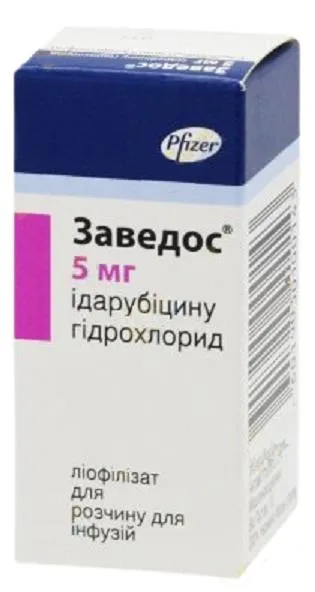
Table of Contents
INSTRUCTIONS FOR MEDICAL USE OF THE MEDICINAL PRODUCT ZAVEDOS® (ZAVEDOS®)
Composition:
Active substance: idarubicin hydrochloride;
1 vial contains 5 mg of idarubicin hydrochloride;
Excipient: anhydrous lactose.
Pharmaceutical form. Lyophilisate for solution for infusion.
Main physico-chemical properties: porous red-orange lyophilisate in the form of a fragment or mass.
Pharmacotherapeutic group. Cytotoxic antibiotics and related agents. Anthracyclines and related compounds. Idarubicin. ATC code L01D B06.
Pharmacological Properties
Pharmacodynamics
Idarubicin is an anthracycline that intercalates between DNA strands, interacts with topoisomerase II enzyme, and inhibits nucleic acid synthesis.
Modification of the anthracycline molecule at the 4th position confers high lipophilicity to the compound, resulting in increased cellular uptake compared to doxorubicin and daunorubicin.
Idarubicin has been shown to have higher activity than daunorubicin and is an effective agent for the treatment of leukemia and lymphoma in mice following both intravenous and oral administration. In vitro studies on anthracycline-resistant mouse and human cells demonstrated that idarubicin exhibits lower levels of cross-resistance compared to doxorubicin and daunorubicin. Animal studies on cardiotoxicity indicate that idarubicin has a higher therapeutic index than daunorubicin and doxorubicin. Antitumor activity of the primary metabolite of the drug—idarubicinol—has been demonstrated in both in vitro and in vivo experimental models. Administration of idarubicinol to rats at doses equivalent to those of the unchanged drug was apparently associated with lower cardiotoxicity compared to equivalent doses of idarubicin.
In vitro studies showed that the investigated medicinal product is at least 95% bound to plasma proteins. This fact should be taken into account when evaluating the potential for using this drug in combination with other medicinal products.
Pharmacokinetics
In adults, following oral administration of 10–60 mg/m² of idarubicin, the drug was rapidly absorbed, reaching peak plasma concentrations (4–12.65 ng/mL) within 1–4 hours after administration. The terminal elimination half-life was 12.7±6.0 hours (mean value ± standard deviation). After intravenous administration of idarubicin to adults, the elimination half-life was 13.9±5.9 hours, approximately the same as with oral administration.
Following intravenous administration, idarubicin is extensively metabolized to form the active metabolite idarubicinol, which is slowly eliminated from plasma (elimination half-life ranging from 41 to 69 hours). The drug is excreted via biliary and renal pathways, primarily in the form of idarubicinol.
Studies on nucleated blood and bone marrow cell cultures obtained from patients with leukemia showed that peak intracellular concentrations of idarubicin are achieved within minutes after drug injection.
Concentrations of idarubicin and idarubicinol in nucleated blood and bone marrow cells exceed plasma concentrations of these substances by more than 100-fold. Idarubicin is eliminated from plasma and cells at approximately the same rate, with an elimination half-life of about 15 hours. The elimination half-life of idarubicinol from cells was approximately 72 hours.
In pharmacokinetic studies involving 7 children receiving intravenous idarubicin hydrochloride at doses of 15 to 40 mg/m² over a 3-day treatment period, the mean elimination half-life was 8.5 hours (range: 3.6–26.4 hours). Idarubicinol, as the active metabolite, accumulated over the 3-day treatment period, with a mean elimination half-life of 43.7 hours (range: 27.8–131 hours). In a separate pharmacokinetic study involving 15 children receiving oral idarubicin hydrochloride at doses of 30 to 50 mg/m² over 3 days of treatment, the maximum plasma concentration (Cmax) of idarubicin was 10.6 ng/mL (range: 2.7–16.7 ng/mL at a dose of 40 mg/m²). The mean elimination half-life of idarubicin was 9.2 hours (range: 6.4–25.5 hours). Significant accumulation of idarubicinol was observed during the 3-day treatment period. The terminal elimination half-life of idarubicin after intravenous administration was comparable to that observed with oral administration in children.
The Cmax values following oral administration of idarubicin were similar in children and adults, indicating that absorption kinetics do not differ between the two populations.
The elimination half-lives of idarubicin after both oral and intravenous administration differed between children and adults.
In adults, total clearance was recorded as 30–107.9 L/h/m², which exceeds that observed in the pediatric population (18–33 L/h/m²). Although idarubicin demonstrated a relatively high volume of distribution in both children and adults, assuming that most of the drug is retained in tissues, the shorter elimination half-life and lower total clearance cannot be fully explained by a smaller apparent volume of distribution in children compared to adults.
Clinical characteristics.
Indications.
For the treatment of acute myeloid leukemia in adults, for induction of remission in patients who have not previously received treatment, or in patients with relapsed or refractory disease.
As a second-line agent for the treatment of relapsed acute lymphoblastic leukemia in adults and children.
For the treatment of acute myeloid leukemia in combination with cytarabine for induction of remission as a first-line therapy in children.
Zavedos® may be used in combination treatment regimens, in conjunction with other cytotoxic agents.
Contraindications.
- Hypersensitivity to idarubicin or to any of the other components listed in the section "Composition", as well as to other anthracyclines or anthracenediones.
- Severe hepatic impairment.
- Severe renal impairment.
- Infections that are not under control.
- Severe cardiomyopathy.
- Recent myocardial infarction.
- Severe arrhythmias.
- Persistent myelosuppression.
- Prior treatment with maximum cumulative doses of idarubicin hydrochloride and/or other anthracyclines and anthracenediones (see section "Special precautions").
Breastfeeding should be discontinued during treatment with this medicinal product (see section "Use in pregnancy or breastfeeding").
Special safety precautions.
Due to the toxic nature of idarubicin, the following protective recommendations are formulated:
- The drug should be handled exclusively by personnel trained in safe handling of such substances;
- Pregnant employees should be excluded from working with this drug;
- Personnel handling Zavedos® must wear protective clothing: goggles, gown, disposable gloves, and mask;
- All materials used during administration of the drug or during cleanup (including gloves) must be placed into bags for highly hazardous waste and disposed of by incineration at high temperatures;
- The reconstituted solution is hypotonic; therefore, the administration procedure described below must be followed.
In case of spillage or leakage of the drug, the surface should first be treated with a diluted sodium hypochlorite solution (1% free chlorine), preferably by wetting, and then rinsed with water. All materials used for cleaning must be disposed of as described above.
In case of accidental contact with skin or eyes, the affected area should be immediately rinsed thoroughly with large amounts of water or sodium bicarbonate solution, and medical assistance should be sought. Unused portions of the solution should be disposed of.
Interaction with other medicinal products and other types of interactions.
Idarubicin is a potent myelosuppressor; therefore, combination chemotherapy regimens containing other agents with a similar mechanism of action may produce an additive effect on bone marrow suppression (see section "Special precautions").
Changes in liver or kidney function caused by concomitant medicinal products may affect the metabolism, pharmacokinetics, therapeutic efficacy, and/or toxicity of idarubicin (see section "Special precautions").
The use of idarubicin in combination chemotherapy regimens together with other potentially cardiotoxic agents, as well as the concomitant use of idarubicin with other drugs affecting cardiac function (e.g., calcium channel blockers), requires monitoring of cardiac function throughout the treatment course.
When radiotherapy is administered concurrently with idarubicin treatment or within 2–3 weeks prior to the start of idarubicin therapy, myelosuppressive effects may be enhanced due to an additive effect.
It is not recommended to administer live attenuated vaccines (e.g., yellow fever vaccine) simultaneously with idarubicin due to the risk of systemic disease with potentially fatal outcome. This risk is increased in patients with already suppressed immune systems due to the underlying disease. Inactivated vaccines should be used if possible.
When oral anticoagulants and anticancer chemotherapy agents are prescribed concurrently, more frequent monitoring of INR (International Normalized Ratio) is recommended than usual, due to the inability to exclude the risk of drug interactions.
Cyclosporin A. Combined use of cyclosporin A as a single chemosensitizer in patients with acute leukemia leads to a significant increase in the AUC of idarubicin (by 1.78-fold) and idarubicinol (by 2.46-fold). The clinical significance of this interaction is unknown. Some patients may require dose adjustment.
Special precautions for use.
Idarubicin should be administered only under the supervision of physicians experienced in cytotoxic chemotherapy. This ensures the possibility of providing immediate and effective treatment of severe complications of the disease and/or adverse reactions (e.g., hemorrhage, generalized infections).
Before initiating treatment with idarubicin, the patient should have recovered from acute toxic effects of the previous chemotherapy cycle (such as stomatitis, neutropenia, thrombocytopenia, and generalized infections).
Hematologic toxicity. Idarubicin exerts a potent suppressive effect on the bone marrow. Severe myelosuppression will develop in all patients receiving therapeutic doses of this drug.
Prior to initiation and during each treatment cycle with idarubicin, hematologic parameters should be evaluated, including a complete leukocyte count.
Hematologic toxicity of idarubicin predominantly manifests as dose-dependent, reversible leukopenia and/or granulocytopenia (neutropenia), which is the most common manifestation of acute dose-limiting toxicity of the drug.
Leukopenia and neutropenia are usually severe. Thrombocytopenia and anemia may also occur. Neutrophil and platelet counts typically reach their nadir 10–14 days after drug administration, but these parameters usually return to normal by the third week.
Fatal cases due to infections and/or hemorrhage during the phase of severe myelosuppression have been reported.
Clinical consequences of severe myelosuppression include fever, infections, sepsis or septicemia, septic shock, bleeding, tissue hypoxia, or death. In cases of febrile neutropenia, treatment with intravenous antibiotics is recommended.
Secondary leukemia. Cases of secondary leukemia (with or without a preleukemic phase) have been reported in patients treated with anthracyclines, including idarubicin. Secondary leukemia occurs more frequently when these drugs are used in combination with DNA-damaging antineoplastic agents, when patients have received intensive prior cytotoxic therapy, or when anthracycline doses are increased. The latent period for such leukemia may range from 1 to 3 years.
Cardiac function effects. Treatment with anthracyclines is associated with the risk of cardiotoxicity, which may manifest as early (acute toxicity) or late (delayed toxicity) effects.
Early (acute) manifestations of toxicity. Early manifestations of idarubicin cardiotoxicity primarily include sinus tachycardia and/or ECG changes (e.g., non-specific ST-T wave changes). Cases of tachyarrhythmias (including ventricular extrasystoles and ventricular tachycardia), bradycardia, atrioventricular block, and bundle branch block have also been reported. These phenomena are usually not predictive of subsequent development of delayed toxicity, are rarely clinically significant, and generally do not necessitate discontinuation of idarubicin treatment.
Late (delayed) manifestations of toxicity. Delayed cardiotoxicity typically occurs at the end of the treatment cycle or within 2–3 months after its completion; however, cases of toxicity development several months or even years after treatment cessation have been described. Delayed cardiomyopathy manifests as a decrease in left ventricular ejection fraction (LVEF) and/or signs and symptoms of congestive heart failure (CHF), such as dyspnea, pulmonary edema, peripheral edema, cardiomegaly, hepatomegaly, oliguria, ascites, pleural effusion, and gallop rhythm. Subacute manifestations such as pericarditis/myocarditis have also been reported. Life-threatening CHF is the most severe form of anthracycline-induced cardiomyopathy and represents cumulative dose-limiting toxicity of the drug.
The cumulative dose limit for idarubicin hydrochloride administered orally or intravenously has not been established. However, in 5% of patients receiving intravenous idarubicin at cumulative doses of 150–290 mg/m², idarubicin-associated cardiomyopathy has been reported. Available data in patients treated with oral idarubicin hydrochloride at total cumulative doses up to 400 mg/m² indicate a low probability of cardiotoxicity.
To minimize the risk of severe cardiac damage, cardiac function should be assessed before initiating idarubicin treatment and monitored throughout therapy. The risk can be reduced by regular monitoring of LVEF values during treatment, with immediate discontinuation of idarubicin at the first signs of cardiac dysfunction. Suitable quantitative methods for repeated assessment of cardiac function (LVEF evaluation) include radionuclide ventriculography (RNV) or echocardiography (ECHO). Initial cardiac assessment is recommended using ECG and one of the two methods—RNV or ECHO. This recommendation is particularly relevant for patients with existing risk factors for increased cardiotoxicity. Repeat LVEF measurements using RNV or ECHO should be performed, especially when higher cumulative anthracycline doses are used. The same method should be used consistently throughout the monitoring period for patient evaluation.
Risk factors for the development of cardiologic toxicity include active or latent cardiovascular disease, radiotherapy to the mediastinal or pericardial area before or concurrently with drug treatment, prior or concurrent treatment with other anthracyclines or anthracenediones, and concomitant use of drugs capable of depressing myocardial contractility or cardiotoxic agents (e.g., trastuzumab). Anthracyclines, including idarubicin, may be administered in combination with other cardiotoxic drugs only with careful monitoring of cardiac function (see section "Interaction with other medicinal products and other forms of interaction"). Patients receiving anthracyclines after completing treatment with other cardiotoxic drugs, particularly those with long elimination half-lives (e.g., trastuzumab), also remain at increased risk of cardiotoxicity. The elimination half-life of trastuzumab has been reported to vary. The active substance may remain in the bloodstream for up to 7 months. Therefore, whenever possible, physicians should avoid initiating anthracycline-based treatment within the first 7 months after completing trastuzumab therapy. If anthracycline treatment cannot be avoided, careful monitoring of cardiac function is recommended.
Cardiac function parameters should be monitored particularly closely in patients receiving high cumulative doses of the drug and in those with existing risk factors. Nevertheless, cardiotoxicity may occur even at lower cumulative doses, regardless of the presence or absence of risk factors.
Infants and children are more sensitive to the cardiotoxic effects of anthracyclines; therefore, periodic assessment of cardiac function over a prolonged period is necessary for these age groups.
The toxicity of idarubicin and other anthracyclines or anthracenediones may exhibit an additive effect.
Hepatic and renal function effects. Since hepatic and/or renal function may affect the distribution of idarubicin, standard clinical laboratory tests to assess liver and kidney function (using serum bilirubin and creatinine levels as indicators) should be performed before and during treatment. In several Phase III studies, treatment was contraindicated if serum bilirubin and/or creatinine levels exceeded 2 mg%. A 50% dose reduction of other anthracyclines is typically applied when bilirubin levels are in the range of 1.2–2 mg%.
Gastrointestinal tract effects. Idarubicin causes vomiting. Mucositis (predominantly in the form of stomatitis; esophagitis is less common) frequently develops in the early stages after drug administration. In severe cases, mucositis may progress to mucosal ulceration within several days. In most patients, this adverse event resolves by the beginning of the third week of treatment.
Isolated cases of serious gastrointestinal events (such as perforation or hemorrhage) have been reported in patients with a history of acute leukemia, other gastrointestinal disorders, or those taking drugs known to cause gastrointestinal complications following oral idarubicin administration. For patients with active gastrointestinal diseases associated with an increased risk of bleeding and/or perforation, the physician must weigh the benefits of oral idarubicin treatment against the associated risks.
Injection site reactions. Phlebosclerosis may develop following injection into a small vessel or repeated injections into the same vessel. Adherence to recommended drug administration procedures may minimize the risk of phlebitis/thrombophlebitis at the injection site.
Extravasation. Leakage of idarubicin outside the vessel during intravenous administration may result in pain at the injection site, severe tissue damage (blistering, severe subcutaneous inflammation), and necrosis. If signs or symptoms of extravasation occur during intravenous administration of idarubicin, drug infusion should be stopped immediately.
In case of extravasation, dexrazoxane may be used to prevent or reduce the extent of tissue damage.
Tumor lysis syndrome. Idarubicin may provoke hyperuricemia due to intense purine catabolism accompanying rapid lysis of tumor cells induced by the drug (tumor lysis syndrome). After treatment initiation, levels of uric acid, potassium, calcium phosphate, and creatinine should be monitored. Patient hydration, urine alkalinization, and prophylaxis of hyperuricemia with allopurinol may minimize potential complications of tumor lysis syndrome.
Immunosuppressive effects/increased susceptibility to infections. Administration of live or live attenuated vaccines (e.g., yellow fever vaccine) to patients with immunosuppression due to chemotherapeutic agents (including idarubicin) may lead to serious infections, including fatal outcomes. Vaccination with live vaccines should be avoided in patients receiving idarubicin. Inactivated or killed vaccines may be used, but the immune response to such vaccines may be diminished.
Reproductive system effects. Men receiving treatment with idarubicin hydrochloride are advised to use contraception throughout the treatment course. If necessary and feasible, they should also consult regarding sperm cryopreservation due to the possibility of irreversible infertility resulting from treatment (see section "Use during pregnancy or breastfeeding").
Other. As with other cytotoxic agents, isolated cases of thrombophlebitis and thromboembolic events, including pulmonary artery embolism, have been reported during idarubicin use.
This medication should not be administered to patients with rare hereditary conditions associated with galactose intolerance, Lapp lactase deficiency, or glucose-galactose malabsorption.
Reddish discoloration of urine may occur 1–2 days after drug administration; patients should be informed about this.
Use during pregnancy or breastfeeding.
Impairment of fertility. Idarubicin may induce chromosomal damage in human spermatozoa. For this reason, men receiving idarubicin treatment should use effective contraception for the first 3 months after treatment completion (see section "Special precautions for use").
Pregnancy. The embryotoxic potential of idarubicin has been demonstrated in vitro and in vivo. However, adequate and well-controlled studies on the use of the drug in pregnant women have not been conducted. Women of reproductive potential should be advised to avoid pregnancy and to use appropriate contraceptive measures recommended by the physician during treatment.
Idarubicin should be administered during pregnancy only if the potential benefit outweighs the potential risk to the fetus. The patient should be informed about the potential risk to the fetus. Patients wishing to have children after completing treatment should, if necessary and feasible, be advised to undergo genetic counseling first.
Breastfeeding. It is currently unknown whether idarubicin or its metabolites are excreted in human breast milk. Breastfeeding should be discontinued during treatment with this drug.
Ability to affect the speed of reactions when driving vehicles or operating machinery.
No systematic assessment of the effect of idarubicin on the ability to drive vehicles or operate machinery has been conducted.
Method of Administration and Dosage
For intravenous use only. The drug is not intended for intrathecal administration. Dosage is calculated based on body surface area.
Acute myeloid leukemia
Adults
12 mg/m² body surface area/day intravenously daily for 3 days in combination with cytarabine, or 8 mg/m² body surface area/day intravenously daily for 5 days either in combination or as monotherapy.
Children
10–12 mg/m² body surface area/day intravenously for 3 days in combination with cytarabine.
Acute lymphoblastic leukemia
Adults
12 mg/m² body surface area intravenously daily for 3 days as monotherapy.
Children
10 mg/m² body surface area intravenously daily for 3 days as monotherapy.
Note. These recommendations are general. To determine the exact dosage, individual treatment protocols must be taken into account.
All dosage regimens should consider the patient's hematological status and the dosage of other cytotoxic agents when used in combination with other drugs.
In patients who develop severe mucositis, initiation of the second treatment cycle should be postponed until complete resolution of toxic effects. A 25% dose reduction of the drug is also recommended.
To obtain a 1 mg/mL solution for intravenous injection, the drug should be reconstituted with 5 mL of water for injections. The reconstituted solution is clear, red-orange in color, and essentially free from visible mechanical particles (see also section "Storage Conditions").
Intravenous administration. The reconstituted Zavedos® solution must be administered intravenously only. The drug should be administered slowly over 5–10 minutes into an intravenous infusion line through which 0.9% sodium chloride solution is freely flowing into the patient. The drug is not recommended for administration via standard injection due to the risk of extravasation, which may occur even if blood return is observed upon needle aspiration (see section "Special Warnings and Precautions").
Children.
The drug is used in children as a first-line treatment for acute myeloid leukemia in combination with cytarabine for induction of remission, and also as a second-line treatment for relapsed acute lymphoblastic leukemia.
Infants and children are considered to be more sensitive to the cardiotoxic effects of anthracyclines; therefore, long-term periodic assessment of cardiac function is required.
Overdose.
Very high doses of idarubicin may cause acute myocardial toxicity within the first 24 hours and severe myelosuppression within 1–2 weeks. Delayed heart failure has been observed several months after anthracycline overdose.
Patients treated with oral idarubicin should be evaluated for possible gastrointestinal bleeding and severe mucosal damage.
Adverse Reactions
The frequency of adverse reactions was determined according to the following conventional scale: very common: ≥ 1/10; common: ≥ 1/100 to < 1/10; uncommon: ≥ 1/1000 to < 1/100; rare: ≥ 1/10,000 to < 1/1000; very rare: < 1/10,000; frequency not known (cannot be estimated based on available data).
Infections and infestations:
Very common: infections;
Uncommon: sepsis, septicaemia.
Benign, malignant and unspecified neoplasms (including cysts and polyps):
Uncommon: secondary leukaemia (acute myeloid leukaemia and myelodysplastic syndrome).
Blood and lymphatic system disorders:
Very common: anaemia, severe leucopenia and neutropenia, thrombocytopenia;
Frequency not known: pancytopenia.
Immune system disorders:
Very rare: anaphylaxis.
Endocrine disorders:
Very common: anorexia;
Uncommon: dehydration.
Metabolism and nutrition disorders:
Uncommon: hyperuricaemia;
Frequency not known: tumour lysis syndrome.
Nervous system disorders:
Rare: cerebral haemorrhage.
Cardiac disorders:
Common: bradycardia, sinus tachycardia, tachyarrhythmia, asymptomatic decrease in left ventricular ejection fraction, congestive heart failure (CHF), cardiomyopathies (see "Special precautions" section for a list of associated signs and symptoms), local phlebitis, thrombophlebitis, haemorrhage;
Uncommon: ECG abnormalities (e.g. non-specific ST segment changes), myocardial infarction, shock;
Very rare: pericarditis, myocarditis, atrioventricular block and bundle branch block, thromboembolism, hot flushes.
Gastrointestinal disorders:
Very common: nausea, vomiting, mucositis/stomatitis, diarrhoea, abdominal pain or burning sensation;
Common: gastrointestinal haemorrhage, intestinal colic;
Uncommon: oesophagitis, colitis (including severe enterocolitis/neutropenic enterocolitis with perforation);
Very rare: gastric erosions or ulcers.
Hepatobiliary disorders:
Common: increased liver enzyme activity and bilirubin levels.
Skin and subcutaneous tissue disorders:
Very common: alopecia;
Common: rash, pruritus, photosensitivity of irradiated skin (reactivation of radiation therapy side effects);
Uncommon: skin and nail hyperpigmentation, urticaria, subcutaneous cellulitis (this condition may be severe), tissue necrosis;
Very rare: acral erythema;
Frequency not known: local reaction.
Renal and urinary disorders:
Very common: red discoloration of urine for 1–2 days after drug administration.
General disorders:
Very common: fever, headache, chills.
Description of some adverse reactions
Blood system disorders
The most severe adverse reaction associated with idarubicin treatment is marked myelosuppression. However, this condition is necessary for the eradication of leukaemic cells (see "Special precautions" section).
Cardiotoxicity
Life-threatening congestive heart failure is the most severe form of anthracycline-induced cardiomyopathy, illustrating the cumulative dose-limiting toxicity of the drug (see "Special precautions" section).
Gastrointestinal effects
Stomatitis and, in severe cases, ulceration of mucous membranes, dehydration due to severe vomiting and diarrhoea; risk of colonic perforation.
Reactions at the site of administration
Phlebitis/thrombophlebitis and preventive measures are described in the "Special precautions" section. Accidental extravasation of the drug may lead to pain, severe inflammation of subcutaneous tissue, and tissue necrosis.
Other adverse reactions: hyperuricaemia.
Prophylaxis with patient hydration, urine alkalinization, and allopurinol may minimize potential complications of tumour lysis syndrome.
Pediatric population
Adverse reactions are similar in adults and children, except for greater sensitivity of children to the cardiotoxic effects of anthracyclines.
Reporting suspected adverse reactions
Reporting of suspected adverse reactions after marketing authorization is important. It allows continuous monitoring of the benefit-risk balance of the medicinal product. Healthcare professionals are encouraged to report any suspected adverse reactions.
Shelf life.
3 years.
Storage conditions.
No special storage conditions required.
The reconstituted solution is chemically stable for up to 48 hours when stored at 2–8 °C and for 24 hours at room temperature (20–25 °C); however, according to pharmaceutical practice guidelines, the solution should not be stored for more than 24 hours at 2–8 °C.
The product contains no antibacterial preservatives. Therefore, if aseptic conditions during solution preparation cannot be guaranteed, the drug should be prepared immediately before administration and any unused portions should be discarded.
Incompatibilities.
Prolonged contact with any solutions having an alkaline pH should be avoided, as this leads to degradation of the medicinal product. Zavedos® should not be mixed with heparin, as this may result in precipitate formation. Zavedos® is also not recommended to be mixed with other medicinal products.
Packaging. 5 mg of lyophilisate in a vial; 1 vial in a cardboard box.
Prescription category. Prescription only.
Manufacturer. Latina Farmaceutici S.p.A. / Latina Pharma S.p.A.
Manufacturer's address.
Via Murillo, 7, 04013 Sermoneta (LT), Italy.
Date of last review.