Eurofenac
Ukraine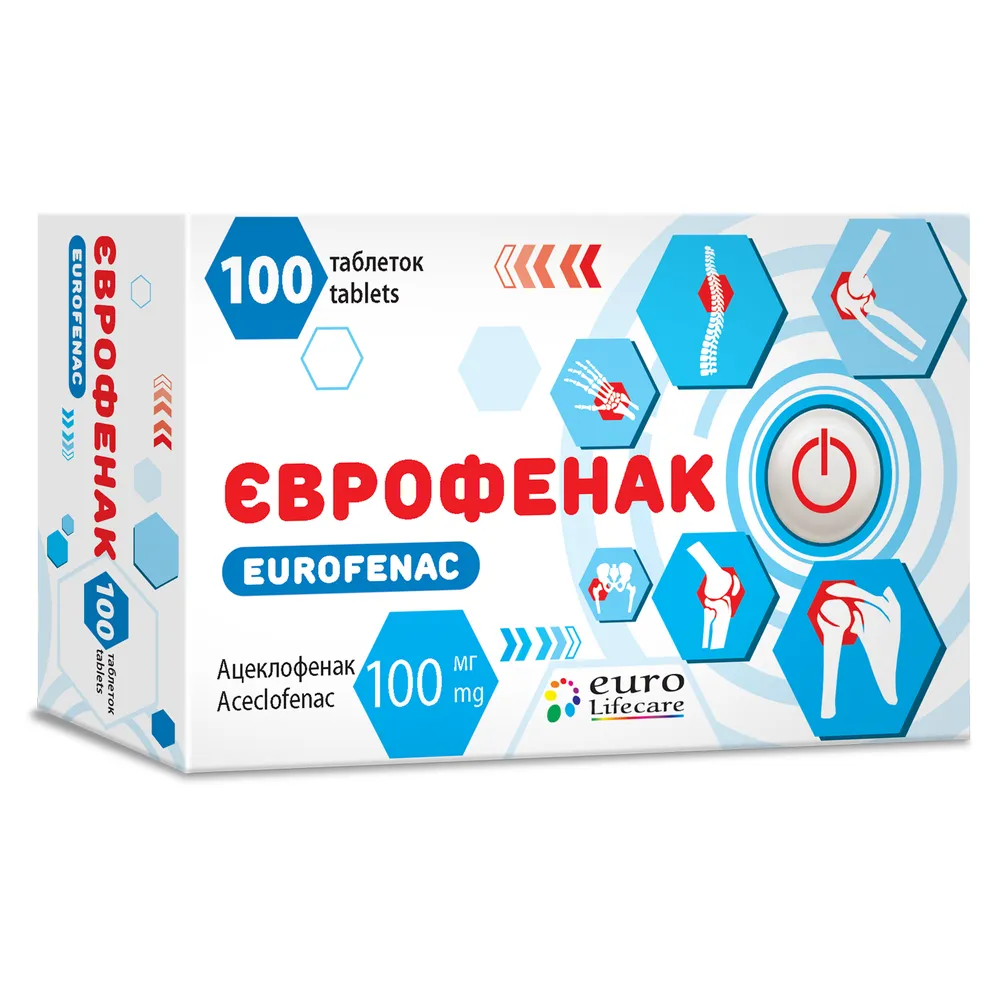
Table of Contents
INSTRUCTIONS FOR MEDICAL USE OF THE MEDICINAL PRODUCT EUROFENAC (EUROFENAC)
Composition:
Active substance: aceclofenac;
One film-coated tablet contains 100 mg of aceclofenac;
Excipients: microcrystalline cellulose, sodium croscarmellose, copovidone, talc, colloidal anhydrous silicon dioxide, glycerol distearate, Opadry 03A0280002.
Pharmaceutical form. Film-coated tablets.
Main physicochemical properties: white, round, biconvex film-coated tablets.
Pharmacotherapeutic group. Non-steroidal anti-inflammatory and antirheumatic agents. Acetic acid derivatives and related substances. ATC code M01AB16.
Pharmacological properties.
Pharmacodynamics.
Aceclofenac is a non-steroidal agent with anti-inflammatory and analgesic effects. The mechanism of action of this drug is believed to be based on inhibition of prostaglandin synthesis.
Pharmacokinetics.
Absorption
After oral administration, aceclofenac is rapidly absorbed, with its bioavailability reaching almost 100%. Peak plasma concentration is achieved approximately within 1.25–3 hours after administration. Food intake slows absorption but does not affect its extent.
Distribution
Aceclofenac is highly bound to plasma proteins (> 99.7%).
Aceclofenac penetrates into synovial fluid, where its concentration reaches approximately 60% of plasma concentration. The volume of distribution is approximately 30 L.
Biotransformation
Aceclofenac is likely metabolized via CYP2C9 to its main metabolite, 4’-OH-aceclofenac, which is presumed to have negligible clinical activity. Among all metabolites, diclofenac and 4’-OH-diclofenac have been detected.
Elimination
The mean elimination half-life is 4–4.3 hours. Clearance is 5 L/h. Approximately 2/3 of the administered dose is excreted in urine, primarily as conjugated hydroxylated metabolites. Only 1% of a single oral dose is excreted unchanged.
Special patient groups
- No changes in the pharmacokinetics of aceclofenac have been observed in elderly patients.
- In patients with impaired liver function, slower elimination of aceclofenac was observed after a single dose.
- In studies with repeated administration of 100 mg daily, no differences in pharmacokinetic parameters were observed between patients with mild to moderate liver cirrhosis and healthy volunteers.
- In patients with mild or moderate renal impairment, no clinically relevant differences in pharmacokinetics were observed after a single dose.
Preclinical safety data.
Like other non-steroidal anti-inflammatory drugs (NSAIDs), aceclofenac is poorly tolerated in animals. Furthermore, pharmacokinetic differences between animals and humans complicate the assessment of the toxic potential of aceclofenac. The main target organ is the gastrointestinal tract (GIT). Available toxicity studies conducted with maximum tolerated doses in rats (species in which aceclofenac is metabolized to diclofenac) and in monkeys (species showing some effect of aceclofenac) did not reveal the typical range of toxic effects commonly observed with NSAID use.
Available animal studies showed no teratogenic effect in rats, although systemic exposure was low. Administration of aceclofenac to rabbits (10 mg/kg/day) resulted in a number of morphological changes in offspring.
Available carcinogenicity studies in mice (where systemic exposure to aceclofenac is unknown) and in rats revealed no carcinogenic effect, and genotoxicity tests conducted with aceclofenac were negative.
Clinical characteristics.
Indications.
For the relief of pain and inflammation in osteoarthritis, rheumatoid arthritis, and ankylosing spondylitis in adults.
Contraindications.
- Hypersensitivity to aceclofenac or to any excipient, or hypersensitivity to substances of similar action, such as other non-steroidal anti-inflammatory drugs (NSAIDs), aspirin.
- Asthma attacks, bronchospasm, acute rhinitis, or urticaria induced in patients by the intake of aspirin or other NSAIDs.
- Progressive peptic ulcer, history of peptic ulcer disease, or recurrent bleeding (two or more documented episodes of ulcer development or bleeding).
- Gastrointestinal bleeding or any other type of bleeding.
- History of gastrointestinal bleeding or ulcer perforation associated with previous NSAID therapy.
- Congestive heart failure (NYHA functional class II–IV), ischemic heart disease, peripheral arterial disease, or cerebrovascular disorders.
- Severe hepatic or renal impairment.
- During the last three months of pregnancy (see section "Use during pregnancy or breastfeeding").
Interaction with other medicinal products and other forms of interaction.
No pharmacokinetic interaction studies have been conducted (except for interaction with warfarin).
Aceclofenac is metabolized via cytochrome P450 2C9, and in vitro data indicate that aceclofenac may be an inhibitor of this enzyme. Therefore, there is a risk of pharmacokinetic interaction with phenytoin, cimetidine, tolbutamide, phenylbutazone, amiodarone, miconazole, and sulfaphenazole.
As with other NSAIDs, there is a risk of pharmacokinetic interaction with drugs that undergo active renal elimination, such as methotrexate and lithium.
Aceclofenac is almost completely bound to plasma proteins (albumin). Potential interactions with medicinal products that are highly protein-bound should be considered.
Due to the lack of pharmacokinetic interaction studies with aceclofenac, the recommendations below are based on information regarding other NSAIDs.
Combinations not recommended
- Methotrexate (high doses)
NSAIDs inhibit its tubular secretion. A minor metabolic interaction due to reduced methotrexate clearance is possible. Therefore, NSAIDs should always be avoided during high-dose methotrexate therapy.
- Lithium and digoxin
Some NSAIDs inhibit renal clearance of lithium and digoxin, leading to increased plasma concentrations. If concomitant use cannot be avoided, close monitoring of lithium or digoxin levels is required.
- Corticosteroids
Increased risk of gastrointestinal ulceration and bleeding (see section "Special precautions for use").
- Anticoagulants
NSAIDs may enhance the effects of anticoagulants such as warfarin (see section "Special precautions for use"). Patients requiring treatment with anticoagulants and aceclofenac should be closely monitored.
- Antiplatelet agents and selective serotonin reuptake inhibitors (SSRIs)
Increased risk of gastrointestinal bleeding (see section "Special precautions for use").
Combinations requiring precautions
- Methotrexate (low doses)
A possible interaction between NSAIDs and methotrexate should be considered, even with low-dose methotrexate, especially in patients with impaired renal function. If the use of this combination within 24 hours cannot be avoided, renal function should be monitored due to the potential for increased methotrexate levels, which may reach toxic values.
- Cyclosporine and tacrolimus
Combining NSAIDs with cyclosporine or tacrolimus increases the risk of nephrotoxicity due to reduced synthesis of renal prostacyclins. Renal function must be monitored in such patients.
- Other NSAIDs, including aspirin (> 3 g per day)
Combination may increase the frequency of adverse effects; caution should be exercised when using.
- Antihypertensive medicinal products
NSAIDs may reduce the efficacy of antihypertensive agents.
In some patients with impaired renal function (e.g., due to dehydration or advanced age), combining an angiotensin-converting enzyme (ACE) inhibitor or angiotensin II receptor antagonist with cyclooxygenase inhibitors may lead to further deterioration of renal function, including acute renal failure, which is usually reversible. Therefore, any such combination should be used with caution, especially in elderly patients. Adequate hydration should be ensured, and monitoring of renal function should be considered at the initiation of concomitant therapy and periodically thereafter.
- Diuretics
Aceclofenac, like all NSAIDs, may impair the effect of diuretics. Concomitant use with diuretics may be associated with increased serum potassium concentration. Serum potassium levels should be monitored. When used concomitantly with bendroflumethiazide, aceclofenac does not affect blood pressure; however, interactions with other diuretics cannot be ruled out.
Combinations to be considered
Hypoglycemic medicinal products
Available clinical studies suggest that diclofenac can be used in combination with oral hypoglycemic agents without affecting their clinical efficacy. However, isolated cases of hypoglycemia and hyperglycemia have been reported with aceclofenac use. Therefore, when taking aceclofenac, doses of agents that may cause hypoglycemia should be adjusted.
Zidovudine
There is an increased risk of hematological toxicity when treating with a combination of NSAIDs and zidovudine. Data exist on increased risk of hemarthrosis and hematomas in HIV-positive patients with hemophilia who were concurrently taking zidovudine and ibuprofen.
Special precautions for use.
Concomitant use of this medicinal product with other NSAIDs, including selective cyclooxygenase-2 inhibitors, should be avoided (see section "Interaction with other medicinal products and other forms of interaction").
Adverse effects can be minimized by using the lowest effective dose for the shortest duration necessary to control symptoms (see section "Dosage and administration" and the risks related to gastrointestinal (GI) and cardiovascular systems below).
Gastrointestinal (GI) tract effects
Gastrointestinal bleeding, ulceration, or perforation, sometimes fatal, have been reported with the use of all NSAIDs at any time during treatment, both in patients with and without a history of serious GI symptoms.
The risk of gastrointestinal bleeding, ulceration, or perforation increases with higher doses, in patients with a history of peptic ulcer, particularly if complicated by bleeding or perforation (see section "Contraindications"), and in elderly patients. Treatment of patients in these categories should be initiated with the lowest possible doses.
Consideration should be given to combining therapy with gastroprotective agents (e.g., misoprostol or proton pump inhibitors) in these patients, as well as in patients requiring concomitant low-dose aspirin or other drugs that negatively affect the gastrointestinal tract (see section "Interaction with other medicinal products and other forms of interactions").
Patients with a history of gastrointestinal disorders, including elderly patients, should report any unusual gastrointestinal symptoms (particularly gastrointestinal bleeding), especially at the beginning of treatment.
Particular caution is required in patients who are concurrently taking medications that increase the risk of bleeding or ulceration, such as systemic corticosteroids, oral anticoagulants (e.g., warfarin), selective serotonin reuptake inhibitors (SSRIs), or antiplatelet agents (e.g., aspirin) (see section "Interaction with other medicinal products and other forms of interaction").
If gastrointestinal bleeding or ulceration occurs in patients taking aceclofenac, treatment should be discontinued.
Due to the risk of exacerbation of pathology, NSAIDs should be prescribed with caution and under close medical supervision to patients with symptoms indicating gastrointestinal disorders, which may affect both the upper gastrointestinal tract and may lead to gastrointestinal ulceration, bleeding, or perforation, ulcerative colitis, Crohn’s disease, or any other condition associated with bleeding (see section "Adverse reactions").
Cardiovascular and cerebrovascular effects
Appropriate monitoring and precautions are necessary for patients with a history of hypertension and/or mild to moderate heart failure. Sodium and fluid retention, as well as edema, have been reported in association with NSAID therapy. Aceclofenac should be used with caution and under close medical supervision in patients with a history of cerebrovascular hemorrhage.
Patients with congestive heart failure (NYHA class I), as well as patients with significant cardiovascular risk factors (e.g., hypertension, hyperlipidemia, diabetes mellitus, and smoking), should only initiate aceclofenac treatment after careful consideration of these factors. Since cardiovascular risks associated with aceclofenac may increase with higher doses and longer duration of treatment, the lowest effective daily dose should be used for the shortest possible treatment duration. The need for continued symptomatic treatment and the effectiveness of therapy should be reviewed periodically.
Renal function effects
NSAID use may cause dose-dependent reduction in prostaglandin formation and lead to the development of renal failure. The importance of prostaglandins in maintaining renal blood flow should be considered in patients with cardiac or renal insufficiency, hepatic disorders, those receiving diuretic therapy, patients recovering from major surgery, patients at risk of hypovolemia from any cause, and elderly patients.
Patients with mild to moderate renal impairment should be under medical supervision, as NSAID use may lead to renal failure.
Caution is advised in patients receiving diuretics or at risk of hypovolemia. These patients should receive the lowest effective dose, and renal function should be monitored regularly. Effects on renal function are usually reversible upon discontinuation of aceclofenac therapy.
Hepatic function effects
Close medical supervision is required for patients with mild to moderate hepatic impairment.
Aceclofenac should be discontinued if abnormal liver function persists or worsens, if clinical signs or symptoms of liver disorders appear, or if other manifestations occur (e.g., eosinophilia, rash). Hepatitis may occur without prodromal symptoms.
Use of NSAIDs in patients with hepatic porphyria may provoke an attack.
Hypersensitivity and skin reactions
As with other NSAIDs, the medicinal product Eurofenac may cause allergic reactions, including anaphylactic/anaphylactoid reactions, even upon first administration.
Serious skin reactions, sometimes fatal, including exfoliative dermatitis, Stevens-Johnson syndrome, and Lyell’s syndrome, have very rarely been reported during NSAID therapy (see section "Adverse reactions").
The frequency of these adverse reactions may be higher at the beginning of treatment; such adverse reactions typically occur within the first month of drug use. Aceclofenac should be discontinued at the first appearance of skin rash, mucosal lesions, or any other signs of hypersensitivity.
In exceptional cases, varicella (chickenpox) may lead to infectious complications involving the skin or soft tissues. A contributory role of NSAIDs in the worsening of these infections cannot be excluded. Therefore, the use of aceclofenac is not recommended in cases of varicella.
Hematological disorders
Aceclofenac may cause reversible inhibition of platelet aggregation (see section "Interaction with other medicinal products and other forms of interaction").
Respiratory system disorders
Patients with bronchial asthma or a history of bronchial asthma should exercise caution, as NSAIDs may induce bronchospasm in these individuals.
Elderly patients
In elderly patients, the use of NSAIDs increases the risk of adverse reactions, particularly gastrointestinal bleeding and perforation, which may be fatal (see section "Dosage and administration").
Gastrointestinal bleeding and perforation may be more severe, and the presence of warning signs during treatment or a history of adverse effects is not required. Elderly patients are also more susceptible to impairments in renal, hepatic, or cardiac function.
Long-term treatment
Patients receiving long-term NSAID therapy should have periodic monitoring of liver and kidney function and hematological status. Aceclofenac should be used with caution and under close medical supervision in patients with systemic lupus erythematosus, porphyria, or coagulation disorders.
Aceclofenac, like any other medicinal product that inhibits cyclooxygenase and prostaglandin synthesis, may impair fertility. Its use is not recommended for women wishing to become pregnant. Women experiencing difficulties in conceiving or undergoing fertility investigations should consider discontinuing aceclofenac treatment.
Fertility
The use of aceclofenac may impair fertility (see section "Use during pregnancy or breastfeeding").
Sodium
This medicinal product contains less than 1 mmol of sodium (23 mg) per tablet, i.e., essentially "sodium-free."
Use during pregnancy or breastfeeding.
Pregnancy
There are no data on the use of aceclofenac in pregnant women. However, in general, inhibitors of prostaglandin synthesis may affect pregnancy and/or embryonic development. Epidemiological data indicate an increased risk of spontaneous abortion, congenital heart defects, and gastroschisis following the use of prostaglandin synthesis inhibitors during early pregnancy. The absolute risk of heart defects increases from less than 1% to approximately 1.5%. The risk is likely to increase with higher doses and longer duration of treatment. Animal studies have shown pre- and post-implantation embryonic and fetal loss associated with the use of prostaglandin synthesis inhibitors.
Furthermore, in animals treated with prostaglandin synthesis inhibitors during organogenesis, an increased incidence of various developmental abnormalities (including cardiovascular) has been observed.
From the 20th week of pregnancy, the use of aceclofenac may cause oligohydramnios due to fetal renal dysfunction. This condition may occur soon after the start of treatment and is usually reversible upon discontinuation of therapy. Additionally, there have been reports of arterial duct constriction after second-trimester treatment, which in most cases resolved after treatment cessation.
During the first and second trimesters of pregnancy, NSAIDs should only be prescribed when strictly necessary. If NSAIDs are prescribed to women planning pregnancy or during the first and second trimesters, doses and duration of treatment should be kept as low as possible. Prenatal monitoring for oligohydramnios and arterial duct constriction may be advisable after exposure to aceclofenac, starting from the 20th week of pregnancy. Aceclofenac use should be discontinued if oligohydramnios or arterial duct constriction is detected.
During the third trimester of pregnancy, the use of prostaglandin synthesis inhibitors exposes the fetus to the risk of:
- cardiopulmonary toxicity (premature closure/constriction of the arterial duct and pulmonary hypertension);
- renal dysfunction (see above).
The use of prostaglandin synthesis inhibitors late in pregnancy poses risks to both the mother and the unborn child:
- prolonged bleeding time, antiplatelet effect, which may occur even at low doses;
- inhibition of uterine contractions, leading to delayed and prolonged labor.
Therefore, NSAIDs are contraindicated during the third trimester of pregnancy (see section "Contraindications").
Breastfeeding
There are no data on the passage of aceclofenac into human breast milk.
However, significant penetration of radiolabeled (14C) aceclofenac into the milk of female rats was not observed.
Therefore, the possibility of continuing breastfeeding during treatment should be considered, taking into account the expected benefit of breastfeeding for the infant and the expected benefit of treatment for the mother.
Fertility
The use of aceclofenac, like any other medicinal product that inhibits cyclooxygenase/prostaglandin synthesis, may reduce fertility and is not recommended for women planning pregnancy. Discontinuation of the medicinal product should be considered in women experiencing difficulties with conception or undergoing infertility treatment.
Ability to affect reaction speed when driving or operating machinery.
Patients who experience symptoms such as dizziness or vertigo, or other central nervous system symptoms, after taking NSAIDs should not drive or operate machinery.
Method of Administration and Dosage
Dosage
Adults
The maximum recommended dose is 200 mg per day in two divided doses, i.e. one 100 mg tablet in the morning and one in the evening.
Geriatric Patients
In general, there is no need for dose adjustment; however, caution should be exercised (see section "Special Warnings and Precautions for Use").
Hepatic Impairment
In cases of mild to moderate hepatic impairment, dosage reduction may be required. The recommended initial dose is 100 mg daily (see section "Special Warnings and Precautions for Use").
Renal Impairment
Dosage adjustment is not required in mild renal impairment; however, precautionary measures should be taken.
Adverse reactions can be minimized by using the lowest effective dose for the shortest duration necessary to control symptoms (see section "Special Warnings and Precautions for Use").
Method of Administration
This medicinal product is intended for oral administration.
Tablets should be swallowed whole with at least half a glass of water or another liquid; they may be taken with food.
Children
Due to lack of data on safety and efficacy of aceclofenac in children, the use of this medicinal product in pediatric patients is not recommended.
Overdose.
There is insufficient data regarding the consequences of overdose in humans. Possible symptoms may include nausea, vomiting, stomach pain, dizziness, drowsiness, and headache.
Treatment of NSAID overdose includes the use, if necessary, of antacids and other symptomatic treatments for complications such as hypotension, renal failure, convulsions, gastrointestinal irritation, and respiratory depression.
Management of aceclofenac overdose involves prevention of drug absorption by gastric lavage followed by administration of activated charcoal.
Forced diuresis, dialysis, or hemoperfusion may not effectively remove NSAIDs due to their high plasma protein binding and extensive metabolism.
Adverse reactions.
Adverse reactions reported during the use of NSAIDs
Adverse reactions from the gastrointestinal tract (GI) are most frequently reported. Peptic ulcers, GI perforation, or GI bleeding, sometimes fatal, may occur, particularly in elderly patients (see section "Special precautions"). Nausea, vomiting, diarrhoea, flatulence, constipation, dyspepsia, ulcerative stomatitis, abdominal pain, melaena, haematemesis (vomiting blood), and exacerbation of ulcerative colitis or Crohn's disease (see section "Special precautions") have been reported following NSAID administration. Gastritis has been observed less frequently.
Edema, hypertension, and heart failure have been reported in association with NSAID therapy.
Other very rare adverse reactions (< 1/10,000) reported during the use of NSAIDs:
- Renal and urinary disorders, interstitial nephritis,
- Bullous reactions, including Stevens-Johnson syndrome and Lyell's syndrome.
In exceptional cases, serious infectious complications involving the skin or soft tissues have been reported in association with NSAID therapy during varicella (chickenpox).
Adverse reactions associated with aceclofenac administration
The adverse reactions listed in the table below are classified by system organ class and frequency: very common (≥ 1/10); common (≥ 1/100 to < 1/10); uncommon (≥ 1/1,000 to < 1/100); rare (≥ 1/10,000 to < 1/1,000); very rare (< 1/10,000).
| MedDRA system organ classes |
Common ≥ 1/100 – < 1/10 |
Uncommon ≥ 1/1000 – < 1/100 |
Rare ≥ 1/10000 – < 1/1000 |
Very rare < 1/10000 |
| Blood and lymphatic system disorders |
Anaemia |
Myelosuppression, granulocytopenia, thrombocytopenia, haemolytic anaemia |
||
| Immune system disorders |
Anaphylactic reactions (including anaphylactic shock), hypersensitivity |
|||
| Metabolism and nutrition disorders |
Hyperkalaemia |
|||
| Psychiatric disorders |
Depression, unusual dreams, insomnia |
|||
| Nervous system disorders |
Dizziness |
Paraesthesia, tremor, somnolence, headache, dysgeusia (taste disturbances) |
||
| Eye disorders |
Visual disturbances |
|||
| Ear and labyrinth disorders |
Vertigo, tinnitus |
|||
| Cardiac disorders |
Heart failure |
Palpitations |
||
| Vascular disorders |
Arterial hypertension, worsening of arterial hypertension |
Hyperaemia, flushing, vasculitis |
||
| Respiratory, thoracic and mediastinal disorders |
Dyspnoea |
Bronchospasm |
||
| Gastrointestinal disorders |
Dyspepsia, abdominal pain, nausea, diarrhoea |
Flatulence, gastritis, constipation, vomiting, ulcerative stomatitis |
Melena, gastrointestinal ulcers, haemorrhagic diarrhoea, gastrointestinal haemorrhage |
Stomatitis, haematemesis, gastric ulcer, pancreatitis, intestinal perforation, exacerbation of Crohn's disease and ulcerative colitis |
| Hepatobiliary disorders |
Increased liver enzyme activity |
Hepatitis, increased alkaline phosphatase activity |
||
| Skin and subcutaneous tissue disorders |
Pruritus, rash, dermatitis, urticaria |
Angioneurotic oedema |
Purpura, eczema, severe skin and mucous membrane reactions (including Stevens-Johnson syndrome and toxic epidermal necrolysis) |
|
| Renal and urinary disorders |
Increased blood urea and creatinine concentrations |
Nephrotic syndrome, renal failure |
||
| General disorders and administration site conditions |
Oedema, increased fatigue, leg muscle cramps |
|||
| Investigations |
Increased body weight |
Aceclofenac is structurally related to diclofenac and is metabolized to diclofenac, for which a large amount of clinical and epidemiological data indicates a consistent increase in the risk of arterial thrombotic events (myocardial infarction or stroke, especially when used at high doses and for prolonged periods).
Epidemiological studies have shown an increased risk of acute coronary syndrome and myocardial infarction associated with aceclofenac treatment (see sections "Contraindications" and "Special precautions for use").
Shelf life. 3 years.
Storage conditions.
Store in the original packaging at a temperature not exceeding 30 °C.
Keep out of reach of children.
Packaging. 10 tablets per blister, 3 or 10 blisters per cardboard box.
Prescription status. Prescription only.
Manufacturer.
Rivopharm SA.
Manufacturer's address and place of business.
Centro Insema, 6928 Manno, Switzerland.