Ezom
Ukraine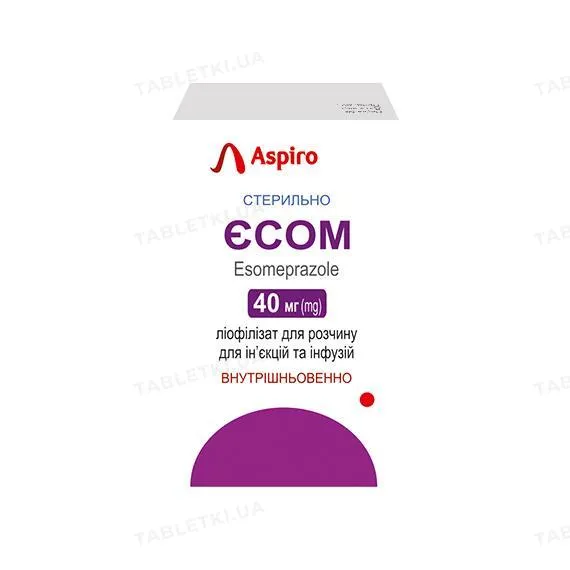
Table of Contents
INSTRUCTION FOR MEDICAL USE OF THE MEDICINAL PRODUCT YESOM (YESOM)
Composition:
Active substance: esomeprazole;
1 vial contains sodium esomeprazole equivalent to esomeprazole 40 mg;
Excipient: edetate disodium.
Pharmaceutical form. Lyophilisate for solution for injection and infusion.
Main physico-chemical properties: lyophilized mass of white to almost white color.
Pharmacotherapeutic group.
Agents for treatment of peptic ulcer and gastroesophageal reflux disease.
ATC code A02B C05.
Pharmacological Properties.
Pharmacodynamics.
Esomeprazole is the S-isomer of omeprazole that inhibits gastric acid secretion through a specific, targeted mechanism of action. It is a specific inhibitor of the acid pump in parietal cells. Both the R- and S-isomers of omeprazole have similar pharmacological activity.
Mechanism of action
Esomeprazole is a weak base that accumulates and is converted into its active form in the highly acidic environment of the secretory canaliculi of parietal cells, where it inhibits the enzyme H+K+-ATPase – the proton pump – and suppresses both basal and stimulated acid secretion.
Effect on gastric acid secretion
After 5 days of oral administration of 20 mg and 40 mg esomeprazole, intragastric pH remained above 4 for an average of 13 hours and 17 hours, respectively, over a 24-hour interval in patients with symptomatic gastroesophageal reflux disease (GERD). The effect is similar regardless of whether esomeprazole is administered orally or intravenously.
Using the area under the plasma concentration-time curve (AUC) as a surrogate parameter for plasma concentration, a relationship has been demonstrated between inhibition of acid secretion and exposure after oral administration of esomeprazole.
Over 24 hours, in healthy volunteers receiving intravenous esomeprazole at a dose of 80 mg as a 30-minute bolus infusion followed by continuous intravenous infusion at 8 mg/hour for 23.5 hours, intragastric pH remained above 4 and above 6 for an average of 21 hours and 11–13 hours, respectively, over a 24-hour interval.
Therapeutic effect of acid secretion inhibition
Treatment of reflux esophagitis with esomeprazole 40 mg demonstrates efficacy in 78% of patients after 4 weeks and in 93% of patients after 8 weeks of oral administration.
Other effects related to acid secretion inhibition
During treatment with antisecretory drugs, serum gastrin levels increase in response to reduced acid secretion. Chromogranin A (CgA) levels also increase due to reduced gastric acidity. An increase in enterochromaffin-like (ECL) cells, possibly related to elevated gastrin levels, has been observed in some patients during long-term oral esomeprazole therapy.
During long-term treatment with oral antisecretory agents, a slight increase in the incidence of gastric glandular cysts has been noted. These changes are a physiological consequence of pronounced suppression of gastric acid secretion and are benign and reversible in nature.
Reduced gastric acidity from any cause, including use of proton pump inhibitors (PPIs), leads to increased numbers of bacteria normally present in the gastrointestinal tract. PPI therapy may slightly increase the risk of gastrointestinal infections caused by, for example, Salmonella and Campylobacter, and in hospitalized patients, possibly also Clostridium difficile.
Children
Results from studies involving pediatric patients show that esomeprazole doses of 0.5 mg/kg and 1.0 mg/kg in infants aged <1 month and 1–11 months, respectively, reduce the mean percentage of time with intraluminal esophageal pH < 4.
The safety profile of the drug was similar to that observed in adults.
Pharmacokinetics.
Distribution
The apparent volume of distribution at steady state in healthy volunteers is approximately 0.22 L/kg body weight. Esomeprazole is 97% bound to plasma proteins.
Metabolism and elimination
Esomeprazole is completely metabolized by the cytochrome P450 (CYP) system. The majority of esomeprazole metabolism is dependent on the polymorphic CYP2C19, responsible for the formation of hydroxy- and desmethyl metabolites of esomeprazole. The remainder of metabolism is mediated by another specific isoenzyme, CYP3A4, which is responsible for the formation of esomeprazole sulfone, the main metabolite in plasma.
The parameters below primarily reflect the pharmacokinetics in individuals with functional CYP2C19 enzyme, i.e., rapid metabolizers.
Total plasma clearance is approximately 17 L/hour after a single dose and approximately 9 L/hour after repeated administration. The elimination half-life (t1/2) from plasma is approximately 1.3 hours after repeated once-daily dosing. AUC increases with repeated administration of esomeprazole. This increase is dose-dependent and results in a non-linear relationship between dose and AUC after repeated dosing. This time- and dose-dependency is due to reduced presystemic metabolism and systemic clearance, likely caused by inhibition of the CYP2C19 enzyme by esomeprazole and/or its sulfone metabolite.
Esomeprazole is completely cleared from plasma between doses, and there is no tendency for accumulation in the body with once-daily administration.
With repeated administration of 40 mg intravenous injections, the mean maximum plasma concentration (Cmax) of esomeprazole is approximately 13.6 µmol/L. The Cmax for corresponding oral doses is approximately 4.6 µmol/L. A smaller increase (approximately 30%) in total exposure is observed with intravenous administration compared to oral administration. A linear, dose-dependent increase in exposure has been observed with esomeprazole administered as a 30-minute intravenous infusion (40 mg, 80 mg, or 120 mg) followed by continuous infusion (at 4 mg/hour or 8 mg/hour) for 23.5 hours.
The main metabolites of esomeprazole do not affect gastric acid secretion. Approximately 80% of an oral dose of esomeprazole is excreted in urine as metabolites, the remainder in feces. Less than 1% of the parent compound is excreted in urine.
Special patient populations
Approximately 2.9 ± 1.5% of the population lacks functional CYP2C19 enzyme and is referred to as poor metabolizers. In these individuals, esomeprazole metabolism is likely primarily catalyzed by CYP3A4. After multiple oral doses of 40 mg esomeprazole once daily, mean total exposure was approximately 100% higher in poor metabolizers compared to individuals with functional CYP2C19 (rapid metabolizers). Cmax was increased by approximately 60%. Similar differences were observed with intravenous administration of esomeprazole. These data do not require dose adjustments for esomeprazole.
Esomeprazole metabolism is only slightly altered in elderly individuals (71–80 years).
After a single oral dose of 40 mg esomeprazole, AUC is approximately 30% higher in women than in men. No sex-related differences are observed with repeated once-daily dosing. Similar differences were observed with intravenous administration of esomeprazole. These data do not affect esomeprazole dosing.
Esomeprazole metabolism may be impaired in patients with mild to moderate hepatic impairment. In patients with severe hepatic impairment, the rate of metabolism is reduced, resulting in a doubling of total esomeprazole exposure. Therefore, patients with GERD and severe hepatic impairment should not exceed the maximum dose of 20 mg. In cases of bleeding ulcer and severe hepatic impairment, after an initial 80 mg bolus dose, continuous intravenous infusion at a maximum rate of 4 mg/hour for 71.5 hours may be sufficient. Esomeprazole or its main metabolites do not tend to accumulate with once-daily administration.
Studies in patients with impaired renal function have not been conducted. Since the kidneys are responsible for the excretion of esomeprazole metabolites, but not the parent compound, changes in metabolism are not expected in patients with renal impairment.
Clinical characteristics.
Indications
Adults
- Antisecretory therapy when oral administration is not possible, for example:
- gastroesophageal reflux disease (GERD) in patients with esophagitis and/or severe reflux symptoms;
- treatment of gastric ulcers associated with nonsteroidal anti-inflammatory drug (NSAID) therapy;
- prevention of gastric and duodenal ulcers associated with NSAID therapy in patients at risk.
- Prevention of recurrent bleeding in patients after endoscopic treatment of acute gastric or duodenal ulcer bleeding.
Children aged 1 to 18 years
- Antisecretory therapy when oral administration is not possible, for example:
- gastroesophageal reflux disease (GERD) in patients with erosive reflux esophagitis and/or severe reflux symptoms.
Contraindications
Hypersensitivity to esomeprazole or to any of the excipients, or to substituted benzimidazoles.
Esomeprazole must not be used concomitantly with atazanavir and nelfinavir (see section "Interaction with other medicinal products and other forms of interaction").
Interaction with other medicinal products and other forms of interaction
Effect of esomeprazole on the pharmacokinetics of other medicinal products
Protease inhibitors
Interactions between omeprazole and certain protease inhibitors have been observed. The clinical significance and mechanisms of these interactions are not always known. Increased gastric pH during omeprazole therapy may alter the absorption of protease inhibitors. Other interaction mechanisms are possible via inhibition of CYP2C19.
It has been reported that co-administration of omeprazole reduces serum levels of atazanavir and nelfinavir; therefore, concomitant use is not recommended. Co-administration of omeprazole (40 mg once daily) with atazanavir 300 mg/ritonavir 100 mg in healthy volunteers resulted in a significant reduction in atazanavir exposure (decrease in AUC, Cmax, and minimum concentration [Cmin] by approximately 75%). Increasing the atazanavir dose to 400 mg did not compensate for the effect of omeprazole on atazanavir exposure. Co-administration of omeprazole (20 mg daily) with atazanavir 400 mg/ritonavir 100 mg in healthy volunteers reduced atazanavir exposure by approximately 30% compared to exposure observed with atazanavir 300 mg/ritonavir 100 mg once daily without omeprazole 20 mg daily. Co-administration of omeprazole (40 mg daily) reduced mean AUC, Cmax, and Cmin of nelfinavir by 36–39%, and mean AUC, Cmax, and Cmin of its pharmacologically active metabolite M8 by 75–92%. Due to the similarity in pharmacodynamic effects and pharmacokinetic properties between omeprazole and esomeprazole, concomitant use with atazanavir is not recommended (see section "Special warnings and precautions for use"), and concomitant use of esomeprazole with nelfinavir is contraindicated (see section "Contraindications").
Increased serum concentrations of saquinavir (co-administered with ritonavir) (80–100%) were observed with concomitant use of omeprazole (40 mg daily). Omeprazole 20 mg daily did not affect darunavir (co-administered with ritonavir) or amprenavir (in combination with ritonavir) exposure. Administration of esomeprazole 20 mg daily did not affect amprenavir exposure (with or without ritonavir). Omeprazole 40 mg daily did not alter lopinavir exposure (in combination with ritonavir).
Methotrexate
When methotrexate is used concomitantly with PPIs, its levels increased in some patients. When high-dose methotrexate is administered, temporary discontinuation of esomeprazole should be considered.
Tacrolimus
Increased serum levels of tacrolimus have been observed with concomitant use of esomeprazole. Close monitoring of tacrolimus concentrations and renal function (creatinine clearance) is required, and dose adjustment of tacrolimus may be necessary.
Medicinal products whose absorption is pH-dependent
Reduced gastric acidity during treatment with esomeprazole and other PPIs may decrease or increase the absorption of medicinal products whose absorption depends on gastric pH. As with other agents that reduce gastric acidity, absorption of drugs such as ketoconazole, itraconazole, and erlotinib may be reduced, while digoxin absorption may be increased during esomeprazole treatment. In healthy volunteers, co-administration of omeprazole (20 mg daily) and digoxin increased digoxin bioavailability by 10% (up to 30% in two out of ten participants). Digoxin toxicity has been reported rarely. However, caution should be exercised when high doses of esomeprazole are administered to elderly patients. Close monitoring of digoxin blood concentrations is recommended.
Medicinal products metabolized by CYP2C19
Esomeprazole inhibits CYP2C19, the main enzyme responsible for esomeprazole metabolism. Therefore, when esomeprazole is combined with medicinal products metabolized by CYP2C19, such as diazepam, citalopram, imipramine, clomipramine, and phenytoin, their plasma concentrations may increase, and dose reduction may be required. In vivo interaction studies using the intravenous formulation at high doses (80 mg + 8 mg/hour) have not been conducted. The effect of esomeprazole on drugs metabolized by CYP2C19 during such treatment regimens may be more pronounced, and patients should be closely monitored for adverse reactions during the 3-day intravenous administration period.
Diazepam
Concomitant oral administration of 30 mg esomeprazole reduced the clearance of the CYP2C19 substrate diazepam by 45%.
Phenytoin
Concomitant oral administration of 40 mg esomeprazole and phenytoin increased the minimum plasma concentration of phenytoin in epileptic patients by 13%. Monitoring of plasma phenytoin concentrations is recommended at the start and upon discontinuation of esomeprazole therapy.
Voriconazole
Administration of omeprazole (40 mg once daily) increased Cmax and AUCτ of voriconazole (a CYP2C19 substrate) by 15% and 41%, respectively.
Cilostazol
Omeprazole, like esomeprazole, is an inhibitor of CYP2C19. In a crossover study in healthy volunteers, administration of omeprazole 40 mg increased Cmax and AUC of cilostazol by 18% and 26%, respectively, and of one of its active metabolites by 29% and 69%, respectively.
Cisapride
Concomitant oral administration of 40 mg esomeprazole and cisapride in healthy volunteers increased AUC by 32% and t1/2 by 31%, but no significant increase in Cmax or plasma cisapride concentration was observed. No prolongation of the QTc interval, which was slightly observed during cisapride monotherapy, was seen when cisapride was administered with esomeprazole.
Warfarin
A clinical study showed that co-administration of oral esomeprazole 40 mg with warfarin maintained coagulation time within acceptable limits. However, during the post-marketing period, several isolated cases of clinically significant increases in the international normalized ratio (INR) have been reported with concomitant use of these medicinal products. Monitoring is recommended at the beginning and end of concomitant therapy with esomeprazole and warfarin or other coumarin derivatives.
Clopidogrel
Results from pharmacokinetic (PK)/pharmacodynamic (PD) interaction studies in healthy volunteers evaluating clopidogrel (loading dose 300 mg/maintenance dose 75 mg daily) and esomeprazole (oral 40 mg daily) showed a mean 40% reduction in exposure to clopidogrel's active metabolite and a mean 14% reduction in maximum inhibition of (ADP-induced) platelet aggregation.
In a study in healthy volunteers, when clopidogrel was administered together with esomeprazole and acetylsalicylic acid (ASA) in fixed combination (20 mg + 81 mg, respectively), exposure to clopidogrel's active metabolite was reduced by nearly 40% compared to clopidogrel monotherapy. However, the maximum level of inhibition of (ADP-induced) platelet aggregation was similar in the clopidogrel monotherapy group and the group receiving clopidogrel with esomeprazole and ASA.
Observational and clinical studies have yielded conflicting data on the clinical implications of the PK/PD interaction between esomeprazole and cardiovascular outcomes. As a precautionary measure, concomitant use of esomeprazole and clopidogrel should be avoided.
Medicinal products without clinically significant interaction
Amoxicillin or quinidine
Esomeprazole was shown not to have a clinically significant effect on the pharmacokinetics of amoxicillin or quinidine.
Naproxen or rofecoxib
Studies conducted during concomitant administration of esomeprazole with naproxen or rofecoxib did not reveal any clinically significant pharmacokinetic interactions during short-term studies.
Effect of other medicinal products on the pharmacokinetics of esomeprazole
Medicinal products inhibiting CYP2C19 and/or CYP3A4
Esomeprazole is metabolized by CYP2C19 and CYP3A4. Concomitant oral administration of esomeprazole and the CYP3A4 inhibitor clarithromycin (500 mg twice daily) doubled the AUC of esomeprazole. Concomitant administration of esomeprazole with a combined inhibitor of CYP2C19 and CYP3A4 may increase esomeprazole exposure by more than two-fold. The CYP2C19 and CYP3A4 inhibitor voriconazole increased the AUCτ of omeprazole by 280%. Dose adjustment of esomeprazole is not always necessary in such situations. However, it may be required in patients with severe hepatic impairment or when long-term treatment is indicated.
Medicinal products inducing CYP2C19 and/or CYP3A4 activity
Medicinal products (such as rifampicin and St. John's wort) capable of inducing CYP2C19 or CYP3A4, or both enzymes, may reduce esomeprazole serum concentrations by enhancing its metabolism.
Children
Drug interaction studies have been conducted only in adults.
Special precautions for use
In the presence of any alarming symptoms (such as significant unexplained weight loss, recurrent vomiting, dysphagia, hematemesis, or melena) or suspicion of or existing gastric ulcer, malignancy should be excluded, as esomeprazole may mask symptoms and delay diagnosis.
Gastrointestinal infections
Treatment with PPIs may slightly increase the risk of gastrointestinal infections, such as those caused by Salmonella and Campylobacter (see section "Pharmacodynamics").
Vitamin B12 absorption
Esomeprazole, like all acid-suppressing medicinal products, may inhibit absorption of vitamin B12 (cyanocobalamin) due to hypo- or achlorhydria. This should be considered when prescribing the drug to patients with low vitamin B12 stores or risk factors for impaired vitamin B12 absorption during long-term therapy.
Hypomagnesemia
Cases of severe hypomagnesemia have been reported in patients taking PPIs such as esomeprazole for at least three months, and in most cases, for a year or longer. Hypomagnesemia may present with serious symptoms such as fatigue, tetany, delirium, seizures, dizziness, and ventricular arrhythmias, and its onset may be insidious and remain unrecognized. In most patients with hypomagnesemia, symptoms improved after magnesium replacement therapy and discontinuation of PPI treatment.
For patients expected to undergo long-term treatment or those taking PPIs concomitantly with digoxin or other drugs that may cause hypomagnesemia (e.g., diuretics), measuring magnesium levels before starting PPI therapy and periodically during treatment may be advisable.
Risk of fractures
PPIs, especially when used at high doses and over a prolonged period (>1 year), may slightly increase the risk of fractures of the hip, wrist, and spine, particularly in elderly patients or those with other risk factors. Observational studies suggest that PPIs may increase the overall risk of fractures by 10–40%. This increased risk may be partly attributable to other risk factors. Patients at risk of osteoporosis should be managed according to current clinical guidelines and should receive adequate vitamin D and calcium intake.
Subacute cutaneous lupus erythematosus
PPI use has been associated with very rare cases of subacute cutaneous lupus erythematosus. If skin lesions develop, particularly in sun-exposed areas, and are accompanied by arthralgia, patients should seek immediate medical advice, and discontinuation of esomeprazole should be considered. Previous development of subacute cutaneous lupus erythematosus during prior PPI therapy may increase the risk of recurrence with other PPIs.
Combination with other medicinal products
Concomitant use of esomeprazole with atazanavir is not recommended (see section "Interaction with other medicinal products and other forms of interaction"). If co-administration of atazanavir with a PPI cannot be avoided, close clinical monitoring is recommended, and the dose of atazanavir should be increased to 400 mg in combination with 100 mg ritonavir; the dose of esomeprazole should not exceed 20 mg.
Esomeprazole is an inhibitor of CYP2C19. Potential interactions with drugs metabolized by CYP2C19 should be considered at the beginning and end of esomeprazole therapy. An interaction between clopidogrel and omeprazole has been reported (see section "Interaction with other medicinal products and other forms of interaction"). The clinical significance of this interaction has not been fully established. As a precautionary measure, concomitant use of esomeprazole and clopidogrel is not recommended.
Severe cutaneous adverse reactions (SCARs)
Very rare cases of severe cutaneous adverse reactions (SCARs), including erythema multiforme, Stevens-Johnson syndrome, toxic epidermal necrolysis, and drug reaction with eosinophilia and systemic symptoms (DRESS), which may be life-threatening, have been reported with esomeprazole treatment.
Patients should be informed about the signs and symptoms of severe skin reactions and advised to seek immediate medical advice if such symptoms occur.
If signs or symptoms of severe skin reactions occur, esomeprazole should be discontinued immediately, and additional medical care/careful patient monitoring should be provided.
Re-administration of the drug should not be considered in patients who have experienced erythema multiforme, Stevens-Johnson syndrome, toxic epidermal necrolysis, or DRESS.
Effect on laboratory test results
Elevated chromogranin A (CgA) levels may interfere with laboratory tests for detecting neuroendocrine tumors. To avoid this, esomeprazole should be discontinued at least five days before measuring CgA levels.
If CgA and gastrin levels do not normalize after initial measurement, repeat testing should be performed 14 days after discontinuation of PPI therapy.
One vial contains less than 1 mmol of sodium (23 mg) per 40 mg, i.e., essentially sodium-free.
Use during pregnancy or breastfeeding
Pregnancy
Data on the use of esomeprazole during pregnancy are limited. Epidemiological studies on the use of the racemic mixture omeprazole during pregnancy show no increased risk of congenital malformations or fetal toxicity. Animal studies with esomeprazole have not revealed any direct or indirect harmful effects on embryonic/fetal development.
Animal studies using the racemic mixture have not shown any direct or indirect adverse effects on pregnancy, delivery, or postnatal development. Caution should be exercised when prescribing Esom to pregnant women.
A moderate amount of data on the use of the drug in pregnant women (from 300 to 1000 pregnancy cases) indicates no risk of congenital malformations or toxic effects of esomeprazole on the fetus/newborn.
Animal studies indicate no direct or indirect harmful effect of the drug on reproductive function due to its toxicological impact.
Breastfeeding
It is unknown whether esomeprazole passes into breast milk. There is insufficient information on the effects of esomeprazole on newborns/infants. Esomeprazole should not be used during breastfeeding.
Fertility
Animal studies with the racemic mixture of omeprazole indicate no effect of omeprazole on fertility following oral administration.
Ability to influence reaction speed when driving or operating machinery
Esomeprazole has a negligible influence on the ability to drive or operate machinery. Adverse reactions such as dizziness (uncommon) and blurred vision (uncommon) have been reported (see section "Adverse reactions"). If such disorders occur, patients should refrain from driving vehicles or operating machinery.
Method of Administration and Dosage
Dosage
Adults
Antisecretory therapy when oral administration is not possible
For patients who cannot take the medication orally, the drug may be administered parenterally at a dose of 20–40 mg once daily. The dose for patients with reflux esophagitis is 40 mg once daily. The dose for patients receiving symptomatic treatment for gastroesophageal reflux disease (GERD) is 20 mg once daily.
For treatment of gastric ulcers associated with NSAID use, the usual dose is 20 mg once daily. For prevention of gastric and duodenal ulcers associated with NSAID therapy, patients at risk should be given the drug at a dose of 20 mg once daily.
Intravenous administration is generally short-term; patients should be switched to oral therapy as soon as possible.
Prevention of recurrent bleeding in patients after endoscopic treatment of acute bleeding from gastric or duodenal ulcers
Following therapeutic endoscopy for acute bleeding from gastric or duodenal ulcers, administer 80 mg of the drug as a bolus infusion over 30 minutes, followed by continuous intravenous infusion at a rate of 8 mg/hour for 3 days (72 hours).
After parenteral treatment, therapy should be continued with oral acid-suppressing agents.
Method of Administration
Instructions for preparing the reconstituted solution are provided in the section below («Instructions for Use, Handling, and Disposal (where applicable)»).
Injections
Dose of 40 mg
Administer 5 mL of reconstituted solution (8 mg/mL) as an intravenous injection over at least 3 minutes.
Dose of 20 mg
Administer 2.5 mL or half of the reconstituted solution (8 mg/mL) as an intravenous injection over at least 3 minutes. Any unused solution must be discarded.
Infusions
Dose of 40 mg
Administer the reconstituted solution as an intravenous infusion over 10–30 minutes.
Dose of 20 mg
Administer half of the reconstituted solution as an intravenous infusion over 10–30 minutes. Any unused solution must be discarded.
Bolus dose of 80 mg
Administer the reconstituted solution as a continuous intravenous infusion over 30 minutes.
Dose of 8 mg/hour
Administer the reconstituted solution as a prolonged intravenous infusion over 71.5 hours (infusion rate calculated at 8 mg/hour; the shelf life of the reconstituted solution is specified in the section «Method of Administration»).
Special Patient Populations
Renal Impairment
Dose adjustment is not required in patients with renal impairment. However, since experience with the drug in patients with severe renal impairment is limited, these patients should be treated with caution (see section «Pharmacokinetics»).
Hepatic Impairment
GERD: dose adjustment is not required in patients with mild to moderate hepatic impairment. In patients with severe hepatic impairment, the maximum dose of Esom should not exceed 20 mg (see section «Pharmacokinetics»).
Bleeding ulcers: dose adjustment is not required in patients with mild to moderate hepatic impairment. In patients with severe hepatic impairment, after administration of the initial 80 mg bolus dose of Esom for infusion, subsequent infusion at a reduced rate of 4 mg/hour for 71.5 hours may be sufficient (see section «Pharmacokinetics»).
Elderly Patients
Dose adjustment is not required.
Children
Dosage
Children aged 1–18 years
Antisecretory therapy when oral administration is not possible
For patients unable to take the drug orally, parenteral administration once daily may be used during the full course of treatment for GERD (doses are specified in the table below).
Treatment with intravenous esomeprazole is generally short-term; patients should be switched to oral therapy as soon as possible.
Recommended intravenous doses of esomeprazole
| Age group | Dose | Frequency | Duration | |----------|------|-----------|---------| | 1–11 years | 10 mg | Once daily | Up to 10 days | | 12–18 years | 20 mg | Once daily | Up to 10 days |
Note: For children weighing less than 20 kg, a dose of 10 mg once daily is recommended. For children weighing 20 kg or more, a dose of 20 mg once daily is recommended.
After the acute phase, patients should be switched to oral therapy as soon as possible.
The safety and efficacy of repeated administration have not been established.
See section «Pharmacokinetics» for further details.
Any unused portion of reconstituted solution must be discarded.
Refer to the section «Instructions for Use, Handling, and Disposal» for preparation guidelines.
Do not mix or co-administer with other drugs in the same infusion line.
Use immediately after reconstitution; if not used immediately, store under recommended conditions and use within the specified time frame.
This medicinal product is for single use only.
Dispose of unused portions and containers according to local regulations.
Keep out of reach of children.
Do not use after expiry date stated on the package.
Protect from light.
Store according to manufacturer’s instructions.
Further information is available in the Summary of Product Characteristics.
For intravenous use only.
Do not administer as an intramuscular injection.
Ensure proper venous access and monitor for signs of local irritation.
Flush the line before and after administration if co-administering other agents.
Avoid extravasation.
In case of extravasation, discontinue infusion immediately and apply appropriate local treatment.
Serious adverse reactions are rare but possible.
Report any suspected adverse reactions to the appropriate authority.
This drug should only be prescribed by physicians experienced in the management of gastrointestinal disorders.
Treatment duration should be as short as possible and based on clinical need.
Long-term use should be regularly reassessed.
Monitor patients with pre-existing liver disease closely.
Caution is advised in patients with osteoporosis or risk factors for fractures.
Consider vitamin B12 and magnesium levels in patients on long-term therapy.
Do not exceed recommended doses unless under strict medical supervision.
Adjust dose based on therapeutic response and tolerability.
Use with caution in patients with hypersensitivity to proton pump inhibitors.
Cross-sensitivity with other benzimidazoles may occur.
Discontinue if signs of allergic reaction occur.
This drug may interact with other medications metabolized by CYP450 enzymes.
Particularly, caution is advised with drugs having a narrow therapeutic index.
Monitor INR when co-administered with warfarin.
Dose adjustment of drugs such as digoxin or phenytoin may be necessary.
Avoid concomitant use with atazanavir or rilpivirine.
Separate administration from antacids by at least 30 minutes.
Do not crush or chew enteric-coated tablets.
Swallow tablets whole with water.
Tablets should not be divided unless scored.
Oral suspension should be mixed with water and taken immediately.
Do not use fruit juices or carbonated beverages to mix suspensions.
Store oral suspension at room temperature and use within 30 minutes of preparation.
Do not freeze.
For patients with dysphagia, consider alternative formulations.
Nasogastric administration is possible with appropriate formulations.
Follow institutional protocols for enteral administration.
Ensure tube patency before and after administration.
Flush tube with water before and after dosing.
Do not mix with enteral feedings.
Administer separately from nutritional formulas.
Monitor for drug interactions in polypharmacy patients.
Consider pharmacogenomic variability in CYP2C19 metabolizers.
Poor metabolizers may have higher exposure; consider lower doses.
Ultrarapid metabolizers may have reduced efficacy; consider higher doses.
Therapeutic drug monitoring is not routinely recommended.
Use in pregnancy only if clearly needed.
Weigh benefits against potential risks.
Esomeprazole is excreted in breast milk; use with caution during lactation.
Animal studies show no direct or indirect harmful effects on pregnancy, embryofetal development, parturition, or postnatal development.
However, human data are limited.
Use in pediatric patients under 1 year of age is not recommended due to insufficient data.
Clinical trials in children have shown similar efficacy and safety to adults.
However, long-term effects on growth and development are unknown.
Monitor growth parameters in children on prolonged therapy.
Consider nutritional status and dietary intake.
Supplement with vitamins if necessary.
Avoid prolonged use without medical supervision.
Educate patients and caregivers about proper use.
Provide written instructions when possible.
Encourage reporting of side effects.
Update treatment plan regularly.
Review need for continued therapy periodically.
Discontinue if no therapeutic benefit is observed.
Consider alternative diagnoses if symptoms persist.
Refer to specialist if refractory to standard treatment.
This product should not be used for self-medication.
Prescription only.
Keep records of administration in hospital settings.
Use aseptic technique during reconstitution and administration.
Inspect solution visually before use; do not use if discolored or contains particles.
Use only clear, colorless to slightly yellow solutions.
Do not use solutions that are cloudy or contain precipitates.
Reconstituted solution is stable for up to 6 hours at room temperature.
If not used immediately, store at 2–8°C and use within 24 hours.
Do not freeze reconstituted solution.
Follow local guidelines for handling cytotoxic drugs if applicable.
Although not classified as cytotoxic, standard precautions are advised.
Wear gloves during preparation and administration.
Avoid skin and mucous membrane contact.
In case of contact, rinse thoroughly with water.
Dispose of waste as hazardous material if required by local regulations.
Train staff in proper handling procedures.
Maintain a log of adverse events.
Report serious events promptly.
Ensure availability of emergency equipment.
Have resuscitation facilities accessible.
Monitor vital signs during infusion, especially in critically ill patients.
Slow the infusion rate if adverse reactions occur.
Stop infusion immediately if anaphylaxis is suspected.
Administer appropriate emergency treatment.
Epinephrine, antihistamines, and corticosteroids should be readily available.
This drug does not require dose adjustment in patients with heart failure.
Use with caution in patients with systemic lupus erythematosus (SLE).
Monitor for exacerbations.
Do not use in patients with known hypersensitivity to esomeprazole or any component of the formulation.
Hypersensitivity reactions may include anaphylaxis, angioedema, rash, urticaria, and bronchospasm.
Discontinue immediately if such reactions occur.
Cross-reactivity with other proton pump inhibitors is possible.
Inform patients about potential side effects.
Common side effects include headache, diarrhea, nausea, abdominal pain, and flatulence.
Less common: vomiting, constipation, dry mouth, dizziness, fatigue.
Rare: hepatitis, encephalopathy in patients with pre-existing liver disease, visual disturbances.
Very rare: agranulocytosis, pancytopenia, interstitial nephritis, lupus-like syndrome.
Skin reactions: bullous eruptions, Stevens-Johnson syndrome, toxic epidermal necrolysis.
If severe skin reactions occur, discontinue and refer immediately.
Monitor liver enzymes periodically during long-term therapy.
Discontinue if signs of hepatitis develop.
Consider drug-induced liver injury in differential diagnosis.
This drug may increase gastric pH, potentially altering absorption of other drugs.
May affect drugs requiring gastric acidity for absorption (e.g., ketoconazole, itraconazole, iron salts, digoxin).
Monitor therapeutic effect of concomitant drugs.
Adjust doses as needed.
Long-term use may lead to gastric atrophy or hypergastrinemia.
The clinical significance of these changes is unclear.
Regular monitoring is advised.
Do not use for longer than recommended without re-evaluation.
In elderly patients, monitor for bone fractures, especially with long-term, high-dose therapy.
Advise adequate intake of calcium and vitamin D.
Consider bone density assessment in high-risk patients.
This drug is not indicated for use in acute coronary syndrome.
Do not co-administer with clopidogrel without evaluating potential interaction.
The clinical relevance of the interaction is controversial.
Some studies suggest reduced antiplatelet effect.
Use alternative antiplatelet agents if necessary.
Monitor for gastrointestinal bleeding in patients on dual antiplatelet therapy.
This drug may mask symptoms of gastric malignancy.
Rule out malignancy before initiating long-term therapy.
Do not delay endoscopic evaluation in patients with alarm symptoms.
Symptoms include weight loss, dysphagia, persistent vomiting, gastrointestinal bleeding, or anemia.
This drug is not a substitute for endoscopy.
Always consider underlying pathology.
In patients with Zollinger-Ellison syndrome, higher doses may be required.
Doses up to 120 mg daily in divided doses may be used.
Adjust based on acid output and clinical response.
Monitor acid secretion if possible.
Use in combination with other antisecretory agents only under specialist supervision.
Do not exceed maximum recommended doses without specialist input.
This drug is not effective for treatment of H. pylori infection alone.
Use in combination with antibiotics as part of eradication therapy.
Follow current guidelines for H. pylori treatment.
Ensure patient adherence to combination regimen.
Confirm eradication with appropriate testing after treatment.
This drug may be used in critically ill patients for stress ulcer prophylaxis.
Dose: 40 mg once daily intravenously.
Switch to oral therapy as soon as possible.
Duration should be limited to the period of critical illness.
Do not use routinely in all hospitalized patients.
Target high-risk patients (e.g., mechanical ventilation, coagulopathy, burns).
Follow institutional protocols.
Monitor for C. difficile-associated diarrhea.
Prolonged acid suppression may increase risk.
Discontinue if C. difficile infection is suspected.
Treat appropriately.
This drug is not recommended for use in patients with carcinoid tumors.
Hypergastrinemia may stimulate tumor growth.
Use only if benefits outweigh risks.
Monitor chromogranin A levels if long-term therapy is needed.
Elevated levels may interfere with tumor monitoring.
Inform oncologists of esomeprazole use.
This drug may be used during chemotherapy if indicated.
Monitor for mucosal protection and symptom control.
Dose adjustment is not typically needed.
Consider drug interactions with chemotherapeutic agents.
Some agents are pH-dependent; absorption may be altered.
Consult oncology team.
This drug is not indicated for prevention of NSAID-induced ulcers in all patients.
Use only in high-risk individuals.
Risk factors include age >65, history of ulcer, concomitant corticosteroids or anticoagulants.
Use lowest effective dose for shortest duration.
Combine with gastroprotective strategies.
This drug may be used in transplant recipients.
Monitor for drug interactions with immunosuppressants.
Cyclosporine levels may be affected.
Monitor levels and adjust doses accordingly.
Tacrolimus and sirolimus may also interact.
Close monitoring is essential.
This drug is not a first-line agent for dyspepsia.
Use only after evaluation and if symptoms are refractory.
Consider psychological factors in chronic cases.
Refer for cognitive behavioral therapy if appropriate.
This drug may be used in patients with Barrett’s esophagus.
Long-term therapy may be indicated.
Monitor endoscopically as per guidelines.
Biopsy for dysplasia as needed.
This drug is not effective for functional dyspepsia.
Diagnose carefully before initiating therapy.
Consider alternative treatments (e.g., prokinetics, antidepressants).
This drug may be used in patients with systemic sclerosis.
Monitor for GERD-related complications.
High-dose therapy may be needed.
Consider prolonged treatment.
This drug is not recommended for use in patients with achlorhydria unless symptomatic.
Do not use for diagnostic purposes.
This drug may be used in patients with chronic kidney disease.
No dose adjustment needed.
Monitor for drug accumulation in severe cases.
This drug may be used in patients with liver cirrhosis.
Use lower doses in Child-Pugh C.
Monitor for hepatic encephalopathy.
This drug may be used in patients with HIV.
No special precautions beyond standard care.
Monitor for drug interactions with antiretrovirals.
Avoid with rilpivirine and atazanavir.
Use alternative PPIs or H2 blockers if needed.
This drug may be used in patients with diabetes.
No interaction expected.
Monitor for gastroparesis.
Consider prokinetic agents if delayed emptying.
This drug may be used in patients with thyroid disorders.
No known interactions.
Monitor for symptom overlap.
This drug may be used in patients with psychiatric disorders.
No direct interactions.
Monitor for medication adherence.
This drug may be used in patients with autoimmune diseases.
Monitor for exacerbations.
This drug may be used in patients with organ transplants.
See immunosuppressant interactions above.
This drug may be used in pediatric surgery patients.
Use weight-based dosing.
Switch to oral as soon as feasible.
This drug may be used in neonates in special circumstances.
Off-label use only.
Limited data available.
Use only under specialist supervision.
This drug is not indicated for acute gastritis.
Treat underlying cause.
This drug may be used in patients with chronic pancreatitis.
No direct benefit for pancreatitis.
Use only if GERD or ulcer prophylaxis is indicated.
This drug may be used in patients with cystic fibrosis.
Monitor for malabsorption.
Consider higher doses if poor response.
This drug may be used in patients with celiac disease.
No interaction expected.
Ensure gluten-free formulation if available.
This drug may be used in patients with inflammatory bowel disease.
Use only if GERD or ulcer is present.
Do not use routinely.
This drug may be used in patients with irritable bowel syndrome.
Only if concomitant GERD is diagnosed.
Do not use for IBS symptoms alone.
This drug may be used in patients with obesity.
No dose adjustment needed.
Consider delayed gastric emptying.
This drug may be used in patients after bariatric surgery.
Use with caution.
Absorption may be altered.
Monitor for efficacy.
This drug may be used in patients with renal transplant.
See immunosuppressant interactions.
This drug may be used in patients with liver transplant.
Same considerations as above.
This drug may be used in patients with heart transplant.
Monitor for drug interactions.
This drug may be used in patients with lung transplant.
Same as above.
This drug may be used in patients with hematopoietic stem cell transplant.
Monitor for mucositis.
Use for symptom control.
This drug may be used in patients with solid organ tumors.
Use for symptom control or ulcer prophylaxis.
Do not use routinely.
This drug may be used in patients with hematologic malignancies.
Same as above.
This drug may be used in patients receiving radiation therapy.
Use for mucosal protection.
This drug may be used in patients with head and neck cancer.
Use for symptom control.
This drug may be used in patients with esophageal cancer.
Use with caution.
Do not mask symptoms.
This drug may be used in patients with gastric cancer.
Same as above.
This drug may be used in patients with colorectal cancer.
Only if GERD or ulcer is present.
This drug may be used in patients with breast cancer.
No interaction expected.
This drug may be used in patients with prostate cancer.
Same as above.
This drug may be used in patients with lung cancer.
Use for symptom control.
This drug may be used in patients with melanoma.
No indication unless GERD present.
This drug may be used in patients with lymphoma.
Same as above.
This drug may be used in patients with leukemia.
Same as above.
This drug may be used in patients with multiple myeloma.
Same as above.
This drug may be used in patients with sarcoma.
Same as above.
This drug may be used in patients with brain tumors.
Use for symptom control.
This drug may be used in patients with spinal cord injury.
Monitor for GERD.
This drug may be used in patients with traumatic brain injury.
Use for stress ulcer prophylaxis.
Dose: 40 mg once daily IV.
Duration: until oral intake resumes or risk subsides.
This drug may be used in patients with burns.
Use for stress ulcer prophylaxis.
Same dosing.
This drug may be used in patients with sepsis.
Same indication.
This drug may be used in patients with multiorgan failure.
Use with caution.
Monitor for drug accumulation.
This drug may be used in patients on mechanical ventilation.
Stress ulcer prophylaxis indicated.
This drug may be used in patients in intensive care.
Same as above.
This drug may be used in patients after major surgery.
Use for 3–5 days postoperatively if high risk.
This drug may be used in patients after cardiac surgery.
Same as above.
This drug may be used in patients after neurosurgery.
Same as above.
This drug may be used in patients after abdominal surgery.
Same as above.
This drug may be used in patients after orthopedic surgery.
Only if high risk for GI bleeding.
This drug may be used in patients after transplant surgery.
See above.
This drug may be used in patients with coagulopathy.
Stress ulcer prophylaxis indicated.
This drug may be used in patients with thrombocytopenia.
Same as above.
This drug may be used in patients with liver disease.
See hepatic impairment section.
This drug may be used in patients with hepatitis B or C.
No special precautions.
Monitor liver enzymes.
This drug may be used in patients with fatty liver disease.
Same as above.
This drug may be used in patients with alcoholic liver disease.
Same as above.
This drug may be used in patients with nonalcoholic steatohepatitis (NASH).
Same as above.
This drug may be used in patients with primary biliary cholangitis.
Same as above.
This drug may be used in patients with autoimmune hepatitis.
Same as above.
This drug may be used in patients with Wilson’s disease.
Monitor for neurological symptoms.
This drug may be used in patients with hemochromatosis.
Same as above.
This drug may be used in patients with alpha-1 antitrypsin deficiency.
Same as above.
This drug may be used in patients with glycogen storage disease.
Monitor for hypoglycemia.
This drug may be used in patients with mitochondrial disorders.
No known interactions.
This drug may be used in patients with epilepsy.
No interaction expected.
Monitor for drug interactions if on enzyme-inducing antiepileptics.
This drug may be used in patients with Parkinson’s disease.
Same as above.
This drug may be used in patients with Alzheimer’s disease.
Same as above.
This drug may be used in patients with multiple sclerosis.
Same as above.
This drug may be used in patients with amyotrophic lateral sclerosis (ALS).
Same as above.
This drug may be used in patients with Huntington’s disease.
Same as above.
This drug may be used in patients with muscular dystrophy.
Same as above.
This drug may be used in patients with myasthenia gravis.
Same as above.
This drug may be used in patients with Guillain-Barré syndrome.
Same as above.
This drug may be used in patients with chronic fatigue syndrome.
Only if GERD present.
This drug may be used in patients with fibromyalgia.
Same as above.
This drug may be used in patients with irritable bowel syndrome.
See above.
This drug may be used in patients with chronic constipation.
Only if GERD present.
This drug may be used in patients with diarrhea-predominant IBS.
Same as above.
This drug may be used in patients with small intestinal bacterial overgrowth (SIBO).
No direct benefit.
Treat underlying cause.
This drug may be used in patients with diverticular disease.
Only if GERD or ulcer present.
This drug may be used in patients with colonic inertia.
Same as above.
This drug may be used in patients with pelvic floor dysfunction.
Same as above.
This drug may be used in patients with anorectal disorders.
Same as above.
This drug may be used in patients with hemorrhoids.
Only if GERD present.
This drug may be used in patients with anal fissures.
Same as above.
This drug may be used in patients with fistula-in-ano.
Same as above.
This drug may be used in patients with Crohn’s disease.
Only if GERD or ulcer present.
This drug may be used in patients with ulcerative colitis.
Same as above.
This drug may be used in patients with microscopic colitis.
Same as above.
This drug may be used in patients with collagenous colitis.
Same as above.
This drug may be used in patients with lymphocytic colitis.
Same as above.
This drug may be used in patients with infectious colitis.
Treat infection first.
This drug may be used in patients with C. difficile colitis.
Only for symptom control after appropriate treatment.
Do not use during active infection.
This drug may be used in patients with tuberculosis colitis.
Same as above.
This drug may be used in patients with Whipple’s disease.
Same as above.
This drug may be used in patients with Behçet’s disease.
Same as above.
This drug may be used in patients with sarcoidosis.
Same as above.
This drug may be used in patients with vasculitis.
Same as above.
This drug may be used in patients with lupus.
Same as above.
This drug may be used in patients with rheumatoid arthritis.
Same as above.
This drug may be used in patients with psoriatic arthritis.
Same as above.
This drug may be used in patients with ankylosing spondylitis.
Same as above.
This drug may be used in patients with gout.
Same as above.
This drug may be used in patients with pseudogout.
Same as above.
This drug may be used in patients with osteoarthritis.
Same as above.
This drug may be used in patients with osteoporosis.
Same as above.
This drug may be used in patients with Paget’s disease.
Same as above.
This drug may be used in patients with hyperparathyroidism.
Same as above.
This drug may be used in patients with hypoparathyroidism.
Same as above.
This drug may be used in patients with thyroid cancer.
Same as above.
This drug may be used in patients with adrenal insufficiency.
Same as above.
This drug may be used in patients with Cushing’s syndrome.
Same as above.
This drug may be used in patients with pheochromocytoma.
Same as above.
This drug may be used in patients with acromegaly.
Same as above.
This drug may be used in patients with prolactinoma.
Same as above.
This drug may be used in patients with diabetes insipidus.
Same as above.
This drug may be used in patients with SIADH.
Same as above.
This drug may be used in patients with Addison’s disease.
Same as above.
This drug may be used in patients with Conn’s syndrome.
Same as above.
This drug may be used in patients with phaeochromocytoma.
Same as above.
This drug may be used in patients with carcinoid syndrome.
Use with caution due to hypergastrinemia.
Monitor for flushing, diarrhea, wheezing.
This drug may be used in patients with Zollinger-Ellison syndrome.
See above.
This drug may be used in patients with mastocytosis.
Same as above.
This drug may be used in patients with systemic sclerosis.
See above.
This drug may be used in patients with Sjögren’s syndrome.
Same as above.
This drug may be used in patients with mixed connective tissue disease.
Same as above.
This drug may be used in patients with antiphospholipid syndrome.
Same as above.
This drug may be used in patients with Goodpasture’s syndrome.
Same as above.
This drug may be used in patients with Wegener’s granulomatosis.
Same as above.
This drug may be used in patients with Churg-Strauss syndrome.
Same as above.
This drug may be used in patients with microscopic polyangiitis.
Same as above.
This drug may be used in patients with polyarteritis nodosa.
Same as above.
This drug may be used in patients with Takayasu’s arteritis.
Same as above.
This drug may be used in patients with giant cell arteritis.
Same as above.
This drug may be used in patients with Kawasaki disease.
Same as above.
This drug may be used in patients with Henoch-Schönlein purpura.
Same as above.
This drug may be used in patients with cryoglobulinemia.
Same as above.
This drug may be used in patients with amyloidosis.
Same as above.
This drug may be used in patients with sarcoidosis.
Same as above.
This drug may be used in patients with tuberculosis.
Same as above.
This drug may be used in patients with leprosy.
Same as above.
This drug may be used in patients with syphilis.
Same as above.
This drug may be used in patients with HIV.
See above.
This drug may be used in patients with hepatitis.
See above.
This drug may be used in patients with malaria.
Same as above.
This drug may be used in patients with dengue.
Same as above.
This drug may be used in patients with Zika virus.
Same as above.
This drug may be used in patients with Ebola.
Same as above.
This drug may be used in patients with Lassa fever.
Same as above.
This drug may be used in patients with Marburg virus.
Same as above.
This drug may be used in patients with Nipah virus.
Same as above.
This drug may be used in patients with MERS-CoV.
Same as above.
This drug may be used in patients with SARS-CoV-2.
Same as above.
This drug may be used in patients with influenza.
Same as above.
This drug may be used in patients with RSV.
Same as above.
This drug may be used in patients with adenovirus.
Same as above.
This drug may be used in patients with parvovirus.
Same as above.
This drug may be used in patients with cytomegalovirus.
Same as above.
This drug may be used in patients with Epstein-Barr virus.
Same as above.
This drug may be used in patients with herpes simplex virus.
Same as above.
This drug may be used in patients with varicella-zoster virus.
Same as above.
This drug may be used in patients with hepatitis A.
Same as above.
This drug may be used in patients with hepatitis B.
Same as above.
This drug may be used in patients with hepatitis C.
Same as above.
This drug may be used in patients with hepatitis D.
Same as above.
This drug may be used in patients with hepatitis E.
Same as above.
This drug may be used in patients with nonalcoholic fatty liver disease.
Same as above.
This drug may be used in patients with alcoholic hepatitis.
Same as above.
This drug may be used in patients with drug-induced liver injury.
Same as above.
This drug may be used in patients with autoimmune hepatitis.
Same as above.
This drug may be used in patients with primary sclerosing cholangitis.
Same as above.
This drug may be used in patients with primary biliary cholangitis.
Same as above.
This drug may be used in patients with Wilson’s disease.
Same as above.
This drug may be used in patients with hemochromatosis.
Same as above.
This drug may be used in patients with alpha-1 antitrypsin deficiency.
Same as above.
This drug may be used in patients with glycogen storage disease.
Same as above.
This drug may be used in patients with mitochondrial disease.
Same as above.
This drug may be used in patients with lysosomal storage disease.
Same as above.
This drug may be used in patients with peroxisomal disorder.
Same as above.
This drug may be used in patients with urea cycle disorder.
Same as above.
This drug may be used in patients with organic acidemia.
Same as above.
This drug may be used in patients with fatty acid oxidation disorder.
Same as above.
This drug may be used in patients with amino acid disorder.
Same as above.
This drug may be used in patients with carbohydrate metabolism disorder.
Same as above.
This drug may be used in patients with lipid metabolism disorder.
Same as above.
This drug may be used in patients with porphyria.
Same as above.
This drug may be used in patients with phenylketonuria.
Same as above.
This drug may be used in patients with maple syrup urine disease.
Same as above.
This drug may be used in patients with homocystinuria.
Same as above.
This drug may be used in patients with galactosemia.
Same as above.
This drug may be used in patients with fructose intolerance.
Same as above.
This drug may be used in patients with lactose intolerance.
Same as above.
This drug may be used in patients with celiac disease.
Same as above.
This drug may be used in patients with Crohn’s disease.
Same as above.
This drug may be used in patients with ulcerative colitis.
Same as above.
This drug may be used in patients with microscopic colitis.
Same as above.
This drug may be used in patients with collagenous colitis.
Same as above.
This drug may be used in patients with lymphocytic colitis.
Same as above.
This drug may be used in patients with infectious colitis.
Same as above.
This drug may be used in patients with C. difficile colitis.
Same as above.
This drug may be used in patients with tuberculosis colitis.
Same as above.
This drug may be used in patients with Whipple’s disease.
Same as above.
This drug may be used in patients with Behçet’s disease.
Same as above.
This drug may be used in patients with sarcoidosis.
Same as above.
This drug may be used in patients with vasculitis.
Same as above.
This drug may be used in patients with lupus.
Same as above.
This drug may be used in patients with rheumatoid arthritis.
Same as above.
This drug may be used in patients with psoriatic arthritis.
Same as above.
This drug may be used in patients with ankylosing spondylitis.
Same as above.
This drug may be used in patients with gout.
Same as above.
This drug may be used in patients with pseudogout.
Same as above.
This drug may be used in patients with osteoarthritis.
Same as above.
This drug may be used in patients with osteoporosis.
Same as above.
This drug may be used in patients with Paget’s disease.
Same as above.
This drug may be used in patients with hyperparathyroidism.
Same as above.
This drug may be used in patients with hypoparathyroidism.
Same as above.
This drug may be used in patients with thyroid cancer.
Same as above.
This drug may be used in patients with adrenal insufficiency.
Same as above.
This drug may be used in patients with Cushing’s syndrome.
Same as above.
This drug may be used in patients with pheochromocytoma.
Same as above.
This drug may be used in patients with acromegaly.
Same as above.
This drug may be used in patients with prolactinoma.
Same as above.
This drug may be used in patients with diabetes insipid
| Age group |
Treatment of erosive reflux esophagitis |
Symptomatic treatment of GERD |
| 1-11 years |
Body weight < 20 kg: 10 mg once daily |
10 mg once daily |
| 12-18 years |
40 mg once daily |
20 mg once daily |
Method of administration
Instructions for preparing the reconstituted solution are provided in this section below ("Instructions for administration, use and disposal (where applicable)").
Injections
Dose of 40 mg
5 ml of reconstituted solution (8 mg/ml) is administered as an intravenous injection over at least 3 minutes.
Dose of 20 mg
2.5 ml or half of the reconstituted solution (8 mg/ml) is administered as an intravenous injection over at least 3 minutes. Any unused solution should be discarded.
Dose of 10 mg
1.25 ml of reconstituted solution (8 mg/ml) is administered as an intravenous injection over at least 3 minutes. Any unused solution should be discarded.
Infusions
Dose of 40 mg
The reconstituted solution is administered as an intravenous infusion over 10–30 minutes.
Dose of 20 mg
Half of the reconstituted solution is administered as an intravenous infusion over 10–30 minutes. Any unused solution should be discarded.
Dose of 10 mg
One-quarter of the reconstituted solution is administered as an intravenous infusion over 10–30 minutes. Any unused solution should be discarded.
Instructions for administration, use and disposal (where applicable)
Before administration, the reconstituted solution should be visually inspected for the presence of particulate matter and discoloration. Only clear solutions should be used. The solution is intended for single use only.
If the entire reconstituted content of the vial is not required, any unused solution should be discarded according to local requirements.
Injection solution 40 mg
Prepare the injection solution (8 mg/ml) by adding 5 ml of 0.9% sodium chloride for intravenous use to a 40 mg esomeprazole vial.
The reconstituted injection solution is clear and colourless or slightly yellowish.
Infusion solution 40 mg
Prepare the infusion solution by dissolving the contents of one 40 mg esomeprazole vial in 100 ml of 0.9% sodium chloride for intravenous use.
Infusion solution 80 mg
Prepare the infusion solution by dissolving the contents of two 40 mg esomeprazole vials in 100 ml of 0.9% sodium chloride for intravenous use.
The reconstituted infusion solution is clear and colourless or slightly yellowish.
Storage after reconstitution. Chemical and physical in-use stability has been demonstrated for 12 hours at room temperature not exceeding 30°C. From a microbiological standpoint, the product should be used immediately.
Children.
Administered to children aged 1 year and older as an antisecretory agent when oral administration is not feasible.
Overdose.
Experience with intentional overdose is very limited to date. Symptoms observed following oral administration of a 280 mg dose included gastrointestinal symptoms and weakness. A single oral dose of 80 mg esomeprazole and intravenous administration of 308 mg esomeprazole over 24 hours did not result in any adverse outcomes. There is no specific antidote. Esomeprazole is highly bound to plasma proteins and therefore is not effectively removed by dialysis. As with any overdose, symptomatic treatment and general supportive measures should be adopted.
Adverse Reactions
Safety profile summary
The adverse reactions most commonly observed during clinical trials (as well as in the post-marketing period) are headache, abdominal pain, diarrhea, and nausea. Furthermore, the safety profile of the medicinal product is consistent across different dosage forms, indications, age groups, and patient populations. Dose-dependent adverse reactions have not been identified.
List of adverse reactions (see table below)
The adverse reactions listed below were identified or suspected in the clinical development program of esomeprazole during its oral or intravenous administration, as well as during post-marketing surveillance of the oral use of the medicinal product. Reactions are classified according to frequency: very common (≥ 1/10); common (≥ 1/100 to < 1/10); uncommon (≥ 1/1,000 to < 1/100); rare (≥ 1/10,000 to < 1/1,000); very rare (< 1/10,000); frequency not known (cannot be estimated from the available data).
| System organ class |
Frequency |
Adverse reactions |
| Blood and lymphatic system disorders |
uncommon |
leucopenia, thrombocytopenia |
| very rare |
agranulocytosis, pancytopenia |
|
| Immune system disorders |
uncommon |
hypersensitivity reactions, e.g. fever, angioedema and anaphylactic reactions/shock |
| Metabolism and nutrition disorders |
uncommon |
peripheral edema |
| rare |
hyponatremia |
|
| frequency not known |
hypomagnesemia (see section "Special precautions"); severe hypomagnesemia may correlate with hypocalcemia; hypomagnesemia may also be associated with hypokalemia |
|
| Psychiatric disorders |
uncommon |
insomnia |
| rare |
agitation, confusion, depression |
|
| very rare |
aggression, hallucinations |
|
| Nervous system disorders |
common |
headache |
| uncommon |
dizziness, paraesthesia, somnolence |
|
| rare |
taste disturbance |
|
| Eye disorders |
uncommon |
blurred vision |
| Ear and labyrinth disorders |
uncommon |
vertigo |
| Respiratory, thoracic and mediastinal disorders |
rare |
bronchospasm |
| Gastrointestinal disorders |
common |
abdominal pain, constipation, diarrhoea, flatulence, nausea/vomiting, fundic gland polyps (benign) |
| uncommon |
dry mouth |
|
| rare |
stomatitis, gastrointestinal candidiasis |
|
| frequency not known |
microscopic colitis |
|
| Hepatobiliary disorders |
uncommon |
elevation of liver enzymes |
| rare |
hepatitis, with or without jaundice |
|
| very rare |
hepatic failure, encephalopathy in patients with pre-existing liver disease |
|
| Skin and subcutaneous tissue disorders |
common |
injection site reactions* |
| uncommon |
dermatitis, pruritus, rash, urticaria |
|
| rare |
alopecia, photosensitivity |
|
| very rare |
erythema multiforme, Stevens-Johnson syndrome, toxic epidermal necrolysis, drug reaction with eosinophilia and systemic symptoms (DRESS) |
|
| frequency not known |
subacute cutaneous lupus erythematosus (see section "Special precautions") |
|
| Musculoskeletal and connective tissue disorders |
uncommon |
fracture of hip, wrist or spine (see section "Special precautions") |
| rare |
arthralgia, myalgia |
|
| very rare |
muscle weakness |
|
| Renal and urinary disorders |
very rare |
interstitial nephritis (in some patients renal failure was also reported) |
| Reproductive system and breast disorders |
very rare |
gynecomastia |
| General disorders and administration site conditions |
rare |
malaise, increased sweating |
*Local reactions were observed predominantly in the study using high doses administered over 3 days (72 hours).
Irreversible visual disturbances were reported in isolated cases in critically ill patients receiving omeprazole (racemate) as intravenous injection, particularly at high doses; however, a causal relationship has not been established.
Paediatric population
There are data from a study evaluating the pharmacokinetics of multiple intravenous administrations of esomeprazole once daily for 4 days in children aged 0 to 18 years (see section "Pharmacokinetics"). A total of 57 patients (including 8 children aged 1–5 years) were included in the safety assessment. The safety profile of the medicinal product was consistent with the known safety profile of esomeprazole, and no new safety concerns were identified.
Reporting of adverse reactions
Reporting of adverse reactions following marketing authorization of the medicinal product is important. It allows continued monitoring of the benefit-risk balance of the medicinal product. Healthcare professionals, pharmacists, as well as patients or their legal representatives are encouraged to report all suspected adverse reactions and lack of efficacy through the Automated Information System for Pharmacovigilance at the following link: https://aisf.dec.gov.ua.
Shelf life. 2 years.
Storage conditions.
Store in the original packaging to protect from light at temperatures not exceeding 30 °C. Keep out of reach and sight of children.
Incompatibilities.
This medicinal product should not be mixed with other medicinal products except those specified in the section "Dosage and administration".
Packaging.
1 vial with lyophilisate in a box.
Prescription status. Prescription only.
Manufacturer.
Aspiro Pharma Limited / Aspiro Pharma Limited.
Manufacturer's address and place of business.
Sy.No.321, Biotech park, Phase-III, Karkapatla Village, Markook Mandal, Siddipet Dist-502281, Telangana State, India / Sy.No.321, Biotech park, Phase-III, Karkapatla Village, Markook Mandal, Siddipet Dist-502281, Telangana State, India.