Voriconazole
Ukraine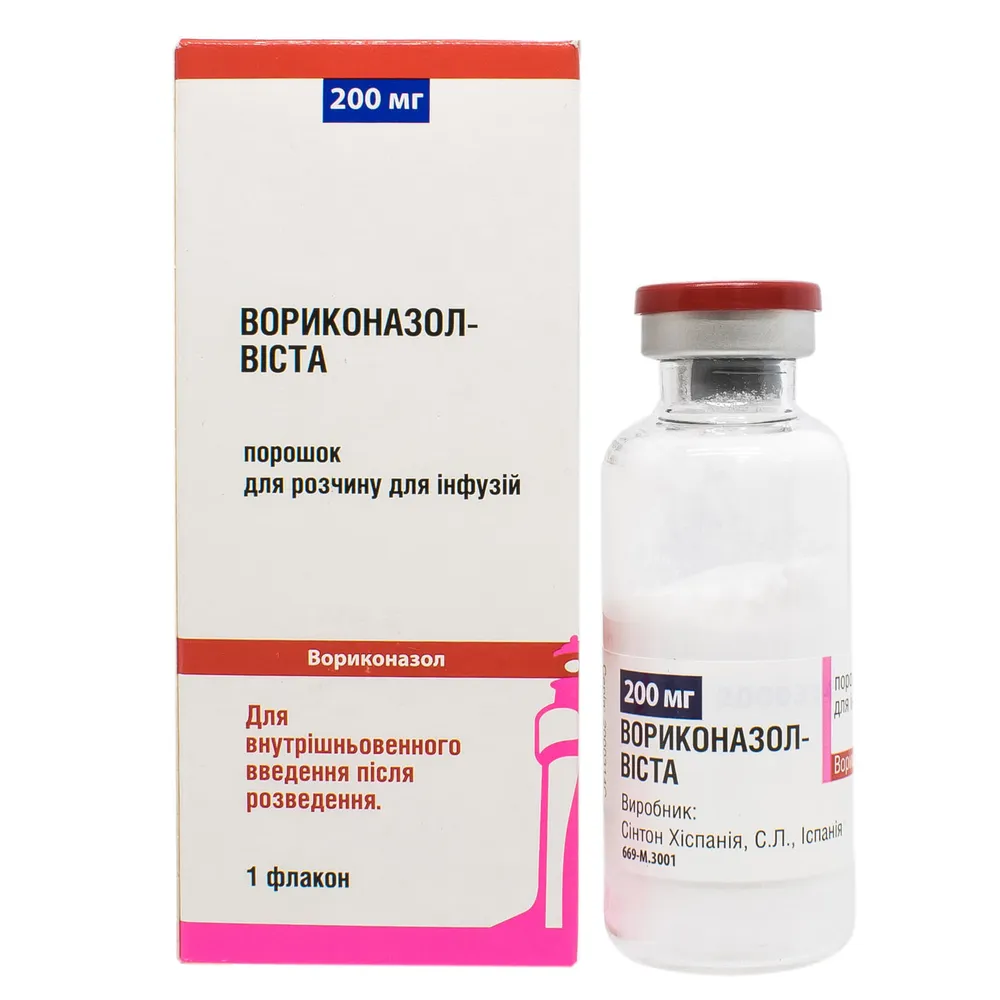
Table of Contents
INSTRUCTIONS FOR MEDICAL USE OF THE MEDICINAL PRODUCT Voriconazole (Voriconazole)
Composition:
Active substance: voriconazole;
1 vial contains 200 mg of voriconazole;
Excipients: sodium sulfobutyl ether of β-cyclodextrin.
Pharmaceutical form. Powder for solution for infusion.
Main physicochemical properties: lyophilized powder or mass of white to almost white color.
Pharmacotherapeutic group.
Antifungal agents for systemic use. Triazole derivatives.
ATC code J02A C03.
Pharmacological Properties.
Pharmacodynamics.
Mechanism of action. Voriconazole is a triazole antifungal agent. Its primary mechanism of action involves inhibition of the 14α-demethylation of lanosterol, mediated by fungal cytochrome P450 enzymes, a key step in ergosterol biosynthesis. Accumulation of 14α-methylsterols correlates with subsequent depletion of ergosterol in fungal cell membranes and may account for the antifungal activity of voriconazole. Voriconazole has been shown to be more selective for fungal cytochrome P450 enzymes than for cytochrome P450 enzyme systems in various mammalian species.
Pharmacokinetics/pharmacodynamics. Across 10 therapeutic studies, the median average and peak plasma concentrations for each individual patient were 2425 ng/mL (interquartile range 1193–4380 ng/mL) and 3742 ng/mL (interquartile range 2027–6302 ng/mL), respectively. A positive correlation between average, peak, or trough plasma concentrations of voriconazole and efficacy was not established in therapeutic trials, and such a relationship has not been demonstrated in prophylaxis studies.
Pharmacokinetic/pharmacodynamic analysis of data from clinical trials identified a positive association between plasma concentrations of voriconazole and abnormalities in liver function tests as well as visual disturbances. Dose adjustment was not studied in prophylaxis trials.
Clinical efficacy and safety. In vitro, voriconazole demonstrates broad-spectrum antifungal activity against Candida species (including fluconazole-resistant C. krusei and resistant strains of C. glabrata and C. albicans) and fungicidal activity against all tested Aspergillus species. Additionally, in vitro voriconazole exhibits fungicidal activity against emerging pathogenic fungi, including Scedosporium and Fusarium species, which often show limited susceptibility to existing antifungal agents.
Clinical efficacy of voriconazole (defined as partial or complete response) has been demonstrated against various Aspergillus species, including A. flavus, A. fumigatus, A. terreus, A. niger, and A. nidulans; various Candida species, including C. albicans, C. glabrata, C. krusei, C. parapsilosis, and C. tropicalis; a limited number of strains of C. dubliniensis, C. inconspicua, and C. guilliermondii; various Scedosporium species, including S. apiospermum and S. prolificans; and various Fusarium species.
Other fungal infections against which voriconazole has shown efficacy (often with partial or complete response) include isolated infections caused by various Alternaria species, Blastomyces dermatitidis, Blastoschizomyces capitatus, various Cladosporium species, Coccidioides immitis, Conidiobolus coronatus, Cryptococcus neoformans, Exserohilum rostratum, Exophiala spinifera, Fonsecaea pedrosoi, Madurella mycetomatis, Paecilomyces lilacinus, various Penicillium species (including P. marneffei), Phialophora richardsiae, Scopulariopsis brevicaulis, and various Trichosporon species, including infections caused by T. beigelii.
In vitro activity against clinical isolates has been observed for various Acremonium, Alternaria, Bipolaris, Cladophialophora, and Histoplasma capsulatum species, with inhibition of most strains occurring at voriconazole concentrations of 0.05–2 µg/mL.
In vitro activity of the drug has been demonstrated against various Curvularia and Sporothrix species, but the clinical significance of this activity has not yet been established.
Clinical breakpoints.
Prior to initiating therapy, fungal cultures and other appropriate laboratory investigations (serological, histopathological) should be obtained to isolate and identify the causative pathogenic microorganisms. Empirical therapy may be initiated before culture and laboratory results are available; however, once these results become available, antimicrobial therapy should be adjusted accordingly.
Species most commonly causing human infections include C. albicans, C. parapsilosis, C. tropicalis, C. glabrata, and C. krusei, all of which typically have voriconazole minimum inhibitory concentrations (MICs) below 1 mg/L.
However, in vitro activity of voriconazole against different Candida species is not uniform. In particular, for C. glabrata, the MIC of voriconazole is proportionally higher in fluconazole-resistant strains compared to fluconazole-susceptible strains. Therefore, every effort should be made to identify Candida isolates to the species level. If antifungal susceptibility testing results are available, MIC data may be interpreted using susceptibility breakpoint criteria established by the European Committee on Antimicrobial Susceptibility Testing (EUCAST).
Table 1.
EUCAST susceptibility breakpoints.
| Species of Candida and Aspergillus |
MIС breakpoint values (mg/L) |
|
| ≤ S (susceptible) |
> R (resistant) |
|
| Candida albicans1 |
0.06 |
0.25 |
| Candida dubliniensis1 |
0.06 |
0.25 |
| Candida glabrata |
Insufficient data available |
|
| Candida krusei |
Insufficient data available |
|
| Candida parapsilosis1 |
0.125 |
0.25 |
| Candida tropicalis1 |
0.125 |
0.25 |
| Candida guilliermondii2 |
Insufficient data available |
|
| Other Candida species3 |
Insufficient data available |
|
| Aspergillus fumigatus4 |
1 |
1 |
| Aspergillus nidulans4 |
1 |
1 |
| Aspergillus flavus |
Insufficient data available5 |
|
| Aspergillus niger |
Insufficient data available5 |
|
| Aspergillus terreus |
Insufficient data available5 |
|
| Other species6 |
Insufficient data available |
|
| 1 Strains with MIC values exceeding the susceptible/intermediate (S/I) breakpoint are rare or have not been reported. Any such strain should be re-identified and re-tested for antifungal susceptibility; if the result is confirmed, the isolate should be referred to a reference laboratory. The strain should be considered resistant until clinical evidence of response to isolates with MICs above the current resistance breakpoint is demonstrated. Clinical response rates of 76% have been achieved in infections caused by the listed species when MICs were at or below the epidemiological cutoff values. Therefore, wild-type populations of C. albicans, C. dubliniensis, C. parapsilosis, and C. tropicalis are considered susceptible. 2 Epidemiological cutoff values (ECOFFs) for these species are generally higher than for C. albicans. 3 Non-species-specific breakpoints have been established primarily based on pharmacokinetic/pharmacodynamic data and are not dependent on the MIC distribution of a specific Candida species. They should be used only for organisms lacking their own species-specific breakpoints. 4 A technical uncertainty zone of 2 exists. Report as "R" with the following note: "In certain clinical situations (non-invasive forms of infection), voriconazole may be used if adequate exposure is ensured." 5 ECOFFs for these species are generally one twofold dilution higher than for A. fumigatus. 6 Non-species-specific breakpoints have not been established. |
||
Clinical experience. Within this section, a favorable outcome of treatment is defined as complete or partial response.
Infections caused by Aspergillus: efficacy in patients with poor-prognosis aspergillosis. Voriconazole demonstrates in vitro fungicidal activity against various species of Aspergillus. The efficacy of voriconazole and its advantages in patient survival compared to standard therapy with amphotericin B as first-line treatment for acute invasive aspergillosis were demonstrated in an open-label, randomized, multicenter study involving 277 immunocompromised patients treated for 12 weeks. Voriconazole was administered intravenously at a loading dose of 6 mg/kg every 12 hours for the first 24 hours, followed by a maintenance dose of 4 mg/kg every 12 hours for 7 days. The route of administration could then be switched to oral dosing at 200 mg every 12 hours. The median duration of intravenous voriconazole therapy was 10 days (range: 2–85 days). After intravenous treatment, the median duration of oral voriconazole therapy was 76 days (range: 2–232 days).
A favorable overall response (complete or partial resolution of all associated symptoms, signs, and radiographic/bronchoscopic findings present prior to treatment initiation) was observed in 53% of patients receiving voriconazole compared to 31% of patients receiving the comparator drug. Patient survival over the 84-day period was statistically significantly higher with voriconazole than with the comparator drug. Clinically and statistically significant advantages of voriconazole were also demonstrated both in terms of time to death and time to discontinuation due to toxicity. This study confirmed the results of a previous prospective study, which showed a positive treatment outcome in patients with risk factors for poor prognosis, including graft-versus-host reaction and particularly cerebral infections (typically associated with 100% mortality). In these studies, the drug was evaluated in the treatment of sinus, cerebral, pulmonary, and disseminated aspergillosis in patients after bone marrow or solid organ transplantation, as well as in patients with hematologic malignancies, solid tumors, and AIDS.
Candidemia in non-neutropenic patients. The efficacy of voriconazole compared to a regimen of amphotericin B followed by fluconazole as first-line therapy for candidemia was demonstrated in an open comparative study. A total of 370 non-neutropenic patients (aged 12 years and older) with documented candidemia were enrolled, of whom 248 received voriconazole therapy. Nine patients in the voriconazole group and five patients in the amphotericin B followed by fluconazole group also had mycologically confirmed deep tissue infections. Patients with renal impairment were excluded from the study. The median duration of treatment in both study groups was 15 days. In the primary analysis, favorable response was defined by the Data Monitoring Committee of the blinded study as resolution or improvement of all clinical signs and symptoms of infection, together with eradication of Candida from blood and infected deep tissue sites, assessed 12 weeks after completion of therapy. Outcomes in patients not evaluable at 12 weeks after completion of therapy were considered unfavorable. Based on this analysis, a favorable treatment outcome was observed in 41% of patients in both treatment groups.
In a secondary analysis using Data Monitoring Committee assessments at the last evaluable time point (end of treatment or 2, 6, or 12 weeks after completion of therapy), the rates of favorable response to voriconazole and to amphotericin B followed by fluconazole were 65% and 71%, respectively. The rates of favorable treatment outcome as assessed by investigators at each of these evaluable time points are presented in Table 2.
Table 2.
| Time point |
Voriconazole (N = 248) |
Amphotericin B → fluconazole (N = 122) |
| End of therapy |
178 (72 %) |
88 (72 %) |
| 2 weeks after end of therapy |
125 (50 %) |
62 (51 %) |
| 6 weeks after end of therapy |
104 (42 %) |
55 (45 %) |
| 12 weeks after end of therapy |
104 (42 %) |
51 (42 %) |
Severe refractory infections caused by Candida species. A clinical study included 55 patients with severe refractory systemic infections caused by Candida species (including candidemia, disseminated candidiasis, and other forms of invasive candidiasis), in whom prior antifungal therapy, including fluconazole, had been ineffective. A favorable response to voriconazole treatment was observed in 24 patients (15 with complete response, 9 with partial response). In patients infected with fluconazole-resistant non-Candida albicans species, favorable outcomes with voriconazole therapy were observed in 3 out of 3 patients infected with C. krusei (all with complete response) and in 6 out of 8 patients infected with C. glabrata (5 with complete response, 1 with partial response). Clinical efficacy data were supported by limited data on pathogen susceptibility to the drug.
Infections caused by various species of Scedosporium and Fusarium. The efficacy of voriconazole against these rare fungal pathogens has been demonstrated:
- Scedosporium species: a favorable response to voriconazole therapy was observed in 16 out of 28 patients infected with S. apiospermum (6 with complete response, 10 with partial response) and in 2 out of 7 patients infected with S. prolificans (both with partial response). Additionally, a favorable response was observed in 1 out of 3 patients infected with more than one pathogenic organism, including various Scedosporium species;
- Fusarium species: successful therapy with voriconazole was achieved in 7 out of 17 patients (3 complete, 4 partial responses). Among these 7 patients, 3 had ocular infections, 1 had a sinus infection, and 3 had disseminated infection. Four additional patients with fusariosis were infected with multiple pathogens; favorable treatment outcomes were observed in 2 of these patients.
In most patients treated with voriconazole for the above-mentioned rare fungal infections, intolerance or resistance to previously administered antifungal agents was observed.
Primary prophylaxis of invasive fungal infections: efficacy in recipients of hematopoietic stem cell transplantation without prior confirmed or suspected invasive fungal infection. Voriconazole was compared with itraconazole as a primary prophylactic agent in an open-label, multicenter comparative study in adults and adolescents undergoing allogeneic hematopoietic stem cell transplantation, without prior confirmed or suspected invasive fungal infection. Success was defined as the ability to continue prophylaxis with the study drug for 100 days post-transplantation (continuously for >14 days) and survival without prior confirmed or suspected invasive fungal infection within 180 days post-transplantation. The modified "intention-to-treat" (ITT) patient population included 465 recipients of allogeneic hematopoietic stem cell transplantation, of whom 45% had acute myeloid leukemia. Conditioning regimens were administered to 58% of all patients. Prophylaxis with the study drug was initiated immediately after hematopoietic stem cell transplantation: 224 patients received voriconazole and 241 patients received itraconazole. The mean duration of prophylaxis in the ITT population was 96 days for voriconazole and 68 days for itraconazole. Efficacy rates and other secondary endpoints are presented in the table below.
| Study Endpoints |
Voriconazole N = 224 |
Itraconazole N = 241 |
Difference in proportions and 95% confidence interval (CI) |
P-value |
| Effectiveness on day 180* |
109 (48.7%) |
80 (33.2%) |
16.4% (7.7%, 25.1%)** |
0.0002** |
| Effectiveness on day 100 |
121 (54.0%) |
96 (39.8%) |
15.4% (6.6%, 24.2%)** |
0.0006** |
| Duration of study drug prophylaxis for at least 100 days |
120 (53.6%) |
94 (39.0%) |
14.6% (5.6%, 23.5%) |
0.0015 |
| Survival rate up to day 180 |
184 (82.1%) |
197 (81.7%) |
0.4% (–6.6%, 7.4%) |
0.9107 |
| Development of proven or suspected invasive fungal infection by day 180 |
3 (1.3%) |
5 (2.1%) |
(–3.1%, 1.6%) |
0.5390 |
| Development of proven or suspected invasive fungal infection by day 100 |
2 (0.9%) |
4 (1.7%) |
(–2.8%, 1.3%) |
0.4589 |
| Development of proven or suspected invasive fungal infection during study drug administration |
0 |
3 (1.2%) |
(–2.6%, 0.2%) |
0.0813 |
* Primary efficacy endpoint of the study.
** Differences in proportions, with 95% CI and P-values, adjusted for randomization.
Incidence of invasive fungal infection by day 180 and the primary endpoint of the study, i.e., "efficacy by day 180," in patients with acute myeloid leukemia and conditioning, are presented in the table below.
Acute myeloid leukemia.
| Endpoint |
Voriconazole (N=98) |
Itraconazole (N=109) |
Difference in proportions and 95% confidence interval (CI) |
| Occurrence of invasive fungal infection – day 180 |
1 (1.0%) |
2 (1.8%) |
|
| Effectiveness at day 180* |
55 (56.1%) |
45 (41.3%) |
14.7% (1.7%, 27.7%)*** |
- Primary endpoint of the study.
** Non-inferior efficacy demonstrated with a 5% margin.
*** Differences in ratios and 95% CI obtained after adjustment for randomization.
Myeloablative conditioning regimen.
| Primary endpoint |
Voriconazole (N=125) |
Itraconazole (N=143) |
Difference in proportions and 95% confidence interval (CI) |
| Incidence of invasive fungal infection – day 180 |
2 (1.6%) |
3 (2.1%) |
|
| Efficacy at day 180* |
70 (56.0%) |
53 (37.1%) |
20.1% (8.5%, 31.7%)*** |
* Primary endpoint of the study.
** Non-inferiority demonstrated with a 5% margin.
*** Differences in ratios and 95% CIs were obtained after adjustment for randomization.
Secondary prophylaxis of invasive fungal infection: efficacy in hematopoietic stem cell transplant recipients with prior proven or suspected invasive fungal infection. Voriconazole was studied as a secondary prophylactic agent in an open-label, non-comparative, multicenter study in adult recipients of allogeneic hematopoietic stem cell transplantation with prior proven or suspected invasive fungal infection. The primary endpoint was the incidence of proven or suspected invasive fungal infections during the first year after hematopoietic stem cell transplantation. The ITT population included 40 patients with prior invasive fungal infections, including 31 with aspergillosis, 5 with candidiasis, and 4 with other types of invasive fungal infection. The mean duration of prophylactic treatment with the investigational drug in the ITT population was 95.5 days.
Proven or suspected invasive fungal infections occurred in 7.5% (3/40) of patients during the first year after hematopoietic stem cell transplantation, including one case of candidemia, one case of scedosporiosis (both were recurrences of prior invasive fungal infection), and one case of zygomycosis. The survival rate on day 180 was 80.0% (32/40), and at one year was 70.0% (28/40).
Duration of therapy. During clinical studies, 705 patients received voriconazole for longer than 12 weeks, and 164 patients for longer than 6 months.
Pediatric patients. Fifty-three pediatric patients aged 2 to 18 years received voriconazole treatment in two prospective, open-label, non-comparative, multicenter clinical studies. One study included 31 patients with possible, proven, or probable invasive aspergillosis, of whom 14 had proven or probable invasive aspergillosis. These patients were included in the efficacy analyses of the modified intent-to-treat population who received treatment. The second study included 22 patients with invasive candidiasis, including candidemia and esophageal candidiasis, requiring primary or salvage therapy. Of these patients, 17 were included in the efficacy analyses of the modified intent-to-treat population who received treatment. In patients with invasive aspergillosis, the overall response rate at 6 weeks was 64.3% (9 out of 14); the overall response rate in patients aged 2 to 12 years was 40% (2 out of 5), and in patients aged 12 to 18 years was 77.8% (7 out of 9). In patients with candidemia, the overall response rate at the end of treatment was 85.7% (6 out of 7), and in patients with esophageal candidiasis was 70% (7 out of 10). The overall response rate (in patients with candidemia and esophageal candidiasis combined) was 88.9% (8 out of 9) in patients aged 2 to 12 years and 62.5% (5 out of 8) in patients aged 12 to 18 years.
Clinical studies assessing QTc interval. A placebo-controlled, randomized, crossover single-dose study in healthy volunteers was conducted to evaluate the effect of investigational agents on the QTc interval. Three doses of oral voriconazole and oral ketoconazole were administered. The placebo-corrected mean maximum increase in QTc interval from baseline was 5.1, 4.8, and 8.2 ms after administration of 800, 1200, and 1600 mg of voriconazole, respectively, and 7.0 ms after administration of 800 mg of ketoconazole. No subject experienced a QTc interval increase of ≥ 60 ms from baseline. No subject exceeded the potentially clinically significant threshold of 500 ms.
Pharmacokinetics.
General pharmacokinetic characteristics. The pharmacokinetics of voriconazole were studied in healthy volunteers, special patient populations, and patients. After oral administration at doses of 200 mg or 300 mg twice daily for 14 days in patients at increased risk of developing aspergillosis (mainly patients with malignant neoplasms of lymphatic and hematopoietic tissues), the investigated pharmacokinetic characteristics—namely, rate and uniformity of absorption, accumulation, and nonlinear pharmacokinetics—were similar to those in healthy volunteers.
Voriconazole pharmacokinetics are nonlinear due to its extensive metabolism. As the dose increases, exposure increases to a greater extent than proportionally. It is estimated that increasing the oral dose from 200 mg to 300 mg twice daily results in an average 2.5-fold increase in exposure (AUCτ). An oral loading dose of 200 mg (or 100 mg for patients with body weight below 40 kg) achieves exposure equivalent to intravenous administration of 3 mg/kg. An oral loading dose of 300 mg (or 150 mg for patients with body weight below 40 kg) achieves exposure equivalent to intravenous administration of 4 mg/kg. After administration of oral or intravenous loading doses of voriconazole, plasma concentrations approaching steady state are achieved within the first 24 hours of therapy. If loading doses are not used, with repeated twice-daily administration of voriconazole, accumulation and achievement of steady-state plasma concentrations occur by day 6 in most patients.
Absorption. Voriconazole is rapidly and almost completely absorbed after oral administration, with Cmax occurring 1–2 hours after dosing. The absolute bioavailability of voriconazole after oral administration is 96%. When voriconazole is administered repeatedly with a high-fat meal, Cmax and AUCτ are reduced by 34% and 24%, respectively. Changes in gastric pH do not affect voriconazole absorption.
Distribution. The volume of distribution at steady state for voriconazole is estimated to be 4.6 L/kg, indicating extensive tissue distribution. Protein binding of voriconazole to plasma proteins is approximately 58%. Voriconazole has been detected in measurable quantities in all cerebrospinal fluid samples obtained from 8 patients within a compassionate-use program.
Metabolism. In vitro studies have demonstrated that voriconazole is metabolized by the CYP2C19, CYP2C9, and CYP3A4 isoenzymes of cytochrome P450. Voriconazole exhibits high inter-individual variability in pharmacokinetics.
In vivo studies have shown that CYP2C19 plays a significant role in voriconazole metabolism. This enzyme exhibits genetic polymorphism. For example, 15–20% of patients of Mongoloid race are expected to be slow metabolizers. Among Caucasian and Negroid populations, the proportion of slow metabolizers is 3–5%. Studies conducted in healthy Caucasian and Japanese volunteers have shown that in "slow metabolizers" of voriconazole, drug exposure (AUCτ) is on average 4 times higher than in the comparator group of homozygous "rapid metabolizers." Heterozygous "rapid metabolizers" of voriconazole have on average 2 times higher drug exposure than homozygous "rapid metabolizers."
The main metabolite of voriconazole is N-oxide, which accounts for 72% of the total amount of radiolabeled metabolites circulating in plasma. This metabolite has minimal antifungal activity and does not contribute to the overall efficacy of voriconazole.
Excretion. Voriconazole is eliminated via hepatic metabolism, with less than 2% of the administered dose excreted unchanged in urine.
After administration of radiolabeled voriconazole, approximately 80% of radioactivity was recovered in urine following multiple intravenous doses and 83% following multiple oral doses. The majority (> 94%) of radioactive substances was eliminated within the first 96 hours after both intravenous and oral administration.
The half-life of voriconazole is dose-dependent and is approximately 6 hours after oral administration of a 200 mg dose. Due to nonlinear pharmacokinetics, half-life is not used to assess accumulation or elimination of voriconazole.
Pharmacokinetics in special patient populations.
Gender. In a study of multiple oral doses of voriconazole, Cmax and AUCτ levels in healthy young women were 83% and 113% higher, respectively, than in healthy young men (18–45 years). In the same study, no statistically significant differences in these parameters were observed between healthy elderly men and women (≥ 65 years). Dose adjustment based on gender was not performed in the clinical program. Safety profiles and plasma concentrations of the drug in women and men were similar. Therefore, dose adjustment based on gender is not necessary.
Elderly patients. In a clinical study of multiple oral dosing, Cmax and AUCτ levels in healthy elderly men (≥ 65 years) were 61% and 86% higher, respectively, than in healthy young men (18–45 years). No statistically significant differences in Cmax and AUCτ levels were observed between healthy elderly women (≥ 65 years) and healthy young women (18–45 years).
Dose adjustment based on age was not performed in clinical studies. A relationship between plasma concentrations and age was observed. Safety profiles of voriconazole in young and elderly patients were similar; therefore, dose adjustment in elderly patients is not required (see section "Dosage and administration").
Pediatric patients. The recommended oral dose for pediatric patients is based on pharmacokinetic analysis of data obtained from 112 immunocompromised children aged 2–12 years and 26 immunocompromised children aged 12–17 years. Multiple doses of 3, 4, 6, 7, and 8 mg/kg twice daily intravenously and multiple oral doses of 4 mg/kg, 6 mg/kg, and 200 mg twice daily (powder for oral suspension) were evaluated in three pharmacokinetic studies involving children. Loading doses of 6 mg/kg twice daily intravenously on day 1, followed by 4 mg/kg twice daily intravenously and 300 mg twice daily orally (tablets), were evaluated in one pharmacokinetic study involving children. This patient category showed greater inter-individual variability compared to adults.
Comparison of pharmacokinetic parameters between children and adults showed that the expected total exposure (AUCτ) in children after an intravenous loading dose of 9 mg/kg was comparable to AUCτ in adults after an intravenous loading dose of 6 mg/kg. AUCτ in children after maintenance intravenous doses of 4 and 8 mg/kg twice daily was comparable to AUCτ in adults after intravenous doses of 3 and 4 mg/kg twice daily. AUCτ in children after oral maintenance doses of 9 mg/kg (maximum 350 mg) twice daily was comparable to AUCτ in adults after oral doses of 200 mg twice daily. Exposure after intravenous administration of 8 mg/kg is expected to be twice that after oral administration of 9 mg/kg.
The higher maintenance intravenous dose in children compared to adults reflects greater elimination capacity due to a larger liver mass relative to body weight. Oral bioavailability may be reduced in children with malabsorption or very low body weight for age. In such cases, intravenous voriconazole is recommended.
Voriconazole exposure in most older children was comparable to that in adults at the same dosing regimen. However, lower exposure was observed in some older children with low body weight compared to adults. In such patients, voriconazole metabolism appears to be more similar to that in children than in adults. Based on population pharmacokinetic analysis, children aged 12–14 years with body weight below 50 kg should receive pediatric dosing (see section "Dosage and administration").
Renal impairment. In patients with moderate to severe renal impairment (serum creatinine level < 2.5 mg/dL), accumulation of sodium sulfobutyl ether β-cyclodextrin occurs (see sections "Dosage and administration" and "Special precautions").
Hepatic impairment. After a single oral dose (200 mg) in patients with mild to moderate hepatic cirrhosis (Child-Pugh class A and B), AUC was 233% higher than in patients with normal liver function. Hepatic impairment does not affect voriconazole protein binding.
In a clinical study of repeated oral dosing, AUCτ was similar in patients with moderate hepatic cirrhosis (Child-Pugh class B) receiving a maintenance dose of 100 mg twice daily and in patients with normal liver function receiving 200 mg twice daily. Pharmacokinetic data in patients with severe hepatic cirrhosis (Child-Pugh class C) are lacking (see sections "Dosage and administration" and "Special precautions").
Clinical characteristics.
Indications.
Voriconazole is indicated for the prevention of invasive fungal infections in patients undergoing allogeneic bone marrow transplantation who are at high risk for such complications.
Voriconazole is indicated for use in adults and children for the treatment of:
- invasive aspergillosis;
- candidemia in non-neutropenic patients;
- severe invasive infections caused by Candida species (including C. krusei) that are resistant to fluconazole;
- severe fungal infections caused by Scedosporium and Fusarium species.
Voriconazole should be used as initial therapy in patients with progressive or potentially life-threatening fungal infections.
Contraindications.
Hypersensitivity to the active substance or to any of the excipients of the medicinal product.
Concomitant use with CYP3A4 substrates, terfenadine, astemizole, cisapride, pimozide, quinidine, or ivabradine — increased plasma concentrations of these medicinal products may lead to QTc interval prolongation and, rarely, to the development of torsades de pointes ventricular tachycardia (see section "Interaction with other medicinal products and other forms of interaction").
Concomitant use with rifampicin, carbamazepine, phenobarbital, or St John’s wort — these medicinal products can significantly reduce voriconazole plasma concentrations (see section "Interaction with other medicinal products and other forms of interaction").
Concomitant use of standard doses of voriconazole with efavirenz at doses of 400 mg or higher per day — administration of efavirenz at these doses significantly reduces voriconazole plasma concentrations in healthy volunteers. Voriconazole also significantly increases efavirenz plasma concentrations (see section "Interaction with other medicinal products and other forms of interaction"; for use of lower efavirenz doses, see section "Special precautions for use").
Concomitant use with high-dose ritonavir (400 mg or higher twice daily) — administration of such ritonavir doses leads to a significant reduction in voriconazole plasma concentrations in healthy volunteers (for use of lower ritonavir doses, see section "Special precautions for use").
Concomitant use with ergot alkaloids (ergotamine, dihydroergotamine), which are CYP3A4 substrates — increased plasma concentrations of these medicinal products may lead to ergotism (see section "Interaction with other medicinal products and other forms of interaction").
Concomitant use with sirolimus — voriconazole may significantly increase sirolimus plasma concentrations (see section "Interaction with other medicinal products and other forms of interaction").
Concomitant use of voriconazole with naloxegol, a CYP3A4 substrate — increased naloxegol plasma concentration may cause opioid withdrawal symptoms (see section "Interaction with other medicinal products and other forms of interaction").
Concomitant use of voriconazole with tolvaptan — strong CYP3A4 inhibitors such as voriconazole may significantly increase tolvaptan plasma concentrations (see section "Interaction with other medicinal products and other forms of interaction").
Concomitant use of voriconazole with lurasidone — voriconazole may significantly increase lurasidone exposure, which may lead to serious adverse reactions (see section "Interaction with other medicinal products and other forms of interaction").
Concomitant use of voriconazole with venetoclax at the initiation of venetoclax treatment and during the dose-titration phase — voriconazole is likely to significantly increase venetoclax plasma concentration and increase the risk of tumor lysis syndrome (see section "Interaction with other medicinal products and other forms of interaction").
Interaction with other medicinal products and other forms of interaction.
Voriconazole inhibits and is metabolized by cytochrome P450 isoenzymes: CYP2C19, CYP2C9, and CYP3A4. Inhibitors or inducers of these isoenzymes may increase or decrease voriconazole plasma concentrations, respectively. Voriconazole has the potential to increase plasma concentrations of substances metabolized by these cytochrome P450 isoenzymes, particularly those metabolized by CYP3A4, as voriconazole is a strong inhibitor of CYP3A4, although the magnitude of AUC increase depends on the substrate (see table below).
Drug interaction studies were conducted in healthy male volunteers who received oral voriconazole 200 mg twice daily repeatedly until steady state was achieved. The results obtained are also applicable to other patient populations and routes of administration.
Voriconazole should be used with caution in patients who are concurrently taking other medicinal products that prolong the QTc interval. In cases where voriconazole also has the potential to increase plasma concentrations of substances metabolized by CYP3A4 isoenzymes (e.g., certain antihistamines, quinidine, cisapride, pimozide, and ivabradine), their concomitant use is contraindicated.
Information on interactions between voriconazole and other medicinal products is presented in Table 3. Arrow directions for each pharmacokinetic parameter are based on the 90% confidence interval of the geometric mean ratio.
Symbols and abbreviations used in the table and their meanings:
↔ — within 80–125%;
↑ — above 80–125%;
↓ — below 80–125%;
* — bidirectional interactions;
AUCτ — area under the concentration-time curve over the dosing interval;
AUCt — area under the concentration-time curve from time zero to a specified time point;
AUC0–∞ — area under the concentration-time curve from time zero to infinity;
н/з — not applicable.
Interactions in the table are listed in the following order: concomitant use contraindicated, concomitant use requires dose adjustment and careful clinical and biological monitoring, concomitant use has no significant pharmacokinetic interactions but may raise clinical concern within the therapeutic area.
Table 3.
| Drug (mechanism of interaction) |
Interaction Mean geometric change, % |
Recommendations for concomitant use |
| Astemizole, cisapride, pimozide, quinidine, terfenadine and ivabradine (CYP3A4 substrates) |
Although appropriate studies have not been conducted, it is expected that increased plasma concentrations of these agents may lead to QTc prolongation and rarely to ventricular tachycardia of the torsade de pointes type |
Contraindicated (see section "Contraindications") |
| Carbamazepine and long-acting barbiturates, e.g. phenobarbital, mephobarbital (potent CYP450 inducers) |
Despite the lack of appropriate studies, carbamazepine and long-acting barbiturates are likely to significantly reduce voriconazole plasma concentrations |
Contraindicated (see section "Contraindications") |
| Efavirenz (non-nucleoside reverse transcriptase inhibitor) (CYP450 inducer; CYP3A4 inhibitor and substrate) 400 mg once daily co-administered with voriconazole 200 mg twice daily* 300 mg once daily co-administered with 400 mg voriconazole twice daily* |
Efavirenz Cmax ↑ 38 % Efavirenz AUCτ ↑ 44 % Voriconazole Cmax ↓ 61 % Voriconazole AUCτ ↓ 77 % Compared to 600 mg efavirenz once daily: Efavirenz Cmax ↔ Efavirenz AUCτ ↑ 17 % Compared to 200 mg voriconazole twice daily: Voriconazole Cmax ↑ 23 % Voriconazole AUCτ ↓ 7 % |
Concomitant use of standard doses of voriconazole with efavirenz 400 mg once daily or higher is contraindicated (see section "Contraindications") When voriconazole and efavirenz are used concomitantly, the maintenance dose of voriconazole should be increased to 400 mg twice daily and the efavirenz dose should be reduced to 300 mg once daily. After discontinuation of voriconazole, return to the original efavirenz dose (see sections "Dosage and administration" and "Special warnings and precautions") |
| Ergot alkaloids, e.g. ergotamine and dihydroergotamine (CYP3A4 substrates) |
Although appropriate studies have not been conducted, voriconazole is expected to increase plasma concentrations of ergot alkaloids and may lead to ergotism |
Contraindicated (see section "Contraindications") |
| Lurasidone (CYP3A4 substrate) |
Although appropriate studies have not been conducted, voriconazole is expected to increase lurasidone concentrations |
Contraindicated (see section "Contraindications") |
| Naloxegol (CYP3A4 substrate) |
Although studies have not been conducted, voriconazole is likely to cause a significant increase in naloxegol plasma concentration |
Contraindicated (see section "Contraindications") |
| Rifabutin (potent CYP450 inducer) 300 mg once daily 300 mg once daily (co-administered with voriconazole 350 mg twice daily*) 300 mg once daily (co-administered with voriconazole 400 mg twice daily*) |
Voriconazole Cmax ↓ 69 % Voriconazole AUCτ ↓ 78 % Compared to 200 mg voriconazole twice daily: Voriconazole Cmax ↓ 4 % Voriconazole AUCτ ↓ 32 % Rifabutin Cmax ↑ 195 % Rifabutin AUCτ ↑ 331 % Compared to 200 mg voriconazole twice daily: Voriconazole Cmax ↑ 104 % Voriconazole AUCτ ↑ 87 % |
Concomitant use of voriconazole and rifabutin should be avoided unless the benefit outweighs the risk. The maintenance dose of voriconazole may be increased to 5 mg/kg intravenously twice daily or from 200 mg to 350 mg orally twice daily (from 100 mg to 200 mg orally twice daily for patients with body weight below 40 kg) (see section "Dosage and administration"). When rifabutin and voriconazole are used concomitantly, careful monitoring of complete blood counts and rifabutin-related adverse reactions (such as uveitis) is recommended |
| Rifampicin (600 mg once daily) (potent CYP450 inducer) |
Voriconazole Cmax ↓ 93 % Voriconazole AUCτ ↓ 96 % |
Contraindicated (see section "Contraindications") |
| Ritonavir (protease inhibitor) (potent CYP450 inducer; CYP3A4 inhibitor and substrate) High dose (400 mg twice daily) Low dose (100 mg twice daily)* |
Ritonavir Cmax and AUCτ ↔ Voriconazole Cmax ↓ 66 % Voriconazole AUCτ ↓ 82 % Ritonavir Cmax ↓ 25 % Ritonavir AUCτ ↓ 13 % Voriconazole Cmax ↓ 24 % Voriconazole AUCτ ↓ 39 % |
Concomitant use of voriconazole and high-dose ritonavir (400 mg or higher twice daily) is contraindicated (see section "Contraindications"). Concomitant use of voriconazole and low-dose ritonavir (100 mg twice daily) should be avoided unless benefit outweighs risk |
| St. John's wort preparations (CYP450 inducer; P-glycoprotein inducer) 300 mg three times daily (co-administered with single 400 mg voriconazole dose) |
In an independent published study Voriconazole AUC0–∞ ↓ 59 % |
Contraindicated (see section "Contraindications") |
| Tolvaptan (CYP3A substrate) |
Although studies have not been conducted, voriconazole is likely to substantially increase tolvaptan plasma concentrations |
If concomitant use of voriconazole and tolvaptan cannot be avoided, a reduction in tolvaptan dose is recommended. Contraindicated (see section "Contraindications") |
| Venetoclax (CYP3A substrate) |
Although studies have not been conducted, voriconazole is likely to substantially increase venetoclax plasma concentrations |
Concomitant use of voriconazole is contraindicated during initiation and dose-titration phase of venetoclax (see section "Contraindications"). Venetoclax dose should be reduced as indicated in the venetoclax prescribing information during stable daily dosing. Close monitoring for signs of toxicity is recommended |
| Fluconazole (CYP2C9, CYP2C19 and CYP3A4 inhibitor), 200 mg once daily |
Voriconazole Cmax ↑ 57 % Voriconazole AUCτ ↑ 79 % Fluconazole Cmax — n/s Fluconazole AUCτ — n/s |
It is not established what reduction in dose and/or frequency of voriconazole and fluconazole is necessary to avoid this effect. When voriconazole is administered immediately after fluconazole, monitoring for voriconazole-related adverse reactions is recommended |
| Phenytoin (CYP2C9 substrate and potent CYP450 inducer) 300 mg once daily 300 mg once daily (co-administered with 400 mg voriconazole twice daily)* |
Voriconazole Cmax ↓ 49 % Voriconazole AUCτ ↓ 69 % Phenytoin Cmax ↑ 67 % Phenytoin AUCτ ↑ 81 % Compared to 200 mg voriconazole twice daily: Voriconazole Cmax ↑ 34 % Voriconazole AUCτ ↑ 39 % |
Concomitant use of voriconazole and phenytoin should be avoided unless benefit outweighs risk. When phenytoin and voriconazole are used concomitantly, careful monitoring of plasma phenytoin levels is recommended Phenytoin may be used concomitantly with voriconazole provided the voriconazole maintenance dose is increased to 5 mg/kg intravenously twice daily or from 200 mg to 400 mg orally twice daily (from 100 mg to 200 mg orally twice daily for patients with body weight below 40 kg) (see section "Dosage and administration") |
| Letermovir (CYP2C9 and CYP2C19 inducer) |
Voriconazole Cmax ↓ 39% Voriconazole AUC0-12 ↓ 44% Voriconazole C12 ↓ 51% |
If concomitant use of voriconazole with letermovir cannot be avoided, monitoring of voriconazole efficacy is required |
| Glasdegib (CYP3A4 substrate) |
Although appropriate studies have not been conducted, voriconazole is likely to increase glasdegib plasma concentration and increase the risk of QTc prolongation |
If concomitant use cannot be avoided, frequent ECG monitoring is recommended (see section "Special warnings and precautions") |
| Tyrosine kinase inhibitors (e.g. axitinib, bosutinib, cabozantinib, ceritinib, cobimetinib, dabrafenib, dasatinib, nilotinib, sunitinib, ibrutinib, ribociclib) (CYP3A4 substrates) |
Although appropriate studies have not been conducted, voriconazole is expected to increase plasma concentrations of tyrosine kinase inhibitors metabolized by CYP3A4 |
If concomitant use cannot be avoided, dose reduction of tyrosine kinase inhibitors is recommended (see section "Special warnings and precautions") |
| Anticoagulants Warfarin (CYP2C9 substrate) (single 30 mg warfarin dose co-administered with 300 mg voriconazole twice daily) Other oral coumarins, such as phenprocoumon, acenocoumarol (CYP2C9 and CYP3A4 substrates) |
Maximum prothrombin time increased approximately twofold Although appropriate studies have not been conducted, voriconazole is expected to increase plasma concentrations of coumarins and thereby prolong prothrombin time |
Close monitoring of prothrombin time and other appropriate coagulation parameters is recommended, with appropriate adjustment of anticoagulant doses |
| Ivacaftor (CYP3A4 substrate) |
Although studies have not been conducted, voriconazole is likely to increase ivacaftor plasma concentrations, increasing the risk of adverse reactions |
Dose reduction of ivacaftor is recommended |
| Benzodiazepines (CYP3A4 substrates) Midazolam (single 0.05 mg/kg intravenous dose) (single 7.5 mg oral dose) Other benzodiazepines (e.g. triazolam, alprazolam) |
In an independent published study: Midazolam AUC0–∞ ↑ 3.7-fold In an independent published study: Midazolam Cmax ↑ 3.8-fold Midazolam AUC0–∞ ↑ 10.3-fold Although appropriate clinical studies have not been conducted, voriconazole is likely to increase plasma concentrations of benzodiazepines metabolized by CYP3A4 and prolong sedative effects |
Dose reduction of benzodiazepines should be considered |
| Immunosuppressants (CYP3A4 substrates) Sirolimus (single 2 mg dose) Everolimus (also P-glycoprotein substrate) Cyclosporine (in stable renal transplant recipients on continuous cyclosporine therapy) Tacrolimus (single 0.1 mg/kg dose) |
In an independent published study: Sirolimus Cmax ↑ 6.6-fold Sirolimus AUC0–∞ ↑ 11-fold Although appropriate studies have not been conducted, voriconazole is expected to cause a substantial increase in everolimus plasma concentration. Cyclosporine Cmax ↑ 13 % Cyclosporine AUCτ ↑ 70 % Tacrolimus Cmax ↑ 117 % Tacrolimus AUCt ↑ 221 % |
Concomitant use is contraindicated (see section "Contraindications") Concomitant use of everolimus and voriconazole is not recommended as voriconazole may cause a substantial increase in everolimus concentration (see section "Special warnings and precautions") For patients already receiving cyclosporine, a 50 % reduction in cyclosporine dose and close monitoring of its levels are recommended when starting voriconazole therapy. Elevated cyclosporine levels are associated with nephrotoxic effects. After discontinuation of voriconazole, cyclosporine levels should be closely monitored and dose increased if necessary For patients already receiving tacrolimus, a reduction in tacrolimus dose to one-third of the original dose and close monitoring of tacrolimus levels are recommended when starting voriconazole therapy. Elevated tacrolimus levels are associated with nephrotoxic effects. After discontinuation of voriconazole, tacrolimus levels should be closely monitored and dose increased if necessary |
| Long-acting opioids (CYP3A4 substrates) Oxycodone (10 mg single dose) |
In an independent published study: Oxycodone Cmax ↑ 1.7-fold Oxycodone AUC0–∞ ↑ 3.6-fold |
Dose reduction of oxycodone and other long-acting opioids metabolized by CYP3A4 (e.g. hydrocodone) should be considered. Close monitoring for opioid-related adverse reactions is recommended |
| Methadone (CYP3A4 substrate) (32–100 mg once daily) |
R-methadone (active) Cmax ↑ 31 % R-methadone (active) AUCτ ↑ 47 % S-methadone Cmax ↑ 65 % S-methadone AUCτ ↑ 103 % |
Continuous monitoring for adverse reactions and toxic effects associated with elevated methadone plasma concentrations, including QT prolongation, is recommended. Methadone dose reduction may be necessary |
| Non-steroidal anti-inflammatory drugs (NSAIDs) (CYP2C9 substrates) Ibuprofen (400 mg single dose) Diclofenac (50 mg single dose) |
S-ibuprofen Cmax ↑ 20 % S-ibuprofen AUC0–∞ ↑ 100 % Diclofenac Cmax ↑ 114 % Diclofenac AUC0–∞ ↑ 78 % |
Close monitoring for NSAID-related adverse reactions and toxicity is recommended. NSAID dose reduction may be necessary |
| Omeprazole (CYP2C19 inhibitor; CYP2C19 and CYP3A4 substrate) 40 mg once daily* |
Omeprazole Cmax ↑ 116 % Omeprazole AUCτ ↑ 280 % Voriconazole Cmax ↑ 15 % Voriconazole AUCτ ↑ 41 % Metabolism of other proton pump inhibitors that are CYP2C19 substrates may also be inhibited by voriconazole, leading to increased plasma concentrations |
Dose adjustment of voriconazole is not recommended. For patients already receiving omeprazole (40 mg or higher), a 50 % reduction in omeprazole dose is recommended when starting voriconazole therapy |
| Oral contraceptives (CYP3A4 substrates, CYP2C19 inhibitors) Norethisterone/ ethinylestradiol (1 mg / 0.035 mg once daily) |
Ethinylestradiol Cmax ↑ 36 % Ethinylestradiol AUCτ ↑ 61 % Norethisterone Cmax ↑ 15 % Norethisterone AUCτ ↑ 53 % Voriconazole Cmax ↑ 14 % Voriconazole AUCτ ↑ 46 % |
Close monitoring for adverse reactions associated with oral contraceptives and voriconazole is recommended |
| Short-acting opioids (CYP3A4 substrates) Alfentanil (20 µg/kg single dose, co-administered with naloxone) Fentanyl (5 µg/kg single dose) |
In an independent published study: Alfentanil AUC0–∞ ↑ 6-fold In an independent published study: Fentanyl AUC0–∞ ↑ 1.34-fold |
Dose reduction of alfentanil, fentanyl and other structurally similar short-acting opioids metabolized by CYP3A4 (e.g. sufentanil) should be considered. Extended close monitoring for respiratory depression and opioid-related adverse reactions is recommended |
| Statins, e.g. lovastatin (CYP3A4 substrates) |
Although appropriate clinical studies have not been conducted, voriconazole is likely to increase plasma levels of statins metabolized by CYP3A4, potentially leading to rhabdomyolysis |
Dose reduction of statins should be considered |
| Sulfonylurea derivatives, e.g. tolbutamide, glipizide, glyburide (CYP2C9 substrates) |
Although appropriate studies have not been conducted, voriconazole is expected to increase plasma levels of sulfonylurea derivatives and thereby cause hypoglycemia |
Close monitoring of blood glucose levels is required. Dose reduction of sulfonylurea derivatives should be considered |
| Vinca alkaloids, e.g. vincristine and vinblastine (CYP3A4 substrates) |
Although appropriate clinical studies have not been conducted, voriconazole is known to increase plasma levels of vinca alkaloids and may lead to neurotoxic effects |
Dose reduction of vinca alkaloids should be considered |
| Other HIV protease inhibitors, e.g. saquinavir, amprenavir, nelfinavir* (CYP3A4 substrates and inhibitors) |
Clinical studies have not been conducted. In vitro studies indicate that voriconazole may inhibit the metabolism of HIV protease inhibitors and voriconazole metabolism may be inhibited by HIV protease inhibitors |
Patients should be carefully monitored for signs of toxicity and/or lack of efficacy of these agents, and dose adjustment should be considered |
| Other non-nucleoside reverse transcriptase inhibitors (NNRTIs), e.g. delavirdine, nevirapine (CYP3A4 substrates and inhibitors or CYP450 inducers) |
Clinical studies have not been conducted. In vitro studies indicate that voriconazole metabolism may be inhibited by NNRTIs and voriconazole may inhibit NNRTI metabolism. Based on the effects of efavirenz on voriconazole, voriconazole metabolism may be induced by NNRTIs |
Patients should be carefully monitored for signs of toxicity and/or lack of efficacy of these agents, and dose adjustment should be considered |
| Tretinoin (CYP3A4 substrate) |
Although appropriate clinical studies have not been conducted, voriconazole is expected to increase tretinoin plasma levels and increase the risk of adverse reactions (idiopathic intracranial hypertension, hypercalcemia) |
Dose reduction of tretinoin during and after voriconazole therapy should be considered |
| Cimetidine (non-specific CYP450 inhibitor and increases gastric pH) (400 mg twice daily) |
Voriconazole Cmax ↑ 18 % Voriconazole AUCτ ↑ 23 % |
No dose adjustment required |
| Digoxin (P-glycoprotein substrate) (0.25 mg once daily) |
Digoxin Cmax ↔ Digoxin AUCτ ↔ |
No dose adjustment required |
| Indinavir (CYP3A4 inhibitor and substrate) (800 mg three times daily) |
Voriconazole Cmax ↔ Voriconazole AUCτ ↔ Indinavir Cmax ↔ Indinavir AUCτ ↔ |
No dose adjustment required |
| Macrolide antibiotics Erythromycin (CYP3A4 inhibitor) (1 g twice daily) Azithromycin (500 mg once daily) |
Voriconazole Cmax and AUCτ ↔ Voriconazole Cmax and AUCτ ↔ Effect of voriconazole on erythromycin or azithromycin unknown |
No dose adjustment required |
| Myfophenolic acid (UDP-glucuronosyltransferase substrate) (1 g single dose) |
Myfophenolic acid Cmax and AUCt ↔ |
No dose adjustment required |
| Corticosteroids Prednisolone (CYP3A4 substrate) (60 mg single dose) |
Prednisone Cmax ↑ 11 % Prednisone AUC0–∞ ↑ 34 % |
No dose adjustment required. Patients undergoing long-term voriconazole and corticosteroid therapy (including inhaled, e.g. budesonide, and intranasal corticosteroids) should be closely monitored for adrenal insufficiency both during and after voriconazole treatment (see section "Special warnings and precautions") |
| Ranitidine (increases gastric pH) (150 mg twice daily) |
Voriconazole Cmax and AUCτ ↔ |
No dose adjustment required |
| Flucloxacillin [CYP450 inducer] |
Significant reduction in voriconazole plasma concentration has been reported. |
If concomitant use of voriconazole with flucloxacillin cannot be avoided, monitoring for potential loss of voriconazole efficacy (e.g. therapeutic drug monitoring) is recommended; voriconazole dose increase may be required |
Special precautions for use.
Hypersensitivity. Voriconazole should be used with caution in patients with hypersensitivity to other azoles (see section "Adverse reactions").
Duration of use. Voriconazole should not be administered intravenously for longer than 6 months.
Cardiovascular system. Voriconazole is associated with QTc interval prolongation. Cases of torsades de pointes ventricular tachycardia have been rarely observed in patients with risk factors such as history of cardiotoxic chemotherapy, cardiomyopathy, hypokalemia, and concomitant use of drugs that may predispose to this condition. Voriconazole should be used with caution in patients with potentially proarrhythmic conditions, such as:
- congenital or acquired QTc prolongation;
- cardiomyopathy, especially in the presence of heart failure;
- sinus bradycardia;
- presence of symptomatic arrhythmias;
- concomitant use of drugs that may prolong the QTc interval.
Electrolyte disturbances such as hypokalemia, hypomagnesemia, and hypocalcemia should be monitored and corrected, if necessary, prior to and during voriconazole therapy (see section "Dosage and administration"). A study in healthy volunteers assessed the effect of single-dose voriconazole administered at doses nearly 4 times higher than the usual daily dose on the QTc interval. In none of the study participants did the QTc interval exceed the potentially clinically significant threshold of 500 ms (see section "Pharmacodynamics").
Infusion-related reactions. Infusion-related reactions have been observed during intravenous administration of the drug, primarily flushing and nausea. Depending on the severity of symptoms, discontinuation of therapy should be considered (see section "Adverse reactions").
Hepatotoxicity. Serious hepatic reactions (including clinically apparent hepatitis, cholestasis, and fulminant hepatic failure, including fatal cases) have been observed during clinical trials with voriconazole. Hepatic reactions were primarily observed in patients with severe underlying diseases (especially hematological malignancies). Transient hepatic reactions, including hepatitis and jaundice, have also been observed in patients without other identifiable risk factors. Liver function abnormalities were reversible and usually resolved after discontinuation of therapy (see section "Adverse reactions").
Liver function monitoring. Patients receiving voriconazole should be regularly monitored for hepatotoxicity. Monitoring should include laboratory assessment of liver function (including aspartate aminotransferase [AST] and alanine aminotransferase [ALT] levels) at the start of treatment and at least once weekly during the first month of therapy. The duration of treatment should be as short as possible; however, if treatment continues based on risk/benefit assessment (see section "Dosage and administration"), the frequency of monitoring may be reduced to once monthly provided there are no changes in liver test results.
If liver test results show significant elevation, voriconazole should be discontinued, except in cases where a medical risk/benefit assessment justifies continued use.
Liver function monitoring is required in both children and adults.
Serious cutaneous adverse reactions.
Photosensitivity. The use of voriconazole has been additionally associated with photosensitivity reactions such as freckles, lentigines, actinic keratosis, and pseudoporphyria. All patients, including children, should avoid direct sunlight exposure, wear protective clothing, and use a high-protection sunscreen (SPF) during treatment with voriconazole.
Squamous cell carcinoma of the skin. Among patients with documented squamous cell carcinoma of the skin (including squamous cell carcinoma in situ or Bowen's disease), some had prior history of photosensitivity reactions. In case of photosensitivity reactions, multidisciplinary physician consultations should be conducted, voriconazole should be discontinued, and alternative antifungal agents should be considered, with referral to a dermatologist. If treatment with voriconazole is continued, a dermatologist should systematically and regularly examine the patient for early detection and treatment of potential precancerous lesions. If precancerous skin lesions or squamous cell carcinoma are detected, voriconazole therapy should be discontinued (see section "Long-term therapy" below).
Severe cutaneous adverse reactions. Cases of severe cutaneous adverse reactions, such as Stevens-Johnson syndrome, toxic epidermal necrolysis, and drug reaction with eosinophilia and systemic symptoms (DRESS syndrome), have been reported during voriconazole use, which may be life-threatening or fatal. Patients presenting with rash should be closely monitored, and voriconazole should be discontinued if signs of disease progression occur.
Adrenal gland disorders
Cases of reversible adrenal insufficiency have been reported in patients receiving azoles, including voriconazole. Adrenal insufficiency has been reported in patients receiving azoles with or without concomitant corticosteroids. In patients receiving azoles without corticosteroids, adrenal insufficiency is related to direct inhibition of steroidogenesis by azoles. In patients receiving corticosteroids, voriconazole, which inhibits CYP3A4 metabolism, may lead to corticosteroid excess and subsequent adrenal suppression (see section "Interaction with other medicinal products and other forms of interaction"). Cushing's syndrome, with or without subsequent adrenal insufficiency, has also been reported in patients receiving voriconazole concomitantly with corticosteroids.
Patients undergoing long-term treatment with voriconazole and corticosteroids (including inhaled, e.g., budesonide, and intranasal corticosteroids) should be carefully monitored for adrenal cortical dysfunction both during and after voriconazole therapy (see section "Interaction with other medicinal products and other forms of interaction"). Patients should be instructed to seek immediate medical attention if signs and symptoms of Cushing's syndrome or adrenal insufficiency develop.
Long-term therapy. Long-term use of the drug (for treatment or prophylaxis) beyond 180 days (6 months) requires careful risk/benefit assessment. Additionally, physicians should consider reducing the dose of voriconazole (see sections "Dosage and administration" and "Pharmacodynamics").
Cases of squamous cell carcinoma of the skin (including squamous cell carcinoma in situ or Bowen's disease) have been reported in association with long-term use of voriconazole.
In patients who have undergone transplant surgery, non-infectious periostitis with elevated fluoride and alkaline phosphatase levels has been observed. If a patient develops bone pain and radiological findings suggest periostitis, multidisciplinary physician consultations should be conducted, and discontinuation of voriconazole should be considered.
Ocular adverse reactions. Prolonged adverse reactions affecting the eyes, including blurred vision, optic neuritis, and optic disc edema, have been reported (see section "Adverse reactions").
Renal adverse reactions. Acute renal failure has been reported in patients with severe underlying conditions receiving voriconazole. Renal function may deteriorate in patients receiving voriconazole concomitantly with nephrotoxic drugs and/or with concomitant conditions (see section "Adverse reactions").
Renal function monitoring. Patients should be monitored for possible renal impairment. Monitoring should include assessment of laboratory parameters, particularly serum creatinine levels.
Pancreatic function monitoring. Careful monitoring of patients, especially children, with risk factors for acute pancreatitis such as recent chemotherapy or hematopoietic stem cell transplantation, is recommended during treatment. Monitoring of serum amylase or lipase levels may be necessary.
Children. The safety and efficacy of voriconazole in children under 2 years of age have not been established (see sections "Adverse reactions" and "Pharmacodynamics"). Voriconazole is recommended for use in children aged 2 years and older. Elevated liver enzymes have been observed more frequently in children (see section "Adverse reactions"). Liver function monitoring is required in both adults and children. In patients aged 2–12 years, oral bioavailability of the drug may be limited due to malabsorption and very low body weight. Intravenous administration is recommended for such patients.
Serious cutaneous adverse reactions (including squamous cell carcinoma of the skin). The incidence of photosensitivity reactions is higher in children. If skin lesions progress toward squamous cell carcinoma in this patient group, enhanced protective measures against sunlight exposure should be implemented. Children exhibiting signs of photoaging, such as freckles or lentigines, should be monitored by a dermatologist and avoid sun exposure even after discontinuation of the drug.
Prophylaxis. In case of treatment-related adverse reactions (hepatotoxicity, severe skin reactions including photosensitivity and squamous cell carcinoma, severe or prolonged visual disturbances, or periostitis), consideration should be given to discontinuing voriconazole and using alternative antifungal agents.
Phenytoin (CYP2C9 substrate and potent CYP450 inducer). Careful monitoring of plasma phenytoin levels is recommended when phenytoin and voriconazole are used concomitantly. Concomitant use of voriconazole and phenytoin should be avoided unless the benefit outweighs the risk (see section "Interaction with other medicinal products and other forms of interaction").
Efavirenz (CYP450 inducer; CYP3A4 inhibitor and substrate). When voriconazole and efavirenz are used concomitantly, the voriconazole dose should be increased to 400 mg every 12 hours, and the efavirenz dose should be reduced to 300 mg every 24 hours (see sections "Dosage and administration", "Contraindications", and "Interaction with other medicinal products and other forms of interaction").
Glasdegib (CYP3A4 substrate). Concomitant use of voriconazole and glasdegib is expected to increase glasdegib plasma concentrations and increase the risk of QTc prolongation (see section "Interaction with other medicinal products and other forms of interaction"). If concomitant use cannot be avoided, frequent ECG monitoring is recommended.
Tyrosine kinase inhibitors (CYP3A4 substrates). Concomitant use of voriconazole with tyrosine kinase inhibitors metabolized by CYP3A4 is expected to increase tyrosine kinase inhibitor plasma concentrations and the risk of adverse reactions. If concomitant use cannot be avoided, dose reduction of the tyrosine kinase inhibitor and careful clinical monitoring are recommended (see section "Interaction with other medicinal products and other forms of interaction").
Rifabutin (potent CYP450 inducer). Careful monitoring of complete blood count and rifabutin-related adverse reactions (e.g., uveitis) is required when voriconazole and rifabutin are used concomitantly. Concomitant use of voriconazole and rifabutin should be avoided unless the benefit outweighs the risk (see section "Interaction with other medicinal products and other forms of interaction").
Ritonavir (potent CYP450 inducer; CYP3A4 inhibitor and substrate). Concomitant use of voriconazole and low-dose ritonavir (100 mg twice daily) should be avoided unless the benefit to the patient outweighs the risk (see sections "Contraindications" and "Interaction with other medicinal products and other forms of interaction").
Everolimus (CYP3A4 substrate, P-glycoprotein substrate). Concomitant use of everolimus and voriconazole is not recommended, as voriconazole is expected to cause a significant increase in everolimus concentration. Currently, there is insufficient information on dosage adjustment (see section "Interaction with other medicinal products and other forms of interaction").
Naloxegol (CYP3A4 substrate). Concomitant use of voriconazole and naloxegol is not recommended, as voriconazole is expected to significantly increase naloxegol concentrations. Currently, there are insufficient data to provide clear dosing recommendations for naloxegol in this situation (see section "Interaction with other medicinal products and other forms of interaction").
Methadone (CYP3A4 substrate). When methadone and voriconazole are used concomitantly, patients should be carefully monitored for methadone-related adverse reactions and signs of toxicity (including QTc prolongation), as methadone levels increase with concomitant voriconazole use. Dose reduction of methadone may be necessary (see section "Interaction with other medicinal products and other forms of interaction").
Short-acting opioids (CYP3A4 substrates). When short-acting opioids and voriconazole are used concomitantly, dose reduction of alfentanil, fentanyl, and other structurally similar short-acting opioids metabolized by CYP3A4 (e.g., sufentanil) should be considered (see section "Interaction with other medicinal products and other forms of interaction"). Careful monitoring of opioid-related adverse reactions (including prolonged respiratory function monitoring) may be necessary, as the half-life of alfentanil is prolonged 4-fold when co-administered with voriconazole, and published data from one study indicate that co-administration of fentanyl and voriconazole leads to increased mean AUC0–∞ of fentanyl.
Long-acting opioids (CYP3A4 substrates). When long-acting opioids and voriconazole are used concomitantly, dose reduction of oxycodone and other long-acting opioids metabolized by CYP3A4 (e.g., hydrocodone) should be considered. Careful monitoring of opioid-related adverse reactions may be necessary (see section "Interaction with other medicinal products and other forms of interaction").
Fluconazole (CYP2C9, CYP2C19, and CYP3A4 inhibitor). Concomitant oral administration of voriconazole and fluconazole results in significant increases in Cmax and AUCτ of voriconazole in healthy volunteers. It is unknown what dose reduction and/or frequency adjustment of voriconazole and fluconazole would prevent this effect. Monitoring for voriconazole-related adverse reactions is recommended when voriconazole is used immediately after fluconazole (see section "Interaction with other medicinal products and other forms of interaction").
Excipients
Sodium. Each vial of voriconazole contains 221 mg of sodium, equivalent to 11% of the WHO recommended maximum daily sodium intake of 2 g for adults. This should be considered when administering the drug to patients who need to control sodium intake.
Cyclodextrins. The powder for solution for infusion contains cyclodextrins (3200 mg cyclodextrins per vial, equivalent to 160 mg/mL when reconstituted in 20 mL solvent – see section "Composition"). This may affect the properties (e.g., toxicity) of the active substance and other medicinal products. Safety aspects of cyclodextrins have been considered during drug development and safety evaluation.
Since cyclodextrins are eliminated via the kidneys, accumulation of cyclodextrin may occur in patients with moderate or severe renal dysfunction.
Use during pregnancy or breastfeeding.
Pregnancy. There are insufficient data on the use of voriconazole in pregnant women.
Animal studies have demonstrated reproductive toxicity. The potential risk to humans is unknown.
Voriconazole should not be used during pregnancy, except when the benefit to the mother clearly outweighs the potential risk to the fetus.
Women of childbearing potential who may become pregnant should use effective contraception during treatment with this drug.
Breastfeeding. Excretion of voriconazole into breast milk has not been studied; therefore, breastfeeding should be discontinued during treatment with voriconazole.
Fertility. Animal studies did not demonstrate impaired fertility in male and female rats.
Ability to affect reaction speed when driving or operating machinery.
Voriconazole has a moderate effect on the ability to drive and operate machinery. The drug may cause reversible visual disturbances, including blurred vision, altered/enhanced visual perception, and/or photophobia. Patients experiencing such symptoms should avoid potentially hazardous activities such as driving or operating machinery.
Dosage and method of administration.
Electrolyte imbalances such as hypokalemia, hypomagnesemia, and hypocalcemia should be monitored before initiating treatment with Voriconazole and during its use, and corrected if necessary (see section "Special precautions").
Voriconazole should be administered at a maximum rate of 3 mg/kg/hour over 1–3 hours.
Treatment.
Adults. To achieve plasma concentrations close to steady-state on the first day, therapy with voriconazole should be initiated with an appropriate loading dose regimen, either orally or intravenously. Due to the high oral bioavailability of voriconazole (96%), the route of administration may be switched from intravenous to oral, or vice versa, as clinically indicated. Detailed dosage recommendations are provided in Table 4.
Table 4.
| Dosing regimen |
Intravenous |
Oral |
|
| Patients with body weight 40 kg or more* |
Patients with body weight less than 40 kg* |
||
| Loading doses (during the first 24 hours of treatment) |
6 mg/kg every 12 hours |
400 mg every 12 hours |
200 mg every 12 hours |
| Maintenance doses (24 hours after initiation of treatment) |
4 mg/kg twice daily |
200 mg twice daily |
100 mg twice daily |
* Including for patients aged 15 years and older.
Duration of treatment. The duration of treatment should be as short as possible, depending on the patient's clinical and mycological response. If treatment with the drug is required for more than 180 days (6 months), a careful benefit-risk assessment should be performed (see sections "Special precautions" and "Pharmacodynamics").
Dose adjustment in adults. If patients are unable to tolerate intravenous administration of the drug at a dose of 4 mg/kg twice daily, the dose should be reduced to 3 mg/kg twice daily.
If an adequate response to treatment is not achieved, the maintenance dose may be increased to 300 mg twice daily using oral formulations of voriconazole. For patients with body weight less than 40 kg, the dose of the drug may be increased to 150 mg twice daily using oral formulations of voriconazole.
For patients who cannot tolerate higher doses of the drug, the dose should be gradually reduced by 50 mg until reaching a maintenance dose of 200 mg twice daily using oral formulations of voriconazole (or 100 mg twice daily orally for patients with body weight less than 40 kg).
If treatment-related adverse reactions occur, consideration should be given to discontinuing voriconazole and initiating alternative antifungal agents (see sections "Adverse reactions" and "Pharmacodynamics").
Dose adjustment when used concomitantly with other agents. Rifabutin or phenytoin may be used concomitantly with voriconazole provided that the maintenance dose of voriconazole is increased to 5 mg/kg twice daily intravenously (see sections "Special precautions" and "Interaction with other medicinal products and other forms of interaction").
Efavirenz may be used concomitantly with voriconazole provided that the maintenance dose of voriconazole is increased to 400 mg every 12 hours and the dose of efavirenz is reduced by 50%, i.e., to 300 mg once daily. After discontinuation of voriconazole, the initial dose of efavirenz should be resumed (see sections "Special precautions" and "Interaction with other medicinal products and other forms of interaction").
Elderly patients. Dose adjustment is not required for elderly patients (see section "Pharmacokinetics").
Renal impairment. In patients with moderate to severe renal impairment (creatinine clearance < 50 ml/min), accumulation of sodium sulfobutyl ether β-cyclodextrin occurs. Voriconazole should be administered orally to these patients, except when the benefit of intravenous voriconazole outweighs the risks. These patients require close monitoring of serum creatinine levels. If serum creatinine increases, consideration should be given to switching the route of administration of voriconazole to oral (see section "Pharmacokinetics").
Voriconazole clearance during hemodialysis is 121 ml/min. The amount of voriconazole eliminated during a 4-hour hemodialysis session is negligible; therefore, dose adjustment is not necessary.
Clearance of sodium sulfobutyl ether β-cyclodextrin during hemodialysis is 55 ml/min.
Hepatic impairment. For patients with mild to moderate hepatic cirrhosis (Child-Pugh class A or B), standard loading dose regimens are recommended, but the maintenance dose should be halved (see section "Pharmacokinetics").
Studies on the use of Voriconazole in patients with severe chronic hepatic cirrhosis (Child-Pugh class C) have not been conducted.
Safety data on voriconazole use in patients with abnormal liver function test results (AST, ALT, alkaline phosphatase, and total bilirubin more than 5 times the upper limit of normal) are limited.
Use of the medicinal product Voriconazole has been associated with elevated liver function parameters and clinical signs of liver injury such as jaundice; therefore, the drug should be used in patients with severe hepatic dysfunction only when the benefit outweighs the potential risk. Close monitoring for toxic effects of the drug is required in patients with severe hepatic impairment (see section "Adverse reactions").
Method of administration.
Before administration as intravenous infusion, the medicinal product must be reconstituted and diluted. Voriconazole is not intended for bolus injection.
To obtain 20 ml of a clear concentrate containing 10 mg/ml of voriconazole, the powder should be dissolved in 19 ml of water for injections or in 19 ml of 9 mg/ml (0.9%) sodium chloride infusion solution. Do not use the vial of Voriconazole medicinal product if the solvent is not drawn into the vial by vacuum force. It is recommended to use a standard (non-automatic) 20 ml syringe to ensure accurate addition of 19 ml of water for injections or 9 mg/ml (0.9%) sodium chloride infusion solution.
The medicinal product is intended for single use only; only clear solutions free from mechanical particles should be used.
To obtain an infusion-ready solution, the required volume of the reconstituted concentrate should be added to a compatible recommended infusion solution (detailed information provided below) to achieve a voriconazole concentration of 0.5–5 mg/ml.
Table 5.
Required volumes of Voriconazole medicinal product concentrate (10 mg/ml).
| Body weight (kg) |
Volume of Voriconazole concentrate (10 mg/ml) required to obtain: |
||||
| dose 3 mg/kg (number of vials) |
dose 4 mg/kg (number of vials) |
dose 6 mg/kg (number of vials) |
dose 8 mg/kg (number of vials) |
dose 9 mg/kg (number of vials) |
|
| 10 |
|
4.0 ml (1) |
|
8.0 ml (1) |
9.0 ml (1) |
| 15 |
|
6.0 ml (1) |
|
12.0 ml (1) |
13.5 ml (1) |
| 20 |
|
8.0 ml (1) |
|
16.0 ml (1) |
18.0 ml (1) |
| 25 |
|
10.0 ml (1) |
|
20.0 ml (1) |
22.5 ml (1) |
| 30 |
9.0 ml (1) |
12.0 ml (1) |
18.0 ml (1) |
24.0 ml (2) |
27.0 ml (2) |
| 35 |
10.5 ml (1) |
14.0 ml (1) |
21.0 ml (2) |
28.0 ml (2) |
31.5 ml (2) |
| 40 |
12.0 ml (1) |
16.0 ml (1) |
24.0 ml (2) |
32.0 ml (2) |
36.0 ml (2) |
| 45 |
13.5 ml (1) |
18.0 ml (1) |
27.0 ml (2) |
36.0 ml (2) |
40.5 ml (3) |
| 50 |
15.0 ml (1) |
20.0 ml (1) |
30.0 ml (2) |
40.0 ml (2) |
45.0 ml (3) |
| 55 |
16.5 ml (1) |
22.0 ml (2) |
33.0 ml (2) |
44.0 ml (3) |
49.5 ml (3) |
| 60 |
18.0 ml (1) |
24.0 ml (2) |
36.0 ml (2) |
48.0 ml (3) |
54.0 ml (3) |
| 65 |
19.5 ml (1) |
26.0 ml (2) |
39.0 ml (2) |
52.0 ml (3) |
58.5 ml (3) |
| 70 |
21.0 ml (2) |
28.0 ml (2) |
42.0 ml (3) |
|
|
| 75 |
22.5 ml (2) |
30.0 ml (2) |
45.0 ml (3) |
|
|
| 80 |
24.0 ml (2) |
32.0 ml (2) |
48.0 ml (3) |
|
|
| 85 |
25.5 ml (2) |
34.0 ml (2) |
51.0 ml (3) |
|
|
| 90 |
27.0 ml (2) |
36.0 ml (2) |
54.0 ml (3) |
|
|
| 95 |
28.5 ml (2) |
38.0 ml (2) |
57.0 ml (3) |
|
|
| 100 |
30.0 ml (2) |
40.0 ml (2) |
60.0 ml (3) |
|
|
The reconstituted solution may be diluted with:
- 9 mg/mL (0.9%) sodium chloride injection;
- compound sodium lactate solution for intravenous infusion;
- 5% glucose and Ringer's lactate solution for intravenous infusion;
- 5% glucose and 0.45% sodium chloride solution for intravenous infusion;
- 5% glucose solution for intravenous infusion;
- 5% glucose with 20 mEq potassium chloride for intravenous infusion;
- 0.45% sodium chloride solution for intravenous infusion;
- 5% glucose and 0.9% sodium chloride solution for intravenous infusion.
Compatibility of voriconazole with other solvents is unknown.
Any unused solution should be disposed of according to local requirements.
Information on the use of the medicinal product for prophylaxis is provided below.
Prophylaxis in adults and children.
Prophylaxis should be initiated on the day of transplantation; its duration may last up to 100 days. Prophylaxis should be as short as possible, depending on the risk of developing invasive fungal infections determined by the presence of neutropenia or immunosuppression. Extending prophylaxis up to 180 days after transplantation may be considered only if immunosuppression persists or graft-versus-host disease is present.
Dosing. The recommended dosing regimen for prophylaxis is the same as for treatment in the corresponding age groups (see Tables 4 and 5).
Duration of prophylaxis. The safety and efficacy of voriconazole use for longer than 180 days have not been adequately studied in clinical trials.
The use of voriconazole for prophylaxis beyond 180 days (6 months) requires careful assessment of the benefit-risk balance.
Dosage adjustment. Dose adjustment due to lack of efficacy or development of adverse reactions is not recommended when the medicinal product is used for prophylaxis.
Children.
The medicinal product is used in children aged 2 years and older. Safety and efficacy of Voriconazole in children under 2 years of age have not been established.
Information on the use of the medicinal product in children for prophylaxis is provided above.
Children aged 2–12 years and children aged 12–14 years with body weight < 50 kg. The following treatment regimen is recommended:
Table 6.
| Dosing regimen |
Intravenous |
Oral |
| Loading dose (within the first 24 hours) |
9 mg/kg every 12 hours |
Not recommended |
| Maintenance dose (after the first 24 hours) |
8 mg/kg twice daily |
9 mg/kg twice daily (maximum dose is 350 mg twice daily) |
It is recommended to initiate therapy with intravenous administration, and the possibility of using oral formulations of voriconazole should be considered only after achieving significant clinical improvement. The intravenous dose of 8 mg/kg provides a voriconazole concentration approximately twice that achieved with the oral dose of 9 mg/kg.
For children aged 12–14 years with body weight ≥ 50 kg and those aged 15–17 years regardless of body weight, the same voriconazole doses as for adults should be administered.
Dose selection for children aged 2–12 years and children aged 12–14 years with body weight < 50 kg. If the patient's response to treatment is inadequate, the intravenous dose of the drug may be increased by 1 mg/kg. If the patient does not tolerate the treatment, the intravenous dose of Voriconazole should be reduced by 1 mg/kg.
The use of the drug in patients aged 2–12 years with renal or hepatic impairment has not been studied (see sections "Adverse Reactions" and "Pharmacokinetics").
Overdose.
Three cases of accidental overdose have been reported. All three cases occurred in children who received intravenous administration of the drug at a dose nearly five times higher than recommended. The only adverse reaction reported was photophobia lasting 10 minutes. There is no known antidote for voriconazole.
The clearance of voriconazole during hemodialysis is 121 ml/min. The clearance of sodium β-cyclodextrin sulfobutyl ether during hemodialysis is 55 ml/min.
In case of overdose, hemodialysis may enhance the elimination of voriconazole and sodium β-cyclodextrin sulfobutyl ether from the body.
Adverse reactions.
The safety profile of voriconazole in adults is based on data from an integrated safety database encompassing over 2000 individuals, including 1603 adult patients who participated in therapeutic studies and an additional 270 adult patients from prophylactic studies. This patient population is sufficiently diverse and includes patients with hematological malignancies, HIV-infected patients with esophageal candidiasis and refractory fungal infections, non-neutropenic patients with candidemia or aspergillosis, and healthy volunteers.
The most commonly reported adverse reactions included visual disturbances, pyrexia, rash, vomiting, nausea, diarrhea, headache, peripheral edema, abnormal liver function tests, respiratory disorders, and abdominal pain.
Overall, adverse reactions were mild to moderate in severity. Analysis of safety data did not reveal any clinically significant differences based on age, race, or gender.
Since most of the studies were open-label, the following adverse reactions are listed as potentially having a causal relationship to the drug. Adverse reactions are listed based on combined data from 1873 adult patients participating in therapeutic (1603) and prophylactic (270) studies. Adverse reactions are categorized by system organ class and frequency: very common (≥ 1/10), common (≥ 1/100 and < 1/10), uncommon (≥ 1/1000 and < 1/100), rare (≥ 1/10,000 and < 1/1000), very rare (< 1/10,000), and frequency not known (cannot be estimated from available data). Within each group, adverse reactions are listed in order of decreasing severity.
Infections and infestations.
Common: Sinusitis.
Uncommon: Pseudomembranous colitis.
Benign, malignant and unspecified neoplasms (including cysts and polyps).
Frequency not known: Squamous cell carcinoma* or Bowen’s disease.
Blood and lymphatic system disorders.
Common: Agranulocytosis1, pancytopenia, thrombocytopenia2, leukopenia, anemia.
Uncommon: Bone marrow failure, lymphadenopathy, eosinophilia.
Rare: Disseminated intravascular coagulation syndrome.
Immune system disorders.
Uncommon: Hypersensitivity.
Rare: Anaphylactoid reactions.
Endocrine disorders.
Uncommon: Adrenal insufficiency, hypothyroidism.
Rare: Hyperthyroidism.
Metabolism and nutrition disorders.
Very common: Peripheral edema.
Common: Hypoglycemia, hypokalemia, hyponatremia.
Psychiatric disorders.
Common: Depression, hallucinations, anxiety, insomnia, agitation, confusion.
Nervous system disorders.
Very common: Headache.
Common: Seizures, syncope, tremor, hypertension3, paresthesia, somnolence, dizziness.
Uncommon: Cerebral edema, encephalopathy4, extrapyramidal disorders5, peripheral neuropathy, ataxia, hypesthesia, dysgeusia.
Rare: Hepatic encephalopathy, Guillain-Barré syndrome, nystagmus.
Eye disorders.
Very common: Visual disturbances6.
Common: Retinal hemorrhage.
Uncommon: Optic nerve disorders7, optic disc edema8, oculogyric crisis, diplopia, scleritis, blepharitis.
Rare: Optic nerve atrophy, corneal clouding.
Ear and labyrinth disorders.
Uncommon: Hearing loss, vertigo, tinnitus.
Cardiac disorders.
Common: Supraventricular arrhythmia, tachycardia, bradycardia.
Uncommon: Ventricular fibrillation, ventricular extrasystoles, ventricular tachycardia, QT interval prolongation on electrocardiogram, supraventricular tachycardia.
Rare: Torsades de pointes, complete atrioventricular block, bundle branch block, nodal rhythm.
Vascular disorders.
Common: Arterial hypotension, phlebitis.
Uncommon: Thrombophlebitis, lymphangitis.
Respiratory, thoracic and mediastinal disorders.
Very common: Dyspnea9.
Common: Acute respiratory distress syndrome, pulmonary edema.
Gastrointestinal disorders.
Very common: Diarrhea, vomiting, abdominal pain, nausea.
Common: Cheilitis, dyspepsia, constipation, gingivitis.
Uncommon: Peritonitis, pancreatitis, tongue swelling, duodenitis, gastroenteritis, glossitis.
Hepatobiliary disorders.
Very common: Abnormal liver function tests.
Common: Jaundice, cholestatic jaundice, hepatitis10.
Uncommon: Hepatic failure, hepatomegaly, cholecystitis, cholelithiasis.
Skin and subcutaneous tissue disorders.
Very common: Rash.
Common: Exfoliative dermatitis, alopecia, maculopapular rash, pruritus, erythema.
Uncommon: Stevens-Johnson syndrome8, photosensitivity, purpura, urticaria, allergic dermatitis, papular rash, macular rash, eczema.
Rare: Toxic epidermal necrolysis8, drug reaction with eosinophilia and systemic symptoms (DRESS syndrome)8, angioedema, actinic keratosis*, pseudoporphyria, erythema multiforme, psoriasis, toxidermia.
Frequency not known: Cutaneous lupus erythematosus*, freckles*, lentigo*.
Musculoskeletal and connective tissue disorders.
Common: Back pain.
Uncommon: Arthritis.
Frequency not known: Periostitis*.
Renal and urinary disorders.
Common: Acute renal failure, hematuria.
Uncommon: Renal tubular necrosis, proteinuria, nephritis.
General disorders and administration site conditions.
Very common: Pyrexia.
Common: Chest pain, facial swelling11, asthenia, chills.
Uncommon: Infusion site reaction, influenza-like illness.
Investigations.
Common: Increased blood creatinine levels.
Uncommon: Increased blood urea levels, increased blood cholesterol levels.
* Adverse reactions identified post-marketing.
1 Includes febrile neutropenia and neutropenia.
2 Includes immune thrombocytopenic purpura.
3 Includes nuchal rigidity and tetany.
4 Includes hypoxic-ischemic encephalopathy and metabolic encephalopathy.
5 Includes akathisia and parkinsonism.
6 See "Visual disturbances" below.
7 Post-marketing reports of prolonged optic neuritis have been reported (see section "Special precautions").
8 See section "Special precautions".
9 Includes dyspnea and exertional dyspnea.
10 Includes drug-induced liver injury, toxic hepatitis, hepatocellular injury, and hepatotoxicity.
11 Includes periorbital edema, lip swelling, and mouth swelling.
Visual disturbances. During clinical and therapeutic studies, visual disturbances (including blurred vision, photophobia, chloropsia, chromatopsia, color blindness, cyanopsia, ocular disorders, halos around lights, night blindness, oscillopsia, photopsia, flickering scotoma, decreased visual acuity, visual brightness, visual field defects, floaters in the vitreous body, and xanthopsia) were very commonly observed with voriconazole use. These visual disturbances were transient and fully reversible, resolving spontaneously in most cases within 60 minutes; no clinically significant long-term visual effects were observed. With repeated dosing, symptoms tended to diminish. Visual disturbances were generally mild, rarely led to drug discontinuation, and were not associated with long-term sequelae. Visual disturbances may be related to high plasma concentrations and/or doses of the drug.
The mechanism of visual disturbances is unknown, although the drug likely affects the retina. Voriconazole administration resulted in reduced wave amplitudes on electroretinograms during a clinical study evaluating voriconazole's effect on retinal function in healthy volunteers. Electroretinography measures electrical potentials in the retina. Changes on electroretinograms did not progress over 29 days of therapy and fully resolved after voriconazole discontinuation.
Post-marketing reports have described prolonged visual adverse reactions (see section "Special precautions").
Skin reactions. Skin reactions were very commonly observed in patients receiving voriconazole in clinical trials; however, these patients were also receiving multiple other medications for treatment of severe underlying conditions. Most cases of rash were mild or moderate in severity. Severe skin reactions, including Stevens-Johnson syndrome (uncommon), toxic epidermal necrolysis (rare), drug reaction with eosinophilia and systemic symptoms (DRESS syndrome) (rare), and erythema multiforme (rare), have occurred during voriconazole treatment (see section "Special precautions").
Patients should be closely monitored for skin reactions, and if lesions progress, voriconazole should be discontinued.
Cases of serious photosensitivity reactions, including freckles, lentigo, and actinic keratosis, have been reported, particularly during prolonged treatment (see section "Special precautions").
Cases of cutaneous squamous cell carcinoma have been reported in patients receiving long-term voriconazole; the mechanism is not established (see section "Special precautions").
Liver function tests. During the clinical program, the overall incidence of transaminase elevations >3 times the upper limit of normal (not necessarily considered adverse reactions) was 18.0% (319/1768) in adults and 25.8% (73/283) in children receiving voriconazole for treatment or prophylaxis. Abnormal liver function tests may be associated with high plasma concentrations and/or drug doses. Most abnormalities resolved during continued treatment without dose adjustment or after dose modification, including discontinuation.
In patients with other serious underlying conditions, voriconazole has been associated with serious hepatotoxic reactions, including jaundice, hepatitis, and fatal hepatic failure (see section "Special precautions").
Infusion-related reactions. Anaphylactoid-type reactions have been reported, including flushing, urticaria, increased sweating, tachycardia, chest tightness, dyspnea, syncope, nausea, pruritus, and rash. Symptoms occurred immediately after the start of infusion (see section "Special precautions").
Prophylaxis. In an open-label, multicenter comparative study of voriconazole versus itraconazole for primary prophylaxis in adult and adolescent recipients of allogeneic hematopoietic stem cell transplantation without prior confirmed or suspected invasive fungal infection, treatment discontinuation due to adverse reactions occurred in 39.3% of patients receiving voriconazole compared to 39.6% in the itraconazole group. Treatment-related hepatic adverse reactions led to discontinuation in 50 patients (21.4%) receiving voriconazole and 18 patients (7.1%) receiving itraconazole.
Pediatric population. The safety of voriconazole was evaluated in 288 children aged 2–12 years (169) and 12–18 years (119), who received voriconazole for prophylaxis (183) or treatment (105) in clinical trials. Safety was also assessed in 158 children aged 2–12 years in compassionate-use programs. Overall, the safety profile in children was similar to that in adults. However, elevated liver enzymes were more frequently observed in children compared to adults (transaminase elevation frequency was 14.2% in children vs. 5.3% in adults). Post-marketing experience suggests that skin reactions (especially erythema) may occur more frequently in children than in adults. In 22 patients under 2 years of age receiving voriconazole in compassionate-use programs, the following adverse reactions, which cannot be excluded as being related to voriconazole, were observed: photosensitivity reaction (1), arrhythmia (1), pancreatitis (1), increased blood bilirubin (1), elevated liver enzymes (1), rash (1), and optic disc edema (1). Pancreatitis has also been reported in children during post-marketing use.
Reporting suspected adverse reactions. Reporting suspected adverse reactions after drug authorization is important. It allows ongoing monitoring of the benefit-risk balance of the medicinal product. Healthcare professionals should report any suspected adverse reactions in accordance with national regulatory requirements.
Reporting of suspected adverse reactions after marketing authorization is important. It allows continued monitoring of the benefit-risk balance of the medicinal product. Healthcare and pharmaceutical professionals, as well as patients or their legal representatives, should report all suspected adverse reactions and lack of efficacy via the automated pharmacovigilance information system at: https://aisf.dec.gov.ua/.
Shelf life. 2 years.
Storage conditions.
Store in the original packaging at a temperature not exceeding 25 °C.
Keep out of reach of children.
Detailed storage recommendations for the medicinal product.
From a microbiological standpoint, the reconstituted solution should be used immediately. If not used immediately, the user is responsible for in-use storage conditions and duration; normally, storage before use should not exceed 24 hours at 2 °C to 8 °C (in a refrigerator), except when reconstitution is performed under controlled and validated aseptic conditions.
The reconstituted solution has demonstrated chemical and physical stability for 24 hours when stored at 2 °C to 8 °C.
Incompatibilities.
Infusion of voriconazole must not be administered simultaneously with other intravenous agents using the same infusion line or catheter. The infusion bag must be checked to ensure that the infusion is complete. After completion of voriconazole infusion, the infusion line may be used for administration of other intravenous drugs.
Blood products and short-term infusions of concentrated electrolyte solutions. Electrolyte imbalances such as hypokalemia, hypomagnesemia, and hypocalcemia should be corrected prior to initiating voriconazole therapy (see sections "Dosage and administration" and "Special precautions"). Voriconazole must not be administered simultaneously with any blood product or any short-term infusion of concentrated electrolyte solutions, even if both infusions are administered through separate lines.
Total parenteral nutrition. Total parenteral nutrition should not be discontinued during voriconazole administration but must be administered through a separate infusion line. When using a multi-lumen catheter, total parenteral nutrition should be administered through a separate port, not the port used for voriconazole infusion. Voriconazole must not be diluted with 4.2% sodium bicarbonate for infusion. Compatibility with other concentrations of this solution is unknown.
Voriconazole must not be mixed with other medicinal products except those specified in the section "Dosage and administration".
Packaging.
200 mg in a glass vial stoppered with a rubber plug and sealed with an aluminum crimp cap equipped with a "flip-off" closure providing tamper evidence.
1 vial per carton.
Prescription status. Prescription only.
Manufacturer.
Hainan Poly Pharm Co., Ltd.
Manufacturer's address and location of operations.
Guilinyan Economic Development Area, Meilan District, Haikou, Hainan 571127, China