Vincristine-teva
Ukraine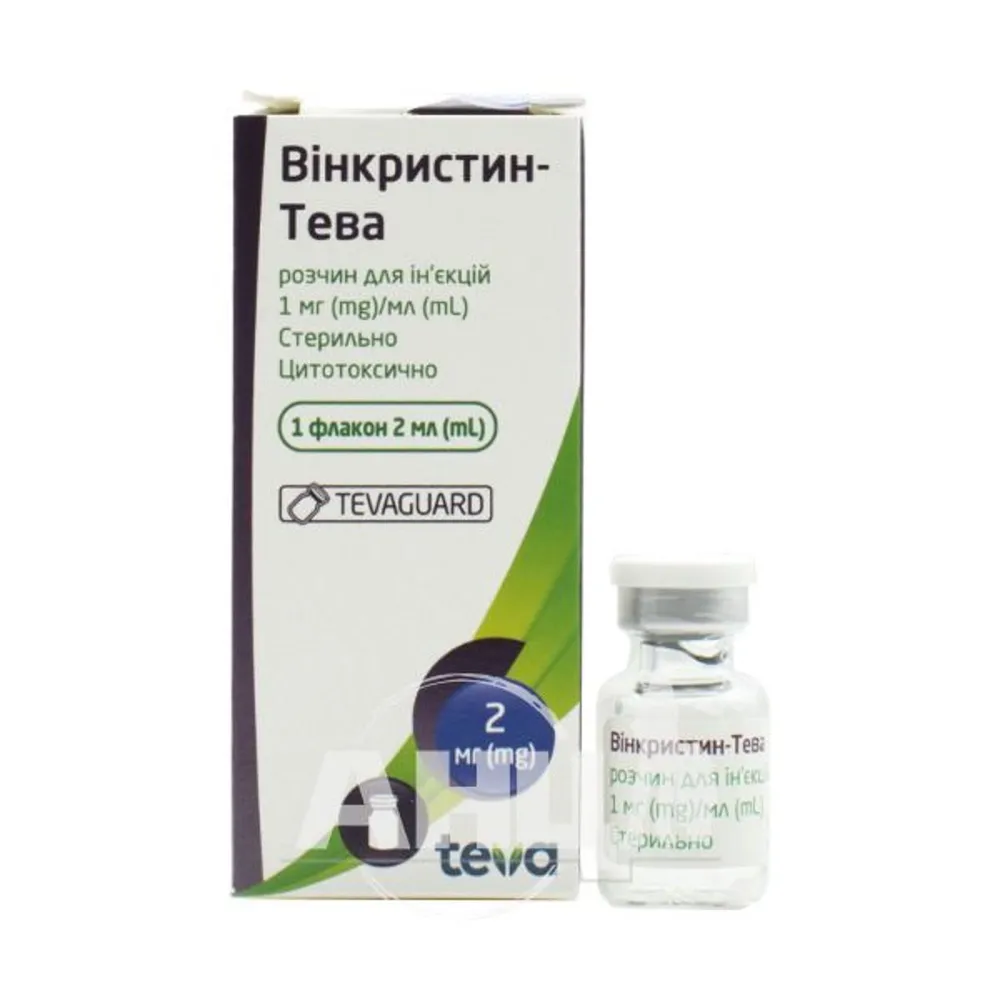
Table of Contents
INSTRUCTIONS FOR MEDICAL USE OF THE MEDICINAL PRODUCT VINCRISTINE-TEVA
Composition:
Active substance: vinblastine sulfate;
1 ml of injection solution contains 1 mg of vinblastine sulfate;
Excipients: sodium hydroxide 0.2%, sulfuric acid 5%, mannitol (E 421), water for injections.
Pharmaceutical form. Injection solution.
Main physicochemical properties: colorless or slightly yellowish transparent solution, free from mechanical particles, except for gas bubbles.
Pharmacotherapeutic group. Antineoplastic agents. Vinca alkaloids and their analogues. ATC code L01CA02.
Pharmacological Properties
Pharmacodynamics
Vincristine sulfate is the sulfate salt of vincristine, an alkaloid derived from the periwinkle plant Vinca rosea Linn.
The antineoplastic and cytotoxic activity of vincristine is associated with disruption of microtubule and mitotic spindle formation, as well as interference with DNA and RNA synthesis in cells.
Pharmacokinetics
After intravenous injection, vincristine is rapidly cleared from blood plasma. Within 15–30 minutes, over 90% of the drug is distributed from plasma into tissues and other blood components. The volume of distribution at plateau phase is 8.4 ± 3.2 L/kg.
Within 20 minutes after intravenous administration, over 50% of vincristine binds to blood components, particularly to platelets, which contain high concentrations of tubulin.
The drug poorly penetrates the blood-brain barrier.
Metabolism
Vincristine is extensively metabolized in the liver, likely by the cytochrome P450 microsomal enzyme system, including CYP3A enzymes.
Excretion
The pharmacokinetic profile after intravenous bolus administration is triphasic. The elimination half-life in the first and second phases is 5 minutes and 2.3 hours, respectively; the terminal phase half-life shows considerable variability (ranging from 19 to 155 hours), with a mean of 85 hours. Plasma clearance is slow, thus requiring a minimum interval of at least 1 week between treatment cycles to avoid cumulative toxicity.
The liver is the primary organ of excretion. The drug is predominantly eliminated in feces (approximately 80%), with a smaller portion excreted in urine (10–20%).
Patients with hepatic impairment
In patients with impaired liver function, metabolism is altered such that excretion of vincristine is likely reduced, increasing the risk of toxicity. Dose adjustment may be necessary (see sections "Administration and Dosage" and "Special Warnings and Precautions").
Pediatric patients
In children, there is greater inter- and intra-individual variability in pharmacokinetic parameters such as clearance, volume of distribution, and elimination half-life. Plasma clearance in children is generally higher than in adults or infants, although it has not been definitively established that vincristine clearance decreases with age.
Clinical characteristics.
Indications.
Acute leukemias, Hodgkin’s lymphoma, non-Hodgkin’s lymphomas (all histological subtypes and clinical stages), reticulum cell sarcoma, lymphosarcoma, embryonal rhabdomyosarcoma, neuroectodermal tumors (such as medulloblastoma and neuroblastoma), Wilms’ tumor, Ewing’s sarcoma, bone sarcomas, breast cancer, small cell lung cancer, multiple myeloma, retinoblastoma, idiopathic thrombocytopenic purpura resistant to splenectomy and short-term adrenocorticosteroid therapy.
Contraindications.
Hypersensitivity to vincristine sulfate or to any of the excipients, demyelinating form of Charcot-Marie-Tooth syndrome, acute hepatic dysfunction, myelosuppression (bone marrow suppression), neurological disorders, constipation and intestinal obstruction (especially in children), radiation therapy to the liver area, neuromuscular disorders, bacterial and viral infections. Vincristine must not be administered during or immediately after vaccination with live virus vaccines.
Special safety precautions.
Medical personnel handling the drug must wear protective clothing (gloves, goggles, gown, mask). Pregnant women must not be assigned to work involving the drug.
Interaction with other medicinal products and other forms of interaction.
Interactions common to all cytotoxic agents
Due to increased risk of thrombotic events in neoplastic diseases, anticoagulant therapy is often used. High inter-individual variability in coagulation capacity during the disease and possible interactions between oral anticoagulants and anticancer chemotherapy necessitate (if oral anticoagulants are used) more frequent monitoring of INR (International Normalized Ratio).
Inhibitors of cytochrome P450 isoenzymes and P-glycoprotein
Vinca alkaloids are metabolized by cytochrome P450 3A4 (CYP3A4) isoenzyme and are substrates for P-glycoproteins. Thus, increased plasma concentrations of vincristine may occur when co-administered with CYP3A4 and P-glycoprotein inhibitors such as ritonavir, nelfinavir, ketoconazole, itraconazole, erythromycin, cyclosporine, nifedipine, and nefazodone. Concurrent administration of itraconazole and vincristine is associated with premature and/or pronounced neuromuscular adverse effects, likely due to inhibition of vincristine metabolism.
Concomitant use of azole antifungal agents (e.g., itraconazole, voriconazole, posaconazole, isavuconazole, and fluconazole) with vincristine may increase plasma concentration of vincristine, potentially leading to earlier onset and/or increased severity of neurotoxicity and other adverse reactions (see section "Special precautions"). Therefore, azole antifungal agents should be used with caution in patients receiving vincristine and only when no alternative antifungal therapy is available or when potential benefits outweigh the risks of this combination. Close monitoring for adverse reactions is required during concomitant use.
Phenytoin and fosphenytoin
It has been reported that concomitant administration of phenytoin and antineoplastic chemotherapy regimens containing, among others, vincristine, may reduce blood levels of phenytoin and increase proconvulsant effects. Use of this combination is not recommended. If unavoidable, dose adjustment based on blood level monitoring should be performed.
Other cytostatic agents
Pharmacodynamic interactions may occur with other cytostatic agents: potentiation of both therapeutic and toxic effects. Concomitant use of vincristine and other myelosuppressive agents such as doxorubicin (especially in combination with prednisone) may potentiate bone marrow suppression.
Asparaginase/isoniazid and other neurotoxic medicinal products
In patients receiving vincristine, the possibility of severe and prolonged peripheral neuropathy should be considered when administering neurotoxic drugs (such as isoniazid, L-asparaginase, and cyclosporin A). When using vincristine sulfate in combination with L-asparaginase, it is recommended to administer vincristine 12–24 hours prior to enzyme administration to reduce toxicity, as prior administration of L-asparaginase may decrease hepatic clearance of vincristine. Such patients should receive other drugs with known neurotoxic effects cautiously and under continuous neurological monitoring.
Vaccines/inactivated virus
Since the normal immune system may be suppressed by vincristine treatment, antibody formation in response to vaccination may be reduced. The time interval between discontinuation of immunosuppressive drugs and restoration of the body’s ability to respond to vaccines depends on the intensity and type of immunosuppressive action, underlying disease, and other factors; estimates range from 3 months to 1 year.
Vaccines/live virus
Since the normal immune system may be suppressed by vincristine treatment, concomitant administration of live virus vaccines may increase viral replication and vaccine-related adverse effects and/or reduce antibody formation in response to vaccination. Such patients should be vaccinated only with extreme caution, after careful assessment of hematological status and only upon approval by the treating physician. The time interval between discontinuation of immunosuppressive drugs and restoration of the body’s ability to respond to vaccines depends on the intensity and type of immunosuppressive action, underlying disease, and other factors; estimates range from 3 months to 1 year. Patients with leukemia in remission should not receive live virus vaccines for at least 3 months after chemotherapy.
Digoxin
Absorption of digoxin may be reduced in patients receiving chemotherapy. Thus, in some patients, the therapeutic effect of digoxin may be diminished. Caution should be exercised when administering such combinations, and the possibility of needing digoxin dose adjustment should be considered.
Mitomycin C
Vincristine may be used with caution together with mitomycin C (acute dyspnea and bronchospasm may occur). Cases of acute respiratory failure and severe bronchospasm have been reported after administration of vinca alkaloids. These reactions require active treatment, especially if pulmonary dysfunction already exists. This reaction may begin minutes after injection of the vinca alkaloid, or several hours later, and even within 2 weeks after mitomycin administration. Progressive dyspnea may develop, requiring ongoing treatment. In such cases, vincristine should not be administered further.
Radiation therapy
Radiation therapy may enhance the peripheral neurotoxicity of vincristine. When chemotherapy is administered concurrently with radiation therapy involving the liver area, administration of vincristine should be postponed until completion of the radiation therapy course.
Cyclosporine, tacrolimus
Excessive immunosuppression with risk of lymphoproliferation may occur.
Allopurinol, pyridoxine, isoniazid
The frequency of bone marrow suppression caused by cytotoxic drugs may be increased. The mechanism of this enhanced effect has not been fully elucidated.
Methotrexate
Vincristine sulfate increases cellular uptake of methotrexate by tumor cells. This should be considered when using high-dose methotrexate therapy.
Other agents
During concomitant administration of vincristine and colony-stimulating factors (G-CSF, GM-CSF), atypical neuropathies with sensations of tingling or burning in the distal parts of extremities have been reported more frequently.
In patients with Wilms’ tumor, severe hepatotoxicity has been observed when vincristine was used in combination with dactinomycin.
In combination with bleomycin, vincristine may induce Raynaud’s syndrome in a dose-dependent manner.
Special precautions for use.
Treatment with the drug should be administered only by an experienced specialist in chemotherapy under conditions of a specialized inpatient facility. VinCristine-Teva must be administered intravenously only; intrathecal administration is absolutely contraindicated (may lead to fatal outcomes).
Following accidental intrathecal administration, immediate neurosurgical intervention is required to prevent ascending paralysis leading to death. In case of accidental intrathecal administration of vincristine, the following treatment must be initiated immediately after injection:
- Removal via lumbar puncture of as much cerebrospinal fluid as safety considerations allow.
- Placement of an epidural catheter into the subarachnoid space through an intervertebral space above the site of the initial lumbar puncture, and irrigation of cerebrospinal fluid with lactated Ringer’s solution. If possible, 25 mL of fresh frozen plasma should be added to each 1 L of lactated Ringer’s solution.
- Placement of an intraventricular drain or catheter by a neurosurgeon and continued irrigation of cerebrospinal fluid with fluid removal via lumbar access connected to a closed drainage system. Lactated Ringer’s solution should be infused continuously at a rate of 150 mL/hour, or at 75 mL/hour if fresh frozen plasma has been added as described above.
The infusion rate should be adjusted to maintain cerebrospinal fluid protein levels at 150 mg/dL.
The following measures may also be used as adjunctive therapy, although their benefit may be limited:
Folinic acid should be administered intravenously as a bolus injection of 100 mg, followed by infusion at 25 mg/hour for 24 hours, then 25 mg bolus every 6 hours for 1 week. Glutamic acid 10 g should be administered intravenously over 24 hours, followed by 500 mg orally three times daily for 1 month. Pyridoxine should be administered at a dose of 50 mg every 8 hours via intravenous infusion over 30 minutes.
In case of extravasation, soft tissue necrosis may develop; to prevent this, infiltration of the extravasation site with hyaluronidase or hydrocortisone at a dose of 20–25 mg is recommended, along with application of warm compresses to the affected area. VinCristine-Teva should be administered with caution in the early postoperative period, as a significant portion of the intravenously administered drug may accumulate in the postoperative wound, causing edema, inflammation, and local tissue necrosis.
In case of accidental contact with eyes, rinse thoroughly with large amounts of water or isotonic saline solution.
In case of accidental skin exposure, wash thoroughly with large amounts of water and mild soap, then rinse carefully.
Particular attention should be paid to patients with neurological disorders or hepatic dysfunction. Careful monitoring of the patient’s condition is necessary when vinCristine is used concomitantly with neurotoxic drugs.
In hepatic dysfunction, plasma concentration and elimination half-life of vinCristine may increase, enhancing its adverse effects.
The neurotoxic effect of vinCristine sulfate may be additive with other neurotoxic agents or may be potentiated by spinal cord irradiation and pre-existing neurological disease. Elderly patients may be more sensitive to the neurotoxic effects of vinCristine sulfate. If signs of neurotoxicity appear, therapy should be discontinued.
Secondary malignancies have been reported in patients who received chemotherapy with vinCristine in combination with other anticancer drugs known to be associated with this effect. The role of vinCristine in this phenomenon has not been established.
Recommended preventive measures for constipation include dietary adjustments and use of laxatives (particularly lactulose) or enemas. Constipation may manifest as obstruction of the proximal colon, and on examination the rectum may appear empty. The presence of abdominal colic despite an empty bowel may mislead the physician. An abdominal X-ray may help clarify this condition.
VinCristine should be administered with caution in patients with ischemic heart disease.
Since leukopenia may occur, both physician and patient should be vigilant for signs of infection. If leukopenia develops, appropriate measures should be taken, including careful consideration of the timing of the next dose of vinCristine sulfate. A peripheral blood count must be performed before each administration of VinCristine-Teva. If the leukocyte count falls below 3000 per mm³, therapy should be discontinued and prophylactic antibiotics should be administered.
Due to increased risk of leukopenia and thrombocytopenia, more careful monitoring is required in patients whose prior therapy or underlying disease has caused bone marrow suppression.
During treatment, patients should undergo regular ophthalmoscopic examination and visual field testing; if there is any suspicion of optic nerve damage, treatment should be discontinued. Any complaints of eye pain or decreased visual acuity require thorough ophthalmological evaluation.
The degree of alopecia during chemotherapy may be reduced by applying local hypothermia to the scalp or using a tourniquet (tight-fitting cap). A tight scalp bandage should not be applied in cases of leukemia or lymphoma, or in the presence of scalp metastases or infiltrates.
Dyspnea and bronchospasm most commonly occur when the drug is combined with mitomycin-C and may require intensive treatment, especially in patients with pre-existing respiratory insufficiency. These reactions may occur minutes or hours after administration of VinCristine-Teva and up to two weeks after mitomycin administration. Progressive dyspnea requires discontinuation of VinCristine-Teva therapy.
During induction of remission in the treatment of acute leukemia, serum uric acid levels may rise; this parameter should be monitored during the first 3–4 weeks of treatment, and appropriate measures should be taken to prevent neuropathy associated with uric acid diathesis. Laboratory tests should be repeated until values normalize. Allopurinol should be used if necessary.
During treatment with VinCristine-Teva, serum sodium concentration should be periodically measured. Hyponatremia may develop due to impaired antidiuretic hormone secretion and should be corrected with 0.9% sodium chloride solution. Systematic ECG monitoring is required during treatment with VinCristine-Teva. In children treated for malignant tumors, monitoring of intellectual, emotional, speech, and central nervous system functions is necessary.
Patients of both sexes should use effective contraception during treatment and for 6 months after completion of therapy.
Treatment with vinCristine may lead to irreversible infertility. Reversibility of these effects depends on the patient’s age and drug dosage. Azoospermia is commonly observed in men who have received chemotherapy including vinCristine in combination with prednisone and cyclophosphamide or mechlorethamine and procarbazine. Amenorrhea is less frequently observed in women who have received chemotherapy including vinCristine.
Patients should be counseled regarding future fertility prospects. Male patients should be informed about sperm preservation.
Interaction with azole antifungal agents. Concomitant use of azole antifungal agents with vinCristine has been associated with neurotoxicity and other serious adverse reactions, including seizures, peripheral neuropathy, syndrome of inappropriate antidiuretic hormone secretion (SIADH), and paralytic ileus. If antifungal therapy is required in patients receiving vinCristine, azole antifungal agents should be considered reserve options only when no alternative antifungal treatments are available (see section "Interaction with other medicinal products and other forms of interaction").
Use during pregnancy or breastfeeding.
The drug should not be used during pregnancy or breastfeeding. Patients of both sexes must use effective contraception during treatment and for 6 months after discontinuation of therapy.
If pregnancy occurs during treatment, the patient should be informed of the potential risks to the fetus and should remain under medical supervision.
Ability to affect reaction speed when driving or operating machinery.
There are no data on the effect of this drug on the ability to drive or operate machinery. However, the possibility of developing adverse (neurological) reactions with vinCristine-Teva that may impair psychomotor performance should be considered.
Dosage and Administration
Vincristine-Teva must be administered intravenously only; administration by any other route may result in fatal outcomes.
The dose of vincristine sulfate must be calculated and administered with extreme caution, as overdosage may lead to severe or even fatal consequences.
When used as monotherapy, the drug is administered at weekly intervals. When used in combination with other antineoplastic agents, the frequency of administration depends on the treatment protocol.
In adults, the usual dose is 1.4 mg/m² of body surface area once weekly, with a maximum dose of 2 mg/m². For maintenance therapy, the drug may be administered weekly at a dose of 0.005–0.01 mg/kg. The duration of treatment course is 4–6 weeks. The cumulative course dose should not exceed 10–12 mg/m².
In children, the recommended dose is 1.5–2 mg/m² of body surface area once weekly. The dose for children should be calculated based on body weight: for children weighing 10 kg or less, the initial dose should be 0.05 mg/kg once weekly.
Geriatric Patients
Dose adjustment is not required.
Patients with Impaired Hepatic Function
For patients with hepatic involvement or serum direct bilirubin levels exceeding 3 mg/100 mL, a 50% reduction in the dose of vincristine sulfate is recommended. Since vincristine is metabolized in the liver and excreted via bile, dose reduction is recommended for patients with obstructive jaundice or other hepatic impairments.
Vincristine should not be used in the presence of severe neurotoxicity (especially paresis). If symptoms improve after discontinuation of the drug, treatment may be resumed at 50% of the original dose.
Administration Method
Vincristine sulfate should be administered only under the strict supervision of a physician experienced in the use of cytotoxic agents.
Intrathecal administration of vincristine results in fatal neurotoxicity. Vincristine sulfate may be administered intravenously either by infusion or by bolus injection over at least 1 minute through an infusion catheter, under physician supervision. Care must be taken to avoid subcutaneous infiltration. Extravasation during intravenous administration of vincristine sulfate may cause significant irritation. To prevent vascular irritation, the vein should be thoroughly flushed after administration of vincristine sulfate.
The recommended therapeutic dose should not be exceeded. In general, individual doses should not exceed 2 mg; leukocyte counts should be performed before and after each dose administration.
Children
The drug may be administered to children when indicated.
Overdose
Overdose of vincristine leads to intensification of adverse reactions. In children under 13 years of age, a tenfold overdose may result in a fatal outcome. Severe clinical manifestations of overdose may occur in children under 13 years of age when administered at doses of 3–4 mg/m², and in adults when administered at single doses of 3 mg/m² or higher. There is no specific antidote. Symptomatic and supportive therapy should be administered under monitoring of fluid and electrolyte balance, ECG, and peripheral blood parameters. In case of generalized seizures, anticonvulsant agents should be used. Enemas should be administered to prevent intestinal obstruction. If necessary, perform blood transfusions, red blood cell and platelet infusions. Intravenously administer calcium folinate at a dose of 100 mg every 3 hours for 24 hours, then every 6 hours for at least 48 hours. Hemodialysis is ineffective.
Adverse Reactions
The most common toxic effects of vincristine are related to the central nervous system. In general, adverse effects are reversible and dose-dependent. Children usually tolerate vincristine better than adults. The most frequent adverse reactions are neurotoxicity and alopecia; the most serious adverse reactions are associated with neuromuscular impairment. Elderly patients have an increased susceptibility to neurotoxicity.
Following weekly single doses of vincristine, transient adverse reactions such as leukopenia, neuralgic pain, and constipation may occur (but usually last no longer than 7 days). Reducing the dose may alleviate or completely eliminate these reactions. The severity of such reactions increases if the required total dose of the drug is administered in divided portions. Therefore, vincristine should not be administered in small amounts over a prolonged period. Other adverse reactions, such as alopecia, loss of sensation, paresthesia, difficulty walking, shuffling gait, loss of deep tendon reflexes, and muscular dystrophy, may manifest throughout the course of treatment. As treatment continues, general sensorimotor dysfunction may progress to a more severe condition; in some patients, individual neuromuscular disorders may persist for a prolonged period. Hair regrowth may begin before completion of maintenance therapy.
Neoplasms benign, malignant and unspecified (including cysts and polyps): secondary malignant neoplasms in patients who received vincristine in combination with other cytotoxic agents with proven carcinogenicity.
Blood and lymphatic system disorders: reversible thrombocytosis, severe bone marrow suppression, anemia, leukopenia, and thrombocytopenia.
Immune system disorders: acute respiratory distress and bronchospasm, which may be severe and life-threatening. Such symptoms have been observed after administration of vinca alkaloids (such as vincristine), particularly when administered concomitantly with mitomycin. The reaction may occur within minutes or hours after administration of the vinca alkaloid or within 2 weeks after mitomycin administration; allergic reactions, including anaphylaxis, rashes, and angioneurotic edema, have been observed in patients receiving vincristine as part of a multi-agent chemotherapy regimen.
Nervous system disorders: neurological toxicity is the most serious adverse reaction associated with vincristine use. Neurological toxicity is dose- and age-dependent. As a result of neurotoxicity, constipation and intestinal obstruction may also occur (see "Gastrointestinal disorders"). Other possible adverse reactions include neuralgia and myalgia (including trigeminal neuralgia and testicular pain syndrome, laryngeal pain, salivary glands, bones, back, limbs), coma, foot drop, dysuria, peripheral neuropathy (mixed sensorimotor), sensory disturbances, paresthesia, loss of deep tendon reflexes, gait disturbances, shuffling gait, muscle weakness, ataxia, paralysis, cranial nerve impairment (paresis/paralysis), laryngeal muscle weakness, hoarseness, and vocal cord paresis (including potentially life-threatening bilateral vocal cord paresis), ptosis, optic neuropathy, extraocular neuropathy, transient blindness, diplopia, and optic atrophy, seizures with hypertension, leukoencephalopathy, toxic effects on the central nervous system, which may manifest as depression, excitement, insomnia, confusion, psychosis, and hallucinations.
Ear and labyrinth disorders: treatment with vinca alkaloids is often associated with vestibular and auditory complications affecting the 8th cranial nerve. Manifestations include partial or total deafness – permanent or intermittent; balance disturbances, including dizziness, nystagmus, and vertigo. Caution should be exercised when using vincristine sulfate in combination with other ototoxic agents, such as platinum-containing chemotherapeutics.
Cardiac disorders: angina pectoris and myocardial infarction (in patients who received combination chemotherapy including vincristine and who had previously undergone mediastinal irradiation), arterial hypertension, and hypotension.
Respiratory, thoracic and mediastinal disorders: severe bronchospasm and dyspnea have been reported following administration of vinca alkaloids, sometimes in combination with mitomycin C.
Gastrointestinal disorders: nausea, vomiting, aphthous stomatitis, constipation, abdominal pain, decreased appetite, weight loss, anorexia, diarrhea, paralytic ileus (particularly in children), mucositis, intestinal necrosis and/or perforation, pancreatitis. Functional intestinal obstruction may occur, especially in young children. Symptoms of intestinal obstruction resolve spontaneously after temporary discontinuation of vincristine and symptomatic treatment.
Hepatobiliary disorders: veno-occlusive liver disease (particularly in children).
Skin and subcutaneous tissue disorders: alopecia (reversible after discontinuation of vincristine), rash.
Renal and urinary disorders: in elderly patients, drugs causing urinary retention should be discontinued in the first few days after vincristine administration. Polyuria, dysuria, and urinary retention due to bladder atony, hyperuricemia, uric acid nephropathy, syndrome of inappropriate antidiuretic hormone secretion (SIADH), urinary incontinence. SIADH may be related to the neurotoxicity of the drug, possibly due to a direct effect on the hypothalamus. In such patients, hyponatremia occurs, combined with urinary sodium excretion, without signs of renal or adrenal dysfunction, hypotension, dehydration, azotemia, or edema. With fluid restriction, hyponatremia and renal sodium loss may be reduced.
Reproductive system and breast disorders: irreversible infertility after chemotherapy with vincristine is more common in men than in women. Azoospermia has been observed in men receiving combination chemotherapy regimens containing vincristine with prednisone and cyclophosphamide or mechlorethamine and procarbazine, amenorrhea.
General disorders and administration site conditions: irritation at injection site, fever, phlebitis, pain, cellulitis, necrosis, headache. These symptoms may occur after irritation of the vessel wall or in case of extravasation during administration.
Shelf life.
Before opening the vial: 2 years.
After reconstitution: Chemical and physical stability of the ready-to-use solution for injection or infusion has been demonstrated for 48 hours at 2–8 °C or 24 hours at 15–25 °C when diluted with 0.9% sodium chloride solution or 5% glucose solution for infusion.
From a microbiological standpoint, the solution should be administered immediately. If not administered immediately, the responsibility for the duration and conditions of storage of the ready-to-use solution lies with the user, and according to standard practice, the solution should be stored for no longer than 24 hours at 2–8 °C, unless dilution is performed under controlled, strictly aseptic conditions.
Storage conditions. Store in a refrigerator at 2–8 °C in the original packaging to protect from light and keep out of reach of children.
Incompatibilities. Due to lack of compatibility studies, this medicinal product must not be mixed with other medicinal products.
Packaging. 1 ml, 2 ml, or 5 ml in a vial, vial covered with TevaGuard protective coating, 1 vial in a cardboard box.
Prescription category. Prescription only.
Manufacturer. Farmahem B.V.
Manufacturer's address and place of business.
Svensweg 5, 2031 GA Haarlem, Netherlands.