Vicks antigrip max
Ukraine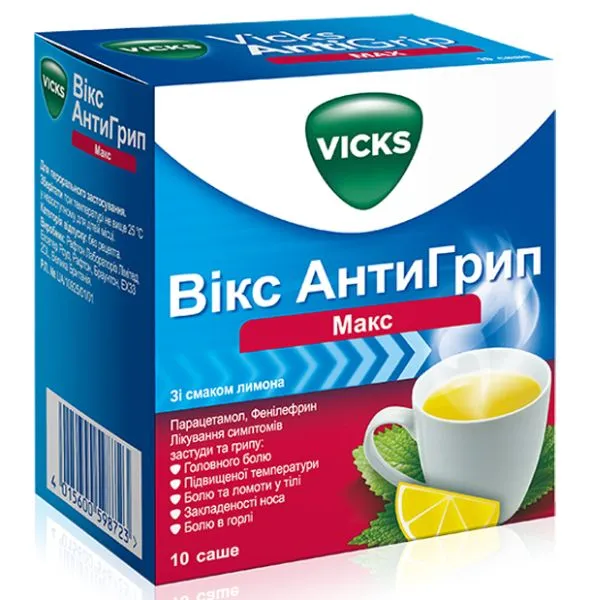
Table of Contents
INSTRUCTIONS FOR MEDICAL USE OF THE MEDICINAL PRODUCT Vicks AntiGrip Max (Vicks AntiGrip Max)
Composition:
Active substances: paracetamol, phenylephrine hydrochloride;
One sachet contains 1000 mg of paracetamol and 12.2 mg of phenylephrine hydrochloride;
Excipients: ascorbic acid, sucrose, anhydrous citric acid, potassium acesulfame, aspartame (E 951), sodium citrate, quinoline yellow (E 104), lemon flavor F/29088, lemon flavor F/29089, lemon flavor F/28151 (contains butylated hydroxyanisole (E 320)), lemon flavor F/501.476/AP0504.
Pharmaceutical form. Powder for oral solution with lemon flavor.
Main physicochemical properties: free-flowing yellow powder, free of large lumps and foreign particles. Has a characteristic citrus odor.
Pharmacotherapeutic group. Analgesics and antipyretics. Paracetamol combinations without psychotropic agents. ATC code N02BE51.
Pharmacological properties.
Pharmacodynamics.
Paracetamol exerts analgesic, weak anti-inflammatory, and antipyretic effects, primarily due to inhibition of prostaglandin synthesis in the central nervous system.
Phenylephrine hydrochloride is a synthetic adrenomimetic agent with minimal central activity, which stimulates postsynaptic α-adrenergic receptors. It acts as a decongestant by constricting blood vessels, thereby reducing edema, including edema of the nasal mucosa and paranasal sinuses, and consequently relieving nasal congestion.
Pharmacokinetics.
Paracetamol is rapidly and completely absorbed, primarily in the small intestine. Peak plasma concentrations are reached within 15–20 minutes after oral administration. Systemic bioavailability, influenced by presystemic metabolism, ranges from 70% to 90%, depending on the dose. It is rapidly and widely distributed throughout the body. The plasma half-life is approximately 2 hours. The main metabolites are glucuronide and sulfate conjugates (> 80%), which are excreted in the urine.
Phenylephrine hydrochloride is rapidly absorbed from the gastrointestinal tract. Presystemic metabolism is high, approximately 60%, resulting in a systemic bioavailability of about 40%. Peak plasma concentrations occur between 1 and 2 hours. The plasma half-life is 2–3 hours. When administered orally for nasal decongestion, phenylephrine is typically given at intervals of 4–6 hours.
Clinical characteristics.
Indications.
Symptomatic treatment of cold and influenza (headache, body aches and malaise, sore throat, nasal congestion, and fever) in adults and children aged 16 years and older.
Contraindications.
Hypersensitivity to paracetamol, phenylephrine, or any other component of the medicinal product. Severe ischemic heart disease. Arterial hypertension. Diabetes mellitus. Closed-angle glaucoma. Severe hyperthyroidism. Prostate hypertrophy. Urinary retention. Pheochromocytoma. Alcoholism. Acute hepatitis. Pancreatitis. Severe hepatic impairment. Renal dysfunction. Concomitant use with monoamine oxidase inhibitors (MAOIs) (or within two weeks after discontinuation of such therapy), tricyclic antidepressants, vasodilators, beta-blockers, and other sympathomimetics. Phenylketonuria. Thrombosis, predisposition to thrombosis, thrombophlebitis. Congenital hyperbilirubinemia, glucose-6-phosphate dehydrogenase deficiency, blood disorders, severe anemia, leukopenia.
Children under 16 years of age.
Interaction with other medicinal products and other forms of interaction.
Metoclopramide or domperidone may increase the rate of paracetamol absorption, whereas cholestyramine reduces paracetamol absorption.
Prior to administration, patients using warfarin or similar anticoagulant agents should consult their physician. Long-term regular use of paracetamol may enhance the anticoagulant effect of warfarin and other coumarins, increasing the risk of bleeding; occasional use has no significant effect.
Paracetamol increases plasma levels of acetylsalicylic acid and chloramphenicol. Due to an increased risk of renal impairment similar to that caused by nonsteroidal anti-inflammatory drugs (NSAIDs), concomitant use with acetylsalicylic acid should be limited to short-term treatment only.
Probenecid inhibits the conjugation of paracetamol with glucuronic acid, thereby reducing paracetamol clearance by almost half. When probenecid is used concomitantly, the dose of paracetamol should be reduced.
Concomitant use of paracetamol and AZT (zidovudine) increases the risk of neutropenia. Therefore, simultaneous use of paracetamol and AZT should be under medical supervision.
Barbiturates reduce the antipyretic effect of paracetamol.
Anticonvulsants (including phenytoin, barbiturates, carbamazepine), which stimulate hepatic microsomal enzyme activity, may enhance the hepatotoxic effects of paracetamol due to increased conversion of paracetamol into hepatotoxic metabolites. Concomitant use of paracetamol with hepatotoxic agents increases the risk of hepatotoxicity.
Simultaneous use of high doses of paracetamol with isoniazid increases the risk of hepatotoxic syndrome. Paracetamol reduces the effectiveness of diuretics.
Phenylephrine may interact with other sympathomimetics and vasodilating agents, causing adverse effects.
Phenylephrine may reduce the effectiveness of beta-blockers, methyldopa, and reserpine. Concurrent use of phenylephrine with these medicinal products may lead to hypertensive crisis. Conditions for which these drugs are prescribed are contraindications for use of this medicinal product.
MAO inhibitors potentiate the effects of phenylephrine. Concurrent use of phenylephrine with MAO inhibitors and tricyclic antidepressants may cause hypertensive crisis. Phenylephrine may enhance the anticholinergic effects of tricyclic antidepressants.
Concomitant use with ergot alkaloids (ergotamine, methysergide) increases the risk of ergotism.
Substances that induce hepatic microsomal enzymes, such as alcohol, barbiturates, and tricyclic antidepressants, may increase the hepatotoxicity of paracetamol, especially after overdose. This medicinal product should not be used in patients during treatment with monoamine oxidase inhibitors or within 14 days after discontinuation of such treatment.
This medicinal product increases the likelihood of arrhythmias in patients receiving digitalis preparations. It may enhance cardiovascular effects of other sympathomimetic amines (decongestants).
Due to the presence of ascorbic acid, the medicinal product reduces the toxicity of sulfonamide drugs, decreases the effect of heparin and indirect anticoagulants, promotes iron absorption, enhances the absorption of penicillin and tetracycline, and intensifies the adverse effects of salicylates (increasing the risk of crystalluria).
Use of oral contraceptives and consumption of fruit juices or alkaline beverages reduce vitamin C levels in the body.
Vitamin C in combination with deferoxamine increases tissue toxicity of iron, particularly in cardiac muscle, potentially leading to circulatory decompensation. Therefore, the medicinal product may be taken only 2 hours after deferoxamine injection.
Vitamin C increases the total clearance of ethanol.
When significantly exceeding the recommended doses, the medicinal product may reduce the efficacy of tricyclic antidepressants and phenothiazine-derived neuroleptics, impair tubular reabsorption of amphetamine, interfere with renal excretion of mexiletine, and inhibit the disulfiram-alcohol reaction in individuals undergoing disulfiram therapy.
Caution is advised when using paracetamol concomitantly with flucloxacillin, as co-administration has been associated with metabolic acidosis with a high anion gap due to pyroglutamic acidosis, particularly in patients with risk factors (see section "Special precautions for use").
Special precautions for use.
Do not use with other medications containing paracetamol. Do not take together with alcohol.
Paracetamol should be used with caution in patients receiving hepatotoxic medicinal products, digitalis preparations, methyldopa, or other antihypertensive agents; in patients with chronic malnutrition (low hepatic glutathione levels), Raynaud's phenomenon, bronchial asthma, granulocytopenia, arrhythmias, or chronic lung diseases.
Consult a physician regarding the possibility of using the medicinal product in patients with impaired kidney or liver function. Paracetamol use in patients with impaired liver function or those receiving long-term high-dose paracetamol therapy requires monitoring of liver function.
It should be noted that in patients with alcoholic liver disease, the risk of hepatotoxic effects of paracetamol is increased.
Medicinal products containing sympathomimetics may act as central nervous system stimulants, causing insomnia, nervousness, hyperpyrexia, tremor, and epileptiform seizures.
Concomitant use with halogenated anesthetics such as chloroform, cyclopropane, halothane, enflurane, or isoflurane may induce or worsen ventricular arrhythmias.
If headache becomes persistent, consult a physician.
Do not exceed recommended doses, especially in patients with increased blood coagulability.
Medicinal products containing sympathomimetics should not be used simultaneously by multiple routes, i.e., orally and locally (nasal, ear, or eye preparations).
Excipients
Ascorbic acid
Each sachet contains 100 mg of ascorbic acid.
Ascorbic acid, as a reducing agent, may affect laboratory test results, for example, blood glucose, bilirubin, transaminase activity, and lactate dehydrogenase levels. Absorption of ascorbic acid may be impaired in intestinal dyskinesia, enteritis, or achylia.
Since ascorbic acid has a mild stimulating effect, it is not recommended to take the medicinal product late in the day.
Since ascorbic acid enhances iron absorption, its use in high doses may be hazardous for patients with blood disorders. Patients with high iron content in the body should use ascorbic acid in minimal doses.
Sucrose
The daily dose of the medicinal product contains 7.75 g of sucrose. Patients with rare hereditary fructose intolerance, glucose-galactose malabsorption syndrome, or sucrase-isomaltase deficiency should not take this medicinal product.
Aspartame
The medicinal product contains aspartame (E 951), a source of phenylalanine—14 mg per dosage unit. May be harmful for patients with phenylketonuria.
Sodium
The medicinal product contains 118 mg of sodium per dose. Caution is advised when administering to patients on a sodium-restricted diet.
Cases of high anion gap metabolic acidosis (HAGMA) due to pyroglutamic acidosis have been reported in patients with severe conditions such as severe renal failure and sepsis, or in patients with malnutrition or other sources of glutathione deficiency (e.g., chronic alcoholism) who were treated with therapeutic doses of paracetamol over a prolonged period or with a combination of paracetamol and flucloxacillin. If HAGMA due to pyroglutamic acidosis is suspected, immediate discontinuation of paracetamol is recommended, along with careful monitoring of the patient's condition. Measurement of 5-oxoproline levels in urine may be useful in identifying pyroglutamic acidosis as the underlying cause of HAGMA in patients with multiple risk factors.
Use during pregnancy or breastfeeding.
Standard reproductive and ontogenetic toxicity studies are not available.
Epidemiological studies on the development of the nervous system in children exposed to paracetamol in utero are inconclusive.
Paracetamol crosses the placental barrier and is excreted in breast milk.
The medicinal product should not be used during pregnancy or breastfeeding.
Ability to influence reaction rate while driving or operating machinery.
No effect.
Dosage and Administration.
For oral use.
Dissolve the contents of 1 sachet in a standard cup of hot, but not boiling, water (approximately 250 mL). Take while warm. Due to the presence of ascorbic acid in the formulation, consumption of alkaline mineral water after administration is not recommended.
Adults: 1 sachet per dose. If necessary, may be taken every 4–6 hours.
Children aged 16 years and older: 1 sachet per dose. If necessary, may be taken every 6 hours.
Elderly patients: no special dose adjustment is required.
Maximum daily dose is 4 sachets.
The treatment course should not exceed 3–5 days. If symptoms persist, consult a physician.
Children.
Do not use in children under 16 years of age.
Overdose.
Paracetamol.
Hepatic injury is possible in adults who have ingested 10 g or more of paracetamol, and in children who have ingested more than 150 mg/kg body weight. Administration of 5 g or more of paracetamol may lead to hepatic injury in patients undergoing long-term treatment with carbamazepine, phenobarbital, phenytoin, primidone, rifampicin, or St. John’s wort (Hypericum perforatum), or other drugs inducing liver enzymes; in chronic alcohol users; or in patients suspected of glutathione depletion, such as those with malnutrition, cystic fibrosis, HIV infection, fasting, or cachexia.
Symptoms of overdose within the first 24 hours after paracetamol administration include pallor, nausea, vomiting, anorexia, and abdominal pain. Hepatic injury may develop 12–48 hours after ingestion. Glucose metabolism disturbances and metabolic acidosis may occur. In severe poisoning, hepatic failure may progress to encephalopathy, hemorrhage, hypoglycemia, cerebral edema, and death. Acute renal failure with acute tubular necrosis, manifested by lumbar pain, hematuria, and proteinuria, may develop even in the absence of severe liver damage. Cases of cardiac arrhythmias and pancreatitis have been reported.
With prolonged use of the drug in high doses, hematological disorders may include aplastic anemia, pancytopenia, agranulocytosis, neutropenia, leukopenia, and thrombocytopenia. Central nervous system effects may include dizziness, psychomotor agitation, and disorientation. Urinary system effects may include nephrotoxicity (renal colic, interstitial nephritis, cortical necrosis).
Other symptoms may include depression, cardiovascular disturbances, and kidney damage.
Treatment.
In case of overdose, prompt medical assistance is required. The patient should be immediately transported to a hospital, even if early symptoms of overdose are absent. Symptoms may be limited to nausea and vomiting and may not reflect the severity of overdose or risk of organ damage. Activated charcoal should be considered if the excessive dose of paracetamol was ingested within 1 hour. Plasma paracetamol concentration should be measured at least 4 hours or later after ingestion (earlier concentrations are unreliable). If necessary, intravenous N-acetylcysteine should be administered at recommended doses. N-acetylcysteine treatment may be used within 24 hours after paracetamol ingestion, but maximum protective effect is achieved when administered within 8 hours. The efficacy of the antidote decreases sharply after this time. In the absence of vomiting, oral methionine may be used as an appropriate alternative in remote areas outside hospital settings.
Patients who have ingested approximately 7.5 g or more of paracetamol within the last 4 hours should undergo gastric lavage.
Management of patients with severe hepatic dysfunction occurring 24 hours after ingestion should be conducted under the supervision of a specialist in toxicology or liver disease.
Phenylephrine hydrochloride.
Symptoms: headache (possibly a sign of arterial hypertension), seizures, palpitations, sensation of rapid heartbeat, vomiting. Severe phenylephrine overdose may present with hemodynamic changes and cardiovascular failure with respiratory depression.
Treatment includes early gastric lavage, as well as symptomatic and supportive measures. Hypertensive effects can be managed with alpha-receptor blockers.
Symptoms of ascorbic acid overdose include: nausea, vomiting, bloating and abdominal pain, itching, skin rash, increased excitability, and exacerbation of adverse reactions described in the section "Adverse reactions possibly related to the presence of ascorbic acid in the medicinal product."
With prolonged use in high doses, suppression of the islet apparatus of the pancreas (hyperglycemia, glucosuria) may occur; therefore, its function should be monitored. Cystitis and accelerated formation of concretions (urates, oxalates) may develop.
When ascorbic acid is administered in doses exceeding 1 g per day, irritation of the gastrointestinal mucosa and exacerbation of urolithiasis are possible; therefore, exceeding the recommended doses of the drug is contraindicated. Due to the stimulatory effect of ascorbic acid on corticosteroid hormone production, kidney function and arterial blood pressure should be monitored during high-dose administration.
Treatment: gastric lavage, alkaline drinks, administration of activated charcoal or other sorbents, symptomatic therapy.
Adverse reactions.
If adverse reactions occur, discontinue use of the medicinal product and seek immediate medical advice.
Blood and lymphatic system disorders: anaemia, sulfhaemoglobinaemia, and methaemoglobinaemia (cyanosis, dyspnoea, chest pain), haemolytic anaemia. With prolonged use at doses exceeding therapeutic levels, aplastic anaemia, pancytopenia, thrombocytopenia (which may lead to nosebleeds and/or bleeding gums, bruising), leucopenia, neutropenia, agranulocytosis have been observed.
Immune system disorders: anaphylaxis, hypersensitivity reactions including pruritus, skin and mucous membrane rashes (usually generalized erythematous rashes, urticaria), angioedema (Quincke's oedema), multiform exudative erythema (including Stevens-Johnson syndrome), toxic epidermal necrolysis (Lyell's syndrome), anaphylactic shock.
Nervous system disorders: dizziness, irritability, headache, psychomotor agitation, disorientation, insomnia, restlessness, impaired consciousness, nervousness, tremor, and anxiety (usually occurring with high-dose administration), increased excitability.
Eye disorders: eye pain, burning sensation in the eyes, blurred vision, photophobia, acute angle-closure glaucoma.
Cardiovascular system disorders: tachycardia, bradycardia, chest pain, dyspnoea, palpitations, increased arterial pressure, arrhythmia.
Gastrointestinal disorders: heartburn, nausea, vomiting, diarrhoea, loss of appetite, epigastric pain.
Hepatobiliary disorders: liver function disturbances, increased liver enzyme activity in blood serum, usually without development of jaundice, hepatonecrosis (a dose-dependent effect).
Endocrine system disorders: hypoglycaemia, development of hypoglycaemic coma.
Renal and urinary disorders: urinary retention, difficulty in urination.
Respiratory system disorders: bronchospasm in patients sensitive to aspirin and other nonsteroidal anti-inflammatory drugs (NSAIDs).
Skin and subcutaneous tissue disorders: very rare cases of serious skin reactions.
Metabolism and nutrition disorders: metabolic acidosis with high anion gap, frequency "not known" (cannot be estimated from available data). Cases of metabolic acidosis with high anion gap as a consequence of pyroglutamic acidosis have been observed in patients with risk factors who used paracetamol (see section "Special precautions for use"). Pyroglutamic acidosis may occur due to low glutathione levels in these patients.
Adverse reactions possibly attributable to the presence of ascorbic acid in the medicinal product:
Renal and urinary disorders: glomerular kidney damage, crystalluria, renal failure.
Skin disorders: eczema.
Endocrine system disorders: impaired glycogen synthesis up to development of diabetes mellitus.
Cardiovascular disorders: myocardial dystrophy.
Blood and lymphatic system disorders: thrombocytosis, hyperprothrombinaemia, thrombus formation, erythrocytopaenia, neutrophilic leucocytosis.
Nervous system disorders: sleep disturbances, sensation of warmth, increased fatigue.
Metabolism disorders: disturbances in zinc and copper metabolism.
Shelf life. 3 years.
Storage conditions. Store at temperatures not exceeding 25 °C, in a place inaccessible to children.
Packaging. 5 or 10 sachets per box.
Pharmaceutical category. Over-the-counter.
Manufacturer. Raphaton Laboratories Limited.
Manufacturer's name and address of the place of business.
Exeter Road, Raphaton, Braunton, EX33 2DL, United Kingdom.