Vicks active medinait
Ukraine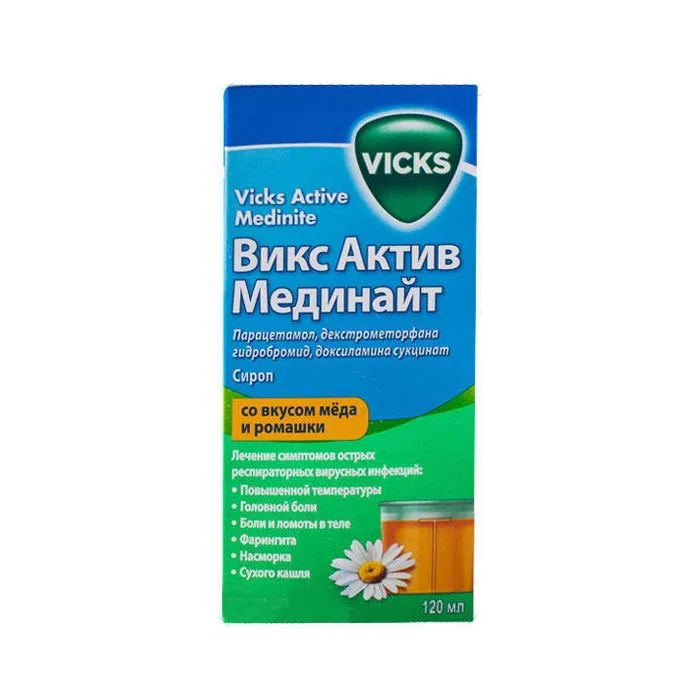
Table of Contents
INSTRUCTIONS FOR MEDICAL USE OF THE MEDICINAL PRODUCT VICKS ACTIVE MEDINITE (VICKS ACTIVE MEDINITE)
Composition:
Active substances: paracetamol, dextromethorphan hydrobromide, doxylamine succinate;
1 dose (30 mL) of syrup contains: paracetamol 600 mg, dextromethorphan hydrobromide 15 mg, doxylamine succinate 7.5 mg;
Excipients: sodium citrate; citric acid, monohydrate; sodium benzoate (E 211); macrogol 6000; sucrose; glycerol; potassium sorbate; honey and chamomile flavoring; purified water.
Medicinal form. Syrup.
Main physicochemical properties: clear, slightly viscous yellow liquid with a characteristic odor and taste. Contains no visible signs of contamination or suspended particles.
Pharmacotherapeutic group. Paracetamol combinations without psychotropic agents.
ATC code N02BE51.
Pharmacological properties.
Pharmacodynamics.
Paracetamol
The mechanism of paracetamol's analgesic and antipyretic action has not been fully established. Central and peripheral actions are possible. Significant inhibition of cerebral prostaglandin synthesis has been demonstrated, whereas peripheral prostaglandin synthesis is only weakly inhibited. In addition, paracetamol blocks the effect of endogenous pyrogens on the temperature-regulating center in the hypothalamus.
Dextromethorphan hydrobromide
Dextromethorphan hydrobromide is a 3-methoxy derivative of levorphanol. It has antitussive activity, but at therapeutic doses it does not exhibit analgesic or psychomimetic activity, respiratory depression, or significant potential for dependence. At therapeutic doses, dextromethorphan hydrobromide does not inhibit ciliary activity.
Doxylamine succinate
Doxylamine is an ethanolamine derivative with H1-histamine receptor-blocking activity. Thus, it reduces H1-receptor stimulation and, in addition, causes vasodilation, increased capillary wall permeability, and sensitization of pain receptors.
In addition to H1-receptor blocking effects, doxylamine exhibits anticholinergic effects (including inhibition of nasal mucosal secretion) and sedative effects.
Pharmacokinetics.
This is a combined medicinal product; therefore, pharmacokinetics has not been studied.
Clinical characteristics.
Indications.
Symptomatic treatment of acute viral respiratory infections accompanied by elevated temperature, headache, body pain and malaise, pharyngitis, rhinitis, and dry cough.
Contraindications.
Hypersensitivity to the components of the medicinal product.
Bronchial asthma, chronic obstructive pulmonary disease (COPD), pneumonia, respiratory depression, respiratory insufficiency, closed-angle glaucoma, previous liver damage, severe impairment of liver function or severe hepatocellular insufficiency (>9 points on the Child–Pugh scale), previous kidney damage, severe renal impairment (creatinine clearance <10 mL/min), ileus, pheochromocytoma, benign prostatic hyperplasia with residual urine and significant voiding difficulty, epilepsy and organic central nervous system (CNS) disorders.
Concomitant use of antidepressants (MAO inhibitors or SSRIs) and within 2 weeks after discontinuation of such treatment.
Pregnancy or breastfeeding.
Children under 15 years of age.
Severe anemia, leukopenia, severe arterial hypertension, unstable angina, myocardial infarction, decompensated heart failure, cardiac conduction disorders, acute pancreatitis, hyperthyroidism, severe forms of diabetes mellitus.
Congenital hyperbilirubinemia, glucose-6-phosphate dehydrogenase deficiency.
Interaction with other medicinal products and other types of interactions.
Concomitant use of Vicks Active Medinait cold syrup with other medicinal products or drug classes may affect their respective effects.
Concomitant use of barbiturates, tricyclic antidepressants, or alcohol consumption may prolong the elimination half-life of paracetamol. Long-term use of anticonvulsant drugs may reduce the efficacy of paracetamol. Concurrent administration of high-dose paracetamol with isoniazid increases the risk of hepatotoxic syndrome. Paracetamol reduces the effectiveness of diuretics.
Barbiturates reduce the antipyretic effect of the product.
Enhanced effect leading to increased risk of adverse effects with concomitant use:
- Other medicinal products that have CNS depressant effects (e.g., neuroleptics, tranquilizers, antidepressants, hypnotics, analgesics, anesthetics, antiepileptic agents). This particularly includes concomitant alcohol consumption, which may unpredictably alter or enhance the effect;
- Substances with anticholinergic effects (e.g., biperiden, tricyclic antidepressants). Increased anticholinergic effects may manifest as urinary retention, acute glaucoma attack, or paralytic ileus. In patients previously treated with certain antidepressants (MAO inhibitors or SSRIs such as fluoxetine or paroxetine), a so-called serotonin syndrome may occur, characterized by symptoms such as hyperthermia, muscle rigidity, mental status changes (e.g., agitation, confusion), and disturbances in respiratory and circulatory functions. Therefore, Vicks Active Medinait cold syrup must not be used to treat patients concurrently receiving these substances. Do not use concomitantly with monoamine oxidase inhibitors (MAOIs) or within two weeks after discontinuation of such treatment.
Reduced efficacy with concomitant use:
- Neuroleptics;
- Cholestyramine (it delays absorption of paracetamol).
Possible other interactions:
- With substances that accelerate gastric emptying (metoclopramide or domperidone). These accelerate the absorption of paracetamol;
- With agents that delay gastric emptying (e.g., salicylamides);
- With probenecid. It inhibits the conjugation of paracetamol with glucuronic acid and thus reduces paracetamol clearance by approximately half. When probenecid is used concomitantly, the dose of paracetamol should be reduced;
- With medicinal products that inhibit the hepatic cytochrome P450 2D6 enzyme system and thus inhibit the metabolism of dextromethorphan (which may lead to increased dextromethorphan concentrations and symptoms of overdose); or with potentially hepatotoxic substances (e.g., alcohol), certain hypnotics and antiepileptic drugs (e.g., phenobarbital, phenytoin, carbamazepine), and rifampicin. Enzyme-inducing substances (e.g., alcohol, anticonvulsants) also lead to faster breakdown of paracetamol and may particularly increase the hepatotoxicity of paracetamol, especially in cases of overdose.
CYP2D6 inhibitors
Dextromethorphan is extensively metabolized by CYP2D6 and undergoes extensive presystemic metabolism. Concomitant use of potent inhibitors of the CYP2D6 enzyme may increase dextromethorphan concentrations in the body to levels many times higher than normal. This increases the risk of toxic effects of dextromethorphan (e.g., agitation, confusion, tremor, insomnia, diarrhea, and respiratory depression) and the development of serotonin syndrome.
Strong inhibitors of the CYP2D6 enzyme include fluoxetine, paroxetine, quinidine, and terbinafine. When used concomitantly with quinidine, plasma concentrations of dextromethorphan increased up to 20-fold compared to normal, leading to enhanced CNS-related adverse effects of the active substance.
Amiodarone, flecainide, propafenone, sertraline, bupropion, methadone, cinacalcet, haloperidol, perphenazine, thioridazine, cimetidine, and ritonavir also have a similar effect on dextromethorphan metabolism.
If concomitant use of CYP2D6 inhibitors and dextromethorphan is necessary, the patient's condition should be closely monitored, and the dose of dextromethorphan should be reduced if needed.
- With anticoagulants. The anticoagulant effect of warfarin and other coumarin derivatives may be enhanced with long-term regular use of paracetamol, increasing the risk of bleeding;
- With mucolytics (cough medicines that thin mucus). These may lead to dangerous accumulation of secretions due to suppressed cough reflex;
- With AZT (zidovudine). The tendency to develop neutropenia is enhanced. Therefore, concomitant use with AZT is possible only after consultation with a physician;
- With antihypertensive agents acting on the CNS, such as guanabenz, clonidine, or α-methyldopa. Sedative effects may be increased;
- With epinephrine. Epinephrine should not be used to treat arterial hypotension in patients receiving treatment with doxylamine succinate, as epinephrine administration may lead to further sharp drop in blood pressure (adrenaline reversal). However, severe shock states may be treated with norepinephrine (see section "Overdose");
- Effect on laboratory test results: paracetamol use may interfere with uric acid testing by the phosphotungstic acid method and with blood glucose determination by the glucose oxidase-peroxidase method;
- Early signs of inner ear damage caused by other medicinal products may be masked;
- Skin testing may yield false-negative results in patients undergoing treatment with Vicks Active Medinait cold syrup;
- Alcohol consumption should be avoided during treatment with Vicks Active Medinait cold syrup.
Caution is advised when using paracetamol concomitantly with flucloxacillin, as this combination has been associated with metabolic acidosis with a high anion gap due to pyroglutamic acidosis, especially in patients with risk factors (see section "Special precautions for use").
Special precautions for use.
In case of high body temperature or signs of secondary infection, as well as if symptoms persist for more than 3 days, medical advice should be sought.
The following conditions require cautious use and prior consultation with a physician:
‒ Gilbert's syndrome (Meulengracht's syndrome);
‒ gastroesophageal reflux;
‒ liver or kidney disease;
- cardiovascular diseases, cardiac involvement, and history of arterial hypertension;
- diabetes mellitus.
In cases of productive cough with significant sputum production, as well as persistent cough, e.g., due to smoking, asthma, or emphysema, antitussive treatment with Vicks Active Medinight cold syrup should be used only after careful assessment of risk versus benefit and consultation with a physician. In some cases, suppression of cough may be undesirable.
Paracetamol should be used with caution in patients with impaired liver function, including patients with non-cirrhotic alcoholic liver disease. The risk of overdose is increased in patients with alcoholic liver disease.
Vicks Active Medinight should not be used concurrently with other paracetamol-containing medicinal products.
Cases of misuse, abuse, and development of dependence with dextromethorphan have been reported. Particular caution should be exercised when using this product, especially in adolescents and young adults, as well as in patients with a history of substance or psychotropic drug abuse.
Dextromethorphan has a low potential for dependence. With prolonged use at threshold doses, psychological and physical dependence may develop. In patients prone to drug abuse or dependence, treatment with Vicks Active Medinight cold syrup should be short-term only and conducted under strict medical supervision.
Dextromethorphan is metabolized in the liver via cytochrome P450 2D6 (CYP2D6). The activity of this enzyme is genetically determined. In approximately 10% of the population, CYP2D6 metabolism is reduced. Such patients may experience symptoms of overdose and/or prolonged effect of dextromethorphan when concomitantly using CYP2D6 inhibitors. Therefore, caution is advised when prescribing to patients with reduced CYP2D6 metabolism or those taking CYP2D6 inhibitors.
Serotonin syndrome
Serotonergic effects, including potentially life-threatening serotonin syndrome, have been reported with concomitant use of dextromethorphan and serotonergic agents, such as selective serotonin reuptake inhibitors (SSRIs), drugs that impair serotonin metabolism (including monoamine oxidase inhibitors (MAOIs)), and CYP2D6 inhibitors.
Serotonin syndrome may include mental status changes, autonomic dysfunction, neuromuscular abnormalities, and/or gastrointestinal symptoms.
If serotonin syndrome is suspected, treatment with Vicks Active Medinight should be discontinued immediately.
In general, when treatment is not supervised by a physician, paracetamol-containing medicines should not be used for more than a few days and should be administered at low doses.
Patients with rare hereditary problems of fructose intolerance, glucose-galactose malabsorption syndrome, or sucrase-isomaltase deficiency should not use Vicks Active Medinight.
30 ml contains 8.25 g of sucrose (sugar), equivalent to approximately 0.69 carbohydrate units (BU). This should be taken into account by patients with diabetes mellitus.
Cases of high anion gap metabolic acidosis (HAGMA) due to 5-oxoproline (pyroglutamic) acidosis have been reported in patients with severe conditions such as severe renal failure and sepsis, or in patients with malnutrition or other sources of glutathione deficiency (e.g., chronic alcoholism), who were treated with therapeutic doses of paracetamol over a prolonged period or with a combination of paracetamol and flucloxacillin. If HAGMA due to pyroglutamic acidosis is suspected, immediate discontinuation of paracetamol and close monitoring are recommended. Measurement of urinary 5-oxoproline levels may be useful in identifying pyroglutamic acidosis as the underlying cause of HAGMA in patients with multiple risk factors.
Use during pregnancy or breastfeeding.
Pregnancy
Contraindicated.
Breastfeeding
Studies on whether dextromethorphan is excreted in human breast milk have not been conducted. Because respiratory depression in nursing infants cannot be ruled out, Vicks Active Medinight cold syrup must not be taken during breastfeeding.
Fertility
Teratogenicity studies, along with decades of clinical experience in human use worldwide, have not provided evidence of an increased risk of congenital malformations. However, available data are insufficient to make definitive conclusions regarding the safety of this medicinal product during pregnancy.
Ability to affect reaction speed when driving or operating machinery.
Even when taken as directed, this medicinal product may cause fatigue and thereby impair reaction speed to such an extent that the ability to drive or operate machinery may be compromised. This effect is intensified by concomitant consumption of alcohol or other medicinal products that may themselves impair reaction speed. Driving or operating machinery should be avoided during treatment. The product may cause drowsiness.
Dosage and Administration
For adults and children aged 15 years and older, take orally 30 mL of syrup once daily (according to the mark on the measuring cup) in the evening before bedtime.
The duration of treatment should not exceed 3 days.
Children
The safety and efficacy of the medication in children have not been sufficiently studied; therefore, it is recommended for use only in children aged 15 years and older.
Overdose
The possibility of intoxication should be considered in cases of accidental ingestion exceeding the recommended dose. It is always necessary to consider the potential for multi-substance intoxication, for example, when a patient takes multiple medications during a suicide attempt.
Symptoms
Paracetamol
Increased risk of intoxication exists in elderly patients, children, individuals with liver disease, chronic alcohol abuse, chronic malnutrition, and when using drugs that induce enzymes. In such cases, overdose may lead to fatal outcomes.
Generally, symptoms—nausea, vomiting, loss of appetite, pallor, abdominal pain—appear within 24 hours and peak at 4–6 days. Subsequently, there may be subjective improvement, but mild abdominal pain may persist, indicating liver damage. Overdose of approximately 6 g of paracetamol or more as a single dose in adults, or 140 mg/kg body weight as a single dose in children, causes hepatocyte necrosis leading to hepatocellular failure, impaired glucose metabolism, metabolic acidosis, and encephalopathy. This, in turn, may lead to coma and even death. Concurrently, increased levels of liver transaminases (ALT, AST), lactate dehydrogenase, and bilirubin occur, combined with prolonged prothrombin time and decreased prothrombin levels, which may manifest within 12–48 hours after paracetamol ingestion. Clinical signs of liver damage typically appear 0.5–2 days after overdose, peaking at 4–6 days.
Even in the absence of severe liver injury, acute renal failure with acute tubular necrosis may occur. Other non-hepatic symptoms of paracetamol overdose include myocardial changes and development of acute pancreatitis. Cases of cardiac arrhythmia have been reported. Additional symptoms include CNS depression, cardiovascular effects, and kidney injury.
Dextromethorphan hydrobromide
Overdose of dextromethorphan may cause nausea, vomiting, dystonia, agitation, confusion, stupor, nystagmus, cardiotoxicity (tachycardia, ECG abnormalities including QTc interval prolongation), ataxia, and toxic psychosis with visual hallucinations and increased excitability.
In cases of significant overdose, symptoms such as coma, respiratory depression, and seizures may occur.
Treatment of overdose:
- Patients who have ingested an increased dose of dextromethorphan within the previous hour and who do not exhibit symptoms may be given activated charcoal.
- For patients who have ingested dextromethorphan and are in a sedative or comatose state, naloxone may be considered at usual doses used for opioid overdose treatment. In case of seizures, benzodiazepines may be administered; for hyperthermia due to serotonin syndrome, benzodiazepines and external cooling measures may be used.
Doxylamine succinate
Hypersomnia with possible progression to coma, episodes of agitation and delirious confusion.
Anticholinergic effects: blurred vision, accommodation disturbances, acute glaucoma attack, delayed gastrointestinal motility, urinary retention, constipation, dry mouth.
Cardiovascular system: arterial hypotension, tachycardia or bradycardia, ventricular tachycardia, heart failure and circulatory failure, cardiovascular collapse.
Hyperthermia or hypothermia.
Seizures.
Respiratory system: cyanosis, respiratory depression, respiratory arrest, aspiration.
Rhabdomyolysis has been reported in several cases as a severe complication of overdose.
Treatment of Overdose
Paracetamol
Prompt initiation of treatment is crucial in paracetamol overdose. Even in the absence of significant early symptoms, patients must be urgently referred to hospital for emergency medical care. Gastric lavage should be performed in any patient who has ingested approximately 7.5 g or more of paracetamol within the previous 4 hours. Oral methionine or intravenous N-acetylcysteine may be effective if administered within at least 48 hours after overdose. Treatment of other symptoms is symptomatic.
Plasma paracetamol concentration can be reduced by dialysis. Plasma paracetamol concentration measurement is recommended.
Dextromethorphan hydrobromide
Treatment includes gastric lavage and general supportive measures. The specific antidote is intravenous naloxone. Successful use of naloxone in children to reverse central and peripheral opioid effects of dextromethorphan has been reported (0.01 mg/kg body weight). Monitoring in an intensive care unit and initiation of symptomatic treatment may be required.
Doxylamine succinate
Gastric lavage or induction of emesis should be performed as soon as possible.
Central nervous system stimulants ( analeptics ) are contraindicated due to the potential lowering of the seizure threshold by doxylamine succinate.
In cases of arterial hypotension caused by paradoxical stimulation, drugs affecting the circulatory system such as epinephrine should not be used. Instead, norepinephrine (continuous intravenous infusion) or angiotensinamide may be administered. β-agonists should be avoided as they enhance vasodilation.
Anticholinergic symptoms, if necessary, may be treated with intravenous physostigmine salicylate (1–2 mg, repeatable), although frequent use is not recommended due to severe adverse effects.
In cases of recurrent seizures, anticonvulsants are indicated, with consideration of artificial ventilation due to the risk of respiratory depression.
Enhanced diuresis is not very effective, as only small amounts of antihistamines are excreted in urine. However, hemodialysis and peritoneal dialysis may be beneficial if mixed intoxication is not excluded.
Further treatment in cases of intoxication with paracetamol, dextromethorphan, and doxylamine succinate should be based on the extent, stage, and clinical symptoms, in accordance with established intensive care protocols.
Adverse Reactions
For a medicinal product containing the identical active substance, along with another active ingredient that reduces mucosal swelling, the adverse effects listed below have been reported only rarely (˂1/1,000,000 patients treated) or not at all over a period exceeding 30 years.
Cardiovascular system: Tachycardia, reflex bradycardia, cardiac arrhythmia, arterial hypotension, arterial hypertension, decompensation of pre-existing heart failure, ECG changes, dyspnea, chest pain.
In patients with phaeochromocytoma, administration of antihistamines (in this case, doxylamine) may lead to catecholamine release.
Blood and lymphatic system disorders: Anaemia, sulfhaemoglobinaemia, and methaemoglobinaemia, haemolytic anaemia (particularly in patients with glucose-6-phosphate dehydrogenase deficiency). With prolonged use at high doses – aplastic anaemia, pancytopenia, agranulocytosis, neutropenia, leukopenia, thrombocytopenia.
Nervous system disorders: Convulsions, hallucinations, psychomotor agitation and disorientation, fear, irritability, tremor, tingling and heaviness in limbs, nervous excitability, sleep disturbances; in cases of abuse, dependence may develop. Drowsiness is common with doxylamine and may rarely occur with dextromethorphan. Other adverse effects more frequently associated with antihistamines such as doxylamine include headache, blurred vision, and psychomotor disturbances. Dextromethorphan is also rarely associated with dizziness.
Eye disorders: Visual disturbances and accommodation disorders, increased intraocular pressure.
Respiratory disorders: Impaired respiratory function due to thickening of secretions, bronchial obstruction, and bronchospasm.
Gastrointestinal disorders: Heartburn, discomfort, hypersalivation, decreased appetite, life-threatening paralytic ileus. When taking antihistamines such as doxylamine, dry mouth, constipation, and increased gastric reflux may occur. In rare cases, nausea, vomiting, and gastrointestinal disturbances (accompanied by abdominal pain and diarrhoea) may occur with doxylamine or dextromethorphan.
Metabolism and nutrition disorders: Metabolic acidosis with high anion gap (frequency unknown (cannot be estimated from available data)). Cases of metabolic acidosis with high anion gap as a result of pyroglutamic acidosis have been observed in patients with risk factors who were taking paracetamol (see section "Special precautions for use"). Pyroglutamic acidosis may occur due to low glutathione levels in these patients.
Renal and urinary disorders: Antihistamines such as doxylamine may cause urinary retention or micturition disorders.
Immune system disorders: In predisposed individuals – bronchospasm (analgesic-induced asthma). Full spectrum of hypersensitivity reactions, including anaphylactic shock. In isolated cases – angioneurotic oedema; rare reports of allergic or hypersensitivity reactions associated with paracetamol and doxylamine, including skin rash, urticaria, anaphylaxis, and bronchospasm.
Skin and subcutaneous tissue disorders: Hypersensitivity reactions including skin rash, pruritus, and urticaria. Skin rash, with or without irritation, has been rarely reported with dextromethorphan. Very rarely, erythema multiforme, Stevens-Johnson syndrome, and toxic epidermal necrolysis may occur.
Hepatobiliary disorders: Liver function abnormalities (cholestatic jaundice).
Other possible adverse effects:
- General weakness, increased sweating, hypoglycaemia;
‒ Autonomic nervous system effects such as accommodation disorders, dry mouth, nasal congestion, constipation, micturition disorders/urinary retention, nausea, vomiting, diarrhoea, loss or increased appetite, epigastric pain, gastrointestinal complaints, increased reflux;
‒ Central nervous system effects such as fatigue, drowsiness, lethargy, dizziness, pre-syncope, slowed reaction time/psychomotor impairment, difficulty concentrating, headache, blurred vision, depression, muscle weakness, tinnitus. Additionally, paradoxical reactions such as restlessness, excitation, tension, insomnia, nightmares, confusion, and tremor may occur;
‒ Thermoregulation disorders;
‒ Cutaneous allergic reactions (skin redness, urticaria), photosensitivity reactions;
‒ Paracetamol: very rare cases of severe skin reactions have been reported;
‒ Increased levels of hepatic transaminases.
If any of these or other adverse effects occur, it is recommended to discontinue treatment and consult a physician.
Shelf life. 3 years.
Storage conditions.
Store at temperatures not exceeding 25 °C, protected from light.
Keep out of reach of children.
Packaging.
30 ml, 90 ml, 100 ml, 120 ml, 180 ml, or 240 ml of syrup in a bottle; 1 bottle with a measuring cup in a carton.
Prescription status. Over-the-counter.
Manufacturer.
Procter & Gamble Manufacturing GmbH.
Manufacturer's address and place of business.
Procter & Gamble Str. 1, 64521, Gross-Gerau, Hesse, Germany.