Verapamil hydrochloride
Ukraine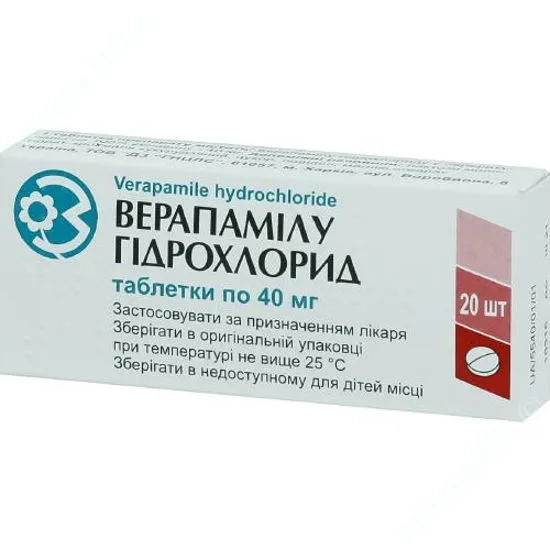
Table of Contents
INSTRUCTION FOR MEDICAL USE OF THE MEDICINAL PRODUCT VERAPAMIL HYDROCHLORIDE
Composition:
Active substance: verapamil;
1 tablet contains verapamil hydrochloride equivalent to 100 % substance 40 mg;
Excipients: lactose monohydrate, corn starch, sucrose, povidone, magnesium stearate.
Pharmaceutical form. Tablets.
Main physicochemical properties: tablets of white or white with yellowish tint color, with biconvex surface.
Pharmacotherapeutic group. Selective calcium antagonists with predominant effect on the heart. Phenylalkylamine derivatives. ATC code C08DA01.
Pharmacological Properties
Pharmacodynamics
Verapamil blocks the transmembrane influx of calcium ions into myocardial cells and vascular smooth muscle cells. It directly reduces myocardial oxygen demand by affecting energy-consuming metabolic processes in myocardial cells and indirectly reduces afterload. By blocking calcium channels in smooth muscle cells of coronary arteries, verapamil enhances blood flow to the myocardium, even in post-stenotic areas, and relieves coronary artery spasm. The antihypertensive efficacy of verapamil results from reduced peripheral vascular resistance without reflex tachycardia. No undesirable changes in physiological blood pressure values are observed. Verapamil exerts a pronounced antiarrhythmic effect, particularly in supraventricular arrhythmias. It slows impulse conduction in the atrioventricular node, thereby restoring sinus rhythm and/or normalizing ventricular rate, depending on the type of arrhythmia. Normal heart rate is either unchanged or slightly reduced.
Pharmacokinetics
Verapamil hydrochloride is a racemic mixture consisting of equal parts of the R-enantiomer and S-enantiomer. Verapamil is extensively metabolized. Norverapamil is one of 12 metabolites identified in urine, possesses 10–20% of the pharmacological activity of verapamil, and accounts for 6% of excreted drug. Equilibrium concentrations of norverapamil and verapamil in plasma are similar. Steady-state concentrations are achieved within 3–4 days after repeated once-daily dosing.
Absorption
More than 90% of orally administered verapamil is rapidly and almost completely absorbed in the small intestine. The mean bioavailability in healthy volunteers after a single dose is approximately 22%, due to extensive first-pass hepatic metabolism. Bioavailability doubles with repeated administration.
Maximum plasma concentration of verapamil is reached within 1–2 hours after administration of immediate-release tablets; for norverapamil, peak concentration occurs within 1 hour. Food intake does not affect verapamil bioavailability.
Distribution
Verapamil is widely distributed in body tissues. In healthy volunteers, the volume of distribution ranges from 1.8 to 6.8 L/kg. Plasma protein binding of verapamil is approximately 90%.
Metabolism
Verapamil is extensively metabolized. In vitro metabolism studies have shown that verapamil is metabolized by cytochrome P450 enzymes CYP3A4, CYP1A2, CYP2C8, CYP2C9, and CYP2C18. After oral administration to healthy male volunteers, verapamil hydrochloride undergoes extensive hepatic metabolism, producing 12 metabolites, most of which are present in trace amounts. The primary metabolites are various N- and O-dealkylated derivatives of verapamil. Among these, only norverapamil exhibits pharmacological activity (approximately 20% of the parent compound), as demonstrated in studies in dogs.
Elimination
The elimination half-life is 3–7 hours following oral administration. Approximately 50% of the administered dose is excreted by the kidneys within 24 hours and 70% within 5 days. Up to 16% of the dose is excreted in feces. About 3–4% of the drug excreted by the kidneys is unchanged. Total systemic clearance of verapamil is nearly as high as hepatic blood flow and averages approximately 1 L/h/kg (range: 0.7–1.3 L/h/kg).
Special Patient Populations
Children. Pharmacokinetic data on verapamil in children are limited. After oral administration, steady-state plasma concentrations are slightly lower in children compared to adults.
Elderly patients. Age may affect the pharmacokinetics of verapamil in patients with arterial hypertension. The elimination half-life may be prolonged in elderly patients. However, the antihypertensive effect of verapamil has been shown to be independent of age.
Patients with renal impairment. Renal function impairment does not affect verapamil pharmacokinetics, as demonstrated in comparative studies between patients with end-stage renal disease and individuals with normal renal function. Verapamil and norverapamil are not removed by hemodialysis.
Patients with hepatic impairment. The elimination half-life increases in patients with impaired liver function due to reduced clearance and increased volume of distribution.
Clinical characteristics.
Indications.
Ischemic heart disease, including: stable angina pectoris; unstable angina (progressive angina, rest angina); vasospastic angina (variant angina, Prinzmetal's angina); post-infarction angina in patients without heart failure when β-adrenoblockers are not indicated.
Arrhythmias: paroxysmal supraventricular tachycardia; atrial flutter/fibrillation with rapid atrioventricular conduction (except in Wolff-Parkinson-White (WPW) syndrome).
Arterial hypertension.
Contraindications.
Hypersensitivity to verapamil or to any other component of the drug.
Cardiogenic shock.
Second- or third-degree atrioventricular block (except in patients with a functioning artificial pacemaker).
Sick sinus syndrome (except in patients with a functioning artificial pacemaker).
Heart failure with reduced ejection fraction below 35% and/or pulmonary artery pressure above 20 mm Hg (unless secondary supraventricular tachycardia is responsive to verapamil therapy).
Atrial fibrillation/flutter in the presence of accessory conduction pathways (WPW syndrome and LGL syndrome). In such patients, administration of verapamil hydrochloride carries a risk of developing ventricular tachyarrhythmias, including ventricular fibrillation.
Do not administer intravenous β-adrenoblockers concomitantly during treatment with this drug (except in intensive care settings).
Interaction with other medicinal products and other forms of interaction.
In vitro metabolism studies of verapamil hydrochloride have shown that it is metabolized by cytochrome P450 enzymes CYP3A4, CYP1A2, CYP2C8, CYP2C9, and CYP2C18. Verapamil is an inhibitor of CYP3A4 enzymes and P-glycoproteins (P-gp). Clinically significant interactions have been reported with CYP3A4 inhibitors, which may increase plasma levels of verapamil, whereas CYP3A4 inducers may reduce plasma levels of verapamil hydrochloride; therefore, monitoring for interactions with other medicinal products is necessary.
Potential interactions related to the CYP450 enzyme system
Prazosin: increased Cmax of prazosin (~40%) without affecting elimination half-life. Additive hypotensive effect.
Terazosin: increased AUC (~24%) and Cmax (~25%) of terazosin. Add combustive hypotensive effect.
Quinidine: reduced quinidine clearance (~35%) after oral administration. Risk of arterial hypotension; in patients with hypertrophic obstructive cardiomyopathy, pulmonary edema may occur.
Flecainide: minimal effect on flecainide clearance in plasma (<~10%); no effect on verapamil clearance in plasma (see section "Special precautions for use").
Theophylline: reduced oral and systemic clearance by approximately 20%; in smokers, by 11%.
Carbamazepine: increased AUC of carbamazepine (~46%) in patients with refractory partial epilepsy; elevated carbamazepine levels may lead to adverse effects such as diplopia, headache, ataxia, or dizziness.
Phenytoin: reduced plasma concentration of verapamil.
Imipramine: increased AUC (~15%) of imipramine without affecting the active metabolite desipramine.
Gliburide: increased Cmax of gliburide by approximately 28%, AUC by 26%.
Colchicine: increased AUC (approximately 2-fold) and Cmax (approximately 1.3-fold) of colchicine. Dose reduction of colchicine is recommended (see colchicine prescribing information).
Clarithromycin, erythromycin, telithromycin: possible increase in verapamil levels.
Rifampicin: possible reduction in antihypertensive effect. Decreased AUC of verapamil (~97%), Cmax (~94%), and oral bioavailability (~92%).
Doxorubicin: when doxorubicin and verapamil (oral) are administered concomitantly, increased AUC (~104%) and Cmax (~61%) of doxorubicin in plasma are observed in patients with small-cell lung cancer.
Phenobarbital: increases oral clearance of verapamil fivefold.
Buspirone: increased AUC and Cmax of buspirone by 3.4-fold.
Midazolam: increased AUC of midazolam threefold and Cmax twofold.
Metoprolol: increased AUC of metoprolol (~32.5%) and Cmax (~41%) in patients with angina (see section "Special precautions for use").
Propranolol: increased AUC of propranolol (~65%) and Cmax (~94%) in patients with angina (see section "Special precautions for use").
Digoxin: in healthy volunteers, increased Cmax of digoxin (~44%), C12h (~53%), Css (~44%), AUC (~50%). Dose reduction of digoxin is recommended (see also section "Special precautions for use").
Digitoxin: reduced clearance of digitoxin (~27%) and extrarenal clearance (~29%).
Cimetidine: increased AUC of R-verapamil (~25%) and S-verapamil (~40%), with corresponding reduction in clearance of R- and S-verapamil.
Cyclosporine: increased AUC, Cmax, and Css of cyclosporine by approximately 45%.
Everolimus: increased AUC of everolimus (approximately 3.5-fold) and Cmax (approximately 2.3-fold). Increased Ctrough of verapamil (approximately 2.3-fold). Precise monitoring and dose adjustment of everolimus may be required.
Sirolimus: increased AUC of sirolimus (approximately 2.2-fold), increased AUC (approximately 1.5-fold) of S-verapamil. Concentration monitoring and dose adjustment of sirolimus may be needed.
Tacrolimus: possible increase in plasma levels of this drug.
Lipid-lowering agents (HMG-CoA reductase inhibitors (statins)): treatment with HMG-CoA reductase inhibitors (simvastatin, atorvastatin, lovastatin) in patients taking verapamil should be initiated at the lowest possible doses and gradually increased. If a patient already taking verapamil requires initiation of an HMG-CoA reductase inhibitor, dose reduction of the statin should be considered, and dosing should be adjusted according to plasma cholesterol levels.
Atorvastatin: possible increase in atorvastatin levels. Atorvastatin increases AUC of verapamil by approximately 43%.
Loxastatin: possible increase in lovastatin levels. Increased AUC (~63%) and Cmax (~32%) of verapamil.
Simvastatin: increased AUC of simvastatin by approximately 2.6-fold, Cmax of simvastatin by 4.6-fold.
Fluvastatin, pravastatin, and rosuvastatin are not metabolized by cytochrome CYP3A4 and are less likely to interact with verapamil.
Almotriptan: increased AUC by 20%, Cmax by 24%.
Sulfinpyrazone: increased oral clearance of verapamil threefold, reduced bioavailability by 60%. Reduced antihypertensive effect may occur.
Grapefruit juice: increased AUC of R-verapamil (~49%) and S-verapamil (~37%), increased Cmax of R-verapamil (~75%) and S-verapamil (~51%), without changes in elimination half-life or renal clearance. Grapefruit juice should be avoided with verapamil.
Hypericum perforatum (St. John's wort): decreased AUC of R-verapamil (~78%) and S-verapamil (~80%), with corresponding reduction in Cmax.
Other interactions
Antiviral agents (HIV): due to the ability of certain antiviral agents, such as ritonavir, to inhibit metabolism, plasma concentrations of verapamil may increase. Use with caution or dose reduction of verapamil may be necessary.
Lithium: increased neurotoxicity of lithium has been reported when lithium and verapamil hydrochloride are used concomitantly, with or without increased plasma lithium levels. However, in patients receiving a constant oral dose of lithium, addition of verapamil hydrochloride led to decreased plasma lithium levels. Patients receiving both drugs should be closely monitored.
Neuromuscular blockers: clinical data and animal studies indicate that verapamil hydrochloride may potentiate the effects of neuromuscular blockers (curare-like and depolarizing). Dose reduction of verapamil hydrochloride and/or the neuromuscular blocker may be required when used concomitantly.
Acetylsalicylic acid: increased risk of bleeding.
Ethanol (alcohol): increased plasma ethanol levels.
Antihypertensive agents, diuretics, vasodilators: enhanced hypotensive effect.
Metformin: concomitant use with verapamil may reduce the effectiveness of metformin.
Special precautions for use.
Acute myocardial infarction
The drug should be used with caution in patients with acute myocardial infarction complicated by bradycardia, severe arterial hypotension, or left ventricular dysfunction.
Cardiac block/first-degree atrioventricular block/bradycardia/asystole
Verapamil hydrochloride affects the atrioventricular and sinoatrial nodes and prolongs atrioventricular conduction time. Use with caution, as development of second- or third-degree atrioventricular block (which is a contraindication), or single-, dual-, or triple-bundle branch block of the His bundle, requires discontinuation of subsequent doses of verapamil hydrochloride and initiation of appropriate therapy if necessary.
Verapamil hydrochloride affects the atrioventricular and sinoatrial nodes and very rarely may provoke second- or third-degree atrioventricular block, bradycardia, and extremely rarely asystole. These symptoms are more likely to occur in patients with sick sinus syndrome (sinoatrial node disease), which is more common in elderly patients.
Asystole in patients without sick sinus syndrome is usually transient (a few seconds or less), with spontaneous return to atrioventricular nodal or normal sinus rhythm. If this phenomenon is not transient, appropriate therapy should be initiated immediately (see section "Adverse reactions").
Antiarrhythmic agents, β-adrenergic blockers
Mutual potentiation of cardiovascular effects (increased degree of high-grade atrioventricular block, significant reduction in heart rate, onset of heart failure, significant decrease in blood pressure). Asymptomatic bradycardia (36 beats/min) with an atrial ectopic pacemaker was observed in patients receiving concomitant therapy with timolol eye drops (a β-adrenergic blocker) during treatment with verapamil hydrochloride.
Digoxin
When verapamil is used concomitantly with digoxin, the digoxin dose should be reduced (see section "Interaction with other medicinal products and other forms of interaction").
Heart failure
Heart failure should be compensated prior to initiating verapamil treatment in patients with ejection fraction greater than 35%, and adequately controlled throughout the entire treatment period.
HMG-CoA reductase inhibitors (statins)
See section "Interaction with other medicinal products and other forms of interaction".
Neuromuscular transmission disorders
Verapamil hydrochloride should be used with caution in patients with disorders affecting neuromuscular transmission (myasthenia gravis, Lambert-Eaton syndrome, progressive Duchenne muscular dystrophy).
Renal impairment
Although data from confirmed comparative studies have shown that renal impairment does not affect the pharmacokinetics of verapamil in patients with end-stage renal disease, there have been several reports suggesting that verapamil should be used with caution and under close monitoring in patients with renal impairment. Verapamil is not removed by hemodialysis.
Hepatic impairment
Verapamil should be used with caution in patients with significant hepatic dysfunction (see section "Posology and method of administration").
If a patient has known intolerance to certain sugars, medical advice should be sought before taking this medicinal product.
Use during pregnancy or breastfeeding.
Well-controlled and clearly documented data on the use of the drug in pregnant women are lacking. Animal studies have not revealed any direct or indirect harmful effects related to reproductive toxicity. Since data obtained from reproductive animal studies cannot always be extrapolated to humans, the drug should be used during pregnancy only if clearly necessary.
Verapamil crosses the placenta and is detectable in umbilical cord blood.
Verapamil and its metabolites are excreted in breast milk. Limited human data on oral administration indicate that the amount of verapamil transferred to the newborn is low (0.1–1% of the dose taken by the mother); therefore, verapamil use may be compatible with breastfeeding. However, the risk to the newborn cannot be excluded. Due to the potential for serious adverse reactions in breastfed infants, verapamil may be used during breastfeeding only if clearly necessary for the mother.
Ability to influence reaction speed when driving or operating machinery.
Due to the antihypertensive effect of verapamil hydrochloride, depending on individual response, the ability to drive vehicles, operate machinery, or work under hazardous conditions may be impaired. This is particularly relevant during the initial phase of treatment, dose escalation, change of antihypertensive medication, and concomitant use of the drug with alcohol. Verapamil may increase plasma alcohol levels and delay its elimination, thereby potentiating the effects of alcohol.
Method of Administration and Dosage
Dosage is determined individually by a physician for each patient. The drug should be taken without chewing or sucking, with sufficient fluid (e.g., one glass of water; grapefruit juice must not be used under any circumstances), preferably during or immediately after a meal.
Adults and adolescents with body weight above 50 kg
Ischemic heart disease, paroxysmal supraventricular tachycardia, atrial flutter/fibrillation
The recommended daily dose is 120–480 mg, divided into 3–4 doses. The maximum daily dose is 480 mg.
Arterial hypertension
The recommended daily dose is 120–360 mg, divided into 3 doses.
Children of preschool age older than 6 years, only for cardiac rhythm disorders: the recommended dose is 80–120 mg per day, divided into 2–3 doses.
Children aged 6–14 years, only for cardiac rhythm disorders: the recommended dose is 80–360 mg per day, divided into 2–4 doses.
Renal function impairment
Available data are described in the section "Special precautions for use". Verapamil hydrochloride should be used with caution and under close medical supervision in patients with renal insufficiency.
Hepatic function impairment
In patients with impaired liver function, the effect of verapamil hydrochloride is enhanced and prolonged due to slowed drug metabolism. Therefore, dosage should be established with particular caution, starting with low doses (e.g., initially 2–3 times daily 40 mg, i.e., 80–120 mg daily for patients with hepatic dysfunction), see section "Special precautions for use".
Do not take the drug while lying down.
Verapamil hydrochloride must not be administered to patients who have had myocardial infarction within the previous 7 days.
After prolonged therapy, the drug should be discontinued gradually by tapering the dose.
The duration of treatment is determined individually by the physician and depends on the patient's condition and disease course.
Children. Verapamil hydrochloride may be used in children only for cardiac rhythm disorders (see section "Method of Administration and Dosage").
Overdose.
Symptoms: arterial hypotension, bradycardia progressing to high-degree atrioventricular block and sinus node arrest, acute respiratory distress syndrome, hyperglycemia, stupor, and metabolic acidosis. Fatal outcomes due to overdose have been reported.
Treatment of verapamil hydrochloride overdose should primarily be supportive and individualized. β-adrenergic stimulation and/or intravenous administration of calcium preparations (calcium chloride) are effective in managing symptoms following intentional oral overdose of verapamil hydrochloride.
In cases of severe arterial hypotension or high-degree atrioventricular block, agents that increase arterial pressure (vasopressors) or cardiac pacemakers, respectively, should be used. In asystole, in addition to standard resuscitation measures, β-adrenergic stimulation (e.g., isoprenaline hydrochloride), other agents aimed at increasing arterial pressure, or cardiac and respiratory support should be applied.
Verapamil hydrochloride is not removed by hemodialysis.
Adverse Reactions
The most commonly observed adverse reactions were: headache, dizziness; gastrointestinal disorders: nausea, constipation, and abdominal pain; as well as bradycardia, tachycardia, palpitations, decreased blood pressure, flushing, peripheral edema, and fatigue.
Immune system disorders: hypersensitivity.
Nervous system disorders: dizziness, headache, paresthesia, tremor, extrapyramidal disorders, paralysis (tetraparesis)*, epileptic seizures.
Metabolism and nutritional disorders: frequency not known – hyperkalemia.
Psychiatric disorders: somnolence.
Ear and labyrinthine disorders: tinnitus, vertigo.
Cardiac disorders: bradycardia, flushing, decreased blood pressure, palpitations, tachycardia, first-, second-, or third-degree atrioventricular block, heart failure, sinus node arrest, sinus bradycardia, asystole.
Respiratory, thoracic and mediastinal disorders: bronchospasm, frequency not known – dyspnea.
Gastrointestinal disorders: nausea, constipation, abdominal pain, vomiting, abdominal discomfort, intestinal obstruction, gingival hyperplasia (gingivitis and bleeding).
Skin and subcutaneous tissue disorders: hyperhidrosis, angioneurotic edema, Stevens-Johnson syndrome, erythema multiforme, maculopapular rash, alopecia, urticaria, sensation of itching, pruritus, purpura.
Musculoskeletal and connective tissue disorders: myalgia, arthralgia, muscle weakness.
Renal and urinary disorders: frequency not known – renal failure.
Reproductive system and breast disorders: erectile dysfunction, gynecomastia, galactorrhea.
General disorders: peripheral edema, fatigue.
Laboratory findings: increased levels of liver enzymes and increased serum prolactin levels.
* Paralysis (tetraparesis) has been reported once during post-marketing surveillance in association with concomitant use of verapamil and colchicine. This may be due to colchicine penetration through the blood-brain barrier as a result of verapamil-induced inhibition of CYP3A4 and P-gp. See section "Interaction with other medicinal products and other forms of interaction".
Shelf life. 5 years.
Storage conditions. Store in the original packaging at a temperature not exceeding 25°C.
Keep out of reach of children.
Packaging. Tablets, 10x2 in blisters in a carton.
Prescription status. Prescription only.
Manufacturer.
Limited Liability Company "Experimental Plant GNCLSC", or
LIMITED LIABILITY COMPANY "CORPORATION "ZDOROVTIA", or
Limited Liability Company "FARMEX GROUP".
Manufacturer's address and place of business.
Ukraine, 61057, Kharkiv region, Kharkiv, Vorobiova Street, 8.
(Limited Liability Company "Experimental Plant GNCLSC")
Ukraine, 61013, Kharkiv region, Kharkiv, Shevchenka Street, 22.
(LIMITED LIABILITY COMPANY "CORPORATION "ZDOROVTIA")
Ukraine, 08301, Kyiv region, Boryspil, Shevchenka Street, 100.
(Limited Liability Company "FARMEX GROUP")