Venogepanol 1000
Ukraine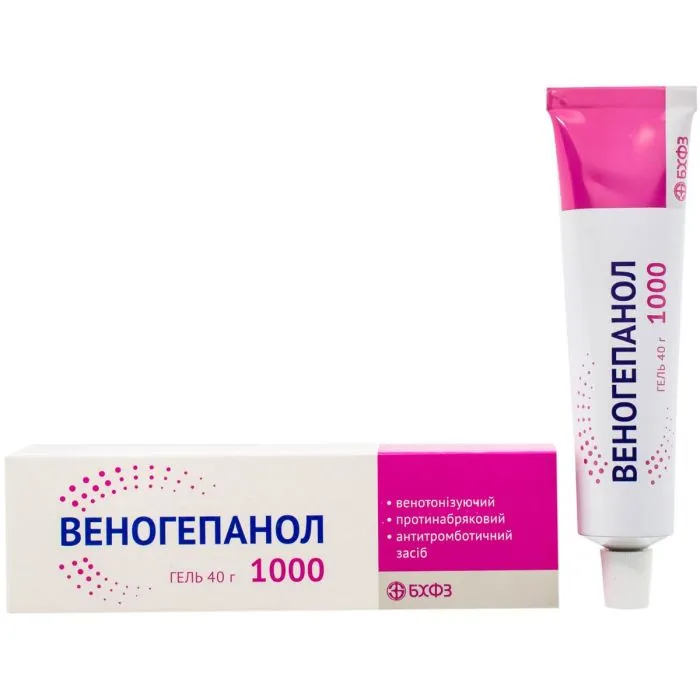
Table of Contents
INSTRUCTIONS FOR MEDICAL USE OF THE MEDICINAL PRODUCT VENOHEPANOL 1000 (VENOHEPANOL 1000)
Composition:
Active substances: venorutinol, sodium heparin, dexpanthenol;
1 g of gel contains venorutinol 20 mg, sodium heparin 1000 IU, dexpanthenol 30 mg;
Excipients: propylene glycol, disodium edetate, carbomers, sodium hydroxide, purified water.
Pharmaceutical form. Gel.
Main physicochemical characteristics: yellow transparent gel of homogeneous consistency.
Pharmacotherapeutic group. Angioprotectives. Agents used in varicose veins. Heparin, combinations.
ATC code C05BA53.
Pharmacological properties.
Pharmacodynamics.
The pharmacodynamic properties of Venogepanol 1000 are determined by the combination of three active ingredients: sodium heparin, venorutinol, and dexpanthenol. Venogepanol 1000 is an antithrombotic, anti-edematous agent with anti-inflammatory, venotonic, and capillary-strengthening effects intended for topical application.
Sodium heparin, included in the formulation, is a direct-acting anticoagulant; it blocks thrombin biosynthesis, enhances fibrinolysis, and inhibits hyaluronidase activity. Heparin reduces blood viscosity and vascular permeability, thereby preventing stasis. By adsorbing onto endothelial and blood cell membranes, it prevents platelet, erythrocyte, and leukocyte adhesion and aggregation. When applied topically, it exerts antithrombotic, anti-inflammatory, and anti-edematous effects.
Venorutinol is a bioflavonoid with vitamin P activity, providing angioprotective, venotonic, anti-inflammatory, and anti-edematous effects. It reduces exudative inflammation in the vascular wall, limits platelet adhesion to its surface, promotes increased oxygen penetration into tissues, and participates in redox processes. Venorutinol decreases capillary permeability and fragility, strengthens venous and capillary walls, enhances smooth muscle tone of venous vessels, improves microcirculation and tissue trophism, and reduces venous and perivenous stasis.
Dexpanthenol (provitamin B5), through conversion into its active metabolite—pantothenic acid—stimulates tissue regeneration, enhances the strength of collagen fibers, maintains skin elasticity and resilience, acts as a moisturizing agent by improving hydration of superficial skin layers, alleviates dryness, desquamation, and pruritus, and exerts mild anti-inflammatory activity. Dexpanthenol enhances metabolic activity in skin cells, thereby improving the skin absorption of heparin.
Pharmacokinetics.
Not studied.
Clinical characteristics.
Indications.
- Prevention and reduction of severity of fatigue, heaviness, pain, swelling, and frequency of leg cramps caused by chronic venous diseases;
- prophylaxis and treatment of varicose veins, deep vein thrombosis, superficial thrombophlebitis of the lower limbs, phlebitis following intravenous infusions;
- rehabilitation after surgical interventions, laser ablation, and sclerotherapy in varicose vein disease;
- tenosynovitis, muscle and tendon injuries (including sports-related) without skin integrity disruption;
- fibrotic indurations and external inflammatory processes without skin integrity disruption.
Contraindications.
Individual hypersensitivity to any component of the drug, hemophilia, hemorrhagic diathesis, idiopathic thrombocytopenic purpura, severe thrombocytopenia, ulcerative-necrotic processes in the area of thrombophlebitis, tendency to bleeding, active bleeding, traumatic skin integrity disruption, open and/or infected wounds.
Interaction with other medicinal products and other forms of interactions.
Parenteral administration of nitroglycerin together with the use of Venogepanol 1000, as well as simultaneous application of the gel with thyroxine, tetracycline, antihistamines, ergot alkaloids, nicotine, may reduce the drug's efficacy.
Enhances the effect of ascorbic acid on vascular wall structure and permeability.
DEXTRAN, phenylbutazone, ketorolac: simultaneous use may increase the risk of bleeding.
Oral anticoagulants (e.g., warfarin, dicoumarol, clopidogrel): concurrent use with Venogepanol 1000 gel may prolong prothrombin time.
Nonsteroidal anti-inflammatory drugs (e.g., diclofenac, ibuprofen, indomethacin), venotonic agents: when used simultaneously, enhance the effect of Venogepanol 1000 gel.
Dipyridamole, iloprost: increase the anticoagulant effect of the active ingredient of Venogepanol 1000 – heparin.
ACE inhibitors, aliskiren: possible hyperglycemia.
Simultaneous use of Venogepanol 1000 with drugs containing sulindac may cause peripheral neuropathy.
Dexpanthenol, a component of Venogepanol 1000, may enhance the effect of depolarizing muscle relaxants (e.g., succinylcholine chloride, decamethonium bromide) and reduce the effect of non-depolarizing muscle relaxants (e.g., tubocurarine chloride) due to its ability to stimulate acetylcholine synthesis.
If the patient is taking any other medicinal products, it is essential to inform the physician.
Special precautions for use.
Apply the gel only to intact skin.
Do not apply to wounded skin surfaces or infected skin areas (including those with purulent processes).
Ensure the medication does not enter the eyes or mucous membranes. The gel may be applied under occlusive dressings. After application, exposure of the treated skin areas to sunlight should be avoided.
Patients with chronic venous diseases are recommended to use the medication both at early and late stages of the disease.
Prolonged use of the medication is not recommended in patients with severe renal function impairment.
If the gel gets into the eyes, they should be thoroughly rinsed with water.
To prevent unwanted effects, the medication should be applied to skin cleaned from other medicinal products, cosmetics, and contaminants.
If the patient's health condition worsens or any adverse reactions occur during the use of Venogepanol 1000, discontinue use of the medication immediately and consult a physician.
Use during pregnancy or breastfeeding.
The medication should not be used during pregnancy or breastfeeding.
Ability to influence reaction speed when driving or operating machinery.
The use of Venogepanol 1000 does not affect reaction speed when driving or operating machinery.
Method of Administration and Dosage
Apply externally. For adults, apply the gel to intact skin of the affected area 1–3 times daily, gently rubbing in with massaging motions until completely absorbed. If necessary, Venogepanol 1000 may be used as gel-impregnated dressings. In the case of varicose ulcers, apply the gel in a ring-shaped pattern approximately 4 cm wide around the ulcer. Avoid direct application to the ulcer surface.
Dosage and duration of treatment are determined individually by a physician depending on clinical indications, severity and course of the disease, as well as the therapeutic effect achieved. The recommended treatment duration for chronic venous disease is 4 weeks; if necessary, the course may be repeated. For the treatment of injuries (including sports-related), use until symptoms resolve.
Children
Do not use.
Overdose
Symptoms: Overdose is unlikely when the recommended dosage regimen is followed. When applied to large skin areas (due to potential systemic absorption), hemorrhagic complications such as bleeding of varying severity may occur.
In case of accidental ingestion, induce vomiting, perform gastric lavage, and seek immediate medical attention. Symptomatic therapy should be administered.
Management of symptoms: In case of minor bleeding, reduce the dose or temporarily discontinue the drug. In case of severe bleeding, administer 1% protamine sulfate solution slowly intravenously. If the heparin concentration in the blood is unknown, a single dose of protamine sulfate should not exceed 1 mL. Symptomatic therapy is indicated.
Side effects.
In individual cases, local hypersensitivity reactions are possible: hyperemia, skin irritation, burning sensation, skin swelling, itching, rash, urticaria, angioneurotic edema, dermatitis (including contact dermatitis), eczema, hemorrhages, and occasionally the appearance of small pustules, vesicles, or bullae. Usually, these symptoms resolve spontaneously after discontinuation of the drug.
When applied to large areas of skin, systemic adverse reactions are possible.
In the event of any negative reactions, it is essential to consult a physician regarding further treatment. Symptomatic therapy should be administered.
Shelf life. 3 years.
Do not use the drug after the expiry date stated on the packaging.
Storage conditions.
Store in the original packaging at a temperature not exceeding 25 °C.
Keep out of reach of children.
Packaging.
40 g in a tube; 1 tube per carton.
Prescription status. Over-the-counter.
Manufacturer.
Public Joint-Stock Company "Scientific and Production Center "Borshchahivskiy Chemical-Pharmaceutical Plant".
Manufacturer’s location and address of business operations.
17, Miru Street, Kyiv, 03134, Ukraine.
INSTRUCTION
for medical use of the medicinal product
VENOHEPANOL 1000
(VENOHEPANOL 1000)
Composition:
Active substances: venorutinol, sodium heparin, dexpanthenol;
1 g of gel contains 20 mg of venorutinol, 1000 IU of sodium heparin, and 30 mg of dexpanthenol;
Excipients: propylene glycol, disodium edetate, carbomers, sodium hydroxide, purified water.
Pharmaceutical form. Gel.
Main physicochemical properties: yellow, transparent, homogeneous gel.
Pharmacotherapeutic group. Angioprotectors. Agents used in varicose veins. Heparin combinations.
ATC code C05BA53.
Pharmacological properties.
Pharmacodynamics.
The pharmacodynamic properties of Venohepanol 1000 are due to the combination of three active ingredients: sodium heparin, venorutinol, and dexpanthenol. Venohepanol 1000 is an antithrombotic, anti-edematous agent with anti-inflammatory, venotonic, and capillary-strengthening effects intended for topical application.
Sodium heparin, a component of the drug, is a direct-acting anticoagulant; it inhibits thrombin biosynthesis, activates fibrinolysis, and suppresses hyaluronidase activity. Heparin reduces blood viscosity and vascular permeability, thereby preventing stasis. By adsorbing onto endothelial and blood cell membranes, it prevents platelet, erythrocyte, and leukocyte adhesion and aggregation. When applied topically, it exerts antithrombotic, anti-inflammatory, and anti-edematous effects.
Venorutinol is a bioflavonoid with vitamin P activity, providing angioprotective, venotonic, anti-inflammatory, and anti-edematous effects. It reduces exudative inflammation in the vessel wall, limits platelet adhesion to its surface, enhances oxygen penetration into tissues, and participates in redox processes. Venorutinol decreases capillary permeability and fragility, strengthens venous and capillary walls, increases venous smooth muscle tone, improves microcirculation and tissue trophism, and reduces venous and perivenous stasis.
Dexpanthenol (provitamin B5), through conversion into its active metabolite pantothenic acid, stimulates tissue regeneration, enhances collagen fiber strength, maintains skin elasticity and resilience, acts as a moisturizing agent by improving hydration of superficial skin layers, alleviates dryness, scaling, and itching, and exerts mild anti-inflammatory effects. Dexpanthenol enhances metabolic activity in skin cells, thereby improving cutaneous absorption of heparin.
Pharmacokinetics.
Not studied.
Clinical characteristics.
Indications.
- Prevention and reduction of fatigue, heaviness, pain, edema, and frequency of leg cramps associated with chronic venous disorders;
- prophylaxis and treatment of varicose veins, deep vein thrombosis, superficial thrombophlebitis of the lower limbs, and phlebitis following intravenous infusions;
- rehabilitation after surgical procedures, laser ablation, or sclerotherapy in varicose disease;
- tenosynovitis, muscle and tendon injuries (including sports-related), without skin integrity disruption;
- scar indurations and external inflammatory processes without skin integrity disruption.
Contraindications.
Hypersensitivity to any component of the drug, hemophilia, hemorrhagic diathesis, idiopathic thrombocytopenic purpura, severe thrombocytopenia, ulcerative-necrotic processes in the area of thrombophlebitis, bleeding tendency, active bleeding, traumatic skin integrity disruption, open and/or infected wounds.
Interaction with other medicinal products and other forms of interaction.
Parenteral administration of nitroglycerin together with Venohepanol 1000, as well as concomitant use of the gel with thyroxine, tetracycline, antihistamines, ergot alkaloids, nicotine, may reduce the drug's efficacy.
Enhances the effect of ascorbic acid on vascular wall structure and permeability.
DEXTRAN, phenylbutazone, ketorolac: concomitant use may increase the risk of bleeding.
Oral anticoagulants (e.g., warfarin, dicoumarol, clopidogrel): concomitant use with Venohepanol 1000 gel may prolong prothrombin time.
Nonsteroidal anti-inflammatory drugs (e.g., diclofenac, ibuprofen, indomethacin), venotonic agents: concomitant use enhances the effect of Venohepanol 1000 gel.
Dipyridamole, iloprost: increase the anticoagulant effect of the active ingredient in Venohepanol 1000—sodium heparin.
ACE inhibitors, aliskiren: hyperglycemia may occur.
Concomitant use of Venohepanol 1000 with drugs containing sulindac may cause peripheral neuropathy.
Dexpanthenol, a component of Venohepanol 1000, may enhance the effect of depolarizing muscle relaxants (e.g., succinylcholine chloride, decamethonium bromide) and reduce the effect of non-depolarizing muscle relaxants (e.g., tubocurarine chloride) due to its ability to stimulate acetylcholine synthesis.
If a patient is taking any other medicinal products, this must be reported to the physician.
Special precautions.
Apply the gel only to intact skin.
Do not apply to wound surfaces or infected skin areas (including those with purulent processes).
Ensure the product does not enter the eyes or mucous membranes. The gel may be applied under an occlusive dressing. After application, avoid sun exposure on treated skin areas.
Patients with chronic venous disorders are advised to use the drug at both early and late stages of the disease.
Prolonged use of the drug is not recommended in patients with severe renal impairment.
In case of gel contact with the eyes, rinse thoroughly with water.
To prevent unwanted effects, apply the drug only to skin cleaned of other medicinal products, cosmetics, and contaminants.
If the patient's condition worsens or any adverse effects occur during treatment with Venohepanol 1000, drug use must be discontinued and medical advice sought.
Use during pregnancy or breastfeeding.
The drug should not be used during pregnancy or breastfeeding.
Effect on the ability to drive or operate machinery.
The use of Venohepanol 1000 does not affect reaction speed when driving or operating machinery.
Method of administration and dosage.
For external use only. Adults should apply the gel to intact skin of the affected area 1–3 times daily, gently massaging until fully absorbed. If necessary, Venohepanol 1000 may be used as a gel-impregnated dressing. In cases of varicose ulcers, apply the gel in a ring approximately 4 cm wide around the ulcer. Avoid direct application to the ulcer surface.
Dosage and duration of treatment are determined individually by a physician based on clinical indications, severity and course of the disease, and therapeutic response achieved. The recommended treatment duration for chronic venous disease is 4 weeks; treatment may be repeated if necessary. For trauma (including sports injuries), use until symptoms resolve.
Children.
Do not use.
Overdose.
Symptoms. Overdose is unlikely when the recommended dosage regimen is followed. However, application to large skin areas (due to possible systemic absorption) may lead to hemorrhagic complications such as bleeding of varying severity.
In case of accidental ingestion, induce vomiting, perform gastric lavage, and seek medical advice. Symptomatic therapy should be administered.
Management of symptoms. In case of minor bleeding, reduce the dose or temporarily discontinue the drug. In case of severe bleeding, administer 1% protamine sulfate solution slowly intravenously. If the heparin concentration in blood is unknown, a single dose of protamine sulfate should not exceed 1 ml. Symptomatic therapy should be administered.
Adverse reactions.
In isolated cases, local hypersensitivity reactions are possible: hyperemia, skin irritation, burning sensation, skin swelling, itching, rash, urticaria, angioneurotic edema, dermatitis (including contact dermatitis), eczema, hemorrhages, and occasionally the appearance of small pustules, vesicles, or bullae. These symptoms usually resolve spontaneously after discontinuation of the drug.
Systemic adverse reactions are possible when applied to large skin areas.
In case of any adverse reactions, consult a physician for further management. Symptomatic therapy should be administered.
Shelf life. 3 years.
Do not use the drug after the expiry date stated on the packaging.
Storage conditions.
Store in the original packaging at a temperature not exceeding 25 °C.
Keep out of reach of children.
Packaging.
40 g in a tube; 1 tube per carton.
Prescription status. Over-the-counter.
Manufacturer.
Public Joint-Stock Company "Scientific and Production Center "Borshchahivskiy Chemical-Pharmaceutical Plant".
Manufacturer’s location and address of business operations.
17, Miru Street, Kyiv, 03134, Ukraine.