Venlafaxine
Ukraine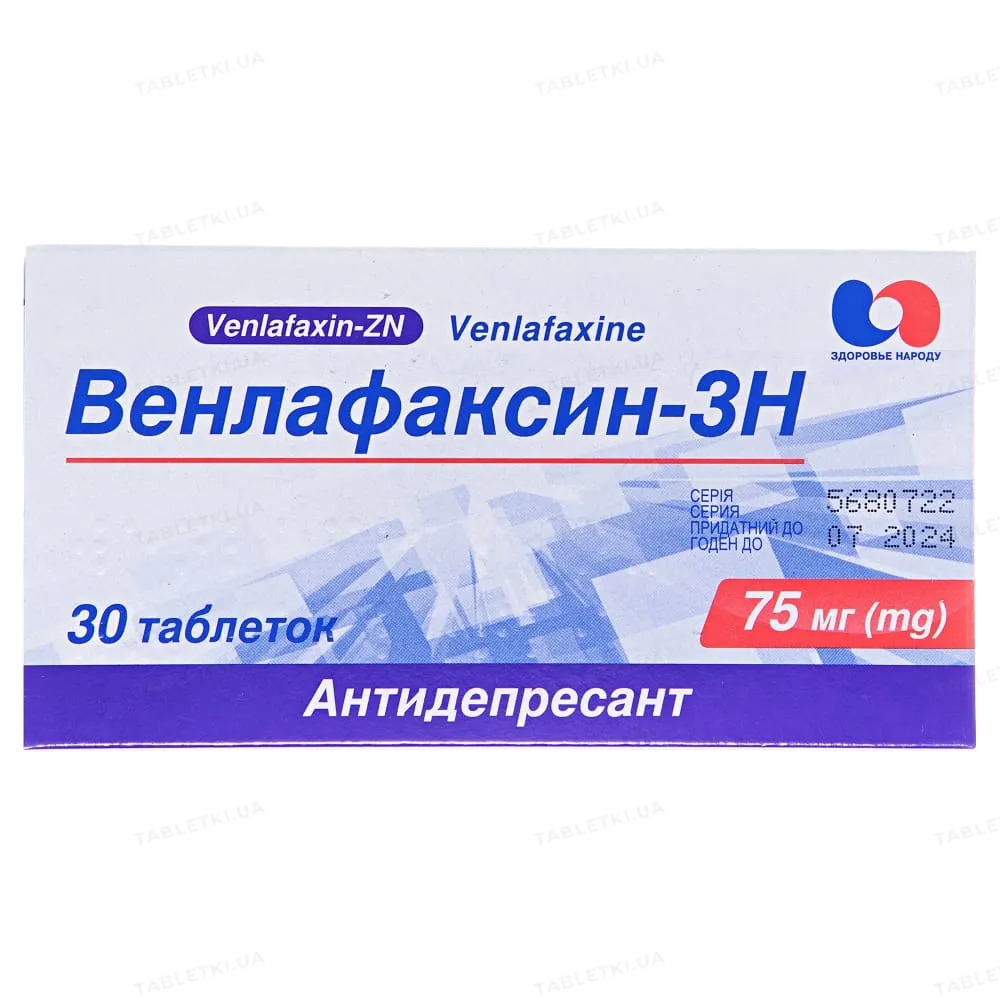
Table of Contents
INSTRUCTIONS FOR MEDICAL USE OF THE MEDICINAL PRODUCT VENLAFAXINE (VENLAFAXINE)
Composition:
Active substance: venlafaxine;
One tablet contains venlafaxine hydrochloride equivalent to venlafaxine 75 mg;
Excipients: microcrystalline cellulose, lactose monohydrate, sodium starch glycolate (type A), colloidal anhydrous silicon dioxide, magnesium stearate, iron(III) oxide yellow (E 172).
Pharmaceutical form. Tablets.
Main physicochemical properties: single-layer, round-shaped tablets, light yellow in color, with flat upper and lower surfaces and beveled edges, having a score line on one side. When broken, a relatively homogeneous structure is visible under magnification.
Pharmacotherapeutic group. Agents acting on the nervous system. Psychoanaleptics. Antidepressants. Venlafaxine. ATC code N06AX16.
Pharmacological Properties
Pharmacodynamics
The mechanism of the antidepressant action of venlafaxine in humans is associated with potentiation of neurotransmitter activity in the central nervous system (CNS). Venlafaxine and its active metabolite O-desmethylvenlafaxine (ODV) are potent, selective serotonin and norepinephrine reuptake inhibitors (SNRIs) and weak inhibitors of dopamine reuptake. After single or multiple doses, venlafaxine and its active metabolite reduce β-adrenergic responses. They have similar effects on neurotransmitter reuptake and receptor binding.
Venlafaxine has virtually no affinity for muscarinic, cholinergic, H1-histaminergic, or α1-adrenergic receptors in vitro. Pharmacological activity at these receptors may be associated with various adverse reactions observed also with other antidepressants, namely anticholinergic, sedative, and cardiovascular side effects.
Venlafaxine does not inhibit monoamine oxidase (MAO) activity.
In vitro studies have shown that venlafaxine has no affinity for opioid or benzodiazepine receptors.
Pharmacokinetics
Venlafaxine is extensively metabolized during first-pass through the liver, forming the active metabolite ODV. The elimination half-life of venlafaxine is 5 ± 2 hours and that of ODV is 11 ± 2 hours. Steady-state concentrations of venlafaxine and ODV are reached within 3 days of multiple dosing. Venlafaxine and ODV exhibit linear kinetics over the dose range of 75–450 mg per day.
Absorption
After a single dose of immediate-release venlafaxine, approximately 92% of the drug is absorbed. Bioavailability is 40–45% due to presystemic metabolism. Following administration of immediate-release venlafaxine, peak plasma concentrations of venlafaxine and ODV are reached within 2 and 3 hours, respectively. Food intake does not affect the bioavailability of venlafaxine or ODV.
Distribution
Plasma protein binding of venlafaxine and ODV is 27% and 30%, respectively. The volume of distribution of venlafaxine at steady state is 4.4 ± 1.6 L/kg after intravenous administration.
Metabolism
Venlafaxine undergoes extensive hepatic metabolism. In vitro and in vivo studies have shown that venlafaxine is metabolized to its active metabolite ODV by the CYP2D6 enzyme system. These studies also indicate that venlafaxine is metabolized by CYP3A4 to the less active metabolite N-desmethylvenlafaxine, and that venlafaxine is a weak inhibitor of CYP2D6. Venlafaxine does not inhibit CYP1A2, CYP2C9, or CYP3A4.
Excretion
Venlafaxine and its metabolites are primarily excreted by the kidneys. Approximately 87% of the dose is recovered in urine within 48 hours, either as unchanged venlafaxine (5%), unconjugated ODV (29%), conjugated ODV (26%), or other inactive metabolites (27%). Mean steady-state clearance of venlafaxine and ODV is 1.3 ± 0.6 L/h/kg and 0.4 ± 0.2 L/h/kg, respectively.
Special Patient Populations
Age and Gender
Age and gender do not significantly affect the pharmacokinetics of venlafaxine and ODV.
Poor and Extensive CYP2D6 Metabolizers
Plasma concentrations of venlafaxine are higher in poor metabolizers of CYP2D6 compared to extensive metabolizers. However, since total exposure (AUC) to venlafaxine and ODV is similar in both groups, no different dosing regimens are required for these two groups.
Patients with Hepatic Impairment
In patients with Child–Pugh class A (mild hepatic impairment) and class B (moderate hepatic impairment) liver disease, the elimination half-life of venlafaxine and ODV is prolonged compared to healthy volunteers. Total clearance of venlafaxine and ODV is reduced. There is a high degree of inter-subject variability. Data in patients with severe hepatic impairment are limited.
Patients with Renal Impairment
In patients undergoing dialysis, the elimination half-life of venlafaxine is prolonged by approximately 180%, and clearance is reduced by approximately 57% compared to healthy volunteers. For ODV, the elimination half-life is prolonged by approximately 142% and clearance is reduced by approximately 56%. Dose adjustment is required in patients with severe renal impairment and in those undergoing hemodialysis.
Clinical characteristics.
Indications.
Treatment of major depressive episodes.
Prevention of recurrence of major depressive episodes.
Contraindications.
- Hypersensitivity to venlafaxine or to any component of the medicinal product;
- concomitant therapy with any monoamine oxidase inhibitors (MAOIs) (reversible, irreversible, selective, or non-selective);
- high risk of severe ventricular arrhythmia in the patient (e.g., in cases of significant left ventricular dysfunction, NYHA functional class III–IV);
- severe arterial hypertension (blood pressure ≥180/115 mmHg prior to initiation of therapy);
- narrow-angle glaucoma;
- severe hepatic and/or renal impairment;
- urinary retention due to impaired urinary outflow (e.g., prostate disorders).
Interaction with other medicinal products and other forms of interactions.
MAO inhibitors
Irreversible non-selective MAO inhibitors
Venlafaxine must not be used in combination with irreversible non-selective MAO inhibitors. Venlafaxine treatment may be initiated no earlier than 14 days after discontinuation of irreversible non-selective MAO inhibitors. After discontinuation of venlafaxine, at least 7 days must elapse before starting therapy with irreversible non-selective MAO inhibitors.
Reversible selective MAO-A inhibitors (moclobemide)
Due to the risk of serotonin syndrome, combination of venlafaxine with reversible selective MAO inhibitors such as moclobemide is contraindicated. Venlafaxine treatment may be initiated no earlier than 14 days after discontinuation of reversible MAO inhibitors. After discontinuation of venlafaxine, at least 7 days must elapse before starting therapy with reversible MAO inhibitors.
Reversible non-selective MAO inhibitors (linezolid)
Concomitant use of the antibiotic linezolid (a weak reversible non-selective MAO inhibitor) with venlafaxine is contraindicated.
Severe adverse reactions have been reported in patients who recently discontinued MAO inhibitor therapy and initiated treatment with venlafaxine, or who discontinued venlafaxine shortly before starting MAO inhibitors. These reactions included tremor, myoclonus, excessive sweating, nausea, vomiting, flushing, dizziness, hyperthermia with features resembling neuroleptic malignant syndrome (NMS), seizures, and fatal outcomes.
Serotonin syndrome
Serotonin syndrome may occur during treatment with venlafaxine, particularly when used concomitantly with medicinal products affecting the serotonergic neurotransmitter system (including triptans, selective serotonin reuptake inhibitors (SSRIs), SNRIs, lithium, sibutramine, tramadol, St. John’s wort (Hypericum perforatum)), with medicinal products interfering with serotonin metabolism (including MAO inhibitors), or with serotonin precursors (e.g., tryptophan supplements). Symptoms of serotonin syndrome include changes in mental status, autonomic lability, neuromuscular disturbances, and/or gastrointestinal symptoms.
If concomitant use of venlafaxine with SSRIs, SNRIs, or serotonin receptor antagonists (tryptophan) is clinically justified, careful patient monitoring is recommended, especially at the beginning of treatment and during dose escalation. Concomitant use of venlafaxine with serotonin precursors (such as tryptophan) is not recommended.
Medicinal products affecting the CNS
The risk of using venlafaxine in combination with other medicinal products affecting the CNS has not been systematically studied. Therefore, caution is advised when using venlafaxine concomitantly with other CNS-active medicinal products.
Alcohol
Patients should be advised not to consume alcohol, considering its CNS effects and potential to clinically worsen psychiatric conditions, as well as the possibility of adverse interactions with venlafaxine, including CNS depression.
Effect of other medicinal products on venlafaxine
Ketoconazole (CYP3A4 inhibitor)
A pharmacokinetic study of ketoconazole in CYP2D6 poor metabolizers (PMs) and extensive metabolizers (EMs) demonstrated increased AUC of venlafaxine (by 70% and 21% in PMs and EMs, respectively) and O-desmethylvenlafaxine (ODV) (by 33% and 23% in PMs and EMs, respectively) following ketoconazole administration. Concomitant use of CYP3A4 inhibitors (e.g., atazanavir, clarithromycin, indinavir, itraconazole, voriconazole, posaconazole, ketoconazole, nelfinavir, ritonavir, saquinavir, telithromycin) with venlafaxine may increase plasma levels of venlafaxine and ODV. Therefore, caution is advised when co-administering a CYP3A4 inhibitor with venlafaxine.
Effect of venlafaxine on other medicinal products
Lithium
Concomitant use of venlafaxine and lithium may lead to serotonin syndrome.
Diazepam
Venlafaxine does not affect the pharmacokinetics and pharmacodynamics of diazepam or its active metabolite desmethyldiazepam. Diazepam does not affect the pharmacokinetics of venlafaxine or ODV. It is unknown whether there is a pharmacokinetic and/or pharmacodynamic interaction with other benzodiazepines.
Imipramine
Imipramine does not affect the pharmacokinetics of venlafaxine or ODV. Venlafaxine does not affect the pharmacokinetics of imipramine or 2-OH-imipramine. A dose-dependent increase in AUC of 2-OH-desipramine by 2.5–4.5 times was observed when venlafaxine was administered at doses of 75–150 mg/day. The clinical significance of this interaction is unknown. Caution is advised when using venlafaxine concomitantly with imipramine.
Haloperidol
In a pharmacokinetic study of haloperidol, a 42% decrease in renal clearance, an 88% increase in maximum plasma concentration, and a 70% increase in AUC of haloperidol were observed, without changes in its elimination half-life. This should be taken into account when using haloperidol concomitantly with venlafaxine.
Risperidone
Venlafaxine increases the AUC of risperidone by 50%, but does not significantly alter the pharmacokinetics of active components (risperidone and 9-hydroxyrisperidone). The clinical significance of this interaction is unknown.
Metoprolol
Concomitant administration of venlafaxine and metoprolol in healthy volunteers in a pharmacokinetic study resulted in an approximately 30–40% increase in plasma concentration of metoprolol, without changing the plasma concentration of its active metabolite α-hydroxymetoprolol. The clinical significance of this phenomenon in patients with arterial hypertension is unknown. Metoprolol does not alter the pharmacokinetics of venlafaxine or its active metabolite ODV. Caution is advised when using venlafaxine concomitantly with metoprolol.
Indinavir
When venlafaxine was co-administered with indinavir, AUC of indinavir decreased by 28% and Cmax by 36%. Pharmacokinetic parameters of venlafaxine and its metabolite ODV were not altered. The clinical significance of this interaction is unknown.
Warfarin
Venlafaxine may potentiate the anticoagulant effect of warfarin.
Cimetidine
At steady state, cimetidine inhibited the "first-pass" metabolism of venlafaxine but did not significantly affect the formation or elimination of ODV. However, in elderly patients and patients with hepatic impairment, drug interaction may be more pronounced.
Medicinal products inhibiting CYP2D6
In vitro and in vivo studies have shown that venlafaxine is metabolized to the active metabolite ODV via CYP2D6. This isoenzyme, responsible for genetic polymorphism, is the main pathway for the metabolism of many antidepressants. Therefore, a potential drug interaction exists between venlafaxine and CYP2D6-inhibiting medicinal products. Drug interactions leading to reduced conversion of venlafaxine to ODV may potentially increase serum concentrations of venlafaxine and decrease concentrations of its active metabolite. The pharmacokinetic profile of venlafaxine in patients receiving one CYP2D6 inhibitor at a time may not differ significantly from that in patients with poor CYP2D6 metabolic capacity; therefore, dose adjustment may not be necessary.
Medicinal products metabolized by cytochrome P450 isoenzymes
Venlafaxine does not inhibit tolbutamide (a CYP1A2 substrate), CYP2C19, CYP3A4, or caffeine metabolism in vitro.
Antihypertensive and antidiabetic agents
No clinically significant interactions between venlafaxine and antihypertensive or antidiabetic agents have been identified.
The potential benefit of combined therapy with venlafaxine and other antidepressants has not been evaluated. The benefit of combining electroconvulsive therapy with venlafaxine treatment has not been assessed.
After completion of venlafaxine treatment, increased clozapine levels showed a temporal association with adverse effects, including seizures.
Venlafaxine is 27% protein-bound, while ODV is 30% protein-bound. Therefore, drug interactions due to protein binding displacement of venlafaxine and its main metabolite are unlikely. Venlafaxine does not inhibit tolbutamide (a CYP1A2 substrate) in vitro, does not inhibit caffeine metabolism, does not inhibit CYP2C19 in vitro, and does not inhibit CYP3A4 in vitro. Venlafaxine is a weak inhibitor of CYP2D6. Since venlafaxine elimination involves CYP2D6 and CYP3A4, concomitant use with strong inhibitors of these isoenzymes is not recommended.
Special precautions for use.
Overdose
Patients should be advised not to consume alcohol, considering its effect on the CNS and the potential for clinical worsening of psychiatric conditions, as well as the possibility of adverse interactions with venlafaxine, including CNS depression (see section "Interaction with other medicinal products and other forms of interaction"). Overdose with venlafaxine has been reported predominantly in combination with alcohol and/or other medicinal products, including cases with fatal outcomes (see section "Overdose").
Venlafaxine should be prescribed at the lowest effective dose with appropriate monitoring of the patient to minimize the risk of overdose (see section "Overdose").
Risk of suicide/suicidal thoughts or clinical deterioration
Data from clinical studies indicate an increased risk of suicidal behavior in patients under 25 years of age. Depression is associated with an increased risk of suicidal thoughts, self-harm, and suicide attempts (suicidal behavior). This risk persists until significant remission is achieved. Since improvement may not occur during the first few weeks or even longer after initiation of treatment, patients require close monitoring until their condition improves. Clinical experience with antidepressants shows that the risk of suicide may increase during the early stages of recovery.
Other psychiatric disorders for which venlafaxine is prescribed are also associated with an increased risk of suicidal behavior. In addition, these disorders may be accompanied by major depressive disorder; therefore, the same safety precautions should be taken when treating patients with other psychiatric disorders as when treating patients with major depressive disorder.
Patients with a history of suicidal behavior, as well as those exhibiting pronounced suicidal ideation prior to treatment initiation, are at higher risk of developing suicidal thoughts or attempts and should be under close medical supervision during treatment.
Close monitoring of patients is required during treatment with venlafaxine, particularly during the initial stages of treatment and after dose adjustments, especially in high-risk patients.
Patients (and caregivers) should be warned to seek immediate medical advice if their clinical condition worsens, suicidal thoughts or behaviors occur, or unusual changes in behavior are observed.
Mania/hypomania
Mania or hypomania may develop in patients with mood disorders receiving antidepressants, including venlafaxine. As with other antidepressants, venlafaxine should be used cautiously in patients with a family history of bipolar disorder.
Clinical studies have not demonstrated dependence, tolerance, or the need for dose escalation with venlafaxine therapy.
Discontinuation of venlafaxine may lead to dizziness, sensory disturbances (including paresthesia), sleep disturbances (including insomnia and vivid dreams), agitation or anxiety, nausea and/or vomiting, tremor, headache, diarrhea, palpitations, and increased sweating, emotional lability.
Aggression
Aggression may occur in patients receiving antidepressants, including venlafaxine. This has been reported at the beginning of treatment, after dose changes, and upon discontinuation. As with other antidepressants, venlafaxine should be used cautiously in patients with a history of aggression.
Akathisia/psychomotor restlessness
Treatment with venlafaxine may be associated with akathisia, which is subjectively characterized by unpleasant or anxious restlessness, an urge to move frequently, and inability to sit or stand still. This most commonly occurs during the first few weeks of treatment. Dose increases may be detrimental in patients who develop these symptoms.
Serotonin syndrome
Treatment with venlafaxine, particularly in combination with other medicinal products such as MAO inhibitors that affect the serotonergic neurotransmitter system, may lead to potentially life-threatening serotonin syndrome. Symptoms of serotonin syndrome may include mental status changes (e.g., agitation, hallucinations, coma), autonomic dysfunction (e.g., tachycardia, unstable blood pressure, hyperthermia), neuromuscular disturbances (e.g., hyperreflexia, incoordination), and/or gastrointestinal symptoms (e.g., nausea, vomiting, diarrhea). Venlafaxine therapy should not be initiated within at least 14 days of discontinuing MAO inhibitors. After stopping venlafaxine, MAO inhibitor therapy should not be started earlier than 7 days later.
Neuroleptic malignant syndrome (NMS)
Use the medicinal product cautiously in patients receiving neuroleptic medicinal products due to the risk of developing NMS.
Angle-closure glaucoma
Cases of mydriasis have been reported with venlafaxine use. Therefore, close monitoring is recommended for patients with elevated intraocular pressure or at risk of acute angle-closure glaucoma.
Blood pressure
Venlafaxine may increase blood pressure in a dose-dependent manner. Blood pressure parameters should be closely monitored in all patients. Blood pressure should be normalized before initiating venlafaxine therapy and measured periodically—at the beginning of treatment and after dose increases. The medicinal product should be used cautiously in patients whose underlying condition may be exacerbated by elevated blood pressure, such as those with cardiac dysfunction. Postural hypotension may occur; therefore, patients, especially elderly patients, should be warned about possible dizziness and motor incoordination.
Heart rate
Heart rate may increase, particularly with high doses of venlafaxine. Caution is advised in patients whose clinical status may be affected by changes in heart rate.
Cardiac disease and risk of arrhythmia
The use of venlafaxine has not been studied in patients who have recently experienced myocardial infarction or who have decompensated heart failure. Therefore, venlafaxine should be used cautiously in such patients.
The benefit-risk ratio should be carefully considered before prescribing venlafaxine to patients at high risk of severe cardiac arrhythmia.
The medicinal product should be used cautiously in patients with cardiovascular disorders due to the risk of ventricular arrhythmia. Changes in PR and QTc intervals may be observed on ECG.
Seizures
Seizures may occur during venlafaxine therapy; therefore, the drug should be used cautiously in patients with a history of seizures. Such patients require close monitoring. If seizures occur, venlafaxine should be discontinued.
Hypotonic hyponatremia
Hyponatremia and/or syndrome of inappropriate secretion of antidiuretic hormone (SIADH) may develop during venlafaxine therapy. This has been most commonly observed in patients with dehydration or reduced blood volume. Elderly patients, as well as patients taking diuretics or those who are dehydrated, are at increased risk of developing hyponatremia. This should be considered when patients present with somnolence, confusion, or seizures.
Abnormal bleeding
Medicinal products that inhibit serotonin reuptake may impair platelet function. The risk of skin bleeding and mucosal bleeding, including gastrointestinal bleeding, is increased in patients taking venlafaxine. Venlafaxine should be used cautiously in patients predisposed to bleeding, including those taking anticoagulants or platelet function inhibitors. SSRIs/SNRIs may increase the risk of postpartum hemorrhage (see sections "Use in pregnancy or lactation" and "Adverse reactions").
Serum cholesterol
Serum cholesterol levels should be monitored during long-term venlafaxine therapy.
Concomitant use with weight-loss medicinal products
The safety and efficacy of venlafaxine in combination with weight-loss medicinal products, including phentermine, have not been established. Concomitant use of venlafaxine with weight-loss medicinal products is not recommended. Venlafaxine is not indicated for weight reduction, including when used in combination with other medicinal products.
Discontinuation of treatment
Discontinuation symptoms usually occur when treatment is stopped (particularly if stopped abruptly).
The risk of developing discontinuation symptoms may depend on several factors, including duration of treatment, dose, and rate of dose reduction. Dizziness, sensory disturbances (including paresthesia), sleep disturbances (including insomnia and vivid dreams), agitation or anxiety, nausea and/or vomiting, tremor, and headache are the most commonly reported discontinuation reactions. These symptoms are generally mild or moderate, but may be severe in some patients. Symptoms typically occur within the first few days after discontinuation, although several cases have been reported in patients who accidentally missed a dose. These symptoms usually resolve without treatment within 2 weeks, although in some patients they may persist longer (2–3 months or more). Therefore, when discontinuing treatment, it is recommended to gradually reduce the dose of venlafaxine over several weeks or months, depending on the patient's needs.
Dry mouth
Dry mouth may occur during venlafaxine therapy. This increases the risk of dental caries; therefore, patients should be reminded of the importance of dental hygiene.
Patients with moderate renal impairment and hepatic cirrhosis require a reduced dose of venlafaxine.
Diabetes mellitus
In patients with diabetes mellitus, treatment with SSRIs or venlafaxine may affect glycemic control. Doses of insulin and/or oral antidiabetic agents may need to be adjusted.
Lactose
Venlafaxine tablets contain lactose. This medicinal product should not be used in patients with rare hereditary problems of galactose intolerance, Lapp lactase deficiency, or glucose-galactose malabsorption.
Sodium compounds
This medicinal product contains sodium starch glycolate (type A). Caution is required when administering venlafaxine to patients on a sodium-restricted diet.
Sexual dysfunction
SSRIs/SNRIs may cause symptoms of sexual dysfunction. Cases of persistent sexual dysfunction, where symptoms continued despite discontinuation of SSRIs/SNRIs, have been reported.
Use during pregnancy or lactation.
Pregnancy
Studies on the use of venlafaxine in pregnant women have not been conducted. Reproductive toxicity studies in animals are insufficient. The potential risk to humans is unknown. Observational data indicate an increased risk (less than 2-fold) of postpartum hemorrhage after SSRI/SNRI use within one month before delivery (see sections "Special precautions for use" and "Adverse reactions"). Venlafaxine increases the risk of persistent pulmonary hypertension in newborns. If venlafaxine is used by the mother before delivery, neonatal withdrawal syndrome may occur. Venlafaxine is contraindicated in pregnant women.
Lactation
Venlafaxine and its metabolite ODV are excreted in breast milk in significant amounts, which may cause serious adverse reactions in the infant; therefore, the use of venlafaxine during lactation is contraindicated. If treatment is necessary, breastfeeding should be discontinued.
Ability to affect reaction speed when driving or operating machinery.
Any therapy with psychotropic agents may impair cognitive or motor performance. Due to adverse effects on the nervous system, such as somnolence and dizziness, patients taking venlafaxine should be warned to avoid driving and operating machinery.
Administration and Dosage
The drug is administered orally. It is recommended to take it with food, preferably at the same time each day.
Major Depressive Episodes
The recommended initial dose of venlafaxine is 75 mg per day, administered in 2 or 3 divided doses. For patients who do not respond adequately to the initial dose of 75 mg per day, the dose may be increased up to the maximum dose—225 mg per day for mild depression and 375 mg per day for severe depression. Dose increases should be made at intervals of 2 weeks or longer. In more severe cases, shorter intervals may be used, but not less than 4 days.
Due to the risk of dose-dependent adverse reactions, dose escalation should only occur after careful clinical evaluation. The lowest effective dose should be used.
Treatment usually requires a prolonged duration, typically several months or longer. Efficacy should be regularly reassessed on a case-by-case basis. Long-term treatment may also be appropriate for the prevention of relapse in major depressive episodes (MDE). In most cases, the recommended dose for relapse prevention is the same as that used during the treatment of the acute depressive episode.
After remission, antidepressant treatment should be continued for at least 6 months.
Use in Elderly Patients
Age alone does not necessitate dose adjustment. However, caution should be exercised when treating elderly patients (e.g., due to possible renal impairment, age-related changes in neurotransmitter sensitivity and affinity). The lowest effective dose should be used, and patients should be closely monitored when dose escalation is required.
Use in Patients with Hepatic Impairment
In patients with mild to moderate hepatic impairment, a 50% reduction in the daily dose is recommended. However, due to inter-individual variability in clearance, dose selection should be individualized.
Data on the use of venlafaxine in patients with severe hepatic impairment are limited. Therefore, caution is advised, and a dose reduction of more than 50% is recommended. The potential benefits and risks should be carefully weighed before prescribing venlafaxine to patients with severe hepatic impairment.
Use in Patients with Renal Impairment
Although dose adjustment is not required in patients with a glomerular filtration rate (GFR) of 30–70 mL/min, caution is still advised. In patients undergoing hemodialysis and in those with severe renal impairment (GFR < 30 mL/min), a 50% dose reduction is recommended. Due to inter-individual variability in clearance in these patients, dose selection should be individualized.
Discontinuation Syndrome after Stopping Venlafaxine
Abrupt discontinuation of venlafaxine should be avoided. After stopping treatment, a gradual dose reduction over 1–2 weeks is recommended to minimize the risk of discontinuation syndrome. If symptoms of intolerance occur during dose reduction or after stopping treatment, re-institution of the previous dose should be considered. The physician may then continue tapering the dose, but more slowly.
Children
The efficacy and safety of venlafaxine in children have not been established; therefore, the drug is not recommended for use in this patient population.
Overdose
Symptoms. In the post-marketing period, cases of venlafaxine overdose, mostly in combination with alcohol and/or other drugs, including fatal outcomes, have been reported. The most commonly observed symptoms of overdose include tachycardia, altered level of consciousness (ranging from somnolence to coma), mydriasis, seizures, and vomiting. Other reported manifestations include ECG changes (e.g., QT interval prolongation, bundle branch block, QRS complex prolongation [see section "Pharmacological Properties"]), ventricular tachycardia, bradycardia, arterial hypotension, hypoglycemia, dizziness, and fatal outcomes. Severe poisoning symptoms may occur in adults after ingestion of approximately 3 grams of venlafaxine.
Published retrospective studies report that venlafaxine overdose may be associated with a higher risk of fatal outcomes compared to SSRIs, but lower than with tricyclic antidepressants. Epidemiological studies have shown that patients receiving venlafaxine have a higher risk of suicide compared to those taking SSRIs.
The increased risk of fatal outcomes may be explained by the toxicity of venlafaxine in overdose rather than by patient-specific characteristics, although the exact contribution remains unclear.
Treatment. Severe poisoning may require complex emergency management and monitoring. Therefore, in case of suspected overdose, immediate contact with a poison control center or toxicology unit is recommended.
General supportive and symptomatic therapy is recommended, including cardiac rhythm and vital sign monitoring. If there is a risk of aspiration, induction of emesis is not recommended. If the drug was recently ingested and the patient is conscious, gastric lavage may be performed. Administration of activated charcoal may also reduce absorption of the active substance. The effectiveness of measures such as forced diuresis, dialysis, hemoperfusion, and exchange blood transfusion is unlikely. There is no specific antidote for venlafaxine.
Adverse Reactions
Blood and lymphatic system disorders: ecchymosis, gastrointestinal hemorrhage, mucosal bleeding, prolonged bleeding time, thrombocytopenia, blood dyscrasias (including agranulocytosis, aplastic anemia, neutropenia, pancytopenia).
Immune system disorders: anaphylactic reactions.
Endocrine disorders: increased blood prolactin levels.
METABOLISM AND NUTRITION DISORDERS: increased serum cholesterol, decreased body weight, increased body weight, hyponatremia, syndrome of inappropriate antidiuretic hormone secretion (SIADH).
Psychiatric disorders: unusual dreams, decreased libido, insomnia, nervousness, sedation, confusion, depersonalization, apathy, hallucinations, anxiety agitation, manic reactions, delirium, suicidal ideation and suicidal behavior (cases of suicidal ideation and suicidal behavior have been reported during treatment with venlafaxine or immediately after discontinuation of therapy), phobias, speech disorders (including dysarthria), mania, hypomania, palpitations.
Nervous system disorders: headache, dizziness, muscle rigidity, tremor, paresthesia, stupor, yawning, myoclonus, impaired balance and coordination (ataxia), akathisia, seizures, CNS depression, serotonin syndrome, extrapyramidal reactions (including dystonia and dyskinesia), tardive dyskinesia; loss of consciousness, somnolence, hypersomnia, postural dizziness, memory impairment, amnesia, attention disturbance, lethargy, mental disturbances.
Eye disorders: accommodation disorder, mydriasis, visual disturbances, closed-angle glaucoma.
Ear and labyrinth disorders: tinnitus.
Cardiac disorders: tachycardia, QT interval prolongation, ventricular fibrillation, ventricular tachycardia (including torsades de pointes), hypertension, vasodilation (mainly hot flushes), orthostatic hypotension, syncope, hypotension, arrhythmia, hemorrhage.
Respiratory, thoracic and mediastinal disorders: yawning, pulmonary eosinophilia, dyspnea.
Gastrointestinal disorders: nausea, dry mouth, decreased appetite, anorexia, constipation, vomiting, taste disturbances, bruxism, diarrhea, pancreatitis, dyspepsia, abdominal pain.
Hepatobiliary disorders: hepatitis, abnormal liver function tests.
Skin and subcutaneous tissue disorders: increased sweating (including night sweats), rash, alopecia, erythema multiforme, toxic epidermal necrolysis, Stevens-Johnson syndrome, pruritus, urticaria, photosensitivity reactions, papular rash, angioneurotic edema.
Musculoskeletal and connective tissue disorders: rhabdomyolysis, arthralgia, myalgia, muscle spasms.
Renal and urinary disorders: urinary disorders (mainly difficulty), polyuria, urinary retention.
Pregnancy, puerperium and perinatal conditions: postpartum hemorrhage* (frequency unknown).
⃰ This reaction has been reported for the therapeutic class of SSRIs/SNRIs (see sections "Special precautions for use" and "Use in pregnancy or breastfeeding").
Reproductive system and breast disorders: pathological ejaculation/orgasm in males, anorgasmia, erectile dysfunction (impotence), menstrual disorders associated with increased irregular bleeding (e.g., menorrhagia, metrorrhagia), pathological orgasm in females, galactorrhea, decreased sexual desire.
General disorders: asthenia (increased fatigue), fever, increased temperature.
Withdrawal syndrome. Discontinuation of venlafaxine treatment (especially abrupt) usually leads to a withdrawal syndrome. Most commonly, upon abrupt discontinuation of venlafaxine, adverse reactions such as dizziness, sensory disturbances (including paresthesia), sleep disturbances (including insomnia and vivid dreams), anxiety agitation or fear, nausea and/or vomiting, tremor, headache, flu-like symptoms, diarrhea, palpitations, increased sweating, and emotional instability have been observed. The risk of developing withdrawal symptoms depends on several factors, including duration of treatment, dose, and speed of dose reduction. Symptoms usually occur within the first few days after discontinuation, although there have been reports of such symptoms occurring in patients who accidentally missed a dose. These reactions are usually mild or moderate and resolve spontaneously within 2 weeks; however, in some patients, they may be severe and/or prolonged (2–3 months or more). Therefore, when discontinuing treatment, it is recommended to gradually reduce the dose of venlafaxine over several weeks or months, depending on the patient's needs.
Shelf life. 2 years.
Storage conditions.
Store in original packaging at a temperature not exceeding 25°C. Keep out of reach of children.
Packaging.
10 tablets in a blister. 3 blisters in a cardboard pack.
Prescription status.
Prescription only.
Manufacturer.
JSC "Tekhnolog".
Manufacturer's address and location of manufacturing site.
8, Stara Prorina Street, Uman, Cherkasy region, 20300, Ukraine.