Velpanut
Ukraine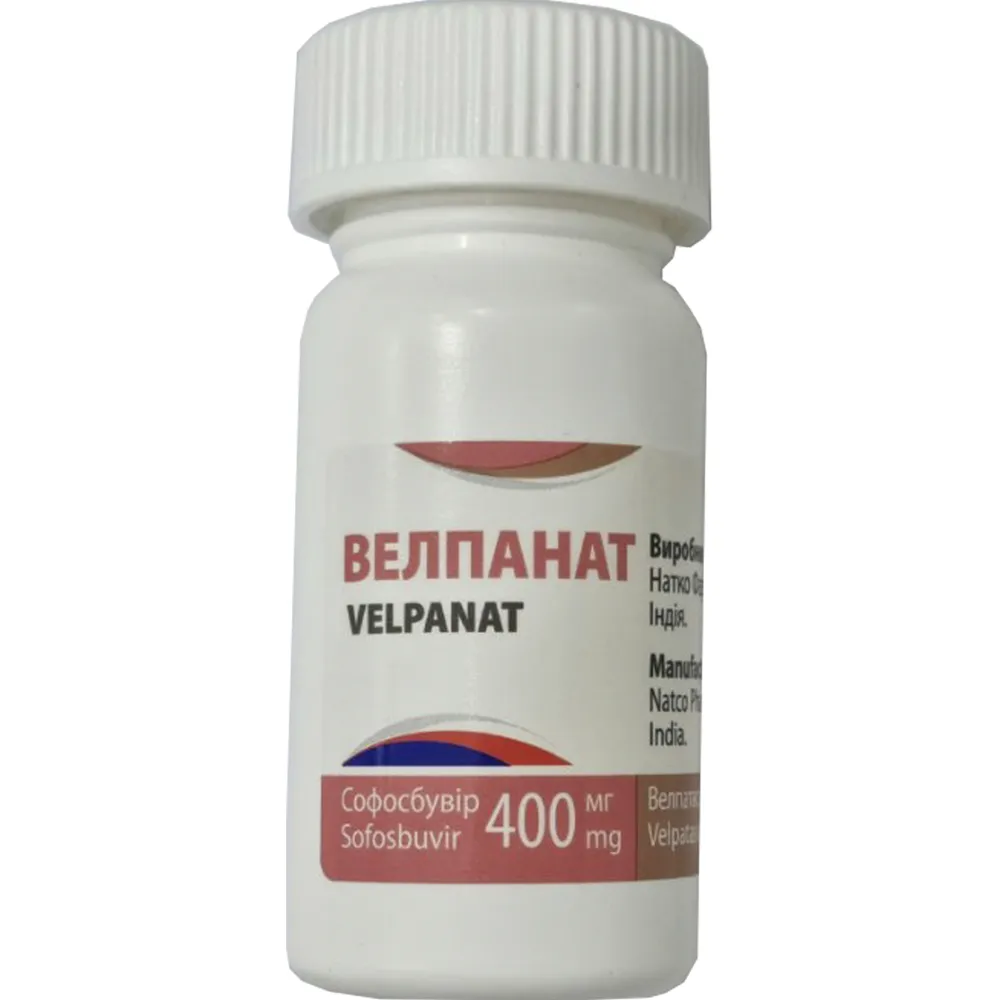
Table of Contents
INSTRUCTIONS FOR MEDICAL USE OF THE MEDICINAL PRODUCT VELPANAT (VELPANAT)
Composition:
Active substances: sofosbuvir, velpatasvir;
One film-coated tablet contains 400 mg of sofosbuvir and 100 mg of velpatasvir
(in the form of 50% m/m solid dispersion of velpatasvir);
Excipients: copovidone; microcrystalline cellulose; sodium croscarmellose; magnesium stearate; Opadry II 85F505153 Blue (polyvinyl alcohol, titanium dioxide (E 171), polyethylene glycol, talc, FD&C Blue #1/Brilliant Blue FCF Aluminum Lake).
Pharmaceutical form.
Film-coated tablets.
Main physicochemical properties: film-coated, blue, oval-shaped tablets, with "S" debossed on one side and "V" on the other.
Pharmacotherapeutic group.
Antiviral agents for systemic use. Direct-acting antiviral agents. Antiviral agents for the treatment of hepatitis C virus (HCV) infection.
ATC code J05A P55.
Pharmacological properties.
Pharmacodynamics.
Mechanism of action
Sofosbuvir is a pangenotypic inhibitor of the hepatitis C virus (HCV) RNA-dependent RNA polymerase NS5B, which is essential for viral replication. Sofosbuvir is a nucleotide prodrug that undergoes intracellular metabolism to form the pharmacologically active uridine analog triphosphate (GS-461203), which can be incorporated by the HCV RNA polymerase NS5B into the growing RNA chain and acts as a chain terminator. GS-461203 (the active metabolite of sofosbuvir) does not inhibit human DNA or RNA polymerases and is not an inhibitor of mitochondrial RNA polymerase.
Velpatasvir is an HCV inhibitor targeting the HCV NS5A protein, which is essential for HCV RNA replication and virion assembly. In vitro studies of selective and cross-resistance indicate that velpatasvir's mechanism of action is directed against NS5A.
Antiviral activity
The 50% effective concentration (EC50) values of sofosbuvir and velpatasvir against full-length or chimeric replicons encoding NS5B and NS5A sequences from laboratory strains are presented in Table 1. EC50 values for sofosbuvir and velpatasvir against clinical isolates are presented in Table 2.
Activity of sofosbuvir and velpatasvir against full-length
or chimeric laboratory replicons
Table 1
| Replicon genotype |
Sofosbuvir EC50, nmola |
Velapatasvir EC50, nmola |
| 1a |
40 |
0.014 |
| 1b |
110 |
0.016 |
| 2a |
50 |
0.005–0.016c |
| 2b |
15b |
0.002–0.006c |
| 3a |
50 |
0.004 |
| 4a |
40 |
0.009 |
| 4d |
N/D |
0.004 |
| 5a |
15b |
0.021–0.054d |
| 6a |
14b |
0.006–0.009 |
| 6e |
N/D |
0.130d |
N/D = no data.
a Mean value from several experiments with one laboratory replicon.
b Chimeric replicons 1b carrying NS5B genes from genotypes 2b, 5a, or 6a were used for testing.
c Data from different full-length NS5A replicons or chimeric NS5A replicons carrying full-length NS5A genes containing polymorphisms L31 or M31.
d Data from a chimeric NS5A replicon carrying NS5A amino acids 9–184.
Activity of sofosbuvir and velpatasvir against chimeric replicons
containing NS5A or NS5B from clinical isolates
Table 2
| Replicon genotype |
Replicons containing NS5B from clinical isolates |
Replicons containing NS5A from clinical isolates |
||
| Number of clinical isolates |
Median EC50 of sofosbuvir, nmol (range) |
Number of clinical isolates |
Median EC50 of velpatasvir, nmol (range) |
|
| 1a |
67 |
62 (29–128) |
23 |
0.019 (0.011–0.078) |
| 1b |
29 |
102 (45–170) |
34 |
0.012 (0.005–0.500) |
| 2a |
15 |
29 (14–81) |
8 |
0.011 (0.006–0.364) |
| 2b |
N/D |
N/D |
16 |
0.002 (0.0003–0.007) |
| 3a |
106 |
81 (24–181) |
38 |
0.005 (0.002–1.871) |
| 4a |
N/D |
N/D |
5 |
0.002 (0.001–0.004) |
| 4d |
N/D |
N/D |
10 |
0.007 (0.004–0.011) |
| 4r |
N/D |
N/D |
7 |
0.003 (0.002–0.006) |
| 5a |
N/D |
N/D |
42 |
0.005 (0.001–0.019) |
| 6a |
N/D |
N/D |
26 |
0.007 (0.0005–0.113) |
| 6e |
N/D |
N/D |
15 |
0.024 (0.005–0.433) |
N/D = no data.
The presence of 40% human serum did not affect the anti-HCV activity of sofosbuvir, but reduced the anti-HCV activity of velpatasvir against HCV replicons of genotype 1a by 13-fold.
Evaluation of sofosbuvir in combination with velpatasvir showed no antagonistic effect resulting in reduced HCV RNA levels in replicon cells.
Resistance
In cell cultures
HCV replicons with reduced susceptibility to sofosbuvir were selected in cell culture systems for various genotypes, including 1b, 2a, 2b, 3a, 4a, 5a, and 6a. Reduced susceptibility to sofosbuvir was associated with the primary NS5B substitution S282T in all replicon genotypes studied. Site-directed mutagenesis of the S282T substitution in replicons of genotypes 1–6 resulted in 2- to 18-fold reduced susceptibility to sofosbuvir and 89–99% reduction in viral replication capacity compared to the corresponding wild-type. In biochemical assays, the ability of the active triphosphate of sofosbuvir (GS-461203) to inhibit recombinant NS5B polymerase from genotypes 1b, 2a, 3a, and 4a carrying the S282T substitution was reduced compared to inhibition of wild-type recombinant NS5B polymerase, as indicated by an 8.5- to 24-fold increase in the 50% inhibitory concentration (IC50).
Under in vitro conditions, HCV replicons with reduced susceptibility to velpatasvir were selected in cell cultures for various genotypes, including 1a, 1b, 2a, 3a, 4a, 5a, and 6a. Variants selected at positions associated with NS5A resistance included positions 24, 28, 30, 31, 32, 58, 92, and 93. Resistance-associated variants (RAVs) selected in two or more genotypes included F28S, L31I/V, and Y93H. Site-directed mutagenesis of known NS5A RAVs demonstrated that substitutions leading to >100-fold reduced susceptibility to velpatasvir were M28G, A92K, and Y93H/N/R/W in genotype 1a; A92K in genotype 1b; C92T and Y93H/N in genotype 2b; Y93H in genotype 3; and L31V and P32A/L/Q/R in genotype 6. No single substitutions tested in genotypes 2a, 4a, or 5a led to >100-fold reduced susceptibility to velpatasvir. Combinations of these variants often demonstrated greater reduction in susceptibility to velpatasvir than individual RAVs alone.
In clinical studies
Patients without cirrhosis and patients with compensated cirrhosis
In a combined analysis of data from patients without cirrhosis or with compensated cirrhosis who received VELPANAT for 12 weeks in three phase 3 studies,
12 patients (2 with genotype 1 and 10 with genotype 3) met criteria for resistance analysis due to lack of virologic response. One additional patient with baseline HCV genotype 3 infection was re-infected with HCV genotype 1a in the absence of virologic response and was excluded from virologic data analysis. No lack of virologic response was recorded in any patients with HCV genotype 2, 4, 5, or 6 infection.
Of the two patients with genotype 1 infection and lack of virologic response, one patient had virus with emergence of NS5A RAV Y93N, and the other patient had virus with emergence of NS5A RAVs L31I/V and Y93H in the absence of virologic response. Both patients had baseline virus infection with NS5A RAVs. No NS5B resistance-associated variants to nucleoside inhibitors (NI) were observed in the two patients with lack of response.
Of the 10 patients with genotype 3 infection and lack of virologic response, the Y93H change was observed in all 10 patients at lack of response (in 6, Y93H emerged post-treatment, and in 4 patients, Y93H was present at baseline and post-treatment). No NS5B RAVs to NIs were observed in the 10 patients at lack of response.
Patients with decompensated cirrhosis
In one phase 3 study in patients with decompensated cirrhosis who received the medicinal product + ribavirin for 12 weeks, 3 patients (1 with genotype 1 virus and 2 with genotype 3 virus) met criteria for resistance analysis due to lack of virologic response. No lack of virologic response was recorded in any patient with HCV genotype 2 or 4 infection in the medicinal product + ribavirin treatment group for 12 weeks.
In one patient with HCV genotype 1 infection and lack of virologic response, no NS5A or NS5B RAVs were detected at lack of response.
Of the two patients with genotype 3 virus and lack of virologic response, one had emergence of NS5A RAV Y93H at lack of response. In another patient, the virus had Y93H substitution at baseline and lack of virologic response, and low levels (<5%) of NS5B RAVs to NIs (N142T and E237G) emerged at lack of response. Pharmacokinetic data from this patient indicated non-adherence to the treatment regimen.
In this study, emergence of NS5B S282T at low levels (<5%) as well as L159F was observed in two patients who received the drug for 12 or 24 weeks without ribavirin.
Impact of baseline presence of resistance-associated variants (RAVs) on treatment outcomes
Patients without cirrhosis and patients with compensated cirrhosis
Analyses were conducted to evaluate the association between baseline presence of NS5A RAVs and treatment outcome in patients without cirrhosis or with compensated cirrhosis in three phase 3 clinical studies (ASTRAL-1, ASTRAL-2, and ASTRAL-3). Of 1035 patients treated with sofosbuvir/velpatasvir in the three phase 3 clinical studies, 1023 patients were included in the NS5A RAV analysis; 7 patients were excluded because they had neither achieved sustained virologic response (SVR12) nor lack of virologic response; another 5 patients were excluded due to inability to sequence the NS5A gene. In the combined analysis of phase 3 study data, virus in 380 of 1023 (37%) patients had baseline presence of NS5A RAVs. Patients with HCV genotype 2, 4, and 6 infections had higher prevalence of NS5A RAVs (70%, 63%, and 52%, respectively) compared to patients infected with HCV genotype 1 (23%), genotype 3 (16%), and genotype 5 (18%).
Baseline RAVs did not have a significant impact on SVR12 rates in patients with HCV genotype 1, 2, 4, 5, or 6 infection, briefly summarized in Table 3. Patients with genotype 3 infection and baseline NS5A RAV Y93H had lower SVR12 rates than patients without the Y93H substitution after 12 weeks of drug treatment, briefly summarized in Table 4. In the ASTRAL-3 study, RAV Y93H was detected at baseline in 9% of patients receiving the drug.
SVR12 in patients with or without baseline NS5A RAVs by HCV genotype
(studies ASTRAL-1, ASTRAL-2, and ASTRAL-3)
Table 3
| Sofosbuvir and velpatasvir, 12 weeks |
||||
| Genotype 1 |
Genotype 3 |
Genotypes 2, 4, 5, or 6 |
Total |
|
| With any baseline NS5A RASs |
97 % (73 of 75) |
88 % (38 of 43) |
100 % (262 of 262) |
98 % (373 of 380) |
| Without baseline NS5A RASs |
100 % (251 of 251) |
97 % (225 of 231) |
100 % (161 of 161) |
99 % (637 of 643) |
SVR12 in patients with and without Y93H at baseline, threshold value
1% (resistance analysis population), ASTRAL-3 study
Table 4
| Sofosbuvir and velpatasvir, 12 weeks |
|||
| All subjects (n=274) |
With cirrhosis (n=80) |
Without cirrhosis (n=197) |
|
| Overall |
95.3% (263 of 274) |
91.3% (73 of 80) |
97.9% (190 of 194) |
| 95% CI |
92.9–98.0% |
82.8–96.4% |
92.8–98.6% |
| SVR with Y93H |
84.0% (21 of 25) |
50.0% (2 of 4) |
90.5% (19 of 21) |
| 95% CI |
63.9–95.5% |
6.8%–93.2% |
69.6–98.8% |
| SVR without Y93H |
96.4% (242 of 249) |
93.4% (71 of 76) |
98.8% (171 of 173) |
| 95% CI |
94.3–98.9% |
85.3–97.8% |
95.9–99.9% |
The NS5B RAV to NI S282T was not detected at baseline in the NS5B sequence in any patients in the phase 3 studies. SVR12 was achieved in all 77 patients who had baseline NS5B RAVs to NI, including N142T, L159F, E/N237G, C/M289L/I, L320F/I/V, V321A/I, and S282G+V321I.
Patients with decompensated cirrhosis (Child–Pugh–Turcotte class B)
Analyses were conducted to evaluate the association between baseline NS5A RAVs and treatment outcome in patients with decompensated cirrhosis in one phase 3 study (ASTRAL-4). Of the 87 patients treated with sofosbuvir and velpatasvir + ribavirin, 85 patients were included in the NS5A RAV analysis; 2 patients were excluded due to either lack of SVR12 or virologic failure. Among patients receiving sofosbuvir and velpatasvir + ribavirin for 12 weeks, 29% (25 of 85) had baseline NS5A RAVs: 29% (19 of 66), 75% (3 of 4), 15% (2 of 13), and 50% (1 of 2) of patients with HCV genotypes 1, 2, 3, and 4, respectively.
SVR12 in patients with or without baseline NS5A RAVs in the sofosbuvir and velpatasvir + ribavirin treatment group for 12 weeks in this study is shown in Table 5.
SVR12 in patients with or without baseline NS5A RAVs
by HCV genotype (ASTRAL-4 study)
Table 5
| Sofosbuvir and velpatasvir + ribavirin 12 weeks |
||||
| Genotype 1 |
Genotype 3 |
Genotypes 2 or 4 |
Total |
|
| With any baseline NS5A RASs |
100 % (19 of 19) |
50 % (1 of 2) |
100 % (4 of 4) |
96 % (24 of 25) |
| Without baseline NS5A RASs |
98 % (46 of 47) |
91 % (10 of 11) |
100 % (2 of 2) |
98 % (58 of 60) |
In one patient with genotype 3 virus who had baseline NS5A RAS and who did not achieve SVR12, the NS5A Y93H substitution was present at baseline; the pharmacokinetic data for this patient were influenced by non-adherence to the treatment regimen.
In three patients in the sofosbuvir and velpatasvir + ribavirin treatment group treated for 12 weeks, baseline NS5B RAS to NI (N142T and L159F) were present; SVR12 was achieved in all three patients.
Cross-resistance
In vitro studies indicate that most NS5A RAS conferring resistance to ledipasvir and daclatasvir remain sensitive to velpatasvir. Velpatasvir retains full activity against the S282T substitution in NS5B associated with resistance to sofosbuvir, while all substitutions associated with resistance to velpatasvir in NS5A remain fully sensitive to sofosbuvir. Sofosbuvir and velpatasvir were fully active against substitutions associated with resistance to other classes of direct-acting antiviral agents with different mechanisms of action, such as non-nucleoside NS5B inhibitors and NS3 protease inhibitors. The efficacy of sofosbuvir and velpatasvir has not been evaluated in patients who previously failed therapy with regimens including an NS5A inhibitor.
Paediatric population
The European Medicines Agency has granted a deferral for the obligation to submit the results of sofosbuvir and velpatasvir studies in one or more subsets of the paediatric population for the treatment of chronic hepatitis C (see section "Posology and method of administration" for information on use in paediatric patients).
Elderly patients
Clinical trials of sofosbuvir and velpatasvir included 156 patients aged 65 years and older (12% of the total number of patients in phase 3 clinical trials). The response rate observed in patients aged ≥ 65 years was the same as in patients aged < 65 years across all treatment groups.
Pharmacokinetics
Absorption
The pharmacokinetic properties of sofosbuvir, GS-331007, and velpatasvir were evaluated in healthy adult volunteers and in patients with chronic hepatitis C. After oral administration of sofosbuvir and velpatasvir, sofosbuvir was rapidly absorbed, with median peak plasma concentration observed 1 hour after dosing. The median peak plasma concentration of GS-331007 was observed 3 hours after dosing. The median peak plasma concentration of velpatasvir was observed 3 hours after dosing.
Based on population pharmacokinetic analysis in HCV-infected patients, the steady-state area under the pharmacokinetic curve (AUC0–24) for sofosbuvir (n = 982), GS-331007 (n = 1428), and velpatasvir (n = 1425) was 1260, 13970, and 2970 ng•h/mL, respectively. The steady-state Cmax values for sofosbuvir, GS-331007, and velpatasvir were 566, 868, and 259 ng/mL, respectively. The AUC0–24 and Cmax values for sofosbuvir and GS-331007 were similar in healthy adult volunteers and HCV patients. Compared to healthy volunteers (n = 331), the AUC0–24 and Cmax values for velpatasvir were 37% and 41% lower, respectively, in HCV-infected patients.
Effect of food
Compared to fasting, administration of a single dose of sofosbuvir and velpatasvir with a meal of moderate fat content (~600 kcal, 30% fat) or high fat content (~800 kcal, 50% fat) increased the AUC0–inf of velpatasvir by 34% and 21%, respectively, and the Cmax by 31% and 5%, respectively. Moderate or high fat content in food increased the AUC0–inf of sofosbuvir by 60% and 78%, respectively, but did not significantly affect the Cmax of sofosbuvir. Moderate or high fat content in food did not alter the AUC0–inf of GS-331007 but reduced the Cmax by 25% and 37%, respectively. The response rate in phase 3 trials was similar in HCV-infected patients receiving sofosbuvir and velpatasvir regardless of food intake. Therefore, sofosbuvir and velpatasvir may be administered with or without food.
Distribution
Sofosbuvir is approximately 61–65% bound to human plasma proteins, and binding is independent of drug concentration in the range of 1–20 µg/mL. Binding of GS-331007 to human plasma proteins is minimal. After a single dose in healthy volunteers of 400 mg [14C]-sofosbuvir, the ratio of [14C]-radioactive compounds in blood to plasma was approximately 0.7.
Velpatasvir is > 99.5% bound to human plasma proteins, and binding is independent of drug concentration in the range of 0.09–1.8 µg/mL. After a single dose in healthy adult volunteers of 100 mg [14C]-velpatasvir, the ratio of [14C]-radioactive compounds in blood to plasma ranged from 0.52 to 0.67.
Biotransformation
Sofosbuvir is actively metabolized in the liver to form the pharmacologically active nucleoside analogue triphosphate GS-461203. The metabolic activation pathway involves sequential hydrolysis of the carboxylic acid ester moiety catalyzed by human cathepsin A (CatA) or carboxylesterase 1 (CES1), followed by cleavage of the phosphoramidate by histidine triad nucleotide-binding protein 1 (HINT1), and subsequent phosphorylation via the pyrimidine nucleotide biosynthesis pathway. Dephosphorylation leads to the formation of the nucleoside metabolite GS-331007, which cannot be efficiently re-phosphorylated and lacks anti-HCV activity in vitro. Sofosbuvir and GS-331007 are not substrates or inhibitors of UGT1A1 or CYP3A4, CYP1A2, CYP2B6, CYP2C8, CYP2C9, CYP2C19, or CYP2D6 enzymes. After a single 400 mg dose of [14C]-sofosbuvir, GS-331007 accounted for > 90% of total systemic exposure.
Velpatasvir is a substrate of CYP2B6, CYP2C8, and CYP3A4 with slow turnover. After a single 100 mg dose of [14C]-velpatasvir, the majority (> 98%) of radioactive compounds in plasma were attributed to the parent drug. Metabolites identified in human plasma included monohydroxylated and demethylated derivatives of velpatasvir. Unchanged velpatasvir is the main compound excreted in feces.
Elimination
After a single 400 mg oral dose of [14C]-sofosbuvir, mean total recovery of [14C]-radioactive compounds exceeded 92%: approximately 80%, 14%, and 2.5% were excreted in urine, feces, and expired air, respectively. The major portion of the sofosbuvir dose excreted in urine was in the form of GS-331007 (78%), while 3.5% was excreted as sofosbuvir. These data indicate that renal clearance is the major route of elimination for GS-331007. The median terminal half-life of sofosbuvir and GS-331007 after administration of sofosbuvir and velpatasvir was 0.5 and 25 hours, respectively.
After a single 100 mg oral dose of [14C]-velpatasvir, mean total recovery of [14C]-radioactive compounds was 95%: approximately 94% and 0.4% were excreted in feces and urine, respectively. Unchanged velpatasvir was the main component in feces, accounting for an average of 77% of the administered dose; monohydroxylated velpatasvir accounted for 5.9% and demethylated velpatasvir for 3.0%. These data indicate that biliary excretion of the parent drug is the primary elimination pathway for velpatasvir. The median terminal half-life of velpatasvir after administration of sofosbuvir and velpatasvir was approximately 15 hours.
Linearity/Non-linearity
The AUC of velpatasvir increases nearly proportionally with dose in the range of 25–150 mg. The AUC of sofosbuvir and GS-331007 is nearly proportional to doses in the range of 200–1200 mg.
Potential in vitro drug interaction between sofosbuvir/velpatasvir
Sofosbuvir and velpatasvir are substrates of P-glycoprotein and breast cancer resistance protein (BCRP) transporters, while GS-331007 is not. Velpatasvir is also a substrate of OATP1B. In vitro, velpatasvir undergoes slow metabolic turnover by CYP2B6, CYP2C8, and CYP3A4 isoenzymes.
Velpatasvir is an inhibitor of P-glycoprotein, BCRP, OATP1B1, and OATP1B3 transporters; thus, its involvement in drug interactions with these transporters is primarily limited to the absorption phase. At clinically relevant plasma concentrations, velpatasvir is not an inhibitor of hepatic transporters: bile salt export pump (BSEP), sodium-taurocholate co-transporting polypeptide (NTCP), OATP2B1, OATP1A2, or organic cation transporter (OCT) 1; renal transporters: OCT2, OAT1, OAT3, multidrug resistance-associated protein 2 (MRP2), or multidrug and toxin extrusion (MATE) 1; or CYP isoenzymes or uridine glucuronosyltransferase (UGT) 1A1 enzymes.
Sofosbuvir and GS-331007 are not inhibitors of P-glycoprotein, BCRP, MRP2, BSEP, OATP1B1, OATP1B3, or OCT1. GS-331007 is not an inhibitor of OAT1, OCT2, or MATE1.
Pharmacokinetics in specific populations
Race and gender
No clinically significant pharmacokinetic differences based on race or gender were observed for sofosbuvir, GS-331007, or velpatasvir.
Elderly patients
Population pharmacokinetic analysis in HCV-infected patients showed that within the analyzed age range (18–82 years), age had no clinical effect on exposure to sofosbuvir, GS-331007, or velpatasvir.
Renal impairment
The pharmacokinetics of sofosbuvir were studied in non-HCV-infected patients with mild (eGFR ≥ 50 and < 80 mL/min/1.73 m²), moderate (eGFR ≥ 30 and < 50 mL/min/1.73 m²), and severe (eGFR < 30 mL/min/1.73 m²) renal impairment, as well as in patients with end-stage renal disease (ESRD) requiring hemodialysis, after a single 400 mg dose of sofosbuvir. Compared to patients with normal renal function (eGFR > 80 mL/min/1.73 m²), the AUC0–inf of sofosbuvir was 61%, 107%, and 171% higher in patients with mild, moderate, or severe renal impairment, respectively, while the AUC0–inf of GS-331007 was 55%, 88%, and 451% higher, respectively. In patients with ESRD, the AUC0–inf of sofosbuvir was 28% higher when sofosbuvir was administered 1 hour before hemodialysis and 60% higher when administered 1 hour after hemodialysis. The AUC0–inf of GS-331007 in ESRD patients who took sofosbuvir 1 hour before or 1 hour after hemodialysis was at least 10-fold and 20-fold higher, respectively. GS-331007 was efficiently removed during hemodialysis with a clearance coefficient of approximately 53%. During a 4-hour hemodialysis session following a single 400 mg dose of sofosbuvir, 18% of the administered dose was removed (see section "Posology and method of administration").
The pharmacokinetics of velpatasvir were studied after a single 100 mg dose of velpatasvir in non-HCV-infected patients with severe renal impairment (eGFR < 30 mL/min by Cockcroft-Gault formula). Compared to patients with normal renal function, the AUCinf of velpatasvir was 50% higher in patients with severe renal impairment (see section "Posology and method of administration").
Hepatic impairment
The pharmacokinetics of sofosbuvir were studied after 7 days of 400 mg sofosbuvir in HCV-infected patients with moderate or severe hepatic impairment (Child–Pugh class B and C). Compared to patients with normal hepatic function, the AUC0–24 of sofosbuvir was 126% and 143% higher in patients with moderate or severe hepatic impairment, respectively, while the AUC0–24 of GS-331007 was 18% and 9% higher, respectively. Population pharmacokinetic analysis in HCV-infected patients indicated that cirrhosis (including decompensated cirrhosis) had no clinically relevant effect on exposure to sofosbuvir and GS-331007.
The pharmacokinetics of velpatasvir were studied after a single 100 mg dose of velpatasvir in non-HCV-infected patients with moderate or severe hepatic impairment (Child–Pugh class B and C). Compared to patients with normal hepatic function, the AUCinf of velpatasvir in plasma was similar in patients with moderate or severe hepatic impairment. Population pharmacokinetic analysis in HCV-infected patients indicated that cirrhosis (including decompensated cirrhosis) had no clinically significant effect on velpatasvir exposure (see section "Posology and method of administration").
Body weight
Body weight has no clinically significant effect on exposure to sofosbuvir or velpatasvir according to population pharmacokinetic analysis.
Paediatric population
The pharmacokinetics of sofosbuvir, GS-331007, and velpatasvir have not been studied in children (see section "Posology and method of administration").
Clinical characteristics.
Indications.
Velpanat is indicated for the treatment of chronic hepatitis C virus (HCV) infection in adults (see sections "Pharmacodynamics", "Special instructions", and "Dosage and administration").
Contraindications.
Hypersensitivity to the active substances or to any of the excipients of the medicinal product.
Use with potent P-glycoprotein and CYP inducers
Concomitant use of medicinal products that are potent inducers of P-glycoprotein or cytochrome P450 (CYP) (rifampicin, rifabutin, St. John's wort [Hypericum perforatum], carbamazepine, phenobarbital, and phenytoin) is contraindicated, as this may significantly reduce plasma concentrations of sofosbuvir and velpatasvir, leading to loss of therapeutic efficacy (see section "Interaction with other medicinal products and other types of interactions").
Interaction with other medicinal products and other types of interactions.
Since Velpanat contains sofosbuvir and velpatasvir, any interactions established for these active substances individually may also occur with the use of Velpanat.
Potential effect of Velpanat on other medicinal products
Velpatasvir is an inhibitor of drug transporters: P-glycoprotein, breast cancer resistance protein (BCRP), organic anion transporting polypeptide (OATP) 1B1, and OATP1B3. Concomitant administration of Velpanat with medicinal products that are substrates of these transporters may increase exposure to such products. Examples of interactions with sensitive P-glycoprotein (digoxin), BCRP (rosuvastatin), and OATP (pravastatin) substrates are provided in Table 6.
Potential effect of other medicinal products on Velpanat
Sofosbuvir and velpatasvir are substrates of P-glycoprotein and BCRP transporters. Velpatasvir is also a substrate of the OATP1B drug transporter. In vitro studies have shown slow metabolism of velpatasvir by CYP2B6, CYP2C8, and CYP3A4 isoenzymes. Medicinal products that are potent inducers of P-glycoprotein or CYP2B6, CYP2C8, or CYP3A4 (e.g., rifampicin, rifabutin, St. John's wort, carbamazepine, phenobarbital, and phenytoin) may reduce plasma concentrations of sofosbuvir or velpatasvir, resulting in decreased therapeutic effect of sofosbuvir/velpatasvir. Concomitant use of such medicinal products with Velpanat is contraindicated (see section "Contraindications"). Medicinal products that are moderate inducers of P-glycoprotein or CYP (e.g., oxcarbazepine, modafinil, or efavirenz) may reduce plasma concentrations of sofosbuvir or velpatasvir, leading to reduced therapeutic efficacy of Velpanat. Concomitant use of such medicinal products with Velpanat is not recommended (see section "Special instructions"). Concomitant use with medicinal products that inhibit P-glycoprotein or BCRP may increase plasma concentrations of sofosbuvir or velpatasvir. Medicinal products that inhibit OATP, CYP2B6, CYP2C8, or CYP3A4 may increase plasma concentrations of velpatasvir. Clinically significant drug interactions with Velpanat mediated by inhibitors of P-glycoprotein, BCRP, OATP, or CYP450 are not expected. Velpanat may be used concomitantly with inhibitors of P-glycoprotein, BCRP, OATP, and CYP.
Patients receiving vitamin K antagonists
Since liver function may change during treatment with Velpanat, careful monitoring of international normalized ratio (INR) values is recommended in patients.
Effect of direct-acting antivirals on medicinal products metabolized in the liver
Pharmacokinetics of medicinal products metabolized in the liver (e.g., immunosuppressive agents such as calcineurin inhibitors) may be affected by changes in liver function during therapy with direct-acting antivirals related to HCV clearance.
Medicinal products without clinically significant interactions with sofosbuvir/velpatasvir
Based on drug interaction studies conducted with sofosbuvir or velpatasvir, no clinically significant drug interactions have been observed or are expected with the following medicinal products:
Sofosbuvir/velpatasvir: atazanavir/ritonavir, buprenorphine/naloxone, cyclosporine, darunavir/ritonavir, dolutegravir, elvitegravir/cobicistat/emtricitabine/tenofovir alafenamide, emtricitabine, methadone, naltrexone, or raltegravir.
Sofosbuvir: ethinylestradiol/norgestimatum, or tacrolimus.
Velpatasvir: ethinylestradiol/norgestimatum, ketoconazole, or pravastatin.
Interaction of Velpanat with other medicinal products
Table 6 lists established or potentially clinically significant drug interactions (where the 90% confidence interval [CI] of the least squares mean [LSM] geometric mean ratio was within "↔", increased "↑", or decreased "↓" within defined interaction limits). The described drug interactions are based on studies conducted with sofosbuvir/velpatasvir or with velpatasvir and sofosbuvir as individual substances, or are predicted interactions potentially relevant for sofosbuvir/velpatasvir. The table is not exhaustive.
Interaction of Velpanat with other medicinal products
Table 6
| Medicinal products by therapeutic area/Possible mechanism of interaction |
Effect on drug concentrations. Geometric mean ratio (90 % CI)a,b |
Recommendations for concomitant use with VELPANAT |
|||||||||||
| Active substance |
Cmax |
AUC |
Cmin |
||||||||||
| AGENTS THAT REDUCE ACIDITY |
|||||||||||||
| Solubility of velpatasvir decreases with increasing pH. Drugs that increase gastric pH are expected to reduce velpatasvir concentrations |
|||||||||||||
| Antacid preparations |
|||||||||||||
| For example, aluminium or magnesium hydroxide; calcium carbonate (increased gastric pH) |
Interaction not studied. Expected. ↔ Sofosbuvir ↓ Velpatasvir |
A 4-hour interval is recommended between administration of antacids and VELPANAT |
|||||||||||
| H2-receptor antagonists |
|||||||||||||
| Famotidine (single dose 40 mg)/sofosbuvir/velpatasvir (single dose 400/100 mg)c Famotidine co-administered with sofosbuvir and velpatasvir productd Cimetidinee Nizatidinee Ranitidinee (increased gastric pH) |
Sofosbuvir |
↔ |
↔ |
H2-receptor antagonists may be administered concomitantly with or separately from VELPANAT at doses not exceeding those comparable to famotidine 40 mg twice daily. |
|||||||||
| Velpatasvir |
↓ 0.80 (0.70, 0.91) |
↓ 0.81 (0.71, 0.91) |
|||||||||||
| Famotidine (single dose 40 mg)/sofosbuvir/velpatasvir (single dose 400/100 mg)c Administration of famotidine 12 hours prior to sofosbuvir and velpatasvir productd (increased gastric pH) |
Sofosbuvir |
↓ 0.77 (0.68, 0.87) |
↓ 0.80 (0.73, 0.88) |
||||||||||
| Velpatasvir |
↔ |
↔ |
|||||||||||
| Proton pump inhibitors |
|||||||||||||
| Omeprazole (20 mg once daily)/sofosbuvir/velpatasvir (single dose 400/100 mg fasting)c Omeprazole co-administered with sofosbuvir and velpatasvir productd Lansoprazolee Rabeprazolee Pantoprazolee Esomiprazolee (increased gastric pH) |
Sofosbuvir |
↓ 0.66 (0.55, 0.78) |
↓ 0.71 (0.60, 0.83) |
Concomitant use with proton pump inhibitors is not recommended. If concomitant use is necessary, VELPANAT should be taken with food and 4 hours prior to the proton pump inhibitor at maximum doses comparable to omeprazole 20 mg |
|||||||||
| Velpatasvir |
↓ 0.63 (0.50, 0.78) |
↓ 0.64 (0.52, 0.79) |
|||||||||||
| Omeprazole (20 mg once daily)/sofosbuvir/velpatasvir (single dose 400/100 mg after food)c Administration of omeprazole 4 hours after sofosbuvir and velpatasvir productd (increased gastric pH) |
Sofosbuvir |
↓ 0.79 (0.68, 0.92) |
↔ |
||||||||||
| Velpatasvir |
↓ 0.67 (0.58, 0.78) |
↓ 0.74 (0.63, 0.86) |
|||||||||||
| ANTIARRHYTHMIC AGENTS |
|||||||||||||
| Amiodarone |
Interaction not studied. Effect on concentrations of amiodarone, velpatasvir and sofosbuvir unknown. |
Concomitant use of amiodarone with a regimen containing sofosbuvir may lead to serious symptomatic bradycardia. Should be used only if no other alternatives are available. Close monitoring is recommended if this medicinal product is used with VELPANAT (see sections “Special warnings and precautions for use” and “Undesirable effects”). |
|||||||||||
| Digoxin |
Interaction studied only with velpatasvir. Expected: ↔ Sofosbuvir |
Concomitant use of VELPANAT with digoxin may increase digoxin concentrations. Caution and monitoring of digoxin therapeutic concentrations are advised when used together with VELPANAT. |
|||||||||||
| Digoxin (single dose 0.25 mg)f /velpatasvir (single dose 100 mg) (P-glycoprotein inhibition) |
Effect on velpatasvir exposure not studied Expected: ↔ Velpatasvir |
||||||||||||
| Observed: Digoxin |
↑ 1.9 (1.7, 2.1) |
↑ 1.3 (1.1, 1.6) |
|||||||||||
| ANTICOAGULANTS |
|||||||||||||
| Dabigatran etexilate (P-glycoprotein inhibition) |
Interaction not studied. Expected: ↑ Dabigatran ↔ Sofosbuvir ↔ Velpatasvir |
Clinical monitoring for signs of bleeding and anaemia is recommended when dabigatran etexilate is used with VELPANAT. Coagulation testing can identify patients at increased risk of bleeding due to increased dabigatran exposure. |
|||||||||||
| Vitamin K antagonists |
Interaction not studied. |
Close monitoring of INR with all vitamin K antagonists is recommended due to changes in liver function during treatment with VELPANAT. |
|||||||||||
| ANTICONVULSANTS |
|||||||||||||
| Carbamazepine Phenytoin Phenobarbital (induction of P-glycoprotein and CYP) |
Interaction not studied. Expected: ↓ Sofosbuvir ↓ Velpatasvir |
Concomitant use of VELPANAT with carbamazepine, phenobarbital and phenytoin, potent inducers of P-glycoprotein and CYP, is contraindicated (see section “Contraindications”). |
|||||||||||
| Carbamazepine (induction of |
Interaction not studied. Expected: ↓ Velpatasvir |
Concomitant use of VELPANAT with carbamazepine is contraindicated (see section “Contraindications”). |
|||||||||||
| Observed: Sofosbuvir |
↓ 0.52 (0.43, 0.62) |
↓ 0.52 (0.46, 0.59) |
|||||||||||
| Oxcarbazepine (induction of |
Interaction not studied. Expected: ↓ Sofosbuvir ↓ Velpatasvir |
Concomitant use of sofosbuvir and velpatasvir with oxcarbazepine is expected to reduce concentrations of sofosbuvir and velpatasvir, leading to reduced therapeutic effect of VELPANAT. Concomitant use is not recommended (see section “Special warnings and precautions for use”). |
|||||||||||
| ANTIFUNGAL AGENTS |
|||||||||||||
| Ketoconazole |
Interaction studied only with velpatasvir. Expected: ↔ Sofosbuvir |
No dose adjustment of VELPANAT or ketoconazole is required. |
|||||||||||
| Ketoconazole (200 mg twice daily)/ velpatasvir (single dose 100 mg)d (inhibition of P-glycoprotein and CYP) Itraconazolee Voriconazolee Posaconazolee Isavuconazolee |
Effect on ketoconazole exposure not studied. Expected: ↔ Ketoconazole |
||||||||||||
| Observed: Velpatasvir |
↑ 1.3 (1.0, 1.6) |
↑ 1.7 (1.4, 2.2) |
|||||||||||
| ANTIMYCOTIC AGENTS |
|||||||||||||
| Rifampicin (600 mg once daily)/ sofosbuvir (single dose 400 mg)d (induction of P-glycoprotein and CYP) |
Effect on rifampicin exposure not studied. Expected: ↔ Rifampicin |
Concomitant use of VELPANAT with rifampicin, a potent inducer of P-glycoprotein and CYP, is contraindicated (see section “Contraindications”). |
|||||||||||
| Observed: Sofosbuvir |
↓ 0.23 (0.19, 0.29) |
↓ 0.28 (0.24, 0.32) |
|||||||||||
| Rifampicin (600 mg once daily)/ velpatasvir (single dose 100 mg) (induction of P-glycoprotein and CYP) |
Effect on rifampicin exposure not studied. Expected: ↔ Rifampicin |
||||||||||||
| Observed: Velpatasvir |
↓ 0.29 (0.23, 0.37) |
↓ 0.18 (0.15, 0.22) |
|||||||||||
| Rifabutin (induction of P-glycoprotein and CYP) |
Interaction not studied. Expected: ↓ Velpatasvir |
Concomitant use of VELPANAT with rifabutin is contraindicated (see section “Contraindications”). |
|||||||||||
| Observed: Sofosbuvir |
↓ 0.64 (0.53, 0.77) |
↓ 0.76 (0.63, 0.91) |
|||||||||||
| Rifapentine (induction of P-glycoprotein and CYP) |
Interaction not studied. Expected: ↓ Sofosbuvir ↓ Velpatasvir |
Concomitant use of VELPANAT with rifapentine is expected to reduce concentrations of sofosbuvir and velpatasvir, leading to reduced therapeutic effect of VELPANAT. Concomitant use is not recommended (see section “Special warnings and precautions for use”). |
|||||||||||
| ANTIRETROVIRAL AGENTS FOR HIV: REVERSE TRANSCRIPTASE INHIBITORS |
|||||||||||||
| Tenofovir disoproxil fumarate |
VELPANAT demonstrated increased tenofovir exposure (P-glycoprotein inhibition). Increase in tenofovir exposure (AUC and Cmax) was approximately 40–80 % during concomitant use with VELPANAT and tenofovir disoproxil fumarate/emtricitabine in various HIV treatment regimens. Patients taking tenofovir disoproxil fumarate concomitantly with VELPANAT should be monitored for adverse reactions associated with tenofovir disoproxil fumarate. Recommendations for monitoring renal function are provided in the prescribing information for medicinal products containing tenofovir disoproxil fumarate (see section “Special warnings and precautions for use”). |
||||||||||||
| Efavirenz/emtricitabine/ tenofovir disoproxil fumarate (600/200/300 mg once daily)/sofosbuvir/ velpatasvir (400/100 mg once daily)c, d |
Efavirenz |
↔ |
↔ |
↔ |
Concomitant use of VELPANAT with efavirenz/emtricitabine/tenofovir disoproxil fumarate is expected to reduce velpatasvir concentrations. Concomitant use of VELPANAT with regimens containing efavirenz is not recommended (see section “Special warnings and precautions for use”). |
||||||||
| Sofosbuvir |
↑ 1.2 (1.1, 1.7) |
↔ |
|||||||||||
| Velpatasvir |
↓ 0.53 (0.43, 0.64) |
↓ 0.47 (0.39, 0.57) |
↓ 0.43 (0.36, 0.52) |
||||||||||
| Efavirenz/rilpivirine/ tenofovir disoproxil fumarate (200/25/300 mg once daily)/sofosbuvir/ velpatasvir (400/100 mg once daily)c, d |
Rilpivirine |
↔ |
↔ |
↔ |
No dose adjustment of sofosbuvir, velpatasvir or emtricitabine/rilpivirine/tenofovir disoproxil fumarate is required. |
||||||||
| Sofosbuvir |
↔ |
↔ |
|||||||||||
| Velpatasvir |
↔ |
↔ |
↔ |
||||||||||
| ANTIRETROVIRAL AGENTS FOR HIV: HIV PROTEASE INHIBITORS |
|||||||||||||
| Atazanavir, boosted with ritonavir (300/100 mg once daily) + emtricitabine/ tenofovir disoproxil fumarate (200/300 mg once daily)/sofosbuvir/ velpatasvir (400/100 mg once daily)c, d |
Atazanavir |
↔ |
↔ |
↑ 1.4 (1.2, 1.6) |
No dose adjustment of VELPANAT, atazanavir (boosted with ritonavir) or emtricitabine/tenofovir disoproxil fumarate is required. |
||||||||
| Ritonavir |
↔ |
↑ 1.3 (1.5, 1.4) |
|||||||||||
| Sofosbuvir |
↔ |
↔ |
|||||||||||
| Velpatasvir |
↑ 1.6 (1.4, 1.7) |
↑ 2.4 (2.2, 2.6) |
↑ 4.0 (3.6, 4.5) |
||||||||||
| Darunavir, boosted with ritonavir (800/100 mg once daily) + emtricitabine/ tenofovir disoproxil fumarate (200/300 mg once daily)/sofosbuvir/ velpatasvir (400/100 mg once daily)c, d |
Darunavir |
↔ |
↔ |
↔ |
No dose adjustment of VELPANAT, darunavir (boosted with ritonavir) or emtricitabine/tenofovir disoproxil fumarate is required. |
||||||||
| Ritonavir |
↔ |
↔ |
↔ |
||||||||||
| Sofosbuvir |
↓ 0.62 (0.54, 0.71) |
↓ 0.72 (0.66, 0.80) |
|||||||||||
| Velpatasvir |
↓ 0.76 (0.65, 0.89) |
↔ |
↔ |
||||||||||
| Lopinavir, boosted with ritonavir (4×200 mg/50 mg once daily) + emtricitabine/ tenofovir disoproxil fumarate (200/300 mg once daily)/sofosbuvir/ velpatasvir (400/100 mg once daily)c, d |
Lopinavir |
↔ |
↔ |
↔ |
No dose adjustment of VELPANAT, lopinavir (boosted with ritonavir) or emtricitabine/tenofovir disoproxil fumarate is required. |
||||||||
| Ritonavir |
↔ |
↔ |
↔ |
||||||||||
| Sofosbuvir |
↓ 0.59 (0.49, 0.71) |
↓ 0.7 (0.6, 0.8) |
|||||||||||
| Velpatasvir |
↓ 0.70 (0.59, 0.83) |
↔ |
↑ 1.6 (1.4, 1.9) |
||||||||||
| ANTIRETROVIRAL AGENTS FOR HIV: INTEGRASE INHIBITORS |
|||||||||||||
| Raltegravir (400 mg twice daily)g + emtricitabine/ tenofovir disoproxil fumarate (200/300 mg once daily)/sofosbuvir/ velpatasvir (400/100 mg once daily)c, d |
Raltegravir |
↔ |
↔ |
↓ 0.79 (0.42, 1.5) |
No dose adjustment of VELPANAT, raltegravir or emtricitabine/tenofovir disoproxil fumarate is required. |
||||||||
| Sofosbuvir |
↔ |
↔ |
|||||||||||
| Velpatasvir |
↔ |
↔ |
↔ |
||||||||||
| Elvitegravir / cobicistat/ emtricitabine/ tenofovir alafenamide fumarate (150/150/200/10 mg once daily)/sofosbuvir/ velpatasvir (400/100 mg once daily)c, d |
Elvitegravir |
↔ |
↔ |
↔ |
No dose adjustment of VELPANAT or elvitegravir/cobicistat/emtricitabine/tenofovir alafenamide fumarate is required. |
||||||||
| Cobicistat |
↔ |
↔ |
↑ 2.0 (1.7, 2.5) |
||||||||||
| Tenofovir alafenamide |
↔ |
↔ |
|||||||||||
| Sofosbuvir |
↔ |
↑ 1.4 (1.2, 1.5) |
|||||||||||
| Velpatasvir |
↑ 1.3 (1.2, 1.5) |
↑ 1.5 (1.4, 1.7) |
↑ 1.6 (1.4, 1.8) |
||||||||||
| Elvitegravir / cobicistat/ emtricitabine/ tenofovir disoproxil fumarate (150/150/200/300 mg once daily)/sofosbuvir/ velpatasvir (400/100 mg once daily)c, d |
Elvitegravir |
↔ |
↔ |
↔ |
No dose adjustment of VELPANAT or elvitegravir/cobicistat/emtricitabine/tenofovir disoproxil fumarate is required. |
||||||||
| Cobicistat |
↔ |
↑ 1.2 (1.2, 1.3) |
↑ 1.7 (1.5, 1.9) |
||||||||||
| Sofosbuvir |
↔ |
↔ |
|||||||||||
| Velpatasvir |
↔ |
↔ |
↑ 1.4 (1.2, 1.5) |
||||||||||
| Dolutegravir (50 mg once daily)/sofosbuvir/ velpatasvir (400/100 mg once daily) |
Dolutegravir |
↔ |
↔ |
↔ |
No dose adjustment of VELPANAT or dolutegravir is required. |
||||||||
| Sofosbuvir |
↔ |
↔ |
|||||||||||
| Velpatasvir |
↔ |
↔ |
↔ |
||||||||||
| HERBAL SUPPLEMENTS |
|||||||||||||
| St. John's wort (induction of P-glycoprotein and CYP) |
Interaction not studied. Expected: ↓ Sofosbuvir ↓ Velpatasvir |
Concomitant use of VELPANAT with St. John's wort, a potent inducer of P-glycoprotein and CYP, is contraindicated (see section “Contraindications”). |
|||||||||||
| HMG-COA REDUCTASE INHIBITORS |
|||||||||||||
| Atorvastatin (single dose 40 mg) + sofosbuvir / velpatasvir (400/100 mg once daily)d |
Observed: Atorvastatin |
↑ 1.7 (1.5, 1.9) |
↑ 1.5 (1.5, 1.6) |
No dose adjustment of VELPANAT or atorvastatin is required |
|||||||||
| Rosuvastatin |
Interaction studied only with velpatasvir. Expected: ↔ Sofosbuvir |
Concomitant use of VELPANAT with rosuvastatin increases rosuvastatin concentrations, which is associated with an increased risk of myopathy, including rhabdomyolysis. Rosuvastatin at doses not exceeding 10 mg may be used concomitantly with VELPANAT. |
|||||||||||
| Rosuvastatin (single dose 10 mg)/velpatasvir (100 mg once daily)d (inhibition of OATP1B and BCRP) |
Observed: Rosuvastatin |
↑ 2.6 (2.3, 2.9) |
↑ 2.7 (2.5, 2.9) |
||||||||||
| Effect on velpatasvir exposure not studied Expected: ↔ Velpatasvir |
|||||||||||||
| Pravastatin |
Interaction studied only with velpatasvir. Expected: ↔ Sofosbuvir |
No dose adjustment of VELPANAT or pravastatin is required. |
|||||||||||
| Pravastatin (single dose 40 mg)/velpatasvir (100 mg once daily)d (inhibition of OATP1B) |
Observed: Pravastatin |
↑ 1.3 (1.1, 1.5) |
↑ 1.4 (1.2, 1.5) |
||||||||||
| Effect on velpatasvir exposure not studied Expected: ↔ Velpatasvir |
|||||||||||||
| Other statins |
Expected: ↑ Statins |
Interaction with other HMG-CoA reductase inhibitors cannot be excluded. Careful monitoring for adverse reactions associated with statins is recommended when used concomitantly with VELPANAT, and dose reduction of statins should be considered if necessary. |
|||||||||||
| NARCOTIC ANALGESICS |
|||||||||||||
| Methadone (methadone therapy [30 to 130 mg daily])/ sofosbuvir (400 mg once daily)d |
R-methadone |
↔ |
↔ |
↔ |
No dose adjustment of VELPANAT or methadone is required. |
||||||||
| S-methadone |
↔ |
↔ |
↔ |
||||||||||
| Sofosbuvir |
↔ |
↑ 1.3 (1.0, 1.7) |
|||||||||||
| Methadone |
Interaction studied only with sofosbuvir. Expected: ↔ Velpatasvir |
||||||||||||
| IMMUNOSUPPRESSANTS |
|||||||||||||
| Cyclosporine (single dose 600 mg)/ sofosbuvir (single dose 400 mg)f |
Cyclosporine |
↔ |
↔ |
No dose adjustment of VELPANAT or cyclosporine is required. Close monitoring and possible dose adjustment of cyclosporine may be needed thereafter. |
|||||||||
| Sofosbuvir |
↑ 2.5 (1.9, 3.5) |
↑ 4.5 (3.3, 6.3) |
|||||||||||
| Cyclosporine (single dose 600 mg)f/ velpatasvir (single dose 100 mg)d |
Cyclosporine |
↔ |
↓ 0.88 (0.78, 1.0) |
||||||||||
| Velpatasvir |
↑ 1.6 (1.2, 2.0) |
↑ 2.0 (1.5, 2.7) |
|||||||||||
| Tacrolimus (single dose 5 mg)f/ sofosbuvir (single dose 400 mg)d |
Tacrolimus |
↓ 0.73 (0.59, 0.90) |
↑ 1.1 (0.84, 1.4) |
No dose adjustment of VELPANAT or tacrolimus is required. Close monitoring and possible dose adjustment of tacrolimus may be needed thereafter. |
|||||||||
| Sofosbuvir |
↓ 0.97 (0.65, 1.4) |
↑ 1.1 (0.81, 1.6) |
|||||||||||
| Tacrolimus |
Effect on velpatasvir exposure not studied. Expected: ↔ Velpatasvir |
||||||||||||
| ORAL CONTRACEPTIVES |
|||||||||||||
| Norgestimate/ ethinylestradiol (norgestimate 0.180 mg/ 0.215 mg/0.25 mg/ ethinylestradiol 0.025 mg)/sofosbuvir (400 mg once daily)d |
Norelgestromin |
↔ |
↔ |
↔ |
No dose adjustment of oral contraceptives is required. |
||||||||
| Norgestrel |
↔ |
↑ 1.2 (0.98, 1.5) |
↑ 1.2 (1.0, 1.5) |
||||||||||
| Ethinylestradiol |
↔ |
↔ |
↔ |
||||||||||
| Norgestimate/ ethinylestradiol (norgestimate 0.180 mg/ 0.215 mg/0.25 mg/ ethinylestradiol 0.025 mg)/velpatasvir (100 mg once daily)d |
Norelgestromin |
↔ |
↔ |
↔ |
|||||||||
| Norgestrel |
↔ |
↔ |
↔ |
||||||||||
| Ethinylestradiol |
↑ 1.4 (1.2, 1.7) |
↔ |
↓ 0.83 (0.65, 1.1) |
||||||||||
a Mean ratio (90% CI) of pharmacokinetics of co-administered drugs for investigational medicinal products alone or in combination. No effect = 1.00.
b All interaction studies conducted in healthy volunteers.
c Take as sofosbuvir and velpatasvir
d Limits of no pharmacokinetic interaction 70–143%.
e These medicinal products belong to a class where a similar interaction can be predicted.
f Bioequivalence/equivalence boundary 80–125%.
g Limits of no pharmacokinetic interaction 50–200%.
Use in specific population groups
People who inject drugs, including those receiving medication-assisted treatment (MAT) for opioid use disorder
Based on phase 2 data from the SIMPLIFY study, the safety and efficacy of sofosbuvir/velpatasvir in patients who self-reported injecting drug use, including those receiving MAT concurrently, were similar to the established safety and efficacy profile of VELPANAT. Dose adjustment of VELPANAT is not recommended for patients who inject drugs, including those on MAT for opioid use disorder.
Special precautions for use
The medicinal product Velpanat should not be used concomitantly with other medicinal products containing sofosbuvir.
Severe bradycardia and heart block
Life-threatening cases of symptomatic bradycardia and heart block have been observed when sofosbuvir was administered in combination with amiodarone. Bradycardia generally occurred within hours to days, although cases with later onset were observed mostly within 2 weeks after initiation of hepatitis C treatment.
Amiodarone should be used in patients receiving Velpanat only if alternative antiarrhythmic therapies are not tolerated or are contraindicated.
If concomitant use of amiodarone is necessary, it is recommended that patients undergo cardiac monitoring in an inpatient setting for the first 48 hours of co-administration, followed by daily outpatient or self-monitoring of heart rate for at least the first 2 weeks of treatment.
Due to the long half-life of amiodarone, appropriate monitoring is required for patients who have discontinued amiodarone within the previous several months and are starting Velpanat.
All patients receiving Velpanat in combination with amiodarone, with or without other medicinal products that reduce heart rate, should also be advised about the symptoms of bradycardia and heart block and should be instructed to seek immediate medical attention if such symptoms occur.
Patients who failed prior NS5A inhibitor therapy
There are no clinical data supporting the efficacy of sofosbuvir/velpatasvir in patients who have failed prior NS5A inhibitor therapy. However, based on resistance-associated variants (RAVs) commonly observed in patients who failed other NS5A inhibitors, the in vitro pharmacology of velpatasvir, and treatment outcomes of sofosbuvir/velpatasvir in treatment-naïve patients with baseline NS5A RAVs enrolled in Study ASTRAL, treatment with sofosbuvir and velpatasvir plus ribavirin for 24 weeks may be considered for patients who have failed prior NS5A inhibitor therapy or who are considered to be at high risk of disease progression and for whom no alternative treatment options are available.
Renal impairment
No dose adjustment of Velpanat is required in patients with mild or moderate renal impairment. The safety of Velpanat has not been studied in patients with severe renal impairment (eGFR < 30 mL/min/1.73 m²) or end-stage renal disease (ESRD) requiring hemodialysis. If the combination of sofosbuvir and velpatasvir is prescribed with ribavirin, refer also to the ribavirin prescribing information for patients with creatinine clearance < 50 mL/min (see section "Pharmacokinetics").
Use with P-glycoprotein or moderate CYP inducers
Medicinal products that are P-glycoprotein or moderate CYP inducers (e.g., oxcarbazepine, modafinil, or efavirenz) may reduce plasma concentrations of sofosbuvir or velpatasvir, leading to reduced therapeutic effect of Velpanat. Concomitant use of such medicinal products with Velpanat is not recommended (see section "Interaction with other medicinal products and other forms of interaction").
Use with certain antiretroviral regimens for HIV infection
Velpanat has been shown to increase exposure to tenofovir, particularly when used in combination with HIV regimens containing tenofovir disoproxil fumarate and a pharmacokinetic booster (ritonavir or cobicistat). The safety of tenofovir disoproxil fumarate with Velpanat and a pharmacokinetic booster has not been established. The potential risks and benefits of concomitant use of Velpanat with a fixed-dose combination tablet containing elvitegravir/cobicistat/emtricitabine/tenofovir disoproxil fumarate or with tenofovir disoproxil fumarate in combination with a boosted HIV protease inhibitor (e.g., atazanavir or darunavir) should be carefully considered, especially in patients with increased risk of renal impairment. Patients receiving Velpanat concomitantly with elvitegravir/cobicistat/emtricitabine/tenofovir disoproxil fumarate or with tenofovir disoproxil fumarate in combination with a boosted HIV protease inhibitor should be monitored for adverse reactions associated with tenofovir. Recommendations for monitoring renal function can be found in the prescribing information for tenofovir disoproxil fumarate, emtricitabine/tenofovir disoproxil fumarate, or elvitegravir/cobicistat/emtricitabine/tenofovir disoproxil fumarate.
HCV/HBV (hepatitis B virus) co-infection
Cases of hepatitis B virus (HBV) reactivation have been reported during or after treatment with direct-acting antivirals, some of which were fatal. All patients should be screened for HBV prior to initiating treatment. Patients with HCV/HBV co-infection are at risk of HBV reactivation and should therefore be monitored and managed according to current clinical guidelines.
Use in diabetic patients
Diabetic patients may experience improved glucose control, which may lead to symptomatic hypoglycemia after initiation of direct-acting antiviral therapy for hepatitis C virus (HCV). Glucose levels in diabetic patients initiating direct-acting antiviral therapy should be closely monitored, especially during the first 3 months, and anti-diabetic medications should be adjusted as necessary. The physician managing the patient’s diabetes care should be informed about the initiation of direct-acting antiviral therapy.
Child–Pugh–Turcotte class C cirrhosis
The safety and efficacy of Velpanat in patients with Child–Pugh–Turcotte class C cirrhosis have not been evaluated (see sections "Pharmacodynamics" and "Adverse reactions").
Liver transplant recipients
The safety and efficacy of Velpanat for the treatment of HCV infection in liver transplant recipients have not been evaluated. Treatment with Velpanat at the recommended dosage (see section "Dosage and administration") should be considered based on an individual assessment of potential benefits and risks for each patient.
Use during pregnancy or breastfeeding
Pregnancy
There is no or limited information (less than 300 pregnancy cases) on the use of sofosbuvir, velpatasvir, or Velpanat in pregnant women.
Sofosbuvir
Animal studies did not indicate direct or indirect toxic effects on reproductive toxicity.
It was not possible to fully assess the margin of exposure of sofosbuvir in rats compared to exposure in humans at the recommended clinical dose.
Velpatasvir
Animal studies did not reveal any toxic effects on reproductive toxicity.
As a precautionary measure, Velpanat is not recommended during pregnancy.
Breastfeeding
It is unknown whether sofosbuvir, sofosbuvir metabolites, or velpatasvir are excreted in human breast milk.
Available pharmacokinetic data in animals show excretion of velpatasvir and sofosbuvir metabolites into breast milk.
Risk to newborns/infants cannot be excluded. Therefore, Velpanat should not be used in women who are breastfeeding.
Fertility
Data on the effect of Velpanat on human fertility are not available. Animal studies do not indicate harmful effects of sofosbuvir and velpatasvir on fertility.
If ribavirin is used concomitantly with Velpanat, detailed recommendations regarding pregnancy, contraception, and breastfeeding can be found in the ribavirin prescribing information.
Effect on ability to drive and use machines
Velpanat has no effect or a negligible effect on the ability to drive or use machines.
Dosage and administration
Treatment with the medicinal product Vepanat should be initiated and supervised by a physician experienced in managing patients with HCV infection.
Dosage
The recommended dose of the medicinal product Vepanat is 1 tablet taken orally once daily, independent of food intake (see section "Pharmacokinetics").
Recommended treatment and its duration for all HCV genotypes
Table 7
| Patient populationa |
Treatment and duration |
| Patients without cirrhosis and patients with compensated cirrhosis |
Velpanat for 12 weeks Option to consider adding ribavirin for patients infected with genotype 3 and compensated cirrhosis (see section «Pharmacodynamics») |
| Patients with decompensated cirrhosis |
Velpanat + ribavirin for 12 weeks |
a Includes patients with human immunodeficiency virus (HIV) co-infection and patients with recurrent HCV after liver transplantation (see section "Special warnings and precautions for use").
When used in combination with ribavirin, also refer to the ribavirin prescribing information.
The ribavirin doses listed below are recommended when ribavirin is divided into two daily doses and taken with food.
Ribavirin dosing recommendations when used with VELPANAT in patients with decompensated cirrhosis
Table 8
| Patient |
Ribavirin dose |
| Child–Pugh–Turcotte class B cirrhosis prior to transplantation |
1000 mg once daily for patients with body weight < 75 kg and 1200 mg for patients with body weight ≥ 75 kg |
| Child–Pugh–Turcotte class C cirrhosis prior to transplantation Child–Pugh–Turcotte class C cirrhosis after transplantation |
Initial dose of 600 mg, which may be titrated up to a maximum of 1000/1200 mg (1000 mg for patients with body weight < 75 kg and 1200 mg for patients with body weight ≥ 75 kg) if well tolerated. If the initial dose is not well tolerated, the dose should be reduced according to clinical judgment based on hemoglobin levels. |
The recommended dose of ribavirin for patients with genotype 3 infection and compensated cirrhosis (pre- or post-liver transplantation) is 1000/1200 mg (1000 mg for patients with body weight < 75 kg and 1200 mg for patients with body weight ≥ 75 kg).
For ribavirin dose modifications, refer to the ribavirin medicinal product information.
If vomiting occurs within 3 hours after taking the medicine, patients should take an additional tablet of VELPANAT. If vomiting occurs more than 3 hours after taking the medicine, an additional dose of VELPANAT is not required (see section "Pharmacodynamics").
If a dose of VELPANAT is missed and less than 18 hours have passed since the usual dosing time, patients should be instructed to take the tablet as soon as possible, then take the next dose at the usual time. If more than 18 hours have passed, patients should wait and take the next dose of VELPANAT at the usual time. Patients should not take a double dose of VELPANAT.
Patients who have not responded to NS5A inhibitor therapy
Treatment with VELPANAT + ribavirin for 24 weeks may be considered (see section "Special precautions for use").
Elderly patients
Dose adjustment in elderly patients is not required (see section "Pharmacokinetics").
Renal impairment
Dose adjustment of VELPANAT is not required in patients with mild or moderate renal impairment. The safety and efficacy of VELPANAT have not been evaluated in patients with severe renal impairment (estimated glomerular filtration rate [eGFR] < 30 mL/min/1.73 m²) or in patients with end-stage renal disease (ESRD) requiring hemodialysis (see section "Pharmacokinetics").
Hepatic impairment
Dose adjustment of VELPANAT is not required in patients with mild, moderate, or severe hepatic impairment (Child–Pugh class A, B, or C) (see section "Pharmacokinetics"). The safety and efficacy of VELPANAT have been evaluated in patients with Child–Pugh class B cirrhosis, but not in patients with Child–Pugh class C cirrhosis (see sections "Pharmacodynamics", "Special precautions for use", and "Adverse reactions").
Paediatric population
The safety and efficacy of VELPANAT in children and adolescents (under 18 years of age) have not been established. No data are available.
Method of administration
For oral use.
Administer orally, regardless of food intake. Patients should swallow the tablet whole (see section "Pharmacokinetics"). Due to its bitter taste, chewing or crushing the film-coated tablet is not recommended.
Children
The safety and efficacy of VELPANAT in children and adolescents (under 18 years of age) have not been established. No data are available.
Overdose
The highest documented doses of sofosbuvir and velpatasvir were single doses of 1200 mg and 500 mg, respectively. In these studies in healthy volunteers, no adverse effects were observed at these dose levels, and adverse events were similar in frequency and severity to those observed in placebo groups. The effects of higher doses/exposures are unknown.
There is no specific antidote for overdose with VELPANAT. In case of overdose, the patient should be monitored for signs of toxicity. Management of overdose consists of general supportive measures, including monitoring of vital signs and observation of the patient's clinical status. Hemodialysis may effectively remove the predominant circulating metabolite of sofosbuvir, GS-331007, with a removal coefficient of 53%. Hemodialysis is unlikely to significantly remove velpatasvir due to its high plasma protein binding.
Adverse reactions.
Short summary of safety profile
The safety assessment of sofosbuvir and velpatasvir is based on pooled phase 3 clinical trial data in patients with HCV genotype 1, 2, 3, 4, 5, or 6 infection (with compensated cirrhosis or without), including 1035 patients who received sofosbuvir and velpatasvir for 12 weeks.
The proportion of patients who discontinued treatment due to adverse events was 0.2%, and the proportion of patients who experienced any serious adverse events was 3.2% among patients who received sofosbuvir and velpatas游戏副本 for 12 weeks. In clinical trials, headache, fatigue, and nausea were the most common (incidence ≥ 10%) adverse events reported during 12 weeks of treatment with sofosbuvir and velpatasvir. These and other adverse events were reported at similar frequencies in patients receiving placebo and in those receiving sofosbuvir and velpatasvir.
Clinical trial experience
Adverse reactions in patients who inject drugs, including those receiving opioid agonist therapy (OAT) for opioid use disorder
The safety of sofosbuvir/velpatasvir in individuals who inject drugs is based on an open-label phase 2 study (SIMPLIFY), which included 103 adult patients with chronic hepatitis C infection of genotypes 1, 2, 3, and 4.
Patients who self-reported injection drug use within 6 months prior to initiation of treatment were eligible to participate and received sofosbuvir/velpatasvir for 12 weeks. The study included a subgroup of 58 patients who were receiving opioid agonist therapy (OAT) for opioid use disorder.
Adverse reactions observed in the SIMPLIFY study, both overall and in patients receiving OAT, were consistent with the known safety profile of sofosbuvir/velpatasvir. The most commonly reported adverse reactions overall were fatigue (18%), nausea (13%), and headache (11%). No patient experienced adverse reactions leading to permanent discontinuation of treatment.
List of adverse reactions
Adverse reactions observed during administration of medicinal products containing sofosbuvir/velpatasvir are based on safety data from clinical trials and post-marketing experience.
All adverse reactions are listed in Table 10. Adverse reactions are categorized by system organ class and frequency. Frequency is defined as follows: very common (≥ 1/10), common (≥ 1/100 to < 1/10), uncommon (≥ 1/1000 to < 1/100), rare (≥ 1/10,000 to < 1/1000), or very rare (< 1/10,000).
Adverse drug reactions reported during use of medicinal products
containing sofosbuvir/velpatasvir
Table 9
| Frequency |
Adverse reaction to the drug |
| Skin and subcutaneous tissue disorders |
|
| Common |
Rash1 |
| Uncommon |
Quincke's edema1 |
1 Adverse reaction identified through post-marketing surveillance of medicinal products containing sofosbuvir/velpatasvir.
Patients with decompensated liver cirrhosis
The safety profile of the sofosbuvir and velpatasvir medicinal product was evaluated in one open-label study in which patients with Child–Pugh–Turcotte class B cirrhosis received the sofosbuvir and velpatasvir medicinal product for 12 weeks (n = 90), sofosbuvir and velpatasvir medicinal product + ribavirin for 12 weeks (n = 87), or sofosbuvir and velpatasvir medicinal product for 24 weeks (n = 90). The observed adverse events were consistent with the expected clinical complications of decompensated liver disease or the known toxicity profile of ribavirin in patients receiving sofosbuvir and velpatasvir in combination with ribavirin.
Among the 87 patients treated with sofosbuvir and velpatasvir medicinal product + ribavirin for 12 weeks, hemoglobin reductions to less than 10 g/dL and 8.5 g/dL during treatment were observed in 23% and 7% of patients, respectively. Treatment with ribavirin had to be discontinued due to adverse events in 15% of patients treated with sofosbuvir and velpatasvir medicinal product + ribavirin for 12 weeks.
Patients with renal impairment
The safety of the medicinal product containing sofosbuvir/velpatasvir was evaluated in a study involving 59 patients with end-stage renal disease (ESRD) requiring dialysis. Under these conditions, exposure to the sofosbuvir metabolite GS-331007 increased 20-fold, exceeding levels at which adverse reactions were observed in non-clinical studies. In this limited set of clinical safety data, the frequency of adverse events and fatal cases was not clearly increased beyond what is expected in patients with end-stage renal disease (ESRD).
Description of selected adverse reactions
Cardiac arrhythmia
Cases of severe bradycardia and heart block have been observed when medicinal products containing sofosbuvir are used in combination with amiodarone and/or other medicinal products that reduce heart rate (see sections "Interaction with other medicinal products and other forms of interaction" and "Special precautions for use").
Skin disorders
Frequency unknown: Stevens–Johnson syndrome
Reporting of suspected adverse reactions.
It is important to report suspected adverse reactions after medicinal product authorization. This allows continuous monitoring of the benefit-risk ratio associated with the use of the medicinal product. Healthcare professionals should report any suspected adverse reactions through the national reporting system.
Shelf life.
3 years.
Storage conditions.
Store in the original packaging at a temperature not exceeding 30 °C.
Keep out of reach of children.
Packaging.
28 film-coated tablets in a high-density polyethylene (HDPE) bottle with a polypropylene child-resistant cap. One bottle in a cardboard box.
Prescription status.
Prescription only.
Manufacturer.
Natco Pharma Limited.
Manufacturer's address and location of its operations.
Pharma Division, Kothur, Rangareddy, Telangana 509228, India.