Vectibix
Ukraine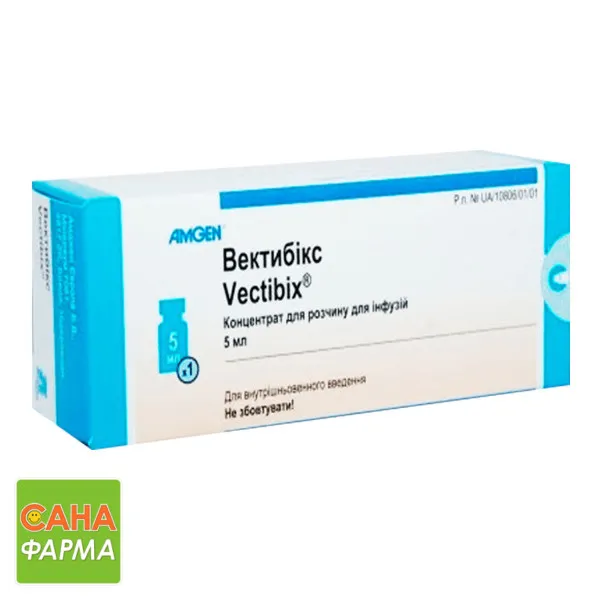
Table of Contents
INSTRUCTIONS FOR MEDICAL USE OF THE MEDICINAL PRODUCT VECTIBIX® (VECTIBIX®)
Composition:
Active substance: panitumumab;
1 ml of concentrate contains 20 mg of panitumumab;
Excipients: sodium chloride; sodium acetate trihydrate; glacial acetic acid; water for injections.
Pharmaceutical form. Concentrate for solution for infusion.
Main physicochemical properties: colorless liquid, may contain amorphous protein particles from transparent to white in color.
Pharmacotherapeutic group. Antineoplastic and immunomodulating agents. Antineoplastic agents. Monoclonal antibodies and antibody-drug conjugates. EGFR (epidermal growth factor receptor) inhibitors. Panitumumab. ATC code L01FE02.
Pharmacological Properties.
Pharmacodynamics.
Mechanism of action
Panitumumab is a recombinant, fully human IgG2 monoclonal antibody that binds with high affinity and specificity to the human epidermal growth factor receptor (EGFR). EGFR is a transmembrane glycoprotein belonging to the type I receptor tyrosine kinase family, which includes EGFR (HER1/c-ErbB-1), HER2, HER3, and HER4. EGFR promotes cell growth in normal epithelial tissues, including skin and hair follicles, and is expressed on many tumor cells.
Panitumumab binds to the ligand-binding domain of EGFR and inhibits receptor autophosphorylation induced by all known EGFR ligands. Binding of panitumumab to EGFR leads to receptor internalization, inhibition of cell growth, induction of apoptosis, and reduced production of interleukin-8 and vascular endothelial growth factor.
The genes KRAS (Kirsten rat sarcoma viral oncogene homolog) and NRAS (neuroblastoma RAS viral oncogene homolog) are closely related members of the RAS oncogene family. KRAS and NRAS encode small GTP-binding proteins involved in signal transduction. A variety of stimuli, including signaling from EGFR, activate KRAS and NRAS, which in turn stimulate other intracellular proteins promoting cell proliferation, cell survival, and angiogenesis.
Activating mutations in RAS genes frequently occur in various human tumors and play a role in both oncogenesis and tumor progression.
Pharmacodynamic effects
In vitro studies and in vivo animal studies have shown that panitumumab inhibits the growth and survival of tumor cells expressing EGFR. The antitumor effect of panitumumab was not observed in xenografts of human tumors lacking EGFR expression. Adding panitumumab to treatment regimens with radiation therapy, chemotherapy, or other targeted therapeutic agents in animal studies resulted in enhanced antitumor effects compared to treatment with radiation therapy, chemotherapy, or other targeted agents alone.
Dermatological reactions (including effects on nails) observed in patients treated with Vectibix or other EGFR inhibitors are associated with the pharmacological action of therapy (see sections "Method of administration and dosage" and "Side effects").
Immunogenicity
All therapeutic proteins have the potential to be immunogenic. Data on the development of anti-panitumumab antibodies were evaluated using two different immunological diagnostic assays to detect binding anti-panitumumab antibodies (an ELISA assay detecting high-affinity antibodies and a biosensor immunoassay detecting both high- and low-affinity antibodies). For patients whose sera tested positive in any diagnostic immunoassay, an in vitro biological assay was performed to detect neutralizing antibodies.
As monotherapy:
- The incidence of binding antibodies (excluding dose administration and transiently positive patients) was < 1%, as detected by acid-dissociation ELISA, and 3.8%, as detected by Biacore assay;
- The incidence of neutralizing antibodies (excluding dose administration and transiently positive patients) was < 1%;
- No relationship between the presence of anti-panitumumab antibodies and pharmacokinetics, efficacy, or safety was observed compared to patients who did not develop antibodies.
In combination with irinotecan- or oxaliplatin-based chemotherapy:
- The incidence of binding antibodies (excluding pre-treatment positive patients) was 1%, as detected by acid-dissociation ELISA, and < 1%, as detected by Biacore assay;
- The incidence of neutralizing antibodies (excluding pre-treatment positive patients) was < 1%;
- No evidence of an altered safety profile was found in patients who tested positive for antibodies to Vectibix.
The detection of antibody formation depends on the sensitivity and specificity of the assay. The observed frequency of antibody-positive results may be influenced by several factors, including assay methodology, sample handling, timing of sample collection, concomitant therapy, and underlying disease. Therefore, comparisons of antibody results with other products may lead to misleading conclusions.
Pharmacokinetics.
Vectibix, administered as monotherapy or in combination with chemotherapy, exhibits nonlinear pharmacokinetics.
After a single dose of panitumumab administered as a 1-hour infusion, the area under the concentration-time curve (AUC) increased more than proportionally with dose, and the clearance (CL) of panitumumab decreased from 30.6 to 4.6 mL/day/kg as the dose increased from 0.75 to 9 mg/kg. However, at doses exceeding 2 mg/kg, the AUC of panitumumab increased proportionally with dose.
With the recommended dosing regimen (6 mg/kg every 2 weeks as a 1-hour infusion), panitumumab concentrations reached steady state by the third infusion, with peak and trough concentrations (± standard deviation [SD]) of 213 ± 59 and 39 ± 14 µg/mL, respectively. The values (± SD) for AUC0-tau and CL were 1306 ± 374 µg•day/mL and 4.9 ± 1.4 mL/kg/day, respectively. The elimination half-life was approximately 7.5 days (ranging from 3.6 to 10.9 days).
A population pharmacokinetic analysis was conducted to investigate the potential impact of selected covariates on panitumumab pharmacokinetics. The results indicate that age (21–88 years), sex, race, hepatic function, renal function, concomitant chemotherapy, and EGFR membrane staining intensity in tumor cells (1+, 2+, 3+) do not have a clinically significant effect on the pharmacokinetics of panitumumab.
Clinical pharmacokinetic studies of panitumumab in patients with impaired renal or hepatic function have not been conducted.
Clinical characteristics.
Indications.
Vectibix is indicated for the treatment of adults with metastatic colorectal cancer (mCRC) with wild-type RAS:
- first-line in combination with FOLFOX or FOLFIRI regimens;
- second-line in combination with FOLFIRI regimen for patients who have received first-line fluoropyrimidine-based chemotherapy (excluding irinotecan);
- as monotherapy when there is no response following treatment with chemotherapy regimens containing fluoropyrimidine, oxaliplatin, and irinotecan.
Contraindications.
History of severe or life-threatening hypersensitivity reactions to the active substance or to any of the excipients contained in Vectibix (see section "Special precautions").
Interstitial pneumonia or pneumonitis (see section "Special precautions").
The use of Vectibix in chemotherapy regimens containing oxaliplatin is contraindicated in patients with mCRC harboring mutated RAS or with unknown RAS status of mCRC (see section "Special precautions").
Pregnancy and breastfeeding period.
Pediatric population.
Special precautions.
The prepared infusion solution of Vectibix is intended for single use only. Vectibix should be reconstituted in 9 mg/mL (0.9%) sodium chloride injection solution. The reconstitution and administration procedures must be performed exclusively by healthcare professionals using aseptic techniques. Do not shake or vigorously agitate the vial contents. Vectibix should be visually inspected before administration. The solution should be colorless or may contain visible amorphous protein particles ranging from transparent to white in color (which will be removed by in-line filtration). Do not use Vectibix if its appearance does not match the description above. Withdraw sufficient amount of Vectibix to prepare a dose of 6 mg/kg using only a 21-gauge or smaller subcutaneous injection needle. Do not use needle-free devices (e.g., vial adapters) to withdraw the contents from the vial. Dilute to a total volume of 100 mL. The final concentration should not exceed 10 mg/mL. Doses exceeding 1000 mg should be diluted in 150 mL of 9 mg/mL (0.9%) sodium chloride injection solution (see section "Dosage and administration"). The diluted solution should be mixed by gently inverting the vial; do not shake.
Vectibix must be administered using a 0.2 or 0.22 micron filter with low protein-binding capacity, via peripheral line or central catheter.
No incompatibility has been observed between Vectibix and 9 mg/mL (0.9%) sodium chloride injection solution in polyvinyl chloride bags or polyolefin bags. The vial, together with any residual liquid remaining in the vial after single use, must be discarded.
Dispose of the vial and any remaining solution in the vial after single use.
Any unused medicinal product or waste material should be disposed of in accordance with local requirements.
Interaction with other medicinal products and other types of interactions.
Drug interaction studies with concomitant administration of Vectibix and irinotecan in patients with mCRC showed that the pharmacokinetics of irinotecan and its active metabolite SN-38 are not altered. Results from a cross-comparative study indicated that treatment with irinotecan-based regimens (IFL or FOLFIRI) has no effect on the pharmacokinetics of panitumumab.
Concomitant use of Vectibix in combination with chemotherapy containing IFL or bevacizumab is not recommended. A high incidence of severe diarrhea was observed when panitumumab was administered in combination with IFL (see section "Special precautions"); increased toxicity and higher number of fatal events were observed when panitumumab was administered in combination with chemotherapy and bevacizumab (see sections "Pharmacodynamics" and "Special precautions").
The use of Vectibix in combination with oxaliplatin-containing chemotherapy is contraindicated in patients with metastatic colorectal cancer if the tumor has a mutated RAS gene or if the RAS status of the tumor is unknown. Progression-free survival and overall survival were evaluated in patients with mutated RAS who received panitumumab or FOLFOX chemotherapy (see sections "Pharmacodynamics" and "Special precautions").
Special precautions for use.
Traceability
To improve traceability of biological medicinal products, the name and batch number of the administered product should be clearly recorded.
Dermatological and soft tissue toxicity reactions
The pharmacological effect observed with epidermal growth factor receptor (EGFR) inhibitors manifests as dermatological reactions and has been reported in nearly all patients (approximately 94%) receiving Vectibix therapy. Severe (NCI-CTC grade 3) skin reactions occurred in 23%, and life-threatening (NCI-CTC grade 4) skin reactions in < 1% of patients receiving Vectibix as monotherapy or in combination with chemotherapy (n = 2224) (see section "Adverse reactions"). If patients develop grade 3 (CTCAE version 4.0) or higher or intolerable dermatological reactions, dose modification recommendations should be followed as described in the section "Dosage and administration".
In clinical trials, infectious complications including sepsis and necrotizing fasciitis, which rarely led to fatal outcomes, and local abscesses requiring surgical intervention and drainage, have been reported as a consequence of severe dermatological reactions (including stomatitis). Patients who develop severe dermatological reactions or soft tissue toxicity, or in whom reactions worsen during Vectibix treatment, should be monitored for inflammatory or infectious complications (including subcutaneous cellulitis and necrotizing fasciitis) and receive immediate appropriate treatment. Life-threatening and fatal infectious complications, including necrotizing fasciitis and sepsis, have been observed in patients receiving Vectibix. Rare cases of Stevens-Johnson syndrome and toxic epidermal necrolysis have been reported in patients receiving Vectibix in the post-marketing period. In case of dermatological or soft tissue toxicity associated with severe or life-threatening inflammation or infectious complications, Vectibix should be withheld or discontinued.
Management of dermatological reactions should be based on severity. Ongoing monitoring and treatment of dermatological reactions should be guided by the severity of manifestations and may include application of moisturizers to affected skin areas, photoprotective agents (SPF > 15 UV-A and UV-B), topical steroid creams (no more than 1% hydrocortisone), and oral antibiotics (e.g., doxycycline). Patients who develop rash or dermatological toxicity during treatment are also advised to use sun protection measures and wear protective clothing, and to limit sun exposure, as sunlight may exacerbate skin reactions.
Patients should apply a moisturizer and sunscreen to the face, hands, legs, neck, back, and chest every morning throughout treatment, and apply a topical steroid cream to the face, hands, legs, neck, back, and chest every night during treatment.
Pulmonary complications
Patients with interstitial pneumonia, pulmonary fibrosis in medical history, or signs of these conditions were excluded from clinical trials. Cases of interstitial lung disease (ILD), both fatal and non-fatal, have been observed, primarily in Japanese patients. In case of acute onset or worsening of pulmonary symptoms, treatment with Vectibix should be interrupted and immediate attention should be paid to these symptoms. Upon diagnosis of ILD, Vectibix should be discontinued permanently and appropriate treatment initiated. In patients with a history of interstitial pneumonia or pulmonary fibrosis, the benefit of panitumumab therapy should be carefully weighed against the risk of pulmonary complications.
Electrolyte disturbances
Progressive decrease in magnesium levels, leading to severe (grade 4) hypomagnesemia, has been observed in some patients. Patients should be monitored for hypomagnesemia and concomitant hypocalcemia before initiation of Vectibix treatment and periodically for up to 8 weeks after treatment completion (see section "Adverse reactions"). Electrolyte replacement with magnesium is recommended when necessary.
Other electrolyte disturbances, including hypokalemia, have also been observed. Monitoring of patients and electrolyte replacement when necessary are recommended.
Infusion-related reactions
In clinical trials of monotherapy and combination therapy for metastatic colorectal cancer (n = 2224), infusion-related reactions (occurring within 24 hours of infusion), including severe infusion-related reactions (NCI-CTC grades 3 and 4), were reported in patients receiving Vectibix.
In post-marketing surveillance, serious infusion-related reactions have been reported, including rare fatal outcomes. If a severe or life-threatening reaction occurs during or at any time after infusion (e.g., bronchospasm, Quincke's edema, arterial hypotension, need for parenteral treatment, anaphylaxis), Vectibix administration must be permanently discontinued (see sections "Contraindications" and "Adverse reactions").
If patients experience mild or moderate (CTCAE version 4.0, grades 1 and 2) infusion-related reactions, the infusion rate should be reduced during that administration. It is recommended to maintain this reduced infusion rate for all subsequent infusions.
Hypersensitivity reactions sometimes occurred more than 24 hours after infusion, including fatal cases of Quincke's edema. Therefore, patients should be informed about the possibility of delayed hypersensitivity reactions and advised to immediately notify their physician if symptoms occur.
Acute renal failure
Acute renal failure has been observed in patients with severe diarrhea and dehydration. Patients experiencing severe diarrhea should be advised to seek immediate medical attention.
Vectibix in combination with irinotecan, bolus 5-fluorouracil and leucovorin (IFL)
In patients receiving Vectibix in combination with the IFL regimen [bolus 5-fluorouracil (500 mg/m²), leucovorin (20 mg/m²), and irinotecan (125 mg/m²)], a high incidence of severe diarrhea was observed; therefore, the use of Vectibix in combination with IFL should be avoided (see sections "Adverse reactions" and "Interaction with other medicinal products and other forms of interaction").
Vectibix in combination with bevacizumab and chemotherapy regimens
Shorter progression-free survival and increased mortality were observed in patients receiving Vectibix in combination with bevacizumab and chemotherapy. Increased frequency of pulmonary embolism, infections (predominantly of dermatological origin), diarrhea, electrolyte imbalance, nausea, vomiting, and dehydration were also observed in treatment groups receiving Vectibix in combination with bevacizumab and chemotherapy. Vectibix should not be administered in combination with bevacizumab-containing chemotherapy regimens (see sections "Pharmacodynamics" and "Interaction with other medicinal products and other forms of interaction").
Vectibix in combination with oxaliplatin-based chemotherapy in patients with mutated RAS mCRC or unknown RAS status
The use of Vectibix in combination with oxaliplatin-containing chemotherapy is contraindicated in patients with metastatic colorectal cancer when the tumor harbors a RAS mCRC mutation or when the RAS mCRC tumor status is unknown (see sections "Pharmacodynamics" and "Contraindications").
Shorter progression-free survival (PFS) and reduced overall survival (OS) were observed in patients with KRAS (exon 2) mutated tumors and additional RAS mutations (KRAS [exons 3 and 4] or NRAS [exons 2, 3, 4]) who received panitumumab in combination with infusional 5-fluorouracil, leucovorin, and oxaliplatin (FOLFOX), compared to FOLFOX monotherapy (see section "Pharmacodynamics").
RAS mutation status should be determined using an approved test method in a qualified laboratory (see section "Dosage and administration"). If Vectibix is used in combination with FOLFOX, it is recommended that the mutation status be determined in a laboratory participating in a RAS or wild-type status quality assurance program, with confirmation by duplicate testing.
Ophthalmological toxicity
Serious cases of keratitis and ulcerative keratitis, which may lead to corneal perforation, have been observed. Patients with signs and symptoms suggestive of keratitis, such as acute or progressive eye inflammation, lacrimation, photophobia, blurred vision, eye pain, and/or eye redness, should be referred to an ophthalmologist.
If ulcerative keratitis is confirmed, treatment with Vectibix should be interrupted or discontinued. If keratitis is diagnosed, the benefit-risk balance of continuing treatment should be carefully evaluated.
Vectibix should be used with caution in patients with a history of keratitis, ulcerative keratitis, or severe dry eye. Contact lens use is also a risk factor for keratitis and corneal ulceration.
Patients with ECOG performance status of 2 receiving Vectibix in combination with chemotherapy
For patients with ECOG performance status of 2, a benefit-risk assessment is recommended before initiating Vectibix in combination with chemotherapy for the treatment of mCRC. A positive benefit-risk balance has not been documented for patients with ECOG performance status of 2.
Elderly patients
No differences in safety or efficacy of Vectibix monotherapy were observed in elderly patients (≥ 65 years). However, an increased incidence of serious adverse reactions was observed in elderly patients receiving Vectibix in combination with FOLFIRI or FOLFOX chemotherapy regimens compared to chemotherapy alone (see section "Adverse reactions").
Precautions regarding excipients
This medicinal product contains 3.45 mg of sodium per 1 ml, equivalent to 0.17% of the maximum daily dose of 2 g recommended by WHO for adults.
Use during pregnancy or breastfeeding.
Pregnancy
There are insufficient data on the use of Vectibix in pregnant women. Animal studies have shown reproductive toxicity, but the risk to humans is unknown. Since epidermal growth factor receptors (EGFR) are involved in the control of prenatal development and play an important role in normal embryonic organogenesis, proliferation, and differentiation, Vectibix may pose a risk to the fetus when administered during pregnancy.
Human IgG is known to cross the placental barrier; therefore, panitumumab may be transferred from the pregnant woman to the developing fetus. Women of childbearing potential should use contraception during treatment with Vectibix and for 2 months after the end of therapy. If pregnancy occurs during treatment or if the drug is used during pregnancy, the patient should be informed of the risk of fetal loss or potential harm to the fetus.
Breastfeeding period
It is unknown whether panitumumab passes into human breast milk. Since human IgG passes into breast milk, panitumumab may also have this property. The potential for absorption and harm to the infant is unknown. Women are advised not to breastfeed during treatment with Vectibix and for 2 months after the end of therapy.
Fertility
Animal studies have shown reversible effects on the menstrual cycle and reduced fertility in female monkeys. Panitumumab may negatively affect a woman's ability to become pregnant.
Ability to drive and use machines.
Vectibix may have a negligible influence on the ability to drive and use machines. If patients experience treatment-related symptoms affecting vision and/or concentration, they are advised to refrain from driving or operating machinery until such effects resolve.
Method of Administration and Dosage
Treatment with Vectibix should be supervised by a physician experienced in the use of anticancer therapy. Prior to initiating treatment with Vectibix, confirmation of wild-type RAS status (KRAS and NRAS) must be obtained. The mutation status should be determined in a specialized laboratory using a validated method for detecting KRAS (exons 2, 3, and 4) and NRAS (exons 2, 3, and 4) mutations.
Method of Administration
Vectibix must be administered by intravenous infusion using an infusion pump.
Before administration, Vectibix should be diluted in 9 mg/mL (0.9%) sodium chloride solution to a maximum concentration not exceeding 10 mg/mL (see instructions for solution preparation in the section "Special Precautions").
Vectibix should be administered using a 0.2 or 0.22 micrometer filter with low protein-binding capacity, via a peripheral line or a central venous catheter. The recommended infusion duration is approximately 60 minutes. If the patient tolerates the first infusion well, subsequent infusions may be administered over 30 to 60 minutes. Doses exceeding 1000 mg should be administered over approximately 90 minutes (see section "Special Precautions").
The infusion system should be flushed before and after administration of Vectibix with sodium chloride solution to avoid mixing with other medicinal products or intravenous solutions.
If infusion-related reactions occur, a reduction in the infusion rate may be required (see section "Special Warnings and Precautions").
Vectibix must not be administered as an intravenous bolus or by rapid intravenous injection.
Instructions for dilution of the medicinal product prior to administration are provided in the section "Special Precautions."
Dosage
The recommended dose of Vectibix is 6 mg/kg body weight administered once every two weeks.
Dose adjustment of Vectibix may be required in the case of severe (grade 3 or higher) dermatologic reactions (see Table 1).
Table 1.
| Skin symptoms present: grade ≥ grade 31 |
Vectibix administration |
Outcome |
Dose adjustment |
| First occurrence |
Withhold administration of 1 or 2 doses |
Improved (< grade 3) |
Resume infusion at 100% of the originally prescribed dose |
| Did not recover |
Discontinue use |
||
| Second occurrence |
Withhold administration of 1 or 2 doses |
Improved (< grade 3) |
Resume infusion at 80% of the originally prescribed dose |
| Did not recover |
Discontinue use |
||
| Third occurrence |
Withhold administration of 1 or 2 doses |
Improved (< grade 3) |
Resume infusion at 60% of the originally prescribed dose |
| Did not recover |
Discontinue use |
||
| Fourth occurrence |
Discontinue use |
- |
- |
1 Greater than or equal to Grade 3: defined as severe or life-threatening.
Special patient groups.
The safety and efficacy of Vectibix in patients with renal or hepatic impairment have not been studied.
There are no clinical data on dose adjustment for elderly patients.
Children.
Studies on the use of Vectibix in children for the treatment of colorectal cancer have not been conducted.
Overdose.
Doses up to and including 9 mg/kg have been evaluated in clinical studies. Overdose was defined as exceeding twice the recommended therapeutic dose (12 mg/kg). Adverse effects observed, such as skin toxicity, diarrhea, dehydration, and weakness, were consistent with the safety profile at the recommended dose.
Adverse Reactions
Summary of Safety Profile
Based on analysis of all mCRC clinical studies in patients receiving Vectibix as monotherapy and in combination with chemotherapy (n = 2224), skin reactions were the most frequently reported, occurring in approximately 94% of patients. These reactions are associated with the pharmacological effect of Vectibix, and most were mild to moderate in severity, with 23% of cases being severe (NCI-CTC Grade 3) and < 1% being life-threatening (NCI-CTC Grade 4). For clinical management of skin reactions, including dose modifications, see section "Dosage and Administration".
Adverse reactions occurring in ≥ 20% of patients were very commonly observed as gastrointestinal disorders [diarrhea (46%), nausea (39%), vomiting (26%), constipation (23%), and abdominal pain (23%)]; general disorders [fatigue (35%), pyrexia (21%)]; metabolism and nutrition disorders [decreased appetite (30%)]; infections and infestations [paronychia (20%)]; and skin and subcutaneous tissue reactions [rash (47%), acneiform dermatitis (39%), pruritus (36%), erythema (33%), and dry skin (21%)].
Summary of Adverse Reactions in Tabular Form
Table 2 lists adverse reactions reported during clinical studies in patients with mCRC who received panitumumab as monotherapy or in combination with chemotherapy (n = 2224), as well as from spontaneous reports. Adverse events within each category are listed in order of decreasing severity.
Table 2.
| MedDRA system organ classes |
Adverse reactions |
||
| Very common |
Common |
Uncommon (from ≥ 1/1000 to < 1/100) |
|
| Infections and infestations |
Conjunctivitis, paronychia1 |
Pustular rashes, subcutaneous cellulitis1, urinary tract infection, folliculitis, localized infections |
Eye infection, eyelid infection |
| Blood and lymphatic system disorders |
Anemia |
Leukopenia |
|
| Immune system disorders |
Hypersensitivity1 |
Anaphylactic reaction2 |
|
| Metabolism and nutrition disorders |
Hypokalemia, hypomagnesemia, decreased appetite |
Hypocalcemia, dehydration, hyperglycemia, hypophosphatemia |
|
| Psychiatric disorders |
Insomnia |
Restlessness |
|
| Nervous system disorders |
Headache, dizziness |
||
| Eye disorders |
Blepharitis, eyelash growth, lacrimation increased, eye hyperemia, dry eye, eye pruritus, eye irritation |
Ulcerative keratitis1,4, keratitis1, eyelid irritation |
|
| Cardiac disorders |
Tachycardia |
Cyanosis |
|
| Vascular disorders |
Deep vein thrombosis, arterial hypotension, arterial hypertension, flushing |
||
| Respiratory, thoracic and mediastinal disorders |
Dyspnea, cough |
Pulmonary embolism, epistaxis |
Interstitial lung disease3, bronchospasm, dry nose |
| Gastrointestinal disorders |
Diarrhea1, nausea, vomiting, abdominal pain, stomatitis, constipation |
Rectal bleeding, dry mouth, dyspepsia, aphthous stomatitis, cheilitis, gastroesophageal reflux disease |
Cracked lips Dry lips |
| Skin and subcutaneous tissue disorders1 |
Acneiform dermatitis, rash, erythema, pruritus, dry skin, skin fissures, acne, alopecia |
Skin ulcer, skin exfoliation, exfoliative rash, dermatitis, papular rash, pruritic rash, erythematous rash, generalized rash, macular rash, maculopapular rash, skin disorder, skin toxicity, scab, hypertrichosis, onychocladia, nail disorder, hyperhidrosis, hand-foot skin reaction |
Toxic epidermal necrolysis1, 4, Stevens-Johnson syndrome1, 4, skin necrosis1, 4, angioedema1, hirsutism, ingrown nail, onycholysis |
| Musculoskeletal and connective tissue disorders |
Back pain |
Limb pain |
|
| General disorders and administration site conditions |
Increased fatigue, hyperthermia, asthenia, mucosal inflammation, peripheral edema |
Chest pain, pain, chills |
|
| Injury, poisoning and procedural complications |
Infusion-related reactions1 |
||
| Investigations |
Weight decreased |
Blood magnesium decreased |
|
1 See section “Description of selected adverse reactions” below.
2 See section “Special warnings and precautions for use”: Infusion-related reactions.
3 See section “Special warnings and precautions for use”: Pulmonary complications.
4 Skin necrosis, Stevens-Johnson syndrome, toxic epidermal necrolysis, and ulcerative keratitis are adverse reactions associated with panitumumab use reported in the post-marketing period. For these adverse reactions, the maximum frequency category was estimated from the upper limit of the 95% confidence interval for the point estimate, based on regulatory guidelines for assessing frequency of adverse reactions in spontaneous reports. The maximum frequency was estimated from the upper limit of the 95% confidence interval for the point estimate, specifically 3/2224 (or 0.13%).
The safety profile of Vectibix in combination with chemotherapy includes adverse reactions observed with Vectibix monotherapy and the toxicity of the concurrently administered chemotherapy regimen. No new types of toxicity or worsening of previously recognized toxicity beyond the expected additive effect were observed. Skin reactions were most frequently observed in patients receiving panitumumab in combination with chemotherapy. Other toxicities observed more frequently compared to monotherapy include hypomagnesemia, diarrhea, and stomatitis. These toxic reactions often led to discontinuation of Vectibix or discontinuation of chemotherapy.
Description of selected adverse reactions
Gastrointestinal system.
Diarrhea reported was predominantly mild to moderate. Severe diarrhea (grade 3–4 according to NCI-CTC scale) was observed in 2% of patients receiving Vectibix monotherapy and in 16% of patients receiving Vectibix in combination with chemotherapy.
Cases of acute renal failure have been reported in patients experiencing diarrhea and dehydration (see section “Special warnings and precautions for use”).
Infusion-related reactions.
During clinical studies of monotherapy and combination therapy in mCRC (n = 2224), infusion-related reactions (occurring within 24 hours after any infusion), which may include symptoms/signs such as chills, fever, or dyspnea, were observed in approximately 5% of patients treated with Vectibix, of which 1% were severe (grade 3–4 according to NCI-CTC scale).
A fatal case of angioedema occurred in a patient with metastatic squamous cell carcinoma of the head and neck who was receiving Vectibix in clinical trials. The fatal event occurred within 24 hours after re-administration in the context of angioedema (see sections “Contraindications” and “Special warnings and precautions for use”). In the post-marketing period, hypersensitivity reactions occurring more than 24 hours after administration have also been reported.
For management of infusion-related reactions, see section “Special warnings and precautions for use”.
Skin and subcutaneous tissue.
Skin eruptions predominantly occurred on the face, upper chest, and back, but could extend to the extremities. There have been reports that severe skin and subcutaneous tissue reactions led to infectious complications, including sepsis (rarely resulting in death), and local abscesses requiring surgical intervention and drainage. The first symptoms of dermatologic reactions appeared within 10 days and resolved on average 31 days after the last dose of Vectibix.
Paronychia was associated with swelling of the lateral nail folds of the hands and feet.
Dermatologic reactions (including nail effects) observed in patients receiving treatment with Vectibix or other EGFR inhibitors were related to the pharmacological effects of therapy.
Across all clinical studies, skin reactions were observed in approximately 94% of patients receiving Vectibix as monotherapy or in combination with chemotherapy (n = 2224). These reactions were primarily rash and acneiform dermatitis, mostly mild to moderate in severity. Severe skin reactions (grade 3 according to NCI-CTC scale) were observed in 23%, and life-threatening skin reactions (grade 4 according to NCI-CTC scale) were reported in <1% of patients. Life-threatening and fatal infectious complications, including necrotizing fasciitis and sepsis, have been observed in patients receiving Vectibix (see section “Special warnings and precautions for use”).
For information on dermatologic reactions, including recommendations for dose modification in clinical use, see section “Special warnings and precautions for use”.
In the post-marketing period, rare cases of skin necrosis, Stevens-Johnson syndrome, and toxic epidermal necrolysis have been reported (see section “Special warnings and precautions for use”).
Ophthalmologic toxicity.
Severe cases of keratitis and ulcerative keratitis have been reported, which may lead to corneal perforation (see section “Special warnings and precautions for use”).
Special patient populations.
There were no differences in safety or efficacy of Vectibix monotherapy observed in elderly patients (≥65 years of age). However, a higher incidence of serious adverse reactions was observed in elderly patients receiving Vectibix in combination with FOLFIRI regimen (45% vs. 32%) or FOLFOX chemotherapy regimen (52% vs. 37%) compared to chemotherapy alone (see section “Special warnings and precautions for use”). The most common serious adverse reaction was diarrhea in patients treated with Vectibix in combination with FOLFOX or FOLFIRI regimens, and dehydration and pulmonary embolism when patients received Vectibix in combination with FOLFIRI.
The safety of Vectibix in patients with renal or hepatic impairment has not been studied.
Reporting of suspected adverse reactions
Reporting suspected adverse reactions after medicine authorization is important. It allows continued monitoring of the benefit-risk balance of the medicine. Healthcare professionals are asked to report any suspected adverse reactions via the national reporting system.
Shelf life.
Vial
3 years.
Reconstituted solution
Vectibix does not contain antimicrobial preservatives or bacteriostatic agents. The product should be used immediately after reconstitution. If not used immediately, the user is responsible for storage conditions and duration, which should not exceed 24 hours at 2–8°C. The reconstituted solution must not be frozen.
Storage conditions.
Store in a refrigerator (2–8°C).
Do not freeze.
Keep in the original packaging.
Keep out of reach of children.
For storage conditions of the prepared solution, see section “Shelf life”.
Incompatibilities.
This medicinal product must not be mixed with other medicinal products except those specified in the section “Special warnings and precautions for use”.
Packaging.
Vials of 5 mL, pack of 1 in a cardboard box.
Prescription status.
Prescription only.
Manufacturer.
Amgen Europe B.V.
Manufacturer’s address and place of business.
Minervum 7061, 4817 ZK, Breda, The Netherlands.