Varivax vaccine for prevention of varicella live attenuated
Ukraine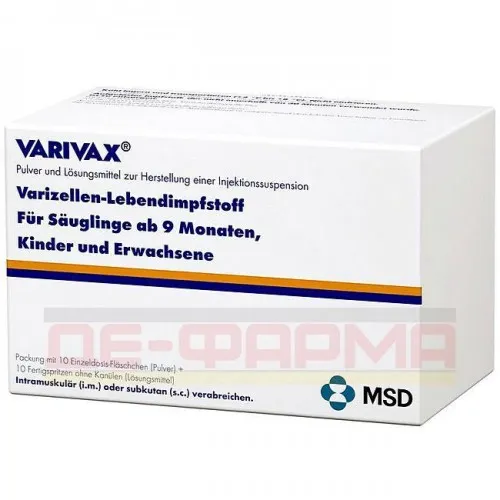
Table of Contents
Instructions for Medical Use of the Medicinal Product VARIVAX Varicella Vaccine Live Attenuated
Composition:
After reconstitution, 1 dose (0.5 mL) contains:
Active substance:
live attenuated varicella virus, Oka/Merck strain 1 ≥ 1350 PFU2
1 obtained in human diploid cells (MRC-5)
2 PFU: plaque-forming units
Excipients: sucrose, gelatin (hydrolyzed porcine), urea, sodium chloride, sodium L-glutamate, disodium phosphate, monopotassium phosphate, potassium chloride.
Solvent: water for injections.
This vaccine may contain a residual amount of neomycin.
Pharmaceutical form. Powder and solvent for suspension for injection.
Main physicochemical characteristics: lyophilized solid white crystalline mass;
solvent: clear, colorless liquid.
Pharmacotherapeutic group. Viral vaccines. Live attenuated varicella vaccine. ATC code J07BK01.
Immunological and Biological Properties.
Pharmacodynamics.
Clinical Efficacy Assessment
Efficacy in children under 12 months of age
Clinical efficacy has not been evaluated when vaccination was initiated before 12 months of age.
Single-dose vaccination schedule in healthy children aged 12 months to 12 years
In combined clinical studies of previous formulations of varicella vaccine (live) (Oka/Merck strain) administered at doses ranging from approximately 1000 to 17,000 PFU, most individuals who received the varicella vaccine (live) (Oka/Merck strain) and were exposed to wild-type varicella virus experienced complete protection against varicella disease or developed only a milder form of the illness.
Specifically, the protective efficacy of the varicella vaccine (live) (Oka/Merck strain), starting from day 42 after vaccination, was assessed in three different ways:
- in a double-blind, placebo-controlled study over 2 years (N = 956; efficacy from 95 to 100%; formulation contains 17,430 PFU);
- by evaluating protection against disease after household exposure to varicella virus over 7–9 years of follow-up (N = 259; efficacy from 81 to 88%; formulation contains 1000–9000 PFU); and
- by comparing the incidence of varicella disease over 7–9 years in vaccinated individuals versus historical control data from 1972 to 1978 (N = 5404; efficacy from 83 to 94%; formulation contains 1000–9000 PFU).
Among a group of 9202 children aged 12 months to 12 years who received a dose of varicella vaccine (live) (Oka/Merck strain), 1149 cases of infection (occurring more than 6 weeks after vaccination) were observed during a 13-year follow-up period. Of these 1149 cases, 20 (1.7%) were classified as severe (≥ 300 skin lesions, oral temperature ≥ 37.8°C). These data, compared to 36% of severe cases observed after wild-type virus infection in the unvaccinated control group, correspond to a 95% relative reduction in the frequency of severe cases among vaccinated individuals who developed infection after vaccination.
Post-exposure prophylaxis with vaccination within 3 days of exposure was studied in two small controlled trials. The first study showed that none of 17 children developed varicella after household exposure to an infected individual, compared to 19 out of 19 unvaccinated children who became ill. In the second placebo-controlled post-exposure prophylaxis study, one out of 10 children in the vaccine group, compared to 12 out of 13 in the placebo group, developed varicella. In an uncontrolled hospital-based study, 148 patients, including 35 immunocompromised individuals, received a dose of varicella vaccine 1–3 days after exposure, and none developed varicella.
Published data on varicella prevention 4–5 days after exposure are limited. In a double-blind study, 26 unvaccinated siblings of varicella-infected children were randomized to receive varicella vaccine or placebo. In the varicella vaccine group, 4 out of 13 children (30.8%) developed varicella, with 3 vaccinated on days 4–5. However, the disease was mild (1, 2, and 50 lesions). In comparison, 12 out of 13 children (92.3%) in the placebo group developed typical varicella (60 to 600 lesions). Thus, vaccination 4–5 days after exposure to varicella virus may attenuate the severity of secondary cases.
Two-dose vaccination schedule in healthy children aged 12 months to 12 years
In a study comparing the efficacy of one-dose (N = 1114) and two-dose (N = 1102) regimens administered 3 months apart, the estimated protection against varicella of any severity over a 10-year observation period was 94% with one dose and 98% with two doses (p < 0.001). The cumulative incidence of varicella over the 10-year period was 7.5% after the one-dose regimen and 2.2% after the two-dose regimen. Most cases of varicella in individuals vaccinated with either one or two doses were mild.
Two-dose vaccination schedule in healthy individuals aged 13 years and older
The protective efficacy of the two-dose vaccination schedule, administered 4 or 8 weeks apart, in individuals aged 13 years and older was evaluated after exposure to varicella virus, over 6–7 years following vaccination. The clinical efficacy rate ranged from approximately 80 to 100%.
Immunogenicity of the Varicella Virus Vaccine (Live) (Oka/Merck Strain)
Single-dose vaccination schedule in children aged 12 months to 12 years
Clinical studies have demonstrated that the immunogenicity of the refrigerator-stable formulation is comparable to that of previous formulations previously evaluated for efficacy.
A titer ≥ 5 gpELISA units/mL (gpELISA – highly sensitive assay, not commercially available) at 6 weeks post-vaccination has been shown to approximately correlate with clinical protection. However, it is unknown whether a titer ≥ 0.6 gpELISA units/mL correlates with long-term protection.
Humoral Immune Response in Children Aged 12 Months to 12 Years
Seroconversion (based on a threshold test, generally corresponding to ≥ 0.6 gpELISA units/mL) was observed in 98% of 9610 varicella-susceptible children aged 12 months to 12 years who received a dose of 1000 to 50,000 PFU. Antibody titers against varicella virus ≥ 5 gpELISA units/mL were observed in approximately 83% of children.
In 93% of children aged 12 to 23 months who received VARIVAX stored under refrigeration (8000 PFU/dose or 25,000 PFU/dose), antibody titers against varicella virus were measured at ≥ 5 gpELISA units/mL at 6 weeks after vaccination.
Humoral Immune Response in Individuals Aged 13 Years and Older
In 934 individuals aged 13 years and older participating in several clinical studies of varicella vaccine (live) (Oka/Merck strain) administered at doses ranging from approximately 900 to 17,000 PFU, the seroconversion rate (anti-varicella virus antibody titer ≥ 0.6 gpELISA units/mL) after one dose ranged from 73% to 100%. The proportion of individuals with antibody titers ≥ 5 gpELISA units/mL ranged from 22% to 80%.
After administration of a two-dose regimen (601 individuals) with doses ranging from 900 to 9000 PFU, the seroconversion rate ranged from 97% to 100%, and the proportion of individuals with antibody titers ≥ 5 gpELISA units/mL ranged from 76% to 98%.
Currently, there are no data on the immune response to VARIVAX in individuals aged ≥ 65 years who are seronegative for varicella-zoster virus (VZV).
Humoral Immunity by Route of Administration
A comparative study involving 752 individuals who received VARIVAX either intramuscularly or subcutaneously demonstrated a similar immunogenicity profile with both routes of administration.
Two-dose vaccination schedule in healthy children aged 12 months to 12 years
In a multicenter study, healthy children aged 12 months to 12 years received one or two doses of VARIVAX administered 3 months apart. Immunogenicity results are presented in the table below.
| VARIVAX 1-dose regimen (N = 1114) |
VARIVAX 2-dose regimen (N = 1102) |
||
| 6 weeks after vaccination |
6 weeks after dose 1 |
6 weeks after dose 2 |
|
| Seroprotection rate |
98.9% (882/892) |
99.5% (847/851) |
99.9% (768/769) |
| Percentage with antibody titer against VZV ≥ 5 gpELISA units/mL (seroprotection threshold) |
84.9% (757/892) |
87.3% (743/851) |
99.5% (765/769) |
| Geometric mean titer (gpELISA units/mL) |
12.0 |
12.8 |
141.5 |
The results of this study, as well as other studies in which the second vaccine dose was administered 3–6 years after the first dose, showed a significant boost in antibody production against varicella virus following administration of the second dose. Levels of antibodies against varicella virus after administration of two doses with an interval of 3–6 years were comparable to levels achieved after administration of two doses with a 3-month interval. Seroprotection rates (≥ 5 gpELISA units/mL) were approximately 85% after the first dose and 100% after the second dose, while the geometric mean titer increased, on average, approximately 10-fold after administration of the second dose (for safety, see "Adverse Reactions").
Two-dose vaccination schedule in healthy children aged 9 to 12 months at the time of first dose administration
A clinical study was conducted on the use of a combined measles, mumps, rubella, and varicella (Oka/Merck) (MMRV) vaccine administered according to a two-dose schedule with a 3-month interval in 1620 healthy children aged 9 to 12 months at the time of first dose administration.
The safety profile after administration of the first and second doses was generally comparable across all age subgroups.
In the full analysis data set (vaccinated regardless of baseline antibody titer), the seroprotection rate against varicella virus was 100% after administration of the second dose, irrespective of the age at first vaccination.
Seroprotection rates and geometric mean titers (GMTs) against varicella virus for the full analysis group are presented in the table below.
| MMRV vaccine dose 1 at 9 months/ dose 2 at 12 months (N = 527) |
MMRV vaccine dose 1 at 11 months/ dose 2 at 14 months (N = 480) |
MMRV vaccine dose 1 at 12 months/ dose 2 at 15 months (N = 466) |
||||
| 6 weeks after dose 1 |
6 weeks after dose 2 |
6 weeks after dose 1 |
6 weeks after dose 2 |
6 weeks after dose 1 |
6 weeks after dose 2 |
|
| Varicella seroprotection rate [95 % CI (confidence interval)] (titer ≥ 5 gpELISA units/mL) |
93.1 % [90.6; 95.1] |
100 % [99.3; 100] |
97.0 % [95.1; 98.4] |
100 % [99.2; 100] |
96.5 % [94.4; 98.0] |
100 % [99.2; 100] |
| Geometric mean titer [95 % CI] (gpELISA units/mL) |
12 [12; 13] |
321 [293; 352] |
15 [14; 15] |
411 [376; 450] |
15 [14; 15] |
481 [441; 526] |
Duration of Immune Response
One-dose vaccination schedule in children aged 12 months to 12 years
In these clinical studies involving children aged 12 months to 12 years who were followed long-term after receiving a single vaccine dose, levels of antibodies against varicella virus (gpELISA ≥ 0.6 units/mL) were present in 99.1% (3092/3120) at 1 year, 99.4% (1382/1391) at 2 years, 98.7% (1032/1046) at 3 years, 99.3% (997/1004) at 4 years, 99.2% (727/733) at 5 years, and 100% (432/432) at 6 years after vaccination.
Two-dose vaccination schedule in children aged 12 months to 12 years
Over 9 years of follow-up, geometric mean titers and the percentage of subjects with antibody titers against varicella virus ≥ 5 gpELISA units/mL were higher in individuals who received the two-dose schedule compared to those who received the one-dose schedule during the first year of observation, and were comparable throughout the entire follow-up period. Cumulative maintenance of antibodies against varicella virus remained very high after 9 years for both vaccination schedules (99.0% in the single-dose group and 98.8% in the two-dose group).
Individuals aged 13 years and older
In clinical studies involving healthy individuals aged 13 years and older who received two vaccine doses, levels of antibodies against varicella virus (gpELISA ≥ 0.6 units/mL) were detected in 97.9% (568/580) at 1 year, 97.1% (34/35) at 2 years, 100% (144/144) at 3 years, 97.0% (98/101) at 4 years, 97.5% (78/80) at 5 years, and 100% (45/45) at 6 years after vaccination.
Elevated antibody levels were observed in vaccinated individuals following exposure to wild-type varicella virus, suggesting long-term maintenance of antibody levels after vaccination in these studies. The duration of immune response following administration of varicella virus vaccine (live) (Oka/Merck strain) in the absence of boosting by wild-type virus exposure is unknown (see "Dosage and administration").
Immune memory was observed after administration of a booster dose of varicella virus vaccine (live) (Oka/Merck strain) 4–6 years after primary vaccination in 419 individuals who received the first vaccine dose at ages 1 to 17 years. The geometric mean titer before the booster dose was 25.7 gpELISA units/mL and increased to 143.6 gpELISA units/mL approximately 7–10 days after booster administration.
Efficacy of Varicella Virus Vaccine (Live) (Oka/Merck Strain)
Observational Studies on Duration of VARIVAX Vaccine Efficacy
Data from two efficacy studies conducted in the United States confirmed that mass varicella vaccination reduces the risk of varicella infection by approximately 90%. Furthermore, reduced risk of varicella disease has persisted at the population level for at least 15 years in both vaccinated and unvaccinated individuals. Data also indicate that varicella vaccination reduces the risk of herpes zoster in vaccinated individuals.
In the first long-term prospective cohort study, approximately 7,600 children who received varicella vaccine at age 1–2 years in 1995 were actively followed for 14 years to assess the incidence of varicella and herpes zoster. By the end of the study in 2009, 38% of the children had received a second dose of varicella vaccine. It should be noted that in 2006, the United States recommended administration of a second dose of varicella vaccine. Throughout the observation period, varicella incidence was approximately 10 times lower among vaccinated children compared to children of the same age in the pre-vaccination era (vaccine effectiveness during the study period ranged between 73% and 90%). There were also fewer cases of herpes zoster among varicella-vaccinated individuals throughout the entire follow-up period compared to expected rates in children of the same age who had natural varicella infection caused by wild-type virus prior to vaccine introduction (relative risk [RR] = 0.61, 95% CI 0.43–0.89). Cases of varicella and herpes zoster in vaccinated individuals were generally mild.
In the second long-term observational study, five cross-sectional surveys on varicella incidence were conducted, each with a random sample of approximately 8,000 children and adolescents aged 5–19 years, over more than 15 years, from 1995 (before vaccine introduction) to 2009. Results showed a progressive decline in varicella incidence of 90–95% (approximately 10–20 fold) from 1995 to 2009 across all age groups, in both vaccinated and unvaccinated children and adolescents. Additionally, a reduction of approximately 90% (approximately 10-fold) in hospitalization rates due to varicella was observed across all age groups.
Pharmacokinetics
Assessment of pharmacokinetic properties is not required for vaccines.
Clinical characteristics.
Indications.
VARIVAX vaccine is indicated for vaccination to prevent varicella in individuals aged 12 months and older (see "Method of administration and dosage" and "Pharmacodynamics").
VARIVAX may be used in children aged 9 months and older under special circumstances, such as to comply with the national vaccination schedule or during disease outbreaks (see "Method of administration and dosage," "Interaction with other medicinal products and other forms of interaction," and "Pharmacodynamics").
VARIVAX may also be administered to susceptible individuals who have not previously had varicella.
Vaccination within 3 days after exposure to a person infected with the varicella virus may prevent the development of clinically evident infection or may attenuate the disease. In addition, some data suggest that vaccination within 5 days after exposure may also attenuate the course of the infectious disease (see "Pharmacodynamics").
Vaccination of children in Ukraine is carried out in accordance with the requirements of current orders of the Ministry of Health of Ukraine.
Contraindications.
- History of hypersensitivity to any varicella vaccine, to any of the excipients contained in the medicinal product, or to neomycin (which may be present in trace amounts; see "Composition," "Special precautions for use").
- Blood dyscrasias, leukemia, lymphoma of any type, or other malignant neoplasms affecting the hematopoietic and lymphatic systems.
- Contraindicated in individuals receiving immunosuppressive therapy (including high-dose corticosteroids) (see "Adverse reactions").
- Severe form of humoral or cellular (primary or acquired) immunodeficiency, e.g., severe combined immunodeficiency, agammaglobulinemia, AIDS, or symptomatic HIV infection, or age-specific percentage of CD4+ T-lymphocytes: in children under 12 months of age – CD4+ < 25%; in children aged 12 to 35 months – CD4+ < 20%; in children aged 36 to 59 months – CD4+ < 15% (see "Special precautions for use" and "Adverse reactions").
- Family history of congenital or hereditary immunodeficiency, except when immune system status is fully compensated.
- Active untreated tuberculosis.
- Any illness associated with fever > 38.5 ºC; however, subfebrile body temperature is not a contraindication to vaccination.
- Pregnancy. In addition, pregnancy should be avoided for 1 month following vaccination (see "Use during pregnancy or breastfeeding").
When conducting immunization in Ukraine, contraindications should be determined in accordance with current orders of the Ministry of Health of Ukraine.
Interaction with other medicinal products and other forms of interaction.
VARIVAX must not be mixed in the same syringe with any other vaccine or medicinal product. Other vaccines or medicinal products should be administered as separate injections and at different body sites.
Concomitant administration with other vaccines
VARIVAX vaccine has been administered simultaneously (but injections given at different body sites) in young children with combination vaccine for measles, mumps, and rubella; conjugate vaccine for prevention of diseases caused by Haemophilus influenzae type b; hepatitis B vaccine; diphtheria, tetanus, and pertussis (whole-cell component) vaccine; or oral poliomyelitis vaccine. No evidence of clinically significant differences in immune responses to any of the antigens was observed when co-administered with VARIVAX vaccine. If varicella vaccine (live) (Oka/Merck strain) is not administered simultaneously with the live viral vaccine for measles, mumps, and rubella, a 1-month interval should be maintained between administration of the two live viral vaccines.
There are no data on simultaneous administration of VARIVAX vaccine and tetravalent, pentavalent, or hexavalent vaccines (for prevention of diphtheria, tetanus, and pertussis [acellular component] [DTP-a]).
Vaccination should be postponed for at least 5 months after blood or plasma transfusion or after administration of normal human immunoglobulin or varicella zoster immune globulin (VZIG).
Administration of blood products containing antibodies to the varicella virus, including VZIG or other immunoglobulin preparations, within 1 month after VARIVAX vaccine dose may reduce the immune response to the vaccine and thereby reduce its protective efficacy. Therefore, these products should not be administered within 1 month after VARIVAX vaccination, except when the benefit clearly outweighs the risk.
Recipients of the vaccine should avoid the use of salicylates for 6 weeks after vaccination with VARIVAX, as Reye's syndrome has been reported following salicylate use during infection with wild-type varicella virus (see "Special precautions for use").
Special precautions for use.
Traceability
To improve traceability of biological medicinal products, it is necessary to clearly record the name and batch number of the administered medicinal product.
When administering all injectable vaccines, appropriate medications and medical supervision must always be available to manage a rare anaphylactic reaction that may occur after vaccination.
As with other vaccines, there is a possibility of developing hypersensitivity reactions not only to the active ingredient, but also to any of the excipients or to neomycin (which may be present in trace amounts) (see "Composition", "Special precautions for use").
Vaccination with VARIVAX, as with other vaccines, may not be effective in all recipients against wild-type varicella. Clinical trials evaluated efficacy only for the first 6 weeks after a single dose in healthy individuals up to 12 years of age and for 6 weeks after the second dose in older individuals (see "Pharmacodynamics").
Vaccination may be considered for patients with certain immunodeficient conditions when the benefits of vaccination outweigh the risks (e.g., individuals with asymptomatic HIV infection, IgG subclass immunoglobulin deficiency, hereditary neutropenia, chronic granulomatous disease, and complement system deficiency).
In immunocompromised patients who have no contraindications to vaccination (see "Contraindications"), the response to vaccination may be less effective than in individuals without immunodeficiency; therefore, some of these patients may still contract varicella despite proper vaccination following exposure. These patients should be closely monitored for signs and symptoms of varicella.
Vaccine recipients should avoid the use of salicylates for 6 weeks after vaccination (see "Interaction with other medicinal products and other forms of interaction").
Transmission
Transmission of the varicella vaccine virus (Oka/Merck strain), leading to varicella infection, including disseminated disease, may rarely occur from vaccinated individuals (whether or not they develop a varicella-like rash) to susceptible contacts, including healthy individuals and those at high risk of developing severe disease (see "Side effects").
For this reason, vaccine recipients should avoid close contact with individuals who lack immunity and are at high risk of developing varicella for 6 weeks after vaccination.
When contact with individuals at high risk is unavoidable, the potential risk of transmission of the vaccine virus as well as the risk of infection and transmission of wild-type varicella should be evaluated prior to vaccination (see "Side effects").
Susceptible individuals at high risk of developing varicella include:
- immunocompromised individuals (see "Contraindications");
- pregnant women without documented history of varicella infection or laboratory-confirmed prior infection;
- newborns of mothers who lack documented history of varicella infection or laboratory-confirmed prior infection.
Sodium
This medicinal product contains less than 1 mmol (23 mg) of sodium per dose and is considered essentially "sodium-free".
Potassium
This medicinal product contains less than 1 mmol (39 mg) of potassium per dose and is considered essentially "potassium-free".
Use during pregnancy or breastfeeding
Fertility. Reproductive function studies with VARIVAX in animals have not been conducted. The potential effect of VARIVAX on fertility has not been studied.
Pregnancy. Pregnant women should not be vaccinated with VARIVAX.
Studies on the use of VARIVAX in pregnant women have not been conducted. However, there have been no documented cases of harmful effects on the fetus following administration of varicella vaccine in pregnant women. It is unknown whether the vaccine may have a negative effect on the fetus if administered during pregnancy or whether it may affect reproductive function.
Pregnancy should be avoided for 1 month following vaccination. Women planning pregnancy should be advised to delay conception.
Breastfeeding. Since there is a theoretical risk of transmission of the vaccine virus strain from mother to infant, VARIVAX is generally not recommended for breastfeeding mothers (see "Special precautions for use"). The issue of vaccination after exposure to varicella virus in women who have not had varicella or who have a negative serological reaction to varicella virus should be considered on an individual basis.
Ability to affect the speed of reaction when driving or operating machinery
Studies on the effect on the ability to drive or operate machinery have not been conducted.
Method of Administration and Dosage.
Dosage
Administration of VARIVAX vaccine should be based on official recommendations.
Children under 9 months of age
VARIVAX should not be administered to children under 9 months of age.
Children aged 9 months and older
Children should receive two doses of VARIVAX vaccine to achieve optimal protection against varicella virus (see "Pharmacodynamics").
- Children aged 9 to 12 months
If vaccination is initiated between 9 and 12 months of age, a second dose should also be administered after a minimum interval of 3 months (see "Pharmacodynamics").
- Children aged 12 months to 12 years
In children aged 12 months to 12 years, the interval between the first and second dose should be at least 1 month (see "Pharmacodynamics").
Note: Current official recommendations may vary regarding the need to administer one or two doses, as well as the intervals between doses of vaccines containing varicella component.
Children aged 12 months to 12 years with asymptomatic HIV infection (CDC Class 1) and age-specific CD4+ T-lymphocyte percentage ≥ 25% should receive two doses of vaccine administered 12 weeks apart.
- Individuals aged 13 years and older
Individuals aged 13 years and older should receive two doses of vaccine administered 4–8 weeks apart. If the interval between the two doses exceeds 8 weeks, the second dose should be administered as soon as possible (see "Pharmacodynamics").
Data are available showing protective efficacy lasting up to 9 years after vaccination (see "Pharmacodynamics"). However, the need for booster doses has not been established.
If VARIVAX vaccine is to be administered to seronegative individuals prior to planned or possible immunosuppression (e.g., individuals awaiting organ transplantation, individuals in remission from malignancy), the timing of vaccination should take into account that maximum protection occurs after a certain period following administration of the second dose (see "Contraindications", "Special Warnings and Precautions for Use", and "Pharmacodynamics").
There are no data on protective efficacy or immune response following administration of VARIVAX vaccine in seronegative individuals over 65 years of age.
Method of Administration
The vaccine should be administered intramuscularly (IM) or subcutaneously (SC).
The preferred site for injection in younger children is the anterolateral aspect of the thigh; in older children, adolescents, and adults, the deltoid muscle area is preferred.
In patients with thrombocytopenia or coagulation disorders, the vaccine should be administered subcutaneously.
DO NOT ADMINISTER INTRAVENOUSLY.
Precautions should be taken when preparing or administering the vaccine. Additional information is provided in the section "Instructions for Vaccine Preparation" below.
Instructions for Vaccine Preparation
Prior to reconstitution, the vial containing the powder contains a white, lyophilized crystalline solid; the diluent vial contains a clear, colorless liquid.
The reconstituted vaccine is a clear liquid, colorless to light yellow.
Avoid contact with disinfectants.
Use only the diluent provided in the diluent vial for reconstitution of the vaccine.
It is essential to use a separate sterile syringe and needle for each patient to prevent transmission of infectious agents from one individual to another.
Use one needle for reconstitution and a separate new needle for injection.
Inject the entire contents of the diluent vial into the vial containing the powder. Gently mix thoroughly.
The reconstituted vaccine should be inspected visually for presence of foreign particulate matter and/or changes in physical appearance. The vaccine must not be used if any particulate matter is present or if the reconstituted vaccine is not a clear, colorless to light yellow liquid.
It is recommended to administer the vaccine immediately after reconstitution to minimize loss of potency. If the reconstituted vaccine is not used within 30 minutes, it must be discarded.
Do not freeze the reconstituted vaccine.
Withdraw the entire contents of the vial into a syringe, replace the needle, and administer the vaccine subcutaneously or intramuscularly.
Any unused medicinal product or waste material should be disposed of in accordance with local requirements.
Children.
VARIVAX should not be administered to children under 9 months of age (see "Indications", "Method of Administration and Dosage").
Overdose.
Cases of accidental administration of a dose of varicella vaccine (live) (Oka/Merck strain) exceeding the recommended dose (higher than recommended dose administered, more than one injection given, interval between injections shorter than recommended) have been reported. In these cases, the following adverse reactions were reported: redness at injection site, pain, inflammation; irritability; gastrointestinal disorders (e.g., bloody vomiting, fecal vomiting, gastroenteritis with vomiting and diarrhea); cough and viral infection. None of these cases resulted in long-term consequences.
Adverse Reactions
a. Summary of safety profile
In clinical studies, the frozen and refrigerated stable formulation of varicella vaccine (live) (Oka/Merck strain) was administered to approximately 17,000 healthy individuals aged ≥12 months, with observation for 42 days after each dose. No increased risk of adverse reactions was observed when VARIVAX was administered to individuals with positive serological status. The safety profile of the refrigerated-stable varicella virus vaccine (live) (Oka/Merck strain) was comparable to that of previous formulations of the vaccine.
In a double-blind, placebo-controlled study of 956 healthy children aged 12 months to 14 years, including 914 with serologically confirmed susceptibility to varicella virus, the following adverse reactions occurred significantly more frequently in vaccine recipients than in placebo recipients: injection site pain (26.7% vs. 18.1%), injection site erythema (5.7% vs. 2.4%), and varicella-like rash at a site other than the injection site (2.2% vs. 0.2%).
In clinical studies, 752 children received VARIVAX either intramuscularly or subcutaneously. The overall safety profile was comparable between the two routes of administration, although injection site reactions occurred less frequently in the intramuscular group (20.9%) compared to the subcutaneous group (34.3%).
In a post-marketing study evaluating short-term safety (with follow-up for 30 or 60 days) of the varicella vaccine (live) (Oka/Merck strain), no serious adverse reactions related to vaccine administration were observed among approximately 86,000 children aged 12 months to 12 years and 3,600 individuals aged 13 years and older.
b. Tabulated summary of adverse reactions
Clinical trials
The following adverse reactions temporally associated with vaccination were reported in clinical trials evaluating causality (5,185 subjects).
Adverse reactions are classified by frequency: very common (≥1/10), common (≥1/100, <1/10), uncommon (≥1/1,000, <1/100), rare (≥1/10,000, <1/1,000).
Healthy children aged 12 months to 12 years (1 dose)
Adverse Reactions |
Frequency |
| Disorders of the blood and lymphatic system |
|
| Lymphadenopathy, lymphadenitis, thrombocytopenia |
Uncommon |
| Nervous system disorders |
|
| Headache, somnolence |
Uncommon |
| Apathy, excitation, hypersomnia, gait disturbance, febrile seizures, tremor |
Rare |
| Eye disorders |
|
| Conjunctivitis |
Uncommon |
| Acute conjunctivitis, lacrimation, eyelid edema, irritation |
Rare |
| Ear and labyrinth disorders |
|
| Ear pain |
Rare |
| Respiratory, thoracic and mediastinal disorders |
|
| Cough, nasal congestion, chest congestion, rhinorrhea |
Uncommon |
| Sinusitis, sneezing, pulmonary congestion, rhinitis, wheezing, bronchitis, respiratory infection, pneumonia |
Rare |
| Metabolism and nutrition disorders |
|
| Anorexia |
Uncommon |
| Infections and infestations |
|
| Upper respiratory tract infection |
Common |
| Gastroenteritis, otitis, otitis media, pharyngitis, varicella, viral exanthema, viral infection |
Uncommon |
| Infection, influenza-like illness |
Rare |
| Gastrointestinal disorders |
|
| Diarrhea, nausea |
Uncommon |
| Abdominal pain, nausea, blood in stool, oral ulceration |
Rare |
| Skin and subcutaneous tissue disorders |
|
| Rash, maculopapular rash, varicella-like rash (mean number of lesions 5) |
Common |
| Contact dermatitis, erythema, pruritus, urticaria |
Uncommon |
| Flushing, vesicles, atopic dermatitis, urticaria-like rash, impetigo, dermatitis, rash at application site, skin infection |
Rare |
| Musculoskeletal and connective tissue disorders |
|
| Musculoskeletal pain, myalgia, stiffness |
Rare |
| Vascular disorders |
|
| Extravasation |
Rare |
| General disorders and administration site conditions |
|
| Fever |
Very common |
| Injection site erythema, rash, pain/tenderness/painfulness, swelling, varicella-like rash (mean number of lesions at injection site 2) |
Common |
| Asthenia/fatigue, injection site bruising, hematoma, induration, rash, malaise |
Uncommon |
| Injection site eczema, swelling, warmth, urticaria-like rash, discoloration, inflammation, stiffness, edema/swelling, warmth, warmth to touch |
Rare |
| Psychiatric disorders |
|
| Irritability |
Common |
| Tearfulness, insomnia, sleep disturbance |
Uncommon |
Healthy children aged 12 months to 12 years (2 doses administered with an interval of ≥ 3 months)
In children aged 12 months to 12 years following vaccination with varicella vaccine (live) (Oka/Merck strain), the following serious adverse reactions temporally associated with vaccination have been reported: diarrhoea, febrile seizures, fever, post-infectious arthritis, and vomiting.
The frequency of systemic clinical adverse reactions after administration of the second dose of VARIVAX was generally similar to or lower than that observed after the first dose. The frequency of injection site reactions (primarily erythema and swelling) was higher after administration of the second dose (study description see in section «Pharmacodynamics»).
Healthy individuals aged 13 years and older (most received 2 doses with an interval of 4 to 8 weeks)
In individuals aged 13 years and older, causal relationship was not assessed except for cases of serious adverse reactions.
However, in clinical trials (1648 participants), the occurrence of the following adverse reactions was temporally associated with vaccination.
Adverse Reactions |
Frequency |
| Disorders of the skin and subcutaneous tissue |
|
| Rash resembling varicella rash (mean number of lesions 5) |
Common |
| General disorders and administration site conditions |
|
| Fever ≥ 37.7 ºC (oral measurement), erythema at injection site, pain and swelling |
Very common |
| Rash at injection site, pruritus, and rash resembling varicella rash (mean number of lesions at injection site 2) |
Common |
| Ecchymosis at injection site, hematoma, induration, sensation of numbness, and feeling of warmth |
Uncommon |
| Hyperpigmentation, stiffness |
Rare |
Post-marketing surveillance
During post-marketing use of the vaccine worldwide, the following adverse reactions have been spontaneously reported, temporally associated with the administration of VARIVAX vaccine.
Adverse Reactions+ |
| Disorders of the blood and lymphatic system |
| Aplastic anemia, thrombocytopenia (including idiopathic thrombocytopenic purpura), lymphadenopathy |
| Nervous system disorders |
| Stroke, febrile and non-febrile seizures, Guillain-Barré syndrome, transverse myelitis, Bell's palsy, ataxia*, vertigo/dizziness, paresthesia, syncope |
| Respiratory, thoracic and mediastinal disorders |
| Pneumonitis |
| Skin and subcutaneous tissue disorders |
| Stevens-Johnson syndrome, erythema multiforme, Henoch-Schönlein purpura, secondary bacterial skin and soft tissue infections including cellulitis |
| Infections and infestations |
| Encephalitis*‡, pharyngitis, pneumonia*, varicella (vaccine strain), herpes zoster*‡, aseptic meningitis‡ |
| General disorders and administration site conditions |
| Irritability |
| Immune system disorders |
| Anaphylaxis (including anaphylactic shock) and related conditions such as angioneurotic edema, facial swelling, peripheral edema, anaphylaxis in individuals with or without a history of allergy |
| Gastrointestinal disorders |
| Nausea, vomiting |
+Since these reactions have been reported voluntarily and the size of the population in which they occurred is unknown, it is not always possible to estimate the frequency of occurrence of these reactions or to establish a causal relationship with the administration of the vaccine. Therefore, the frequency of these adverse reactions is defined as "unknown".
* These individual adverse reactions have been reported following vaccination with varicella vaccine (live) (Oka/Merck strain) and also occur during infection with wild-type varicella virus. In active post-marketing surveillance studies and during passive post-marketing surveillance, no increased risk of such adverse reactions following vaccination has been identified when compared to wild-type virus infection (see "Pharmacodynamics").
‡ See section v.
Rash following vaccination, from which the Oka/Merck strain was isolated, was generally mild.
v. Description of individual adverse reactions
Herpes zoster cases in clinical trials
In clinical trials, 12 cases of herpes zoster were reported among 9,543 vaccinated individuals aged 12 months to 12 years over 84,414 patient-years of follow-up. Recalculated, this represents at least 14 cases per 100,000 patient-years compared to 77 cases per 100,000 patient-years following infection with wild-type varicella virus. Among 1,652 vaccinated individuals aged 13 years and older, 2 cases of herpes zoster were observed. All cases were mild and without complications.
In another clinical study in children aged 12 months to 12 years, 2 cases of herpes zoster were recorded in the single-dose vaccine group and no cases in the two-dose vaccine group. Vaccinated individuals were followed for 10 years after vaccination.
Data from active surveillance of children who received varicella vaccine (live) (Oka/Merck strain) with up to 14 years of follow-up after vaccination showed no increased frequency of herpes zoster cases compared to children who had natural varicella infection caused by wild-type virus prior to vaccination. However, the long-term impact of varicella vaccine (live) (Oka/Merck strain) on the incidence of herpes zoster is currently unknown (see "Pharmacodynamics").
Complications associated with varicella
Complications of varicella caused by the vaccine strain have been reported, including herpes zoster and disseminated disease such as aseptic meningitis and encephalitis, in both immunocompromised individuals and those with normal immune function.
Contagiousness
According to isolated reports received during post-marketing surveillance, the vaccine virus may rarely be transmitted through contact with vaccinated individuals, whether or not they developed a varicella-like rash (see "Special precautions for use").
Concomitant administration of varicella vaccine (live) (Oka/Merck strain) with other vaccines in children
When varicella virus vaccine (live) (Oka/Merck strain) was administered concomitantly with measles, mumps, and rubella vaccine (M-M-R II) in children aged 12 to 23 months, fever (≥ 38.9 ºC; equivalent to oral measurement; from days 0 to 42 after vaccination) occurred with a frequency of 26–40% (see "Interaction with other medicinal products and other forms of interaction").
g. Other special populations
Immunocompromised individuals (see "Contraindications").
During the post-marketing period, necrotizing retinitis has been reported in immunocompromised individuals.
Elderly individuals
No differences in the safety profile were observed between elderly individuals (≥ 65 years of age) and younger individuals in clinical studies.
Reporting of adverse reactions
Reporting adverse reactions after drug authorization is of great importance. It enables ongoing monitoring of the benefit-risk balance of the medicinal product. Healthcare and pharmaceutical professionals, as well as patients or their legal representatives, should report all suspected adverse reactions and lack of efficacy through the automated pharmacovigilance information system at the following link: https://aisf.dec.gov.ua.
Shelf life.
2 years for the powder. 3 years for the solvent.
The shortest shelf life is indicated on the cardboard box.
Storage conditions.
Store at 2 to 8 ºC. Do not freeze. Keep the vial in the outer cardboard box to protect from light. After reconstitution, the vaccine should be used immediately. However, stability during use has been demonstrated for up to 30 minutes at temperatures between 20 and 25 ºC. Keep out of reach of children.
Incompatibilities.
The vaccine must not be mixed with other medicinal products.
Packaging.
Powder: Clear, colorless glass vial (Type I) with a volume of 3 mL, stoppered with an elastomeric plug and sealed with an aluminum flip-off cap with a purple plastic cap.
Solvent: Clear, colorless glass vial (Type I) with a volume of 3 mL, stoppered with a rubber stopper and sealed with an aluminum flip-off cap with a grey plastic cap.
One vial of powder (1 dose) and one vial of solvent (water for injections) are supplied in a cardboard box.
Prescription status. Prescription only.
Manufacturer.
Merck Sharp & Dohme B.V., Netherlands
Manufacturer's location and address of place of business.
Waarderweg 39, 2031 BN Haarlem, Netherlands