Warfarin nikomed
Ukraine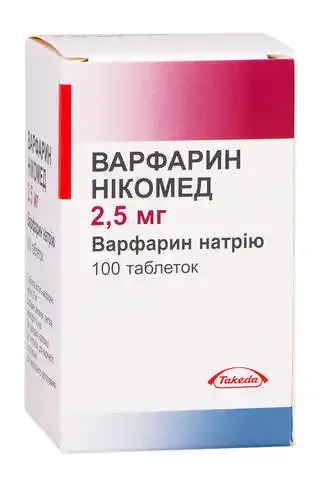
Table of Contents
INSTRUCTIONS FOR MEDICAL USE OF THE MEDICINAL PRODUCT WARFARIN NYCOMED (WARFARIN NYCOMED)
Composition:
Active substance: sodium warfarin;
1 tablet contains 2.5 mg of sodium warfarin;
Excipients: indigo carmine (E 132); lactose monohydrate; maize starch; povidone 30; calcium hydrogen phosphate; magnesium stearate.
Pharmaceutical form. Tablets.
Main physico-chemical characteristics: light blue, biconvex tablets with a cross-shaped score line.
Pharmacotherapeutic group.
Antithrombotic agents. Vitamin K antagonists.
ATC code B01A A03.
Pharmacological properties.
Pharmacodynamics.
Warfarin is an anticoagulant that inhibits the synthesis of vitamin K-dependent clotting factors. Vitamin K is essential for the synthesis of clotting factors in the liver, specifically factors II, VII, IX, and X. Clotting factors are formed through the carboxylation of their protein precursors, a process in which vitamin K is oxidized to vitamin K 2,3-epoxide. Oral anticoagulants prevent the conversion of vitamin K 2,3-epoxide back to vitamin K, resulting in the accumulation of vitamin K 2,3-epoxide. This leads to a reduced availability of vitamin K, thereby inhibiting the synthesis of vitamin K-dependent clotting factors. As a result, the concentration of these factors in the blood decreases and the coagulation process is slowed.
The onset of anticoagulant effect occurs within 32–72 hours after initiation of treatment, with maximal effect achieved by day 5–7 of therapy. After discontinuation of the drug, recovery of vitamin K-dependent clotting factor activity occurs over 4–5 days.
The S-enantiomer of warfarin has 2–5 times greater anticoagulant activity than the R-enantiomeric form.
Pharmacokinetics.
Absorption. The drug is rapidly absorbed from the gastrointestinal tract. The rate of absorption depends on individual patient characteristics.
Distribution. Plasma protein binding ranges from 97% to 99%.
Metabolism. In humans, warfarin exists as a racemic mixture, with the S-form being more active than the R-form. Warfarin is metabolized in the liver, and the metabolites formed are either inactive or have minimal activity. The R- and S-isomers are metabolized in the liver via different pathways, each forming two separate metabolites. The primary enzyme responsible for the metabolism of the S-enantiomer is CYP2C9, whereas the R-enantiomer is metabolized mainly by CYP1A2 and CYP3A4. The S-enantiomer (levorotatory isomer) of warfarin has 2–5 times greater anticoagulant activity than the R-enantiomer (dextrorotatory isomer), although the elimination half-life of the R-enantiomer is longer. Patients with polymorphisms in the CYP2C9 enzyme, including the CYP2C9*2 and CYP2C9*3 alleles, may exhibit increased sensitivity to warfarin, enhanced anticoagulant effect, and an elevated risk of bleeding.
Excretion. Warfarin metabolites are excreted into bile, undergo enterohepatic recirculation, and are ultimately eliminated in urine. The elimination half-life ranges from 20 to 60 hours. For the R-enantiomer, the half-life ranges from 37 to 89 hours, and for the S-enantiomer, from 21 to 43 hours. Warfarin is excreted in breast milk in an inactive form.
Clinical characteristics.
Indications.
Treatment and prevention of deep vein thrombosis and pulmonary embolism. Secondary prevention of myocardial infarction and prevention of thromboembolic complications (stroke or systemic embolism) after myocardial infarction. Prevention of thromboembolic complications in patients with atrial fibrillation, heart valve disorders, or prosthetic heart valves. Prevention of transient ischemic attacks and stroke.
Contraindications.
Hypersensitivity to the components of the drug; clinically evident bleeding; to avoid the risk of severe bleeding during the 72 hours following major surgical procedures, during the 48 hours postpartum period; tendency to bleeding (hemophilia, von Willebrand disease; thrombocytopenia and platelet function disorders); predisposition to falls; severe renal impairment; severe hepatic impairment, liver cirrhosis; untreated or uncontrolled arterial hypertension; recent hemorrhagic stroke; conditions predisposing to intracranial hemorrhage, such as cerebral artery aneurysm, aortic aneurysm; surgery of the central nervous system or eye surgery; gastrointestinal or renal bleeding and their complications, diverticulosis or malignant tumors; pericarditis (including exudative). Conditions in which therapy cannot be conducted safely enough (e.g., psychoses, dementia, alcoholism).
The use of the drug is contraindicated in women during the first trimester of pregnancy and during the last four weeks of pregnancy (see section "Use in pregnancy or breastfeeding").
The use of the drug is contraindicated in patients with an increased risk of bleeding (including patients with hemorrhagic diathesis, esophageal varices, arterial aneurysms, lumbar puncture, gastric ulcer, severe wounds (including surgical), cerebrovascular disorders with risk of cerebral hemorrhage, bacterial endocarditis, and malignant arterial hypertension).
Patients receiving warfarin therapy should not use herbal products containing Hypericum perforatum (St. John's wort), as their concomitant use leads to decreased warfarin plasma concentration, resulting in reduced clinical effect (see section "Interaction with other medicinal products and other forms of interaction").
Interaction with other medicinal products and other forms of interaction.
Warfarin has a narrow therapeutic index, and other medicinal products may affect the action of warfarin. Before initiating treatment, changing dosage, or discontinuing therapy, consultation with a physician is mandatory. The effect of other medicinal products is due to pharmacodynamic and/or pharmacokinetic properties.
It is not recommended to start or stop taking other medicinal products, or to change the doses of concomitant medications, without consulting a physician.
This also applies to over-the-counter medications, herbal medicinal products, dietary supplements, and vitamins. The intervals between therapy monitoring can be gradually extended during treatment. However, intensive monitoring is required at the beginning and end of concomitant medication use.
Pharmacokinetic interactions.
Warfarin is metabolized by liver enzymes. Other medicinal products metabolized by these same enzymes may inhibit or enhance the activity of these enzymes. This may lead to increased or decreased warfarin levels.
Warfarin has a high degree of protein binding. Interactions may occur due to competition for protein binding.
A significant number of medicinal products interact with oral anticoagulants.
The most important ones include broad-spectrum antibiotics, salicylates, nonsteroidal anti-inflammatory drugs (NSAIDs), clofibrate, barbiturates, phenytoin, oral antidiabetic agents.
The combination of warfarin with NSAIDs significantly increases the risk of bleeding. This also applies to other platelet aggregation inhibitors such as dipyridamole and valproic acid. Such combinations should be avoided.
This may also apply to combinations with strong inhibitors of the cytochrome P450 system, such as cimetidine and chloramphenicol, which increase the risk of bleeding over several days of use. In such cases, cimetidine may be replaced with ranitidine or famotidine. If treatment with chloramphenicol is necessary, anticoagulant therapy should be temporarily discontinued. The use of diuretics in cases of pronounced hypovolemic effect may lead to increased concentration of coagulation factors, thereby reducing the effect of anticoagulants.
When it is necessary to use warfarin in combination with other drugs listed below, monitoring of therapy (International Normalized Ratio [INR]) at the beginning and end of treatment, and 2–3 weeks after initiation of therapy, is recommended. This applies to drugs that induce liver enzymes (barbiturates, phenytoin, carbamazepine) and thereby reduce the anticoagulant effect of warfarin. When using drugs that may increase bleeding both by impairing normal coagulation processes and by inhibiting coagulation factors, or by incomplete inhibition of liver enzymes (e.g., laxatives), the anticoagulant strategy will depend on the possibility of laboratory monitoring. Frequent laboratory monitoring of therapy is recommended whenever possible, allowing for early adjustment of warfarin dosage—e.g., increasing or decreasing by 5–10%. When laboratory monitoring is limited, the use of the listed drugs should be avoided. The list of drugs below, whose interactions must be considered, is by no means complete.
Reduced effect of warfarin is observed when used concomitantly with barbiturates, vitamin K in food (e.g., cabbage, avocado, broccoli, spinach), glutethimide, griseofulvin, dicloxacillin, carbamazepine, phenytoin, mianserin, retinoids, rifampicin, sucralfate, phenazone, cholestyramine, bosentan, aprepitant, ritonavir, azathioprine, nevirapine, aminoglutethimide, phenobarbital.
Enhanced effect of warfarin is observed when used concomitantly with allopurinol, amiodarone, anabolic steroids (testosterone and other C-17 alkylated steroids), acetylsalicylic acid, paracetamol, NSAIDs, heparin, glucagon, danazol, diazoxide, disopyramide, disulfiram, isoniazid, ketoconazole, clofibrate, levamisole, metronidazole, miconazole, nalidixic acid, flutamide, omeprazole, serotonin reuptake inhibitors (fluoxetine, fluvoxamine, paroxetine, sertraline), proguanil, antidiabetic agents—sulfonylurea derivatives (glyburide), sulfonamides, tamoxifen, thyroxine, quinine, quinidine, antifungal agents (fluconazole, itraconazole, ketoconazole, voriconazole), anti-inflammatory agents (prednisolone, prednisone), fluorouracil, capecitabine, imatinib, ifosfamide, quinolones, chloral hydrate, chloramphenicol, cephalosporins, cimetidine, erythromycin, etacrynic acid, penicillin group antibiotics (cloxacillin, amoxicillin), macrolides (clarithromycin, azithromycin), sulfamethoxazole, clopidogrel, eptifibatide, tirofiban, abciximab, lipid-modifying agents (simvastatin, rosuvastatin, fluvastatin, gemfibrozil), propafenone, etacrynic acid, quinolones (ciprofloxacin, norfloxacin), leflunomide, phenylbutazone, tramadol, antiepileptic agents (fosphenytoin, phenytoin), disulfiram, glucosamine, orlistat. Ethanol may enhance the effect of warfarin.
In patients who have taken glucosamine and oral vitamin K antagonists, increased INR has been reported. Therefore, patients receiving oral vitamin K antagonists should be closely monitored at the initiation or discontinuation of glucosamine therapy.
Preparations of certain herbal medicines may either enhance (e.g., Ginkgo biloba, garlic, medicinal angelica, papaya, sage, cranberry) or reduce (e.g., ginseng, St. John's wort) the effect of warfarin.
Quinine, present in tonic drinks, may also enhance the effect of warfarin.
Food rich in vitamin K (e.g., green vegetables) reduces the effect of warfarin. Because the chemical structure of coenzyme Q10 and vitamin K2 is similar, their concomitant use may lead to increased or decreased warfarin effect.
When warfarin is used concomitantly with acetylsalicylic acid preparations, the INR should be maintained within the range of 2.0–2.5.
When used concomitantly with antithrombotic or hemostatic agents, the pharmacological effects of warfarin may be enhanced, increasing the risk of bleeding. Streptokinase and alteplase are contraindicated in patients taking warfarin. The use of thrombin inhibitors, unfractionated heparins and their derivatives, low-molecular-weight heparins, fondaparinux, rivaroxaban, glycoprotein IIb/IIIa receptor antagonists, prostacyclin, serotonin reuptake inhibitors, erlotinib, methylphenidate, and oral contraceptives should be avoided during warfarin therapy. If this is unavoidable, these medicinal products should be prescribed with caution under intensified clinical and laboratory monitoring. Alcohol abuse may slow warfarin metabolism and increase INR.
Chronic alcohol consumption may accelerate warfarin metabolism. Lactulose may potentiate the effect of warfarin with long-term use.
In case of need for temporary pain relief in patients receiving warfarin, paracetamol or opioids are recommended.
Special precautions for use.
Calciphylaxis is a rare syndrome of vascular wall calcification with skin necrosis, associated with a high number of fatal cases. This condition occurs predominantly in patients with end-stage renal disease on dialysis, or in patients with existing risk factors such as protein C and S deficiency, hyperphosphatemia, hypercalcemia, or hypoalbuminemia. Rare cases of calciphylaxis have also been reported in patients receiving warfarin without renal function impairment. If calciphylaxis is diagnosed, appropriate treatment must be initiated and discontinuation of warfarin should be considered.
After assessing the benefits of thromboembolic event prevention against the risk of bleeding, a key condition for warfarin therapy is strict adherence to the prescribed dose. Patients suffering from alcoholism, as well as those with dementia, may be unable to comply with the required warfarin regimen.
Intensive monitoring of the patient is necessary at the beginning of warfarin therapy, after completion of treatment, or when changing treatment courses involving other medicinal products, as other drugs may alter the effect of warfarin.
Various factors may influence the anticoagulant properties of warfarin. These include acute illnesses, hyper-/hypothyroidism, vomiting, diarrhea, heart failure, alcoholism with concomitant liver damage, and concomitant use of other medicinal products. Significant dietary changes (e.g., switching to a vegetarian diet) may affect vitamin K absorption and thus influence warfarin's effect on the body. More careful monitoring is required when such changes occur.
Physicians and patients must be informed about the risk of bleeding, particularly gastrointestinal bleeding, which increases with concomitant use of warfarin and acetylsalicylic acid or NSAIDs.
Particular caution and careful monitoring of the INR level are required when prescribing warfarin to patients at risk of serious bleeding. The most likely risk factors for bleeding include a high level of anticoagulation (INR > 4); age over 65 years; unstable INR; recent gastrointestinal bleeding, ischemic stroke, or bacterial endocarditis; peptic ulcer; cerebrovascular disease; serious heart disease; anemia; trauma; renal failure; and concomitant use of other medicinal products. All patients taking warfarin must have their INR measured regularly. Patients at increased risk of bleeding require more frequent INR monitoring, careful dose adjustment to achieve the desired INR, and possibly shorter treatment duration. If INR is elevated, the dose should be reduced or warfarin discontinued. Occasionally, reversal therapy with anticoagulants may be necessary. INR should be measured within 2–3 days to confirm its reduction. Other antiplatelet agents should be used with particular caution due to the increased risk of bleeding.
Acute kidney injury may occur in patients with altered glomerular integrity or a history of kidney disease, possibly related to episodes of excessive anticoagulation and hematuria. Several such cases have been reported in patients without prior kidney disease. Patients with a supratherapeutic international normalized ratio (INR) and hematuria (including microscopic) should be closely monitored, including assessment of kidney function.
Anticoagulant therapy following a recent ischemic stroke increases the risk of secondary intracerebral hemorrhage. A treatment break after ischemic stroke is justified, especially in patients on long-term warfarin therapy for atrial fibrillation, considering the low risk of early recurrent embolism. Warfarin therapy should be restarted 2–14 days after an ischemic stroke, depending on the size of the infarct and arterial blood pressure. In patients with embolic strokes, warfarin use should be discontinued for 14 days.
Mandatory physician consultation and monitoring are required when planning surgical procedures. Warfarin use should be discontinued several days before scheduled surgical procedures. Careful monitoring and adjustment of INR levels, as minimal safety measures, are necessary prior to surgical interventions (including dental surgery). Surgery may be performed when INR < 2.5, provided there is no risk of serious bleeding. Before surgical procedures associated with a risk of serious bleeding, warfarin intake should be discontinued 3 days prior to surgery. If anticoagulant therapy must be continued, e.g., in life-threatening thromboembolism, INR should be reduced to < 2.5 and heparin therapy initiated. If surgery is urgently needed and warfarin cannot be discontinued 3 days in advance, reversal of anticoagulation should be achieved using low doses of vitamin K. Resumption of warfarin therapy depends on the risk of postoperative bleeding.
Patients with hereditary deficiency of antithrombotic protein C are at risk of developing skin necrosis at the beginning of warfarin therapy. In such patients, treatment should be initiated without a loading dose of warfarin, even if heparin is being administered. Patients with hereditary deficiency of antithrombotic protein S are also advised to start warfarin therapy slowly.
During treatment, ethanol consumption should be avoided (risk of hypoprothrombinemia and bleeding).
Treatment of elderly patients requires special caution due to reduced hepatic metabolism and decreased synthesis of blood clotting factors. This may easily lead to an excessive effect of warfarin. It is also necessary to ensure the patient's ability to adhere strictly to the prescribed dosing regimen.
Hyperthyroidism, fever, and decompensated heart failure may enhance the effect of warfarin. Hypothyroidism may reduce warfarin's effect. The effect of warfarin is enhanced in patients with moderate liver dysfunction. In renal failure or nephrotic syndrome, the level of free warfarin fraction in plasma increases, which, depending on concomitant diseases, may lead to either enhanced or reduced warfarin effect. More frequent INR monitoring is required in patients at increased risk of hypercoagulability, such as those with severe arterial hypertension, liver or kidney disease.
Factors such as weight loss, acute illness, or smoking cessation may enhance warfarin's effect and require a reduction in warfarin dose. Conversely, weight gain, diarrhea, or vomiting may reduce warfarin's effect and necessitate an increase in dose.
Patients with a mutation in the gene encoding the CYP2C9 enzyme have a prolonged warfarin half-life. These patients require lower drug doses, as standard therapeutic doses increase the risk of bleeding.
Patients with mutations in the VKORC1 gene have increased sensitivity to warfarin and should therefore receive a lower maintenance dose (see section "Side effects").
The product contains lactose and should not be used in patients with hereditary galactose intolerance, lactase deficiency, or glucose/galactose malabsorption.
Cases of Stevens-Johnson syndrome and toxic epidermal necrolysis have been reported in patients taking medicinal products containing warfarin. Patients should be informed about the signs and symptoms of these skin reactions. If symptoms occur, the drug should be discontinued immediately, and appropriate treatment and close monitoring should be provided.
Use during pregnancy or breastfeeding.
Pregnancy. Warfarin use during pregnancy may cause congenital defects and fetal death. Women of reproductive age should use effective contraception during treatment.
Warfarin rapidly crosses the placenta. Warfarin use during pregnancy may lead to fetal warfarin syndrome. Administration of warfarin to pregnant women may cause warfarin embryopathy (nasal hypoplasia [saddle nose and other cartilaginous deformities] and chondrodysplasia) if taken during organogenesis (weeks 6–12), and may even cause central nervous system developmental disorders after this period. These abnormalities are characterized by stippled cartilage on X-rays (particularly in the spine and long bones), small fingers and hands, optic nerve atrophy, microcephaly, oligophrenia and growth retardation, cataracts, which may lead to complete or partial blindness. Fetal death may also occur.
Warfarin may cause congenital malformations and fetal hemorrhage, especially in late pregnancy and during delivery. Warfarin embryopathy occurs in 4–6% of cases when warfarin is used during pregnancy, and the risk increases with daily doses exceeding 5 mg. Therefore, warfarin is contraindicated during the first trimester and the last four weeks of pregnancy (see section "Contraindications"). The risk of warfarin to the fetus must be carefully weighed against the risk to the mother if warfarin is not used. Antithrombotic therapy during pregnancy should be individualized and closely supervised by a physician.
Lactation period. Warfarin may be used during breastfeeding. Warfarin is excreted in breast milk, but if administered in therapeutic doses, adverse reactions in the newborn are not expected.
Ability to affect reaction speed when driving or operating machinery. Not observed. The drug has no effect or has a negligible effect on the ability to drive a car or operate machinery.
Method of administration and dosage.
Target INR (International Normalized Ratio) for oral anticoagulant therapy.
Prevention of thromboembolic complications in patients with prosthetic heart valves: INR 2.5–3.5.
Other indications: INR 2–3.
Adults: Patients with normal body weight and spontaneous INR below 1.2 should receive 10 mg of warfarin for three consecutive days. Then the dose is adjusted according to Table 1, based on INR measurement on day 4.
In outpatient settings and in patients with hereditary protein C or S deficiency, the recommended initial dose is 5 mg of warfarin for three consecutive days. Then the dose is adjusted according to Table 1, based on INR measurement on day 4.
In patients with hereditary antithrombin protein C deficiency, there is a risk of skin necrosis at the beginning of warfarin therapy. In such patients, warfarin treatment should be initiated without a loading dose, even if the patient is receiving heparin.
If skin necrosis develops, warfarin should be discontinued.
For elderly patients, patients with low body weight, spontaneous INR above 1.2, or those with concomitant diseases or taking any medicinal products affecting the efficacy of anticoagulant therapy, the recommended initial dose is 5 mg of warfarin for two subsequent days. Then the dose is adjusted according to Table 1, based on INR measurement on day 3.
Table 1.
| Day |
INR |
Warfarin dose, mg/day |
| 1 |
|
10 (5) |
| 2 |
|
10 (5) |
| 3 |
< 2 from 2 to 2.4 from 2.5 to 2.9 from 3 to 3.4 from 3.5 to 4 > 4 |
10 (5) 5 3 2.5 1.5 Skip one day |
| 4-6 |
< 1.4 from 1.4 to 1.9 from 2 to 2.4 from 2.5 to 2.9 from 3 to 3.9 from 4 to 4.5 > 4.5 |
10 7.5 5 4.5 3 Skip one day, then 1.5 Skip two days, then 1.5 |
| 7 |
from 1.1 to 1.4 from 1.5 to 1.9 from 2 to 3 from 3.1 to 4.5 > 4.5 |
Weekly warfarin dose: Increase by 20% Increase by 10% Dose remains unchanged Decrease by 10% Skip until INR < 4.5, then resume treatment with dose reduced by 20% |
INR measurements are performed daily until a stable target level is achieved, which is usually established by day 5–6 of treatment. After that, INR measurements should be carried out weekly, progressing to 4-week intervals. In cases of significant INR fluctuations or in patients with liver disease or conditions affecting vitamin K absorption, measurement intervals may be less than 4 weeks. The initiation of new medications or discontinuation of previously used ones requires additional INR measurements. During long-term therapy, adjustments are made based on the weekly warfarin dose (see Table 1). If a dose adjustment is required, the next INR measurement should be performed 1 or 2 weeks after the adjustment. Afterward, measurements continue until 4-week intervals are achieved.
Children: anticoagulant therapy in children must be conducted under the supervision of pediatricians. Doses are selected according to Table 2.
Table 2.
| Day 1, if spontaneous INR from 1 to 1.3 |
Initial dose: 0.2 mg/kg body weight 0.1 mg/kg body weight in case of hepatic impairment |
| Days 2 to 4, if INR values: from 1.1 to 1.3 from 1.4 to 1.9 from 2 to 3 from 3.1 to 3.5 > 3.5 |
Supporting dose: repeat initial dose 50% of initial dose 50% of initial dose 25% of initial dose Discontinue administration until INR < 3.5 is achieved, then resume treatment with a dose equal to 50% of the previous dose |
| Maintenance therapy, if INR values: from 1.1 to 1.4 from 1.5 to 1.9 from 2 to 3 from 3.1 to 3.5 > 3.5 |
Actions Increase weekly dose by 20% Increase weekly dose by 10% No change Reduce weekly dose by 10% Discontinue administration until INR < 3.5 is achieved, then resume treatment with a dose 20% lower than the previous dose |
Planned surgeries: Pre-, peri- and postoperative anticoagulant therapy should be carried out as outlined below.
Determine INR one week before the scheduled surgery.
Discontinue warfarin 1–5 days before surgery. In patients at high risk of thrombosis, subcutaneous administration of low molecular weight heparin should be initiated for prophylaxis.
The duration of warfarin interruption depends on the INR. Discontinue warfarin:
- 5 days before surgery if INR > 4;
- 3 days before surgery if INR = 3–4;
- 2 days before surgery if INR = 2–3.
Determine INR the evening before surgery and administer 0.5–1 mg of vitamin K1 orally or intravenously if INR > 1.8.
Consider the need for infusion of unfractionated heparin or prophylactic administration of low molecular weight heparin on the day of surgery.
Continue subcutaneous administration of low molecular weight heparin for 5–7 days after surgery, along with resumed warfarin therapy.
Resume warfarin at the usual maintenance dose on the same evening after minor surgeries, or on the day when the patient resumes enteral feeding following major surgeries.
Children.
Anticoagulant therapy in children should be conducted under the supervision of pediatricians.
Overdose.
Elevated INR is the main indicator of warfarin overdose, which increases the risk of bleeding. The rise in INR correlates with the half-life of blood coagulation factor VII. Increased INR becomes apparent within 24 hours and reaches its peak within 36–72 hours after drug administration.
Clinical manifestations occur several days or weeks after drug intake and are characterized by nosebleeds, bleeding gums, pallor, hematomas around joints and buttocks, and presence of blood in urine and stool. Other symptoms may include back pain, bleeding lips, mucosal bleeding, abdominal pain, vomiting, and petechiae. In advanced cases, central paralysis due to hemorrhage, severe bleeding, and fatal outcome may occur.
Treatment. Symptomatic and supportive therapy. Activated charcoal may be administered within 1 hour after drug intake. In cases of serious bleeding, administer vitamin K intravenously, transfuse clotting factor concentrate, fresh frozen plasma, or blood. Since the elimination half-life of warfarin is 20–60 hours, prolonged monitoring of the patient is required.
In acute overdose, gastric emptying is not recommended due to the risk of bleeding. To prevent absorption, administration of activated charcoal is advisable.
Therapeutic measures in overdose management:
in the absence of clinically significant bleeding:
- INR < 5: Recommendation: omit the next warfarin dose and resume therapy at a lower dose once the target INR is reached;
- INR 5–9: Recommendation: omit 1–2 warfarin doses and resume therapy at a lower dose once the target INR is reached, or omit one warfarin dose and administer vitamin K1 2.5 mg orally;
- INR > 9: Recommendation: discontinue warfarin and administer vitamin K1 3–5 mg orally.
Indicated rapid reversal (prior to surgery):
- INR 5–9 and surgery is elective. Recommendation: discontinue warfarin and administer vitamin K1 2–4 mg orally. Approximately 24 hours before surgery, an additional dose of 1–2 mg may be given orally.
Indicated very rapid reversal:
- severe bleeding or severe overdose (e.g., INR > 20). Recommendation: administer vitamin K 10 mg by slow intravenous infusion. Fresh frozen plasma or prothrombin complex concentrate may also be indicated depending on the urgency. If necessary, vitamin K1 may be re-administered every 12 hours.
Adverse Reactions
The most common adverse effects of warfarin are hemorrhages and bleeding, which may occur in any organ, since the desired therapeutic effect is anticoagulation (e.g., epistaxis, hemoptysis, hematuria, gingival bleeding, bruising, vaginal bleeding, conjunctival hemorrhage, rectal and gastrointestinal bleeding, intracranial hemorrhage, prolonged and profuse bleeding after surgical procedures or trauma). Bleeding may be severe and may lead to hospitalization, blood transfusions in patients undergoing long-term anticoagulant therapy, and even fatal outcomes.
Factors influencing the risk of bleeding during warfarin therapy include advanced age, high intensity of concomitant anticoagulant therapy, history of stroke and gastrointestinal bleeding, comorbid conditions, and atrial fibrillation. Patients with polymorphisms in the CYP2C9 and VKORC1 genes have an increased risk of excessive anticoagulation and bleeding.
Hemoglobin levels and INR must be carefully monitored.
Adverse effects are classified by frequency of occurrence into the following categories: very common (> 1/10), common (> 1/100 and < 1/10), uncommon (> 1/1000 and < 1/100), rare (> 1/10,000 and < 1/1000), very rare (< 1/10,000), and not known (cannot be estimated from available data).
Blood and lymphatic system disorders:
Very common – bleeding from various organs;
Common – increased sensitivity to warfarin after prolonged treatment;
Uncommon – anemia;
Rare – eosinophilia.
Gastrointestinal disorders:
Uncommon – vomiting, nausea, diarrhea;
Very rare – melena;
Not known – abdominal pain (secondary to bleeding) and hematemesis.
Hepatobiliary disorders:
Rare – elevated liver enzymes, jaundice.
Skin and subcutaneous tissue disorders:
Rare – eczema, vasculitis, skin necrosis, alopecia, rash, urticaria, pruritus;
Not known – calciphylaxis, erythematous swollen skin areas progressing to ecchymosis, Stevens-Johnson syndrome, toxic epidermal necrolysis.
Renal and urinary disorders:
Rare – nephritis, urolithiasis, tubular necrosis;
Not known – anticoagulant nephropathy (see section "Special Warnings and Precautions for Use").
Cardiovascular disorders:
Very common – bleeding from various organs;
Rare – purple toe syndrome;
Very rare – cholesterol embolism.
Immune system disorders:
Common – hypersensitivity reactions.
General disorders and administration site conditions:
Not known – pyrexia.
In the post-marketing period, the following adverse reactions have been reported with warfarin use: decreased hematocrit; fever; tracheal calcification; cholestatic hepatitis, pancreatitis; priapism; allergic reactions; purpura; intracranial hemorrhage, subdural hematoma; hemothorax, rectal bleeding, vomiting blood, melena. The most common risk factor for intracerebral hemorrhage is untreated or uncontrolled arterial hypertension. The likelihood of bleeding increases when the INR is significantly above the target range. If bleeding occurs while the INR is within the target range, this indicates the presence of other concomitant conditions that should be investigated.
Purple toe syndrome is a rare complication of warfarin therapy. It typically occurs in male patients with atherosclerotic disease. Warfarin is thought to cause hemorrhage from atheromatous plaques, leading to microembolism. Symmetrical purpuric skin lesions on the toes and the plantar surface of the feet, accompanied by burning pain, are characteristic. Warfarin therapy should be discontinued, and skin lesions gradually resolve.
Erythematous swelling of the skin leading to ecchymosis, infarction, and skin necrosis. Necrosis usually begins as darkened, swollen skin on the lower limbs or buttocks, but may also appear in other areas. Later, these lesions become necrotic. Ninety percent of patients with such lesions are women. Lesions typically appear between the 3rd and 10th day of treatment. The etiology is thought to involve deficiency of protein C or protein S. Congenital deficiency of these proteins may be the cause of complications. Therefore, warfarin therapy should be initiated at low initial doses, simultaneously with heparin administration. If complications occur, warfarin should be discontinued and heparin continued until healing or scarring of lesions.
Reporting suspected adverse reactions
Reporting suspected adverse reactions after drug registration is important. It enables ongoing monitoring of the benefit-risk balance of the medicinal product. Healthcare professionals, pharmacists, patients, and their legal representatives should report all suspected adverse reactions and lack of efficacy via the automated pharmacovigilance information system at: https://aisf.dec.gov.ua.
Shelf life. 5 years.
Storage conditions.
Store at temperatures not exceeding 25°C.
Keep out of reach and sight of children.
Packaging.
100 tablets in a bottle. One bottle per cardboard box.
Prescription status. Prescription only.
Manufacturer.
Orifarm Manufacturing Poland Sp. z o.o., Poland / Orifarm Manufacturing Poland Sp. z o.o., Poland.
Manufacturer's address and location of operations.
12, Ksiestwa Lowickiego Str., 99-420 Lyszkowice, Poland / 12, Ksiestwa Lowickiego Str., 99-420 Lyszkowice, Poland.