Vancomycin-vocate
Ukraine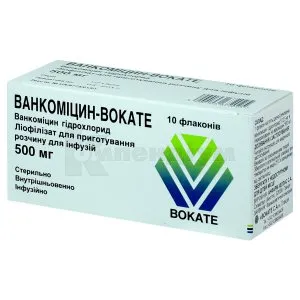
Table of Contents
INSTRUCTIONS FOR MEDICAL USE OF THE MEDICINAL PRODUCT VANCOCIN-VOCATE (VANCOMYCIN-VOCATE®)
Composition:
Active substance: vancomycin;
One vial contains active substance: vancomycin hydrochloride 512.5 mg equivalent to vancomycin 500 mg.
Pharmaceutical form. Lyophilisate for preparation of solution for infusion.
Main physico-chemical properties: powder (lyophilisate), color ranging from white to light beige or light pink.
Pharmacotherapeutic group.
Antibacterials for systemic use. Glycopeptide antibiotics.
ATC code J01XA01.
Pharmacological properties.
Pharmacodynamics.
Vancomycin is an antibiotic belonging to the glycopeptide group. The bactericidal mechanism of action of the drug is due to inhibition of bacterial cell wall synthesis. The drug is active against Gram-positive bacteria: Staphylococcus spp. (including Staphylococcus aureus, Staphylococcus epidermidis, including methicillin-resistant strains), Streptococcus spp. (including Streptococcus pneumoniae, Streptococcus pyogenes, Streptococcus agalactiae), Enterococcus faecalis, Listeria spp., Clostridium spp. (including Clostridioides difficile), Corynebacterium diphtheriae, Actinomyces spp., Bacillus spp., Lactobacillus spp. In vitro, Listeria monocytogenes, Lactobacillus species, Actinomyces species, Clostridium species, and Bacillus species are susceptible to vancomycin. Vancomycin is not active in vitro against Gram-negative bacteria, fungi, or mycobacteria.
Pharmacokinetics.
Absorption. After intravenous administration of vancomycin, plasma concentration is approximately 63 mg/L immediately after infusion, 23 mg/L at 2 hours, and 8 mg/L at 11 hours after completion of infusion.
Distribution. Approximately 55% of the administered vancomycin binds to plasma proteins. After intravenous administration, inhibitory concentrations of vancomycin are found in pleural, peritoneal, pericardial, ascitic, and synovial fluids, urine, cardiac muscle, and heart valves. Vancomycin penetrates poorly through the meninges under normal conditions, but penetration improves during inflammation.
Elimination. The mean elimination half-life of vancomycin in plasma is 4–6 hours in patients with normal renal function. Approximately 75% of the administered dose is excreted in the urine via glomerular filtration within the first 24 hours. A very small amount of vancomycin is excreted in bile. Elimination of vancomycin is delayed in patients with impaired renal function. In patients with anuria, the mean elimination half-life is 7.5 days.
Clinical characteristics.
Indications.
Treatment of infections caused by gram-positive microorganisms sensitive to the drug, treatment of patients with a history of allergy to penicillins and cephalosporins:
- sepsis;
- endocarditis;
- osteomyelitis;
- central nervous system infections;
- lower respiratory tract infections (pneumonia);
- skin and soft tissue infections;
- staphylococcal enterocolitis (for oral administration);
- pseudomembranous colitis (for oral administration).
Prevention of endocarditis in patients with increased sensitivity to penicillin antibiotics, and prevention of infections following surgical procedures in the oral cavity and ENT organs.
Contraindications.
Hypersensitivity to vancomycin.
Vancomycin should not be administered intramuscularly due to the risk of developing necrosis at the injection site.
Interaction with other medicinal products and other forms of interaction.
Increased frequency of infusion-related adverse reactions has been reported during concomitant use of anesthetics. Infusion-related adverse reactions can be minimized by administering vancomycin as a 60-minute infusion prior to administration of anesthetics.
Concomitant and/or sequential systemic or local use of other potentially ototoxic or nephrotoxic drugs, such as amphotericin B, aminoglycosides, bacitracin, polymyxin B, colistin, viomycin, cisplatin, and loop diuretics, may increase the toxicity of vancomycin. If such combination therapy is necessary, it should be used with caution and under appropriate monitoring.
Due to synergistic action with gentamicin, the maximum dose of vancomycin should be limited to 500 mg every 8 hours.
Concomitant administration of vancomycin and anesthetic agents increases the risk of arterial hypotension and may cause erythema, histamine-like flushing, and anaphylactoid reactions.
When vancomycin is administered during or immediately after surgery, the effect of muscle relaxants such as succinylcholine may be enhanced or prolonged.
Vancomycin should not be mixed with aminophylline or fluorouracil preparations, as the properties of vancomycin may significantly decrease over time.
The combination of vancomycin with aminoglycosides acts synergistically in vitro against Staphylococcus aureus, non-enterococcal group D streptococci, enterococci, and Streptococcus species (various species).
Medicinal products that reduce intestinal peristalsis are contraindicated in pseudomembranous colitis.
Cholestyramine reduces the efficacy of vancomycin.
There is a risk of developing acute renal failure when vancomycin is used concomitantly with piperacillin/tazobactam therapy (see section "Special precautions").
Special precautions for use.
Official recommendations regarding the appropriate use of antibacterial agents must be followed.
Vancomycin should be administered intravenously by slow infusion only, due to the risk of soft tissue necrosis following intramuscular injection. To reduce the risk of thrombophlebitis, the infusion should be slow (2.5–5 mg/mL) and the infusion site should be changed with each subsequent administration. Rapid intravenous administration as a bolus injection (over several minutes) may result in marked hypotension, including shock, and in rare cases cardiac arrest. Therefore, to minimize the risk of hypotensive reactions, the patient's blood pressure should be monitored during drug administration.
Rapid intravenous infusion of vancomycin hydrochloride for injection may also be associated with "vancomycin infusion reaction," characterized by flushing, erythema, and pruritus involving the face, neck, and upper part of the trunk.
Infusion-related adverse reactions depend on both the concentration and the rate of vancomycin infusion. However, such reactions may occur at any infusion rate or concentration.
Vancomycin should be administered as a diluted solution over at least 60 minutes to avoid infusion-related adverse reactions. Discontinuation of the infusion usually results in rapid resolution of these reactions (see sections "Dosage and administration" and "Adverse reactions").
Liver function should be monitored regularly, as hepatic disorders during vancomycin therapy may worsen due to increased levels of bilirubin, AST, ALT, alkaline phosphatase, and occasionally elevated lactate dehydrogenase and gamma-glutamyl transferase.
The frequency of infusion-related complications (including arterial hypotension, flushing, hyperemia, urticaria, and pruritus) increases when anesthetics are administered concomitantly; therefore, anesthesia should be initiated after completion of vancomycin infusion.
In some patients with inflammatory conditions of the intestinal mucosa, significant systemic absorption may occur following oral vancomycin, potentially leading to adverse reactions similar to those associated with parenteral vancomycin administration. The risk is increased in patients with renal impairment. It should be noted that both total systemic and renal clearance of vancomycin are reduced in elderly patients.
Vancomycin should be used with caution in patients with renal insufficiency, particularly those with anuria, as prolonged maintenance of high drug concentrations in blood may lead to toxic effects. The risk of toxicity increases with sustained high serum vancomycin concentrations or prolonged therapy.
Regular monitoring of serum vancomycin levels and renal function is mandatory during high-dose or prolonged therapy, especially in patients with renal dysfunction, hearing impairment, or those receiving concomitant nephrotoxic or ototoxic drugs.
There are currently available data suggesting a potential association between acute kidney injury and the interaction of vancomycin with piperacillin/tazobactam; therefore, caution is recommended when using these medicinal products concomitantly.
Cases of ototoxicity, which may be transient or permanent, have been reported in patients with pre-existing hearing loss who received excessive intravenous doses of vancomycin or were concurrently treated with other ototoxic agents such as aminoglycosides.
Vancomycin should not be administered to patients with a history of hearing impairment. If treatment is necessary in such patients, the dose should be adjusted, whenever possible, based on periodic measurement of serum drug concentrations. Tinnitus may precede the onset of hearing loss.
Elderly patients are more susceptible to hearing disorders. Experience with other antibiotics indicates that hearing loss may progress despite discontinuation of therapy. To reduce the risk of ototoxicity, periodic monitoring of serum vancomycin levels and regular audiologic testing are recommended.
Vancomycin should be used cautiously in patients with allergic reactions to teicoplanin, as cross-allergic reactions between vancomycin and teicoplanin have been reported.
Use in children: Monitoring of serum vancomycin concentrations is recommended in premature neonates and infants.
Concomitant administration of vancomycin and anesthetics has been associated with erythema and histamine-like flushing in children.
Use in elderly patients: The natural decline in glomerular filtration rate with increasing age may lead to elevated serum vancomycin concentrations if the dose is not adjusted (see section "Dosage and administration").
Clostridioides difficile-associated diarrhea (CDAD)
Cases of Clostridioides difficile-associated diarrhea have been reported with nearly all antibacterial agents, including vancomycin. The severity of this diarrhea may range from mild diarrhea to fatal colitis. Antibacterial therapy alters the normal flora of the colon, leading to overgrowth of Clostridioides difficile.
Clostridioides difficile produces toxins A and B, which contribute to the development of CDAD. Hypertoxigenic strains of Clostridioides difficile are associated with increased morbidity and mortality, as these infections may be refractory to antimicrobial therapy and may require colectomy. CDAD should be considered in all patients who develop diarrhea following antibiotic use. Since CDAD has been reported to occur up to two months after antibiotic administration, a careful patient history is essential.
Upon suspicion or confirmation of CDAD, ongoing use of antibiotics not directed against Clostridioides difficile may need to be discontinued. Appropriate fluid and electrolyte management, protein supplementation, antimicrobial treatment directed against Clostridioides difficile, and surgical evaluation should be undertaken as clinically indicated.
Clinically significant serum concentrations have been observed in some patients with active pseudomembranous colitis caused by Clostridioides difficile after multiple oral doses of vancomycin. Therefore, monitoring of serum vancomycin levels may be advisable in these patients.
Patients with borderline renal function and individuals aged 60 years and older should undergo periodic monitoring of hearing function and serum vancomycin levels. All patients receiving vancomycin should undergo periodic hematological examinations, urine analysis, and renal function tests. Prolonged vancomycin use may lead to overgrowth of non-susceptible microorganisms. Close monitoring of the patient is necessary. If superinfection occurs during therapy, appropriate measures should be taken.
Pseudomembranous colitis caused by Clostridioides difficile has been rarely reported in patients receiving intravenous vancomycin.
Patients with burns have been reported to have higher total vancomycin clearance rates and therefore may require more frequent dosing with increased doses. Individualized dosing and careful monitoring are recommended when administering vancomycin to such patients.
Severe skin adverse reactions. Severe skin adverse reactions, including Stevens-Johnson syndrome, toxic epidermal necrolysis, drug reaction with eosinophilia and systemic symptoms (DRESS), and acute generalized exanthematous pustulosis, which may be life-threatening or fatal, have been reported in association with vancomycin therapy. Most of these reactions occurred within several days to up to eight weeks after initiation of vancomycin treatment. Patients receiving vancomycin should be informed about signs and symptoms, and skin reactions should be closely monitored. If signs or symptoms suggestive of these reactions occur, vancomycin should be discontinued immediately and alternative therapy considered. Vancomycin therapy should not be restarted at any time in patients who have experienced severe skin adverse reactions during prior vancomycin treatment.
Ocular disorders. Vancomycin is not intended for intracameral or intravitreal administration, including for endophthalmitis prophylaxis. Hemorrhagic occlusive retinal vasculitis, including permanent vision loss, has been observed following intracameral or intravitreal administration of vancomycin during or after cataract surgery.
Nephrotoxicity. Vancomycin should be used with caution in patients with renal insufficiency, including anuria, due to the potential for toxic effects. The risk of toxicity increases with elevated serum vancomycin concentrations or prolonged therapy. Regular monitoring of serum vancomycin levels is indicated during high-dose or prolonged therapy, particularly in patients with impaired renal function or hearing, and in those receiving concomitant nephrotoxic or ototoxic agents (see section "Interaction with other medicinal products and other forms of interaction").
Use during pregnancy or breastfeeding.
There are no data on the safety of vancomycin use during pregnancy. Vancomycin is contraindicated in the first trimester of pregnancy. Administration during the second and third trimesters may be considered only for life-threatening indications when the expected benefit to the mother outweighs the potential risk to the fetus, and serum vancomycin concentrations should be monitored.
Vancomycin is excreted in breast milk; therefore, breastfeeding should be discontinued if vancomycin use is necessary.
Ability to affect reaction speed when driving or operating machinery.
During treatment with this medicinal product, the ability to concentrate may be impaired. This should be taken into account when driving vehicles or performing work requiring heightened attention.
Administration and Dosage
For intravenous infusion only. Not for intramuscular administration.
Vancomycin is administered intravenously for the treatment of life-threatening infections. Under no circumstances should vancomycin be administered as a bolus injection or intramuscularly due to pain and the risk of tissue necrosis at the injection site.
Infusion-related reactions may depend on both the concentration of the solution administered and the rate of infusion. For adult treatment, the recommended infusion concentration should not exceed 5 mg/mL, and the infusion rate should not exceed 10 mg/min. For individual patients who require restriction of fluid volume, solutions with a concentration of up to 10 mg/mL may be used, provided that the infusion rate does not exceed 10 mg/min. Higher concentrations increase the risk of infusion-related adverse reactions.
Adults and children aged 12 years and older
The usual intravenous dosage is 2 g per day: either 500 mg every 6 hours or 1 g every 12 hours. The solution should be administered over not less than 60 minutes.
Children
Newborns up to 7 days of age: initial dose is 15 mg/kg, followed by 10 mg/kg every 12 hours.
Newborns aged 7 days to 1 month: initial dose is 15 mg/kg, followed by 10 mg/kg every 8 hours.
Children aged 1 month to 12 years: dosage is 40 mg/kg per day, divided into individual doses (10 mg/kg) administered every 6 hours.
The concentration of the prepared vancomycin solution for children should not exceed 2.5–5 mg/mL. The solution should be administered over not less than 60 minutes.
The maximum single dose for children is 15 mg/kg; the maximum daily dose is 60 mg/kg, which should not exceed the adult daily dose of 2 g.
Elderly patients: dose reduction may be necessary due to age-related decline in renal function.
Patients with obesity: adjustment of the standard daily dose may be required.
Patients with hepatic impairment: do not require adjustment of the daily dose.
Patients with renal impairment: dosage should be adjusted according to creatinine clearance as per the table below.
| Creatinine clearance, mL/min |
100 |
90 |
80 |
70 |
60 |
50 |
40 |
30 |
20 |
10 |
| Vancomycin dose, mg/day |
1545 |
1390 |
1235 |
1080 |
925 |
770 |
620 |
465 |
310 |
155 |
When the serum creatinine concentration is known, use the following formula (taking into account the patient's sex, body weight, and age) to determine creatinine clearance. The calculated creatinine clearance (mL/min) is only an estimate, while the exact value of creatinine clearance should be measured.
| Men: body weight (kg) × (140 - age in years) 72 × serum creatinine concentration (mg/dL) |
Women: 0.85 × the value obtained by the formula given above.
The initial dose of the drug should be 15 mg/kg body weight, even for patients with mild to moderate renal impairment.
In anuria, the initial dose of vancomycin is 15 mg/kg body weight, administered until therapeutic serum concentration is achieved. The maintenance dose is 1.9 mg/kg/day.
For patients with severe renal impairment, it is recommended to administer a maintenance dose of 250–1000 mg at intervals of several days, rather than daily.
Dosing regimen during hemodialysis.
For patients undergoing dialysis, the loading dose is 1000 mg; the maintenance dose is 1000 mg of the drug every 7–10 days. When polysulfone membranes are used for hemodialysis, the maintenance dose of vancomycin should be increased.
Serum creatinine levels should be monitored as a consistent indicator of kidney function. It is recommended to analyze vancomycin serum concentrations 2–3 times per week. These should be measured on the second day of therapy, immediately before the next dose, and 1 hour after completion of infusion. The therapeutic concentration of vancomycin should be 30–40 mg/L (maximum 50 mg/L) 1 hour after the end of infusion, and the trough concentration (immediately before the next dose) should be 5–10 mg/L. If these values are exceeded, dosage adjustment is recommended.
Duration of therapy depends on the severity of the infectious disease and the rate of pathogen eradication.
Preparation of solution
Dissolve the contents of a 500 mg vial in 10 ml of sterile water for injection; the resulting solution has a concentration of 50 mg/ml. Further dilution is required: add at least 100 ml of 0.9% sodium chloride injection or 5% dextrose injection to the solution containing 500 mg of vancomycin.
The final concentration of the prepared vancomycin solution should not exceed 5 mg/ml.
Solution stability
The reconstituted solution (after dilution with water for injection) is stable for 24 hours at 25°C and for 96 hours at 2–8°C.
After further dilution with 5% dextrose injection or 0.9% sodium chloride injection, the resulting solutions can be stored in the refrigerator at 2–8°C for up to 48 hours, and at 25°C for up to 24 hours.
Oral administration
Vancomycin is poorly absorbed after oral administration; therefore, it can be administered by this route only for the treatment of staphylococcal enterocolitis and pseudomembranous colitis caused by Clostridioides difficile.
The oral solution should be prepared by adding 30 ml of water to the contents of a 500 mg vancomycin vial. The resulting solution can be administered orally or via nasogastric tube. To improve taste, sweet syrup with flavoring additives may be added to the solution.
Adults: The usual daily dose is 500–1000 mg, divided into 3–4 doses, for 7–10 days. The maximum daily dose should not exceed 2 g.
Children: The usual daily dose is 40 mg/kg body weight, divided into 3–4 doses, for 7–10 days. The maximum daily dose should not exceed 2 g.
Children.
Can be used in children from birth.
Overdose.
Overdose is characterized by an intensification of adverse effects.
Treatment should be aimed at maintaining adequate glomerular filtration. Vancomycin is poorly removed by dialysis. Hemofiltration and hemodialysis using polysulfone membranes may increase vancomycin clearance and reduce its blood levels. Hemoperfusion using Amberlite XAD-4 resin has been reported to have limited benefit. A specific antidote is not known.
Side effects.
Adverse reactions are classified by organ systems and frequency of occurrence: very common (≥ 1/10), common (≥ 1/100, < 1/10), uncommon (≥ 1/1,000, < 1/100), rare (≥ 1/10,000, < 1/1,000), very rare (< 1/10,000), frequency not known (cannot be estimated from available data).
The most common adverse reactions during or immediately after rapid infusion of vancomycin include phlebitis, pseudoallergic, anaphylactic, and anaphylactoid reactions, marked decrease in arterial blood pressure, flushing of the upper body (red man syndrome), dyspnea, shortness of breath, urticaria, pruritus, chest and back muscle pain and spasms, wheezing, cardiovascular disorders (heart failure up to cardiac arrest). Rapid administration of vancomycin may cause flushing of the upper body. These reactions usually resolve within 20 minutes but may last for several hours. Such reactions are practically absent when the drug is administered slowly over 60 minutes. With incorrect administration (not intravenous), pain, inflammation, irritation, and tissue necrosis may occur at the injection site.
Blood and lymphatic system disorders:
Common – transient neutropenia;
Rare – neutropenia (reversible neutropenia may occur, usually beginning one week or later after initiation of vancomycin therapy or after a total dose of 25 g or more), agranulocytosis, thrombocytopenia, eosinophilia, leukopenia.
Immune system disorders:
Rare – anaphylactoid reaction (infusion-related reaction), hypersensitivity reactions, anaphylactoid shock (infusion-related reaction).
Ear and labyrinth disorders:
Common – transient or permanent hearing loss;
Rare – tinnitus, vertigo, weakness, decreased hearing acuity.
Ototoxic effects have been observed most frequently when the drug is used at high doses, concomitantly with other ototoxic agents (e.g., aminoglycosides), or in patients with impaired renal function or pre-existing hearing impairment.
Cardiovascular system disorders:
Common – arterial hypotension, thrombophlebitis;
Rare – vasculitis;
Very rare – bradycardia, cardiac arrest, cardiogenic shock, heart failure (these symptoms are primarily associated with rapid infusion of the drug).
Respiratory system disorders:
Common – dyspnea, shortness of breath.
Nervous system disorders:
Dizziness, paresthesia.
Gastrointestinal disorders:
Common – nausea (due to unpleasant taste in the mouth);
Uncommon – vomiting, diarrhea;
Rare – abdominal pain, pseudomembranous colitis.
Skin and subcutaneous tissue disorders:
Common – exanthema and mucosal inflammation, pruritus, urticaria;
Very rare – toxic epidermal necrolysis, Stevens-Johnson syndrome, linear IgA bullous dermatitis, acute generalized exanthematous pustulosis, drug reaction with eosinophilia and systemic symptoms (DRESS syndrome).
Renal and urinary system disorders:
Common – renal failure, manifested by increased serum creatinine and urea levels;
Uncommon – interstitial nephritis (especially with concomitant use of aminoglycosides or in patients with pre-existing renal dysfunction), acute renal failure. Azotemia resolved in nearly all patients upon discontinuation of vancomycin therapy.
Musculoskeletal system disorders:
Muscle spasms (infusion-related reaction).
General disorders and administration site conditions:
Common – redness of the upper body and face, chest and back muscle pain and spasms;
Uncommon – drug fever, chills, growth of drug-resistant microorganisms or fungi;
Rare – severe lacrimation, sometimes lasting up to 10 hours, injection site reactions including pain, inflammation, irritation, tissue necrosis, chest and back muscle pain and spasms, drug reaction with eosinophilia and systemic symptoms (DRESS syndrome), lacrimation, mucosal inflammation, redness of the upper body and face.
Laboratory findings:
Increased serum creatinine, increased serum urea, elevated AST, ALT, alkaline phosphatase, lactate dehydrogenase, gamma-glutamyl transferase, bilirubin, leucine aminopeptidase levels.
Description of selected adverse reactions
Reversible neutropenia usually occurs one week or later after initiation of intravenous vancomycin therapy or after administration of a total dose exceeding 25 g. Anaphylactic/anaphylactoid reactions (arterial hypotension, dyspnea, urticaria, or pruritus) may occur during or immediately after rapid administration of the drug. The severity of these reactions decreases upon discontinuation of the infusion, typically within 20 minutes to 2 hours. Vancomycin infusion should be administered slowly.
Other possible reactions include redness of the upper body skin (red man syndrome), chest or back muscle pain and spasms. Tissue necrosis may occur after intramuscular injection.
Tinnitus, which may precede hearing loss, should be considered an indication to discontinue therapy.
Ototoxic effects have been observed most frequently with high-dose vancomycin, concomitant use of other ototoxic agents (such as aminoglycosides), or in patients with impaired renal function or pre-existing hearing loss.
Reporting of suspected adverse reactions
Reporting suspected adverse reactions after drug authorization is important. It allows continuous monitoring of the benefit-risk balance of the medicinal product. Healthcare professionals are required to report any suspected adverse reactions through the national reporting system.
Children
The safety profile is generally similar in pediatric and adult patients. Nephrotoxicity in children has usually been described in association with the use of other nephrotoxic agents, such as aminoglycosides.
Shelf life.
2 years.
Storage conditions.
Store at temperatures not exceeding 25°C in a place protected from light.
Keep out of the reach of children.
Incompatibilities.
Vancomycin solution prepared in sterile water for injection and further diluted with 0.9% sodium chloride solution or 5% glucose solution has a low pH, which may cause physical or chemical instability when mixed with other components. Vancomycin solutions should not be mixed with other solutions except those with proven compatibility.
Concomitant use and mixing of vancomycin solutions with chloramphenicol, corticosteroids, methicillin, heparin, aminophylline, cephalosporin antibiotics, and phenobarbital is not recommended.
Packaging.
1 or 10 vials of 500 mg lyophilisate in a cardboard box.
Prescription status.
Prescription only.
Manufacturer.
ANFARM HELLAS C.A., Greece / ANFARM HELLAS S.A., Greece
Manufacturer's address and place of business.
Schimatari Viotias, 32009, 61st km Nat. Rd. Athens-Lamia, Greece
Marketing authorization holder.
Pharmaceutical company «VOCATE S.A.», Greece
Address of the marketing authorization holder.
16674 Glyfada, Gounari str., 150 Athens, Greece