Vancomycin rompharm
Ukraine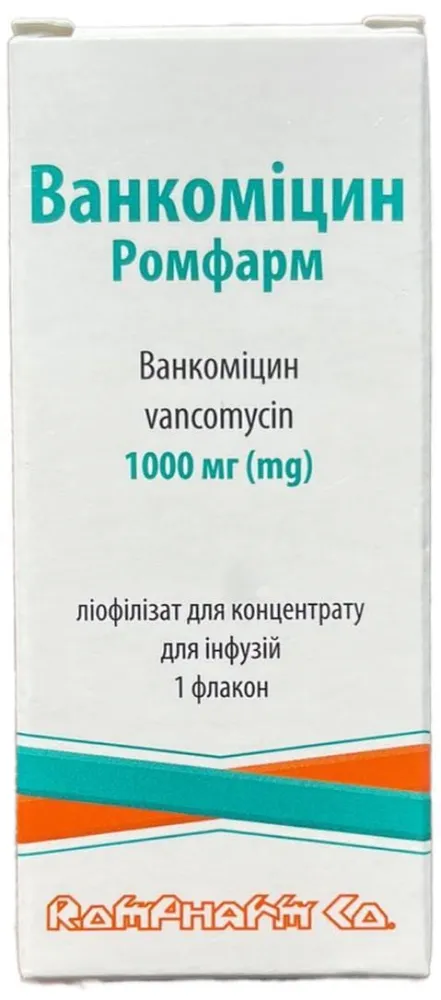
Table of Contents
INSTRUCTIONS FOR MEDICAL USE OF THE MEDICINAL PRODUCT VANCOCIN ROMPHARM (VANCOMYCIN ROMPHARM)
Composition:
Active substance: vancomycin hydrochloride;
1 vial contains 1000 mg of vancomycin hydrochloride, equivalent to 1,000,000 IU of vancomycin;
Excipients: none.
Pharmaceutical form. Lyophilisate for concentrate for infusion solution.
Main physicochemical characteristics: sterile powder, white to light brown in color.
Pharmacotherapeutic group. Glycopeptide antibacterial agents.
ATC code:
J01XA01 — vancomycin for intravenous use,
A07AA09 — vancomycin for oral use.
Pharmacological Properties
Pharmacodynamics
Mechanism of action
Vancomycin is a tricyclic glycopeptide antibiotic that inhibits cell wall synthesis in susceptible bacteria by binding with high affinity to the D-alanyl-D-alanine terminus of cell wall precursors. The drug exerts a slow bactericidal effect on dividing microorganisms. In addition, it disrupts bacterial cell membrane permeability and RNA synthesis.
Pharmacokinetic (PK)/pharmacodynamic (PD) relationship
Vancomycin exhibits concentration-independent activity, where the area under the concentration-time curve (AUC) divided by the minimum inhibitory concentration (MIC) for the target organism is the primary pharmacodynamic predictor of efficacy. Based on in vitro and animal data, as well as limited human data, an AUC/MIC ratio of 400 has been established as the target PK/PD parameter to achieve clinical efficacy of vancomycin. To achieve this target when MIC ≥ 1.0 mg/L, dosing at the upper end of the range and high serum concentrations (15–20 mg/L) are required (see section "Method of administration and dosage").
Mechanism of resistance
Acquired resistance to glycopeptides is most commonly observed in enterococci and is based on acquisition of various van gene clusters that modify the D-alanyl-D-alanine target to D-alanyl-D-lactate or D-alanyl-D-serine, which bind vancomycin poorly. In certain countries, an increasing incidence of resistance, particularly in enterococci, has been observed; multidrug-resistant strains of Enterococcus faecium are of particular concern.
van genes are rarely found in Staphylococcus aureus, where alterations in cell wall structure lead to "intermediate" susceptibility, which is usually heterogeneous. Strains of methicillin-resistant Staphylococcus aureus (MRSA) with reduced susceptibility to vancomycin have also been reported. The mechanisms underlying reduced susceptibility or resistance to vancomycin in staphylococci are not fully understood and appear to require the presence of multiple genetic elements and numerous mutations.
Cross-resistance between vancomycin and other classes of antibiotics is absent. However, cross-resistance with other glycopeptide antibiotics, such as teicoplanin, may still occur. Secondary development of resistance during therapy is rare.
Synergy
Combination of vancomycin with an aminoglycoside antibiotic exerts a synergistic effect against many strains of Staphylococcus aureus, non-enterococcal group D streptococci, enterococci, and Viridans group streptococci. The combination of vancomycin with a cephalosporin has a synergistic effect against certain oxacillin-resistant strains of Staphylococcus epidermidis, and the combination of vancomycin with rifampicin has a synergistic effect against Staphylococcus epidermidis and a partial synergistic effect against certain strains of Staphylococcus aureus. Since vancomycin in combination with cephalosporins may also have an antagonistic effect against certain strains of Staphylococcus epidermidis, and in combination with rifampicin against certain strains of Staphylococcus aureus, preliminary synergy testing is advisable.
Bacterial cultures should be obtained to isolate and identify causative pathogens and determine their susceptibility to vancomycin.
Breakpoints in susceptibility testing
Vancomycin is active against Gram-positive bacteria, including staphylococci, streptococci, enterococci, pneumococci, and clostridia. Gram-negative bacteria are resistant to vancomycin.
The prevalence of acquired resistance in specific species may vary geographically and over time; therefore, local information on resistance patterns is desirable, especially when treating severe infections. Expert advice should be sought if local resistance prevalence raises doubts about the appropriateness of using the drug, at least for certain types of infections. This information provides only an approximate indication of microbial susceptibility to vancomycin.
Minimum inhibitory concentration (MIC) breakpoints established by the European Committee on Antimicrobial Susceptibility Testing (EUCAST)
| Susceptible |
Resistant |
|
| Staphylococcus aureus1 |
≤ 2 mg/L |
> 2 mg/L |
| Coagulase-negative staphylococci1 |
≤ 4 mg/L |
> 4 mg/L |
| Enterococcus species (Enterococcus spp.) |
≤ 4 mg/L |
> 4 mg/L |
| Streptococcus species (Streptococcus spp.) groups A, B, C and G |
≤ 2 mg/L |
> 2 mg/L |
| Streptococcus pneumoniae |
≤ 2 mg/L |
> 2 mg/L |
| Gram-positive anaerobes |
≤ 2 mg/L |
> 2 mg/L |
1S. aureus with vancomycin MIC values of 2 mg/L are at the wild-type cutoff boundary, and a diminished clinical response may be observed.
| Commonly susceptible species |
| Gram-positive: Enterococcus faecalis Staphylococcus aureus Methicillin-resistant Staphylococcus aureus Coagulase-negative staphylococci Streptococcus spp. Streptococcus pneumoniae Enterococcus spp. Staphylococcus spp. Anaerobic species: Clostridioides spp., except Clostridioides innocuum Eubacterium spp. Peptostreptococcus spp. |
| Species that may develop resistance |
| Enterococcus faecium |
| Species with intrinsic resistance |
| All Gram-negative bacteria Gram-positive aerobic species: Erysipelothrix rhusiopathiae Heterofermentative Lactobacillus Leuconostoc spp. Pediococcus spp. Anaerobic species: Clostridioides innocuum |
| Vancomycin resistance varies between different hospitals; therefore, local microbiological laboratories should be consulted for relevant local information. |
Pharmacokinetics
Absorption
Vancomycin is administered intravenously for the treatment of systemic infections.
In patients with normal renal function, intravenous infusion of multiple doses of 1 g vancomycin (15 mg/kg) over 60 minutes achieves approximate mean plasma concentrations of 50–60 mg/L, 20–25 mg/L, and 5–10 mg/L immediately, 2 hours, and 11 hours after the end of infusion, respectively. Plasma levels obtained after multiple dosing are similar to those achieved after a single dose.
Vancomycin is generally not absorbed into the bloodstream following oral administration. However, absorption may occur after oral administration in patients with (pseudomembranous) colitis. This may lead to accumulation of vancomycin in patients with concomitant renal impairment.
Distribution
The volume of distribution is approximately 60 L / 1.73 m² body surface area. At serum vancomycin concentrations ranging from 10 mg/L to 100 mg/L, protein binding is approximately 30–55% (measured by ultrafiltration).
Vancomycin readily diffuses across the placenta and distributes into umbilical cord blood. In non-inflamed meninges, vancomycin penetrates the blood-brain barrier only to a minimal extent.
Biotransformation
Vancomycin metabolism is minimal. After parenteral administration, the drug is excreted almost entirely in microbiologically active form (approximately 75–90% within 24 hours) via the kidneys by glomerular filtration.
Elimination
The elimination half-life of vancomycin is 4–6 hours in patients with normal renal function and 2.2–3 hours in children. Plasma clearance is approximately 0.058 L/kg/h, and renal clearance is approximately 0.048 L/kg/h. Within the first 24 hours, approximately 80% of the administered dose of vancomycin is excreted in urine by glomerular filtration. Impaired renal function delays vancomycin elimination. In anephric patients, the mean elimination half-life is 7.5 days. Due to the ototoxic potential of vancomycin, plasma concentration monitoring during therapy is indicated in such cases.
Biliary excretion is negligible (less than 5% of the dose).
Although vancomycin is not effectively removed by hemodialysis or peritoneal dialysis, there are reports of increased vancomycin clearance with hemoperfusion and hemofiltration.
After oral administration, only a portion of the administered dose is recovered in urine. In contrast, high concentrations of vancomycin are found in feces (> 3100 mg/kg at doses of 2 g/day).
Linearity/Non-linearity
Vancomycin concentration typically increases proportionally with increasing dose. Plasma concentrations during multiple dosing are similar to those after a single dose.
Special patient populations
Patients with impaired renal function. Vancomycin is primarily eliminated by glomerular filtration. In patients with impaired renal function, the terminal elimination half-life of vancomycin is prolonged and total clearance is reduced. Therefore, the optimal dose should be calculated according to the dosing recommendations provided in the section "Dosage and administration".
Patients with impaired hepatic function. The pharmacokinetics of vancomycin are not altered in patients with impaired hepatic function.
Pregnant women. Significantly higher doses may be required in pregnant women to achieve therapeutic serum concentrations (see section "Use during pregnancy or breastfeeding").
Patients with excess body weight. Vancomycin distribution may be altered in patients with excess body weight due to increased volume of distribution, renal clearance, and potential changes in plasma protein binding. In this subpopulation, serum vancomycin concentrations have been higher than expected in healthy adult males (see section "Special warnings and precautions for use").
Children. The pharmacokinetics of vancomycin show wide inter-subject variability in preterm and term neonates. In neonates following intravenous administration, the volume of distribution of vancomycin ranges from 0.38 to 0.97 L/kg, similar to values in adults, while clearance ranges from 0.63 to 1.4 mL/kg/min. The elimination half-life ranges from 3.5 to 10 hours and is longer than in adults, reflecting typically lower clearance values in neonates.
In infants and older children, the volume of distribution ranges from 0.26 to 1.05 L/kg, and clearance ranges from 0.33 to 1.87 mL/kg/min.
Clinical characteristics
Indications
Intravenous administration
Vancomycin Rompharm is indicated in all age groups for the treatment of the following infections (see also sections "Method of administration and dosage", "Special precautions for use" and "Pharmacological properties"):
- complicated skin and soft tissue infections;
- bone and joint infections;
- community-acquired pneumonia;
- hospital-acquired pneumonia, including ventilator-associated pneumonia;
- infective endocarditis.
Vancomycin Rompharm is also indicated in all age groups for perioperative antibacterial prophylaxis in cases of high risk of developing bacterial endocarditis during major surgical procedures.
Oral administration
Vancomycin Rompharm is indicated in all age groups for the treatment of Clostridioides difficile infections (see also sections "Method of administration and dosage", "Special precautions for use" and "Pharmacological properties").
In addition, official recommendations regarding appropriate use of antibacterial agents should be taken into account.
Contraindications
Hypersensitivity to vancomycin.
Vancomycin must not be administered intramuscularly due to the risk of necrosis at the injection site.
Interaction with other medicinal products and other forms of interaction
Concomitant administration of vancomycin and anesthetics has been associated with erythema, histamine-like flushing, and anaphylactoid reactions (see section "Special precautions for use").
An increased frequency of infusion-related adverse reactions has been reported with concomitant use of anesthetics. Infusion-related adverse reactions can be minimized by administering vancomycin as a 60-minute infusion prior to administration of anesthetics. When administered during anesthesia, doses should be diluted to 5 mg/mL or less and infused slowly with careful cardiac monitoring. Patient repositioning should be delayed until completion of the infusion.
Concomitant or sequential systemic or local use of other potentially ototoxic or nephrotoxic agents, such as amphotericin B, aminoglycosides, bacitracin, polymyxin B, colistin, viomycin, cisplatin, piperacillin/tazobactam, loop diuretics, and NSAIDs, may increase vancomycin toxicity. Caution and appropriate monitoring are required in such cases (see section "Special precautions for use").
The combination of vancomycin with an aminoglycoside antibiotic has a synergistic effect against many strains of Staphylococcus aureus, non-enterococcal group D streptococci, enterococci, and Viridans group streptococci.
The combination of vancomycin with rifampicin has a synergistic effect against Staphylococcus epidermidis.
Oral administration: Consideration should be given to discontinuing proton pump inhibitors and motility-reducing agents in accordance with local guidelines for Clostridioides difficile infection.
Special precautions for use
Hypersensitivity reactions
Serious and sometimes fatal hypersensitivity reactions may occur (see sections "Contraindications" and "Side effects"). If hypersensitivity reactions occur, vancomycin therapy must be discontinued immediately and appropriate emergency measures should be initiated.
In patients receiving vancomycin for prolonged periods or concurrently with other agents that may cause neutropenia or agranulocytosis, leukocyte counts should be monitored regularly. In all patients receiving vancomycin, periodic blood, urine, liver, and kidney function tests should be performed.
Vancomycin should be used with caution in patients with allergic reactions to teicoplanin, as cross-sensitivity may occur, including fatal anaphylactic shock.
Antibacterial spectrum
The antibacterial spectrum of vancomycin is limited to Gram-positive microorganisms. Vancomycin should not be used as monotherapy for certain types of infections, except when the causative agent has already been identified and is known to be susceptible to vancomycin, or when there is a high probability that the likely pathogen is susceptible to vancomycin.
When vancomycin is used empirically, the bacterial spectrum of activity, safety profile, and suitability of standard antibacterial therapy for the individual patient should be considered.
Ototoxicity
Ototoxicity, both temporary and irreversible (see section "Side effects"), has been reported in patients with pre-existing hearing loss who received excessive intravenous doses or who were concurrently treated with other ototoxic agents, such as aminoglycosides. Vancomycin should also be avoided in patients with pre-existing hearing loss. Tinnitus may precede hearing loss. Experience with other antibiotics indicates that deafness may progress despite discontinuation of therapy. To reduce the risk of ototoxicity, vancomycin blood levels should be monitored periodically, and hearing function should be assessed regularly.
Elderly patients are particularly susceptible to hearing damage. Monitoring of vestibular and auditory function in elderly patients should be performed during and after treatment. Concomitant or sequential use of other ototoxic substances should be avoided.
Infusion-related reactions
Rapid bolus administration (i.e., over several minutes) may be associated with increased arterial hypotension (including shock and, rarely, cardiac arrest), histamine-like reactions, and maculopapular rash. Rapid intravenous administration of vancomycin hydrochloride for injection may also be associated with a "vancomycin infusion reaction," characterized by itching and erythema affecting the face, neck, and upper part of the trunk ("red man syndrome" or "red neck syndrome"). Vancomycin should be administered slowly in a diluted solution (2.5–5.0 mg/mL) at a rate not exceeding 10 mg/min over at least 60 minutes to avoid rapid infusion-related reactions. Discontinuation of the infusion usually leads to rapid resolution of these reactions.
Side effects associated with administration depend on both the concentration and the rate of vancomycin infusion. However, infusion-related side effects may occur at any rate or concentration.
The frequency of infusion-related reactions (hypotension, flushing, erythema, urticaria, and pruritus) increases with concomitant use of anesthetics (see section "Interaction with other medicinal products and other forms of interaction"). This risk can be reduced by administering vancomycin via infusion for at least 60 minutes prior to induction of anesthesia.
Severe skin adverse reactions (SSARs)
Severe skin adverse reactions (SSARs), including Stevens-Johnson syndrome (SJS), toxic epidermal necrolysis (TEN), drug reaction with eosinophilia and systemic symptoms (DRESS syndrome), and acute generalized exanthematous pustulosis (AGEP), have been reported during vancomycin therapy and may be life-threatening or fatal (see section "Side effects"). Most of these reactions occurred from several days to eight weeks after initiation of vancomycin therapy.
Patients should be informed of the signs and symptoms, and skin reactions should be closely monitored. If symptoms suggestive of these reactions occur, vancomycin should be discontinued immediately and alternative therapy considered. If a patient develops SSARs during vancomycin treatment, vancomycin therapy must not be resumed under any circumstances.
Administration site reactions
Pain and thrombophlebitis may occur in many patients receiving intravenous vancomycin and may sometimes be severe. The frequency and severity of thrombophlebitis can be minimized by slow administration of the drug as a diluted solution (see section "Method of administration and dosage") and by rotating infusion sites regularly.
The efficacy and safety of vancomycin administered via intrathecal, intralumbar, or intraventricular routes have not been established.
Nephrotoxicity
Vancomycin should be used with caution in patients with renal impairment, including anuria, as the likelihood of toxic effects is significantly higher with prolonged presence of high blood concentrations. The risk of toxicity increases with high blood concentrations or prolonged treatment.
Monitoring of vancomycin blood levels is indicated during high-dose therapy and long-term use, especially in patients with impaired renal function or hearing, and in those receiving concomitant nephrotoxic or ototoxic agents, respectively (see sections "Method of administration and dosage" and "Interaction with other medicinal products and other forms of interaction").
Visual disturbances
Vancomycin is not permitted for intracameral or intravitreal use, including prophylaxis of endophthalmitis.
Hemorrhagic occlusive retinal vasculitis, including irreversible vision loss, has been observed in isolated cases following intracameral or intravitreal administration of vancomycin during or after cataract surgery.
Clostridioides difficile-associated diarrhea (CDAD)
Cases of Clostridioides difficile-associated diarrhea have been reported with the use of nearly all antibacterial agents, including vancomycin. This diarrhea may range in severity from mild diarrhea to fatal colitis. Antibacterial therapy alters the normal flora of the colon, leading to overgrowth of C. difficile.
C. difficile produces toxins A and B, which contribute to the development of CDAD. Hypertoxin-producing strains of C. difficile are associated with increased morbidity and mortality, as these infections may be refractory to antimicrobial therapy and may require colectomy. CDAD should be considered in all patients who develop diarrhea following antibiotic use. Since CDAD may occur up to two months after administration of antibacterial agents, a careful patient history should be obtained.
Upon suspicion or confirmation of CDAD, ongoing use of antibiotics not directed against C. difficile may need to be discontinued. Appropriate fluid and electrolyte management, protein supplementation, treatment of C. difficile with antibiotics, and surgical evaluation should be performed as clinically indicated.
Children
Recommended intravenous doses for children, particularly those under 12 years of age, may not achieve therapeutic vancomycin levels in a significant number of children. However, the safety of increasing the vancomycin dose has not been adequately evaluated, and doses above 60 mg/kg/day are generally not recommended.
Vancomycin should be used with particular caution in premature neonates and young infants (from 1 month (28 days) to 23 months) due to immature renal function and the potential for increased serum vancomycin concentrations. Serum vancomycin concentrations should be closely monitored in these children.
Concomitant use of vancomycin and anesthetics has been associated with erythema and histamine-like hyperemia in children. Similarly, concomitant use with nephrotoxic agents such as aminoglycoside antibiotics, NSAIDs (e.g., ibuprofen for closure of patent ductus arteriosus), or amphotericin B is associated with an increased risk of nephrotoxicity (see section "Interaction with other medicinal products and other forms of interaction"); therefore, more frequent monitoring of serum vancomycin levels and renal function is necessary.
Elderly patients
The natural age-related decline in glomerular filtration rate may lead to elevated serum vancomycin concentrations if the dose is not adjusted (see section "Method of administration and dosage").
Interaction with anesthetics
Vancomycin may potentiate myocardial depression caused by anesthetics. During anesthesia, doses should be well diluted and administered slowly with careful monitoring of cardiac function. Position changes should be delayed until infusion is complete (see section "Interaction with other medicinal products and other forms of interaction").
Pseudomembranous enterocolitis
In cases of severe, prolonged diarrhea, pseudomembranous enterocolitis, which may be life-threatening, should be considered (see section "Side effects"). Antidiarrheal agents should not be administered.
Superinfection
Prolonged use of vancomycin may result in overgrowth of non-susceptible organisms. The patient should be carefully observed. If superinfection occurs during therapy, appropriate measures should be taken.
Oral administration
Intravenous administration of vancomycin is ineffective for the treatment of Clostridioides difficile infection. For this indication, vancomycin should be administered orally.
Testing for Clostridioides difficile colonization or toxin is not recommended in children under 1 year of age due to high rates of asymptomatic colonization, except in cases of severe diarrhea in infants with risk factors for stasis, such as Hirschsprung's disease, surgically corrected anal atresia, or other serious motility disorders. Alternative etiologies should always be sought, and Clostridioides difficile-induced enterocolitis should be confirmed.
Potential for systemic absorption
Absorption may be enhanced in patients with inflammatory bowel mucosal disorders or pseudomembranous colitis caused by Clostridioides difficile. These patients have an increased risk of adverse reactions, especially if concomitant renal impairment is present. The greater the degree of renal dysfunction, the higher the risk of adverse reactions associated with parenteral vancomycin administration. Serum vancomycin concentration should be monitored in patients with inflammatory bowel mucosal disorders.
Nephrotoxicity
Sequential monitoring of renal function should be performed during treatment of patients with impaired renal function or those receiving concomitant therapy with aminoglycosides or other nephrotoxic agents.
Ototoxicity
Sequential hearing function tests may be useful to minimize the risk of ototoxicity in patients with pre-existing hearing loss or those receiving concomitant therapy with ototoxic agents such as aminoglycosides.
Interaction with motility-inhibiting agents and proton pump inhibitors
Motility-inhibiting agents should be avoided, and the use of proton pump inhibitors should be reviewed.
Development of drug-resistant bacteria
Oral use of vancomycin increases the likelihood of development of vancomycin-resistant enterococci in the gastrointestinal tract. Therefore, cautious use of oral vancomycin is recommended.
Use during pregnancy or breastfeeding
Pregnancy
In teratogenicity studies in animals, rats and rabbits were administered vancomycin doses 5 and 3 times, respectively, higher than human doses, and no evidence of fetal harm was observed.
In a controlled clinical study, potential ototoxic and nephrotoxic effects of vancomycin hydrochloride on infants were evaluated when the drug was administered to pregnant women for serious staphylococcal infections. Vancomycin hydrochloride was detected in umbilical cord blood. No sensorineural hearing loss or nephrotoxicity related to vancomycin was observed. One infant, whose mother received vancomycin in the third trimester, had conductive hearing loss unrelated to vancomycin. Since vancomycin was used only in the second and third trimesters, it is unknown whether it harms the fetus. Vancomycin should be administered during pregnancy only if clearly needed, and serum drug levels should be carefully monitored to minimize the risk of toxic effects on the fetus. However, it has been reported that pregnant patients may require significantly higher vancomycin doses to achieve therapeutic serum concentrations.
Breastfeeding
Vancomycin hydrochloride is excreted in breast milk. Vancomycin should be used with caution in nursing women. The amount of vancomycin that may pass into the infant via breast milk is considered negligible.
Ability to affect reaction speed when driving or operating machinery.
During treatment with the medicinal product, the ability to concentrate may be reduced; this should be taken into account when driving a vehicle or performing work requiring heightened attention.
Method of Administration and Dosage
If necessary, vancomycin should be used in combination with other antibacterial agents.
Intravenous administration
The initial dose should be based on total body weight. Subsequent dose adjustments should be guided by serum concentrations to achieve target therapeutic levels. When prescribing subsequent doses and dosing intervals, renal function should be taken into account.
Patients aged 12 years and older
The recommended dose is 15–20 mg/kg body weight every 8–12 hours (do not exceed 2 g per dose).
For critically ill patients, a loading dose of 25–30 mg/kg body weight may be administered to facilitate rapid attainment of target trough serum vancomycin concentrations.
Children aged 1 month to 12 years
The recommended dose is 10 to 15 mg/kg body weight every 6 hours (see section "Special Instructions").
Full-term newborns (from birth to 27 days) and preterm newborns (from birth to estimated date of delivery plus 27 days)
Dosing regimen for newborns should be established under the guidance of a physician experienced in treating newborns. An example of vancomycin dosing for newborns is provided in the table below (see also section "Special Instructions").
| PMA (weeks) |
Dose (mg/kg) |
Administration interval (h) |
| < 29 |
15 |
24 |
| 29–35 |
15 |
12 |
| > 35 |
15 |
8 |
PMA — postmenstrual age [time elapsed from the first day of the last menstrual period to birth (gestational age) plus time elapsed after birth (postnatal age)].
Perioperative prophylaxis of bacterial endocarditis in all age groups
The recommended dose is an initial dose of 15 mg/kg prior to induction of anesthesia. Depending on the duration of surgery, a second dose of vancomycin may be required.
Duration of treatment
The recommended duration of treatment is presented in the table below. In each case, the duration of treatment should be adjusted according to the type and severity of infection and the individual clinical response.
| Indications |
Treatment duration |
| Complicated skin and soft tissue infections
|
|
| 7–14 days 4–6 weeks* |
|
| Bone and joint infections |
4–6 weeks** |
| Community-acquired pneumonia |
7–14 days |
| Hospital-acquired pneumonia, including ventilator-associated pneumonia |
7–14 days |
| Infective endocarditis |
4–6 weeks*** |
*Continue until there is no further need for wound management and until the patient achieves clinical improvement. Discontinue if the patient continues to have fever for 48–72 hours.
**For prosthetic joint infections, consider the possibility of longer courses of oral suppressive therapy.
***The duration and need for combination therapy depend on the type of cardiac valve and the causative microorganism.
Special patient groups
Elderly patients
Due to age-related decline in renal function, lower maintenance doses may be required.
Renal impairment
For adults and children with renal impairment, dosing may need to be adjusted based on serum vancomycin levels, especially in patients with severe renal impairment or those undergoing renal replacement therapy (RRT), due to numerous factors that may affect vancomycin levels.
Initial dose should not be reduced in patients with mild or moderate renal impairment. For patients with severe renal impairment, it is preferable to prolong the dosing interval rather than administer lower daily doses.
Concomitant use of medicinal products that may reduce vancomycin clearance and/or enhance its adverse effects should be carefully considered (see section "Special precautions for use").
Vancomycin is poorly cleared during intermittent hemodialysis. However, the use of high-flux membranes and continuous renal replacement therapy (CRRT) increases vancomycin clearance and generally requires dose adjustment (usually after an intermittent hemodialysis session).
Adults. Dose adjustment in adult patients may be based on estimated glomerular filtration rate (eGFR) calculated using the following formula:
Men: [weight (kg) × (140 – age (years))] / (72 × serum creatinine (mg/dL))
Women: 0.85 × value calculated by the formula above
The usual initial dose for adult patients is 15 to 20 mg/kg, which may be administered every 24 hours to patients with a creatinine clearance of 20 to 49 mL/min. In patients with severe renal impairment (creatinine clearance <20 mL/min) or those receiving renal replacement therapy, dosing and the number of subsequent doses depend significantly on the RRT method and should be based on trough serum vancomycin levels and residual renal function (see section "Special precautions for use"). Depending on the clinical situation, the next dose may be withheld until serum vancomycin level results are available.
For critically ill patients with renal impairment, the initial loading dose (25–30 mg/kg) should not be reduced.
Children. Dose adjustment in children aged 1 year and older may be based on estimated glomerular filtration rate (eGFR) using the Schwartz formula:
eGFR (mL/min/1.73 m²) = (height (cm) × 0.413) / serum creatinine (mg/dL)
eGFR (mL/min/1.73 m²) = (height (cm) × 36.2) / serum creatinine (µmol/L)
Expert consultation is recommended when treating children under 1 year of age, as the Schwartz formula does not apply to this age group.
The table below provides dosing recommendations for children, based on the same principles as for adult patients.
| CLCR (mL/min/1.73 m2) |
Intravenous dose |
Frequency |
| 50–30 |
15 mg/kg |
12 hours |
| 29–10 |
15 mg/kg |
24 hours per day |
| < 10 |
10–15 mg/kg |
Repeat doses according to vancomycin levels* |
| Intermittent hemodialysis |
||
| Peritoneal dialysis |
||
| Continuous renal replacement therapy |
15 mg/kg |
Repeat doses according to vancomycin levels* |
* Dosing and the amount of subsequent doses largely depend on the method of RRT and should be based on serum vancomycin levels and residual renal function. Depending on the clinical situation, the next dose may not be administered until serum vancomycin level results are available.
Hepatic impairment
Dose adjustment is not required in patients with hepatic impairment.
Pregnancy
Higher doses may be required in pregnant women to achieve therapeutic serum concentrations (see section "Use during pregnancy or breastfeeding").
Obese patients
For obese patients, the initial dose should be individually selected according to total body weight, as in patients without obesity.
Oral administration
Patients aged 12 years and older
Treatment of Clostridioides difficile infection (CDI): the recommended dose of vancomycin is 125 mg every 6 hours for 10 days for the first episode of mild CDI. This dose may be increased to 500 mg every 6 hours for 10 days in cases of severe or complicated disease. The maximum daily dose should not exceed 2 g.
For patients with multiple recurrences, treatment of the current CDI episode may include vancomycin 125 mg four times daily for 10 days, followed by dose tapering—gradual reduction to 125 mg daily—or pulse dosing—125–500 mg/day every 2–3 days for at least 3 weeks.
Neonates, infants, and children under 12 years
The recommended dose of vancomycin is 10 mg/kg orally every 6 hours for 10 days. The maximum daily dose should not exceed 2 g.
The duration of vancomycin treatment may be adjusted according to the individual clinical course of CDI. Concomitant antibacterial agents likely responsible for CDI should be discontinued if possible. Adequate fluid and electrolyte replacement should be ensured.
Monitoring of serum vancomycin concentrations
The frequency of therapeutic drug monitoring (TDM) should be individualized and depend on the clinical situation and response to therapy: from daily sampling, which may be required in certain hemodynamically unstable patients, to at least once weekly in stable patients showing response to treatment. In patients with normal renal function, serum vancomycin concentrations should be monitored on the second day of therapy, immediately before the next dose.
In patients undergoing intermittent hemodialysis, vancomycin levels should generally be measured before the start of a hemodialysis session.
Serum vancomycin monitoring should be performed in patients receiving oral administration who have inflammatory bowel disease (see section "Special precautions").
The trough serum vancomycin level should generally be maintained between 10–20 mg/L, depending on the site of infection and pathogen susceptibility. Clinical laboratories typically recommend trough levels of 15–20 mg/L to better cover classified susceptible organisms with MIC > 1 mg/L (see sections "Special precautions" and "Pharmacological properties").
Methods based on pharmacokinetic modeling may be used to determine an individual dose that achieves adequate AUC. This approach can be used both for calculating the initial dose and for dose adjustment based on TDM results (see section "Pharmacological properties").
Method of administration
Intravenous administration
This medicinal product must be administered intravenously only after reconstitution and dilution.
Vancomycin is usually administered intravenously as an intermittent infusion, and the dosing recommendations for intravenous administration provided in this section correspond to this route.
Vancomycin should be administered only by slow intravenous infusion lasting at least one hour or at a maximum rate of 10 mg/min (whichever is longer). The solution must be sufficiently diluted (at least 100 mL per 500 mg or at least 200 mL per 1000 mg). See also section "Special precautions".
Patients who require fluid restriction may receive a solution of 500 mg / 50 mL or 1000 mg / 100 mL, although the risk of infusion-related adverse effects increases with higher concentrations.
Preparation of reconstituted solution
Add 20 mL of water for injections to the vial containing the lyophilisate. This will yield a solution of 50 mg/mL. After dissolution of the lyophilisate in water, a clear solution is formed.
Continuous infusion of vancomycin may be considered, for example, in patients with unstable vancomycin clearance.
Intermittent infusion is the preferred method of administration. Reconstituted solutions containing 1 g of vancomycin hydrochloride should be diluted in at least 200 mL of 0.9% sodium chloride solution for intravenous infusion or 5% dextrose solution for intravenous infusion. The desired dose should be administered by intravenous infusion over at least 60 minutes. Shorter infusion times or higher concentrations may lead to marked hypotension in addition to thrombophlebitis. Rapid infusion may also cause flushing and transient rash on the neck and shoulders.
Continuous infusion (should only be used when intermittent infusion is not feasible). One to two vials (1–2 g) may be added to a sufficiently large volume of 0.9% sodium chloride intravenous infusion or 5% dextrose intravenous infusion so that the desired daily dose can be administered slowly via intravenous infusion over 24 hours.
Recommended concentrations should not exceed 5 mg/mL. For individual patients requiring fluid restriction, concentrations up to 10 mg/mL may be used.
Each dose should be administered at a rate not exceeding 10 mg/min.
After reconstitution and dilution with 0.9% sodium chloride solution for intravenous infusion or 5% dextrose solution for intravenous infusion, the osmolarity of the reconstituted and diluted solution is approximately 270 mOsm/kg, and the pH ranges from 2.5 to 4.5.
Before administration, reconstituted and diluted solutions should be inspected visually for particulate matter and discoloration. Only clear solutions, colorless to pale yellow, free of particles, should be used.
Oral administration
The medicinal product may be administered orally.
The dose should be dissolved in 20 mL of water and given to the patient to drink or administered via a nasogastric tube.
A 2.5 mL aliquot of the reconstituted concentrate contains 125 mg of vancomycin hydrochloride and should be diluted with 5 mL of water, i.e., 1 volume of aliquot should be diluted with 2 volumes of water.
To improve palatability, standard flavoring syrups may be added to the solution at the time of administration.
Children
The medicinal product Vancomycin Rompharm may be used in children from birth.
Overdose
Supportive therapy with maintenance of glomerular filtration is recommended.
Vancomycin is poorly removed from blood by hemodialysis or peritoneal dialysis. Hemoperfusion using Amberlite XAD-4 resin has been reported to have limited benefit.
Adverse Reactions
Short description of the safety profile
The most commonly reported adverse reactions are phlebitis, pseudoallergic reactions, and redness of the upper body (the so-called "red man syndrome") associated with too rapid intravenous infusion of vancomycin.
Parenteral formulations for oral use: absorption of vancomycin from the gastrointestinal tract is negligible. However, in cases of severe intestinal mucosal inflammation, especially in combination with renal impairment, adverse reactions associated with parenteral administration of vancomycin may occur.
Severe skin adverse reactions (SSARs) have been reported with vancomycin treatment, including Stevens–Johnson syndrome (SJS), toxic epidermal necrolysis (TEN), drug reaction with eosinophilia and systemic symptoms (DRESS syndrome), and acute generalized exanthematous pustulosis (see section "Special precautions").
List of adverse reactions
The adverse reactions listed below are classified by organ systems according to MedDRA (Medical Dictionary for Regulatory Activities). The frequency of adverse reactions is categorized as follows: very common (≥ 1/10), common (≥ 1/100 to < 1/10), uncommon (≥ 1/1,000 to < 1/100), rare (≥ 1/10,000 to < 1/1,000), very rare (< 1/10,000), and frequency not known (cannot be estimated from the available data). Within each frequency group, adverse effects are listed in order of decreasing severity.
| Frequency |
Adverse reaction |
| Blood and lymphatic system disorders |
|
| Occasional |
Reversible neutropenia1, agranulocytosis, eosinophilia, thrombocytopenia, pancytopenia |
| Immune system disorders |
|
| Occasional |
Hypersensitivity reactions, anaphylactic reactions2, including anaphylaxis, vancomycin infusion reaction5 |
| Ear and labyrinth disorders |
|
| Uncommon |
Temporary or irreversible hearing loss4 |
| Occasional |
Vertigo, tinnitus3, dizziness |
| Cardiac disorders |
|
| Rare |
Cardiac arrest |
| Vascular disorders |
|
| Common |
Decreased blood pressure |
| Occasional |
Vasculitis |
| Respiratory, thoracic and mediastinal disorders |
|
| Common |
Dyspnea, stridor |
| Gastrointestinal disorders |
|
| Occasional |
Nausea |
| Rare |
Pseudomembranous enterocolitis |
| Frequency unknown |
Vomiting, diarrhea |
| Skin and subcutaneous tissue disorders |
|
| Common |
Upper body flushing ("red man syndrome"), rash and mucosal inflammation, pruritus, urticaria |
| Rare |
Exfoliative dermatitis, Stevens-Johnson syndrome, toxic epidermal necrolysis (TEN), linear IgA bullous dermatosis |
| Frequency unknown |
Eosinophilia and systemic symptoms (DRESS syndrome), |
| Renal and urinary disorders |
|
| Common |
Renal failure — predominantly manifested by increased serum creatinine and blood urea |
| Occasional |
Interstitial nephritis, acute renal failure |
| Frequency unknown |
Acute tubular necrosis |
| General disorders and administration site conditions |
|
| Common |
Phlebitis, flushing of upper body and face |
| Occasional |
Drug fever, chills, chest and back muscle pain and spasms |
1 Reversible neutropenia usually begins one week or more after initiation of intravenous therapy or after a total dose exceeding 25 g.
2 Anaphylactoid/anaphylactic reactions, including bronchospasm, may occur during or shortly after rapid infusion. Reactions diminish after discontinuation of the infusion, typically within 20 minutes to 2 hours. Vancomycin should be administered slowly (see sections “Dosage and administration” and “Special precautions”). Necrosis may occur after intramuscular injection.
3 Tinnitus, which may precede onset of hearing loss, should be considered as an indication to discontinue treatment.
4 Ototoxicity has mainly been observed in patients receiving high doses, in those receiving concomitant treatment with other ototoxic agents such as aminoglycosides, and in those with pre-existing renal impairment or hearing loss.
5 The reaction occurred during clinical trials.
Children
The safety profile is generally similar in children, adolescents, and adult patients. Nephrotoxicity has been reported in children, usually when vancomycin was administered concomitantly with other nephrotoxic agents such as aminoglycosides.
Reporting of suspected adverse reactions
Reporting of suspected adverse reactions after marketing authorization is important. It allows continued monitoring of the benefit-risk balance of the medicinal product. Healthcare and pharmaceutical professionals, as well as patients or their legal representatives, should report all suspected adverse reactions and lack of efficacy via the Automated Pharmacovigilance Information System at the following link: https://aisf.dec.gov.ua.
Shelf life. 3 years.
Storage conditions
Store at a temperature not exceeding 25 °C.
Reconstituted solution for intravenous administration: chemical and physical stability has been demonstrated for 24 hours at 2–8°C.
From a microbiological standpoint, the solution should be used immediately. If not used immediately, responsibility for storage conditions and duration during use lies with the user.
Reconstituted solution for oral administration: chemical and physical stability has been demonstrated for 14 days at 2–8°C.
Keep out of reach and sight of children.
Incompatibilities
Vancomycin solution has a low pH, which may cause chemical or physical instability when mixed with other compounds. Mixing with alkaline solutions should be avoided.
Mixtures of vancomycin and beta-lactam antibiotics have been shown to be physically incompatible. The likelihood of precipitation increases with higher concentrations of vancomycin. It is recommended to adequately flush intravenous lines between administration of these antibiotics. It is also recommended to dilute vancomycin solutions to 5 mg/mL or less.
Although intravitreal injection is not an approved route of administration for vancomycin, precipitation has been reported after intravitreal injection of vancomycin and ceftazidime for treatment of endophthalmitis using separate syringes and needles. The precipitate gradually dissolved, with complete clearance of the vitreous cavity within two months and improvement in visual acuity.
Packaging. 1000 mg in a vial, 1 vial per cardboard pack.
Prescription status. Prescription only.
Manufacturer. K.T. ROMPHARM COMPANY S.R.L.
Manufacturer's address and place of business.
Strada Eroilor No. 1A, Otopeni, 075100, Ilfov County, Romania – Rompharm 1 and Rompharm 2 buildings.