Valtrevir
Ukraine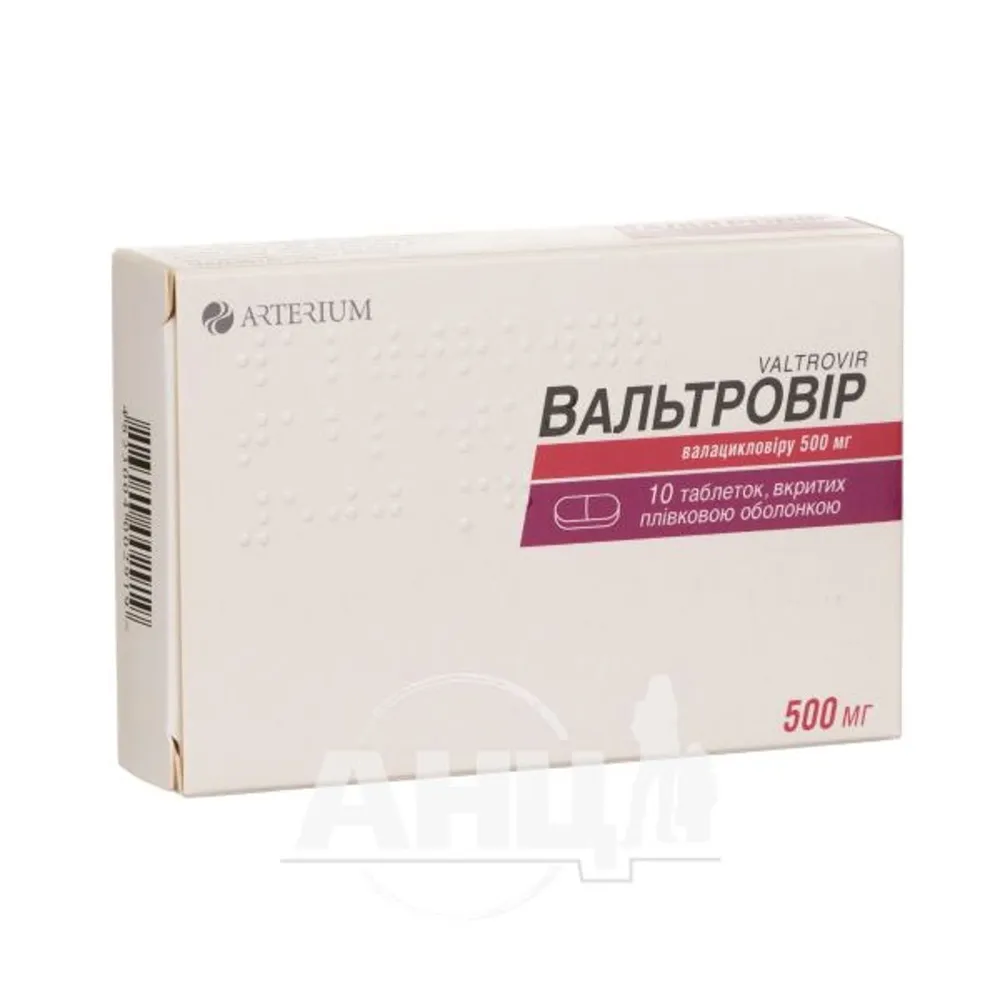
Table of Contents
INSTRUCTIONS FOR MEDICAL USE OF THE MEDICINAL PRODUCT VALTROVIR (VALTROVIR)
Composition:
Active substance: valaciclovir;
1 tablet contains valaciclovir hydrochloride equivalent to valaciclovir – 500 mg;
Excipients: povidone, calcium stearate, sodium starch glycolate (Type A), microcrystalline cellulose, coating mixture "Opadry II Yellow" 33G22623 (containing: hypromellose; lactose monohydrate; titanium dioxide (E 171); polyethylene glycol 3000 (macrogol); triacetin; quinoline yellow (E 104); yellow FCF (E 110); iron oxide yellow (E 172); indigo carmine (E 132)).
Pharmaceutical form. Film-coated tablets.
Main physicochemical properties: film-coated tablets of lemon-yellow color, with a biconvex surface, a score line on one side and embossing "KMP" on the other side. A white core is visible in cross-section.
Pharmacotherapeutic group.
Direct-acting antiviral agents. Nucleosides and nucleotides, excluding reverse transcriptase inhibitors.
ATC code J05A B11.
Pharmacological Properties
Pharmacodynamics
Valacyclovir is an antiviral agent, the L-valyl ester of acyclovir, which is a purine (guanine) nucleoside analogue. In humans, valacyclovir is rapidly and almost completely converted to acyclovir by the enzyme valacyclovir hydrolase. Acyclovir is a specific inhibitor of herpesviruses with in vitro activity against herpes simplex virus types I and II, Varicella zoster virus, cytomegalovirus, Epstein-Barr virus, and human herpesvirus type VI. Acyclovir inhibits viral DNA synthesis immediately after phosphorylation and conversion into its active form, acyclovir triphosphate. The initial phosphorylation step requires the activity of a virus-specific enzyme. For herpes simplex virus, Varicella zoster virus, and Epstein-Barr virus, this is the viral thymidine kinase (TK), which is present only in virus-infected cells. Partial selectivity of phosphorylation is maintained in cytomegalovirus infection, mediated by the UL97 gene product phosphotransferase. The activation of acyclovir by a specific viral enzyme largely explains its selectivity.
The phosphorylation of acyclovir (conversion from mono- to triphosphate) is carried out by cellular kinases. Acyclovir triphosphate competitively inhibits viral DNA polymerase and is incorporated into viral DNA, leading to obligate (complete) chain termination, cessation of DNA synthesis, and thus blocking viral replication.
Resistance is caused by a deficiency of viral thymidine kinase, resulting in excessive viral spread within the host. Occasionally, reduced sensitivity to acyclovir is due to the emergence of viral strains with altered structure of viral TK or DNA polymerase. The virulence of these viral variants resembles that of wild-type strains.
Extensive monitoring of clinical isolates of herpes simplex virus and Varicella zoster virus in patients treated with acyclovir has shown that viruses with reduced sensitivity to acyclovir are exceptionally rare in immunocompetent patients and occur only infrequently, primarily in patients with severe immunosuppression, such as after organ transplantation or bone marrow recipients, during chemotherapy for malignancies, and in HIV-infected individuals.
Valacyclovir accelerates pain resolution in the treatment of herpes zoster, reduces the duration of pain syndrome, and decreases the number of patients with zoster-associated pain, including acute and postherpetic neuralgia.
Prophylaxis of cytomegalovirus infection with valacyclovir reduces the risk of acute transplant rejection (in kidney transplant recipients), the frequency of opportunistic infections, and other infections caused by herpesviruses (herpes simplex virus and Herpes zoster virus).
Pharmacokinetics
Absorption
After oral administration, valacyclovir is well absorbed and rapidly and almost completely converted into acyclovir and valine. This conversion appears to occur via the enzyme valacyclovir hydrolase, isolated from human liver. The bioavailability of acyclovir following administration of 1000 mg valacyclovir is 54% and is not reduced when taken with food. The pharmacokinetics of valacyclovir are not dose-proportional. The rate and extent of absorption decrease with increasing dose, resulting in less than proportional increases in Cmax within the therapeutic dose range and reduced bioavailability when doses exceeding 500 mg are administered. The mean peak concentration of acyclovir ranges from 10–37 µmol (2.2–8.3 µg/mL) after a single dose of 250–2000 mg valacyclovir in healthy volunteers with normal renal function, with a median time to peak concentration of 1–2 hours. The peak plasma concentration of valacyclovir is only about 4% of the acyclovir concentration and is reached on average within 30–100 minutes; it declines below measurable levels within 3 hours. Pharmacokinetic parameters of valacyclovir and acyclovir after single and repeated dosing are similar.
Distribution
Plasma protein binding of valacyclovir is very low – 15%. Penetration into cerebrospinal fluid (CSF), determined by the CSF/AUC plasma ratio, is approximately 25% for acyclovir and its metabolite 8-hydroxyacyclovir, and 2.5% for the metabolite 9-carboxymethoxymethylguanine.
Metabolism
After oral administration, valacyclovir is converted to acyclovir and L-valine through first-pass metabolism in the intestine and/or liver. A small fraction of acyclovir is further metabolized to 9-carboxymethoxymethylguanine by alcohol and aldehyde dehydrogenase, and to 8-hydroxyacyclovir by aldehyde oxidase. Approximately 88% of total drug exposure in plasma is attributed to acyclovir, 11% to 9-carboxymethoxymethylguanine, and 1% to 8-hydroxyacyclovir. Neither valacyclovir nor acyclovir is metabolized by cytochrome P450 enzymes.
Excretion
The elimination half-life of acyclovir after single and multiple doses of valacyclovir in patients with normal renal function is approximately 3 hours. Valacyclovir is excreted in urine primarily as acyclovir (more than 80% of the dose) and its metabolite 9-carboxymethoxymethylguanine.
Special patient populations
In patients with end-stage renal disease, the elimination half-life of acyclovir is approximately 14 hours.
Herpes zoster virus and herpes simplex virus do not significantly alter the pharmacokinetics of acyclovir and valacyclovir after oral administration of valacyclovir.
In a pharmacokinetic study of valacyclovir and acyclovir during late pregnancy, the area under the concentration-time curve (AUC) of acyclovir at steady state after administration of 1000 mg valacyclovir was approximately twice higher than after oral administration of 1200 mg acyclovir per day.
In HIV-infected patients, the pharmacokinetic characteristics of acyclovir after single or multiple doses of 1000 mg or 2000 mg of valacyclovir were unchanged compared to those in healthy individuals.
In organ transplant recipients receiving valacyclovir 2000 mg four times daily, the maximum concentration of acyclovir was equal to or higher than in healthy volunteers receiving the same dose, and daily area under the concentration-time curve values were significantly greater.
Clinical characteristics.
Indications.
Treatment of herpes zoster (Herpes zoster).
Treatment of skin and mucous membrane infections caused by herpes simplex virus, including primary and recurrent genital herpes.
Treatment of herpes labialis (cold sores).
Suppressive therapy for prevention of recurrent skin and mucous membrane infections caused by herpes simplex virus, including genital herpes.
Reduction of the risk of transmission of genital herpes virus to healthy partners when valacyclovir is used as suppressive therapy in combination with adherence to safe sex practices.
Prophylaxis of cytomegalovirus infection and disease following organ transplantation.
Contraindications.
Hypersensitivity to valacyclovir, acyclovir, or to any other component of the medicinal product.
Interaction with other medicinal products and other forms of interaction.
No clinically significant interactions have been identified.
Acyclovir is predominantly excreted unchanged in urine via active tubular secretion. Any concomitantly administered drugs that affect this elimination pathway may increase acyclovir plasma concentrations following valacyclovir administration. After administration of 1 g valacyclovir together with cimetidine and probenecid, which block tubular secretion, the area under the plasma concentration-time curve (AUC) of acyclovir increases and its renal clearance decreases; however, dosage adjustment is not required due to the wide therapeutic index of acyclovir.
Caution is advised in patients receiving higher doses of valacyclovir (4 g or more per day) when administered concomitantly with drugs competing with acyclovir for elimination pathways, as this may lead to increased plasma levels of one or both drugs and their metabolites. When administered concomitantly with mycophenolate mofetil (an immunosuppressive agent used after organ transplantation), plasma levels of both acyclovir and the inactive metabolite of mycophenolate mofetil are increased.
Caution and monitoring of renal function changes are also recommended when high doses of valacyclovir (4 g or more) are administered concomitantly with other drugs affecting renal function (e.g., cyclosporine, tacrolimus).
Special precautions for use.
Drug reaction with eosinophilia and systemic symptoms (DRESS).
Cases of DRESS syndrome have been reported with valacyclovir use, which may be life-threatening or fatal. Patients should be informed of the signs and symptoms of DRESS syndrome and closely monitored for possible skin reactions. If signs or symptoms suggestive of DRESS syndrome occur, the drug should be discontinued immediately and alternative therapy considered if necessary. Valacyclovir must not be re-administered to patients who have previously experienced DRESS syndrome.
Hydration: Adequate fluid intake should be maintained in patients at increased risk of dehydration, particularly elderly patients.
Use in patients with renal impairment and elderly patients
Acyclovir is eliminated by the kidneys; therefore, the dose of valacyclovir should be reduced in patients with renal impairment (see section "Dosage and administration"). Elderly patients often have reduced renal function and require dose adjustment. The risk of developing neurological complications is increased in patients with renal impairment and in elderly patients. Such patients require careful monitoring for these adverse effects. These reactions are mostly reversible upon discontinuation of treatment (see section "Adverse reactions").
Use of higher doses of valacyclovir in hepatic impairment and liver transplantation
There are no data on the use of higher doses of valacyclovir (4 g or more per day) for the treatment of patients with liver disease; therefore, higher doses of valacyclovir should be used with caution in such patients. Specific studies on the use of valacyclovir in liver transplantation have not been conducted; however, information is available indicating that prophylaxis with high-dose acyclovir reduces the incidence of cytomegalovirus (CMV)-related infections and disease.
Use in the treatment of herpes zoster
Patients, especially those who are immunocompromised, should be closely monitored for clinical response during treatment. If the response to treatment is inadequate, intravenous antiviral therapy should be considered. Patients with complicated herpes zoster, such as visceral organ involvement, viral dissemination, motor neuropathy, encephalitis, or cerebrovascular complications, should be treated with intravenous antiviral agents.
Additionally, immunocompromised patients with ocular herpes lesions or at high risk of viral dissemination and visceral organ involvement should be treated with intravenous antiviral agents.
Reduction of genital herpes virus transmission
Suppressive therapy with valacyclovir reduces the risk of transmission of genital herpes. However, it does not cure herpes infection and does not completely eliminate the risk of viral transmission. In addition to valacyclovir therapy, patients are advised to follow safe sex practices.
Use in cytomegalovirus infection
Data on efficacy in treating patients at high risk of CMV infection for prophylaxis after organ transplantation indicate that valacyclovir may be used in these patients when valganciclovir or ganciclovir have been discontinued for safety reasons. The use of high-dose valacyclovir required for CMV prophylaxis may lead to a higher incidence of adverse reactions, including nervous system disorders, compared to lower doses used for other indications. Renal function should be closely monitored and appropriate dose adjustments made.
Use during pregnancy or breastfeeding.
Fertility.
There are no data on the effect of valacyclovir on fertility, and this has not been clinically confirmed. However, information is available showing that after 6 months of daily administration of acyclovir at doses ranging from 400 mg to 1 g, no changes in sperm count, morphology, or motility were observed.
Pregnancy.
Data on the use of valacyclovir during pregnancy are limited. Valacyclovir may be used during pregnancy only if the potential benefit to the mother outweighs the potential risk to the fetus. There are documented data from a pregnancy registry of women who used valacyclovir or any form of acyclovir (the active metabolite of valacyclovir): 111 and 1,246 women, respectively (29 and 756 pregnant women, respectively, used valacyclovir or any form of acyclovir during the first trimester of pregnancy). According to the results of this observation, no increase in congenital malformations was observed in newborns of pregnant women who took acyclovir compared to the general population of such patients. No congenital malformation had a unique or consistent pattern to identify a single cause. Due to the small number of pregnant women observed, a reliable and definitive conclusion on the safety of valacyclovir use during pregnancy cannot be made (see section "Pharmacological properties").
Breastfeeding.
Acyclovir, the main metabolite of valacyclovir, is excreted into breast milk. It has been established that after daily administration of 500 mg of valacyclovir, the average peak concentration of acyclovir in breast milk was 0.5–2.3 times (on average 1.4 times) higher than the concentration of acyclovir in maternal plasma. The ratio of acyclovir concentration in breast milk to maternal plasma concentration ranges from 1.4 to 2.6 (average 2.2). The average concentration of acyclovir in breast milk was 2.24 µg/mL (9.95 µmol). When the mother takes valacyclovir at a dose of 500 mg twice daily, the infant receives approximately 0.61 µg/kg/day of acyclovir via breast milk. The elimination half-life of acyclovir in breast milk is similar to that in plasma. Unchanged valacyclovir is not detected in maternal plasma, breast milk, or infant urine.
Valacyclovir should be administered to breastfeeding women with caution and only when clinically necessary. However, acyclovir is used for the treatment of neonates with herpes simplex virus infections via intravenous administration at doses of 30 mg/kg/day.
Ability to affect reaction speed when driving or operating machinery.
Currently, there are no such reports. The pharmacology of valacyclovir does not suggest any expected negative impact. However, when assessing a patient's ability to drive or operate machinery, their clinical condition and the adverse effect profile of valacyclovir should be taken into account.
Dosage and Administration
Herpes zoster (shingles) treatment: 1000 mg (2 tablets) three times daily for 7 days in adults.
Treatment of infections caused by herpes simplex virus
Immunocompetent patients (adults): 500 mg (1 tablet) twice daily.
In cases of recurrent episodes, treatment should last 3 or 5 days. For primary episodes, which may be more severe, treatment should be extended from 5 to 10 days. Treatment should be initiated as early as possible. For recurrent herpes simplex virus infections, optimal efficacy is achieved when the drug is administered during the prodromal phase or immediately after the onset of the first symptoms. Valacyclovir may prevent the development of lesions in recurrent herpes simplex virus infections if treatment is started immediately upon the appearance of the first symptoms.
Alternatively, for the treatment of labial herpes (cold sores), an effective regimen is 2000 mg (4 tablets) twice daily for 1 day. The second dose should be administered approximately 12 hours (but no sooner than 6 hours) after the first dose. With this dosing regimen, treatment should not exceed 1 day, as prolonged administration has not been shown to increase clinical efficacy. Treatment should be initiated at the first sign of early symptoms of labial herpes (such as tingling, itching, or burning around the lips).
Suppressive (preventive) therapy for recurrent herpes simplex virus infections:
- In immunocompetent patients (adults): 500 mg (1 tablet) once daily;
- In immunocompromised patients (adults): 500 mg (1 tablet) twice daily.
Reduction of transmission of genital herpes virus.
In immunocompetent adult heterosexual patients who experience 9 or fewer recurrences per year, valacyclovir should be administered to the infected partner at a dose of 500 mg once daily.
There are no data on reduction of transmission of genital herpes virus in other patient populations.
Prophylaxis of cytomegalovirus (CMV) infection and disease following organ transplantation.
Adults and children aged 12 years and older: valacyclovir should be administered at a dose of 2000 mg (4 tablets) four times daily, initiated as soon as possible after transplantation. Dose adjustments are required in patients with renal impairment (see "Dosage in Renal Impairment"). The usual duration of treatment is 90 days, but may be extended in patients at high risk.
Dosage in Renal Impairment.
Valacyclovir should be used with caution in patients with impaired renal function. Adequate hydration must be maintained.
The dosage regimen depends on creatinine clearance and the indication, and is specified in the table.
| Therapeutic indication |
Creatinine clearance, mL/min |
Valacyclovir dose |
| Herpes zoster (treatment) immunocompetent and immunocompromised adult patients |
50 and above 30–49 10–29 less than 10 |
1 g three times daily 1 g twice daily 1 g once daily 500 mg once daily |
| Herpes simplex (treatment) immunocompetent adult patients |
30 and above less than 30 |
500 mg twice daily 500 mg once daily |
| Herpes labialis (treatment) immunocompetent adult patients |
50 and above 30–49 10–29 less than 10 |
2 g twice daily 1 g twice daily 500 mg twice daily 500 mg once daily |
| Herpes simplex (suppression) |
||
| immunocompetent adult patients |
30 and above less than 30 |
500 mg once daily 250 mg once daily* |
| immunocompromised adult patients |
30 and above less than 30 |
500 mg twice daily 500 mg once daily |
| Prevention of cytomegalovirus infection |
75 and above 50–75 25–50 10–25 Less than 10 or dialysis |
2 g four times daily 1.5 g four times daily 1.5 g three times daily 1.5 g twice daily 1.5 g once daily |
* – administer valacyclovir at the appropriate dosage.
For patients undergoing intermittent hemodialysis, it is recommended to use the same doses of valacyclovir as for patients with a creatinine clearance of less than 15 mL/min. Doses should be administered after hemodialysis.
Creatinine clearance must be monitored continuously, especially during periods when renal function may change rapidly, such as immediately after transplantation. Valacyclovir dosage should be adjusted accordingly.
Dosage in hepatic impairment
Dosage adjustment is not required in patients with mild to moderate cirrhosis (preserved synthetic liver function). Pharmacokinetic data in advanced stages of cirrhosis (with impaired synthetic liver function and signs of portal hypertension) suggest that dosage adjustment is not necessary; however, clinical experience is limited.
For use of higher doses (4000 mg or more per day), see section "Special precautions".
Elderly patients
To avoid potential renal function impairment, dosage adjustment of valacyclovir may be required (see "Dosage in renal impairment").
Adequate hydration must be maintained.
Children
Valacyclovir is indicated in children aged 12 years and older for the prevention of cytomegalovirus infection and disease following organ transplantation.
Overdose
Symptoms
Overdose with valacyclovir has been associated with acute renal failure and neurological symptoms, including confusion, hallucinations, agitation, decreased mental abilities, and coma. Nausea and vomiting may also occur. Care should be taken to avoid inadvertent overdose. Many cases of overdose have been reported in patients with renal impairment and in elderly patients who did not receive appropriate dose reduction.
Treatment
Patients should be closely monitored for signs of toxicity. Hemodialysis significantly accelerates the removal of acyclovir from the blood and therefore may be considered the treatment of choice in cases of symptomatic overdose.
Adverse Reactions
The most commonly reported adverse reactions of the medicinal product are headache and nausea. Among more serious adverse reactions, there have been reports of thrombotic thrombocytopenic purpura/hemolytic uremic syndrome, acute renal failure, neurological disorders, and DRESS syndrome (see section "Special Warnings and Precautions for Use").
Adverse reactions are classified by organ systems and frequency of occurrence: very common (≥1/10), common (≥1/100 to <1/10), uncommon (≥1/1,000 to <1/100), rare (≥1/10,000 to <1/1,000), very rare (<1/10,000), and frequency not known (cannot be estimated from available data).
Clinical trial data.
Nervous system disorders:
Common – headache.
Gastrointestinal disorders:
Common – nausea.
Post-marketing surveillance data.
Blood and lymphatic system disorders:
Very rare – leukopenia, thrombocytopenia.
Leukopenia is primarily observed in patients with immunodeficiency.
Immune system disorders:
Very rare – anaphylaxis.
Nervous system and psychiatric disorders:
Rare – dizziness, confusion, hallucinations, cognitive impairment; very rare – agitation, tremor, ataxia, dysarthria, psychotic symptoms, seizures, encephalopathy, coma.
The above symptoms are mostly reversible and primarily occur in patients with renal impairment or other predisposing factors (see section "Special Warnings and Precautions for Use"). In organ transplant recipients receiving high-dose valacyclovir (8 g daily) for cytomegalovirus infection prophylaxis, neurological reactions occur more frequently than in patients receiving lower doses.
Respiratory, thoracic and mediastinal disorders:
Uncommon – dyspnea.
Gastrointestinal disorders:
Rare – abdominal discomfort, vomiting, diarrhea.
Hepatobiliary disorders:
Very rare – reversible elevations in liver function tests.
Occasionally described as hepatitis.
Skin and subcutaneous tissue disorders:
Uncommon – rash, including photosensitivity reactions; rare – pruritus; very rare – urticaria, angioneurotic edema; frequency not known – drug reaction with eosinophilia and systemic symptoms (DRESS) (see section "Special Warnings and Precautions for Use").
Renal and urinary disorders:
Rare – renal dysfunction; very rare – acute renal failure, renal pain, hematuria (often associated with other renal function abnormalities). Renal pain may be associated with renal impairment; frequency not known – tubulointerstitial nephritis.
There have been reports of acyclovir crystal precipitation in renal tubules. Adequate hydration should be maintained during treatment (see section "Special Warnings and Precautions for Use").
Other.
There have been reports of renal failure, microangiopathic hemolytic anemia, and thrombocytopenia (sometimes in combination) in severely immunocompromised patients, particularly those with advanced HIV disease who received high doses (8000 mg daily) of valacyclovir for prolonged periods in clinical trials. These same events have also been observed in patients with similar conditions who were not treated with valacyclovir.
Reporting suspected adverse reactions.
Reporting suspected adverse reactions after marketing authorization is important. It allows continued monitoring of the benefit-risk balance of the medicinal product. Healthcare professionals and pharmacists, as well as patients or their legal representatives, should report any suspected adverse reactions and lack of efficacy through the Automated Pharmacovigilance Information System at: https://aisf.dec.gov.ua.
Shelf life: 2 years.
Storage conditions:
Store in the original packaging at a temperature not exceeding 25 °C. Keep out of reach of children.
Packaging:
10 tablets in a blister. 1 or 5 blisters per carton.
Prescription status: Prescription only.
Manufacturer: JSC "Kyivmedpreparat".
Manufacturer’s address and place of business:
139 Saksahanskoho Street, Kyiv, 01032, Ukraine.