Vaccine for prevention of tuberculosis live, lyophilized bcg 10
Ukraine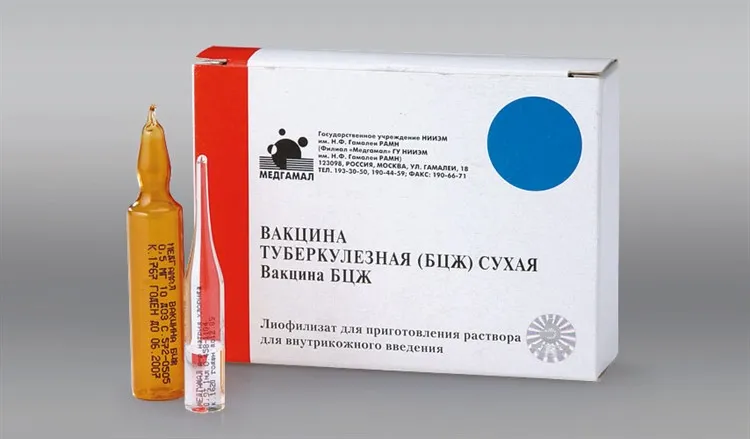
Table of Contents
INSTRUCTIONS FOR MEDICAL USE OF THE MEDICINAL PRODUCT BCG 10 Live Dry Vaccine for Tuberculosis Prevention
Composition:
Active substance: Bacillus Calmette-Guerin (BCG) bacteria, Brazilian substrain Moreau;
one vial of BCG 10 vaccine (10 doses) contains 0.5 mg of live BCG bacteria;
one dose (0.1 mL) of vaccine contains 50 μg of semi-dry BCG bacterial mass, from 150,000 to 600,000 live BCG bacteria;
Excipient: sodium glutamate;
Solvent: isotonic sodium chloride solution.
Pharmaceutical form.
Powder and solvent for preparation of a suspension for intradermal injection.
Main physicochemical properties:
Powder: dry, amorphous powder of white or light cream color.
Solvent: colorless, clear, sterile solution.
Pharmaco-therapeutic group.
Antibacterial vaccines. Live attenuated antituberculosis vaccine.
ATC code J07AN01.
Immunological and biological properties.
Pharmacodynamics.
Live bacteria of the Brazilian Moreau substrain, multiplying within the vaccinated individual's body, induce the development of long-lasting immunity against tuberculosis.
Pharmacokinetics.
After vaccination, mycobacteria multiply at the injection site as well as in regional lymph nodes. The body's response to the presence of bacilli includes the development of delayed-type hypersensitivity, known as tuberculin allergy, and the formation of immunity to tuberculosis.
Clinical characteristics.
Indications.
BCG 10 vaccine is used for specific prophylaxis of tuberculosis in children under 15 years of age.
Contraindications.
The decision regarding vaccination (revaccination) with BCG 10 vaccine in each individual case is made by a physician after examination of the child.
Vaccination is contraindicated:
- In infants whose mothers are HIV-infected, until HIV infection in the infant is ruled out.
- In newborns with suspected congenital immunodeficiencies.
- In infants whose mothers were treated during the third trimester of pregnancy with medicinal products such as monoclonal antibodies against TNF-alpha.
- In patients after hematopoietic stem cell transplantation or organ transplantation.
Contraindications to vaccination include:
- Hypersensitivity to any component of the vaccine.
- Birth weight less than 2500 g.
- HIV infection (asymptomatic HIV carriage, clinical stages I, II, III, and IV).
- Primary or secondary immunodeficiencies (including gamma-interferon deficiency or DiGeorge syndrome).
- Radiation therapy.
- Administration of corticosteroids during immunosuppressive therapy (including monoclonal antibodies against TNF-alpha).
- Presence of oncological disease (e.g., leukemia, Hodgkin’s disease, lymphoma, or other tumors of the reticuloendothelial system).
- Severe diseases (including severe malnutrition).
- Pregnancy.
- Complications following previous BCG vaccination (lymphadenitis, cold abscess, skin ulcer larger than 10 mm in diameter, keloid scar, BCG-ostitis, generalized BCG infection).
- Generalized BCG infection or BCG-ostitis identified in other children in the family.
- Phagocytic system defects (chronic granulomatous disease, leukocyte adhesion deficiency).
- Tuberculinization or history of tuberculosis.
- Positive or doubtful Mantoux reaction.
Vaccination should be postponed in the following cases:
- Clinically unstable newborns, until improvement of general health status (they should be vaccinated before leaving the neonatal unit).
- Acute illness accompanied by fever.
- Exacerbation of chronic disease.
- Generalized skin infections.
Interaction with other medicinal products and other forms of interaction.
BCG vaccination must not be performed on the same day as vaccination with other vaccines.
Other prophylactic vaccinations may be administered with an interval of at least 4 weeks before and/or after BCG vaccination (except for primary vaccination against hepatitis B virus).
Other vaccines must not be administered in the left shoulder within 3 months after BCG vaccination due to the risk of regional lymph node inflammation.
Special precautions for use.
The risk of apnea following vaccination in premature infants (born at ≤28 weeks of gestation) should be considered, especially in infants with symptoms indicating immaturity of the respiratory system. Therefore, respiratory monitoring should be performed in such newborns for 48–72 hours. However, vaccination should not be refused in this group of newborns.
Premature infants should be vaccinated after achieving a body weight ≥ 2500 g. Infants under two months of age are vaccinated against tuberculosis without prior Mantoux testing. After two months of age, the Mantoux test should be performed before vaccination. Vaccination is performed only if the test result is negative.
Children vaccinated with BCG who did not develop a scar, but with documented confirmation of prior vaccination, do not require revaccination.
Revaccination against tuberculosis is indicated for children aged 7 years who are not infected with Mycobacterium tuberculosis (MTB) and have a negative Mantoux test result.
BCG vaccination should be delayed in infants whose mothers received anti-TNF therapy or were treated with other potentially immunosuppressive IgG1 antibodies during pregnancy. The vaccination date is determined by the physician.
It is prohibited to use instruments intended for tuberculosis vaccination and tuberculin diagnostics for any other purposes.
Vaccination must be performed by specially trained medical personnel in maternity hospitals (wards), premature infant care units, pediatric outpatient clinics, or paramedic stations, and organized children's groups. Vaccination of newborns should be performed in the morning in a specially designated room or directly in the ward, after examination by a pediatrician and temperature measurement.
In outpatient clinics and children's institutions, selection of children eligible for vaccination is preliminarily conducted by a physician (paramedic) with mandatory temperature measurement on the day of examination and consideration of medical contraindications and medical history. If necessary, consultation with a specialist physician is obtained, and blood and urine tests are performed.
The date of vaccination, vaccine batch number, expiry date, and name of the manufacturer must be recorded in the newborn's medical record and the child's medical card.
For vaccination (revaccination), disposable tuberculin syringes with a capacity of 1.0 mL equipped with tightly fitted plungers and thin needles with a short bevel are used. The use of syringes and needles after expiry date or needle-free injectors is prohibited. After each injection, the syringe with needle and cotton swabs must be soaked in a disinfectant solution (5% chloramine solution) and then centrally destroyed. Instruments intended for tuberculosis vaccination must not be used for other purposes.
BCG vaccine must be stored in a specially designated room in a refrigerator under lock. Vaccine reconstitution is performed in this room. To prevent contamination, BCG vaccination must not be combined on the same day with other parenteral procedures.
Persons not involved in BCG vaccination are not allowed in the vaccination room.
One syringe must be used to vaccinate only one child.
Application of a dressing or treatment with iodine or other disinfectant solutions at the injection site is prohibited.
Home vaccination is prohibited.
After vaccination, the patient must remain under medical supervision for at least 30 minutes to monitor for possible allergic reactions.
The product must not be used if:
- Cracks or scratches are present on the ampoule;
- The ampoule lacks a label;
- The expiry date has passed;
- Changes in physical properties of the product occur (change in color, etc.);
- Foreign particles or non-dispersible flakes are present in the reconstituted product after shaking.
The reconstituted vaccine must be protected from exposure to sunlight and daylight using a cylinder made of black paper and must be used immediately after reconstitution.
Any unused vaccine or waste must be disposed of in accordance with current legislation.
This medicinal product contains less than 1 mmol (23 mg)/dose of sodium, i.e., it is practically sodium-free.
Use during pregnancy or breastfeeding.
The vaccine must not be used during pregnancy or lactation.
Ability to affect reaction speed when driving vehicles or operating other machinery.
The anti-tuberculosis BCG 10 vaccine does not affect or has negligible effect on the ability to drive vehicles or operate other machinery.
Method of Administration and Dosage
BCG 10 vaccine is administered intradermally.
The single prophylactic dose of the vaccine is 0.05 mg in a volume of 0.1 mL.
Vaccination must be performed by medical personnel who have undergone special training in intradermal injection techniques.
The vaccine should be reconstituted with 1 mL of isotonic sodium chloride solution (0.9%). After reconstitution, a homogeneous suspension without visible aggregates is formed. Only one dose of vaccine (0.1 mL) should be drawn into the syringe for administration to one child. The vaccine must be administered using a special tuberculin syringe with a properly selected needle. A volume of 0.1 mL of the vaccine is injected strictly intradermally into the outer upper third of the left shoulder after prior skin disinfection with 70% alcohol solution. The needle should be inserted bevel upward, superficially, into a stretched skin fold. Initially, a small amount of vaccine is injected to confirm correct intradermal placement of the needle, followed by the full dose of the vaccine (0.1 mL total).
It is essential to ensure that the vaccine is not administered subcutaneously or too deeply. Subcutaneous administration is unacceptable, as it may lead to the formation of a cold abscess.
Injection too high into the upper portion of the deltoid muscle increases the risk of keloid scar formation.
Instructions for Vaccine Preparation
Before using the vaccine, check the label for the following information: vaccine type, number of doses per vial, and expiration date.
The vaccine powder must be reconstituted immediately before use with sterile 0.9% isotonic sodium chloride solution supplied by the vaccine manufacturer. The diluent must be clear, colorless, and free of foreign particles.
The vaccine powder should be located at the bottom of the ampoule; if necessary, gently tap the ampoule to ensure the powder settles at the bottom.
Before scoring, disinfect the neck of the ampoules containing the vaccine and diluent with a cotton swab moistened with 70% ethyl alcohol and allow it to dry naturally.
After opening the ampoule containing the lyophilized vaccine, introduce 1 mL of 0.9% isotonic sodium chloride solution into the ampoule using a syringe with a long needle. The diluent should be added slowly along the wall of the ampoule. The contents of the ampoule are then drawn into the syringe and gently re-injected back into the ampoule, avoiding foaming. This procedure is repeated until a homogeneous suspension is obtained. The suspension in the syringe should be uniform and slightly opalescent. Visual inspection of the vaccine before and after reconstitution is recommended to avoid potential risks associated with flakes or solid particles.
The vaccine must be used immediately after reconstitution.
Specific Reaction to Administration
With correct administration, a white papule of at least 5 mm in diameter forms and disappears within 15–20 minutes. After 2–4 weeks, an infiltrate develops, which persists for several weeks. A pustule typically forms at the apex of the infiltrate, followed by an ulceration 2–5 mm in diameter (but not exceeding 10 mm). These manifestations heal spontaneously, and 2–3 months after vaccination, a whitish scar several millimeters in diameter develops. In some cases, the pustule may exude for a period of time; this is not considered a complication and does not require treatment, but the lesion must remain clean. Symptoms and lesions generally resolve spontaneously within 3 months after vaccination and do not require treatment.
When conducting immunization in Ukraine, current orders of the Ministry of Health of Ukraine regarding prophylactic vaccinations must be followed.
Children
Vaccination is administered on the 3rd to 5th day of life (not earlier than 48 hours after birth). The vaccine is intended for children up to 15 years of age.
Overdose
The recommended age-dependent dose must not be exceeded. In case of overdose, the frequency of post-vaccination complications such as regional lymphadenitis may increase.
Adverse Reactions
An expected reaction in vaccinated individuals is enlargement of regional lymph nodes, most commonly inguinal lymph nodes, up to 15 mm in size.
Severe local reactions, such as:
- large ulceration (diameter greater than 1 cm),
- abscess or keloid scar,
are most often associated with incorrect administration technique, incorrect dosing, or individual reaction (e.g., positive Mantoux test result).
If a local reaction occurs within 24–48 hours after BCG vaccination or an abscess develops within 5–7 days, tuberculosis infection should be suspected. Administration of the vaccine too high in the upper portion of the deltoid muscle increases the risk of keloid formation.
In case of severe local reactions or lymphadenitis, medical consultation is required, followed by individual decision-making regarding further management. However, most reactions resolve spontaneously without treatment.
Severe generalized reactions following BCG vaccination are extremely rare (approximately 2 per 1,000,000) and usually occur in individuals with compromised immune systems.
Disseminated BCG infection (in congenital immunodeficiency). Disseminated BCG infection requires specialist consultation, bacteriological diagnosis, immune system evaluation, and anti-tuberculosis treatment in a hospital setting.
The frequency of adverse events was assessed according to the following criteria: very common (> 1/10), common (> 1/100, < 1/10), uncommon (> 1/1,000 to < 1/100), rare (> 1/10,000 to < 1/1,000), very rare (< 1/10,000), unknown (frequency cannot be determined based on available data). The frequency of reported adverse reactions is unknown.
Immune system disorders
Hypersensitivity reactions may occur in vaccinated individuals.
Blood and lymphatic system disorders
Enlargement of regional lymph nodes, lymphadenitis / suppurative lymphadenitis (inguinal, cervical, supraclavicular, subclavicular), lymph node abscess and calcification, lymph node necrosis, lymph node tenderness.
Skin and subcutaneous tissue disorders
Keloid scars.
Musculoskeletal and connective tissue disorders
Ostitis.
General disorders and administration site reactions
Fever, injection site ulceration, infiltration, pustule.
Respiratory system disorders
Apnoea (see section "Special precautions for use" regarding apnoea in preterm infants born at ≤28 weeks of gestation).
Infections and infestations
Osteomyelitis, subcutaneous cold abscesses, acne / pustular acne at injection site, generalized BCG infection with bone inflammation.
Psychiatric disorders
Restlessness.
Reporting of suspected adverse reactions
Reporting suspected adverse reactions after marketing authorization of the medicinal product is of great importance. It allows continuous monitoring of the benefit-risk balance associated with the use of the medicinal product. Healthcare professionals are requested to report any suspected adverse reactions.
Shelf life
Shelf life of the vaccine: 2 years.
Shelf life of the solvent: 4 years.
The reconstituted preparation must not be stored.
Storage conditions
Store the product at 2–8 °C, protected from light and inaccessible to unauthorized persons.
Transport by all means of transport under cold chain conditions.
Incompatibilities
No incompatibilities known.
Packaging
0.5 mg (10 doses) powder in a glass ampoule and 1 ml solvent in another glass ampoule. Each carton contains 5 ampoules of BCG vaccine 10 and 5 ampoules of solvent (isotonic sodium chloride solution).
Prescription status
Prescription only.
Manufacturer
"BIOMED-LUBLIN" Wytwórnia Surowic i Szczepionek Spółka Akcyjna.
Manufacturer's name and address
University Street 10, 20-029 Lublin, Poland