Urofuragin
Ukraine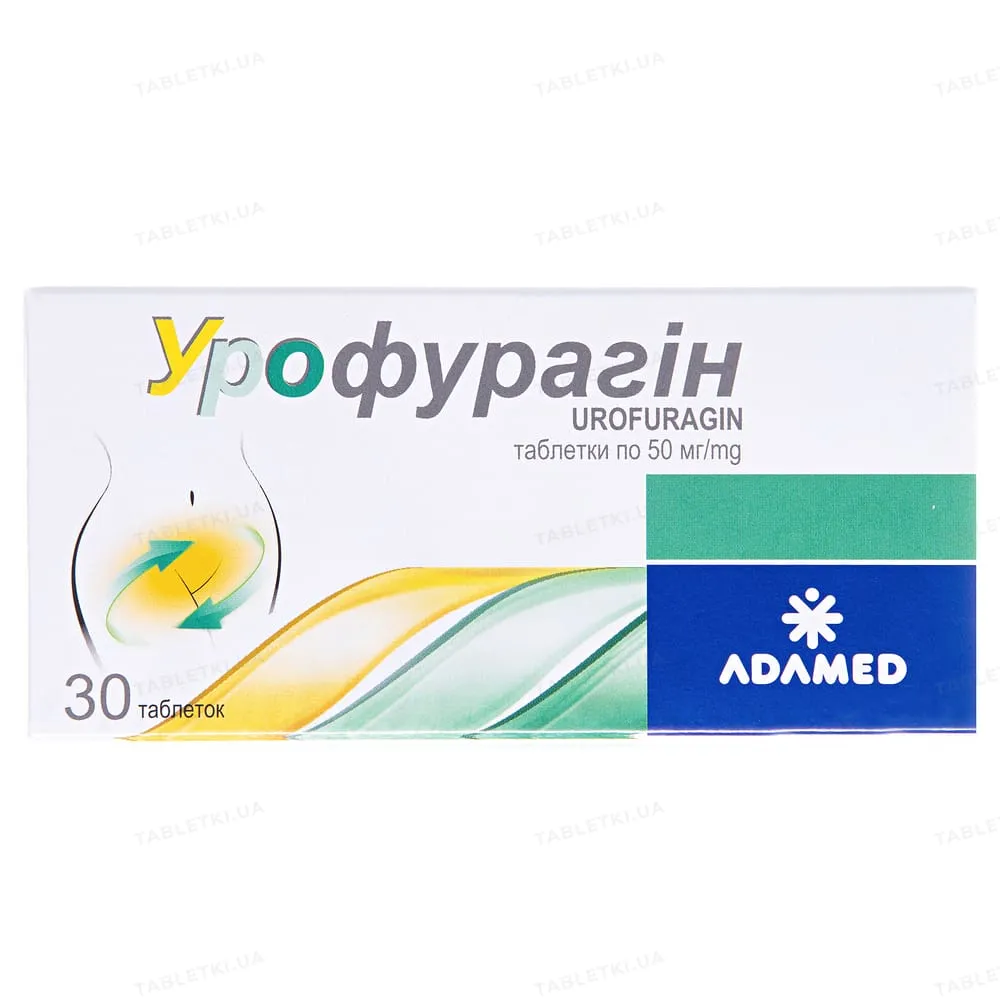
Table of Contents
INSTRUCTION FOR MEDICAL USE OF THE MEDICINAL PRODUCT UROFURAGIN (Urofuragin)
Composition:
Active substance: furazidin (furagin);
1 tablet contains 50 mg of furagin;
Excipients: corn starch, sucrose, colloidal anhydrous silicon dioxide, stearic acid.
Medicinal form. Tablets.
Main physico-chemical characteristics: uncoated tablets, flat on both sides, yellow-orange in color, with a score line on one side and beveling.
Pharmacotherapeutic group.
Antimicrobial agents for systemic use. Nitrofuran derivatives.
ATC code J01X E03
Pharmacological Properties
Pharmacodynamics
Furagin, or furazidin, is a nitrofuran derivative. Drugs of this group exhibit bacteriostatic activity against a broad spectrum of microorganisms, including gram-positive bacteria (Staphylococcus epidermidis, Staphylococcus aureus, Staphylococcus faecalis) and many gram-negative strains (Enterobacteriaceae: Salmonella, Shigella, Proteus, Klebsiella, Escherichia, Enterobacter). Nitrofuran derivatives possess antiprotozoal activity and have only minimal effects against fungi. They do not affect Pseudomonas aeruginosa and most strains of Proteus vulgaris.
The strongest activity of Furagin is observed in an acidic environment (pH 5.5); alkaline conditions reduce its efficacy. The potent bacteriostatic action of Furagin is associated with the presence of an aromatic substituent containing a nitro group.
Nitrofuran derivatives are reduced to active metabolites by bacterial flavoproteins. These metabolites then disrupt ribosomal proteins and other compounds essential for cellular protein synthesis, nucleic acids (DNA and RNA), and cellular respiration processes. Cross-resistance between nitrofuran derivatives and antibiotics or sulfonamides has not been observed.
Pharmacokinetics
After oral administration, Furagin is rapidly absorbed and reaches maximum serum concentration within approximately 0.5 hours. The serum concentration-time curve follows an open, single-compartment model of drug distribution. These serum concentrations are clinically insignificant and amount to about 4.2 µg/mL.
Excretion in individuals taking Furagin, as determined by relative bioavailability studies, averaged approximately 6.25 mg/mL. Available published data indicate that administration of nitrofuran derivatives with food, particularly protein-rich meals, increases bioavailability by 40–50%, enhances urinary excretion, and thus raises drug concentration in urine, contributing to increased therapeutic efficacy.
Clinical characteristics.
Indications.
Lower urinary tract infections.
Contraindications.
Hypersensitivity to nitrofuran derivatives or to any of the excipients.
Pregnancy and breastfeeding.
Renal insufficiency (creatinine clearance below 60 mL/min or elevated serum creatinine concentration). Contraindicated in patients undergoing hemodialysis or peritoneal dialysis.
Polyneuropathy (including diabetic polyneuropathy).
Glucose-6-phosphate dehydrogenase deficiency (risk of developing hemolysis).
Porphyria. Severe hepatic insufficiency.
Interaction with other medicinal products and other forms of interaction.
Furagin is an antagonist of nalidixic acid, which reduces its bacteriological effect. Antibiotics (aminoglycosides and tetracyclines), when taken in combination with Furagin, enhance its antibacterial effect. Chloramphenicol and ristomycin increase the hematotoxic effect of Furagin.
Uricosuric medicinal products, such as probenecid (at high doses) and sulfinpyrazone, reduce tubular excretion of nitrofuran derivatives and may cause accumulation of Furagin in the body, increasing its toxicity and decreasing its concentration in urine below the minimum bacteriostatic level, resulting in reduced therapeutic efficacy.
Concomitant use of medicinal products with an alkaline environment, containing magnesium trisilicate, reduces absorption of Furagin.
Atropine slows down absorption of nitrofuran derivatives, but the total amount of absorbed substance remains unchanged. Concurrent intake of vitamin B complex increases absorption of nitrofuran derivatives.
During treatment with nitrofuran derivatives, false-positive results in urine glucose tests using Benedict's and Fehling's solutions have been observed. Enzymatic methods for determining glucose in urine provided correct results.
Special precautions for use.
Particular caution is required in patients with impaired kidney or liver function, neurological disorders, anemia, electrolyte imbalances, vitamin B group and folic acid deficiency, as well as lung diseases.
Patients with diabetes mellitus should use the drug cautiously, since furazidin may cause the development of polyneuropathy. Peripheral neuropathy has been observed in patients treated with nitrofuran derivatives, which in severe cases may be irreversible and life-threatening. Therefore, if the first symptoms of neuropathy (paresthesia) occur, Urofuragin should be discontinued immediately.
Acute, subacute, and chronic pulmonary reactions have been reported in patients receiving nitrofuran derivatives. If such symptoms occur, the drug should be discontinued immediately.
During prolonged treatment, monitoring of blood morphology (leukocytosis) and biochemical parameters of kidney and liver function is necessary.
Avoid alcohol consumption during furazidin therapy.
The drug contains sucrose. It is contraindicated in patients with rare hereditary disorders associated with fructose intolerance, glucose-galactose malabsorption, or sucrase-isomaltase deficiency.
Use during pregnancy or breastfeeding.
Due to the lack of clinical data on the potential teratogenic effects of furazidin, the drug is contraindicated during pregnancy and childbirth because of the risk of hemolytic anemia in the newborn.
Breastfeeding
Since furazidin is excreted in breast milk, the drug should not be used during breastfeeding.
Ability to influence reaction rate when driving or operating machinery.
There are no data on the effect of furazidin on the ability to drive or operate machinery. However, in some patients, adverse effects may occur that could affect psychomotor performance (see section "Adverse reactions. Nervous system disorders").
Dosage and Administration
Adults
100 mg (2 tablets) three times a day.
Administration method
The medicinal product Urofuragin should be taken orally during meals rich in proteins, as proteins enhance the bioavailability of nitrofuran derivatives.
The medicinal product should be taken for 5 to 10 days. If necessary, the treatment course may be repeated after 10–15 days.
Children
The medicinal product must not be used in children.
Overdose
Since the medicinal product is excreted from the body via the kidneys, patients with impaired renal function are at increased risk of overdose. Symptoms of overdose may include headache, dizziness, allergic reactions, nausea, vomiting, anemia, ataxia, tremor, and signs of neurotoxicity.
In case of overdose, gastric lavage and intravenous infusion therapy are recommended. Blood morphology should be checked, liver function tests and pulmonary function monitoring should be performed. In severe cases, hemodialysis should be performed.
For prevention of neuropathies – vitamins of group B.
Adverse Reactions
The most common adverse reactions are nausea (8%), headache (6%), and excessive flatulence (1.5%). Other symptoms were observed in no more than 1% of patients. Adverse effects classified by organ systems are listed below.
Blood and lymphatic system disorders
Cyanosis due to methemoglobinemia. In patients with glucose-6-phosphate dehydrogenase deficiency, administration of furazidin may lead to development of megaloblastic or hemolytic anemia.
Nervous system disorders
Dizziness, drowsiness, visual disturbances, peripheral neuropathy, including acute or irreversible forms (its development may be favored by renal insufficiency, anemia, diabetes mellitus, electrolyte imbalances, and vitamin B deficiency).
Respiratory, thoracic and mediastinal disorders
Acute, subacute, and chronic hypersensitivity reactions to nitrofuran derivatives. Chronic reactions were observed in patients treated with furazidin for more than 6 months. Chronic pulmonary reactions (including pulmonary fibrosis and disseminated interstitial pneumonia) are particularly possible in elderly patients. Acute respiratory hypersensitivity reactions: fever, chills, cough, chest pain, dyspnea, pleural effusion, radiological changes in the lungs, and eosinophilia. These adverse effects usually resolve rapidly after discontinuation of the drug.
In cases of chronic reactions, the severity of symptoms and their reversibility after discontinuation of the drug depend on whether treatment was continued after the onset of initial adverse symptoms.
Gastrointestinal disorders
Constipation, diarrhea, dyspeptic symptoms, abdominal pain, vomiting, sialadenitis, pancreatitis, pseudomembranous colitis.
Skin and subcutaneous tissue disorders
Alopecia, exfoliative dermatitis, polymorphic erythema, Stevens-Johnson syndrome.
General disorders
Fever, chills, malaise, infections caused by microorganisms resistant to nitrofuran derivatives, most commonly Pseudomonas species or Candida species.
Immune system disorders
Itching, urticaria, anaphylaxis, Quincke's edema (angioedema), rash.
Hepatobiliary disorders
Symptoms of drug-induced hepatitis, cholestatic jaundice, necrosis of liver parenchyma.
Clinical studies have shown that nitrofuran derivatives have a negative effect on testicular function, may reduce sperm motility, decrease semen volume, and lead to pathological changes in sperm morphology.
In addition, in patients taking furazidin, musculoskeletal and connective tissue disorders have been reported with unknown frequency: muscle cramps, muscle pain.
Shelf life
4 years.
Storage conditions
Store in a dry place in the original packaging.
Packaging
30 tablets in a blister pack made of PVC and aluminum foil, in a cardboard box.
Prescription status
Over-the-counter (without prescription).
Manufacturer
Adamex Pharma Ltd., Poland.
Address
5 J. Pilsudskiego Marsh. Street, 95-200 Pabianice, Poland.