Undetab
Ukraine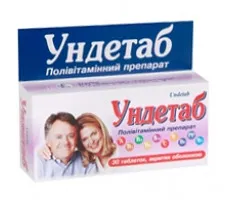
Table of Contents
INSTRUCTIONS FOR MEDICAL USE OF THE MEDICINAL PRODUCT UNDETAB (UNDETAB)
Composition:
Active substances: 1 tablet contains
| vitamin A |
3300 IU; |
| vitamin E |
10 mg; |
| vitamin B1 (thiamine hydrochloride) |
2 mg; |
| vitamin B2 (riboflavin) |
2 mg; |
| vitamin B6 (pyridoxine hydrochloride) |
3 mg; |
| vitamin B12 (cyanocobalamin) |
0.002 mg; |
| vitamin C (ascorbic acid) |
75 mg; |
| vitamin PP (nicotinamide) |
20 mg; |
| folic acid |
0.07 mg; |
| rutin |
10 mg; |
| vitamin B5 (calcium D-pantothenate) |
3 mg; |
Excipients: sugar, corn starch, sodium croscarmellose, sorbitol (E 420), aspartame (E 951), orange flavour, lemon flavour, potassium acesulfame, calcium stearate, colloidal anhydrous silicon dioxide, stearic acid; coating: sugar, heavy magnesium carbonate, povidone, titanium dioxide (E 171), colloidal anhydrous silicon dioxide, quinoline yellow dye (E 104), Ponceau 4R dye (E 124), yellow wax, light mineral oil, talc.
Dosage form. Film-coated tablets.
Main physicochemical characteristics: round, biconvex film-coated tablets, pale pinkish-orange to brownish-orange in colour. The tablet surface may have specks of more intense colour than the main one. Two layers are visible in cross-section.
Pharmacotherapeutic group. Vitamins. Multivitamin complexes without additives.
ATC code: A11BA.
Pharmacological properties.
Pharmacodynamics.
A multivitamin medicinal agent. Belongs to medicinal agents that regulate metabolic processes. Normalizes metabolism, including during aging processes.
The pharmacological effect of the medicinal agent is due to the active substances included in its composition.
Vitamin A (retinol) plays a key role in the synthesis of enzyme proteins and structural components of tissues, is necessary for the formation of epithelial cells, bones, and synthesis of rhodopsin (visual pigment), supports division of immunocompetent cells, normal synthesis of immunoglobulins and other factors protecting against infections.
Vitamin E (α-tocopherol acetate) – a fat-soluble vitamin exhibiting pronounced antioxidant and radioprotective effects, protects cell membranes from damage by free radicals, participates in heme and protein biosynthesis, cell proliferation, and other important cellular metabolic processes. Vitamin E improves tissue oxygen uptake. It exerts angioprotective effects by influencing vascular tone and permeability, stimulating the formation of new capillaries.
Vitamin B1 (thiamine hydrochloride) – an essential cofactor in carbohydrate metabolism, participates in the functioning of the nervous system.
Vitamin B2 (riboflavin) – an important catalyst in cellular respiration and visual perception processes.
Vitamin B6 (pyridoxine hydrochloride) acts as a cofactor in protein metabolism and neurotransmitter synthesis.
Vitamin B12 (cyanocobalamin) is a growth factor necessary for normal hematopoiesis and maturation of erythrocytes, participates in the synthesis of amino acids, nucleic acids, and myelin.
Vitamin C (ascorbic acid) participates in redox processes in the body, hemoglobin synthesis, influences amino acid metabolism, enhances iron absorption from the gastrointestinal tract, increases non-specific resistance of the body, is essential for growth and formation of bones, skin, teeth, and for normal functioning of the nervous and immune systems.
Vitamin PP (nicotinamide) participates in tissue respiration, carbohydrate and lipid metabolism.
Folic acid stimulates erythropoiesis, participates in the synthesis of amino acids and nucleic acids.
Rutin normalizes capillary permeability, strengthens vascular walls, reduces platelet aggregation, exhibits antioxidant properties, prevents oxidation, and promotes deposition of ascorbic acid in tissues.
Calcium pantothenate is a component of coenzyme A, necessary for the normal formation of the tricarboxylic acid cycle, ATP synthesis, hormone and antibody production, acetylcholine synthesis, and for intestinal absorption of potassium ions, glucose, and vitamin E.
Pharmacokinetics.
After oral administration, the medicinal agent is well absorbed from the small intestine into systemic circulation and penetrates all organs and tissues.
Clinical characteristics.
Indications.
As a prophylactic and therapeutic agent to improve metabolic processes and general condition in working-age and elderly individuals, including those with premature aging, asthenic syndrome, as well as during the period of convalescence after infectious diseases, in the postoperative period, and following prolonged therapy with broad-spectrum antibiotics.
Contraindications.
Hypersensitivity to any component of the drug, nephrolithiasis, severe renal function impairment, chronic glomerulonephritis, gout, hyperuricemia, erythremia, erythrocytosis, predisposition to thrombosis, thrombophlebitis, thromboembolism, thyrotoxicosis, chronic heart failure, history of sarcoidosis, active peptic ulcer of the stomach and duodenum (due to possible increase in gastric juice acidity), severe hepatic function disorders, active hepatitis, neoplasms (except cases associated with megaloblastic anemia), arterial hypertension (severe forms), hypervitaminosis A and E, disturbances in iron and copper metabolism, hypercalcemia, fructose intolerance, glucose-galactose malabsorption syndrome.
Interaction with other medicinal products and other types of interactions.
Vitamins A and E are synergists (mutually enhance each other's effects).
Vitamin A reduces the anti-inflammatory effect of glucocorticoids. It must not be used simultaneously with nitrates and cholestyramine, as they impair retinol absorption. Vitamin A must not be prescribed with retinoids, as their combination is toxic.
Vitamin E must not be used together with iron-containing drugs, silver-containing agents, or agents creating an alkaline environment (sodium bicarbonate, trisamin), and indirect-acting anticoagulants (dicoumarol, neodicoumarol). Vitamin E enhances the effect of steroid and nonsteroidal anti-inflammatory agents (sodium diclofenac, ibuprofen, prednisolone). Iron-containing medicinal products suppress the action of vitamin E.
Vitamin C enhances the action and toxicity of sulfonamides (risk of crystalluria), penicillin, increases iron absorption, enhances aluminum absorption (should be considered during concomitant treatment with antacids containing aluminum), and reduces the effectiveness of heparin and indirect anticoagulants. High doses of the drug reduce the efficacy of tricyclic antidepressants, phenothiazine derivative neuroleptics, tubular reabsorption of amphetamine, and impair renal excretion of mexiletine.
Ascorbic acid may be administered only 2 hours after deferoxamine injection. Prolonged use of high doses of the drug reduces the effectiveness of disulfiram treatment.
Ascorbic acid increases the total clearance of ethanol. Ascorbic acid enhances oxalate excretion in urine and increases the risk of crystalluria during treatment with salicylates.
Absorption of vitamin C is reduced when used concomitantly with oral contraceptives, fruit or vegetable juices, and alkaline drinks.
Folic acid, when used concomitantly with antithrombotic drugs, increases the risk of bleeding; with antihypertensive agents, leads to enhanced arterial hypotension; with lipid-lowering agents, increases the risk of their toxic effects; with antidiabetic agents, reduces their hypoglycemic effect; with methyldopa or beta-adrenergic blockers, causes significant reduction in arterial pressure; with probenecid, reduces probenecid's effect. Folic acid reduces plasma concentrations of phenytoin; when used with other antiepileptic agents, mutual reduction in clinical efficacy is possible.
Vitamin B6 reduces the effect of levodopa and prevents or reduces toxic manifestations observed during treatment with isoniazid and other antituberculosis drugs.
Vitamin B1, by affecting polarization processes at neuromuscular synapses, may reduce the curare-like action of muscle relaxants.
Vitamin B2 is incompatible with streptomycin and reduces the effectiveness of antibacterial agents (oxytetracycline, doxycycline, erythromycin, tetracycline, and lincomycin). Tricyclic antidepressants, imipramine, and amitriptyline inhibit riboflavin metabolism, especially in cardiac tissues.
Para-aminosalicylic acid (PAS), cimetidine, calcium preparations, and ethanol reduce the absorption of vitamin B12. Use with caution in patients with angina pectoris, unstable angina, and acute myocardial infarction who are receiving nitrates, calcium channel antagonists, and beta-blockers. Cases of rhabdomyolysis have been reported when nicotinic acid was used with lovastatin.
Special precautions for use.
When using the medicinal product, it is necessary to adhere strictly to the recommended dosage and duration of treatment. The medicinal product should be used with caution in patients with diabetes mellitus, dystrophic heart diseases, decompensated cardiac function, ischemic heart disease, hematological disorders, iron metabolism disorders (hemidosiderosis, hemochromatosis, thalassemia), gastrointestinal diseases, history of peptic ulcer of the stomach or duodenum, cholelithiasis, chronic pancreatitis, liver impairment, patients with acute nephritis, urolithiasis, glaucoma, hemorrhages, and moderate arterial hypotension. When using this medicinal product, monitoring of blood pressure and renal function is required.
Use with caution in patients with neoplastic conditions (except in cases associated with megaloblastic anemia).
It should be noted that high-dose administration of ascorbic acid may alter certain laboratory parameters (blood levels of glucose, transaminases, uric acid, creatinine). Concurrent use of ascorbic acid with alkaline beverages reduces its absorption; therefore, the medicinal product should not be taken with alkaline mineral water. Do not take the medicinal product with hot beverages (especially coffee) or alcohol. It is not recommended to take the medicinal product late in the day, as ascorbic acid has a mild stimulating effect. The recommended dose should not be exceeded. When using this medicinal product, as with other multivitamin preparations, a balanced protein-rich diet is required to promote better absorption and metabolism of vitamins, particularly water-soluble ones.
Women who have used high doses of retinol (more than 10,000 IU) should not plan pregnancy earlier than 6–12 months after discontinuation. This is due to the risk of fetal developmental abnormalities caused by high vitamin A levels in the body during this period.
There is also a risk of developing neuropsychiatric disorders (such as depression, anxiety, and mood changes).
The medicinal product contains sugar, which should be taken into account in patients with diabetes mellitus.
The medicinal product contains aspartame, a derivative of phenylalanine, which is hazardous for patients with phenylketonuria.
Unidtab contains sorbitol; therefore, if intolerance to certain sugars has been diagnosed, consult a physician before taking this medicinal product.
The medicinal product contains the dye "Ponceau 4R", which may cause allergic reactions.
The medicinal product is not recommended to be prescribed together with other multivitamin preparations due to the risk of vitamin overdose.
Yellow discoloration of urine may occur, which is completely harmless and is due to the presence of riboflavin in the composition of the medicinal product.
Use during pregnancy or breastfeeding.
Use of the medicinal product during pregnancy or breastfeeding is possible only under medical supervision when the benefit to the mother outweighs the potential risk to the fetus/infant. During pregnancy, to prevent teratogenic effects, the daily dose of the medicinal product should not exceed 1 tablet per day.
The daily dose of vitamin A should not exceed 5,000 IU in pregnant women and women planning pregnancy.
High doses of retinol (over 10,000 IU) should not be used by women during breastfeeding due to the risk of developing hypervitaminosis A in breastfed infants.
Ability to affect reaction speed when driving or operating machinery.
Drivers and operators of complex machinery should be aware of the possible occurrence of adverse effects such as dizziness, drowsiness, and visual disturbances.
Method of Administration and Dosage
The medicinal product should be administered orally after meals to adults and children aged 14 years and older: for prophylactic purposes – 1 tablet twice daily; for treatment – 2 tablets three times daily for 20–30 days. Repeat courses should be conducted every 1–3 months.
During pregnancy, to prevent teratogenic effects, the daily dose of the medicinal product should not exceed 1 tablet per day.
The duration of treatment depends on the severity and course of the disease and is determined individually by a physician.
Children
The use of the medicinal product is contraindicated in children under 14 years of age.
Overdose
Symptoms. In case of overdose, dyspeptic symptoms (nausea, vomiting, diarrhea, epigastric pain), allergic reactions (itching, skin rashes), changes in skin and hair, liver function disturbances, headache, drowsiness, lethargy, facial hyperemia, and irritability may occur. In such cases, administration of the medicinal product should be discontinued.
Treatment. Symptomatic therapy.
Prolonged use of high-dose vitamin C may lead to suppression of the pancreatic islet apparatus function, altered renal excretion of ascorbic acid and uric acid during urine acidification, with a risk of precipitation of oxalate calculi.
Adverse reactions.
When the medicinal product is used at recommended doses, the following adverse reactions may occur.
Immune system disorders: hypersensitivity reactions to components of the medicinal product, including anaphylactic shock, angioneurotic edema, bronchospasm.
Cardiovascular system disorders: arterial hypertension.
Skin and subcutaneous tissue disorders: rash, urticaria, pruritus, erythema.
Gastrointestinal disorders: dyspeptic disorders, nausea, vomiting, stomach pain, belching, constipation, diarrhea, increased gastric juice secretion.
Nervous system disorders: headache, dizziness, increased excitability, drowsiness, sleep disturbances, increased fatigue, depression, anxiety, and mood changes.
Eye disorders: visual disturbances, dryness of skin/mucous membranes of eyes.
Metabolism and nutrition disorders: hypercalcemia, hypercalciuria, crystalluria, glucosuria.
Blood and lymphatic system disorders: impaired blood coagulation, hemolysis of erythrocytes in patients with glucose-6-phosphate dehydrogenase deficiency.
General disorders: hot flushes, possibly accompanied by palpitations; irritability; sweating; hyperthermia.
Other: possible yellow discoloration of urine.
With prolonged use of high doses, the following adverse reactions may occur:
Metabolism and nutrition disorders: hyperuricemia, impaired glucose tolerance, hyperglycemia, disturbances in zinc and copper metabolism.
Nervous system disorders: paresthesia, seizures, anorexia.
Cardiovascular system disorders: arrhythmias, arterial hypotension.
Blood and lymphatic system disorders: erythrocytopenia, neutrophilic leukocytosis.
Gastrointestinal disorders: gastrointestinal disturbances.
Skin and subcutaneous tissue disorders: hair loss, seborrhea, hyperpigmentation, dryness and cracking of palms and soles.
Renal and urinary disorders: impaired kidney function, renal failure.
Hepatobiliary disorders: jaundice, fatty liver degeneration.
Musculoskeletal and connective tissue disorders: myalgia, myopathy.
Laboratory findings: transient increase in aspartate aminotransferase, alkaline phosphatase, lactate dehydrogenase; elevated blood uric acid levels; electrolyte imbalance.
Shelf life. 1 year 6 months.
Storage conditions.
Store in original packaging at a temperature not exceeding 25 °C.
Keep out of reach of children.
Packaging.
10 tablets per blister; 3 blisters per carton.
Availability. Over-the-counter.
Manufacturer. JSC "KYIV VITAMIN PLANT".
Manufacturer's address and location of business activity.
38 Kopilivska Street, Kyiv, 04073, Ukraine.
Web-site: www.vitamin.com.ua