Uman complex 500 iu/20 ml
Ukraine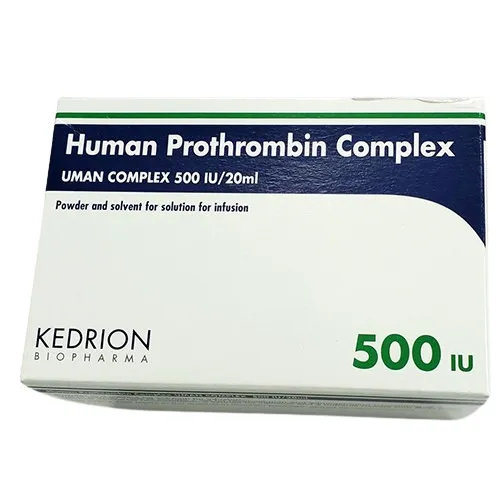
Table of Contents
INSTRUCTION FOR MEDICAL USE OF THE MEDICINAL PRODUCT UMAN COMPLEX 500 IU/20 ml
Composition:
1 vial contains:
Active substances: Human prothrombin complex
human blood coagulation factor IX – 500 IU;
human blood coagulation factor II – 500 IU;
human blood coagulation factor X – 400 IU;
Excipients:
sodium citrate – 51.6 mg;
sodium chloride – 162.0 mg;
glycine – 92.6 mg;
heparin – not more than 250 IU (not more than 12.5 IU/ml);
antithrombin III – not more than 2.5 IU (not more than 0.125 IU/ml);
Solvent:
water for injections – 20 ml.
Factor IX is standardized according to the international standard.
The total protein content per vial is ≤ 300 mg. The specific activity of the medicinal product is more than 0.6 IU/mg, expressed as factor IX activity.
Excipients with known effect: the medicinal product contains up to 0.20 mmol (or 4.6 mg) of sodium per 1 ml of reconstituted solution (equivalent to 4 mmol, or 92 mg, of sodium per vial). This should be taken into account for patients on a controlled sodium diet.
Pharmaceutical form.
Powder for solution for infusion.
Main physicochemical properties: the product is a white or slightly colored powder or brittle solid, highly hygroscopic.
Pharmacotherapeutic group. Antihemorrhagics. Combination of blood coagulation factors IX, II, VII, and X. ATC code B02BD01.
Immunological and biological properties.
Pharmacodynamics.
Blood coagulation factors II, VII, IX, and X, synthesized in the liver with the help of vitamin K, are commonly referred to as prothrombin complex.
Factor VII is a zymogen of the active serine protease factor VIIa, which initiates blood coagulation via the extrinsic pathway. The tissue factor – factor VIIa complex activates coagulation factors X and IX, leading to the formation of factors IXa and Xa. Subsequent activation of the coagulation cascade results in the conversion of prothrombin (factor II) into thrombin. Under the action of thrombin, fibrinogen is converted into fibrin, resulting in clot formation.
Normal thrombin generation is also vital for platelet function as part of primary hemostasis.
Isolated severe deficiency of factor VII leads to reduced thrombin generation and a tendency to bleeding due to impaired fibrin formation and weakened primary hemostasis. Isolated deficiency of factor IX is one of the classic hemophilias (hemophilia B). Isolated deficiency of factor II or factor X is very rare but, in severe forms, causes bleeding similar to that seen in classic hemophilia.
Acquired deficiency of vitamin K-dependent coagulation factors occurs during treatment with vitamin K antagonists. If the deficiency becomes severe, it leads to a tendency toward significant bleeding, predominantly retroperitoneal or cerebral, rather than into muscles and joints. Severe liver failure also results in markedly reduced levels of vitamin K-dependent coagulation factors and a tendency toward clinical bleeding, which, however, is often complex due to concomitant chronic mild intravascular coagulation, low platelet counts, deficiency of coagulation inhibitors, and impaired fibrinolysis.
Administration of human prothrombin complex provides increased plasma levels of vitamin K-dependent coagulation factors and may temporarily correct coagulation disorders in patients with deficiency of one or more of these factors.
Pharmacokinetics.
| Coagulation factor |
Half-life period |
| Factor II |
40 – 60 hours |
| Factor IX |
16 – 30 hours |
| Factor X |
30 – 60 hours |
Preclinical safety data.
Prothrombin complex concentrate is a normal component of human plasma and acts similarly to endogenous factors.
Single-dose toxicity studies are not meaningful, as higher doses lead to volume overload.
Repeat-dose toxicity studies in animals are not feasible due to interference from antibodies formed against the heterologous protein.
Even doses significantly exceeding the recommended human dose per kg of body weight do not demonstrate any toxic effects in test animals.
Since clinical experience indicates the absence of signs of carcinogenic or mutagenic effects of human plasma prothrombin complex factors, experimental studies, particularly in heterologous species, are not considered justifiably mandatory.
Clinical characteristics.
Indications.
- Treatment of bleeding and preoperative prevention of bleeding in acquired deficiency of vitamin K-dependent coagulation factors, for example, deficiency caused by treatment with vitamin K antagonists or overdose of vitamin K antagonists, when rapid correction of the deficiency is required.
- Treatment of bleeding and preoperative prevention in congenital deficiency of any vitamin K-dependent coagulation factor, when a purified specific coagulation factor product is unavailable.
Contraindications.
Hypersensitivity to the active substance or to any of the excipients.
Known allergy to heparin or history of heparin-induced thrombocytopenia.
Interaction with other medicinal products and other forms of interactions.
Human prothrombin complex concentrates neutralize the effect of vitamin K antagonists.
Interaction with other medicinal products is unknown.
Interference with biological testing
When performing coagulation tests that are sensitive to heparin, the presence of heparin as a component of the administered product should be taken into account in patients receiving high doses of human prothrombin complex.
Children.
Specific data in children are lacking.
Special precautions for use.
Treatment of coagulation disorders should be carried out by specialists with appropriate experience.
Patients with acquired vitamin K-dependent coagulation factor deficiency (e.g., due to vitamin K antagonist therapy) should receive UMANN COMPLEX only when rapid correction of prothrombin complex levels is necessary, such as in cases of significant bleeding or emergency surgical procedures. In other cases, reducing the dose of the vitamin K antagonist and/or administering vitamin K is usually sufficient.
Patients receiving vitamin K antagonists may be predisposed to hypercoagulability, and administration of human prothrombin complex concentrate may provoke it.
In cases of inherited deficiency of any vitamin K-dependent coagulation factor, specific factor replacement therapy should be used if available.
If an allergic or anaphylactic-type reaction occurs, the injection/infusion must be stopped immediately.
In case of shock, standard medical treatment should be initiated.
Viral safety
Standard measures to prevent infections from medicinal products derived from human blood or plasma include donor selection, screening of individual donations or plasma pools for specific infectious markers, and inclusion of effective manufacturing steps for virus inactivation/removal.
Nevertheless, the possibility of transmitting infectious agents cannot be completely excluded when using medicinal products derived from human blood or plasma. This also applies to transmission of unknown viruses or other pathogens.
The measures taken are considered effective against enveloped viruses such as HIV, hepatitis B and C, as well as against the non-enveloped hepatitis A virus. However, the measures may have limited effectiveness against non-enveloped viruses such as parvovirus B19. Parvovirus B19 infection may be severe in pregnant women (fetal infection) and in individuals with immunodeficiency or increased erythropoiesis (e.g., hemolytic anemia).
Appropriate vaccination (against hepatitis A and B) should be considered for patients who regularly receive human prothrombin complex concentrate.
To maintain traceability between the patient and the product batch, it is strongly recommended to record the batch number of UMANN COMPLEX in the patient’s medical record each time the product is administered.
Administration of human prothrombin complex concentrate is associated with an increased risk of disseminated intravascular coagulation, thromboembolic complications, and myocardial infarction. Patients receiving human prothrombin complex concentrate should be closely monitored for signs of intravascular coagulation or thrombosis.
Due to the potential risk of thromboembolic complications, careful monitoring with appropriate biological testing is required during administration of this product to patients with coronary heart disease or history of myocardial infarction, patients with liver disease, postoperative patients, newborns, or patients at risk of thromboembolic events or disseminated intravascular coagulation. In each of these cases, the potential benefit of treatment with UMANN COMPLEX must outweigh the risk of these complications.
There are no data on the use of UMANN COMPLEX in cases of perinatal bleeding due to vitamin K deficiency in newborns.
Children.
Specific data in children are lacking.
Use during pregnancy or breastfeeding.
The safety of human prothrombin complex concentrate in pregnant women has not been established in controlled clinical trials.
Animal experimental studies are not adequate for assessing the safety of the drug's effects on reproductive function, embryonic/fetal development, course of pregnancy, and peri- and postnatal development in humans.
Therefore, human prothrombin complex concentrate may be used during pregnancy and lactation only if clearly necessary.
Effect on the ability to drive and operate machinery.
No studies on the effect on the ability to drive or operate machinery have been conducted.
Method of Administration and Dosage
The following are general dosage recommendations only. Treatment should be initiated only under the supervision of a specialist experienced in the management of coagulation disorders. The dosage and duration of replacement therapy depend on the severity of the coagulation disorder, the location and extent of bleeding, and the patient's clinical condition.
The amount and frequency of administration must be individually calculated for each patient.
Dosing intervals should be adjusted according to the different half-lives of the various coagulation factors in the prothrombin complex (see "Pharmacokinetics"). Individual dosage requirements can only be determined based on regular measurements of individual plasma coagulation factor levels or by means of general tests assessing prothrombin complex levels (prothrombin time), along with continuous monitoring of the patient's clinical status.
In the case of major surgical procedures, careful monitoring of replacement therapy through coagulation studies (measurement of specific coagulation factor activity and/or general tests for prothrombin complex levels) is essential.
Bleeding and preoperative prevention of bleeding during treatment with vitamin K antagonists
The dose will depend on the initial (pre-treatment) and target international normalized ratio (INR) values. Correction of hemostatic disturbances caused by vitamin K antagonists lasts approximately 6–8 hours. However, the effect of vitamin K, when administered concomitantly, usually becomes evident within 4–6 hours. Therefore, after administration of vitamin K, repeated treatment with human prothrombin complex concentrate is generally not required.
Since these recommendations are empirical and because the speed and duration of response may vary, monitoring of INR during treatment is mandatory.
Bleeding and preoperative prevention of bleeding in congenital deficiency of any vitamin K-dependent coagulation factor when a specific coagulation factor concentrate is not available
The required therapeutic dose is based on empirical data indicating that approximately 1 IU of Factor IX per 1 kg of body weight increases Factor IX activity by 0.01 IU/mL; 1 IU of Factor II or Factor X per 1 kg of body weight increases Factor II or Factor X activity by 0.02 IU/mL and 0.017 IU/mL, respectively.
The dose of the administered coagulation factor is expressed in International Units (IU), according to the current WHO standards for each factor. The activity of a specific coagulation factor in plasma is expressed as a percentage (relative to normal plasma) or in International Units (relative to the international standard for the specific coagulation factor).
One International Unit (IU) of coagulation factor activity is equivalent to the amount present in 1 mL of normal human plasma.
For example, the calculation of the required dose of Factor X is based on empirical data indicating that 1 International Unit (IU) of Factor X per 1 kg of body weight increases Factor X activity in plasma by 0.017 IU/mL.
The required dose is calculated using the following formula:
Required number of units = body weight (kg) × desired increase in Factor X (IU/mL) × 60,
where
60 (mL/kg) is the reciprocal of the expected recovery value.
If the individual recovery value is known, this value should be used for dose calculation.
Children.
The safety and efficacy of UMAN KOMPLEX in pediatric patients have not been established.
Route of Administration
Reconstitute the product as described below. UMAN KOMPLEX must be administered intravenously by injection or slow infusion.
A dose exceeding 100 IU/kg body weight per day is not recommended.
Reconstitution of the powder with solvent:
- Allow the vial containing the powder and the vial containing the solvent to reach room temperature.
- Maintain room temperature throughout the reconstitution process (maximum 10 minutes).
- Remove the protective caps from both the powder vial and the solvent vial.
- Disinfect the stopper surfaces of both vials with ethyl alcohol.
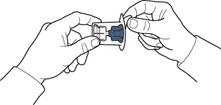
- Open the device packaging carefully by peeling off the top cover, taking care not to touch the inside of the packaging (Fig. A).
- Do not remove the device from the packaging.
- Invert the packaging containing the device and insert the plastic spike through the stopper of the solvent vial so that the blue part of the device connects to the solvent vial (Fig. B).
- Holding the packaging by the edge, remove it without touching the device itself (Fig. C).
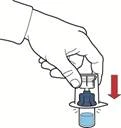
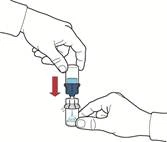
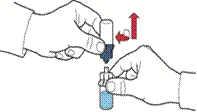
- Ensure the powder vial is placed on a stable surface; invert the system so that the solvent vial is positioned above the device; press the transparent adapter on the powder vial stopper to insert the plastic spike through the powder vial stopper; the solvent will automatically transfer into the powder vial (Fig. D).
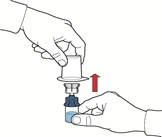
- After the solvent has transferred, unscrew and remove the blue part of the system to which the solvent vial is attached (Fig. E).
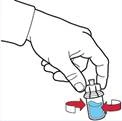
- Gently swirl the vial until the powder is completely dissolved. Do not shake vigorously to avoid foaming (Fig. F).
| Fig. A |
Fig. B |
|
|
|
| Fig. C |
Fig. D |
|
|
|
| Fig. E |
Fig. F |
|
|
|
Administration of the solution
The reconstituted solution should be clear or slightly opalescent.
Visually inspect the solution for particles or discoloration prior to administration. Do not use if the solution is cloudy or contains a precipitate.
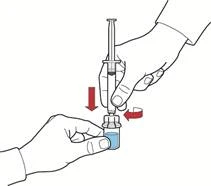
- Draw air into the syringe by pulling back the plunger, attach the device to the vial containing the reconstituted solution, and inject the air into the vial (Fig. E).
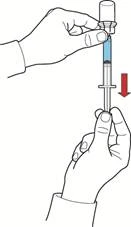
- Keeping the plunger in the same position, invert the system so that the vial with the reconstituted solution is positioned above the device, and slowly withdraw the concentrate into the syringe by pulling back the plunger (Fig. F).
- Detach the syringe by rotating it counterclockwise.
- Visually inspect the solution in the syringe; it should be clear or slightly opalescent and free from particles.
- Attach a butterfly needle to the syringe and administer the preparation intravenously by infusion or slow injection.
| Fig. E |
Fig. F |
|
|
|
The contents of opened vials should be used immediately.
Reconstituted solution drawn into a syringe should be used immediately.
Any unused medicinal product or waste material must be disposed of in accordance with local requirements.
Children
The safety and efficacy of UMAN COMPLEX in children have not been established.
Overdose
Administration of high doses of human prothrombin complex concentrates has been associated with cases of myocardial infarction, disseminated intravascular coagulation, venous thrombosis, and pulmonary thromboembolism. Therefore, in case of overdose, the risk of developing thromboembolic complications or disseminated intravascular coagulation is increased.
Children
Specific data in children are lacking.
Adverse reactions.
Short description of safety profile
Allergic reactions or anaphylactic-type reactions have been rarely observed.
Replacement therapy with human prothrombin complex may rarely lead to formation of circulating antibodies inhibiting one or more factors of human prothrombin complex. If such inhibitors occur, they will manifest as poor clinical response.
Fever has been observed in rare cases.
There is a potential risk of thromboembolic reactions after administration of human prothrombin complex, such as embolism and thrombosis, disseminated intravascular coagulation, and myocardial infarction.
For information on safety regarding transmission of infectious agents, see section "Precautions".
Adverse reactions that may occur during administration of human prothrombin complex are presented in the table below according to the MedDRA system organ classes (SOC and preferred terms).
The frequency was assessed according to the following conventional categories: very common (≥1/10); common (≥1/100 to <1/10); uncommon (≥1/1,000 to <1/100); rare (≥1/10,000 to <1/1,000); very rare (<1/10,000), frequency not known (cannot be estimated from available data).
| Standard MedDRA System Organ Class |
Adverse Reactions(MedDRA, preferred term) |
Frequency |
| Immune system disorders |
Hypersensitivity |
Unknown |
| Anaphylactic type reactions |
Unknown |
|
| Vascular disorders |
Embolism |
Unknown |
| Thrombosis |
Unknown |
|
| Disseminated intravascular coagulation |
Unknown |
|
| Myocardial infarction |
Unknown |
|
| General disorders and administration site conditions |
Pyrexia |
Unknown |
| Investigations |
Inhibitory antibodies |
Unknown |
Children
Specific data in children are lacking.
Reporting of suspected adverse reactions
Reporting of suspected adverse reactions after authorization of the medicinal product is important as it allows continued monitoring of the benefit/risk balance of the medicinal product. Healthcare professionals should report any suspected adverse reactions via the national reporting system.
Shelf life.
Powder (lyophilized preparation): 3 years.
Solvent (water for injection): 5 years.
The reconstituted solution should be used immediately.
Do not use the medicinal product if the solution is cloudy or contains a precipitate after reconstitution.
Storage conditions.
Store in a refrigerator at a temperature of 2 to 8 °C.
Keep the vial in the original cardboard package to protect from light.
Do not freeze.
Incompatibilities.
Human prothrombin complex concentrate must not be mixed with other medicinal products.
Only the infusion set supplied may be used, as treatment failure may result from adsorption of coagulation factors onto the internal surfaces of certain infusion sets.
Packaging.
500 IU in a vial No. 1, supplied with solvent (water for injection) 20 ml in a vial No. 1 and a reconstitution and administration set, in a cardboard box.
Prescription status.
Prescription only.
Manufacturer.
Cedrion S.p.A.
Manufacturer's location and address of place of business.
Via Provinciale, Bolognana 55027, Gallicano, Lucca, Italy.