Tizercin
Ukraine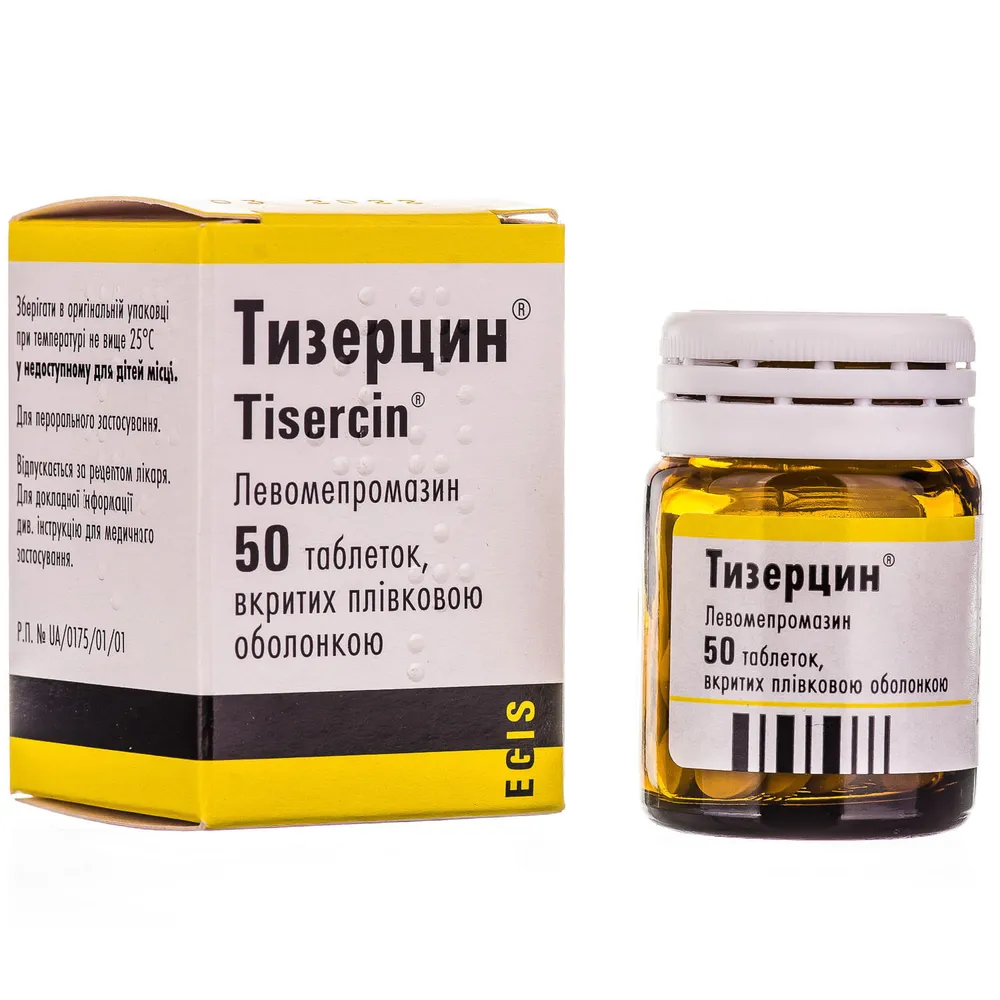
Table of Contents
INSTRUCTIONS FOR MEDICAL USE OF THE MEDICINAL PRODUCT TISERCIN® (TISERCINÒ)
Composition:
Active substance: levomepromazine maleate;
1 tablet contains levomepromazine maleate 33.80 mg, corresponding to levomepromazine 25.00 mg;
Excipients: magnesium stearate, sodium starch glycolate (type A), povidone, microcrystalline cellulose, potato starch, lactose monohydrate, hypromellose, titanium dioxide (E 171), dimethicone.
Pharmaceutical form. Film-coated tablets.
Main physicochemical properties: white, round, biconvex, film-coated tablets, odorless.
Pharmacotherapeutic group. Antipsychotics. Levomepromazine.
ATC code: N05A A02.
Pharmacological Properties.
Pharmacodynamics.
Tizerstin**®** is a neuroleptic of the phenothiazine series. Levomepromazine is an analogue of chlorpromazine with a more pronounced suppressive effect on psychomotor activity.
By blocking dopamine receptors in the thalamus, hypothalamus, reticular and limbic systems, levomepromazine suppresses the sensory system, reduces motor activity, and produces a pronounced sedative effect. In addition, it exerts antagonistic effects on other neurotransmitter systems (noradrenaline, serotonin, histamine, acetylcholine). Due to these properties, levomepromazine demonstrates antiemetic, antihistaminic, antiadrenergic, and anticholinergic actions. Extrapyramidal side effects are less pronounced compared to those observed with potent neuroleptics. Levomepromazine is a potent antagonist of alpha-adrenergic receptors, although its cholinolytic activity is weak. Levomepromazine increases the pain threshold (analgesic activity similar to morphine) and produces amnestic effects. Due to its ability to potentiate the action of analgesics, levomepromazine can be used as an adjuvant agent in the management of severe chronic and acute pain.
Pharmacokinetics.
After oral administration, levomepromazine is rapidly absorbed from the gastrointestinal tract. Maximum plasma concentration is reached within 1–3 hours after ingestion. Levomepromazine is extensively metabolized, forming sulfate and glucuronide conjugates, which are excreted by the kidneys. A small amount of the dose (1%) is excreted unchanged in urine and feces. The elimination half-life is 15–30 hours.
Clinical Characteristics.
Indications.
Acute psychotic states accompanied by psychomotor agitation and severe anxiety:
- acute episodes of schizophrenia;
- other severe mental disorders.
Adjuvant therapy in chronic psychoses:
- chronic schizophrenia;
- chronic hallucinatory psychoses.
Contraindications.
- Hypersensitivity to the active substance, phenothiazines, or to any other component of the medicinal product;
- concomitant treatment with other antihypertensive agents;
- concomitant use with monoamine oxidase inhibitors (MAOIs);
- concomitant use with central nervous system (CNS) depressants (alcohol, general anesthetics, hypnotics);
- closed-angle glaucoma;
- urinary retention;
- Parkinson’s disease;
- multiple sclerosis;
- bulbar paralysis (myasthenia gravis), hemiplegia;
- severe cardiomyopathy (circulatory failure);
- severe renal or hepatic impairment;
- clinically significant hypotension;
- blood disorders;
- porphyria;
- pregnancy (first trimester) and breastfeeding;
- pediatric use under 12 years of age.
Interaction with other medicinal products and other forms of interaction.
Concomitant use of Tizercine**®** and the following is prohibited:
- antihypertensive drugs – due to increased risk of severe arterial hypotension;
- MAO inhibitors, as they may prolong and intensify adverse effects of Tizercine**®**.
Caution should be exercised when using Tizercine**®** concomitantly with anticholinergic agents (tricyclic antidepressants, H1-antihistamines, certain antiparkinsonian agents, atropine, scopolamine, succinylcholine), as the anticholinergic effect may be enhanced (paralytic ileus, urinary retention, glaucoma). Extrapyramidal side effects have been observed when used with scopolamine.
There is an increased risk of arrhythmias when neuroleptics are used concomitantly with tetracyclic antidepressants (e.g., maprotiline).
When used simultaneously with tricyclic/tetracyclic antidepressants, prolongation and intensification of sedative and anticholinergic effects are possible, along with an increased risk of developing neuroleptic malignant syndrome.
Concomitant use of Tizercine with central nervous system depressants (opioids, general anesthetics, anxiolytics, sedative-hypnotics, tranquilizers, tricyclic antidepressants, neuroleptics) enhances CNS depression.
Tizercine**®** reduces the effect of central nervous system stimulants (e.g., amphetamine derivatives) when used concomitantly.
Under the influence of Tizercine**®**, the antiparkinsonian effect of levodopa is markedly reduced due to antagonistic interaction caused by neuroleptic-induced blockade of dopaminergic receptors.
When Tizercine**®** is used with oral antidiabetic agents, their effectiveness may decrease and hyperglycemia may develop.
Concomitant use of Tizercine**®** with medicinal products that prolong the QT interval (certain class IA and III antiarrhythmics, macrolide antibiotics, certain azole antifungals, cisapride, certain antidepressants, antihistamines, diuretics with hypokalemic effect) may result in additive effects and increase the frequency of arrhythmias.
Concomitant use of Tizercine**®** and dilevalol enhances the effects of both drugs due to mutual inhibition of metabolism. Such interaction cannot be excluded when other beta-blockers are used. In case of concomitant administration, the dose of one or both drugs should be reduced.
Photosensitization may increase when Tizercine**®** is used concomitantly with photosensitizing agents.
Alcohol and medicinal products containing alcohol should not be used during Tizercine**®** therapy. Alcohol may enhance CNS depressant effects and increase the likelihood of extrapyramidal side effects.
Concomitant use with vitamin C reduces avitaminosis associated with Tizercine**®** intake.
Special precautions for use.
If allergic reactions of any type occur, the drug should be discontinued immediately.
Tizercin® should be used with special caution when co-administered with anticholinergic agents.
Administration of the drug to patients with hepatic and/or renal insufficiency requires special attention due to the risk of drug accumulation.
Elderly individuals (especially patients with dementia) are more prone to developing postural hypotension and are more sensitive to the anticholinergic and sedative effects of phenothiazines. In addition, they are also prone to developing extrapyramidal side effects. Therefore, it is important to initiate treatment in such patients with low doses and gradually increase them.
When using Tizercin® in patients at increased risk of stroke, the benefit-risk ratio should be carefully evaluated.
Increased mortality in elderly patients with dementia
Results from two large observational studies showed that elderly patients with dementia treated with antipsychotics had increased mortality compared to those who did not receive these antipsychotic drugs. However, available data do not allow reliable assessment of the extent of risk or the causes of increased mortality.
Tizercin® is not indicated for the treatment of behavioral disorders associated with dementia.
To avoid the development of postural hypotension, the patient should remain lying down for 30 minutes after the first dose. If dizziness occurs after taking the drug, the patient should be advised to remain in bed after each dose.
One film-coated tablet contains 40 mg of lactose. This drug should not be taken by patients with hereditary galactose intolerance, Lapp lactase deficiency, or glucose-galactose malabsorption.
Caution should be exercised when administering the drug to patients with a history of cardiovascular disorders, especially elderly patients and those with congestive heart failure, conduction disorders, arrhythmias, congenital QT interval prolongation syndrome, or unstable hemodynamics. An ECG should be performed before initiating treatment with Tizercin®.
Tizercin® should be prescribed with great caution to patients with risk factors for arrhythmia. If clinically feasible, the absence of the following risk factors for arrhythmia should be confirmed before initiating treatment: bradycardia or second- to third-degree atrioventricular block, metabolic disturbances such as hypokalemia, hypocalcemia, or hypomagnesemia, starvation or alcohol abuse, personal history of QT interval prolongation, ventricular arrhythmia or torsades de pointes, family history of QT interval prolongation, concomitant use of neuroleptics, concomitant use of other drugs that may provoke bradycardia, electrolyte imbalance, decreased intraventricular conduction, or QT interval prolongation.
Risk of venous thromboembolism (VTE)
An increased incidence of venous thromboembolism (VTE) has been reported with the use of neuroleptics. Since patients treated with neuroleptics often have acquired risk factors for VTE, these factors should be identified before and during treatment, and appropriate preventive measures should be implemented.
As with other neuroleptics, neuroleptic malignant syndrome (NMS) may occur (including fatal complications), characterized by hyperthermia, muscle rigidity, confusion, autonomic dysfunction (unstable blood pressure, tachycardia, arrhythmias, excessive sweating), catatonia, and autonomic dysfunction. Laboratory findings include elevated creatine phosphokinase levels, myoglobinuria (rhabdomyolysis), and acute renal failure. All these symptoms indicate the development of NMS; therefore, treatment with Tizercin® must be discontinued immediately if such symptoms appear. Treatment should also be discontinued even in the absence of clinical symptoms of NMS if unexplained hyperthermia occurs during treatment with Tizercin®. If further antipsychotic treatment is required after recovery, the choice of therapy should be thoroughly re-evaluated.
Tolerance to the sedative effects of phenothiazines and cross-tolerance among antipsychotic agents has been reported. This tolerance may manifest as withdrawal symptoms after abrupt discontinuation of high doses or after prolonged use: nausea, vomiting, headache, tremor, excessive sweating, tachycardia, insomnia, and restlessness. Due to this phenomenon, the drug should always be discontinued gradually.
Many neuroleptic drugs, including Tizercin®, may lower the seizure threshold and cause EEG changes. Therefore, in patients with epilepsy, clinical parameters and EEG findings should be monitored closely during dose titration.
Cholestatic (jaundice-like) hepatotoxic reactions caused by chlorpromazine may also occur with other phenothiazines. This depends on individual patient sensitivity. The reaction resolves completely after discontinuation of treatment. Therefore, liver function should be monitored regularly during prolonged therapy.
Hyperglycemia, agranulocytosis, and leukopenia have been observed in some patients treated with phenothiazines. Therefore, despite the very low frequency of these events, regular blood monitoring is recommended during long-term treatment with Tizercin®.
Alcoholic beverages are contraindicated during treatment with Tizercin® and for 4–5 days after discontinuation.
Regular monitoring of the following parameters is recommended before starting treatment and throughout the entire treatment period:
- Blood pressure (especially in patients with unstable hemodynamics and those prone to arterial hypotension);
- Liver function (especially in patients with liver disease);
- Blood count (in case of sore throat, pharyngitis, or suspicion of leukopenia or agranulocytosis);
- ECG (in patients with cardiovascular disorders and in elderly patients);
- Blood levels of calcium, magnesium, and potassium.
Use during pregnancy or breastfeeding.
Pregnancy
Congenital developmental abnormalities have been observed in some children whose mothers used phenothiazines during pregnancy, although a causal relationship with phenothiazines has not been established.
Due to the lack of data from controlled clinical studies, the drug should not be used during the third trimester of pregnancy.
Breastfeeding
Levomepromazine passes into breast milk; therefore, its use during breastfeeding is contraindicated.
Fertility
There are no data on fertility in animals.
In humans, due to interaction with dopamine receptors, levomepromazine may cause hyperprolactinemia, which may be associated with impaired fertility in women.
Ability to affect reaction speed when driving or operating machinery.
During treatment, patients should refrain from driving vehicles or operating machinery requiring high attention and rapid psychomotor reactions.
Method of Administration and Dosage
Adults
Treatment should be initiated with low doses, which can then be gradually increased depending on tolerance. After noticeable improvement in condition, the dose may be reduced to a maintenance dose, individually determined by the physician. The initial dose is 25–50 mg (1 tablet 1–2 times daily). If necessary, the initial dose may be increased to 150–250 mg (6–10 tablets) in 2–3 divided doses per day. The largest portion of the daily dose should be taken at bedtime. After improvement, the dose may be reduced to a maintenance level. The maximum daily dose is 250 mg. The duration of treatment is determined individually by the physician and depends on the therapeutic response.
Children (over 12 years of age)
Children are sensitive to the hypotensive and sedative effects of levomepromazine; therefore, the recommended daily dose for children is 25 mg.
Elderly Patients
The drug is not recommended for patients aged 65 years and older, as these individuals are more sensitive to phenothiazines.
Children. The drug is contraindicated in children under 12 years of age.
Overdose
Symptoms
Changes in vital signs (arterial hypotension, hyperthermia), disturbances in cardiac conduction (prolongation of the QT interval, ventricular tachycardia/fibrillation, ventricular tachycardia (torsades de pointes), atrioventricular block), extrapyramidal symptoms, sedative effect, central nervous system excitation (seizures) and neuroleptic malignant syndrome, loss of consciousness, tachycardia, ECG changes, hypothermia, dyskinesia.
Treatment
Symptomatic treatment should be administered according to monitoring results of vital parameters. In case of arterial hypotension – intravenous fluid administration, Trendelenburg position, dopamine and/or norepinephrine may be used (a resuscitation kit should be available; when using dopamine and/or norepinephrine, cardiac monitoring with ECG is required). Seizures may be controlled with diazepam or, if seizures recur, with phenytoin or phenobarbital. Mannitol should be administered only if rhabdomyolysis develops.
Forced diuresis, hemodialysis, and hemoperfusion are ineffective. Induction of vomiting is not recommended, as aspiration of vomitus may occur due to epileptic seizures causing spasmodic movements of the head and neck. Gastric lavage and monitoring of vital functions may be performed even 12 hours after drug ingestion, since due to the anticholinergic effect of Tizercin**®**, gastric emptying is delayed. To reduce drug absorption, administration of activated charcoal and a laxative is additionally recommended.
Treatment of neuroleptic malignant syndrome includes immediate discontinuation of neuroleptics and management with cooling measures. Sodium dantrolene may be used.
Neuroleptics should be used with caution if further administration is necessary.
Adverse reactions.
Cardiovascular system: The most common and most serious adverse effect of the medicinal product is postural hypotension, accompanied by weakness, dizziness, or fainting. Tachycardia, Adams–Stokes syndrome, QT interval prolongation (proarrhythmic effect, arrhythmia torsades de pointes) may also occur; malignant neuroleptic syndrome; cardiac attacks that may lead to sudden death.
Blood and lymphatic system: Pancytopenia, agranulocytosis, leukopenia, eosinophilia, thrombocytopenia; venous thromboembolism, including cases of pulmonary embolism and deep vein thrombosis; hyperglycemia, withdrawal syndrome in newborns.
CNS (central nervous system): Disorientation, confusion, visual hallucinations, slurred speech, extrapyramidal symptoms (dyskinesia, dystonia, parkinsonism, opisthotonus, hyperreflexia), epileptic seizures, increased intracranial pressure, rebound of psychotic symptoms, catatonia.
Endocrine system and metabolism: Galactorrhea, menstrual cycle disturbances, weight loss. In some patients treated with phenothiazine, pituitary adenoma has been observed. However, further studies are required to establish a causal relationship with the drug.
Urinary and reproductive system: Discoloration of urine, difficulty in urination, very rarely – chaotic uterine contractions; priapism.
Gastrointestinal tract: Dry mouth, abdominal discomfort, nausea, vomiting, constipation which may lead to the development of paralytic ileus, liver damage (jaundice, cholestasis); necrotizing enterocolitis, which may be fatal.
Skin: Photosensitivity, erythema, urticaria, pigmentation, exfoliative dermatitis.
Eye: Lens and corneal opacities, pigmentary retinopathy.
Hypersensitivity reactions: Laryngeal edema, peripheral edema, anaphylactoid reactions, asthma.
Other: Hyperthermia, cardiac arrhythmia, glucose intolerance, vitamin deficiency, heat stroke in hot and humid environments.
Shelf life. 5 years.
Do not use the medicinal product after the expiry date stated on the packaging.
Storage conditions.
Store in the original packaging at a temperature not exceeding 25°C, in a place inaccessible to children.
Packaging. 50 film-coated tablets in a glass bottle, in a cardboard box.
Prescription status. Prescription only.
Manufacturer. EGIS Pharmaceuticals PLC, Hungary.
Manufacturer's name and address of the place of business.
EGIS Pharmaceuticals PLC, 9900 Kormend, Matyas kiraly ut. 65, Hungary.