Cisplatin
Ukraine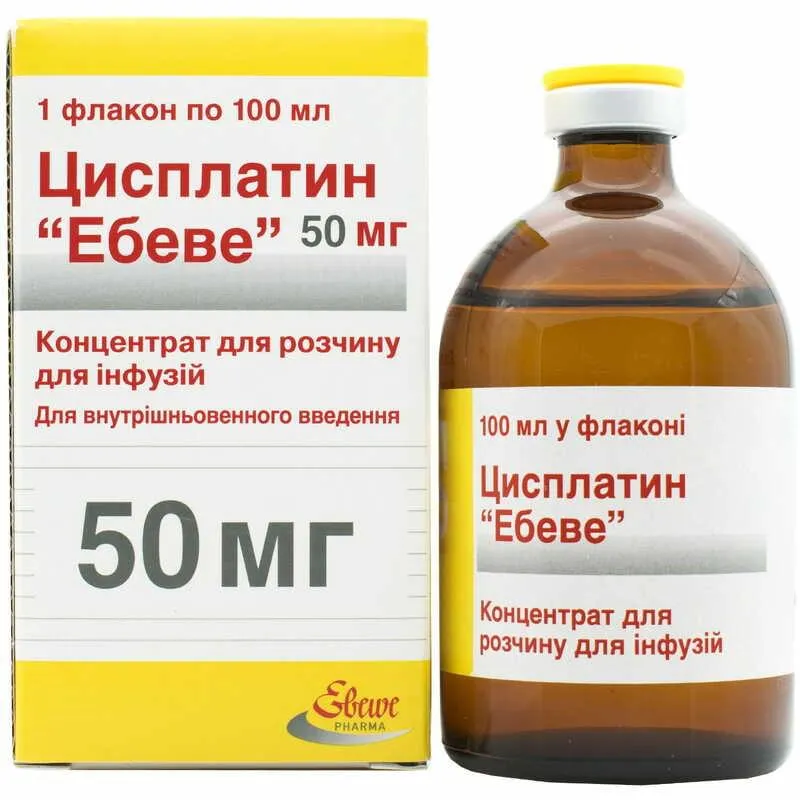
Table of Contents
INSTRUCTIONS FOR MEDICAL USE OF THE MEDICINAL PRODUCT CISPLATIN (CISPLATIN)
Composition:
Active substance: cisplatin;
1 ml of solution contains 1 mg of cisplatin;
1 vial contains 10 mg, or 50 mg, or 100 mg of cisplatin;
Excipients: sodium chloride, water for injections.
Pharmaceutical form. Concentrate for solution for infusion.
Main physicochemical properties: clear solution, ranging from colorless to pale yellow.
Pharmacotherapeutic group. Antineoplastic agents. Platinum compounds. Anticancer agent. ATC code L01XA01.
Pharmacological Properties
Pharmacodynamics
Cisplatin is an antineoplastic agent containing platinum. Cisplatin has biochemical properties similar to bifunctional alkylating agents. It inhibits DNA synthesis by forming intrastrand and interstrand cross-links (crosslinks) within and between DNA strands. Synthesis of protein and RNA is also suppressed, but to a lesser extent.
Although the antineoplastic effect of cisplatin is primarily associated with inhibition of DNA synthesis, other mechanisms, including increased tumour immunogenicity, may contribute to its antineoplastic activity. Cisplatin also has immunosuppressive and antimicrobial properties and enhances radiosensitivity.
The action of cisplatin on cells is independent of the cell cycle phase. In addition to tumour cells, target tissues are primarily those characterized by rapid cellular proliferation, such as bone marrow, gastrointestinal mucosa, and gonads.
Pharmacokinetics
Absorption
Cisplatin should usually be administered intravenously, preferably by intravenous infusion over 6–8 hours. During standard intravenous infusions, total plasma platinum levels rise gradually and reach a peak at the end of the infusion.
Distribution
Cisplatin is well distributed to the kidneys, liver, prostate, and intestine. More than 90% of the platinum compound is distributed in the blood by binding (possibly irreversible) to plasma proteins.
The extent of penetration into cerebrospinal fluid (CSF) is low, although a significant amount of cisplatin may be found in intracerebral tumours.
Elimination of total platinum from plasma is rapid during the first 4 hours after intravenous administration, followed by a slower phase due to covalent binding to serum proteins. Levels of free platinum decline with a half-life ranging from 20 minutes to 1 hour, depending on the infusion rate.
After repeated treatment cycles, platinum may accumulate in body tissues and has been detected in certain tissues up to 6 months after the last dose.
Biotransformation
The metabolic pathway of cisplatin is not fully elucidated. Biotransformation occurs via rapid non-enzymatic conversion into inactive metabolites, which have not been precisely identified.
Excretion
Excretion of the free drug and various platinum-containing biotransformation products occurs via urine. Approximately 15–25% of the administered platinum is rapidly eliminated from the body within the first 2–4 hours after cisplatin administration. This early excretion primarily involves free cisplatin. Within the first 24 hours after administration, 20–80% is excreted, while the remainder consists of substances bound to tissues or plasma proteins.
Clinical Characteristics
Indications
- Advanced or metastatic testicular cancer;
- Advanced or metastatic ovarian cancer;
- Advanced or metastatic bladder cancer;
- Advanced or metastatic squamous cell carcinoma of the head and neck;
- Advanced or metastatic non-small cell lung cancer;
- Advanced or metastatic small cell lung cancer.
Treatment of cervical malignancies in combination with other chemotherapy and with radiotherapy.
Cisplatin may be used as monotherapy as well as in combination therapy.
Contraindications
Hypersensitivity to cisplatin or to any component of the medicinal product or to other platinum-containing agents.
In some patients, cisplatin may cause allergic reactions. Administration is contraindicated in patients with a history of allergic reaction to cisplatin or other platinum-containing compounds or to any component of the product.
Cisplatin causes nephrotoxicity, which is cumulative; therefore, it is contraindicated in patients with a history of renal dysfunction.
Cisplatin has also been shown to exhibit cumulative neurotoxicity (including ototoxicity), and should not be administered to patients with a history of hearing impairment.
Cisplatin is also contraindicated in patients with myelosuppression and dehydration.
Breastfeeding period (see section "Use in pregnancy or breastfeeding").
Concomitant administration with yellow fever vaccine.
Interaction with other medicinal products and other forms of interaction
Cisplatin may be used in combination with other cytostatic agents having appropriate mechanisms of action. In such cases, additive toxicity may occur.
The myelosuppressive effect of cisplatin may be additive to pre-existing disorders or to similar toxicity of other agents such as cephaloridine, furosemide, aminoglycosides, etc., when administered concomitantly.
Nephrotoxic substances
Nephrotoxic drugs (e.g., cephalosporins, aminoglycosides, amphotericin B, or radiographic contrast agents) potentiate the toxic effects of cisplatin on the kidneys. Nephrotoxicity may be caused by aminoglycosides administered concomitantly or within 1–2 weeks after cisplatin treatment. Concomitant use of other potentially nephrotoxic drugs (e.g., amphotericin B) is not recommended during cisplatin therapy.
Substances excreted by the kidneys
Particular attention should be paid to substances primarily excreted by the kidneys, such as cytostatic agents like bleomycin and methotrexate, during or after cisplatin treatment due to the potential for reduced renal elimination.
When ifosfamide is used in combination with cisplatin or following prior cisplatin treatment, the nephrotoxicity of ifosfamide is enhanced.
In combined therapy with cisplatin, bleomycin, and etoposide, a decrease in serum lithium concentration has been observed in several cases. Therefore, lithium levels should be monitored during treatment.
Ototoxic substances
Concomitant and/or sequential administration of ototoxic medicinal products (e.g., aminoglycosides and loop diuretics) potentiates the toxic effects of cisplatin on hearing function, especially in the presence of renal impairment.
Except for patients who require cisplatin administration at doses exceeding 60 mg/m² body surface area (BSA) and whose urine output does not exceed 1000 ml in 24 hours, forced diuresis using loop diuretics should not be performed, as this may lead to renal damage and increased ototoxicity.
Ifosfamide also potentiates the ototoxic effects of cisplatin.
Live attenuated vaccines
Yellow fever vaccine is strictly contraindicated due to the risk of fatal systemic vaccine-related disease (see section "Contraindications"). Because of the risk of systemic disease, inactivated vaccines are recommended.
Oral anticoagulants
When oral anticoagulants are used concomitantly, regular monitoring of the international normalized ratio (INR) is recommended.
Phenothiazines, antihistamines, and other agents
Symptoms of cisplatin ototoxicity (e.g., dizziness, tinnitus) may be masked by concomitant use of antihistamines, buclizine, cyclizine, loxapine, meclizine, phenothiazines, thioxanthenes, or trimethobenzamides.
Pyridoxine + altretamine, combination
In a randomized clinical trial, a reduced response to cisplatin therapy was observed in patients with progressive ovarian cancer who received concomitant pyridoxine and altretamine (hexamethylmelamine).
Paclitaxel
It has been established that when paclitaxel is administered after cisplatin, the clearance of paclitaxel may decrease by 33%, thereby potentially increasing neurotoxicity.
Anticonvulsants
In patients receiving concomitant cisplatin and anticonvulsants (e.g., phenytoin), serum concentrations of the latter may decrease and potentially become subtherapeutic. This is primarily due to reduced absorption of phenytoin and/or enhanced metabolism. Plasma levels of phenytoin should be monitored and the dose adjusted accordingly.
Cisplatin may interact with aluminum (see section "Method of administration and dosage").
Special precautions for use.
Cisplatin therapy must be administered under the supervision of a qualified oncologist only in specialized units equipped to provide appropriate monitoring and care. Appropriate resuscitation equipment must be available to manage anaphylactic reactions.
Cisplatin reacts with aluminum, forming a black platinum precipitate. It is essential to avoid using any aluminum-containing intravenous infusion systems, needles, catheters, or syringes. Prior to administration to the patient, the solution must be inspected visually to ensure clarity and absence of particulate matter.
Cisplatin for infusion must not be mixed with any other medicinal products or excipients.
Appropriate monitoring and management of treatment and its complications are possible only with an accurate diagnosis and clearly defined treatment regimens.
Before, during, and after cisplatin therapy, the following parameters must be monitored:
- Renal function;
- Hepatic function;
- Hematopoietic system function (erythrocyte, leukocyte, and platelet counts);
- Serum electrolyte levels (calcium, sodium, potassium, magnesium concentrations).
Tests should be repeated weekly throughout the entire cisplatin treatment period.
The next treatment cycle must not be initiated until the following key parameters have normalized:
- Serum creatinine: ≤ 130 µmol/L (1.5 mg/dL);
- Blood urea: < 25 mg/dL;
- Leukocyte count: > 4.0 × 10⁹/L;
- Platelet count: > 100 × 10⁹/L;
- Audiogram: results within normal limits.
Cisplatin is associated with cumulative ototoxic, nephrotoxic, and neurotoxic effects. Its toxicity may be enhanced when used concomitantly with other agents toxic to these organs and systems.
Nephrotoxicity
Cisplatin causes severe cumulative nephrotoxic effects, which may be potentiated by aminoglycoside use. Cisplatin should not be administered more frequently than once every 3–4 weeks. To promote urinary excretion and reduce nephrotoxicity, cisplatin is recommended to be administered via intravenous infusion over 6–8 hours (see section "Administration and dosage").
Repeat cisplatin courses should not be administered unless plasma creatinine levels are below 1.5 mg/100 mL (130 µmol/L) or blood urea levels are below 55 mg/100 mL (9 mmol/L), and circulating blood levels are acceptable. Since cisplatin nephrotoxicity is cumulative, blood urea nitrogen, plasma creatinine, glomerular filtration rate (GFR), or creatinine clearance (CrCl) should be measured before initiating therapy and before each subsequent cycle.
Adequate hydration before and during therapy is required to minimize the risk of nephrotoxicity. A diuresis of 100 mL/hour or more should minimize cisplatin nephrotoxicity. Adequate diuresis can be achieved by pre-hydration with 2 L of appropriate intravenous solution or similar hydration after cisplatin administration (administration of 2500 mL/m²/BSA over 24 hours is recommended). If active hydration is insufficient to maintain adequate diuresis, osmotic diuretics (e.g., 10% mannitol solution) may be prescribed.
Particular attention should be paid to patients receiving concomitant therapy with other potentially nephrotoxic agents (see section "Interaction with other medicinal products and other forms of interaction").
Bone marrow function
Frequent monitoring of blood cell counts is required in patients receiving cisplatin. Although hematotoxicity is usually mild to moderate and reversible, severe thrombocytopenia and leukopenia may occur. In patients who develop thrombocytopenia, special precautions are recommended: caution during invasive procedures; monitoring for signs of bleeding or bruising; testing urine, stool, and vomitus for blood; and avoidance of aspirin and other NSAIDs. Patients who develop leukopenia should be carefully examined for signs of infection and may require antibiotic support and blood transfusions (see section "Adverse reactions").
Neuropathies
Severe neuropathies have been reported. These neuropathies may be irreversible and may manifest as paresthesia, areflexia, loss of proprioception, and vibration sensation. Cases of motor function loss have also been reported. Neurological examinations should be performed regularly in patients. Neurotoxicity appears to be cumulative. The absence of peripheral neuropathy symptoms must be confirmed before each treatment cycle.
Ototoxicity
Ototoxicity has been observed in 31% of patients receiving a single dose of cisplatin 50 mg/m², manifesting as tinnitus and/or high-frequency hearing loss (4000–8000 Hz). In some cases, hearing impairment in the speech range may occur. Ototoxic effects may be more pronounced in children receiving cisplatin therapy. Delayed hearing loss has been reported in pediatric patients. Long-term monitoring of this patient group is recommended. Hearing loss may be unilateral or bilateral and occurs more frequently and severely with repeated administration, although cases of deafness after the first dose have been reported. Prior or concurrent radiotherapy to the head region increases the risk of ototoxic complications, possibly related to peak cisplatin plasma concentration. It is not known whether cisplatin-induced ototoxicity is reversible. Audiometry should be performed before initiating therapy and repeated if auditory symptoms or clinical hearing changes occur. Vestibular toxicity has also been reported (see section "Adverse reactions").
Allergic reactions
Anaphylactic reactions to cisplatin have been reported. These reactions occurred within minutes of administration in patients previously exposed to cisplatin and were managed with epinephrine, steroids, and antihistamines.
As with other platinum-containing medicinal products, hypersensitivity reactions may occur, mostly during infusion. These require immediate discontinuation of infusion and appropriate symptomatic treatment. Cross-reactions, sometimes fatal, have been reported with all platinum compounds (see sections "Contraindications" and "Adverse reactions").
Liver function and blood counts
Blood counts and liver function should be monitored regularly.
Potential carcinogenic effect
In isolated cases, acute leukemia has been temporally associated with cisplatin use in humans; these cases were usually associated with other leukemogenic agents. Cisplatin is a bacterial mutagen and causes chromosomal aberrations in animal cell cultures. Carcinogenicity is possible but has not yet been demonstrated. Cisplatin has teratogenic and embryotoxic effects in mice.
Reactions at the site of administration
Reactions at the site of administration may occur during cisplatin infusion. Due to the risk of extravasation, the infusion site should be carefully monitored for possible infiltration. Specific treatment for extravasation reactions is currently unknown.
In case of paravenous administration, the following steps are required:
- Immediately discontinue cisplatin infusion;
- Without removing the needle, aspirate extravasated material from the tissue and irrigate with 0.9% sodium chloride solution (especially when using infusion solutions with cisplatin concentrations exceeding the recommended level).
Particular caution is required when treating patients with pre-existing peripheral neuropathy not caused by cisplatin, as well as patients with acute bacterial and viral infections.
Gastrointestinal tract effects
Nausea, vomiting, and diarrhea are common after cisplatin administration (see section "Adverse reactions"). In most patients, these symptoms resolve within 24 hours. Milder nausea and anorexia may persist for up to 7 days after treatment. Nausea and vomiting may be severe and require adequate antiemetic treatment. Prophylactic use of antiemetics may help prevent or reduce the intensity of nausea and vomiting. Fluid loss due to vomiting or diarrhea must be compensated.
Warnings
This cytostatic agent has higher toxicity than conventional anticancer chemotherapy agents.
Nephrotoxicity, which is primarily cumulative, is severe and requires special precautions during administration (see sections "Administration and dosage" and "Adverse reactions").
Patients must be carefully monitored for ototoxicity, myelosuppression, and anaphylactic reactions (see section "Adverse reactions").
The mutagenic effect of cisplatin has been demonstrated. This agent may also adversely affect fertility. Other antineoplastic agents are known to have carcinogenic effects, and this possibility should be considered with long-term cisplatin use.
If a patient wishes to have children after completing therapy, they should consult a genetics specialist beforehand, as cisplatin treatment may cause irreversible infertility in men who wish to become fathers in the future. Sperm cryopreservation should be considered before starting therapy.
Excipients
This medicinal product contains 3.5 mg of sodium per mL, equivalent to 0.18% of the maximum recommended daily intake of sodium (2 g) for adults according to WHO.
Use during pregnancy or breastfeeding.
Contraception in men and women. Due to the genotoxic potential of cisplatin, women of childbearing potential must use effective contraception during cisplatin therapy and for 7 months after completion of treatment. Men are advised to use effective contraception and avoid conception during cisplatin therapy and for 4 months after treatment completion.
Pregnancy. There is insufficient information on the use of cisplatin in pregnant women, but based on the pharmacological properties of cisplatin, serious birth defects can be expected. Animal studies have shown reproductive toxicity. Cisplatin must not be used during pregnancy unless there are life-threatening indications.
Breastfeeding. Cisplatin passes into breast milk; therefore, breastfeeding during cisplatin therapy is contraindicated (see section "Contraindications").
Fertility. Since cisplatin may cause irreversible infertility, men who wish to become fathers in the future should be advised to consider sperm cryopreservation before starting therapy.
Effect on ability to drive and use machines
No studies on the effect on the ability to drive or operate machinery have been conducted. However, the adverse reaction profile (e.g., nephrotoxicity) may negatively affect the ability to drive or operate machinery.
Method of Administration and Dosage
Dosage
Adults and Children
Cisplatin doses should be determined based on the specific disease, expected response to therapy, and whether cisplatin is to be used as monotherapy or as part of combination chemotherapy. The following doses are recommended for both adults and children.
For monotherapy, the recommended treatment regimens are:
- Single dose of 50–120 mg/m² body surface area every 3–4 weeks;
- Daily doses of 15–20 mg/m² body surface area for 5 consecutive days, repeated every 3–4 weeks.
In combination therapy, doses should be lower. Cisplatin is usually administered at a dose of 20 mg/m² body surface area or higher every 3–4 weeks.
For the treatment of cervical tumors, cisplatin should be used in combination with radiotherapy or other chemotherapeutic agents. Cisplatin is typically administered at a dose of 40 mg/m² body surface area weekly for 6 weeks.
The next treatment course should only be initiated after a comprehensive assessment of the patient's condition (see section "Special Warnings and Precautions for Use").
Doses of the drug must be appropriately reduced in case of renal function impairment or bone marrow suppression (see section "Contraindications").
Method of Administration
The infusion solution, prepared according to the instructions provided in the section "Special Safety Precautions", must be administered only by intravenous infusion over 6–8 hours.
Hydration
Adequate hydration must be provided 2–12 hours before and for at least 6 hours after the end of cisplatin infusion. Hydration is necessary to maintain sufficient diuresis during and after cisplatin administration. In adults, hydration is achieved by intravenous infusion of 0.9% sodium chloride solution or a mixture of 0.9% sodium chloride and 5% glucose solution in a 1:1 ratio.
Pre-treatment hydration: Intravenous infusion of one of the above solutions at a rate of 100–200 mL/hour for 6–12 hours, with a total volume of at least 1 liter.
Post-infusion hydration: Intravenous infusion of an additional 2 liters of one of the above solutions at a rate of 100–200 mL/hour for 6–12 hours.
If urine output is less than 100–200 mL/hour after hydration, forced diuresis may be required. For this, the patient should receive intravenous infusion of 37.5 g of mannitol (375 mL of 10% solution) or diuretics (provided renal function is normal).
Mannitol or diuretics should also be administered when the cisplatin dose exceeds 60 mg/m² BSA.
Patients should consume large amounts of fluids for 24 hours after cisplatin administration to ensure adequate urine output.
The sterile concentrate Cisplatin 1 mg/mL must be diluted before administration. Instructions for dilution prior to use are provided in the section "Special Safety Precautions".
Although cisplatin is administered intravenously, the drug may also be administered via intraperitoneal instillation in patients with intraperitoneal malignant tumors (e.g., ovarian tumors). High concentration gradients between intraperitoneal and plasma levels of the drug can be achieved through intraperitoneal administration.
During administration, avoid using any devices containing aluminum that may come into contact with cisplatin (intravenous infusion sets, needles, catheters, syringes).
Preparation and Dilution of Solution for Intravenous Administration
Like all other antineoplastic agents, cisplatin should be handled with caution. Prior to use, it must be diluted. Dilution should be performed under aseptic conditions by trained personnel in a specially designated area, wearing protective gloves. Precautions should be taken to avoid contact with skin and mucous membranes. If skin contact occurs, wash the skin immediately with soap and water. Skin contact may cause stinging, burning, and redness. Mucous membranes should be thoroughly rinsed with water if exposed. Cases of dyspnea, chest pain, throat irritation, and nausea have been reported following inhalation exposure.
Pregnant individuals should avoid contact with cytostatic drugs.
Physiological waste and vomitus must be handled and disposed of carefully.
If the solution is cloudy or shows an insoluble precipitate, the vial should be discarded.
Damaged vials should be disposed of in the same manner as contaminated waste. Contaminated waste must be stored in specially marked waste containers.
Preparation for Intravenous Administration
Withdraw the required amount of solution from the vial and dilute it in at least 1 liter of one of the following solutions:
- 0.9% sodium chloride;
- 0.9% sodium chloride / 5% glucose mixture (1:1) (final concentrations: 0.45% sodium chloride, 2.5% glucose);
- 0.9% sodium chloride and 1.875% mannitol;
- 0.45% sodium chloride, 2.5% glucose, and 1.875% mannitol.
The injection solution should always be visually inspected before use. Do not use if the solution is cloudy or if an insoluble precipitate forms. Only clear, particle-free solutions should be administered.
Avoid contact with injection materials containing aluminum. Do not administer undiluted.
Chemical and physical stability during use after dilution with infusion solutions indicates that the drug remains stable for 24 hours at room temperature (20–25°C) after dilution with recommended intravenous fluids.
The diluted solution should be protected from light. Do not store diluted solutions in a refrigerator or freezer.
From a microbiological standpoint, the diluted solution should be used immediately. If not used immediately, the responsibility for storage duration and conditions prior to use lies with the user, and dilution must be performed under controlled aseptic conditions. All materials used in preparation and administration, or that have come into contact with cisplatin in any way, must be disposed of according to local regulations for cytotoxic waste. Medicinal products must not be disposed of via wastewater or household waste.
Children
In children, prior to starting the next treatment course, key parameters (serum creatinine, urea, leukocytes, platelets, audiogram) must return to age-appropriate normal values.
Overdose
Caution should be exercised to prevent accidental overdose.
Acute cisplatin overdose may lead to an intensification of its expected toxicities, such as renal failure, hepatic failure, severe neurosensory toxicity (deafness), ophthalmotoxicity (including retinal detachment), profound bone marrow suppression, intractable nausea and vomiting, and/or neuropathy. Overdose may be fatal.
Renal function, cardiovascular status, and blood parameters should be monitored daily to assess potential toxicity to these systems. Serum magnesium and calcium levels, as well as symptoms and signs of muscle irritability, should be closely monitored. If symptomatic tetany develops, electrolyte supplementation should be administered. After acute overdose, liver enzymes in serum and serum uric acid should be monitored daily.
There is no specific antidote for cisplatin overdose. Hemodialysis is effective, even partially, only if performed within the first 3 hours after cisplatin administration. If hemodialysis is initiated more than 4 hours after overdose, the effect on cisplatin elimination will be minimal due to rapid and extensive binding of platinum to blood proteins.
In case of overdose, general supportive measures are indicated.
In the event of fever during prolonged myelosuppression, appropriate antibiotic therapy should be initiated after culture sampling.
Adverse Reactions
The most frequently reported adverse effects associated with cisplatin use include: hematological (leukopenia, thrombocytopenia, and anemia), gastrointestinal (anorexia, nausea, vomiting, and diarrhea), ototoxic effects (hearing disturbances), renal disorders (renal failure, nephrotoxicity, hyperuricemia), and fever.
Severe ototoxicity, nephrotoxicity, and bone marrow suppression were reported in almost 1/3 of patients receiving cisplatin as monotherapy. These effects are generally dose-dependent and cumulative. Ototoxicity may be more severe in children.
The following frequency categories were used to assess adverse reactions: very common (≥1/10), common (≥1/100 to <1/10), uncommon (≥1/1,000 to <1/100), rare (≥1/10,000 to <1/1,000), very rare (≤1/10,000), and frequency not known (cannot be estimated from available data).
Infections and infestations
Common – sepsis; frequency not known – infectiona.
Blood and lymphatic system disorders
Very common – bone marrow suppression, thrombocytopenia, leukopenia, anemia; frequency not known – Coombs-positive hemolytic anemia, thrombotic microangiopathy (hemolytic uremic syndrome), neutropenia.
Benign, malignant, and unspecified neoplasms (including cysts and polyps)
Rare – acute leukemia.
Immune system disorders
Uncommon – anaphylactoid reactionsb.
Endocrine disorders
Frequency not known – increased serum amylase levels, syndrome of inappropriate antidiuretic hormone secretion (SIADH).
Metabolism and nutrition disorders
Very common – hyponatremia; uncommon – hypomagnesemia; frequency not known – dehydration, hypokalemia, hypophosphatemia, hyperuricemia, hypocalcemia, tetany.
Nervous system disorders
Rare – seizures, peripheral neuropathy, leukoencephalopathy, reversible posterior leukoencephalopathy syndrome; frequency not known – cerebrovascular complications, hemorrhagic stroke, ischemic stroke, loss of taste, cerebral arteritis, Lhermitte’s sign, myelopathy, autonomic neuropathy.
Eye disorders
Frequency not known – blurred vision, color vision defects, cortical blindness, retrobulbar neuritis, optic disc edema, retinal pigmentation.
Ear and labyrinth disorders
Uncommon – ototoxicity; frequency not known – tinnitus, deafness.
Cardiac disorders
Common – arrhythmia, bradycardia, tachycardia; rare – myocardial infarction; very rare – cardiac arrest; frequency not known – cardiac dysfunction.
Vascular disorders
Common – venous thromboembolism; frequency not known – Raynaud’s phenomenon.
Gastrointestinal disorders
Rare – stomatitis; frequency not known – vomiting, nausea, anorexia, hiccups, diarrhea.
Hepatobiliary disorders
Frequency not known – increased liver enzymes, increased blood bilirubin levels.
Respiratory, thoracic and mediastinal disorders
Frequency not known – pulmonary embolism.
Skin and subcutaneous tissue disorders
Frequency not known – rash, alopecia.
Musculoskeletal and connective tissue disorders
Frequency not known – muscle spasms.
Renal and urinary disorders
Frequency not known – acute renal failure, renal failurec, tubular dysfunction.
Reproductive system and breast disorders
Uncommon – impaired spermatogenesis.
General disorders and administration site conditions
Frequency not known – fever (very common), asthenia, malaise, extravasation at injection sited.
a – infectious complications were fatal in some patients;
b – symptoms include: facial swelling, wheezing, bronchospasm; tachycardia and arterial hypotension are included in parentheses for anaphylactoid reaction in the frequency list of adverse reactions specified above;
c – elevated blood urea nitrogen, creatinine, serum uric acid, and/or decreased creatinine clearance are indicative of renal failure;
d – local soft tissue toxicity, including cellulitis, fibrosis, and necrosis (common), pain (common), swelling (common), and erythema (common), results from extravasation.
Reporting suspected adverse reactions
Reporting suspected adverse reactions after medicine authorization is of great importance. It allows continuous monitoring of the benefit-risk balance of the medicine. Healthcare professionals, pharmacists, patients, and their legal representatives should report all suspected adverse reactions and lack of efficacy through the Automated Pharmacovigilance Information System at the following link: http://aisf.dec.gov.ua.
Shelf life. 2 years.
Storage conditions. Store in the original packaging at a temperature not exceeding 30 °C, out of reach of children.
Packaging. 10 mL (10 mg), 50 mL (50 mg), or 100 mL (100 mg) in a vial; 1 vial per cardboard box.
Prescription status. Prescription only.
Manufacturer. European Pharma Hub Kft.
Manufacturer's address.
Gorcsev Ivan Utca 5, Gyal, 2360, Hungary /
5 Gorcsev Ivan Street, Gyal, 2360, Hungary.
Marketing authorization holder. Mili Healthcare Limited.
Address of marketing authorization holder.
Second Floor Office Suite, 4 Chartfield House, Castle Street, Taunton, Somerset, England TA1 4AS, Great Britain /
2-й поверх, офісне приміщення, 4 Чартфілд Хаус, Касл Стріт, Тонтон, Сомерсет, Англія, TA1 4AS, Велика Британія.