Cerucal®
Ukraine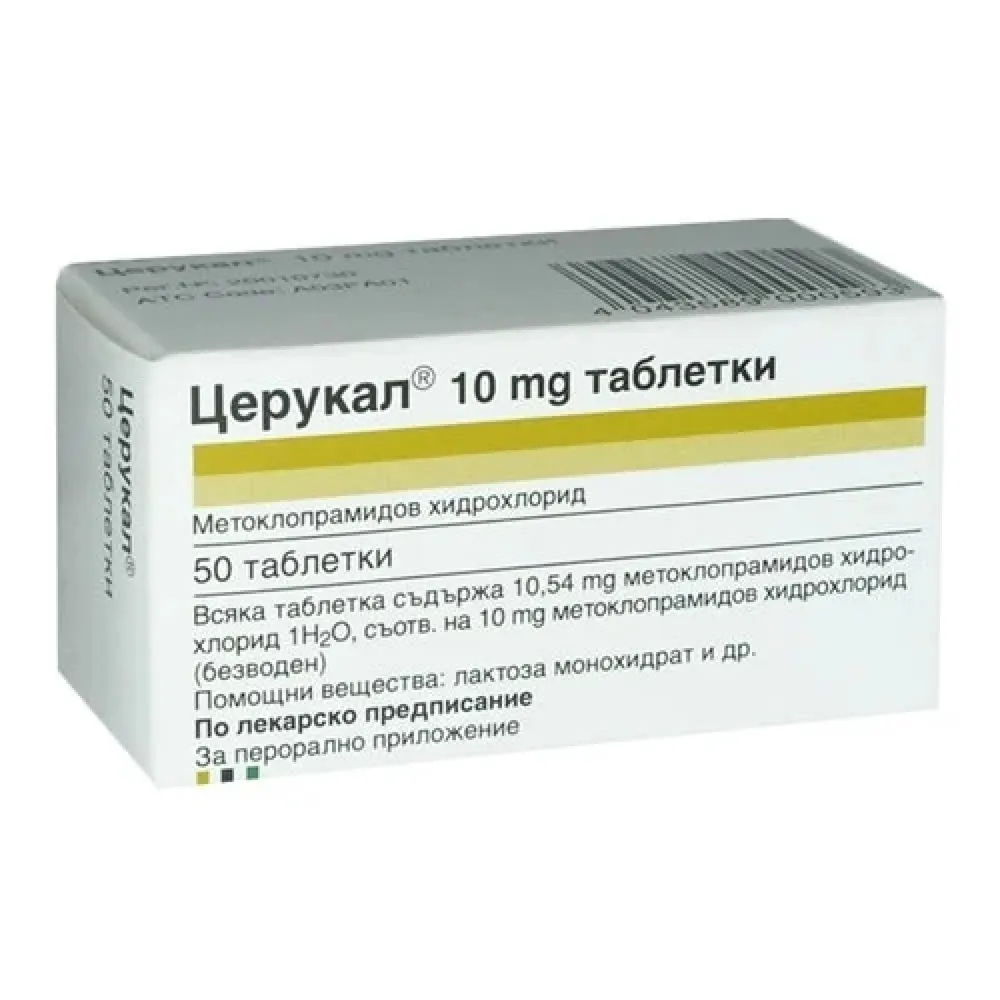
Table of Contents
INSTRUCTIONS FOR MEDICAL USE OF THE MEDICINAL PRODUCT Cerucal® (Cerucal®)
Composition:
Active substance: metoclopramide hydrochloride;
1 tablet contains metoclopramide hydrochloride (as metoclopramide hydrochloride monohydrate) 10 mg;
Excipients: potato starch, lactose monohydrate, gelatin, colloidal anhydrous silica, magnesium stearate.
Pharmaceutical form. Tablets.
Main physicochemical properties: white-colored, round, flat tablets with beveled edges, a score line on one side, intact edges and uniform appearance.
Pharmacotherapeutic group. Prokinetic agents (propulsants). Metoclopramide. ATC code A03FA01.
Pharmacological Properties
Pharmacodynamics
Metoclopramide is a central dopamine antagonist that also exhibits peripheral cholinergic activity.
Two main effects are observed: an antiemetic effect and an effect enhancing gastric emptying and intestinal transit.
The antiemetic effect results from action on the central chemoreceptor trigger zone in the brainstem, likely through inhibition of dopaminergic neurons. Enhanced peristalsis is partially regulated by higher centers, but a peripheral mechanism may also be involved, including activation of postganglionic cholinergic receptors and possibly blockade of dopaminergic receptors in the stomach and small intestine. Through the hypothalamus and the parasympathetic nervous system, it regulates and coordinates motor activity of the upper gastrointestinal tract. It increases gastric and intestinal tone, accelerates gastric emptying, reduces gastroparesis, prevents pyloric and esophageal reflux, and stimulates intestinal peristalsis. It normalizes bile secretion, reduces spasm of the sphincter of Oddi without altering its tone, and alleviates gallbladder dyskinesia.
Adverse effects are primarily manifested as extrapyramidal symptoms, which are based on dopamine receptor-blocking action in the central nervous system.
Prolonged treatment with metoclopramide may lead to increased serum prolactin concentrations due to lack of dopaminergic inhibition of prolactin secretion. Galactorrhea and menstrual cycle disturbances have been reported in women, and gynecomastia in men; however, these symptoms resolve after discontinuation of treatment.
Pharmacokinetics
After oral administration, metoclopramide is rapidly and completely absorbed. Maximum plasma concentration is reached within 30–120 minutes, on average within 1 hour. Onset of action on the gastrointestinal tract occurs within 20–40 minutes after oral administration. The oral bioavailability of metoclopramide averages 60–80%. The antiemetic effect lasts for approximately 12 hours. The elimination half-life ranges from 2.6 to 4.6 hours. Only a small fraction of the administered dose binds to plasma proteins. The volume of distribution ranges from 2.2 to 3.4 L/kg. Metoclopramide is metabolized in the liver. It crosses the blood-brain barrier and the placental barrier, and is excreted in breast milk. Approximately 20% of the dose is excreted unchanged, while the remainder (about 80%) is metabolized in the liver and excreted by the kidneys as conjugates with glucuronic or sulfuric acid.
Renal Insufficiency
In patients with severe renal insufficiency, metoclopramide clearance is reduced by up to 70%, and the plasma elimination half-life is prolonged (approximately 10 hours when creatinine clearance is 10–50 mL/min, and 15 hours when creatinine clearance is <10 mL/min).
Hepatic Insufficiency
In patients with liver cirrhosis, accumulation of metoclopramide has been observed, accompanied by a 50% reduction in plasma clearance.
Clinical characteristics.
Indications.
In adults, metoclopramide is indicated for the prevention of nausea and vomiting caused by radiotherapy, delayed nausea and vomiting caused by chemotherapy, and for symptomatic treatment of nausea and vomiting, including that associated with acute migraine (in combination with oral analgesics to enhance their absorption).
In children, metoclopramide should be used only as a second-line agent for the prevention of delayed nausea and vomiting caused by chemotherapy.
Contraindications.
- Hypersensitivity to metoclopramide or to any other component of the medicinal product;
- gastrointestinal bleeding;
- mechanical intestinal obstruction;
- gastrointestinal perforation;
- confirmed or suspected pheochromocytoma, due to the risk of severe hypertensive crisis;
- history of tardive dyskinesia induced by neuroleptics or metoclopramide;
- epilepsy (increased frequency and intensity of seizures);
- Parkinson's disease;
- concomitant use with levodopa or dopaminergic agonists (see section "Interaction with other medicinal products and other forms of interaction");
- history of methemoglobinemia associated with metoclopramide use or NADH-cytochrome-b5-reductase deficiency;
- prolactin-dependent tumors;
- increased seizure susceptibility (extrapyramidal movement disorders);
- age under 1 year, due to increased risk of extrapyramidal disorders (see section "Special precautions").
Interaction with other medicinal products and other forms of interaction.
Contraindicated combinations.
Levodopa or dopaminergic agonists and metoclopramide exhibit mutual antagonism.
Combinations to be avoided.
Alcohol enhances the sedative effect of metoclopramide.
Combinations requiring attention.
The prokinetic effect of metoclopramide may influence the absorption of certain medicinal products.
Anticholinergic agents and morphine derivatives: anticholinergic agents and morphine derivatives exhibit mutual antagonism with metoclopramide regarding their effects on gastrointestinal motility.
Central nervous system depressants (morphine derivatives, anxiolytics, sedative antihistamines – H1 receptor antagonists, sedative antidepressants, barbiturates, clonidine and related agents): central nervous system depressants potentiate the sedative effect of metoclopramide.
Neuroleptics: when metoclopramide is used in combination with other neuroleptics, cumulative effects and extrapyramidal disorders may occur.
Serotonergic agents: concomitant use of metoclopramide with serotonergic agents, such as selective serotonin reuptake inhibitors (SSRIs), may increase the risk of serotonin syndrome.
Digoxin: metoclopramide may reduce digoxin bioavailability. Careful monitoring of digoxin plasma concentrations is required.
Cyclosporine: metoclopramide increases cyclosporine bioavailability (Cmax by 46% and AUC by 22%). Careful monitoring of cyclosporine plasma concentrations is required. The clinical significance of this interaction is not fully established.
Mivacurium and succinylcholine: metoclopramide injection may prolong the duration of neuromuscular blockade (due to inhibition of plasma cholinesterase). Metoclopramide may prolong the effect of succinylcholine.
Potent CYP2D6 inhibitors: metoclopramide exposure levels increase when used concomitantly with strong CYP2D6 inhibitors, such as fluoxetine and paroxetine. Although the clinical significance of this increase is unknown, patients should be monitored for adverse reactions.
Metoclopramide may affect the absorption process of other substances. For example, it may delay the absorption of cimetidine, accelerate the absorption of paracetamol, various antibiotics (including tetracycline, pivampicillin), and lithium. Concomitant administration of metoclopramide tablets and lithium may lead to increased plasma levels of lithium.
Special precautions for use.
The drug should not be used for the treatment of chronic conditions such as gastroparesis, dyspepsia, and gastroesophageal reflux disease, or as an adjunctive agent in surgical or radiological procedures.
Neurological disorders.
Extrapyramidal disorders may occur, particularly in children and/or with high-dose administration. These reactions usually occur at the beginning of treatment and may appear even after a single dose. If extrapyramidal symptoms develop, metoclopramide must be discontinued immediately. These effects generally resolve completely after discontinuation of treatment, but symptomatic therapy may be required (benzodiazepines – in children and/or anticholinergic anti-Parkinson drugs – in adults).
To avoid overdose, a minimum interval of 6 hours must be maintained between doses of metoclopramide, even in cases of vomiting and dose rejection.
Prolonged treatment with metoclopramide may lead to tardive dyskinesia, which can potentially be irreversible, especially in elderly patients. Treatment should not exceed 3 months due to the risk of developing tardive dyskinesia (see section "Adverse reactions"). Treatment must be discontinued if clinical signs of tardive dyskinesia appear.
Cases of neuroleptic malignant syndrome have been reported with metoclopramide used in combination with neuroleptics, as well as with metoclopramide monotherapy (see section "Adverse reactions"). If symptoms of neuroleptic malignant syndrome occur, metoclopramide must be discontinued immediately and appropriate treatment initiated.
Extreme caution is required in patients with concomitant neurological disorders and in patients receiving treatment with other medicinal products acting on the central nervous system (see section "Contraindications").
Symptoms of Parkinson's disease may also be exacerbated by metoclopramide.
Methemoglobinemia.
Cases of methemoglobinemia, possibly associated with NADH-cytochrome-b5-reductase deficiency, have been reported. In such cases, metoclopramide must be discontinued immediately and appropriate measures taken (e.g., administration of methylene blue).
Cardiac disorders.
Serious adverse cardiovascular reactions, including cases of acute circulatory failure, severe bradycardia, cardiac arrest, and QT interval prolongation, have been reported following administration of metoclopramide by injection, particularly after intravenous administration (see section "Adverse reactions").
Metoclopramide should be used with particular caution, especially when administered intravenously, in elderly patients, patients with impaired cardiac conduction (including QT interval prolongation), patients with electrolyte imbalance or bradycardia, and patients taking drugs that prolong the QT interval.
Renal and hepatic impairment.
Dose reduction is recommended in patients with renal impairment or severe hepatic impairment (see section "Dosage and administration").
If a patient has known intolerance to certain sugars, they should consult their physician before taking this medicinal product. The product contains lactose; therefore, it should not be administered to patients with rare hereditary conditions such as galactose intolerance, lactase deficiency, or glucose-galactose malabsorption.
Use during pregnancy or breastfeeding.
Pregnancy.
Extensive data from use in pregnant women (over 1000 outcomes) indicate no evidence of teratogenic or fetotoxic effects. Metoclopramide may be used during pregnancy if clinically indicated. However, due to its pharmacological properties (similar to other neuroleptics), extrapyramidal symptoms in the newborn cannot be excluded if metoclopramide is used in late pregnancy. The use of metoclopramide in late pregnancy should be avoided. Neonatal monitoring is required when metoclopramide is administered.
Breastfeeding.
Metoclopramide passes into breast milk in small amounts. Effects of metoclopramide on the breastfed infant cannot be excluded. Therefore, the use of metoclopramide during breastfeeding is not recommended. The possibility of discontinuing metoclopramide should be considered in breastfeeding women.
Ability to affect reaction speed when driving or operating machinery.
Metoclopramide may cause drowsiness, dizziness, dyskinesia, and dystonia, which may affect vision as well as the ability to drive vehicles or operate other automated systems.
Dosage and method of administration
Take orally before meals, without chewing, with sufficient amount of liquid.
To minimize the risk of adverse reactions from the nervous system and other side effects, metoclopramide should be used only for short-term treatment (up to 5 days).
Adults.
The usual therapeutic dose of metoclopramide is 10 mg up to 3 times daily. The maximum daily dose is 30 mg or 0,5 mg/kg body weight. The maximum duration of treatment with metoclopramide is 5 days.
Children.
The recommended dose of metoclopramide for prevention of delayed nausea and vomiting caused by chemotherapy is 0,1–0,15 mg/kg body weight up to 3 times daily. The maximum daily dose is 0,5 mg/kg body weight.
Dosing regimen:
| Body weight, kg |
Single dose, mg |
Frequency |
| 30-60 |
5 |
Up to 3 times a day |
| >60 |
10 |
Up to 3 times a day |
The maximum duration of metoclopramide use is 5 days.
Geriatric patients.
Dose reduction should be considered in elderly patients due to age-related decline in renal and hepatic function.
Renal impairment.
In patients with end-stage renal disease (creatinine clearance ≤15 mL/min), the dose of metoclopramide should be reduced by 75%.
In patients with moderate to severe renal impairment (creatinine clearance 15–60 mL/min), the dose of metoclopramide should be reduced by 50%.
Hepatic impairment.
In patients with severe hepatic insufficiency, metoclopramide should be administered at half the usual dose.
Children.
Metoclopramide is contraindicated in children under 1 year of age due to increased risk of extrapyramidal disorders. Tablets should not be used to treat children weighing less than 30 kg. In children with body weight <30 kg, metoclopramide should be administered in dosage forms allowing appropriate dose adjustment.
Overdose.
Symptoms: drowsiness, depressed level of consciousness, confusion, irritability and increased restlessness, seizures, extrapyramidal disorders, cardiovascular dysfunction with bradycardia and either elevated or reduced arterial pressure, hallucinations, respiratory arrest, and cardiac arrest.
Treatment. In case of extrapyramidal symptoms, whether related to overdose or not, only symptomatic treatment is indicated (benzodiazepines – in children, and/or anticholinergic anti-Parkinson drugs – in adults).
Depending on the clinical condition, symptomatic treatment and continuous monitoring of cardiovascular and respiratory functions should be performed.
Adverse Reactions.
Blood and lymphatic system disorders: methemoglobinemia, which may be associated with NADH-cytochrome-b5-reductase deficiency, especially in infants; sulfhemoglobinemia, mainly related to concomitant use of high doses of sulfur-releasing drugs.
Cardiac disorders: bradycardia, especially with intravenous administration; transient cardiac arrest shortly after injection, which may result from bradycardia (see section "Special precautions"); atrioventricular block, sinus arrest, especially with intravenous administration; QT interval prolongation; torsade de pointes ventricular tachycardia; arterial hypotension, especially with intravenous administration; shock; syncope following parenteral administration; acute arterial hypertension in patients with pheochromocytoma (see section "Contraindications"); transient increase in blood pressure.
Endocrine system disorders*: amenorrhea, hyperprolactinemia, galactorrhea, gynecomastia, menstrual cycle disturbances.
Gastrointestinal disorders: nausea, dry mouth, constipation, diarrhea.
Immune system disorders: hypersensitivity, anaphylactic reactions (including anaphylactic shock), predominantly after intravenous administration.
Nervous system disorders: dyskinetic syndrome, mainly in children (involuntary spasmodic movements, particularly in the head, neck, and shoulder areas; tonic blepharospasm; spasm of facial and masticatory muscles; tongue deviation; spasm of pharyngeal and tongue muscles; abnormal head and neck posture; spinal muscle tension; spasmodic flexion of arms; spasmodic extension of legs); headache, dizziness, drowsiness, extrapyramidal disorders (which may occur even after a single dose, predominantly in children and adolescents and/or when exceeding the recommended dose) (see section "Special precautions"); parkinsonism (tremor, muscle rigidity, akinesia); akathisia; dystonia (including visual disturbances and oculogyric crisis); dyskinesia; decreased level of consciousness; tardive dyskinesia (which may be persistent during or after prolonged treatment, especially in elderly patients); neuroleptic malignant syndrome (characteristic symptoms: fever, muscle rigidity, loss of consciousness, fluctuations in blood pressure, seizures (mainly in patients with epilepsy)).
Skin disorders: rash, urticaria, skin hyperemia and itching, angioneurotic edema.
Psychiatric disorders: depression, hallucinations, confusion, anxiety, restlessness.
Laboratory investigations: elevated liver enzymes.
General disorders: asthenia, increased fatigue.
*Endocrine disorders during prolonged treatment are associated with hyperprolactinemia (amenorrhea, galactorrhea, gynecomastia). In such cases, the drug should be discontinued.
Particular caution is required in adolescents and in patients with severe renal impairment (renal insufficiency), due to reduced elimination of metoclopramide. In such patients, careful monitoring for adverse reactions is essential. If adverse reactions occur, the drug should be discontinued immediately.
Severe cardiovascular reactions have been reported following intravenous administration of metoclopramide (arrhythmias, e.g., supraventricular extrasystoles, ventricular extrasystoles, tachycardia, ranging from bradycardia to cardiac arrest).
There is an increased risk of acute (transient) neurological disorders in children and of tardive dyskinesia in elderly patients. The risk of nervous system adverse reactions increases with high-dose administration and prolonged treatment.
When high doses are used, the following reactions occur more frequently (sometimes simultaneously):
− extrapyramidal symptoms: acute dystonia and dyskinesia, parkinsonism syndrome, akathisia, even after a single dose of the drug, especially in children and adolescents;
− drowsiness, decreased level of consciousness, confusion, hallucinations.
Shelf life. 5 years.
The drug must not be used after the expiry date.
Storage conditions.
Store in the original container to protect from light at a temperature not exceeding 25 °C, in a place inaccessible to children.
Packaging. 50 tablets in a bottle. 1 bottle in a box.
Prescription status. Prescription only.
Manufacturer. PLIVA Hrvatska d.o.o.
Manufacturer's address and place of business.
Prilaz baruna Filipovića 25, 10000 Zagreb, Croatia.