Cerebrolysin®
Ukraine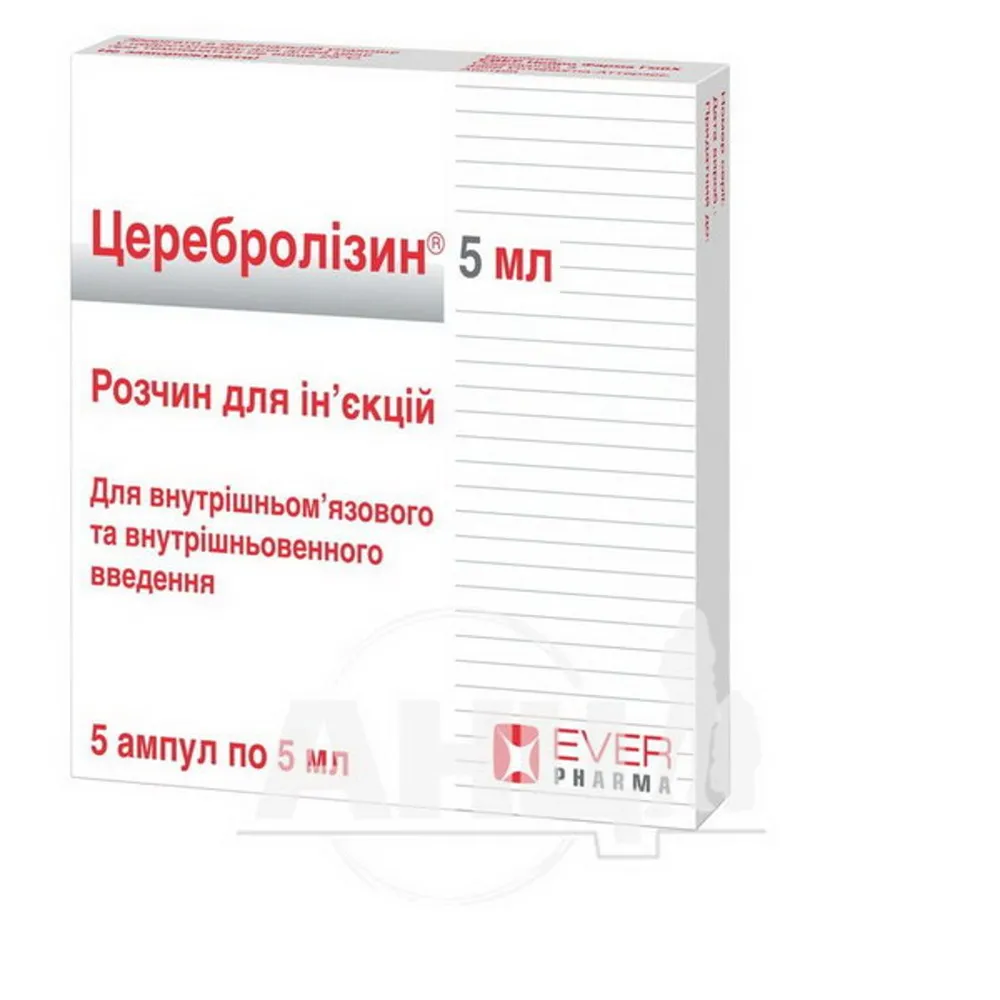
Table of Contents
INSTRUCTIONS FOR MEDICAL USE OF THE MEDICINAL PRODUCT CEREBROLYSIN® (CEREBROLYSIN®)
Composition:
Active substance: Cerebrolysin® concentrate;
1 ml of solution contains 215.2 mg of Cerebrolysin® concentrate (a peptide preparation derived from pig brain);
Excipients: sodium hydroxide, water for injections.
Pharmaceutical form. Injection solution.
Main physicochemical properties: clear, amber-colored solution.
Pharmacotherapeutic group. Psychostimulants and nootropic agents.
ATC code N06B X.
Pharmacological Properties
Pharmacodynamics
The proteolytic peptide fraction obtained from porcine brain stimulates cell differentiation, improves neuronal function, and activates protective and regenerative mechanisms. Animal experiments have demonstrated that Cerebrolysin® directly influences neuronal and synaptic plasticity, thereby promoting improvement in cognitive functions. This effect has been shown in young, adult, and aged animals with impaired learning ability. In experimental models of cerebral ischemia, Cerebrolysin® reduced infarct size, prevented edema formation, stabilized microcirculation, normalized neurological and cognitive deficits, and doubled survival rates. Positive results were also obtained in studies using models of Alzheimer's disease. In addition to its direct effects on neurons, Cerebrolysin® significantly increases the number of molecules responsible for glucose transport across the blood-brain barrier, thereby compensating for the critical energy deficit observed in this condition.
Quantitative analysis of electroencephalograms in healthy volunteers and patients with vascular dementia showed a significant dose-dependent increase in neuronal activity (increased alpha- and beta-rhythm frequencies) after four weeks of treatment with Cerebrolysin®. Regardless of the underlying cause of dementia—whether neurodegenerative Alzheimer-type dementia or vascular dementia—patients show objective improvement in cognitive functions and capacity for self-care following treatment with Cerebrolysin®. Clinically noticeable improvement in patients' condition is observed as early as two weeks after initiating treatment and increases with continued therapy. A positive effect with Cerebrolysin® treatment is observed in 60–70% of patients, irrespective of dementia type. In cases of senile Alzheimer-type dementia, clinical improvement persists after completion of active treatment. This is particularly true for long-term improvement in daily functioning, resulting in reduced need for external care and supervision. Due to its neurotrophic activity (similar to that of nerve growth factor), Cerebrolysin® may significantly slow, and in some cases even halt, the progression of neurodegenerative processes.
Peptides with high molecular weight and antigenic potential are removed from the product during manufacturing.
Studies have not revealed any influence of the drug on the immune system. Experiments have shown that Cerebrolysin® does not induce antibody formation or anaphylactic reactions.
Cerebrolysin® does not stimulate histamine receptors and does not affect erythrocyte hemagglutination.
Pharmacokinetics
Because the proteolytic peptide fraction derived from porcine brain contains short biologically active peptides similar or identical to those produced endogenously, direct measurement of pharmacokinetic parameters of Cerebrolysin® has not been possible to date. Indirect pharmacokinetic data have been obtained based on analysis of the drug's pharmacodynamic profile. Neurotrophic activity of Cerebrolysin® in blood plasma is detectable for up to 24 hours after a single administration. The components of the drug can cross the blood-brain barrier. Preclinical in vivo experiments have demonstrated identical pharmacodynamic effects on the central nervous system following both intracerebroventricular and peripheral administration. This provides indirect evidence that the drug's components cross the blood-brain barrier.
Clinical characteristics.
Indications.
- Organic, metabolic disorders and neurodegenerative diseases of the brain, particularly senile dementia of the Alzheimer type.
- Post-stroke complications.
- Traumatic brain injuries (conditions following brain surgery, closed head injuries, cerebral concussion).
Contraindications.
- Hypersensitivity to any component of the drug.
- Epilepsy.
- Severe renal function impairment.
Interaction with other medicinal products and other forms of interaction.
Given the pharmacological profile of Cerebrolysin®, particular attention should be paid to potential additive effects when used concomitantly with antidepressants or MAO inhibitors. In such cases, a reduction in the dose of antidepressants is recommended.
Cerebrolysin® should not be mixed with balanced amino acid solutions in the same infusion bottle.
Simultaneous administration of Cerebrolysin® with vitamins and cardiovascular drugs is permitted; however, they should not be mixed in the same syringe.
Special precautions for use
Special caution is required when prescribing Cerebrolysin® to patients with allergic diathesis.
Although there is no evidence that Cerebrolysin® may increase renal load, the drug should not be administered to patients with severe renal impairment.
This medicinal product contains 2.57 mg of sodium per 1 mL of solution, equivalent to 0.13% of the recommended maximum daily intake of sodium for adults. Caution should be exercised when administering to patients on a sodium-controlled diet.
Use during pregnancy or breastfeeding
Animal studies have not revealed reproductive toxicity of the drug. However, data on the effect of the drug on human reproductive function are lacking. Cerebrolysin® may be used during pregnancy only after careful assessment of the benefit-risk ratio for the mother and potential risk to the fetus/child. Breastfeeding should be discontinued during treatment with this drug.
Effect on the ability to drive vehicles or operate machinery
Clinical studies have not shown any effect of the drug on reaction speed when driving vehicles or operating machinery. However, in some patients, Cerebrolysin® may cause certain adverse neurological and psychiatric side effects, which could temporarily impair the ability to drive vehicles or operate machinery.
Method of Administration and Dosage
The preparation should be administered intravenously or intramuscularly.
Undiluted Cerebrolysin® can be administered at doses up to 5 ml intramuscularly and up to 10 ml via intravenous injection. The preparation at doses from 10 to 50 ml (maximum dose) should only be administered by slow intravenous infusion after dilution to a volume of 100 ml with one of the standard solutions listed below. The duration of the infusion should be from 15 to 60 minutes.
After dilution with 0.9% sodium chloride solution (9 mg NaCl/ml), Ringer's solution (Na+ 153.98 mmol/l, Ca2+ 2.74 mmol/l, K+ 4.02 mmol/l, Cl– 163.48 mmol/l), or 5% glucose solution, the infusion solution is physically and chemically stable for 24 hours when stored at room temperature and protected from light. From a microbiological standpoint, the infusion solution should be administered immediately after preparation.
The recommended optimal duration of treatment course is 10–20 days with daily administration of the preparation.
Single doses up to 50 ml may be administered; however, course therapy is more effective.
Recommended daily doses:
- Organic, metabolic disorders and neurodegenerative diseases of the brain, particularly Alzheimer-type senile dementia: 5–30 ml
- Post-stroke complications: 10–50 ml
- Traumatic brain injuries: 10–50 ml
- For children: 1–2 ml
Therapeutic efficacy usually increases with repeated courses. Treatment should be continued as long as improvement in the patient's condition due to therapy is observed. After completion of the initial course, the frequency of administration may be reduced to 2 or 3 times per week. A break between treatment courses should last at least as long as the duration of the treatment course.
The recommended dose for children aged 6 months and older is 0.1 ml/kg body weight (up to 2 ml per day).
Instructions for Healthcare Personnel
When administering Cerebrolysin® via a permanent intravenous catheter, the system should be flushed with sodium chloride solution before and after drug infusion.
The preparation should be drawn from the ampoule/vial immediately before use.
Only single withdrawal of the preparation from the ampoule/vial is permitted.
Only a clear, amber-colored solution should be used.
Children
The preparation may be used in pediatric practice when there are justified indications.
Overdose
No cases of intoxication or adverse health effects due to overdose of Cerebrolysin® have been reported.
Adverse Reactions.
The following adverse effects and reactions have been reported during clinical studies and post-marketing surveillance, regardless of a causal relationship to Cerebrolysin® therapy (the drug is primarily used for the treatment of elderly patients, and the listed symptoms are frequently observed in this patient group).
Immune system disorders
Rare (<1/10,000) – hypersensitivity reactions or allergic reactions, anaphylactic shock, angioedema, urticaria, chills.
Metabolism and nutrition disorders
Uncommon (>1/10,000 – <1/1,000) – loss of appetite.
Psychiatric disorders
Uncommon (>1/10,000 – <1/1,000) – in isolated cases, the desired therapeutic effect was accompanied by agitation (with manifestations of aggression, confusion, insomnia), depression, apathy, weakness.
Nervous system disorders
Uncommon (>1/10,000 – <1/1,000) – dizziness, tremor, headache, drowsiness may occur with very rapid administration.
Rare (<1/10,000) – grand mal seizures, convulsions.
Cardiac disorders
Uncommon (>1/10,000 – <1/1,000) – arterial hypertension, arterial hypotension.
Rare (<1/10,000) – palpitations, tachycardia, and arrhythmia, chest pain may occur with very rapid administration.
Respiratory, thoracic and mediastinal disorders
Uncommon (>1/10,000 – <1/1,000) – hyperventilation, dyspnea, chest pain.
Gastrointestinal disorders
Rare (<1/10,000) – dyspepsia, diarrhea, constipation, nausea, vomiting.
Skin and subcutaneous tissue disorders
Uncommon (>1/10,000 – <1/1,000) – with very rapid administration, sensation of heat, increased sweating, pruritus, rash (including maculopapular), urticaria, skin redness may occur.
General disorders and administration site conditions
Uncommon (>1/10,000 – <1/1,000) – increased fatigue, influenza-like symptoms (e.g., runny nose, cough, respiratory tract infections).
Rare (<1/10,000) – injection site reactions, particularly erythema and burning sensation at the injection site, local inflammatory reactions.
Other reactions
Rare (<1/10,000) – pain in the neck, limbs, lower back.
Shelf life.
Cerebrolysin® in ampoules: 5 years.
Cerebrolysin® in vials: 2 years.
Storage conditions.
Store in the original packaging, out of reach of children, at a temperature not exceeding 25 °C. Do not freeze.
Incompatibilities.
Cerebrolysin® is incompatible with solutions that alter the pH of the preparation (5.0–8.0), as well as with lipid-containing solutions.
Cerebrolysin® should not be mixed with balanced amino acid solutions, vitamins, or cardiovascular drugs in the same infusion container.
Packaging.
1 ml in a brown glass ampoule; 10 ampoules in a cardboard box.
2 ml in a brown glass ampoule; 10 ampoules in a cardboard box.
5 ml in a brown glass ampoule; 5 ampoules in a cardboard box.
10 ml in a brown glass ampoule; 5 ampoules in a cardboard box.
20 ml in a brown glass ampoule; 5 ampoules in a cardboard box.
30 ml or 50 ml in a brown glass vial, stoppered with a chlorobutyl rubber closure with fluoropolymer coating and sealed with an aluminum cap;
1 vial in a cardboard box.
Prescription category.
Prescription only.
Manufacturer/Marketing Authorization Holder.
EVER Neuro Pharma GmbH, Austria.
EVER Neuro Pharma GmbH, Austria.
Address of manufacturer and location of its business operation/Address of marketing authorization holder.
Oberburgau 3, 4866 Unterach am Attersee, Austria.
Oberburgau 3, 4866 Unterach am Attersee, Austria.