Cefotaxime-vista
Ukraine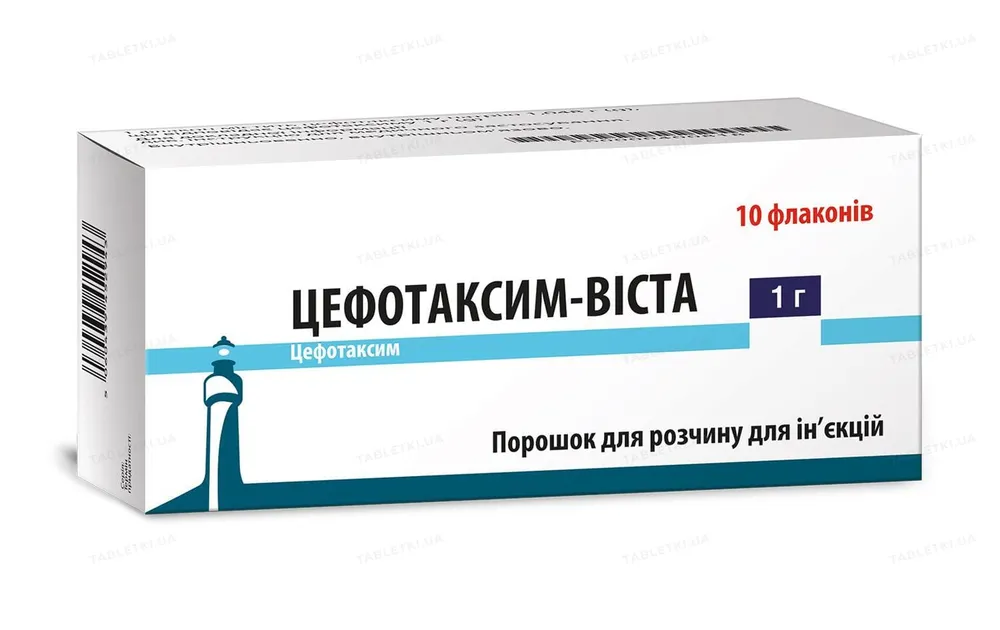
Table of Contents
INSTRUCTIONS FOR MEDICAL USE OF THE MEDICINAL PRODUCT CEFOTAXIME-VISTA (CEFOTAXIME-VISTA)
Composition:
Active substance: cefotaxime;
1 vial contains 1.048 g of sodium cefotaxime, equivalent to 1 g of cefotaxime.
Pharmaceutical form. Powder for solution for injection.
Main physicochemical properties: white or slightly yellowish hygroscopic powder.
Pharmacotherapeutic group. Antimicrobial agents for systemic use. Beta-lactam antibiotics. Third-generation cephalosporins. Cefotaxime.
ATC code J01D D01.
Pharmacological properties.
Pharmacodynamics.
Mechanism of action. Cefotaxime is a broad-spectrum antibiotic of the third-generation cephalosporin class for parenteral administration. Cefotaxime inhibits bacterial cell wall synthesis by interfering with enzymes responsible for peptidoglycan cross-linking. This leads to bacterial cell lysis.
Mechanism of resistance. Bacterial resistance to cefotaxime may result from one or more of the following mechanisms:
- Hydrolysis by beta-lactamases. Cefotaxime can be hydrolyzed by many so-called broad-spectrum beta-lactamases. It is also hydrolyzed by chromosomally encoded (AmpC-type) beta-lactamases.
- Resistance based on permeability.
- Mechanisms involving overexpression of efflux pumps.
Several of these mechanisms may coexist simultaneously in a single bacterium.
Bacteria resistant to cefotaxime may exhibit varying degrees of cross-resistance to other beta-lactam antibiotics. Gram-negative bacteria resistant to cefotaxime often show cross-resistance to other broad-spectrum third-generation cephalosporins (e.g., ceftazidime, ceftriaxone).
Clinical breakpoints. The clinical breakpoints for minimum inhibitory concentration (MIC) of cefotaxime, as defined by the European Committee on Antimicrobial Susceptibility Testing (EUCAST) to distinguish susceptible from resistant microorganisms, are presented in Table 1.
Table 1
EUCAST clinical breakpoints for cefotaxime
| Pathogenic microorganism |
Susceptible |
Resistant |
| Enterobacteriaceae |
≤ 1 mg/l |
> 2 mg/l |
| S. pneumoniae |
≤ 0.5 mg/l |
> 2 mg/l |
| Other Streptococci |
≤ 0.5 mg/l |
> 0.5 mg/l |
| H. influenzae |
≤ 0.12 mg/l |
> 0.12 mg/l |
| M. catarrhalis |
≤ 1 mg/l |
> 2 mg/l |
| N. gonorrhoeae |
≤ 0.12 mg/l |
> 0.12 mg/l |
| N. meningitidis |
≤ 0.12 mg/l |
> 0.12 mg/l |
| Intermediate values, not species-related |
≤ 1 mg/l |
> 2 mg/l |
| Susceptibility of staphylococci (Staphylococcus) to cephalosporins follows from their susceptibility to methicillin. Susceptibility of streptococci (Streptococcus) groups A, B, C, G follows from their susceptibility to benzylpenicillin. |
||
Antibacterial spectrum. Resistance prevalence may vary depending on the region and time for selected species. Local resistance information should be taken into account when treating serious infections. If necessary, consultation with specialists should be sought when local resistance prevalence has reached a level at which the benefit of use is questionable.
| Typically susceptible microorganisms |
| Aerobic gram-positive bacteria Methicillin-susceptible Staphylococcus aureus. Methicillin-susceptible coagulase-negative staphylococci. Methicillin-susceptible Staphylococcus epidermidis. Methicillin-susceptible Staphylococcus haemolyticus. Group A streptococci (including Streptococcus pyogenes). Group B streptococci. Streptococcus pneumoniae. Streptococcus viridans group. Aerobic gram-negative bacteria Citrobacter spp. (excluding Citrobacter freundii). Escherichia coli. Haemophilus influenzae. Moraxella catarrhalis. Neisseria gonorrhoeae. Neisseria meningitidis. Proteus mirabilis. Klebsiella spp. Serratia spp. Yersinia enterocolitica. Other microorganisms Borrelia spp. |
| Microorganisms that may develop resistance |
| Bacteroides fragilis. Enterobacter spp. Aerobic gram-positive bacteria Methicillin-resistant Staphylococcus aureus. Methicillin-resistant coagulase-negative staphylococci. Aerobic gram-negative bacteria Acinetobacter spp. Citrobacter freundii. Morganella morganii. Providencia spp. Pseudomonas aeruginosa. Stenotrophomonas maltophilia. |
| Inherently resistant microorganisms |
| Aerobic gram-positive bacteria Enterococcus spp. Other microorganisms Chlamydia spp. Legionella pneumophila. Listeria spp. Mycoplasma spp. Treponema pallidum. |
Pharmacokinetics.
Cefotaxime is administered parenterally. After a single intravenous dose of 1 g, serum concentrations of cefotaxime were approximately 81–102 mg/L at 5 minutes and 46 mg/L at 15 minutes. After a single intravenous dose of 2 g, serum concentrations were 167–214 mg/L at 8 minutes.
Following intramuscular administration, maximum serum concentration of cefotaxime (approximately 20 mg/L after a 1 g dose) was achieved within 30 minutes. Distribution. Cefotaxime rapidly penetrates tissues, crosses the placental barrier, and reaches high concentrations in fetal tissues (up to 6 mg/kg). It appears in breast milk only in low amounts (milk concentration is 0.4 mg/L after a 2 g dose).
In cases of inflammation of the meninges, cefotaxime and desacetylcefotaxime penetrate into the cerebrospinal fluid (CSF) and achieve therapeutically effective concentrations (e.g., in infections caused by Gram-negative bacteria and pneumococci).
The apparent volume of distribution is 21–37 L. Plasma protein binding is approximately 25–40%.
Metabolism. Cefotaxime undergoes extensive metabolism in the human body. Approximately 15–25% of the parenterally administered dose is excreted as O-desacetylcefotaxime. This metabolite possesses antibacterial activity. In addition to desacetylcefotaxime, two other inactive metabolites (lactones) are formed. The lactone is formed from desacetylcefotaxime as a short-lived intermediate product, which is rapidly no longer detectable in urine or plasma because it quickly converts into stereoisomers of the lactone with an opened ring (beta-lactam ring). These isomers are also excreted in urine. Excretion. Excretion of cefotaxime and desacetylcefotaxime occurs predominantly via the renal route. A small percentage (approximately 2%) is excreted in bile. In urine collected over 6 hours, 40–60% of the dose was recovered unchanged and approximately 20% as desacetylcefotaxime. After intravenous administration of radiolabeled cefotaxime, more than 80% was excreted in urine, of which 50–60% was unchanged and the remainder as three metabolites.
Total clearance of cefotaxime is 240–390 mL/min, and renal clearance is 130–150 mL/min.
The elimination half-life of cefotaxime and its active metabolite in serum is 50–80 minutes and 125 minutes, respectively. In elderly patients (>80 years of age), the elimination half-life of cefotaxime and its active metabolite is 120–150 minutes and 5 hours, respectively.
In cases of severe renal impairment (creatinine clearance of 3–10 mL/min), the elimination half-life of cefotaxime may be prolonged to 2.5–10 hours. Under these conditions, cefotaxime accumulates only to a minor extent, in contrast to active and inactive metabolites.
Both cefotaxime and desacetylcefotaxime are significantly removed from the blood by hemodialysis.
Clinical characteristics.
Indications.
For the treatment of serious infections caused by, or likely to be caused by, microorganisms sensitive to cefotaxime:
- Bacterial pneumonia (cefotaxime is not active against bacteria causing atypical pneumonia or against various other bacterial strains that may cause atypical pneumonia, including P. aeruginosa (see section "Pharmacodynamics")).
- Complicated infections of the kidneys and upper urinary tract.
- Severe skin and soft tissue infections.
- Genital infections caused by gonococci, especially when penicillin therapy has proven ineffective or is unsuitable.
- Intra-abdominal infections (including peritonitis): when treating intra-abdominal infections, cefotaxime should be used in combination with an antibiotic active against anaerobic microorganisms.
- Acute bacterial meningitis (particularly caused by H. influenzae, N. meningitidis, S. pneumoniae, E. coli, Klebsiella spp.).
- Lyme disease or tick-borne borreliosis (particularly stages II and III).
- Bacteremias associated with, or likely associated with, one of the listed infections (if the infection is caused by gram-negative bacteria, this medicinal product should be combined with another appropriate antibiotic).
- Endocarditis (if the infection is caused by gram-negative bacteria, this medicinal product must be combined with another appropriate antibiotic).
For perioperative prophylaxis of infectious complications (before/after surgical procedures, particularly on the colon and rectum (colorectal surgery), gastrointestinal tract, prostate gland, genitourinary system, and obstetric-gynecological surgeries in patients with a significant risk of postoperative infections). Official recommendations regarding the proper use of antibacterial agents should be taken into account.
Contraindications.
Hypersensitivity to cephalosporin antibiotics and to other β-lactam antibiotics.
Contraindications for solutions containing lidocaine:
- Hypersensitivity to lidocaine or other amide-type local anesthetics;
- Atrioventricular block without an implanted pacemaker;
- Severe heart failure;
- Intravenous administration;
- Age under 1 year (for intramuscular administration).
Interaction with other medicinal products and other types of interactions.
When used concomitantly with nephrotoxic medicinal products (aminoglycosides) and potent diuretics (ethacrynic acid, furosemide), colistin, polymyxin, the risk of developing renal failure increases. Renal function must be monitored in these patients.
Cefotaxime is incompatible with solutions of other antibiotics; they should be administered separately. When anticoagulants of indirect action and cefotaxime are used together, these medicinal products act synergistically.
During treatment with cefotaxime, the effectiveness of oral contraceptives may be reduced; therefore, additional contraception is necessary during this period. Cefotaxime should not be used concomitantly with bacteriostatic antibiotics (e.g., tetracyclines, erythromycin, chloramphenicol) due to the possibility of an antagonistic effect.
When used in combination therapy, cefotaxime solutions should not be mixed with solutions of aminoglycosides; they must be administered separately.
Concomitant use of nifedipine increases the bioavailability of cefotaxime by 70%. Probenecid blocks tubular secretion of cefotaxime and prolongs its elimination half-life, increasing cefotaxime exposure approximately twofold and reducing renal clearance by approximately 50% at therapeutic doses.
Due to the wide therapeutic range of cefotaxime, dosage adjustment is not required in patients with normal renal function.
Dosage adjustment may be necessary in patients with impaired renal function. The medicinal product Cefotaxime-Vista should not be used concomitantly with lidocaine:
- When administered intravenously;
- In children under 30 months of age;
- In patients with a history of hypersensitivity to lidocaine;
- In patients with heart block;
- In patients with severe heart failure.
Effect on laboratory test results
During therapy with cephalosporins, a false-positive Coombs' test may occur; this phenomenon may also occur during treatment with cefotaxime and may interfere with cross-matching blood tests.
It is recommended to use glucose oxidase methods for determining blood glucose levels due to the possibility of false-positive results when using non-specific reagents (Benedict's, Fehling's, or Clinistix). Meslocillin and azlocillin may reduce cefotaxime clearance.
Special precautions for use.
Cefotaxime-Vista should be prescribed with caution in patients with impaired renal or hepatic function, or with a history of hypersensitivity to penicillins. In patients with impaired renal function, the dose should be reduced according to the severity of renal insufficiency and the susceptibility of the causative organism. During prolonged treatment, renal function should be monitored and prophylaxis of dysbiosis should be implemented. It is advisable to regularly monitor peripheral blood cell counts and liver function. False-positive Coombs test results may occur during treatment with this medicinal product.
Anaphylactic reactions.
Administration of cephalosporins requires careful assessment of allergic history (allergic diathesis, asthma, hypersensitivity reactions to beta-lactam antibiotics). If a hypersensitivity reaction occurs in a patient, treatment should be discontinued immediately. Cefotaxime is strictly contraindicated in patients with a history of immediate-type hypersensitivity reactions to cephalosporins. In case of any doubts, a physician must be present during the first administration of the drug due to the potential risk of anaphylactic reaction. Cross-allergy between cephalosporins and penicillins is known to occur in 5–10% of cases. Therefore, the medicinal product should be administered with particular caution in patients with a history of penicillin allergy.
Pseudomembranous colitis.
Pseudomembranous colitis, characterized by severe and persistent diarrhea, may develop within the first weeks of treatment. Diagnosis is confirmed by colonoscopy and/or histological examination. These complications are considered serious: immediate discontinuation of the drug and initiation of appropriate therapy, including oral vancomycin or metronidazole, are required. Concomitant use of cefotaxime with nephrotoxic drugs requires monitoring of renal function; treatment lasting more than 10 days requires monitoring of blood parameters. Elderly and debilitated patients should be administered vitamin K (to prevent hypocoagulation).
Severe cutaneous adverse reactions (SCARs).
During the post-marketing period, cases of severe cutaneous adverse reactions associated with cefotaxime therapy have been reported, including acute generalized exanthematous pustulosis (AGEP), Stevens-Johnson syndrome (SJS), toxic epidermal necrolysis (TEN), and drug reaction with eosinophilia and systemic symptoms (DRESS), which may be life-threatening or fatal.
Patients should be informed about the signs and symptoms of skin reactions before initiating treatment.
If signs or symptoms suggestive of these reactions occur, cefotaxime should be discontinued immediately. If AGEP, SJS, TEN, or DRESS develops during cefotaxime therapy, re-administration of cefotaxime is contraindicated and treatment must be permanently discontinued.
In children, skin rash may be mistakenly attributed to the underlying infection or an alternative infectious process. Therefore, physicians should consider the possibility of a reaction to cefotaxime in children who develop rash and fever during therapy.
Clostridium difficile-associated disease (e.g., pseudomembranous colitis).
Diarrhea, especially if severe and/or persistent, occurring during or within several weeks after treatment may be symptomatic of Clostridium difficile-associated disease. The severity of Clostridium difficile-associated disease may range from mild to life-threatening, with pseudomembranous colitis being the most severe form. Diagnosis of this rare but potentially fatal condition can be confirmed by detection of toxins, endoscopy, and/or histological examination. This diagnosis should be considered in any patient presenting with diarrhea during or after cefotaxime therapy. If pseudomembranous colitis is suspected, cefotaxime therapy should be discontinued immediately and appropriate specific antibiotic treatment should be initiated promptly.
Fecal stasis may predispose to the development of Clostridium difficile-associated disease. The use of drugs that inhibit intestinal peristalsis should be avoided.
Hematological reactions.
Leukopenia and neutropenia may occur during cefotaxime therapy; bone marrow suppression, pancytopenia, and agranulocytosis are less common, particularly during prolonged treatment. If treatment lasts longer than 7–10 days, blood counts should be monitored regularly. If blood test results (hemogram) deviate from normal, treatment should be discontinued. Cases of eosinophilia and thrombocytopenia, which resolve rapidly after discontinuation of therapy, have been reported. Hemolytic anemia has also been reported.
Patients with renal impairment.
Dosage adjustment is necessary based on calculated creatinine clearance. Caution should be exercised when cefotaxime is used concomitantly with aminoglycosides, furosemide, probenecid, or other nephrotoxic drugs. Renal function should be monitored regularly in these patients, in elderly patients, and in patients with pre-existing renal impairment.
Neurotoxicity (encephalopathy).
Particularly in patients with renal impairment, administration of high doses of beta-lactam antibiotics, including cefotaxime, may lead to encephalopathy (altered/loss of consciousness, abnormal movements, confusion, and seizures). Patients should be advised to seek immediate medical attention if such reactions occur.
During post-marketing surveillance, potentially life-threatening arrhythmias have been reported in a very small number of patients receiving cefotaxime via rapid intravenous injection through a central venous catheter. Therefore, the recommended infusion time must be strictly observed.
As with other broad-spectrum antibiotics, prolonged use of Cefotaxime-Vista may lead to overgrowth of non-susceptible microorganisms, necessitating discontinuation of treatment. If superinfection occurs during therapy, appropriate antimicrobial therapy should be initiated. False-positive results may occur when measuring urinary glucose by reduction methods. To avoid this, an enzymatic test should be used.
Alcohol consumption should be avoided during treatment, as disulfiram-like effects may occur (facial flushing, abdominal cramps, nausea, vomiting, headache, hypotension, tachycardia, and respiratory difficulty).
Important information on excipients.
This medicinal product contains 2.2 mmol (or 50.5 mg) of sodium per 1 g of powder for injection solution. Caution is required when administering this product to patients on a sodium-restricted diet.
Use during pregnancy or breastfeeding.
Pregnancy.
Cefotaxime crosses the placental barrier. Animal studies have not revealed teratogenic effects of cefotaxime. However, the safety of cefotaxime use during human pregnancy has not been established; therefore, the drug should not be used during pregnancy.
Breastfeeding period.
Cefotaxime is excreted in breast milk. An effect on the infant’s physiological gut flora cannot be excluded, which may lead to diarrhea, colonization with yeast-like fungi, or sensitization of the infant. Therefore, a decision must be made whether to temporarily or permanently discontinue breastfeeding or to discontinue therapy, weighing the benefits of breastfeeding for the infant against the benefits of treatment for the mother.
Fertility.
Use of the drug in women of childbearing potential requires careful assessment of expected benefits versus potential risks.
Ability to influence reaction speed when driving or operating machinery.
Due to the possible occurrence of adverse reactions such as dizziness or encephalopathy (e.g., altered/loss of consciousness, abnormal movements, confusion, and seizures), patients should avoid driving or operating machinery during treatment.
Dosage and Administration
The medicinal product is intended for intravenous bolus and infusion, as well as intramuscular administration.
For intravenous bolus injection, dissolve 1 g of powder in 8 mL of sterile water for injections. Administer slowly over 3–5 minutes due to the potential risk of life-threatening arrhythmias when cefotaxime is administered via a central venous catheter.
For intravenous infusion, dissolve 1 g or 2 g of powder in 40–100 mL of 0.9% sodium chloride solution or 5% glucose solution. The infusion should last 50–60 minutes. For intramuscular injection, dissolve 1 g of powder in 4 mL of sterile water for injections or in 1% lidocaine solution and inject deeply into the gluteal muscle. If lidocaine is used, intravenous administration of the medicinal product is strictly contraindicated.
Treatment may be initiated before the results of antibiotic susceptibility testing are available. Cefotaxime exerts a synergistic effect when used in combination with aminoglycosides.
Dosage. The dosage and route of administration depend on the severity of infection, microbial susceptibility, and the patient's clinical condition.
Duration of treatment.
The duration of treatment with Cefotaxime-Vista depends on the patient's clinical status and the course of the disease. Treatment should last at least 10 days if the infection is caused by Streptococcus pyogenes (parenteral therapy may be switched to oral therapy before the end of the 10-day period).
Adults and adolescents (aged 12 to 16–18 years).
The usual dose is 1 g of cefotaxime every 12 hours. In severe infections, the daily dose may be increased up to 12 g. Daily doses up to 6 g may be divided into at least two separate doses administered at 12-hour intervals. Higher daily doses should be divided into at least three or four separate doses administered at 12-hour intervals. Higher daily doses should be divided into at least three or four separate doses administered at 8- or 6-hour intervals, respectively.
Table 2 may serve as a guide for dosage.
Table 2
| Type of infection |
Single dose of cefotaxime |
Interval between administrations of the drug |
Daily dose of cefotaxime |
| Typical infections in which microbial sensitivity has been demonstrated or is expected |
1 g |
12 hours |
2 g |
| Infections in which high or moderate sensitivity of various microorganisms has been demonstrated or is expected |
2 g |
12 hours |
4 g |
| Bacterial diseases of unclear etiology that cannot be localized, patient's condition is critical |
2–3 g |
8 hours 6 hours |
6–9 g 8–12 g |
Infants and children (from 28 days to 11 years of age).
Usually 50–100 mg/kg body weight per day, depending on the severity of infection (up to 150 mg), divided into 2–4 equal doses (every 12–6 hours).
Table 3 may serve as a guide for dosing.
Table 3
| Type of infection |
Interval between administrations of the drug |
Daily dose of cefotaxime |
| Typical infections in which microbial sensitivity has been demonstrated or is expected |
6–12 hours |
50 mg/kg |
| Infections in which high or moderate sensitivity of various microorganisms has been demonstrated or is expected |
6–12 hours |
100 mg/kg |
| Bacterial diseases of unknown etiology that cannot be localized, patient's condition is critical |
6–8 hours |
150 mg/kg* |
* In individual cases, especially in life-threatening situations, it may be necessary to increase the daily dose up to 200 mg/kg body weight per day. However, the maximum daily dose of 12 grams should not be exceeded.
Preterm and full-term newborns (aged 0–27 days).
The usual dose is 50 mg/kg body weight per day, divided into 2–4 equal doses (every 12–6 hours). In life-threatening situations, an increase in the daily dose may be required. For severe infections, a dose of 150 mg/kg body weight per day is administered. Table 4 may serve as a guide for dosing.
Table 4
| Type of infection |
Age |
Interval between administrations |
Daily dose of cefotaxime |
| Typical infections caused by susceptible microorganisms where high or moderate sensitivity has been demonstrated or is expected |
0–7 days 8 days–1 month |
6–12 hours |
50 mg/kg |
| Bacterial diseases of unknown etiology that cannot be localized, patient's condition is critical |
0–7 days 8 days–1 month |
6–12 hours |
100 mg/kg⃰ 150 mg/kg* |
* In individual cases, especially in life-threatening situations, it may be necessary to increase the daily dose up to 200 mg/kg body weight per day. This dose should not be exceeded due to insufficiently developed renal excretory function (parameter: endogenous creatinine clearance).
Elderly patients.
No dose adjustment is required in elderly patients with normal renal and hepatic function.
Dosing in patients with renal impairment.
In patients with creatinine clearance less than 10 mL/min, after an initial standard dose, maintenance doses should be reduced to half the standard dose, without changing the interval between administrations.
In patients undergoing hemodialysis: 1 g to 2 g per day, depending on the severity of infection. On the day of hemodialysis procedure, cefotaxime should be administered after completion of the dialysis session.
In patients undergoing peritoneal dialysis: 1 g to 2 g per day, depending on the severity of infection. Cefotaxime is not removed by peritoneal dialysis.
Other recommendations.
Gonorrhea. Single dose (intramuscularly or intravenously) of 0.5 g to 1 g cefotaxime. In complicated infections, current official guidelines should be considered. Syphilis should be ruled out before initiating treatment. Urinary tract infections. For uncomplicated urinary tract infections: 1 g every 12 hours.
Bacterial meningitis. In adults, recommended daily doses are 6 g to 12 g per day, divided into equal doses every 6–8 hours. In children, recommended daily doses are 150 mg/kg to 200 mg/kg body weight per day, divided into equal doses every 6–8 hours. Neonates aged 1 to 7 days may be given 50 mg/kg body weight every 12 hours, and neonates aged 7 to 28 days – 50 mg/kg body weight every 8 hours. Intra-abdominal infections. Intra-abdominal infections should be treated with cefotaxime in combination with other appropriate antibiotics.
Perioperative prophylaxis. For perioperative prevention of infectious complications, a single dose of 1 g to 2 g cefotaxime is recommended 30–60 minutes before the start of surgery. An additional antibiotic is required to provide protection against anaerobic microorganisms. If surgery lasts longer than 90 minutes, an additional dose is needed. Method of administration.
Cefotaxime and aminoglycosides should not be mixed in the same syringe or infusion solution. Preparation of solutions must be performed under aseptic (sterile) conditions. Use immediately after preparation.
Children.
Cefotaxime should not be administered intramuscularly to children under 1 year of age.
Overdose.
Symptoms: possible fever, leukopenia, thrombocytopenia, acute hemolytic anemia, skin, gastrointestinal and hepatic reactions, dyspnea, renal failure, stomatitis, anorexia, temporary hearing loss, disorientation, encephalopathy (especially in patients with renal impairment and when high doses of beta-lactam antibiotics, including cefotaxime, are used). In isolated cases, seizures and exacerbation of adverse effects may occur.
Treatment. There is no specific antidote. Serum cefotaxime levels can be reduced by hemodialysis. Peritoneal dialysis is not effective. Symptomatic therapy should be administered if necessary.
In case of anaphylactic shock, appropriate measures should be initiated immediately. If early signs of hypersensitivity reaction occur (skin rash, urticaria, headache, nausea, loss of consciousness), cefotaxime administration should be discontinued. In case of severe hypersensitivity reaction or anaphylactic reaction, appropriate therapy should be initiated (administration of epinephrine and/or glucocorticoids). Additional measures may be required in other clinical conditions, such as artificial ventilation, use of histamine receptor antagonists. In case of circulatory failure, resuscitation measures should be taken.
Adverse reactions.
The frequency of adverse reactions is defined as follows: very common (> 1/10), common (> 1/100, < 1/10), uncommon (> 1/1000, < 1/100), rare (> 1/10,000, < 1/1000), very rare (< 1/10,000), and frequency not known (cannot be estimated based on available data).
Table 4
| System Organ Class |
Very common |
Common |
Uncommon |
Rare |
Very rare |
Frequency not known* |
| Infections and infestations |
superinfection |
|||||
| Blood and lymphatic system disorders |
leukopenia, eosinophilia, thrombocytopenia |
bone marrow suppression, pancytopenia, neutropenia, agranulocytosis, hemolytic anemia |
||||
| Immune system disorders |
Jarisch-Herxheimer reaction (exacerbation) |
anaphylactic reactions, angioneurotic edema, bronchospasm, malaise, anaphylactic shock |
||||
| Nervous system disorders |
convulsions |
headache, dizziness, encephalopathy |
||||
| Cardiac disorders |
arrhythmia after rapid bolus infusion via central venous catheter |
|||||
| Gastrointestinal disorders |
diarrhea |
nausea, vomiting, abdominal pain, pseudomembranous colitis |
||||
| Hepatobiliary disorders |
elevated levels of liver enzymes (alanine aminotransferase (ALT), aspartate aminotransferase (AST), lactate dehydrogenase (LDH), gamma-glutamyl transferase (γ-GT) and/or alkaline phosphatase) and/or bilirubin |
hepatitis* (sometimes with jaundice) |
||||
| Skin and subcutaneous tissue disorders |
rash, pruritus, urticaria |
multiform erythema, Stevens-Johnson syndrome, toxic epidermal necrolysis, acute generalized exanthematous pustulosis, drug-induced eosinophilia with systemic symptoms (DRESS) (see section "Special precautions") |
||||
| Renal and urinary disorders |
reduced renal function/increased creatinine concentration (especially when used concomitantly with aminoglycosides) |
acute renal failure, interstitial nephritis |
||||
| General disorders and administration site conditions |
injection site pain (with intramuscular administration) |
fever, inflammatory reactions at the injection site such as phlebitis/thrombophlebitis |
* Post-marketing surveillance.
Jarisch-Herxheimer reaction.
During treatment of borreliosis, Jarisch-Herxheimer reaction may occur within the first days of therapy. Cases of the following symptoms have been reported after several weeks of treatment for borreliosis: skin rash, pruritus, fever, leukopenia, increased levels of liver enzymes, dyspnea, joint pain.
Encephalopathy.
Administration of high doses of beta-lactam antibiotics, including cefotaxime, particularly in patients with renal impairment, may lead to encephalopathy (with symptoms such as impaired/loss of consciousness, abnormal movements, confusion, and seizures).
Hepatobiliary disorders.
Elevated levels of liver enzymes (ALT, AST, LDH, γ-GT and/or alkaline phosphatase) and/or bilirubin have been observed. In some cases, these values may exceed twice the upper limit of normal and indicate hepatic involvement, usually cholestatic, and often asymptomatic.
Reporting suspected adverse reactions.
Reporting suspected adverse reactions after marketing authorization is important. It allows continued monitoring of the benefit-risk balance of the medicinal product. Healthcare professionals are required to report any suspected adverse reactions through the national reporting system.
*** Shelf life. ***
3 years.
** Storage conditions. ** Store in the original packaging to protect from light at a temperature not exceeding 30 °C. Keep out of reach and sight of children.
*** Incompatibilities. ***
The medicinal product solution is incompatible with solutions of other antibiotics, aminoglycoside solutions in the same syringe or infusion. Use only the diluents specified in the section "Administration and dosage".
** Packaging. **
1 g of powder in a vial; 1 or 10 vials per cardboard box.
** Prescription category. ** Prescription only.
** Manufacturer. ** ACS DOBFAR S.P.A.
** Manufacturer's address and location of operations. **
VIA ALESSANDRO FLEMING, 2, VERONA (VR), 37135, Italy.