Cefotaxime
Ukraine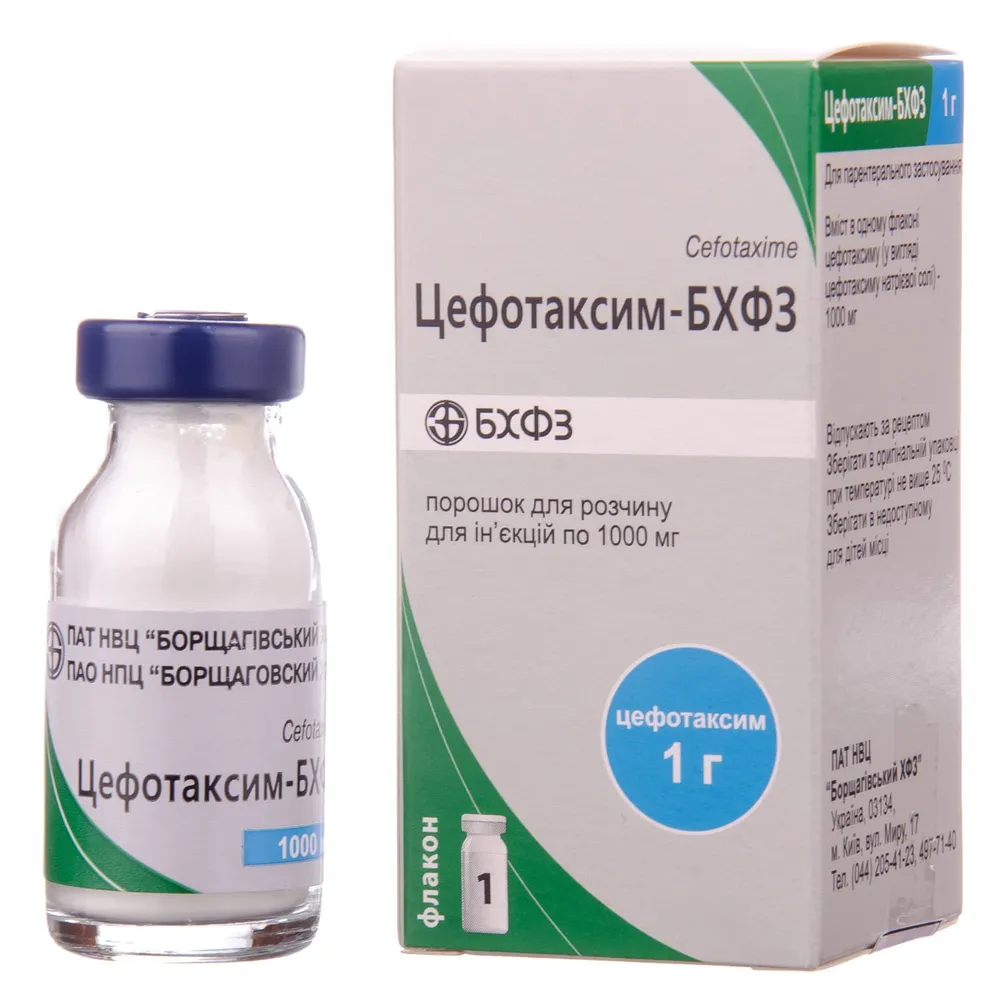
Table of Contents
INSTRUCTION for medical use of the medicinal product cefotaxime (Cefotaxime)
Composition:
Active substance: cefotaxime;
1 vial contains cefotaxime (as cefotaxime sodium) 1.0 g.
Dosage form. Powder for solution for injection.
Main physicochemical properties: crystalline powder ranging from almost white to light yellow in colour.
Pharmacotherapeutic group. Antibacterials for systemic use. Beta-lactam antibiotics. Third-generation cephalosporins. ATC code J01D D01.
Pharmacological properties.
Pharmacodynamics.
Cefotaxime is a semi-synthetic third-generation cephalosporin antibiotic for parenteral administration. It exerts a bactericidal effect and has a broad spectrum of activity.
The following organisms have demonstrated in vitro sensitivity to cefotaxime.
Gram-positive: staphylococci, including coagulase-positive, coagulase-negative, and penicillinase-producing strains; β-hemolytic and other streptococci, such as Streptococcus mitis (viridans) (most enterococcal strains, e.g. Streptococcus faecalis, are relatively resistant), Streptococcus (Diplococcus) pneumoniae, Clostridium spp.
Gram-negative: Escherichia coli, Haemophilus influenzae, including ampicillin-resistant strains, Klebsiella spp., Proteus spp. (indole-positive and indole-negative), Enterobacter spp., Neisseria spp. (including β-lactamase-producing strains of N. gonorrhoeae), Salmonella spp. (including Sal. Typhi), Shigella spp., Providencia spp., Serratia spp., Citrobacter spp.
The drug has frequently demonstrated useful in vitro activity against Pseudomonas spp. and Bacteroides spp., although some strains of Bacteroides fragilis are resistant to the drug.
There is in vivo evidence of synergy between cefotaxime and aminoglycoside antibiotics, such as gentamicin, against certain gram-negative bacteria, including some strains of Pseudomonas. No in vitro antagonism has been observed. In cases of severe infections caused by Pseudomonas spp., concomitant administration of an aminoglycoside antibiotic may be indicated.
Pharmacokinetics.
Absorption. Five minutes after a single intravenous bolus injection of 1 g of cefotaxime, plasma concentrations typically range from 81 µg/mL to 102 µg/mL. Plasma concentrations of the drug are 38 µg/mL and 200 µg/mL after doses of 500 mg and 2000 mg, respectively. No accumulation occurs after intravenous (i.v.) doses of 1000 mg or intramuscular (i.m.) doses of 500 mg administered over 10–14 days. Bactericidal concentrations in blood are maintained for 12 hours.
Distribution. The theoretical volume of distribution at steady state is 21.6 L/1.73 m² following a 30-minute intravenous infusion of 1 g of cefotaxime. Concentrations of cefotaxime (usually measured by non-selective methods) have been detected in a wide range of human tissues and physiological fluids. Drug concentrations in cerebrospinal fluid (CSF) are low when meninges are not inflamed, but reach levels of 3–30 µg/mL in children with meningitis.
Cefotaxime generally crosses the blood-brain barrier and achieves concentrations exceeding the minimum inhibitory concentration (MIC) for common susceptible pathogens when meningeal inflammation is present. Inhibitory concentrations (0.2–5.4 µg/mL) for most gram-negative bacteria are achieved in purulent sputum, bronchial secretions, and pleural fluid after doses of 1 g or 2 g. Therapeutic concentrations effective against most susceptible organisms are also achieved in female reproductive organs, middle ear effusions, prostate tissue, interstitial fluid, kidney tissue, peritoneal fluid, and gallbladder wall following standard therapeutic doses. High concentrations of cefotaxime and its metabolite desacetylcefotaxime are attained in bile.
Elimination. Cefotaxime undergoes partial metabolism prior to excretion. Its main metabolite, desacetylcefotaxime, possesses antibacterial activity. The majority of the administered dose is excreted by the kidneys. 60% of the dose is excreted unchanged, and 24% as desacetylcefotaxime. Plasma clearance of the drug ranges from 260 to 390 mL/min, and renal clearance from 145 to 217 mL/min.
After intravenous administration of cefotaxime to healthy adult volunteers, the elimination half-life (t½) of the parent compound is 0.9–1.14 hours, while that of the desacetyl metabolite is approximately 1.3 hours.
In neonates, pharmacokinetics depend on gestational and chronological age; t½ is prolonged in preterm infants or newborns of the same age with low body weight.
In severe renal impairment, the t½ of cefotaxime is prolonged to at least 2.5 hours, while the t½ of desacetylcefotaxime is prolonged to approximately 10 hours. Total urinary excretion of cefotaxime and its main metabolite decreases with impaired renal function.
Clinical characteristics.
Indications.
The medicinal product Cefotaxime is recommended for the treatment of the following infections, both prior to and after identification of the causative pathogen, provided that the pathogen has been confirmed to be susceptible to the drug:
- respiratory tract infections, including chronic bronchitis, bacterial pneumonia, bronchiectasis due to infectious diseases, lung abscess, and postoperative infections of the thoracic organs;
- urinary and genital tract infections, including chronic pyelonephritis, cystitis, and asymptomatic bacteriuria;
- septicemia;
- soft tissue infections, including cellulitis, peritonitis, and wound infections;
- bone and joint infections, including osteomyelitis and septic arthritis;
- obstetrics and gynecology: pelvic inflammatory diseases;
- gonorrhea, particularly in cases where penicillin treatment has failed or is contraindicated;
- other bacterial infections, meningitis, and other infections caused by pathogens sensitive to the drug, requiring parenteral antibiotic therapy.
Prophylaxis:
Administration of the drug for prophylactic purposes may reduce the occurrence of certain postoperative infections in patients undergoing surgical procedures classified as contaminated or potentially contaminated, or in clean surgical procedures where infections could lead to serious consequences.
Optimal protection is achieved by ensuring adequate drug concentration in local tissues at the time of likely contamination. Therefore, cefotaxime should be administered immediately before surgery and, if necessary, continued during the early postoperative period.
Drug administration is typically discontinued within 24 hours, as prolonged use of any antibiotic in most surgical procedures does not reduce the risk of subsequent infection.
Cefotaxime may also be used prophylactically in combination with non-absorbable oral antibiotics to reduce the risk of infection in certain patients undergoing intensive therapy and expected to remain in the intensive care unit for more than 48 hours.
Contraindications.
Hypersensitivity to cephalosporin antibiotics and to other β-lactam antibiotics.
The preparation reconstituted with lidocaine is contraindicated in patients with:
- history of hypersensitivity to lidocaine or to other amide-type local anesthetics (for intramuscular administration);
- AV block without a cardiac pacemaker;
- severe heart failure;
- infants under 30 months of age;
- for intravenous administration.
Cross-allergic reactions between penicillins and cephalosporins may occur.
Interaction with other medicinal products and other forms of interaction.
When used concomitantly with nephrotoxic medicinal products (aminoglycosides) and potent diuretics (ethacrynic acid, furosemide), colistin, or polymyxin, nephrotoxic effects are enhanced. Renal function tests should be monitored.
Probenecid blocks tubular secretion of cefotaxime and prolongs its t½, thereby increasing its plasma levels.
Special precautions for use.
Like other antibiotics, cefotaxime, especially when used for prolonged periods, may lead to overgrowth of non-susceptible organisms. Re-evaluation of the patient's condition is essential. If superinfection occurs during therapy, appropriate measures should be taken.
Effect on laboratory test results. As with other cephalosporins, false-positive Coombs' test reactions have been observed in some patients receiving cefotaxime. This phenomenon may interfere with cross-matching blood. False-positive results may also occur when glucose in urine is tested by non-enzymatic reducing methods. To avoid this, the glucose oxidase method should be used.
Anaphylactic reactions. Administration of cephalosporins requires careful assessment of allergic history (atopic diathesis, hypersensitivity reactions to β-lactam antibiotics). If a hypersensitivity reaction occurs in a patient, treatment must be discontinued immediately. Cefotaxime is strictly contraindicated in patients with a history of immediate-type hypersensitivity reactions to cephalosporins. In case of any doubts, the presence of a physician during the first administration of the drug is mandatory due to the risk of anaphylactic reaction. Because of cross-allergenicity between penicillins and cephalosporins, cephalosporins should be administered with extreme caution to patients with known penicillin sensitivity. Hypersensitivity reactions (anaphylaxis) to these two classes of antibiotics may be severe or even fatal.
Severe cutaneous adverse reactions (SCARs). In the post-marketing period, cases of severe cutaneous adverse reactions associated with cefotaxime therapy have been reported, including acute generalized exanthematous pustulosis (AGEP), Stevens-Johnson syndrome (SJS), toxic epidermal necrolysis (TEN), and drug-induced eosinophilia with systemic symptoms (DRESS), which may be life-threatening or fatal.
Patients should be informed about the signs and symptoms of skin reactions when being prescribed this medicinal product.
If signs or symptoms suggestive of these reactions occur, cefotaxime must be discontinued immediately. If AGEP, SJS, TEN, or DRESS develops in a patient during cefotaxime therapy, re-administration of cefotaxime is not recommended and treatment must be permanently discontinued.
In children, the appearance of rash may be mistakenly attributed to the primary infection or another infectious process; therefore, physicians should consider the possibility of a reaction to cefotaxime in children who develop rash and fever during therapy.
Clostridium difficile-associated disease (e.g., pseudomembranous colitis). Diarrhea, particularly severe and/or prolonged, occurring during or within the first weeks after treatment may be a symptom of Clostridium difficile-associated disease. Clostridium difficile-associated disease may range from mild to life-threatening, with pseudomembranous colitis being the most severe form.
This rare condition, which may nevertheless be fatal, can be diagnosed by endoscopy and/or histological examination. This diagnosis should be considered in patients who develop diarrhea during or after cefotaxime therapy. If pseudomembranous colitis is suspected, cefotaxime must be discontinued immediately and appropriate specific antibiotic therapy should be initiated without delay. Clostridium difficile-associated disease may be exacerbated by fecal impaction. Medicinal products that inhibit peristalsis should not be administered.
Blood disorders. Leukopenia and neutropenia may occur during cefotaxime therapy; rarely, bone marrow suppression, pancytopenia, or agranulocytosis may develop. For treatment courses lasting longer than 7–10 days, white blood cell counts should be monitored, and therapy should be discontinued if neutropenia occurs.
There have been reports of eosinophilia and thrombocytopenia, which resolved rapidly after discontinuation of therapy. Cases of hemolytic anemia have also been reported (see section "Adverse reactions").
Patients with renal impairment. Dosage adjustments should be made according to calculated creatinine clearance. Caution is required when cefotaxime is used concomitantly with aminoglycosides or other nephrotoxic agents (see section "Interaction with other medicinal products and other forms of interaction"). Renal function should be monitored in these patients, in elderly patients, and in those with pre-existing renal impairment.
Encephalopathy. β-lactams, including cefotaxime, may cause a risk of encephalopathy (which may include seizures, confusion, impaired consciousness, and movement disorders), particularly in cases of overdose or impaired renal function (see section "Adverse reactions"). Patients should be advised to contact their physician immediately if such reactions occur before continuing treatment.
The medicinal product Cefotaxime contains 2.2 mmol (or 50.5 mg) of sodium per 1 g of powder for solution for injection. Caution is required when administering this medicinal product to patients on a sodium-restricted diet.
Use during pregnancy or breastfeeding.
The use of this medicinal product during pregnancy is contraindicated.
Breastfeeding should be discontinued for the duration of treatment with this medicinal product.
Ability to affect reaction speed when driving or operating machinery.
Due to the possibility of adverse reactions and the administration of high doses of cefotaxime, particularly in patients with renal impairment, encephalopathy (convulsions, confusion, impaired consciousness, movement disorders) may occur (see section "Adverse reactions"). Patients should be advised to refrain from driving or operating machinery if any of these symptoms occur.
Method of Administration and Dosage
The medicinal product is intended for intravenous bolus and infusion, as well as intramuscular administration. The dose, route, and frequency of administration are determined based on the severity of infection, pathogen sensitivity to the antibiotic, and the patient's condition. Therapy may be initiated before obtaining results of pathogen sensitivity testing.
For intravenous bolus injection, dissolve 1 g of powder in 4 mL of sterile water for injection. Administer slowly over 3–5 minutes.
The medicinal product may also be administered by intravenous infusion. Dissolve 1–2 g of the drug in 40–100 mL of sterile water for injection or in one of the infusion fluids listed below.
The prepared solution may be administered over 20–60 minutes.
For intramuscular injection, dissolve 1 g of powder in 4 mL of sterile water for injection or in 1% lidocaine solution and inject deeply into the gluteal muscle.
Intermittent intravenous injection: The solution should be administered over 3–5 minutes. During post-marketing surveillance, cases of potentially life-threatening arrhythmia have been reported in a very small number of patients who received cefotaxime rapidly via central venous catheter.
The duration of treatment is determined individually by the physician.
For adults and children with body weight ≥50 kg, cefotaxime should be administered at a dose of 1 g every 12 hours; in severe cases – 1 g 3–4 times daily. The maximum daily dose is 12 g. For treatment of infections caused by susceptible Pseudomonas spp., daily doses exceeding 6 g are usually required.
For gonorrhea: a single intramuscular or intravenous injection of 1 g.
Children: The usual dosage range is 100–150 mg/kg/day, divided into 2–4 doses. However, in very severe infections, doses up to 200 mg/kg/day may be required.
Neonates: The recommended dose is 50 mg/kg/day, divided into 2–4 doses. In severe infections, administer 150–200 mg/kg/day, divided into multiple doses.
Renal Impairment
In patients with creatinine clearance below 10 mL/min, after administration of the initial standard dose, the maintenance dose should be reduced to half the usual dose, without changing the dosing interval.
Patients undergoing hemodialysis: 1–2 g daily, depending on the severity of infection; cefotaxime should be administered after the hemodialysis procedure on dialysis days.
Patients undergoing peritoneal dialysis: 1–2 g daily, depending on the severity of infection; cefotaxime is not removed by peritoneal dialysis.
Cefotaxime and aminoglycosides should not be mixed in the same syringe or infusion solution.
If freshly prepared solutions for intravenous and intramuscular injection are desired, cefotaxime is compatible with several commonly used intravenous infusion fluids, which will retain adequate potency for up to 24 hours when stored refrigerated (2–8 °C): water for injection, sodium chloride solution, 5% dextrose solution, dextrose and sodium chloride injection solution, and compound sodium lactate injection solution (Ringer's lactate solution).
Children.
Cefotaxime should be administered to children at appropriate doses (see section "Method of Administration and Dosage"). Intramuscular administration is contraindicated in children under 2.5 years of age.
Overdose.
Symptoms of overdose largely correspond to the profile of adverse reactions.
Particularly in patients with renal impairment and when high doses of β-lactam antibiotics, including cefotaxime, are used, there is a risk of developing encephalopathy.
In case of overdose, cefotaxime therapy should be discontinued. Supportive treatment should be initiated, including measures to enhance drug elimination, as well as symptomatic treatment of adverse reactions (e.g., seizures).
There is no specific antidote. Cefotaxime is removed by hemodialysis. Peritoneal dialysis is ineffective for cefotaxime elimination.
Adverse reactions.
| System organ class |
Very common (≥1/10) |
Common (≥1/100 to <1/10) |
Uncommon (≥1/1,000 to <1/100) |
Rare (≥1/10,000 to <1/1,000) |
Very rare (<1/10,000) |
Frequency not known (cannot be estimated from the available data)* |
| Infections and infestations |
superinfection (see section "Overdose") |
|||||
| Blood and lymphatic system disorders |
leukopenia, eosinophilia, thrombocytopenia |
bone marrow suppression, pancytopenia, neutropenia, agranulocytosis (see section "Special precautions"), hemolytic anemia |
||||
| Immune system disorders |
Jarisch-Herxheimer reaction |
anaphylactic reactions, angioedema, bronchospasm, anaphylactic shock |
||||
| Nervous system disorders |
convulsions (see section "Special precautions") |
headache, dizziness, encephalopathy* (see section "Special precautions") |
||||
| Cardiac disorders |
arrhythmia following rapid bolus infusion via central venous catheter |
|||||
| Gastrointestinal disorders |
diarrhea |
nausea, vomiting, abdominal pain, pseudomembranous colitis (see section "Special precautions") |
||||
| Hepatobiliary disorders |
elevation of liver enzymes (ALT, AST, LDH, γ-GT and/or alkaline phosphatase) and/or bilirubin |
hepatitis** (sometimes with jaundice) |
||||
| Skin and subcutaneous tissue disorders |
rash, pruritus, urticaria |
multiform erythema, Stevens-Johnson syndrome, toxic epidermal necrolysis, acute generalized exanthematous pustulosis (AGEP), drug reaction with eosinophilia and systemic symptoms (DRESS) (see section "Special precautions"). |
||||
| Renal and urinary disorders |
reduced renal function/increased creatinine concentration (particularly when administered concomitantly with aminoglycosides) |
acute renal failure (see section "Special precautions"), interstitial nephritis |
||||
| General disorders and administration site conditions |
For intramuscular injections: pain at injection site |
fever, inflammatory reactions at injection site, including phlebitis/thrombophlebitis |
For intramuscular injections (when lidocaine is used for reconstitution): systemic reactions to lidocaine |
* Beta-lactam antibiotics, including cefotaxime, may increase the risk of encephalopathy (which may include convulsions, confusion, impaired consciousness, and movement disorders), particularly in cases of overdose or impaired renal function;
* Post-marketing surveillance.
Jarisch-Herxheimer reaction. During treatment of borreliosis, the Jarisch-Herxheimer reaction may occur within the first days of therapy.
Cases of the following symptoms have been reported after several weeks of borreliosis treatment: skin rashes, pruritus, fever, leukopenia, elevated liver enzymes, dyspnea, and joint pain.
Hepatic and biliary disorders. Elevated levels of liver enzymes (ALT, AST, LDH, γ-GT, and/or alkaline phosphatase) and/or bilirubin have been observed. In individual cases, these parameters may exceed the upper limit of normal values by two-fold, indicating liver injury, usually of cholestatic type and asymptomatic in nature.
Superinfection. As with other antibiotics, cefotaxime, especially when used long-term, may lead to overgrowth of non-susceptible organisms. Repeated assessment of the patient's condition is important. If superinfection occurs during therapy, appropriate measures should be taken.
For intramuscular injection: since the solvent contains lidocaine, systemic reactions to lidocaine are possible, particularly in case of accidental intravenous administration, injection into highly vascularized tissues, or overdose.
Reporting of adverse reactions after marketing authorization of the medicinal product is of great importance. It enables ongoing monitoring of the benefit-risk balance of the medicinal product. Healthcare and pharmacy professionals, as well as patients or their legal representatives, should report all suspected adverse reactions and lack of efficacy via the automated pharmacovigilance information system at the following link: https://aisf.dec.gov.ua.
Shelf life.
Cefotaxime, powder for solution for injection, 1.0 g – 2 years.
Water for injections, solvent for parenteral use, 10 ml in ampoule – 4 years.
The shelf life of the final preparation is determined by the component (powder or solvent) with the shorter expiration date.
Storage conditions. Store out of reach of children, in the original packaging, at a temperature not exceeding 25 °C.
Incompatibilities.
The medicinal product solution is incompatible with aminoglycoside solutions in the same syringe or infusion container. Use only the diluents specified in the section "Administration and dosage".
Packaging. 1 g of powder in a vial; 1, 5, or 50 vials per carton; or 1 or 5 vials in a blister, 1 blister per carton; 1 vial and 1 ampoule of solvent (water for injection, 10 ml in ampoule) in a blister, 1 blister per carton.
Prescription status. Prescription only.
Manufacturer. Private Joint-Stock Company "Lekhim-Kharkiv". LLC "Lekhim-Obukhiv".
Bulk production and packaging by the manufacturer Qilu Pharmaceutical Co., Ltd., China.
Manufacturer's address and location of its operations.
Ukraine, 61115, Kharkiv Oblast, Kharkiv, Severina Pototskoho Street, 36.
Ukraine, 08700, Kyiv Oblast, Obukhiv, Kyivska Street, 126 A.