Cephalexin alkaloid®
Ukraine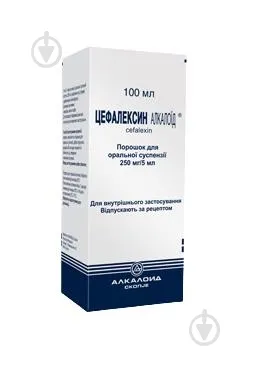
Table of Contents
INSTRUCTIONS FOR MEDICAL USE OF THE MEDICINAL PRODUCT Cefalexin Alkaloid®
Composition:
Active substance: cefalexin;
250 mg of cefalexin (as cefalexin monohydrate) in 5 ml of oral suspension;
Excipients: sodium carboxymethylcellulose, microcrystalline cellulose, sucrose, potassium sorbate, sodium citrate, citric acid monohydrate, xanthan gum, special red colorant (E 129), raspberry flavor 83462 R.
Pharmaceutical form. Powder for oral suspension.
Main physicochemical properties: granular powder ranging from almost white to light yellow color with a characteristic smell of antibiotic and raspberry.
Pharmacotherapeutic group. Antibacterial agents for systemic use. Other beta-lactam antibiotics. First-generation cephalosporins. ATC code J01D B01.
Pharmacological properties.
Pharmacodynamics.
Cephalexin is a semi-synthetic broad-spectrum cephalosporin antibiotic. Gram-positive microorganisms are sensitive to cephalexin: staphylococci (coagulase-positive and penicillinase-producing strains), streptococci (except enterococci), pneumococci. Cephalexin is also active against Escherichia coli, Klebsiella spp., Proteus mirabilis.
Cephalexin is inactive against Enterococcus spp., Staphylococcus aureus (methicillin-resistant), Enterobacter spp., Haemophilus influenzae, Moraxella catarrhalis, Pseudomonas aeruginosa, Mycoplasma spp., Chlamydia spp., Legionella spp.
Pharmacokinetics.
Cephalexin is rapidly and almost completely absorbed after oral administration (more than 90%). The extent and rate of cephalexin absorption are practically unaffected by food intake. Peak serum concentration is reached within 60–90 minutes after drug administration.
Cephalexin penetrates well into tissues and body fluids, including pericardial and pleural membranes. Only 10–15% of the active substance is protein-bound in plasma. The drug is excreted predominantly unchanged in urine. Cephalexin is removed during hemodialysis and peritoneal dialysis.
Clinical characteristics.
Indications.
Treatment of infections caused by microorganisms sensitive to cephalexin:
- Ear, nose, and throat organs and respiratory tract (pharyngitis, otitis media, sinusitis, tonsillitis, bronchitis, pneumonia);
- urinary and genital systems (pyelonephritis, cystitis, urethritis, prostatitis, epididymitis, endometritis,
vulvovaginitis); - skin and soft tissues (furunculosis, abscess, phlegmon, pyoderma, lymphadenitis);
- bones and joints (osteomyelitis).
Contraindications.
Hypersensitivity to cephalexin and cephalosporins, as well as to other beta-lactam antibiotics or any other component of the medicinal product; porphyria; infections of the central nervous system (brain or spinal cord).
Should not be used for initial treatment of severe generalized infections requiring parenteral administration of cephalosporins.
Interaction with other medicinal products and other types of interactions.
Due to the bactericidal action of cephalexin, it should not be combined with bacteriostatic antibiotics such as tetracyclines and chloramphenicol.
When used concomitantly with potent diuretics (ethacrynic acid, furosemide) or potentially nephrotoxic medicinal products (aminoglycosides, polymyxin, colistin, amphotericin B, capreomycin, vancomycin), cephalosporins may increase nephrotoxicity.
Concomitant use of cephalosporins with oral anticoagulants may prolong prothrombin time.
Probenecid and phenylbutazone reduce renal excretion of cephalexin, as with other beta-lactam drugs.
Concomitant administration of cephalexin with probenecid or phenylbutazone may lead to an increased elimination half-life and higher plasma concentrations of cephalexin.
Interaction between cephalexin and metformin may result in metformin accumulation. When cephalexin is administered concomitantly with metformin at a single dose of 500 mg, the Cmax and AUC of metformin increase on average by 34% and 24%, respectively, while renal clearance decreases by 14%.
In laboratory diagnostics, it should be considered that cephalexin may cause false-positive urine glucose tests and a positive Coombs' reaction. False test results have also been observed in newborns whose mothers received cephalexin during pregnancy. During testing while using the drug, methods based on glucose oxidation reactions should be used.
Cephalosporins may interfere with urinary ketone body testing results.
In patients receiving cytotoxic drugs for leukemia, hypokalemia may develop when gentamicin and cephalexin are used concomitantly.
Special precautions for use.
Prior to initiating therapy, it is necessary to determine whether the patient has a history of hypersensitivity reactions to cephalosporins, penicillins, or other allergens, and to perform a preliminary sensitivity test.
Cross-hypersensitivity between penicillins and cephalosporins may occur (in 5–10% of cases). Severe hypersensitivity reactions (including anaphylaxis) have been reported with both drugs. Cephalexin should be used with caution in patients with predisposition to allergic conditions (hay fever, allergic diathesis) and/or bronchial asthma.
Prolonged use of cephalexin may lead to dysbiosis and superinfection (e.g., candidiasis).
Preventive measures should be taken if secondary infection occurs.
The drug should be prescribed with caution to patients with impaired renal function and those with colitis.
During treatment, regular monitoring of peripheral blood cell counts, liver and kidney function is recommended.
Cephalexin should be administered with caution to patients with severe renal impairment. Regular monitoring of renal function and dose adjustment are recommended.
When using nearly all broad-spectrum antibacterial agents, including macrolides, semisynthetic penicillins, and cephalosporins, pseudomembranous colitis may develop, ranging from mild to life-threatening. Therefore, in case of diarrhea following antimicrobial therapy, it is important to rule out this condition.
If severe diarrhea characteristic of pseudomembranous colitis occurs, the drug should be discontinued and appropriate measures taken. The use of agents that suppress peristalsis is contraindicated.
Treatment with cephalosporins (including cephalexin) may be associated with reduced prothrombin activity. Therefore, prothrombin time should be monitored in patients with impaired vitamin K synthesis or deficiency (e.g., chronic liver or kidney disease, cystic fibrosis, elderly age, malnutrition, prolonged antibiotic therapy), and in patients who have undergone prolonged anticoagulant therapy prior to cephalexin administration. Vitamin K supplementation should be considered if necessary.
Cephalosporins may interfere with urine ketone testing results.
Cephalexin use may cause a positive direct Coombs' test and a false-positive urine glucose test.
False test results have also been observed in newborns whose mothers received cephalexin during pregnancy. When performing tests during drug administration, methods based on glucose oxidation reactions should be used, as other methods (Fehling's or Benedict's tests) may yield false-positive results.
Alcohol consumption should be avoided during therapy.
The drug contains sucrose; therefore, it should not be administered to patients with rare hereditary conditions such as fructose intolerance or sucrase-isomaltase deficiency.
Diabetic patients should be aware that each dose (250 mg / 5 mL) contains 2.8 g of sucrose.
Acute generalized exanthematous pustulosis (AGEP) associated with cephalexin therapy has been reported. Patients should be informed about the signs and symptoms and should closely monitor skin reactions during treatment. If signs or symptoms suggestive of these reactions occur, cephalexin should be discontinued immediately and alternative therapy considered. Most of these reactions likely occur within the first week of treatment.
Use during pregnancy or breastfeeding.
There are no adequate data on the teratogenic effects of the drug. It may be prescribed during pregnancy only after careful assessment of the benefit-risk ratio.
Cephalexin is excreted in breast milk; therefore, breastfeeding should be discontinued during treatment.
Ability to affect reaction speed when driving or operating machinery.
Until individual response to the drug is established (dizziness, confusion may occur), caution is recommended when driving or operating complex machinery.
Dosage and Administration
Administer the medicinal product orally.
The usual daily dose for children (with body weight less than 40 kg) is 25–50 mg/kg body weight (depending on the severity and site of infection), to be divided into 2–4 doses.
In severe infections, the dose may be doubled. For treatment of acute otitis media, the recommended dose is 75–100 mg/kg body weight, divided into 2–4 doses.
In most cases, the duration of treatment is 7–10 days. To prevent complications of streptococcal infections, the drug should be administered for at least 10 days.
Recommended Dosage
| Age |
Recommended dose of the medicinal product |
Frequency of daily doses |
| Children under 1 year of age |
½ measuring spoon (2.5 ml) of suspension 250 mg/5 ml |
3 |
| Children aged 1–3 years |
1 measuring spoon of suspension 250 mg/5 ml |
3 |
| Children aged 3–6 years |
1½ measuring spoons of suspension 250 mg/5 ml |
3 |
| Children aged 6–10 years |
2 measuring spoons of suspension 250 mg/5 ml |
3 |
| Children aged 10–14 years |
2 measuring spoons of suspension 250 mg/5 ml |
3–4 |
The usual daily dose for children from 14 years of age and adults is 1–4 g, divided into 2–4 doses.
For skin and soft tissue infections, streptococcal pharyngitis, and uncomplicated urinary tract infections, the usual dose is 250 mg every 6 hours or 500 mg every 12 hours. In severe cases, the dose may be doubled.
Dosing in renal impairment
| Creatinine clearance, mL/min |
Single dose, mg |
Dosing interval, hours |
| 40–80 |
500 |
4–6 |
| 20–30 |
500 |
8–12 |
| 10 |
250 |
12 |
| 5 |
250 |
12–24 |
For patients undergoing dialysis, administer 250 mg of the drug 1–2 times daily and an additional 500 mg after each dialysis session, corresponding to a total daily dose of up to 1 g on the day of dialysis.
Preparation of suspension.
Shake the bottle containing the powder for oral suspension well, add 60 mL of purified water, and shake until a homogeneous suspension is formed.
The prepared suspension: a viscous pink liquid with a characteristic odor of antibiotic and raspberry.
Shake well before use!
The suspension is dosed using a special measuring spoon.
Children. The medicinal product may be used in pediatric practice.
Overdose.
Symptoms: nausea, vomiting, epigastric pain, diarrhea, hematuria, electrolyte imbalance, hyperreflexia, seizures.
Treatment: in case of overdose, clinical and laboratory monitoring of hematological, renal, hepatic functions and blood coagulation is required until the patient's condition becomes stable.
Gastric lavage is not necessary except in cases where the ingested dose exceeded the usual dose by 5–10 times.
Treatment is symptomatic. Gastric lavage, administration of activated charcoal, assisted ventilation, and hemodialysis are recommended.
Cases of hematuria without impaired renal function have been reported in children who accidentally ingested more than 3.5 g of cephalexin per day.
Adverse Reactions
Blood and lymphatic system disorders: leukopenia, neutropenia, eosinophilia, thrombocytopenia, hemolytic anemia; agranulocytosis, lymphopenia, pancytopenia, aplastic anemia, hemorrhages.
Immune system disorders: hypersensitivity reactions, including allergic reactions in patients with known penicillin allergy; allergic reactions to cephalosporins; anaphylaxis (including bronchospasm, dyspnea, decreased arterial pressure, anaphylactic shock), anaphylactic reactions, facial and/or neck swelling, swelling of hands and/or feet. Allergic reactions usually resolve after discontinuation of therapy.
Nervous system disorders: headache, weakness, dizziness, vertigo, excitation; hallucinations, confusion, seizures, particularly in patients with renal impairment.
Gastrointestinal disorders: diarrhea, nausea, vomiting, loss of appetite/anorexia (generally resolves spontaneously even if treatment is continued), dry mouth, dyspepsia (indigestion), abdominal pain, flatulence, gastritis, colitis; pseudomembranous colitis. With prolonged use, dysbiosis, candidal stomatitis, intestinal candidiasis, and anal pruritus may develop.
Hepatobiliary disorders: cholestatic jaundice and hepatitis, transient increases in liver enzymes [aspartate aminotransferase (AST), alanine aminotransferase (ALT)].
Skin and subcutaneous tissue disorders: skin rash, including erythematous rash, dermatitis, pruritus, skin hyperemia, urticaria, angioneurotic edema, polymorphic erythema, Stevens-Johnson syndrome, toxic epidermal necrolysis, acute generalized exanthematous pustulosis (AGEP).
Renal and urinary system disorders: reversible renal function impairment, toxic nephropathy; isolated cases of interstitial nephritis. Reversible fever, increased blood urea nitrogen, hypercreatininemia, pyuria, and eosinophiluria are characteristic signs of cephalosporin-induced interstitial nephritis. Acute tubular necrosis has also been reported.
Musculoskeletal and connective tissue disorders: arthralgia, arthritis, joint involvement.
Reproductive system disorders: vaginal candidiasis, pruritus in the anal and genital areas, vaginitis, and vaginal discharge.
Other: drug fever.
Laboratory findings: prolonged prothrombin time, positive Coombs test, false-positive urine glucose test results, increased levels of creatinine, alkaline phosphatase, bilirubin, and lactate dehydrogenase.
Shelf life. 3 years.
Storage conditions.
Store at a temperature not exceeding 25 °C.
Keep out of reach of children.
The reconstituted suspension is stable for 7 days at a temperature not exceeding 25 °C and for 14 days in the refrigerator (2 °C – 8 °C).
Packaging.
65.4 g of powder in a bottle.
1 bottle with a plastic measuring spoon and instructions for medical use, packed in a cardboard box.
Prescription category. Prescription only.
Manufacturer: ALKALOID AD Skopje.
Manufacturer's address and place of business.
Boulevard Alexander the Great, 12, Skopje, 1000, Republic of North Macedonia.