Triftazin-zdorovya
Ukraine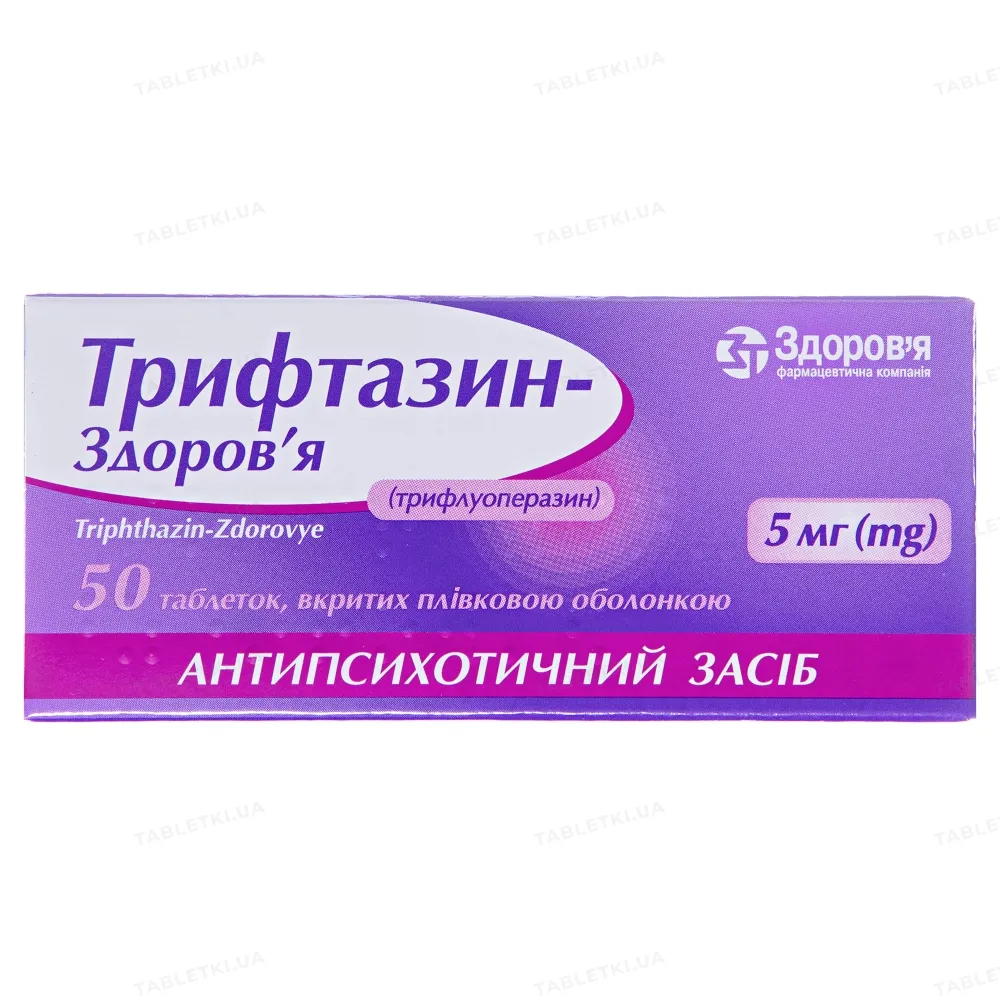
Table of Contents
INSTRUCTIONS FOR MEDICAL USE OF THE MEDICINAL PRODUCT TRIPHTAZIN-ZDOROVYE (TRIPHTAZIN-ZDOROVYE)
Composition:
Active substance: trifluoperazine;
1 tablet contains trifluoperazine 5 mg;
Excipients: lactose monohydrate; corn starch; microcrystalline cellulose; povidone; anhydrous colloidal silicon dioxide; sodium croscarmellose; stearic acid; hypromellose; titanium dioxide (E 171); indigo carmine (E 132).
Medicinal form: Film-coated tablets.
Main physicochemical properties: film-coated tablets, light blue to blue in color. Two layers are visible in cross-section.
Pharmacotherapeutic group: Antipsychotics. Piperazine derivatives of phenothiazine.
ATC code: N05AB06.
Pharmacological Properties.
Pharmacodynamics.
A neuroleptic agent containing the active substance trifluoperazine − one of the most potent antipsychotic agents.
Trifluoperazine blocks dopamine receptors in the central nervous system (CNS). It exerts a pronounced effect on productive psychotic symptoms (hallucinations, delusions). The antipsychotic effect of the drug is combined with a certain stimulating action. The drug also has antiemetic and pronounced cataleptic effects.
It produces anti-serotonin, hypothermic, and inhibitory effects and causes hyperprolactinemia. Anticholinergic and adrenolytic effects, hypotensive and sedative actions are weakly expressed. It does not cause stiffness or general weakness.
Pharmacokinetics.
The extent of absorption of trifluoperazine is quite high; plasma protein binding reaches 95–99 %. First-pass liver metabolism occurs, with a bioavailability of 35 %. Tmax in plasma is 2–4 hours. The drug crosses the blood-brain barrier and passes into breast milk. It is extensively metabolized in the liver to form pharmacologically inactive metabolites. Excretion occurs primarily via the kidneys, as well as through bile.
Clinical characteristics.
Indications.
Psychotic disorders, including schizophrenia.
Contraindications.
Hypersensitivity to the components of the drug, to other agents of the phenothiazine group; heart diseases with conduction disorders and in decompensated stage; severe arterial hypotension; CNS depression; progressive systemic diseases of the brain and spinal cord; angina pectoris; closed-angle glaucoma; impaired liver and kidney function; liver damage; acute and chronic inflammatory liver diseases; peptic ulcer of the stomach and duodenum during exacerbation; epilepsy; Parkinson's disease; disorders of the central respiratory regulation mechanism (especially in children); Reye's syndrome; cachexia; pheochromocytoma; myxedema; benign prostatic hyperplasia; blood pathology (associated with impaired hematopoiesis); bone marrow suppression; prolactin-dependent tumor; breast cancer; age over 60 years.
Interaction with other medicinal products and other forms of interaction.
When used concomitantly:
- with CNS depressants (anesthetics, opioid analgesics, barbiturates, anxiolytics, ethanol and ethanol-containing preparations) – possible enhancement of CNS depression and respiratory depression;
- with tricyclic antidepressants, maprotiline, or monoamine oxidase inhibitors – possible increased risk of neuroleptic malignant syndrome;
- with anticonvulsant drugs – possible reduction of seizure threshold;
- with drugs used to treat hyperthyroidism – increased risk of agranulocytosis;
- with drugs causing extrapyramidal reactions – possible increase in frequency and severity of extrapyramidal disorders;
- with antihypertensive drugs – possible orthostatic hypotension;
- with prochlorperazine – possible prolonged loss of consciousness;
- with adrenaline, other adrenomimetics, and sympathomimetics – possible paradoxical decrease in blood pressure;
− with drugs that prolong the QT interval (antiarrhythmics, nonsedating antihistamines, antimalarials, cisapride, diuretics, tricyclic antidepressants), phenothiazine derivatives – possible increased risk of ventricular arrhythmia;
− with α-adrenoblockers – enhanced hypotensive effects of trifluoperazine;
− with antiepileptic agents – reduced efficacy of antiepileptic drugs;
− with astemizole, disopyramide, erythromycin, procainamide – increased risk of tachycardia;
− with propranolol, sulfadoxine – increased plasma concentration of trifluoperazine;
− with polypeptide antibiotics – possible induction of respiratory muscle paralysis;
− with trazodone – additive hypotensive effect;
− with valproic acid – increased plasma concentration of valproic acid;
- with bromocriptine – phenothiazines suppress the ability of bromocriptine to reduce serum prolactin concentration.
Inducers of CYP1A2 reduce the concentration and effect of trifluoperazine, while inhibitors of CYP1A2 increase the concentration and effect of trifluoperazine.
The drug may reduce the effect of oral anticoagulants.
Use with caution when coadministered with anti-tuberculosis antibacterial agents.
The drug may weaken the vasoconstrictive effect of ephedrine, enhance the anticholinergic effects of other drugs, suppress the action of amphetamines, levodopa, clonidine, and guanethidine.
Antacids, anti-Parkinson agents, and lithium preparations interfere with the absorption of trifluoperazine.
Special precautions for use.
Use with particular caution (if the benefit of treatment outweighs the risk) or avoid the drug altogether in patients with urinary retention, paralytic ileus, hypothyroidism, cardiovascular diseases, cerebrovascular disorders, respiratory disorders, chronic respiratory diseases, diabetes mellitus, myasthenia gravis, or a history of jaundice.
Patients receiving the drug for a prolonged period require careful monitoring to detect early signs of tardive dyskinesia, ocular changes, hematological or hepatic disorders, and disturbances in cardiac conduction. Regular eye examinations are recommended for patients undergoing long-term phenothiazine therapy.
If signs of tardive dyskinesia or neuroleptic malignant syndrome (NMS) occur, the drug should be discontinued immediately. Clinical manifestations of NMS may include hyperthermia, muscle rigidity, altered mental status and consciousness, and autonomic instability (irregular pulse, fluctuations in blood pressure, tachycardia, excessive sweating, cardiac arrhythmias). Diagnosing this syndrome is particularly difficult in patients with severe underlying conditions (e.g., pneumonia, systemic infection, etc.). Differential diagnosis should be performed in patients with CNS pathology, drug-induced fever, heat stroke, or central anticholinergic toxicity. Encephalopathic syndrome (weakness, lethargy, fever, tremor, confusion, extrapyramidal symptoms, leukocytosis, elevated enzyme levels, blood urea nitrogen, and blood glucose) has been observed in some patients receiving combined therapy with lithium. In some cases, irreversible brain damage has occurred; therefore, careful monitoring for early signs of neurological toxicity is essential, and treatment should be discontinued immediately upon their appearance.
If hypersensitivity reactions occur (including jaundice or blood abnormalities), phenothiazines should not be re-administered.
The antiemetic effect of trifluoperazine may interfere with the diagnosis and treatment of brain tumors and Reye's syndrome.
The action of phenothiazine on the vomiting center may mask symptoms of overdose with other drugs.
There is no clinical experience with the use of this drug in patients with depressive disorders.
At the beginning of treatment, drowsiness and a slight decrease in blood pressure may occur.
During treatment, exposure to high temperatures should be avoided (due to possible disruption of thermoregulation). Exposure to direct sunlight should also be avoided.
The drug should be administered to patients who experience vomiting only if the benefit of treatment outweighs the risk.
Trifluoperazine should be prescribed for the treatment of non-psychotic anxiety only if alternative treatments (e.g., benzodiazepines) are ineffective.
Concomitant use with sedatives, anesthetics, tranquilizers, or alcohol may lead to increased sedation.
Alcohol consumption should be avoided during treatment with this drug.
Use with caution in patients with acute infection or leukopenia.
The use of phenothiazine drugs in elderly patients with dementia may increase the risk of fatal outcomes.
The drug contains lactose. If the patient has known intolerance to certain sugars, medical advice should be sought before taking this medication.
Use during pregnancy or breastfeeding.
The use of this drug during pregnancy is contraindicated.
If use of the drug is necessary, breastfeeding should be discontinued.
Ability to affect reaction speed when driving or operating machinery.
During treatment with this drug, patients should refrain from driving vehicles or operating machinery that requires heightened attention, mental alertness, or rapid psychomotor responses.
Method of Administration and Dosage
Administer orally after meals.
For adults, the initial dose is 5 mg of trifluoperazine (1 tablet). This dose should then be gradually increased by 5 mg (1 tablet) per administration until reaching a daily dose of 30–80 mg (in individual cases, up to 100–120 mg). The daily dose should be divided into 2–4 administrations. After achieving the therapeutic effect, optimal doses should be maintained for 1–3 months, then gradually reduced to 5–20 mg per day. The final doses should be continued as maintenance therapy.
Maximum daily dose for adults: 100–120 mg of trifluoperazine.
Treatment with the drug must be strictly individualized depending on the course of the disease. Duration of treatment may range from 3 to 9 months or longer, depending on therapeutic efficacy.
Children. The drug in this pharmaceutical form is not intended for use in children.
Overdose.
Symptoms: Overdose manifests as dyskinesia, dysarthria, drowsiness and stupor, extrapyramidal disorders, involuntary muscle contractions, arterial hypotension, cardiac arrhythmias, seizures, ECG changes, autonomic disturbances, dry mouth, and intestinal obstruction. In severe cases, coma may occur.
Treatment: Reduce dose or discontinue the drug. To manage extrapyramidal disorders, administer antiparkinsonian agents (tropacin, cyclodol). Dyskinesias (paroxysmal muscle spasms of the neck, tongue, floor of the oral cavity, oculogyric crises) are controlled with sodium benzoate caffeine (2 ml of 20% solution subcutaneously) or aminazine (1–2 ml of 2.5% solution intramuscularly).
Adverse Reactions.
Nervous system: headache, dizziness, insomnia, impaired thermoregulation, increased fatigue, confusion, muscle rigidity, extrapyramidal disorders (dyskinesias, akineto-rigid symptoms, akathisia, hyperkinesias, tremor, autonomic disturbances), dystonia, dystonic extrapyramidal reactions (which may include neck muscle spasm, torticollis, extension of back muscles with possible progression to opisthotonus, carpopedal spasm, trismus, swallowing difficulties, oculogyric crisis, tongue protrusion; these symptoms disappear within several hours or 24–48 hours after discontinuation of the drug), pseudoparkinsonism (mask-like face, drooling, "pill-rolling" movements, cogwheel rigidity, shuffling gait); at the beginning of treatment – drowsiness; with prolonged use – tardive dyskinesia, including of facial muscles [symptoms may be irreversible, characterized by rhythmic involuntary movements of the tongue, mouth, jaw (e.g., tongue protrusion, cheek puffing, mouth puckering, chewing movements), tardive dystonia, involuntary limb movements (limb movements may be the only manifestations of tardive dyskinesia)]; neuroleptic malignant syndrome, tardive dysphoria, manifestations of psychic indifference, delayed response to external stimuli, seizures.
Sensory organs: visual disturbances, retinopathy, lens and corneal clouding, accommodation paresis, conjunctivitis.
Gastrointestinal system: nausea, vomiting, diarrhea, constipation, colonic atony, gastralgia, intestinal paresis, trismus, tongue protrusion, hypersalivation, bulimia; at the beginning of treatment – dry mouth, anorexia.
Hepatobiliary system: cholestatic jaundice, hepatotoxicity, hepatitis.
Endocrine system and metabolic disorders: hypo- or hyperglycemia, glucosuria, hyperprolactinemia, gynecomastia, breast pain, increased appetite, weight gain, menstrual cycle disturbances (oligomenorrhea, dysmenorrhea, amenorrhea), galactorrhea, libido disturbances.
Cardiovascular system: at the beginning of treatment – tachycardia, decreased arterial pressure, moderately expressed orthostatic hypotension; cardiac arrhythmias, ECG changes (prolongation of QT interval, flattening of T wave), angina attacks, ventricular arrhythmia resembling torsades de pointes, cardiac arrest.
Blood and lymphatic system: agranulocytosis, anemia (hemolytic, aplastic), eosinophilia, leukopenia, thrombocytopenia, thrombocytopenic purpura, agranulocytopenia, pancytopenia.
Urinary and reproductive system: urinary retention, oliguria, micturition disturbances, decreased potency, ejaculation disorders, priapism.
Musculoskeletal system: myasthenia.
Skin and subcutaneous tissue: photosensitivity, skin redness, skin pigmentation, exfoliative dermatitis.
Immune system: allergic reactions, including rash, urticaria, angioneurotic edema, anaphylactic shock, anaphylactoid reactions.
Effect on laboratory test results: false-positive pregnancy tests, false-positive phenylketonuria tests.
Other: muscle weakness, edema.
Adverse reactions typical for phenothiazines: hypothermia, night terrors, depression, hypercholesterolemia, hyperpyrexia, brain edema, generalized and partial seizures, prolonged CNS effects of opioids, analgesics, antihistamines, barbiturates, alcohol, atropine, heat, organophosphorus insecticides, nasal congestion, adynamic intestinal obstruction, intestinal atony, miosis, mydriasis, reactivation of psychotic processes, catatonic-like states, impaired liver function, jaundice, biliary stasis, irregular menstruation, itching, eczema, asthma, epinephrine effect, increased appetite, lupus-like syndrome, skin pigmentation, epithelial keratopathy, lens and corneal deposits, sudden death, asphyxia.
Shelf life. 2 years.
Storage conditions. Store in original packaging at a temperature not exceeding 25 °C.
Keep out of reach of children.
Packaging. Tablets: № 50, № 10×5 in blisters in a box; № 50 in a blister.
Prescription category. Prescription only.
Manufacturer. LIMITED LIABILITY COMPANY "CORPORATION "ZDOROVIYA".
Manufacturer's address and place of business.
Ukraine, 61013, Kharkiv region, city of Kharkiv, Shevchenko Street, 22.