Thrombo acc 100 mg
Ukraine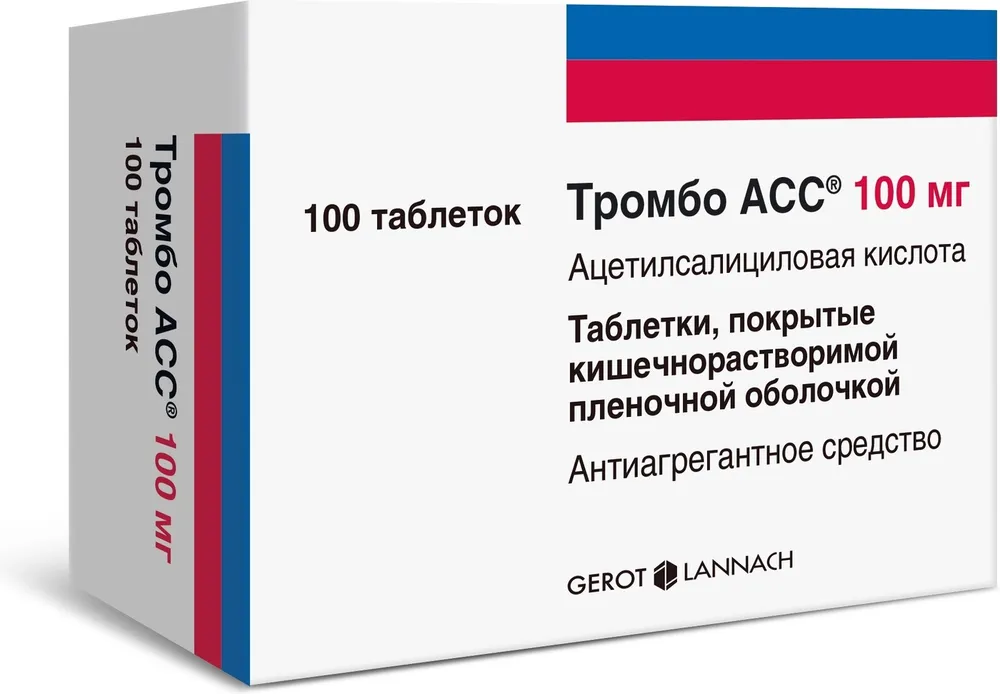
Table of Contents
INSTRUCTIONS FOR MEDICAL USE OF THE MEDICINAL PRODUCT TROMBO ASS 100 mg (THROMBO ASS 100 mg)
Composition:
Active substance: acetylsalicylic acid;
1 tablet contains 100 mg of acetylsalicylic acid;
Excipients: lactose monohydrate, microcrystalline cellulose, colloidal anhydrous silicon dioxide, potato starch, talc, triacetin, dispersion of methacrylic acid copolymer.
Pharmaceutical form. Film-coated enteric-coated tablets.
Main physicochemical properties: white, round, biconvex tablets coated with an enteric film coating, without a score line.
Pharmacotherapeutic group. Antithrombotic agents.
ATC code B01AC06.
Pharmacological Properties.
Pharmacodynamics.
Acetylsalicylic acid (ASA) inhibits platelet aggregation by blocking the synthesis of thromboxane A2. This is achieved by acetylation of cyclooxygenase, leading to inhibition of thromboxane A2 synthesis (a prostaglandin that promotes platelet aggregation and vasoconstriction) in platelets. This is a permanent effect, which typically persists throughout the 8-day lifespan of platelets.
Recent clinical data confirm the antithrombotic effect of ASA even at low doses.
In a study (Dutch TIA Trial), 3131 patients who had experienced a transient ischemic attack (TIA) or stroke were randomized to receive either 30 mg or 283 mg daily of enteric-coated ASA. The observation period lasted on average 2.6 years. In the 30 mg group (1555 individuals), stroke, myocardial infarction, or death occurred in 228 cases (14.7%) compared to 240 cases (15.2%) in the 283 mg group (1576 individuals). These results indicate that 30 mg daily of ASA is no less effective than 283 mg daily of ASA. A trend toward a lower incidence of clinically significant bleeding (major bleeding) was observed in favor of the group receiving the lower ASA dose, but the difference was clinically significant only with respect to minor bleeding. ASA is also used in the treatment of Kawasaki syndrome. Appropriate dosing should be taken from current scientific literature.
By inhibiting prostaglandin synthesis, ASA also belongs to the group of acid-forming nonsteroidal anti-inflammatory drugs (NSAIDs) with analgesic, antipyretic, and anti-inflammatory properties.
Experimental data suggest that ibuprofen may interfere with the effect of low-dose ASA on platelet aggregation when both are used concomitantly. In one study, when a single 400 mg dose of ibuprofen was administered within 8 hours before or within 30 minutes after immediate-release ASA (81 mg), a reduction in ASA's effect on thromboxane formation or platelet aggregation was observed. However, due to the limited nature of these data and uncertainty regarding extrapolation of ex vivo findings to clinical situations, no firm conclusions can be drawn regarding regular use of ibuprofen, and a clinically significant effect with occasional ibuprofen use is considered unlikely (see section "Interaction with other medicinal products and other forms of interaction").
Pharmacokinetics.
Absorption. After administration of the gastro-resistant formulation, absorption of ASA occurs in the small intestine. Acetylsalicylic acid is rapidly and completely absorbed from the gastrointestinal tract. Maximum plasma concentration is reached within 3 hours after administration.
Distribution. In humans, plasma protein binding is concentration-dependent: values range from 49% to over 70% (for ASA) and from 66% to 98% (for salicylic acid), respectively.
After oral administration of ASA, salicylic acid can be detected in cerebrospinal fluid and synovial fluid.
TROMBO ASS 100 mg tablets are bioequivalent to an aqueous solution of ASA; due to the special pharmaceutical formulation, the elimination half-life is prolonged from 2 to 4 hours.
Salicylic acid crosses the placenta and is excreted in breast milk.
Biotransformation. ASA is enzymatically hydrolyzed to salicylic acid in the intestinal mucosa, but predominantly in the liver. Additionally, salicylic acid undergoes glucuronidation in the liver.
Elimination. Elimination occurs almost entirely via the kidneys in the form of salicylic acid (approximately 10%), salicyluric acid (approximately 75%), and conjugates of salicyluric acid (approximately 10%).
Preclinical data. Preclinical experimental results were obtained following oral, nasal, subcutaneous, and intravenous administration in mice, rats, guinea pigs, rabbits, and dogs. In chronic toxicity studies using therapeutic doses of ASA in humans, no significant differences were observed compared to the control group.
In vitro studies did not reveal mutagenic potential for ASA.
Studies in mice and rats did not indicate a carcinogenic potential of ASA.
Reproductive toxicology. In animal studies (rats, dogs) using higher doses of ASA, teratogenic effects were observed. Impairment of implantation, embryotoxic and fetotoxic effects, as well as learning disabilities in offspring, were described following prenatal exposure.
Clinical characteristics.
Indications.
For reduction of risk:
- mortality in patients with suspected acute myocardial infarction;
- mortality in patients who have suffered myocardial infarction;
- transient ischemic attacks (TIA) and stroke in patients with TIA;
- morbidity and mortality in stable and unstable angina.
For prevention:
- thrombosis and embolism following vascular procedures (percutaneous transluminal coronary angioplasty [PTCA], carotid endarterectomy, aortocoronary bypass grafting [CABG], arteriovenous shunting);
- deep vein thrombosis and pulmonary embolism following prolonged immobilization (after surgical procedures);
- myocardial infarction in patients at high risk of cardiovascular complications (diabetes mellitus, controlled arterial hypertension) and individuals with multifactorial risk of cardiovascular disease (hyperlipidemia, obesity, smoking, advanced age).
For secondary prevention of stroke.
Contraindications.
- Hypersensitivity to acetylsalicylic acid, other salicylates, or any component of the medicinal product.
- Chronic asthma induced by the use of salicylates or NSAIDs in medical history.
- Acute peptic ulcers of the stomach and intestine.
- Gastrointestinal bleeding or perforation in history associated with previous NSAID therapy.
- Active or historical gastrointestinal ulcers/bleeding (two or more separate episodes of confirmed ulcer or bleeding).
- Bleeding disorders and hematological disorders (hemorrhagic diathesis, thrombocytopenia, hemophilia).
- Severe renal impairment.
- Severe hepatic impairment.
- Severe heart failure.
- Combination with methotrexate at doses of 15 mg/week or higher (see "Interaction with other medicinal products and other forms of interaction").
- Doses exceeding 100 mg/day during the third trimester of pregnancy.
- Hyperoxaluria.
Interaction with other medicinal products and other forms of interaction.
Contraindicated combinations.
- Concomitant use of methotrexate at doses of 15 mg/week or higher increases hematological toxicity of methotrexate (due to reduced renal clearance of methotrexate by anti-inflammatory agents and displacement of methotrexate from plasma protein binding by salicylates) (see section "Contraindications").
- Oral anticoagulants in combination with high-dose salicylates: increased risk of bleeding due to inhibition of platelet function, damage to the duodenal mucosa, and displacement of oral anticoagulants from plasma protein binding sites (see section "Special precautions for use").
Combinations requiring caution.
- When methotrexate is used at doses less than 15 mg/week, hematological toxicity of methotrexate may increase (due to reduced renal clearance of methotrexate by anti-inflammatory agents and displacement of methotrexate from plasma protein binding by salicylates). Blood tests should be performed weekly during the first weeks of combined treatment. Patients with pre-existing, even mild, renal function impairment and elderly patients must be closely monitored.
- Oral anticoagulants (e.g., coumarins, warfarin), alteplase, thrombolytics, other platelet aggregation inhibitors/hemostasis inhibitors (clopidogrel, cilostazol, dipyridamole), combined with low-dose salicylates: increased risk of bleeding due to impaired platelet function, damage to duodenal mucosa, and displacement of oral anticoagulants from plasma protein binding sites. Monitoring of bleeding time is required. In particular, treatment with ASA should not be initiated within the first 24 hours after alteplase treatment in patients with acute stroke. Therefore, concomitant use is not recommended.
- Heparin for parenteral administration: increased risk of bleeding (due to inhibition of platelet function and damage to duodenal mucosa by salicylates).
- Ticlopidine: increased risk of bleeding (synergistic effect of inhibition of platelet aggregation). If this combination cannot be avoided, careful clinical monitoring and frequent laboratory checks (including bleeding time) are required.
- Streptokinase, thrombolytics: ASA may enhance their effect. Risk of bleeding increases (especially after ischemic stroke).
- Other non-steroidal anti-inflammatory drugs (NSAIDs)/anti-rheumatic agents with high-dose salicylates (>3 g/day): increased risk of peptic ulcer and gastrointestinal bleeding due to synergistic effects; mutual reduction of serum concentrations.
- Selective serotonin reuptake inhibitors (SSRIs, such as sertraline or paroxetine): combination of SSRIs and ASA is associated with an increased risk of gastrointestinal bleeding (see section "Special precautions for use").
- Concomitant use with digoxin increases digoxin plasma concentration due to reduced renal excretion. Adequate monitoring is recommended, and dose adjustment may be necessary.
- Concurrent use with uricosuric agents such as benzbromarone, probenecid reduces uric acid excretion efficacy (due to competition in renal tubular excretion of uric acid). Use of another analgesic is recommended.
- Concomitant use of high-dose acetylsalicylic acid with oral antidiabetic agents of the sulfonylurea group or insulin enhances the hypoglycemic effect of the latter due to the hypoglycemic effect of acetylsalicylic acid and displacement of sulfonylurea from plasma protein binding. Patients should be informed about this and advised to monitor blood glucose levels more frequently. Dose adjustment of antidiabetic agents may be required.
- Diuretics in combination with high-dose acetylsalicylic acid reduce glomerular filtration due to decreased renal prostaglandin synthesis (risk of acute renal failure in dehydrated patients). Adequate hydration of patients and monitoring of renal function and blood pressure are required.
- Furosemide and other loop diuretics: their antihypertensive effect may be reduced; blood pressure monitoring is recommended.
- Systemic glucocorticoids (excluding hydrocortisone) used for replacement therapy in Addison's disease: during corticosteroid treatment, salicylate levels in blood may decrease, increasing the risk of overdose after discontinuation of therapy.
Concomitant use with corticosteroids increases the risk of gastrointestinal bleeding. Therefore, salicylate doses should be appropriately adjusted during and after combined therapy with glucocorticoids.
- Angiotensin-converting enzyme (ACE) inhibitors in combination with high-dose acetylsalicylic acid may reduce glomerular filtration due to inhibition of vasodilatory prostaglandins and diminish antihypertensive effect. Adequate hydration and monitoring of renal function and blood pressure are required.
- When ASA is used with verapamil, bleeding time should be monitored.
- Concomitant use with valproic acid: acetylsalicylic acid displaces valproic acid from plasma protein binding, increasing its toxicity. Serum level monitoring may be necessary.
- Ethanol promotes damage to the gastrointestinal mucosa and prolongs bleeding time due to synergism between acetylsalicylic acid and alcohol. This combination should therefore be avoided.
- Gastrointestinal treatments with local action: magnesium salts, aluminum salts, potassium salts, oxides, and hydroxides: renal excretion of salicylates is enhanced due to urinary alkalinization.
- Metamizole may reduce the effect of acetylsalicylic acid on platelet aggregation when taken concomitantly. Therefore, metamizole should be used with caution in patients taking low-dose acetylsalicylic acid for cardioprotection.
- Concomitant use with NSAIDs such as ibuprofen or naproxen on the same day may attenuate the irreversible inhibition of platelets by acetylsalicylic acid. The clinical significance of this interaction is unknown. Treatment with NSAIDs such as ibuprofen or naproxen in patients at risk of cardiovascular disease may limit the cardioprotective effect of acetylsalicylic acid (see section "Special precautions for use").
Possible reduction of effect.
Aldosterone antagonists (spironolactone and canrenone), antihypertensive agents, particularly ACE inhibitors (in case of combination therapy with ACE inhibitors, ASA doses ≤100 mg should be used).
Laboratory tests.
High doses of ASA may affect various clinical-chemical testing methods and/or their results.
Generally, colorimetric-based chemical methods may be interfered with. Thus, for example, results of liver function tests may be falsified (possibility of false-negative results).
Special precautions for use.
Use the drug with caution in the following cases:
- Hypersensitivity to analgesics, anti-inflammatory, or antirheumatic agents, as well as in patients with allergies to other substances;
- Arterial hypertension and/or heart failure in medical history: fluid retention and edema have been reported during treatment with acetylsalicylic acid (ASA) at antirheumatic doses.
- Gastrointestinal ulcers, including chronic and recurrent peptic ulcer disease or gastrointestinal bleeding in medical history;
- Concomitant use of anticoagulants (see section "Interaction with other medicinal products and other forms of interaction");
- Liver function disorders;
- During surgical procedures (including dental procedures), use of drugs containing acetylsalicylic acid may increase the risk of occurrence or intensification of bleeding;
- Concomitant use of NSAIDs such as ibuprofen or naproxen, since NSAIDs may reduce the inhibitory effect of acetylsalicylic acid on platelet aggregation. If ASA is used before starting NSAIDs as an analgesic, the patient should consult a physician (see section "Interaction with other medicinal products and other forms of interaction");
- Renal function impairment or cardiovascular circulation disorders (e.g., renal vascular disease, congestive heart failure, hypovolemia, major surgery, sepsis, or severe bleeding), as acetylsalicylic acid may increase the risk of renal function impairment and acute renal failure.
Bronchospasm. In patients with allergic complications, including bronchial asthma, allergic rhinitis, urticaria, skin itching, mucosal edema, and nasal polyps, as well as in combination with chronic respiratory tract infections, and in patients with hypersensitivity to NSAIDs, bronchospasm or an attack of bronchial asthma may develop during treatment with acetylsalicylic acid.
Fixed drug eruption / generalized bullous fixed drug eruption. Cases of fixed drug eruption / generalized bullous fixed drug eruption have been reported during diclofenac use.
TROMBO ASS 100 mg should not be re-administered to patients with a history of fixed drug eruption / generalized bullous fixed drug eruption associated with diclofenac use.
Gastrointestinal side effects. The use of ASA with NSAIDs, including selective cyclooxygenase-2 inhibitors, should be avoided (see section "Interaction with other medicinal products and other forms of interaction").
Severe gastrointestinal bleeding, ulceration, or perforation, which may be fatal, have been reported during treatment with ASA and NSAIDs at any time during therapy, with or without warning symptoms or history of serious gastrointestinal disorders.
Elderly patients have an increased frequency of adverse reactions to ASA and NSAIDs, especially gastrointestinal bleeding and perforations, which may be fatal (see section "Dosage and administration"). Patients undergoing prolonged therapy should be regularly monitored.
Patients should report any unusual abdominal symptoms (especially gastrointestinal bleeding).
Concomitant use of ASA and other medicinal products that modulate hemostasis (e.g., anticoagulants such as warfarin, thrombolytics, antiplatelet agents, anti-inflammatory agents, and selective serotonin reuptake inhibitors) is not recommended, except in serious indications, as this may increase the risk of bleeding (see section "Interaction with other medicinal products and other forms of interaction"). If such combinations cannot be avoided, careful monitoring for signs of bleeding is recommended.
Caution is recommended in patients who are concurrently taking such drugs as oral corticosteroids, selective serotonin reuptake inhibitors, and deferiprone (see section "Interaction with other medicinal products and other forms of interaction"), which may increase the risk of ulceration.
If gastrointestinal bleeding or ulceration occurs, treatment with ASA should be discontinued.
The risk of gastrointestinal bleeding, ulceration, or perforation increases with higher doses of ASA in patients with a history of ulcers, especially if complicated by bleeding or perforation (see section "Contraindications"), as well as in elderly patients. Such patients should start treatment with the lowest available dose. For these patients, as well as for patients requiring concomitant therapy with other drugs that may increase gastrointestinal risk, the possibility of combined therapy with protective agents (e.g., misoprostol or proton pump inhibitors) should be considered (see section "Interaction with other medicinal products and other forms of interaction").
Alcohol. Concurrent alcohol consumption during ASA treatment may enhance adverse effects related to the substance, especially those affecting the gastrointestinal tract or central nervous system (see section "Interaction with other medicinal products and other forms of interaction").
Bleeding tendency. Inhibition of platelet aggregation (even at relatively low doses of ASA), which persists for several days after administration, may lead to increased bleeding tendency, especially during and after surgery (even minor surgical procedures such as tooth extraction).
Rare or very rare reports of serious bleeding, such as cerebral hemorrhage, have also been reported, particularly in patients with uncontrolled hypertension and/or concomitant anticoagulant therapy. In very rare cases, this may lead to a fatal outcome.
Gout. When low doses of acetylsalicylic acid are used, excretion of uric acid may decrease. This may lead to the development of gout in patients with reduced excretion of uric acid (see sections "Interaction with other medicinal products and other forms of interaction", "Adverse reactions").
Reye's syndrome. In isolated cases, life-threatening complications affecting the brain and liver (so-called Reye's syndrome) have been observed in children and adolescents, possibly associated with ASA, especially when ASA was used to treat fever associated with influenza or varicella. This syndrome may also occur in young adults.
As a precautionary measure, medicinal products containing ASA should not be administered within 6 weeks after vaccination with live varicella virus.
Nephropathy. ASA should be used with caution in patients with moderate impairment of renal or hepatic function (contraindicated in severe impairment) or in patients with dehydration, as regular use of nonsteroidal anti-inflammatory drugs (NSAIDs), particularly combinations of several analgesics, may lead to worsening of renal function. Persistent kidney damage may lead to a risk of renal failure (nephropathy).
Patients should be informed of this if necessary.
Patients with mild to moderate hepatic insufficiency should undergo regular liver function tests.
Laboratory tests. During prolonged use, appropriate laboratory parameters (e.g., liver and kidney function, blood count, blood coagulation) should be monitored (see section "Interaction with other medicinal products and other forms of interaction").
Glucose-6-phosphate dehydrogenase deficiency. In some patients with glucose-6-phosphate dehydrogenase deficiency, high doses of ASA may cause hemolysis. Therefore, medical supervision is necessary if ASA must be administered to such patients.
Fertility. ASA may impair female fertility due to its effect on ovulation (see section "Use during pregnancy or breastfeeding").
Lactose. The drug contains lactose monohydrate. Therefore, patients with certain rare hereditary disorders, such as galactose intolerance, Lapp lactase deficiency, or glucose-galactose malabsorption, should not take this drug.
Use during pregnancy or breastfeeding.
Pregnancy.
Low doses (up to 100 mg/day inclusive)
Clinical studies indicate that doses up to 100 mg/day for limited obstetric use, requiring specialized monitoring, are considered safe.
Doses from over 100 mg/day to 500 mg/day
There is insufficient clinical experience with doses from over 100 mg/day to 500 mg/day. Thus, the recommendations below for doses of 500 mg/day and higher also apply to this dose range.
Doses of 500 mg/day and higher
Inhibition of prostaglandin synthesis may adversely affect pregnancy and/or embryonic/fetal development. Epidemiological data indicate an increased risk of miscarriage and congenital malformations, including cardiac defects and gastroschisis, following use of prostaglandin synthesis inhibitors in early pregnancy. The risk increases with higher doses and longer duration of therapy.
Administration of prostaglandin synthesis inhibitors to animals has been shown to increase pre- and post-implantation losses and embryofetal mortality. In addition, increased frequency of various developmental abnormalities, including cardiovascular defects, has been reported in animals receiving prostaglandin synthesis inhibitors during the organogenetic period. Preclinical studies have shown reproductive toxicity (see section "Pharmacokinetics. Preclinical data").
During the first and second trimesters of pregnancy. Inconsistent epidemiological data are known regarding an increased risk of developmental abnormalities (cleft palate, heart defects) with acetylsalicylic acid use in early pregnancy. However, when the drug is used at therapeutic doses (50–150 mg/day), this risk appears to be low.
Use of TROMBO ASS 100 from the 20th week of pregnancy may cause oligohydramnios due to fetal renal dysfunction. This may occur soon after starting treatment and is usually reversible upon discontinuation of therapy. Additionally, after treatment in the second trimester, cases of fetal arterial duct constriction have been reported, most of which resolved after discontinuation of the drug. Therefore, TROMBO ASS 100 mg should not be prescribed during the first and second trimesters of pregnancy except in cases of extreme necessity.
If TROMBO ASS 100 mg is used by a woman trying to conceive or during the first or second trimester of pregnancy, the dose should be as low as possible and the duration of treatment as short as possible. Prenatal monitoring for oligohydramnios and arterial duct constriction should be considered after exposure to TROMBO ASS 100 mg for several days starting from the 20th week of pregnancy. Use of TROMBO ASS 100 mg should be discontinued if oligohydramnios or arterial duct constriction is detected.
During the third trimester of pregnancy. All prostaglandin synthesis inhibitors may:
affect the fetus as follows:
- cardiopulmonary toxicity (with premature closure of the arterial duct and pulmonary hypertension);
- renal dysfunction with possible subsequent development of renal failure with oligohydramnios;
affect the mother and fetus as follows:
- prolonged bleeding time, anti-aggregatory effect, which may occur even with very low doses;
- inhibition of uterine contractions and bleeding in the pregnant woman, and prolonged duration of labor.
Therefore, acetylsalicylic acid in doses above 100 mg/day is contraindicated during the third trimester of pregnancy (see section "Contraindications"). Doses up to 100 mg/day inclusive may be used only under strict obstetric supervision.
Breastfeeding. Acetylsalicylic acid and its metabolites pass into breast milk in small amounts. Since no harmful effects of the drug on the infant have been identified after administration to lactating women, interruption of breastfeeding is generally not required. However, with prolonged use of the drug or use of acetylsalicylic acid at high doses, the need to discontinue breastfeeding should be considered.
Fertility. There is some evidence that medicinal products that inhibit cyclooxygenase/prostaglandin synthesis may cause impairment of fertility in women due to effects on ovulation. This effect is reversible after discontinuation of treatment.
Ability to affect reaction speed when driving vehicles or operating machinery.
Does not affect the ability to drive vehicles or operate machinery.
Dosage and Administration
The medication is intended for use in adults and children aged 16 years and older. The medication should be taken orally before meals, without chewing, and swallowed with sufficient liquid.
To reduce the risk of fatal outcomes in patients with suspected acute myocardial infarction, administer the medication at a dose of 100 mg per day. A dosage of 300 mg per day may be used short-term based on therapeutic indications. To achieve rapid absorption, the first tablet must be chewed!
To reduce the risk of fatal outcomes in patients who have suffered myocardial infarction, administer 100 mg per day. A dosage of 300 mg per day may be used short-term based on therapeutic indications.
For secondary stroke prevention, administer the medication at a dose of 100 mg per day. A dosage of 300 mg per day may be used short-term based on therapeutic indications.
To reduce the risk of transient ischemic attack (TIA) and stroke in patients with TIA, administer 100–200 mg per day. A dosage of 300 mg per day may be used short-term based on therapeutic indications.
To reduce the risk of disease progression and fatal outcomes in patients with stable and unstable angina: from 100 mg per day. A dosage of 300 mg per day may be used short-term based on therapeutic indications.
For prevention of thrombosis and embolism following vascular procedures (percutaneous transluminal coronary angioplasty [PTCA], carotid endarterectomy, coronary artery bypass grafting [CABG], arteriovenous shunting), administer 100–300 mg per day.
For prevention of deep vein thrombosis and pulmonary embolism following prolonged immobilization (after surgical procedures): 100–200 mg per day or 300 mg per day every other day.
For prevention of myocardial infarction in patients at high risk of cardiovascular complications (diabetes mellitus, controlled arterial hypertension) and individuals with multifactorial cardiovascular risk (hyperlipidemia, obesity, smoking, advanced age), administer 100 mg per day. A dosage of 300 mg per day may be used short-term based on therapeutic indications.
Children.
The use of the medication is contraindicated in children under 16 years of age unless there are specific indications such as Kawasaki syndrome or disease, prevention of thrombosis following cardiac surgery, or prevention of myocardial infarction in children at high risk.
Medications containing acetylsalicylic acid should not be administered to children with acute respiratory viral infection (ARVI), regardless of whether fever is present.
There is a risk of developing Reye’s syndrome, a very rare but life-threatening condition. If these conditions are accompanied by vomiting, dehydration, impaired consciousness, or seizures, immediate medical intervention is required.
Overdose.
Overdose can be harmful, especially in elderly patients (therapeutic overdose or accidental intoxication may be fatal).
Moderate intoxication symptoms. Dizziness, vertigo, tinnitus, hearing disturbances, visual disturbances, abdominal pain, excessive sweating, nausea, vomiting, headache, tremor, disorientation, confusion. These symptoms can be managed by dose reduction.
Severe intoxication symptoms. Fever, hyperthermia, hyperventilation, dyspnea, seizures, respiratory alkalosis, metabolic acidosis, dehydration, pulmonary edema, rhabdomyolysis, arrhythmias, delirium, coma, cardiovascular shock, respiratory failure, severe hypo- or hyperglycemia, hypokalemia. Symptoms may appear with a delay of several hours after ingestion of a toxic dose.
Emergency treatment. Immediate hospitalization, gastric lavage, activated charcoal administration, monitoring of acid-base balance, alkaline diuresis (target urine pH from 7.5 to 8.0). Forced diuresis should be considered if plasma salicylate concentration exceeds 500 mg/L (3.6 mmol/L) in adults or 300 mg/L (2.2 mmol/L) in children.
Hemodialysis in cases of severe intoxication, rehydration, and symptomatic therapy.
There is no specific antidote.
Adverse reactions.
Adverse reactions are classified according to frequency of occurrence: very common (≥1/10); common (≥1/100, <1/10); uncommon (≥1/1,000, <1/100); rare (≥1/10,000, <1/1,000); very rare (<1/10,000); frequency not known (cannot be estimated from available data).
The list below includes adverse effects observed in patients with rheumatic diseases receiving high-dose acetylsalicylic acid (ASA) over prolonged periods.
ASA may cause abdominal discomfort, peptic ulceration, and erosive gastritis, which may lead to serious gastrointestinal bleeding. The likelihood of these effects increases with higher doses, although they may also occur with lower doses. With long-term ASA use, gastrointestinal bleeding may result in iron-deficiency anemia.
Edema, arterial hypertension, and heart failure have been reported in association with NSAID therapy.
Blood and lymphatic system disorders.
Common: due to the antiplatelet effect of acetylsalicylic acid, an increased risk of bleeding may occur.
Rare: thrombocytopenia, agranulocytosis, pancytopenia, leukopenia, aplastic anemia, iron-deficiency anemia.
Rare or very rare: serious bleeding events such as cerebral hemorrhage (particularly in patients with uncontrolled hypertension and/or concomitant use of anticoagulants), which in isolated cases may be potentially life-threatening.
Frequency not known: bleeding with prolonged bleeding time, e.g., epistaxis, gingival bleeding, purpura. Symptoms may persist for 4 to 8 days after discontinuation of treatment. This may increase the risk of bleeding during surgery.
Immune system disorders.
Uncommon: hypersensitivity reactions such as urticaria, skin rashes.
Rare: hypersensitivity reactions such as severe skin reactions (very rarely including erythema multiforme and toxic epidermal necrolysis [Lyell’s syndrome]), which may be accompanied by hypotension, dyspnea, anaphylactic reactions, or angioedema, particularly in patients with asthma.
Metabolism and nutrition disorders.
Very rare: hypoglycemia.
With low-dose acetylsalicylic acid, urinary excretion of uric acid may be reduced. This may lead to gout in patients with impaired uric acid excretion.
Frequency not known: hyperuricemia.
Nervous system disorders.
Rare: headache, vertigo, dizziness, visual disturbances, confusion.
These may be symptoms of overdose, especially in elderly patients.
Ear and labyrinth disorders.
Rare: tinnitus, hearing disturbances.
These may be symptoms of overdose, especially in elderly patients.
Vascular disorders.
Rare: hemorrhagic vasculitis.
Respiratory, thoracic and mediastinal disorders.
Uncommon: rhinitis, dyspnea.
Rare: bronchospasm, asthma attacks.
Gastrointestinal disorders.
Common: epigastric pain, abdominal pain, heartburn, nausea, vomiting, diarrhea, dyspepsia.
Uncommon: gastrointestinal bleeding, and gastrointestinal ulcers, which very rarely may lead to perforation.
Frequency not known: overt (hematemesis, melena) or occult gastrointestinal bleeding, which may lead to iron-deficiency anemia (more common with higher doses).
Hepatobiliary disorders.
Very rare: transient hepatic dysfunction with elevated liver transaminases.
Skin and subcutaneous tissue disorders.
Rare: nodular erythema.
Frequency not known: fixed drug eruption.
Renal and urinary disorders.
Very rare: renal function impairment; cases of acute renal failure have been reported.
General disorders.
Rare: Reye’s syndrome (see section "Special precautions").
Shelf life. 3 years.
Storage conditions. Store in a dry, light-protected place at temperatures not exceeding 25 °C. Keep out of reach of children.
Packaging.
10 tablets per blister; 3 blisters per carton.
20 tablets per blister; 5 blisters per carton.
Prescription status.
Over-the-counter: 10 tablets per blister; 3 blisters per carton.
Prescription only: 20 tablets per blister; 5 blisters per carton.
Manufacturer. H. L. Pharma GmbH.
Manufacturer's address and place of business.
Schlossplatz 1, 8502 Lannach, Austria.