Tresiba flextouch
Ukraine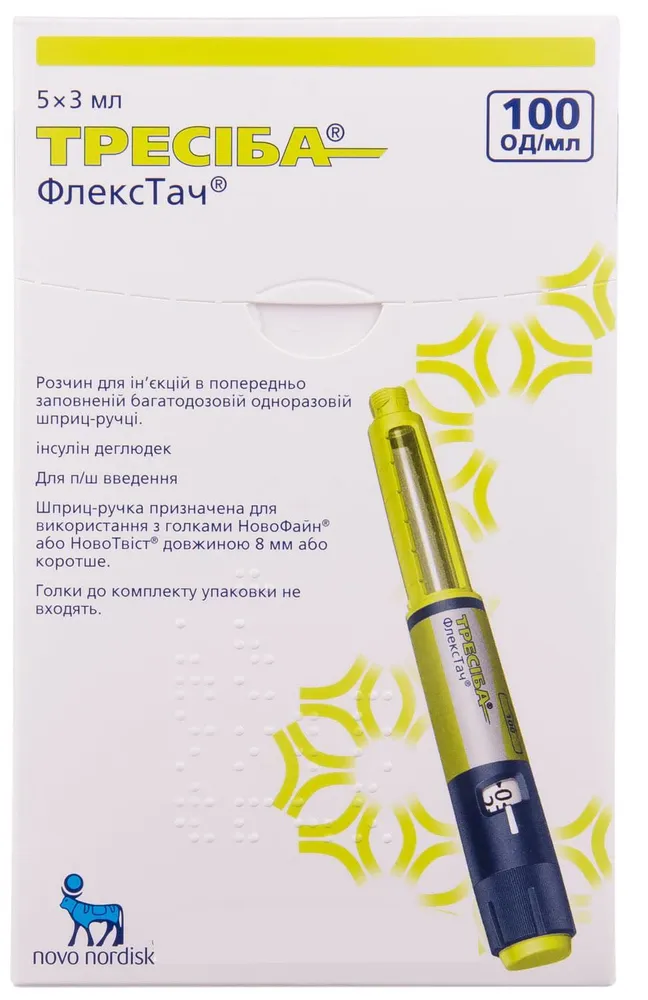
Table of Contents
INSTRUCTION FOR MEDICAL USE OF THE MEDICINAL PRODUCT TRESIBA® FLEXTOUCH®
Composition:
Active substance: insulin degludec;
1 ml of solution contains 100 IU insulin degludec* (equivalent to 3.66 mg insulin degludec).
1 pre-filled pen contains 3 ml of solution, equivalent to 300 IU insulin degludec;
Excipients: glycerol; metacresol; phenol; zinc acetate dihydrate; hydrochloric acid (for pH adjustment); sodium hydroxide (for pH adjustment); water for injections.
*Produced by recombinant DNA technology in Saccharomyces cerevisiae.
Pharmaceutical form. Solution for injection.
Main physicochemical properties: clear, colourless liquid, free from visible particles, practically free from mechanical inclusions.
Pharmacotherapeutic group. Drugs affecting the digestive tract and metabolism. Medicinal products used in diabetes. Long-acting insulins and analogues for injection. ATC code A10AE06.
Pharmacological properties.
Mechanism of action
Insulin degludec specifically binds to the human insulin receptor and results in the same pharmacological effect as human insulin.
The glucose-lowering effect of insulin is mediated by promoting glucose uptake into tissues following insulin binding to receptors on muscle and fat cells, as well as by simultaneous suppression of glucose release from the liver.
Pharmacodynamics.
Tresiba® FlexTouch® is a basal insulin which, after subcutaneous injection, forms a soluble multihexamer, resulting in a depot from which insulin degludec is continuously and slowly absorbed into the bloodstream, leading to a smooth and stable glucose-lowering effect. Over 24 hours, the glucose-lowering effect of Tresiba® FlexTouch® administered once daily, unlike insulin glargine, is evenly distributed during the first and second 12-hour periods (AUC_SMBG,0-12h, PK / AUC_SMBG, total PK = 0.5).
The duration of action of Tresiba® FlexTouch® exceeds 42 hours within the therapeutic dose range.
Steady-state plasma concentration is reached after 2–3 days of administration.
Daily variability, expressed as the coefficient of variation of glucose-lowering effect over a single dosing interval of 0–24 hours (AUC_SMBG,τ, PK) at steady state, is 20% for insulin degludec, which is significantly lower than for insulin glargine (100 IU/mL).
The overall glucose-lowering effect of Tresiba® FlexTouch® increases linearly with increasing dose. The average glucose-lowering effect of Tresiba® FlexTouch® 100 IU/mL and Tresiba® FlexTouch® 200 IU/mL is comparable when the same dose is administered.
No differences in pharmacodynamic effect of the drug were observed between younger and older adult patients.
Clinical efficacy and safety
Eleven multinational, controlled, randomized, open-label, treat-to-target clinical trials of 26 and 52 weeks’ duration were conducted with Tresiba® FlexTouch®, involving a total of 4275 patients (1102 patients with type 1 diabetes and 3173 patients with type 2 diabetes).
Open-label trials evaluated the drug in patients with type 1 diabetes, in patients previously not treated with insulin (initiation of insulin therapy in patients with type 2 diabetes), and in patients previously treated with insulin (intensification of insulin therapy in patients with type 2 diabetes), under both fixed and flexible dosing regimens. It was confirmed that the drug is non-inferior to comparator agents (insulin detemir and insulin glargine [100 IU/mL]) in terms of HbA1c reduction (from baseline to end of trial).
At the same time, the effect of Tresiba® FlexTouch® on HbA1c reduction was statistically significantly greater compared to sitagliptin.
In a prospectively planned meta-analysis of seven open-label confirmatory trials using a treat-to-target design in patients with type 1 and type 2 diabetes, Tresiba® FlexTouch® was associated with fewer emergency treatments for confirmed hypoglycemic events (in patients with type 2 diabetes) and fewer confirmed nocturnal hypoglycemic events compared to insulin glargine (100 IU/mL) (administered according to instructions). The reduction in hypoglycemic events was achieved with a lower mean fasting plasma glucose level when using Tresiba® FlexTouch® compared to insulin glargine.
There are no data indicating clinically relevant formation of anti-insulin antibodies during long-term treatment with Tresiba® FlexTouch®.
In a 104-week clinical trial, 57% of patients with type 2 diabetes receiving Tresiba® FlexTouch® (insulin degludec) in combination with metformin achieved the target HbA1c level of < 7.0%. The remaining patients continued in a 26-week open-label trial and were randomized to either add-on therapy with liraglutide or insulin aspart (administered once daily with the largest meal). In the group receiving insulin degludec + liraglutide, the insulin dose was reduced by 20% to minimize the risk of hypoglycemia. Adding liraglutide resulted in a statistically significantly greater reduction in HbA1c (–0.73% with liraglutide vs. –0.40% with the comparator, based on mean estimates) and body weight (–3.03 kg vs. +0.72 kg, based on mean estimates). The rate of hypoglycemic episodes (per patient-year of exposure) was statistically significantly lower with liraglutide add-on compared to insulin aspart once daily (1.0 vs. 8.15; rate ratio: 0.13; 95% CI: 0.08–0.21).
Additionally, two 64-week controlled, double-blind, randomized, crossover trials with a treat-to-target design were conducted in patients with type 1 diabetes (501 patients) and type 2 diabetes (721 patients), each with at least one risk factor for hypoglycemia. Patients were randomized to receive either Tresiba® FlexTouch® or insulin glargine (100 IU/mL) in a crossover design. The trials evaluated the frequency of hypoglycemia with Tresiba® FlexTouch® compared to insulin glargine (100 IU/mL) (see Table 1).
Table 1. Results of the double-blind, crossover clinical trial in patients with type 1 and type 2 diabetes
| Parameter |
Type 1 diabetes |
Type 2 diabetes |
||
| Tresiba®1 |
Insulin glargine (100 IU/mL)1 |
Tresiba®2 |
Insulin glargine (100 IU/mL)2 |
|
| N |
501 |
721 |
||
| Glycated hemoglobin, HbA1c, (%) |
||||
| Baseline level |
7.6 |
7.6 |
||
| End of treatment |
6.9 |
6.9 |
7.1 |
7.0 |
| Fasting plasma glucose level (mmol/L) |
||||
| Baseline level |
9.4 |
7.6 |
||
| End of treatment |
7.5 |
8.4 |
6.0 |
6.1 |
| Frequency of severe hypoglycemia3 |
||||
| Dose-maintenance period4 |
0.69 |
0.92 |
0.05 |
0.09 |
| Ratio: 0.65 [0.48; 0.89] |
Ratio: 0.54 [0.21; 1.42] |
|||
| Frequency of severe or symptomatic hypoglycemia confirmed by blood glucose measurement3,5 |
||||
| Dose-maintenance period4 |
22.01 |
24.63 |
1.86 |
2.65 |
| Ratio: 0.89 [0.85; 0.94] |
Ratio: 0.70 [0.61; 0.80] |
|||
| Frequency of severe or symptomatic nocturnal hypoglycemia confirmed by blood glucose measurement 3,5 |
||||
| Dose-maintenance period4 |
2.77 |
4.29 |
0.55 |
0.94 |
| Ratio: 0.64 [0.56; 0.73] |
Ratio: 0.58 [0.46; 0.74] |
|||
1 When administered once daily + insulin aspart to cover mealtime insulin requirements.
2 When administered once daily ± oral antidiabetic medicinal products (any combination of metformin, dipeptidyl peptidase-4 inhibitor, alpha-glucosidase inhibitor, thiazolidinediones, and sodium-glucose cotransporter-2 inhibitor).
3 Per patient-year of exposure.
4 Episodes recorded from week 16 of each treatment period.
5 Symptomatic hypoglycemia, confirmed by blood glucose measurement, is defined as an episode confirmed by a plasma glucose level below 3.1 mmol/L with symptoms of hypoglycemia. Nocturnal confirmed hypoglycemia refers to episodes occurring between 12 a.m. and 6 a.m.
Assessment of impact on cardiovascular events
The DEVOTE study was a randomized, double-blind, event-driven clinical trial with a median duration of 2 years, in which the cardiovascular safety of Tresiba® FlexTouch® was compared with insulin glargine (100 U/mL) in 7,637 patients with type 2 diabetes and high cardiovascular risk.
The primary analysis assessed the time from randomization to the first occurrence of one of three major adverse cardiovascular events (MACE): death from cardiovascular causes, non-fatal myocardial infarction, or non-fatal stroke. This study was designed as a cardiovascular risk non-inferiority trial with a pre-specified non-inferiority margin of 1.3 for the hazard ratio (HR) of MACE with Tresiba® FlexTouch® compared to insulin glargine. Cardiovascular safety of Tresiba® FlexTouch® was demonstrated compared to insulin glargine (HR 0.91 [0.78; 1.06]) (see Table 2).
Results of subgroup analyses (e.g., by sex, duration of diabetes, cardiovascular risk, and prior insulin regimen) were consistent with the primary analysis results.
Table 2. Results of the analysis of the combined 3-component MACE endpoint and individual cardiovascular endpoints in the DEVOTE study
| Risk ratio (95% CI) |
Tresiba® FlexTouch® N (%) |
Insulin glargine N (%) |
|||||||
| Primary analysis (3-component MACE endpoint) |
|
0.91 (0.78–1.06) |
325 (8.51) |
356 (9.32) |
|||||
| Cardiovascular death |
0.96 (0.76–1.21) |
136 (3.56) |
142 (3.72) |
||||||
| Non-fatal stroke |
0.90 (0.65–1.23) |
71 (1.86) |
79 (2.07) |
||||||
| Non-fatal MI |
0.85 (0.68–1.06) |
144 (3.77) |
169 (4.43) |
||||||
| Death from any cause |
0.91 (0.76–1.11) |
202 (5.29) |
221 (5.79) |
||||||
| 0.7 0.9 1 1.1 1.3 |
|||||||||
| In favor of Tresiba® FlexTouch® |
In favor of insulin glargine |
||||||||
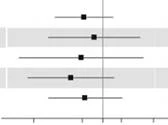
N – number of patients with first event confirmed by EAC occurring during the study.
% – percentage of patients with first event confirmed by EAC out of total number of randomized patients.
EAC – Executive Assessment Committee.
C-V – cardiovascular.
MI – myocardial infarction.
CI – 95% confidence interval.
At baseline, HbA1c level was 8.4% in both treatment groups, and after 2 years HbA1c was 7.5% in both the Tresiba® FlexTouch® treatment group and the insulin glargine treatment group.
Tresiba® FlexTouch® was superior to insulin glargine with regard to lower rate of severe hypoglycemic episodes and fewer patients experiencing severe hypoglycemic episodes. The rate of nocturnal severe hypoglycemic episodes with Tresiba® FlexTouch® was statistically significantly lower compared to insulin glargine (see Table 3).
Table 3. Results of the DEVOTE study
| Tresiba® FlexTouch®1 |
Insulin glargine (100 IU/mL)1 |
|
| N |
3818 |
3819 |
| Frequency of hypoglycemia (per 100 patient-years of observation) |
||
| Severe episodes |
3.70 |
6.25 |
| Event rate: 0.60 [0.48; 0.76] |
||
| Nocturnal severe episodes2 |
0.65 |
1.40 |
| Event rate: 0.47 [0.31; 0.73] |
||
| Proportion of patients experiencing hypoglycemia (percentage of patients) |
||
| Severe episodes |
4.9 |
6.6 |
| Odds ratio: 0.73 [0.60; 0.89] |
||
1 Were administered in addition to standard treatment of diabetes and cardiovascular diseases.
2 Severe nocturnal hypoglycemic episodes were defined as episodes occurring between midnight and 6 a.m.
Children
The efficacy and safety of Tresiba® FlexTouch® in children and adolescents with type 1 diabetes were evaluated in a randomized, 1:1, controlled clinical trial of 26 weeks’ duration (n = 350), followed by a 26-week extension period (n = 280). The group of patients receiving Tresiba® FlexTouch® included 43 children aged 1 to 5 years, 70 children aged 6 to 11 years, and 61 adolescents aged 12 to 17 years. Once-daily administration of Tresiba® FlexTouch® resulted in a similar reduction in HbA1c levels at week 52 and a greater reduction in fasting plasma glucose from baseline compared to the comparator product, insulin detemir, administered once or twice daily. This was achieved with a daily dose of Tresiba® FlexTouch® that was 30% lower than the dose of insulin detemir. The rates (events/patient-year of exposure) of severe hypoglycemia (as defined by ISPAD; 0.51 vs 0.33), confirmed hypoglycemia (57.71 vs 54.05), and nocturnal confirmed hypoglycemia (6.03 vs 7.60) were comparable between Tresiba® FlexTouch® and insulin detemir. In both treatment groups, children aged 6 to 11 years had a higher rate of confirmed hypoglycemia than other age groups. In the Tresiba® FlexTouch® group, the rate of severe hypoglycemia was higher in children aged 6 to 11 years. The rate of hyperglycemic episodes with ketosis was significantly lower with Tresiba® FlexTouch® compared to insulin detemir: 0.68 vs 1.09, respectively. The frequency, type, and severity of adverse reactions in children were not different from those in the general diabetic patient population. Antibody formation was extremely rare and had no clinical impact. Data on efficacy and safety in adolescents with type 2 diabetes were extrapolated from data in adolescents and adult patients with type 1 diabetes and adult patients with type 2 diabetes. Results support the use of Tresiba® FlexTouch® in adolescents with type 2 diabetes.
Pharmacokinetics.
Absorption.
After subcutaneous injection, soluble and stable multihexamers of insulin degludec form an insulin depot in the subcutaneous tissue. Monomers of insulin degludec gradually dissociate from the multihexamers, resulting in a slow and continuous release of insulin degludec into the bloodstream.
Steady-state serum concentrations of insulin degludec are reached after 2–3 days of daily administration.
The glucose-lowering effect of Tresiba® FlexTouch® over 24 hours with once-daily administration is evenly distributed during the first and second 12-hour periods (AUCdeg,0–12h,PK / AUCdeg,total,PK = 0.5), unlike insulin glargine.
Distribution
The binding affinity of insulin degludec to human plasma albumin is > 99%.
Metabolism
Degradation of insulin degludec is similar to that of human insulin; none of the metabolites formed have biological activity.
Elimination
After subcutaneous administration, the elimination half-life is determined by the rate of absorption from the subcutaneous tissue. The elimination half-life of Tresiba® FlexTouch® is approximately 25 hours, independent of dose.
Linearity
Dose proportionality was observed in overall exposure after subcutaneous administration within the therapeutic dose range. Bioequivalence requirements were met in direct comparisons between Tresiba® FlexTouch® 100 U/mL and Tresiba® FlexTouch® 200 U/mL (based on AUCdeg,τ,PK and Cmax,deg,PK).
Gender
No differences in pharmacokinetic properties of the drug were observed according to gender.
Age, race, renal and hepatic impairment
No differences in the pharmacokinetics of insulin degludec were observed between elderly and younger adult patients, among patients of different racial backgrounds, or between healthy volunteers and patients with renal or hepatic impairment.
Children
The pharmacokinetic properties of insulin degludec in children (aged 1 to 11 years) and adolescents (aged 12 to 18 years) at steady state were comparable to those in adults with type 1 diabetes. Overall exposure after a single dose was higher in children and adolescents than in adults with type 1 diabetes.
Clinical characteristics.
Indications.
Treatment of diabetes mellitus in adults, adolescents, and children aged 1 year and older.
Contraindications.
Hypersensitivity to insulin degludec or to any of the excipients in the product.
Interaction with other medicinal products and other forms of interaction.
It is known that certain medicinal products affect glucose metabolism.
Medicinal products that may decrease insulin requirements
Oral hypoglycemic agents, GLP-1 receptor agonists, monoamine oxidase inhibitors (MAO inhibitors), β-blockers, angiotensin-converting enzyme (ACE) inhibitors, salicylates, anabolic steroids, and sulphonamides.
Medicinal products that may increase insulin requirements
Oral contraceptives, thiazides, glucocorticoids, thyroid hormones, sympathomimetics, growth hormone, and danazol.
β-blockers may mask symptoms of hypoglycemia.
Octreotide/lanreotide may either decrease or increase insulin requirements.
Alcohol may potentiate or reduce the hypoglycemic effect of insulin.
Special precautions for use.
Hypoglycemia
Skipping meals or unexpected intense physical exertion may lead to hypoglycemia.
Hypoglycemia may occur if the insulin dose is too high relative to insulin requirements.
When used in children, particular attention should be paid to matching insulin doses (especially in the basal-bolus regimen) with food intake and physical activity to reduce the risk of hypoglycemia.
Patients in whom intensive insulin therapy has substantially improved glycemic control may experience altered usual warning symptoms of hypoglycemia, and should therefore be warned in advance. Usual warning symptoms may disappear in patients with long-standing diabetes mellitus.
Concomitant diseases, especially infections and fever, usually increase the patient's insulin requirements. Concomitant kidney, liver, or adrenal, pituitary, or thyroid gland disorders may necessitate insulin dose adjustments.
As with other basal insulin preparations, the prolonged action of Tresiba® FlexTouch® may delay glucose recovery after hypoglycemia.
Hyperglycemia
In cases of significant hyperglycemia, administration of short-acting insulin is recommended.
Inadequate dosing or discontinuation of treatment in patients requiring insulin may lead to hyperglycemia and diabetic ketoacidosis. In addition, concomitant diseases, especially infections, may lead to hyperglycemia and thus increased insulin requirements.
Typically, the first symptoms of hyperglycemia develop gradually over several hours or days. They include thirst, frequent urination, nausea, vomiting, drowsiness, skin flushing and dryness, dry mouth, loss of appetite, as well as acetone odor on the breath. In type 1 diabetes mellitus, untreated hyperglycemia leads to diabetic ketoacidosis, which is potentially life-threatening.
Switching from another type of insulin
Switching a patient from another type or brand of insulin or from insulin produced by another manufacturer should be done under strict medical supervision, as insulin dose adjustments may be necessary.
Skin and subcutaneous tissue disorders
Patients should be instructed on the necessity of regularly rotating injection sites to reduce the risk of lipodystrophy and cutaneous amyloidosis. Injecting into areas with such reactions carries a potential risk of delayed insulin absorption and impaired glycemic control. Cases of hypoglycemia have been reported after sudden switching of injection sites from affected to unaffected areas. Monitoring of blood glucose levels and dose adjustment of antidiabetic medications are recommended after changing injection sites from affected to unaffected areas.
Combination of pioglitazone with insulin preparations
Cases of congestive heart failure have been reported when pioglitazone was used in combination with insulin, particularly in patients with risk factors for congestive heart failure. This should be considered when prescribing treatment combining pioglitazone with Tresiba® FlexTouch®. Patients receiving these drugs in combination should be monitored by a physician for early detection of symptoms of congestive heart failure, weight gain, and development of edema. If cardiac function worsens at any time, treatment with pioglitazone should be discontinued.
Vision disorders
Intensification of insulin therapy with rapid improvement in glycemic control may temporarily worsen diabetic retinopathy, whereas long-term improvement in glycemic control reduces the risk of progression of diabetic retinopathy.
Prevention of accidental errors
Patients must consistently check the label on the insulin before each injection to avoid accidentally confusing Tresiba® FlexTouch® with other insulin preparations.
Patients should visually check the number of units displayed on the dose counter of the pen device. Blind patients or patients with poor vision must seek assistance from another person with good vision who knows how to use the insulin delivery device.
To prevent dosing errors and potential overdose, patients and healthcare providers must not use a syringe to withdraw medication from the cartridge of a pre-filled pen device. If needle blockage occurs, patients should follow the instructions described in the patient information leaflet for Tresiba® FlexTouch® (see Instructions for care and handling of the pen device).
Production of insulin antibodies
Insulin administration may lead to the production of insulin antibodies. In rare cases, the presence of such antibodies may require insulin dose adjustments to overcome a tendency toward hyperglycemia or hypoglycemia.
Tresiba® FlexTouch® contains less than 1 mmol sodium (23 mg); therefore, the medicinal product can be considered essentially sodium-free.
Traceability
To improve traceability of biological medicinal products, the name and batch number of the administered product should be clearly recorded on the packaging.
Use during pregnancy or breastfeeding.
Pregnancy
There is no clinical experience with the use of Tresiba® FlexTouch® in pregnant women.
Reproductive toxicity studies in animals showed no differences between the effects of insulin degludec and human insulin on embryotoxicity and teratogenicity.
Generally, intensified blood glucose monitoring and close surveillance of pregnant women with diabetes are recommended during pregnancy and when planning pregnancy. Insulin requirements usually decrease during the first trimester and increase during the second and third trimesters. After delivery, insulin requirements usually return rapidly to pre-pregnancy levels.
Breastfeeding
There is no clinical experience with the use of Tresiba® FlexTouch® during breastfeeding. In animals, insulin degludec passes into breast milk, with lower concentrations in milk than in plasma.
It is unknown whether insulin degludec passes into human breast milk. Metabolic adverse effects in breastfed newborns/infants are not expected.
Fertility
Reproductive function studies in animals following administration of insulin degludec showed no adverse effects on fertility.
Ability to affect reaction speed when driving vehicles or operating machinery.
A patient's reaction and ability to concentrate may be impaired during hypoglycemia. This may constitute a risk factor, for example, when driving a car or operating machinery.
Patients should take precautions to prevent hypoglycemia before driving. This is particularly important for patients with weakened or absent hypoglycemia warning symptoms or those who experience frequent episodes of hypoglycemia. Under such circumstances, the appropriateness of driving should be carefully considered.
Method of Administration and Dosage
Dosage
Tresiba® FlexTouch® is a long-acting basal insulin preparation for subcutaneous administration once daily at any time of day, preferably at the same time each day.
The potency of insulin analogues, including insulin degludec, is expressed in units (U). One (1) unit (U) of insulin degludec is equivalent to 1 international unit (IU) of human insulin, 1 unit of insulin glargine (100 U/mL), or 1 unit of insulin detemir.
For patients with type 2 diabetes mellitus, the drug may be administered alone or in combination with oral antidiabetic agents, GLP-1 receptor agonists, or in combination with bolus insulin (see section "Pharmacodynamics").
For patients with type 1 diabetes mellitus, the drug is used in combination with short-acting insulin to cover insulin requirements during meals.
The dosage of Tresiba® FlexTouch® should be individualized according to the patient's needs. Glycemic control should be optimized by adjusting the basal insulin dose based on fasting plasma glucose levels.
As with other insulin preparations, dose adjustments may also be required when there are changes in physical activity, usual dietary intake, or in the presence of concomitant illness.
The required dose is determined in units of activity. The Tresiba® FlexTouch® 100 U/mL pen device allows administration of doses from 1 to 80 units per injection in 1-unit increments.
The dose counter displays the number of units regardless of insulin strength. There is no need to recalculate the insulin dose when switching patients to preparations with a new strength.
Flexibility in Timing of Administration
If administration at the same time each day is not possible, the injection may be given at another time, provided that at least an 8-hour interval is maintained between injections. There is no clinical experience regarding variable administration times of Tresiba® FlexTouch® in children and adolescents.
Patients who forget to administer their insulin dose on time should be advised to inject it as soon as they remember, then resume their usual once-daily regimen.
Initiation of Treatment
Patients with type 2 diabetes mellitus
The recommended initial dose is 10 units once daily, with subsequent individual dose adjustments.
Patients with type 1 diabetes mellitus
The drug should be administered once daily in combination with mealtime insulin, with subsequent individual dose adjustments.
Switching from Other Insulin Preparations
Careful monitoring of blood glucose levels is recommended during the transition to Tresiba® FlexTouch® and during the first weeks of treatment. Dose adjustments and timing of short-acting insulin or other antidiabetic agents may be necessary.
Patients with type 2 diabetes mellitus
For patients previously receiving once-daily basal insulin, basal-bolus insulin therapy, or previously using premixed insulins or self-mixing insulins, switching to Tresiba® FlexTouch® can be done at a 1:1 ratio relative to the previous basal insulin dose, followed by individual dose adjustments.
A 20% reduction from the previous basal insulin dose should be considered, followed by individual dose titration:
- when switching from a basal insulin previously administered twice daily;
- when switching from insulin glargine (300 U/mL).
Patients with type 1 diabetes mellitus
For patients with type 1 diabetes mellitus, a 20% reduction from the previous basal insulin dose or from the basal component of continuous subcutaneous insulin infusion (CSII) therapy should be considered, followed by individual dose adjustments based on individual glycemic response.
Use of Tresiba® FlexTouch® in Combination with GLP-1 Receptor Agonists in Patients with Type 2 Diabetes Mellitus
When adding Tresiba® FlexTouch® to GLP-1 receptor agonists, the recommended initial dose is 10 units once daily, with subsequent individual dose titration.
When adding GLP-1 receptor agonists to Tresiba® FlexTouch®, a 20% reduction in the dose of Tresiba® FlexTouch® is recommended to reduce the risk of hypoglycemia. Subsequent dose adjustments should be made individually.
Special Populations
Older Patients (≥ 65 years)
Tresiba® FlexTouch® can be used in older patients. More frequent monitoring of blood glucose levels and individual dose adjustments are recommended (see section "Pharmacokinetics").
Impaired Liver or Kidney Function
Tresiba® FlexTouch® can be used in patients with impaired liver or kidney function. More frequent monitoring of blood glucose levels and individual dose adjustments are recommended (see section "Pharmacokinetics").
Children
Tresiba® FlexTouch® can be used in children and adolescents aged 1 year and older (see section "Pharmacodynamics"). When switching from basal insulin to Tresiba® FlexTouch®, both basal and bolus insulin doses should be calculated on an individual basis to reduce the risk of hypoglycemia (see section "Special Warnings and Precautions for Use").
Administration of the Medicinal Product
Tresiba® FlexTouch® must be administered by subcutaneous injection only, into the abdominal wall, thigh, or upper arm. Injection sites should be rotated within the same region to reduce the risk of lipodystrophy and cutaneous amyloidosis (see sections "Special Warnings and Precautions for Use" and "Adverse Reactions").
The drug must not be administered:
- intravenously, as this may lead to severe hypoglycemia;
- intramuscularly, as this may alter the rate of absorption;
- via an insulin infusion pump.
Tresiba® FlexTouch® must not be drawn from the prefilled pen cartridge into a syringe.
Patients must be instructed to always use a new needle for each injection. Reusing needles increases the risk of needle blockage, which may result in under- or overdosing of insulin. In case of needle blockage, patients should follow the instructions provided in the Patient Information Leaflet for Tresiba® FlexTouch® (see Care and Handling of the Pen Device).
- The pen device is intended for individual patient use only. The cartridge must not be refilled.
- Tresiba® FlexTouch® must not be used if the solution is not clear, colorless, and free of particles.
- Tresiba® FlexTouch® must not be used if the product has been frozen.
- A new needle must be attached before each use. Needles must not be reused. The patient must dispose of the needle after each injection.
- In case of needle blockage, patients should follow the instructions in the Patient Information Leaflet for Tresiba® FlexTouch®.
- Used devices must be disposed of in accordance with local regulations.
Tresiba® FlexTouch® is supplied in a prefilled pen device (FlexTouch®) designed for use with NovoFine® or NovoTwist® injection needles up to 8 mm in length. The prefilled pen allows administration of doses from 1 to 80 units per injection in 1-unit increments.
Patient Instructions for Use of Tresiba® FlexTouch®
Before using the Tresiba® FlexTouch® pen, read these instructions carefully.
Do not use the pen without proper training from a healthcare professional.
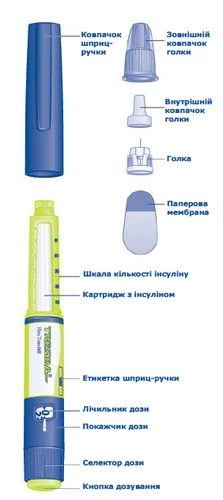
First, check the label to confirm that the pen contains Tresiba® FlexTouch® 100 U/mL, then review the illustrations below to become familiar with the different parts of the pen and needle.
Patients who are blind or have poor vision and cannot visually verify the number of units set on the pen's dose counter should not use the pen without assistance from another person. Seek help from someone with good vision who knows how to use an insulin delivery device.
The prefilled pen contains 300 units of insulin. The Tresiba® FlexTouch® 100 U/mL pen allows administration of doses from 1 to 80 units per injection in 1-unit increments.
Tresiba® FlexTouch® is intended for use with NovoFine® or NovoTwist® injection needles up to 8 mm in length. Needles are not included in the package.
! Important Information
Read these instructions carefully, as they are essential for the safe use of the pen device.
Tresiba® FlexTouch®: prefilled pen device (FlexTouch®) and needle (example).
- Preparing the Tresiba® FlexTouch® pen for injection
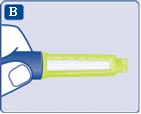
| Check the insulin name and strength on the label of your pen to make sure it contains Tresiba® FlexTouch® 100 units/mL. This is especially important if you use more than one type of insulin. Fig. A. Remove the cap from the pen. |
|
| Fig. C. Take a new needle and remove the paper membrane from it. |
|
| Fig. D. Screw the needle onto the pen. Turn the needle until it is firmly secured. |
|
| Fig. E. Remove the outer needle cap. Do not throw it away: you will need it after the injection to safely remove the needle from the pen. |
|
| Fig. F. Remove the inner needle cap and discard it: attempting to replace it may result in accidental self-injection. A drop of insulin may appear at the needle tip. This is normal, but you must still perform an insulin flow check. |
|
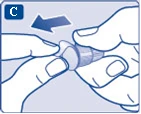
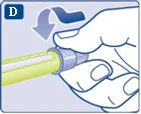
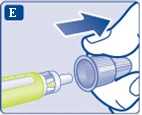
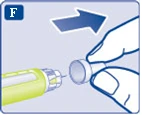
! Always use a new needle for each injection to prevent needle blockage, infection, or incorrect insulin dosing.
! Never use a bent or damaged needle.
- Check insulin flow
| Always check the insulin flow before injection. This will help ensure that the full dose of the medicine is delivered. Fig. A. Turn the dose selector to set 2 units. Make sure that the dose counter shows 2. |
|
| Fig. B. Holding the pen vertically with the needle pointing upwards, gently tap the cartridge several times with your finger so that air bubbles collect at the top of the cartridge. |
|
| Fig. C. Press and hold the injection button until the dose counter returns to the "0" mark. The "0" mark should align with the dose pointer. A drop of insulin should appear at the tip of the needle. |
|
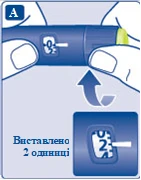
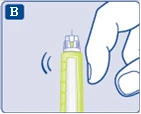
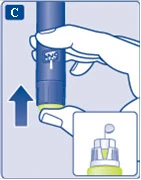
A small air bubble may remain at the needle tip, but it will not be injected during the injection.
If an insulin drop does not appear, repeat steps (from Fig. A to Fig. C) up to 6 times. If an insulin drop still does not appear, change the needle and repeat steps from Fig. A to Fig. C once again.
If an insulin drop still does not appear, discard this pen and use a new one.
! Always make sure that an insulin drop appears at the needle tip before administering the dose. If no drop appears, do not inject insulin, even if the dose counter is turning.
- Setting the dose
| Fig. A. Before injecting, make sure the dose counter is set to the mark "0". The "0" mark must align with the dose indicator. Turn the dose selector to set the dose prescribed by your doctor. The selected dose can be adjusted either up or down by rotating the dose selector in the appropriate direction. The pen injector allows administration of a single dose of up to 80 units. |
|
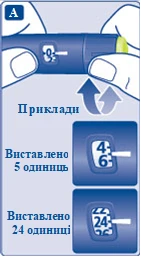
The dose selector changes the number of insulin units. Only the dose counter and dose indicator show how many units have been selected for injection.
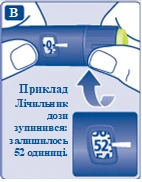
You can dial up to 80 units for a single injection. If the insulin pen contains less than 80 units of insulin, the dose counter will stop at the number of units remaining.
The dose selector clicks differently when turned to increase or decrease the dose, or when the selected number of units exceeds the amount of insulin remaining in the pen. Do not count the clicks of the insulin pen when selecting the insulin dose.
! Always use the dose counter and dose indicator to verify the selected number of units before injecting the medication.
Do not count the clicks of the insulin pen when setting the dose.
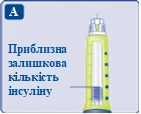
Do not use the insulin volume scale, which only approximately shows how much insulin remains in the pen.
- Injecting insulin
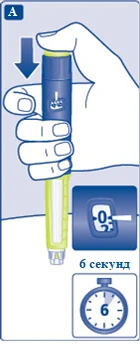
| Fig. A. Insert the needle under the skin. Follow the injection technique taught to you by your doctor or nurse. Make sure you can see the dose counter. Do not touch the dose counter with your fingers: this may stop the insulin from being delivered. Press and hold the dose button until the dose counter returns to "0". "0" should align with the dose markers, and you may hear a click. Keep the needle under the skin for at least 6 seconds. This ensures the full dose of insulin is delivered. |
|
| Fig. B. Remove the needle from the skin at a right angle. If bleeding occurs at the injection site, apply slight pressure with a cotton ball. Do not rub the injection site. |
|
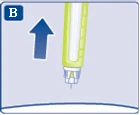
Sometimes a drop of insulin may be seen at the needle tip after injection. This is acceptable and does not affect the dose.
! Always watch the dose counter to monitor the number of units injected.
The dose counter shows the exact number of units.
Do not count the clicks of the pen to determine the number of units.
- Removing the needle after injection
| Fig. A. On a flat surface, carefully cover the needle with the large outer cap without touching the needle or the outer cap. |
|
| Fig. B. After the needle is covered, carefully press the outer cap firmly into place, then unscrew the needle. |
|
| Fig. C. After each use, replace the cap on the pen injector to protect the medication from light. |
|
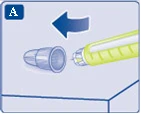
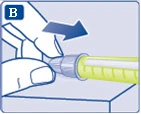
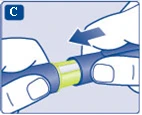
Always remove the needle after each injection to ensure painless administration of the medication and to prevent needle blockage. Insulin cannot be administered if the needle is blocked.
Dispose of the used insulin pen without the needle, according to your doctor's, nurse's, pharmacist's, or local authorities' instructions.
! To avoid accidental needlestick injury, never re-cover the removed inner needle cap.
! After each injection, always remove the needle to prevent needle blockage, infection, insulin leakage, or inaccurate dosing.
- Determining the amount of insulin in the pen
| Fig. A. The insulin scale is only an approximate indication of how much insulin remains in the pen. |
|
| Fig. B. To determine how much insulin is left in the pen, use the dose counter: turn the dose selector until the dose counter stops. If the dose counter shows 80, there are at least 80 units of insulin remaining in the pen. If the dose counter shows less than 80, the number of units corresponds to the remaining insulin in the pen. Turn the dose selector in the reverse direction until the dose counter indicates "0". If a larger dose of insulin is required than the number of units remaining in the pen, the missing portion of the dose can be administered using a second pen. |
|
! Carefully calculate the dose when using two injection pens. If in doubt, it is better to administer the full dose from a new pen.
! Other important information:
- Always keep the pen with you.
- Always carry a spare injection pen and new needles in case the pen is damaged or lost.
- Always keep the injection pen and needles out of reach of other people, especially children.
- Needles and the Tresiba® FlexTouch® pen are intended for individual use only.
- Persons assisting the patient should handle used needles with great care to avoid injury and infection.
Instructions for care and handling of the injection pen:
- Do not leave the injection pen in a car to avoid overheating or freezing of the medication.
- Prevent contact of the injection pen with dust, dirt, or liquids.
- Do not wash, soak, or lubricate the injection pen with oil. If necessary, the Tresiba® FlexTouch® pen may be cleaned by wiping it with a damp cloth and mild detergent.
- Avoid dropping the injection pen. Do not tap the injection pen against hard surfaces. After a pen has been dropped or if any problem is suspected, attach a new needle and check insulin flow before administering the dose.
- Do not attempt to refill the pen cartridge. If the cartridge is empty, the pen must be disposed of.
- Do not attempt to repair the injection pen or disassemble it into parts.
Children.
The efficacy and safety of Tresiba® FlexTouch® in children (aged 1 to 18 years) have been demonstrated in a long-term study. Tresiba® FlexTouch® may be used in adolescents and children aged 1 year and older.
Overdose.
Although there is no specific definition of overdose for insulin, hypoglycemia of varying severity may occur after administration if doses are too high relative to the patient's needs.
- Mild hypoglycemia can be treated by oral intake of glucose or sugar-containing products. Therefore, diabetic patients are advised to always carry glucose-containing products with them.
- In cases of severe hypoglycemia, when the patient is unconscious, individuals who have received appropriate training should administer glucagon subcutaneously or intramuscularly (0.5–1.0 mg). A healthcare professional may administer glucose intravenously. Intravenous glucose should also be administered if the patient's condition does not improve within 10–15 minutes after glucagon injection.
After the patient regains consciousness, they should take carbohydrates orally to prevent recurrence of hypoglycemia.
Adverse reactions
The most common adverse effect reported during treatment is hypoglycaemia (see "Description of selected adverse reactions").
Listed below are adverse reactions based on clinical trial data. Adverse reactions are classified by frequency and by system organ class according to MedDRA. They are categorized by frequency as follows: very common (≥1/10), common (≥1/100 to <1/10), uncommon (>1/1000 to <1/100), rare (>1/10000 to <1/1000), very rare (<1/10000), and frequency not known (cannot be estimated from available data).
Immune system disorders: rare – hypersensitivity reactions, urticaria.
Metalabolism and nutrition disorders: very common – hypoglycaemia.
Skin and subcutaneous tissue disorders: uncommon – lipodystrophy, frequency not known – cutaneous amyloidosis†.
General disorders and administration site conditions: common – injection site reactions; uncommon – peripheral oedema.
†Adverse reactions from post-marketing experience are described in the section "Description of selected adverse reactions".
Description of selected adverse reactions
Immune system disorders
Allergic reactions may occur during treatment with insulin products. Immediate-type allergic reactions to insulin or excipients may be life-threatening.
With the use of Tresiba® FlexTouch®, urticaria and hypersensitivity reactions are rarely observed, manifesting as swelling of the tongue and lips, diarrhoea, nausea, fatigue, and pruritus.
Hypoglycaemia
Hypoglycaemia may occur when the insulin dose greatly exceeds the patient's insulin requirements. Severe hypoglycaemia may lead to loss of consciousness and/or seizures, followed by temporary or permanent impairment of brain function, and even death. Symptoms of hypoglycaemia usually appear suddenly. They include cold sweat, pallor and cold skin, fatigue, nervousness or tremor, anxiety, unusual tiredness or weakness, confusion, difficulty concentrating, drowsiness, excessive hunger, visual disturbances, headache, nausea, and palpitations.
Skin and subcutaneous tissue disorders
Lipodystrophy, including lipohypertrophy, lipoatrophy, and cutaneous amyloidosis, may develop at injection sites and may delay insulin absorption from the injection site. Regular rotation of injection sites within a given area may reduce the occurrence or prevent the development of this reaction.
Injection site reactions
Skin reactions at the injection site, such as haematoma, pain, bleeding, erythema, nodules, swelling, discoloration, pruritus, sensation of warmth, and induration, may occur with administration of Tresiba® FlexTouch®. These reactions are usually mild and transient and resolve with continued treatment.
Paediatric population
The frequency, type, and severity of adverse reactions in children do not differ from those in the general population of patients with diabetes mellitus (see section "Pharmacodynamics").
Special populations
Based on clinical trial data, the frequency, type, and severity of adverse reactions observed in elderly patients and in patients with renal or hepatic impairment do not differ from those in the general population.
Shelf life.
2.5 years.
Storage conditions.
Store in a refrigerator at 2–8 °C (do not place too close to the freezer compartment). Do not freeze. Protect from exposure to sunlight by storing the pen with the cap attached.
After first use, the pen may be stored at temperatures not exceeding 30 °C. Storage in the refrigerator at 2–8 °C is also permitted. Use within 8 weeks. After each injection, the pen should be recapped to protect from light.
Keep out of the reach and sight of children.
Incompatibilities.
Adding other substances to Tresiba® FlexTouch® may result in degradation of insulin degludec.
Tresiba® FlexTouch® must not be added to infusion solutions or mixed with any other medicinal product.
Packaging.
The pre-filled multi-dose disposable pen contains a 3 ml cartridge made of glass (type 1), sealed at one end with a piston made of halobutyl rubber and at the other end with a disc made of halobutyl/polyisoprene rubber. The pen is made of polypropylene. Packs of 1 or 5 pens in a cardboard box.
Prescription status. Prescription only.
Manufacturers
A/T Novo Nordisk A/S.
Novo Nordisk Production SAS
Manufacturers' addresses
Novo Allé, Bagsværd, 2880, Denmark.
45, avenue d'Orléans, 28000 Chartres, France.