Tramadol calcex
UkraineTable of Contents
INSTRUCTIONS FOR MEDICAL USE OF THE MEDICINAL PRODUCT TRAMADOL KALCEKS (TRAMADOL KALCEKS)
Composition:
Active substance: tramadol;
2 ml of solution (1 ampoule) contains 100 mg of tramadol hydrochloride;
Excipients: sodium acetate trihydrate, water for injections.
Pharmaceutical form. Injection solution.
Main physicochemical properties: clear colorless liquid.
Pharmacotherapeutic group. Analgesics. Opioids. ATC code N02A X02.
Pharmacological Properties.
Pharmacodynamics.
Tramadol is a centrally-acting opioid analgesic. It is a non-selective pure agonist of mu, delta, and kappa receptors, with higher affinity for mu-receptors. Other mechanisms contributing to its analgesic effect include inhibition of neuronal reuptake of norepinephrine and increased release of serotonin.
Tramadol has antitussive activity. Unlike morphine, tramadol does not produce respiratory depression at analgesic doses, even over a wide dose range. It also has less effect on gastrointestinal motility. Its effects on the cardiovascular system are mostly negligible. The analgesic efficacy of tramadol has been reported to be between 1/10 and 1/6 that of morphine.
Pharmacokinetics.
After intramuscular administration in humans, tramadol is rapidly and completely absorbed, reaching maximum plasma concentration (Cmax) within 45 minutes; bioavailability is nearly 100%.
Tramadol has high tissue affinity (Vd, β = 203 ± 40 L). Plasma protein binding is approximately 20%.
Tramadol crosses the blood-brain and placental barriers. Only very small amounts of tramadol and its O-desmethyl metabolites are found in breast milk (0.1% and 0.02% of the administered dose, respectively).
Inhibition of CYP3A4 and/or CYP2D6 isoenzymes involved in tramadol biotransformation may affect plasma concentrations of tramadol or its active metabolite.
Tramadol and its metabolites are almost completely eliminated by the kidneys. Cumulative urinary excretion accounts for 90% of the total radioactivity of the administered dose. Elimination half-life (t1/2, β), regardless of the route of administration, is approximately 6 hours. In patients aged 75 years and older, it may increase by about 1.4-fold. In patients with hepatic cirrhosis, elimination half-life was 13.3 ± 4.9 hours for tramadol and 18.5 ± 9.4 hours for O-desmethyltramadol, with exceptional cases reaching 22.3 hours and 36 hours, respectively. In patients with renal insufficiency (creatinine clearance < 5 mL/min), these values were 11 ± 3.2 hours and 16.9 ± 3 hours, respectively, with exceptional cases reaching 19.5 hours and 43.2 hours.
In the human body, tramadol is mainly metabolized via N- and O-demethylation pathways, as well as by conjugation of O-demethylated products with glucuronic acid. Only O-desmethyltramadol is pharmacologically active. Among other metabolites, significant individual quantitative differences exist. To date, 11 metabolites have been identified in urine.
Within the therapeutic dose range, tramadol exhibits linear pharmacokinetics. The relationship between plasma concentration and analgesic effect is dose-dependent, although with considerable inter-individual variability. Plasma concentrations of 100–300 ng/mL are generally effective.
Clinical characteristics.
Indications.
For the relief of moderate to severe pain.
Contraindications.
Hypersensitivity to tramadol hydrochloride or to any of the excipients of the medicinal product.
Acute alcohol, sedative, hypnotic, opioid, or other psychotropic drug intoxication.
Concomitant use of monoamine oxidase inhibitors (MAOIs) or within 14 days of their discontinuation.
Epilepsy not controlled by treatment.
During therapy for narcotic withdrawal.
Interaction with other medicinal products and other forms of interaction.
The medicinal product Tramadol Kalceks must not be used concomitantly with monoamine oxidase inhibitors (MAOIs) (see section "Contraindications"). Life-threatening interactions affecting the central nervous system (CNS), respiratory and cardiovascular functions have been observed in patients who received treatment with MAOIs within 14 days prior to administration of the opioid meperidine. A similar interaction with MAOIs cannot be excluded when tramadol is used.
Due to available pharmacokinetic data, a clinically significant interaction is not expected with concomitant or prior use of cimetidine (enzyme inhibitor).
Concomitant or prior use of carbamazepine (enzyme inducer) may reduce the analgesic effect and shorten its duration of action.
Concomitant use of Tramadol Kalceks and other CNS depressants, including alcohol, may enhance the CNS depressant effect.
Concomitant use of Tramadol Kalceks with gabapentinoids (gabapentin and pregabalin) may result in respiratory depression, hypotension, profound sedation, coma, or death.
Tramadol may cause seizures and may enhance the effects of selective serotonin reuptake inhibitors (SSRIs), serotonin-norepinephrine reuptake inhibitors (SNRIs), tricyclic antidepressants, antipsychotics, and other drugs that lower the seizure threshold (e.g., bupropion, mirtazapine, tetrahydrocannabinol), thereby causing seizures. Concomitant therapeutic use of tramadol and serotonergic agents, such as SSRIs, serotonin-norepinephrine reuptake inhibitors, MAOIs (see section "Contraindications"), tricyclic antidepressants, and mirtazapine, may lead to serotonin syndrome—a potentially life-threatening condition (see sections "Special precautions" and "Adverse reactions").
Caution is advised when tramadol is used concomitantly with coumarin derivatives (e.g., warfarin), as increased international normalized ratio (INR), severe bleeding, and ecchymosis have been reported in some patients.
Other active substances that inhibit CYP3A4, such as ketoconazole and erythromycin, may delay tramadol metabolism (N-demethylation) and possibly the metabolism of its active O-demethylated metabolite. The clinical significance of this interaction has not been studied.
In limited studies, the use of selective 5-HT3 serotonin receptor antagonists antiemetics (ondansetron) before or after surgery has been associated with increased tramadol requirements in patients with postoperative pain.
Special precautions for use.
Tramadol Kalceks should be used with particular caution in patients with opioid dependence, head injury, shock, disturbances of consciousness of unknown origin, respiratory center or respiratory function disorders, or increased intracranial pressure.
Treatment of patients with respiratory depression or when used concomitantly with CNS depressants (see section "Interaction with other medicinal products and other forms of interaction"), or when significantly exceeding the recommended maximum daily dose, should be carried out cautiously, as respiratory depression cannot be excluded in such situations.
Seizures have been observed during tramadol use at recommended doses. The risk may increase if the tramadol dose exceeds the recommended daily dose (400 mg). Tramadol may increase the risk of seizures when used concomitantly with medications that lower the seizure threshold (see section "Interaction with other medicinal products and other forms of interaction"). Tramadol should be used in patients with epilepsy or predisposition to seizures only if absolutely necessary.
CYP2D6 metabolism
Tramadol is metabolized by the hepatic enzyme CYP2D6. If a patient has deficiency or complete absence of this enzyme, adequate analgesic effect may not be achieved. Estimates indicate that up to 7% of Caucasian population may have this deficiency. However, if a patient is an ultra-rapid metabolizer, there is a risk of developing opioid toxicity side effects even at normally prescribed doses. General symptoms of opioid poisoning include confusion, drowsiness, shallow breathing, pinpoint pupils, nausea, vomiting, constipation, and loss of appetite. In severe cases, circulatory and respiratory depression may occur, which can be life-threatening and very rarely fatal. Estimates of the prevalence of ultra-rapid metabolizers in various populations are summarized below:
Population \ Prevalence
African/Ethiopian \ 29%
African American \ 3.4% to 6.5%
Asian \ 1.2% to 2%
Caucasian \ 3.6% to 6.5%
Greek \ 6.0%
Hungarian \ 1.9%
North European \ 1% to 2%
Postoperative use in children
Published reports indicate that postoperative use of tramadol in children after tonsillectomy and/or adenoidectomy due to obstructive sleep apnea has led to rare but life-threatening adverse effects. Tramadol should be prescribed to children with extreme caution for relief of postoperative pain; such use must be accompanied by careful monitoring for symptoms of opioid toxicity, including respiratory depression.
Children with impaired respiratory function
Tramadol is not recommended for use in children who may have impaired respiratory function, including neuromuscular disorders, severe cardiac or respiratory diseases, upper respiratory tract infections or lung infections, multiple injuries, or extensive surgical procedures. These factors may exacerbate symptoms of opioid toxicity.
Serotonin syndrome
Cases of serotonin syndrome, potentially life-threatening, have been reported in patients treated with tramadol in combination with other serotonergic agents or tramadol alone (see sections "Interaction with other medicinal products and other forms of interaction", "Overdose", and "Adverse reactions").
If concomitant treatment with other serotonergic agents is clinically justified, careful monitoring of the patient is recommended, especially at the beginning of treatment and during dose escalation.
Symptoms of serotonin syndrome may include mental status changes, autonomic instability, neuromuscular abnormalities, and/or gastrointestinal symptoms.
If serotonin syndrome is suspected, consideration should be given to reducing the dose or discontinuing therapy depending on the severity of symptoms. Discontinuation of serotonergic drugs usually leads to rapid improvement.
Adrenal insufficiency
Opioid analgesics may cause reversible adrenal insufficiency, which requires monitoring and replacement therapy with glucocorticoids. Symptoms of adrenal insufficiency include, for example, severe abdominal pain, nausea, vomiting, low blood pressure, severe fatigue, decreased appetite, and weight loss.
Sleep-related breathing disorders
Opioids may cause sleep-related breathing disorders, including central sleep apnea (CSA) and sleep-related hypoxemia. Opioid use increases the risk of CSA in a dose-dependent manner. For patients with CSA, consideration should be given to reducing the total opioid dose.
| Tolerance and disorders related to opioid use (abuse and dependence) |
Tolerance, physical and psychological dependence, as well as opioid use disorders (OUD), may develop following repeated use of opioids such as Tramadol Kalceks. Repeated administration of Tramadol Kalceks may lead to opioid use disorders (OUD). Higher doses and longer duration of opioid treatment may increase the risk of developing OUD. Misuse or intentional inappropriate use of Tramadol Kalceks may result in overdose and/or death. The risk of developing OUD is increased in patients with a personal or family history (parents or siblings) of substance use disorders (including alcohol use disorders), in individuals who currently use tobacco products, or in patients with pre-existing psychiatric disorders (e.g., major depression, anxiety, and personality disorders).
Prior to initiating and during treatment with Tramadol Kalceks, the treatment goals and a plan for discontinuation should be discussed with the patient (see section "Dosage and administration"). Patients should also be informed about the risks and signs of OUD prior to and during treatment. Patients should be advised to contact their physician if such signs appear.
Patients should be monitored for signs of addictive behavior (e.g., early requests for additional doses). This includes monitoring for concomitant use of opioids and psychoactive medications (e.g., benzodiazepines). Patients exhibiting signs and symptoms of OUD should be considered for referral to a specialist in addiction medicine.
When a patient no longer requires tramadol therapy, gradual dose reduction may be appropriate to prevent withdrawal symptoms.
This medicinal product is not intended as a substitution therapy for opioid dependence. Although tramadol is an opioid agonist, it cannot alleviate morphine withdrawal symptoms.
Alcohol should not be consumed during treatment with Tramadol Kalceks.
The injectable solution Tramadol Kalceks contains less than 1 mmol (23 mg) of sodium per ampoule.
Use during pregnancy or breastfeeding.
Pregnancy. Tramadol crosses the placental barrier. There are insufficient data on the safety of tramadol in human pregnancy; therefore, tramadol should not be used during pregnancy.
Administration of tramadol before or during labor does not affect uterine contractility. In newborns, it may cause changes in respiratory rate, which are usually clinically insignificant. Prolonged use during pregnancy may lead to withdrawal symptoms in the neonate.
Breastfeeding period. Approximately 0.1% of the maternal dose passes into breast milk. In the early postpartum period, when the mother receives an oral daily dose of up to 400 mg, the average amount of tramadol ingested by the infant via breast milk is 3% of the maternal dose adjusted for body weight. Therefore, tramadol should not be used during lactation, or alternatively, breastfeeding should be discontinued during tramadol treatment. After a single dose of tramadol, interruption of breastfeeding is usually not necessary.
Ability to affect reaction speed when driving or operating machinery.
Even when used as directed, tramadol may cause drowsiness and dizziness, thereby impairing reaction ability and the capacity to drive or operate machinery. This effect is particularly relevant when combined with alcohol or other psychoactive substances.
Method of Administration and Dosage
Administer intravenously, intramuscularly, or subcutaneously.
The dose should be adjusted according to the intensity of pain and individual patient sensitivity. The lowest effective analgesic dose should always be used. The total daily dose of tramadol should not exceed 400 mg (corresponds to 8 mL of Tramadol Calceks injection solution). In exceptional cases, when clinically necessary, the physician may prescribe a higher daily dose.
If the physician has not prescribed otherwise, the medicinal product Tramadol Calceks should be administered as follows:
Adults and children aged 12 years and older: Depending on the intensity of pain, administer 50–100 mg of tramadol (corresponds to 1–2 mL of Tramadol Calceks injection solution) every 4–6 hours. It is not recommended to exceed the maximum daily dose of 400 mg (4 ampoules).
Children aged 1 to 12 years: The single dose of tramadol is 1–2 mg/kg body weight. The lowest effective analgesic dose should usually be administered. The daily dose should not exceed the lower of the following: 8 mg/kg body weight or 400 mg of active substance.
Tramadol Calceks injection solution is not recommended for children under 1 year of age.
Elderly patients
For patients under 75 years of age without clinically diagnosed hepatic or renal impairment, dose adjustment is generally not required. In patients aged 75 years and older, elimination of the drug may be slowed; therefore, if necessary, the dosing intervals should be individually extended.
Renal impairment/dialysis and hepatic dysfunction
In patients with renal and/or hepatic impairment, elimination of tramadol is reduced. Careful consideration should be given to extending the dosing intervals for such patients.
Method of administration
Intravenous administration (the injection solution should be administered slowly: 1 mL (50 mg of tramadol hydrochloride) per minute), intramuscularly, or subcutaneously. The medicinal product Tramadol Calceks may also be diluted with an infusion solution (e.g., 0.9% sodium chloride solution or 5% glucose solution) and administered as an infusion.
Calculation of injection volume:
Calculate the total required dose of tramadol hydrochloride (mg): body weight (kg) × dose (mg/kg). Calculate the volume of diluted solution to be administered (mL): total dose (mg) divided by the corresponding concentration of the diluted solution (mg/mL; see table below).
Dilution of Tramadol Calceks injection solution:
| Concentration of diluted solution (tramadol hydrochloride mg/ml) |
Tramadol Calcex, 50 mg/ml injection solution (2 ml ampoule) + supplied diluent |
| 25.0 mg/ml |
2 ml + 2 ml |
| 16.7 mg/ml |
2 ml + 4 ml |
| 12.5 mg/ml |
2 ml + 6 ml |
| 10.0 mg/ml |
2 ml + 8 ml |
| 8.3 mg/ml |
2 ml + 10 ml |
| 7.1 mg/ml |
2 ml + 12 ml |
| 6.3 mg/ml |
2 ml + 14 ml |
| 5.6 mg/ml |
2 ml + 16 ml |
| 5.0 mg/ml |
2 ml + 18 ml |
According to the instructions, reconstitute the contents of the Tramadol Kalceks vial by adding the appropriate solvent, mix thoroughly, and administer the resulting volume of the reconstituted solution.
Therapeutic goals and discontinuation of treatment
Prior to initiating treatment with Tramadol Kalceks, a treatment strategy—including duration and therapeutic goals—should be agreed upon with the patient, in accordance with the pain management protocol. During therapy, the physician should maintain regular contact with the patient to assess the need for continued treatment, consider the possibility of discontinuation, and, if necessary, adjust the dosage. When the patient no longer requires tramadol therapy, gradual dose reduction is recommended to prevent withdrawal symptoms. If adequate pain control is not achieved, consider the possibility of hyperalgesia, development of tolerance, or progression of the underlying disease (see section "Special precautions").
Duration of use
Tramadol must under no circumstances be used longer than necessary. If long-term analgesic treatment with tramadol is required due to the nature and severity of the condition, the patient's condition must be carefully and regularly monitored (with treatment interruption if necessary) to determine the need and dosing regimen for continued therapy.
How to open the ampoule:
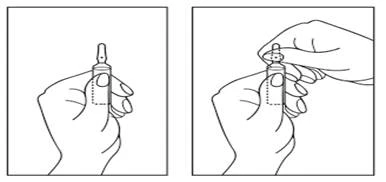
- Turn the ampoule so that the colored dot faces you. Gently tap the top of the ampoule with your finger to ensure the solution flows down to the lower part.
- Open the ampoule with both hands: hold the lower part of the ampoule in one hand and press the top part away from the colored dot with the other hand (see illustration below).
Children
Do not use in children under 1 year of age.
Overdose
In case of tramadol overdose, symptoms are mainly similar to those observed in overdose with other centrally-acting analgesics (opioids). These symptoms primarily include miosis, vomiting, cardiovascular collapse, impaired consciousness up to coma, seizures, and respiratory depression, which may lead to respiratory arrest. Cases of serotonin syndrome have also been reported.
Treatment
General emergency measures should be implemented. Depending on symptoms, ensure airway patency (aspiration possible), respiration, and circulation. In case of respiratory depression, administer the antidote naloxone. Animal studies have shown that naloxone does not affect seizures; therefore, administer diazepam intravenously.
Tramadol is only minimally removed from blood plasma by hemodialysis or hemofiltration. Therefore, in cases of acute poisoning with Tramadol Kalceks, using hemodialysis or hemofiltration alone for detoxification is not appropriate.
Side effects
The most commonly reported adverse reactions were nausea and dizziness, occurring in more than 10% of patients.
The following adverse reactions are listed according to system organ class and frequency of occurrence (MedDRA): very common (≥1/10), common (≥1/100 to <1/10), uncommon (≥1/1000 to <1/100), rare (≥1/10000 to <1/1000), very rare (<1/10000), frequency not known (cannot be estimated from available data).
Psychiatric disorders:
Rare: hallucinations, confusion, sleep disturbances, delirium, anxiety, nightmares.
Psychiatric adverse reactions may occur after tramadol administration, with severity and type varying individually (depending on patient-specific characteristics and duration of treatment). These include mood changes (mainly euphoria, sometimes dysphoria), changes in activity (usually decreased activity, sometimes increased), and changes in cognitive and sensory abilities (e.g., impaired decision-making, altered perception).
Dependence may develop. A withdrawal syndrome similar to that observed with opioid discontinuation may also occur, with symptoms including restlessness, anxiety, nervousness, insomnia, hyperkinesia, tremor, and gastrointestinal symptoms. Other symptoms very rarely observed upon discontinuation of tramadol include panic attacks, severe anxiety, hallucinations, tinnitus, and unusual central nervous system (CNS) symptoms (e.g., confusion, nightmares, depersonalization, derealization, paranoia).
Nervous system disorders:
Very common: dizziness;
Common: headache, somnolence;
Rare: paraesthesia, tremor, epileptic seizures, involuntary muscle contractions, coordination disturbances, loss of consciousness, speech disorders.
Seizures are usually observed after administration of high tramadol doses or concomitant use of drugs that lower the seizure threshold.
Frequency not known: speech disorders, serotonin syndrome.
Eye disorders:
Rare: miosis, mydriasis, blurred vision.
Cardiac disorders:
Uncommon: bradycardia, tachycardia, palpitations.
Vascular disorders:
Uncommon: effects on cardiovascular regulation (palpitations, tachycardia, postural hypotension, or cardiovascular collapse). These adverse reactions are mainly observed after intravenous administration or in patients undergoing physical stress.
Rare: bradycardia, increased blood pressure.
Respiratory, thoracic and mediastinal disorders:
Rare: respiratory depression, dyspnoea;
Frequency not known: hiccup.
Respiratory depression may occur following significant overdose or concomitant use of CNS depressants.
Cases of asthma exacerbation have been reported; however, a causal relationship has not been established.
Gastrointestinal disorders:
Very common: nausea;
Common: constipation, dry mouth, vomiting;
Uncommon: urge to vomit, gastrointestinal discomfort (feeling of heaviness in the stomach, bloating), diarrhoea.
Hepatobiliary disorders:
Very rare: in isolated cases, increased liver enzyme levels have been observed temporally associated with therapeutic use of tramadol.
Skin and subcutaneous tissue disorders:
Common: hyperhidrosis;
Uncommon: skin reactions (e.g., pruritus, rash, urticaria).
Musculoskeletal and connective tissue disorders:
Rare: muscle weakness.
Renal and urinary disorders:
Rare: micturition disorders (dysuria, urinary retention).
General disorders and administration site conditions:
Common: fatigue;
Rare: allergic reactions (e.g., dyspnoea, bronchospasm, wheezing, angioneurotic oedema) and anaphylaxis, appetite changes;
Frequency not known: hypoglycaemia.
Drug dependence
Repeated use of Tramadol Kalceks may lead to drug dependence, even at therapeutic doses. The risk of developing drug dependence may vary depending on individual patient risk factors, dosage, and duration of opioid treatment (see section "Special warnings and precautions for use").
Reporting suspected adverse reactions.
Reporting suspected adverse reactions after a medicine is authorized is important. It allows continued monitoring of the benefit-risk balance of the medicine. Healthcare professionals and patients are encouraged to report any suspected adverse reactions and lack of efficacy through the Automated Information System for Pharmacovigilance at the following link: https://aisf.dec.gov.ua.
Shelf life.
4 years.
Do not use after the expiry date stated on the packaging.
Storage conditions.
No special storage conditions required. Do not refrigerate or freeze.
Keep out of reach and sight of children.
Incompatibilities.
Tramadol Kalceks injection solution must not be mixed (used in combination) with injection or infusion solutions containing diclofenac, indomethacin, phenylbutazone, diazepam, midazolam, flunitrazepam, or glyceryl trinitrate.
Packaging.
2 ml in a vial made of colourless glass of hydrolytic class I with scoring rings and a break point or score mark.
5 vials in a blister pack (cavity) made of polyvinyl chloride film.
2 or 20 blister packs (cavities) with the instruction for medical use in a cardboard carton with a first-opening control in the form of a self-adhesive sticker on each opening part of the carton.
Prescription status.
Prescription only.
Manufacturer.
Manufacturer responsible for batch release:
JSC "Kalceks"
Manufacturer's address and place of business.
71E Krustpils Street, Riga, LV-1057, Latvia.
Marketing Authorisation Holder.
JSC "Kalceks"
Address of the Marketing Authorisation Holder and/or its representative.
71E Krustpils Street, Riga, LV-1057, Latvia.