Totema
Ukraine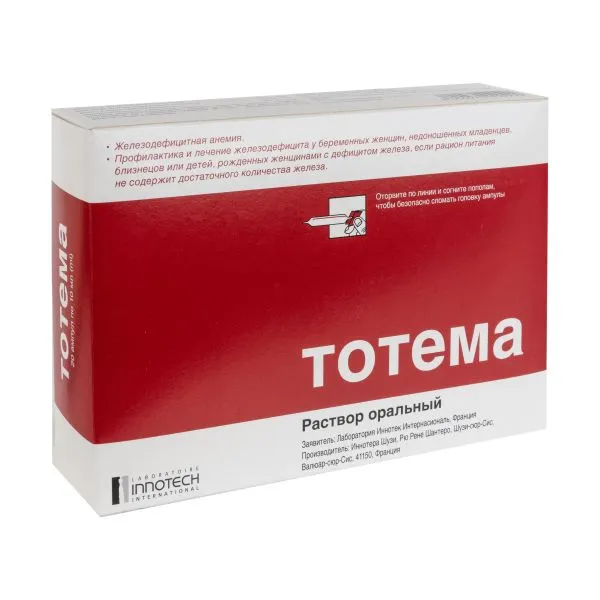
Table of Contents
INSTRUCTIONS FOR MEDICAL USE OF THE MEDICINAL PRODUCT TOT’HEMA (TOTEMA)
Composition:
Active substances: iron (as iron(II) gluconate hydrate); manganese (as manganese gluconate); copper (as copper gluconate);
1 ampoule (10 mL) contains: iron (as iron(II) gluconate hydrate) 50 mg; manganese (as manganese gluconate) 1.33 mg; copper (as copper gluconate) 0.7 mg;
Excipients: glycerin, glucose solution, sucrose, citric acid, sodium citrate, sodium benzoate (E 211), polysorbate 80, ammonia caramel (E 150c)*, "Tutti frutti" flavour**, purified water.
*Composition of ammonia caramel (E 150c)*: glucose, ammonium hydroxide.
**Composition of "Tutti frutti" flavour: isoamyl acetate, isoamyl butyrate, benzaldehyde, ethyl methylphenylglycidate, gamma-undecalactone, ethyl vanillin, ethanol, water.
Pharmaceutical form. Oral solution.
Main physicochemical characteristics: clear dark brown liquid. A slight precipitate may be present.
Pharmacotherapeutic group. Antianaemic agents. Iron preparations, various combinations.
ATC code: B03AE10.
Pharmacological properties.
Pharmacodynamics.
A combined preparation containing essential trace elements – iron (II), copper, and manganese, which are necessary for maintaining the hematopoietic process.
Mechanism of action
Iron is an essential trace element playing a key role in many physiological processes, such as oxygen transport, ATP production, DNA synthesis, and electron transfer.
Iron is the central atom of heme groups incorporated into the structure of hemoglobin and is therefore essential for erythropoiesis.
Iron preparations help eliminate iron deficiency in the body and prevent its development in cases of increased iron demand or insufficient iron stores.
Pharmacokinetics.
Absorption
Iron absorption is an active process occurring primarily in the duodenum and the proximal segment of the small intestine. When body iron stores are reduced, absorption increases.
Copper may positively influence iron transport in enterocytes. Iron absorption may be affected by concomitant intake of certain foods, beverages, or other medicinal products (see sections "Special precautions" and "Interaction with other medicinal products and other forms of interaction").
Distribution
In the body, iron is stored predominantly in the bone marrow (erythroblasts) and erythrocytes. Iron in the form of ferritin is stored in the liver, spleen, and bone marrow. Iron is transported in the bloodstream by transferrin, mainly to the bone marrow, from where it enters hemoglobin.
Metabolism
Iron, copper, and manganese are metal ions that are not metabolized by the liver.
Excretion
The average iron excretion rate in healthy individuals is estimated to be approximately 1 mg/day.
The main excretion routes are the gastrointestinal tract (shedding of enterocytes, heme degradation due to extravasation of erythrocytes), urinary tract, and skin.
The primary route of manganese and copper excretion is via bile.
Clinical characteristics.
Indications.
- Treatment of iron-deficiency anemia in adults, children, and infants.
- Prevention and treatment of iron deficiency in pregnant women, premature infants, twins, or children born to women with iron deficiency, when dietary intake does not provide sufficient iron.
Contraindications.
- Hypersensitivity to the active substances or to any of the excipients.
- Iron overload due to increased intestinal absorption or altered iron metabolism (e.g., hemochromatosis, thalassemia, refractory anemia, aplastic anemia, sideroblastic anemia), or due to excessive parenteral administration (e.g., repeated or prolonged blood transfusions).
- Anemias not related to iron deficiency (e.g., hemolytic anemia, megaloblastic anemia, anemia of inflammation).
- Wilson’s disease.
Interaction with other medicinal products and other forms of interaction.
Combinations not recommended for use
+ Iron (salts) (intravenous administration):
Lipothymia (pre-syncope) or even shock due to rapid release of iron from its complex and saturation of transferrin (siderophilin).
Combinations to be used with caution
+ Bictegravir:
Reduced gastrointestinal absorption of bictegravir by almost two-thirds when administered orally simultaneously or on an empty stomach.
Bictegravir should be taken at least 2 hours before iron salts or simultaneously with food.
+ Bisphosphonates:
Reduced gastrointestinal absorption of bisphosphonates.
Iron salts and bisphosphonates should be taken separately (with an interval of at least 30 minutes to over 2 hours, depending on the bisphosphonate, if possible).
+ Calcium:
Reduced gastrointestinal absorption of iron salts.
Iron salts should be taken between meals, avoiding simultaneous intake with calcium.
+ Carbidopa, levodopa:
Reduced gastrointestinal absorption of carbidopa and levodopa.
Iron salts and carbidopa/levodopa should be taken separately (preferably with an interval of more than 2 hours).
+ Cholestyramine:
Reduced gastrointestinal absorption of iron salts.
Iron salts should be taken 1–2 hours before or 4 hours after cholestyramine.
+ Cyclines (tetracyclines):
Reduced gastrointestinal absorption of both cyclines and iron.
Iron salts and cyclines should be taken separately (preferably with an interval of more than 2 hours).
+ Entacapone:
Reduced gastrointestinal absorption of entacapone and iron due to chelation of iron by entacapone.
Iron salts and entacapone should be taken separately (preferably with an interval of more than 2 hours).
+ Fluoroquinolones:
Reduced gastrointestinal absorption of fluoroquinolones.
Iron salts and fluoroquinolones should be taken separately (preferably with an interval of more than 2 hours).
+ Thyroid hormones:
Reduced gastrointestinal absorption of thyroid hormones.
Iron salts and thyroid hormones should be taken separately (preferably with an interval of more than 2 hours).
+ HIV integrase inhibitors:
Reduced gastrointestinal absorption of integrase inhibitors.
Iron salts and antiretroviral drugs should be taken separately (preferably with an interval of more than 2 hours).
+ Methyldopa:
Reduced gastrointestinal absorption of methyldopa (due to complex formation).
Iron salts and methyldopa should be taken separately (preferably with an interval of more than 2 hours).
+ Penicillamine:
Reduced gastrointestinal absorption of penicillamine.
Iron salts and penicillamine should be taken separately (preferably with an interval of more than 2 hours).
+ Roxadustat:
Administration of divalent iron cations may reduce gastrointestinal absorption and potential efficacy of concurrently administered roxadustat.
Iron salts and roxadustat should be taken separately (preferably with an interval of more than 1 hour).
+ Strontium:
Reduced gastrointestinal absorption of strontium.
Iron salts and strontium should be taken separately (preferably with an interval of more than 2 hours).
+ Local gastrointestinal medications, antacids, and adsorbents:
Reduced gastrointestinal absorption of iron.
As a precautionary measure, these local agents or antacids should be taken separately from any other medications (preferably with an interval of more than 2 hours).
+ Trientine:
Reduced serum iron levels.
Iron salts and trientine should be taken separately.
+ Zinc:
Reduced gastrointestinal absorption of zinc.
Iron salts and zinc should be taken separately (preferably with an interval of more than 2 hours).
+ Food products:
Phytic acids (whole grains), vegetables, polyphenols (tea, coffee, red wine), calcium (milk, dairy products), and certain proteins (eggs) strongly impair iron absorption.
Whenever possible, iron salts and these foods should be taken separately (with an interval of more than 2 hours).
Combinations to be considered
+ Acetohydroxamic acid:
Reduced gastrointestinal absorption of both medicinal products due to chelation of iron.
Special precautions for use.
Special warnings
- This medicinal product is not recommended for the treatment of iron deficiency in inflammatory syndromes.
- Iron therapy should be accompanied, whenever possible, by correction of the underlying cause of iron loss.
- Accidental ingestion of high doses of iron-containing medicinal products, particularly in children, may lead to poisoning that can be fatal (see section "Overdose").
- Totema medicinal product is not intended for intravenous administration.
- Accidental aspiration of iron solution during oral administration may cause development of granulomas, mucosal lesions or necrosis of bronchial mucosa, which in turn may lead to cough, haemoptysis and/or bronchostenosis (symptoms may appear even several days or months after aspiration). Elderly patients and patients with swallowing difficulties are particularly at risk. In case of suspected aspiration of iron solution into the respiratory tract, patients should consult a physician.
- This medicinal product is contraindicated in patients with rare hereditary disorders such as fructose intolerance, glucose-galactose malabsorption syndrome or sucrase-isomaltase deficiency.
- Prolonged use (at least 2 weeks) of glucose and sucrose may be harmful to tooth enamel.
- One ampoule (10 mL) contains 108 mg of ethanol as part of the flavouring agent. The amount of ethanol in 10 mL of this medicinal product is less than that in 3 mL of beer or 2 mL of wine. This small amount of alcohol is not considered to have a significant effect.
- One ampoule (10 mL) contains less than 1 mmol sodium (23 mg), i.e. it can be considered essentially "sodium-free".
- One ampoule (10 mL) contains 20 mg of sodium benzoate. Sodium benzoate may exacerbate jaundice (yellowing of the skin and sclera of the eyes) in neonates (up to 4 weeks of age). The product is indicated for use in children from 1 month of age.
- Totema should be used with caution in patients with impaired liver function, particularly those with alcoholic liver disease, non-alcoholic fatty liver disease, or viral hepatitis, as well as in patients with active gastrointestinal disorders such as chronic inflammatory bowel disease, intestinal strictures, diverticula, gastritis, gastric or intestinal ulcers.
- Patients with renal insufficiency may have increased iron requirements and may require additional iron supplementation to treat iron deficiency or anaemia. Oral iron preparations may be prescribed for non-dialysis patients with renal insufficiency, particularly those with stage 2–3 chronic kidney disease, provided they are well tolerated (see section "Method of administration and dosage"). Intravenous iron administration is recommended for patients with stage 5D chronic kidney disease on dialysis, and potentially for patients with stage 3–5 disease. Totema is not intended for intravenous administration.
- Concurrent consumption of large amounts of tea or coffee may impair iron absorption (see section "Interaction with other medicinal products and other forms of interaction").
Precautionary measures
- Prevention of iron deficiency in infants during the first year of life is based on early introduction of a varied diet.
- According to literature data, the gastric and gastrointestinal mucosa of patients receiving iron preparations may accumulate pigment, which could interfere with surgical procedures in the gastrointestinal tract (see section "Adverse reactions").
Use during pregnancy or breastfeeding.
Pregnancy
There are insufficient data on iron use during the first trimester of pregnancy to assess the risk of developmental abnormalities.
Clinical studies have not shown any effect of iron supplementation during pregnancy on birth weight, preterm delivery, or infant mortality. Reproductive toxicity has not been observed in animal studies. Therefore, Totema may be used during pregnancy if clinically needed.
Breastfeeding
Iron is present in breast milk in small amounts. Its concentration is not affected by maternal iron supplementation. Therefore, no adverse effects are expected in breastfed newborns/infants.
Totema may be used during breastfeeding.
Fertility
Based on animal studies, no effect on fertility in men or women is expected.
Ability to affect reaction speed when driving or operating machinery.
No effect or negligible effect on the ability to drive or operate machinery.
Dosage and Administration
Dosage
One ampoule of the medicinal product contains 50 mg of elemental iron.
Treatment of iron-deficiency anemia:
Children from 1 month of age: 3 mg of elemental iron per 1 kg of body weight per day, not exceeding 60 mg per day.
Adults: 100–150 mg of elemental iron per day, i.e. 2–3 ampoules per day, administered as a single dose or in divided doses.
Patients with renal impairment
Dose adjustment is generally not required in patients with impaired kidney function (see section "Special precautions").
Patients with hepatic impairment
Dose adjustment is generally not required in patients with impaired liver function (see section "Special precautions").
Prevention and treatment of iron deficiency:
Pregnant women: 50 mg of iron (1 ampoule) per day during the last two trimesters of pregnancy (or starting from the 4th month).
Duration of treatment
Treatment should generally continue long enough to correct anemia (restoration of hemoglobin levels and mean corpuscular volume, MCV) and/or to replenish iron stores (serum ferritin level, transferrin saturation coefficient).
Iron-deficiency anemia: Hemoglobin levels should be checked 4 weeks after initiation of therapy. The frequency of subsequent monitoring depends on the course of anemia. The usual duration of treatment is 3–6 months, depending on the degree of iron store depletion. Longer-term therapy may be necessary if the underlying cause of iron-deficiency anemia cannot be corrected. After hemoglobin levels normalize, iron supplementation should be continued for an additional 3 months.
Administration method
For oral use.
The ampoule must be shaken before use.
The contents of the ampoule should be poured into a glass of water (sweetened or unsweetened) or orange juice.
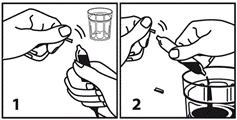
Tear off the cardboard tab along the dotted line indicated on the cardboard packaging and fold it in half to snap off the ampoule tip.
Opening both ends of the ampoule may result in glass fragments. It is important not to break the ampoule tips over a glass containing liquid.
- Carefully snap off the first tip away from the glass.
- Turn the ampoule upside down and position the open end over the glass. Hold the ampoule at an angle so that the second tip is not positioned over the glass. Snap off the second tip.
Totema should preferably be taken before meals; however, the time of administration and dosage may be adjusted according to individual tolerance.
Children. The product may be administered to children from 1 month of age.
Overdose
Cases of accidental overdose with iron salts have been reported, particularly in young children. Oral intake of 20 mg of elemental iron per kg of body weight may cause symptoms of intoxication. Ingestion exceeding 60 mg/kg may lead to severe toxicity. An intake equivalent to 200–250 mg of elemental iron per kg is considered potentially lethal. Acute iron poisoning may progress in four stages:
- The first stage occurs within 6 hours after oral administration and is predominantly characterized by gastrointestinal toxicity, including vomiting and diarrhea. Other reactions may include cardiovascular disturbances such as hypotension, metabolic changes including acidosis and hyperglycemia, and signs of central nervous system (CNS) depression ranging from lethargy to coma. After this initial stage, the condition of patients with mild to moderate poisoning generally does not worsen.
- The second stage, which does not always occur, may develop 6–24 hours after ingestion and is characterized by temporary remission or clinical stabilization.
- The third stage (12–48 hours after ingestion) is marked by recurrence of gastrointestinal toxicity and may be accompanied by shock, metabolic acidosis, severe lethargy or coma, liver necrosis and jaundice, hypoglycemia, coagulation disorders, oliguria or renal failure, and possibly myocardial dysfunction.
- The fourth stage may occur several weeks after ingestion and is characterized by gastrointestinal obstruction and possibly delayed liver damage.
Treatment of overdose should be initiated as soon as possible. Depending on serum iron concentration, a chelating agent (i.e., deferoxamine) is recommended.
Adverse reactions.
Adverse reactions observed during clinical trials of the medicinal product Totema and those reported during post-marketing surveillance are classified according to MedDRA system organ classes and by frequency as follows: very common (≥ 1/10); common (≥ 1/100 to < 1/10); uncommon (≥ 1/1 000 to < 1/100); rare (≥ 1/10 000 to < 1/1 000); very rare (< 1/10 000); frequency not known (cannot be estimated from the available data).
| MedDRA System Organ Class |
Common |
Frequency unknown (cannot be estimated based on available data) |
| Immune system disorders |
Hypersensitivity, anaphylactic reaction |
|
| Gastrointestinal disorders |
Constipation, diarrhea, dyspepsia, nausea, vomiting, black discoloration of stools, flatulence, abdominal pain |
Gastrointestinal irritation, gastritis, pseudomelanosis of gastrointestinal mucosa* Change in tooth color** |
| Skin and subcutaneous tissue disorders |
Rash, pruritus, urticaria, angioneurotic edema, allergic dermatitis |
* According to data from the literature, the mucous membrane of the stomach and gastrointestinal tract in patients receiving iron preparations may accumulate pigment, which could interfere with surgical procedures on the gastrointestinal tract.
** Brown or black stains on teeth disappear after discontinuation of therapy.
Reporting of suspected adverse reactions
Reporting of adverse reactions after drug registration is of great importance. It enables ongoing monitoring of the benefit-risk balance of the medicinal product. Medical and pharmaceutical professionals, as well as patients or their legal representatives, should report all suspected adverse reactions and lack of efficacy through the Automated Pharmacovigilance Information System at the following link: https://aisf.dec.gov.ua.
Shelf life. 2 years. Do not use the medicinal product after the expiry date stated on the packaging.
Storage conditions. Store at a temperature not exceeding 25 °C in a place inaccessible to children.
Packaging. 10 mL of solution in a glass ampoule, 10 ampoules in blister packs, 2 blisters per cardboard box.
Prescription status. Over-the-counter.
Manufacturer.
Innothera Chouzy, France/Innothera Chouzy, France.
Manufacturer's address and location of its business operations.
Rue Rene Chantereau, Chouzy-sur-Cisse, Valloire-sur-Cisse, 41150, France/Rue Rene Chantereau, Chouzy-sur-Cisse, Valloire-sur-Cisse, 41150, France.
Marketing Authorization Holder.
Laboratoire Innotech International, France/Laboratoire Innotech International, France.
Address of the Marketing Authorization Holder.
22 avenue Aristide Briand, 94110 Arcueil, France/22 avenue Aristide Briand, 94110 Arcueil, France.