Torasemide-pharmex
Ukraine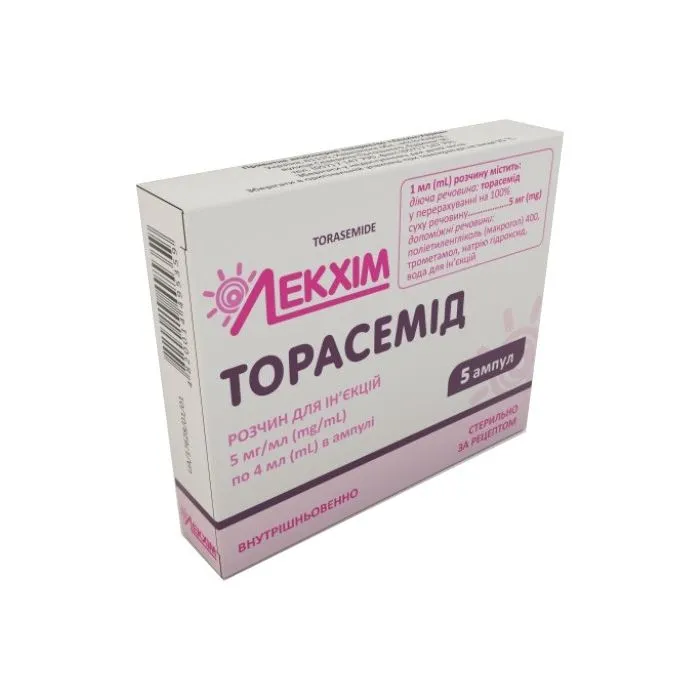
Table of Contents
INSTRUCTIONS FOR MEDICAL USE OF THE MEDICINAL PRODUCT TORASEMIDE-PHARMEX (TORASEMIDE-PHARMEX)
Composition:
Active substance: torasemide;
1 ml of injection solution contains 5 mg of torasemide;
Excipients: polyethylene glycol 400, tromethamine, sodium hydroxide, water for injections.
Pharmaceutical form. Injection solution.
Main physicochemical properties: clear, colorless solution.
Pharmacotherapeutic group. Diuretics. High-ceiling diuretics.
ATC code C03CA04.
Pharmacological Properties.
Pharmacodynamics.
Torasemide acts as a diuretic; its effect is associated with inhibition of renal reabsorption of sodium and chloride ions in the ascending limb of the loop of Henle. In humans, the diuretic effect rapidly reaches its maximum within the first 2–3 hours after intravenous and oral administration, respectively, and remains sustained for approximately 12 hours. In healthy volunteers, within the dose range of 5–100 mg, a logarithmic dose-proportional increase in diuresis was observed (loop diuretic activity). Increased diuresis was observed even in cases where other diuretics, such as distally-acting thiazide-type diuretics, had already failed to produce the desired effect, for example, in renal insufficiency. Due to this mechanism of action, torasemide promotes reduction of edema. In cases of heart failure, torasemide reduces disease symptoms and improves myocardial function by decreasing preload and afterload.
Pharmacokinetics.
Protein binding of torasemide in plasma exceeds 99%; metabolites M1, M3, and M5 are bound by 86%, 95%, and 97%, respectively. The apparent volume of distribution (Vz) is 16 L. In humans, torasemide is metabolized to form three metabolites—M1, M3, and M5. There is no evidence of other metabolites. Metabolites M1, M3, and M5 are formed through stepwise oxidation of the methyl group attached to the phenyl ring into a carboxylic acid; metabolite M3 is formed by hydroxylation of the ring. Metabolites M2 and M4, detected in animal experiments, were not identified in humans.
The pharmacokinetics of torasemide and its metabolites is characterized by linear dependence. This means that maximum plasma concentration and area under the plasma concentration-time curve increase proportionally with dosage. The terminal half-life (t1/2) of torasemide and its metabolites in healthy volunteers is 3–4 hours. Total clearance of torasemide is 40 mL/min, renal clearance is approximately 10 mL/min. In healthy volunteers, approximately 80% of the administered dose is excreted in urine as torasemide and its metabolites, with the following average percentage distribution: torasemide—approximately 24%, metabolite M1—approximately 12%, metabolite M3—approximately 3%, metabolite M5—approximately 41%. The main metabolite M5 has no diuretic activity; the combined contribution of active metabolites M1 and M3 accounts for approximately 10% of the total pharmacodynamic effect. In renal insufficiency, total clearance and t1/2 of torasemide remain unchanged, while t1/2 of M3 and M5 is prolonged. However, pharmacodynamic characteristics remain unchanged, and the severity of renal insufficiency does not affect the duration of action. In patients with hepatic dysfunction or heart failure, t1/2 of torasemide and metabolite M5 is slightly prolonged, but the amount of substance excreted in urine is nearly equal to that in healthy volunteers; therefore, accumulation of torasemide and its metabolites does not occur. Torasemide and its metabolites are poorly removed by hemodialysis and hemofiltration.
Clinical characteristics.
Indications.
Treatment of edema and/or effusions caused by heart failure when intravenous administration of the medicinal product is necessary, for example, in case of pulmonary edema due to acute heart failure.
Contraindications.
Hypersensitivity to the active substance, sulfonylurea drugs, or to any of the excipients of the medicinal product. Renal failure with anuria. Hepatic coma or precoma. Arterial hypotension. Hypovolemia. Hyponatremia. Hypokalemia. Acute impairment of urination, for example, due to prostatic hyperplasia. Breastfeeding period.
Interaction with other medicinal products and other types of interactions.
Torasemide enhances the effect of other antihypertensive agents, particularly angiotensin-converting enzyme inhibitors, which may cause excessive reduction in blood pressure when used concomitantly. When torasemide is used concomitantly with digitalis preparations, potassium deficiency caused by diuretic use may lead to increased incidence and severity of adverse effects of both drugs. Torasemide may reduce the effectiveness of antidiabetic agents. Probenecid and nonsteroidal anti-inflammatory drugs (e.g., indomethacin, acetylsalicylic acid) may inhibit the diuretic and antihypertensive effects of torasemide. When treating with high-dose salicylates, torasemide may enhance their toxic effects on the central nervous system (CNS). Torasemide, especially at high doses, may enhance the ototoxic and nephrotoxic effects of aminoglycoside antibiotics (e.g., kanamycin, gentamicin, tobramycin) and nephrotoxic effects of platinum-containing cytostatic agents, as well as the nephrotoxic effects of cephalosporins. Torasemide may enhance the action of theophylline and the effects of curare-like medicinal agents. Laxatives, as well as mineralo- and glucocorticoids, may intensify potassium loss caused by torasemide. Concomitant use of torasemide and lithium preparations may increase lithium plasma concentration, potentially leading to enhanced effects and increased adverse reactions of lithium. Torasemide may reduce the vasoconstrictive action of catecholamines, such as epinephrine and norepinephrine. Concomitant use with cholestyramine may reduce torasemide absorption and consequently its expected efficacy.
Special precautions for use.
Before initiating treatment with the medicinal product, existing hypokalemia, hyponatremia, or hypovolemia should be corrected.
During prolonged use of torasemide, regular monitoring of electrolyte balance, particularly serum potassium levels, is recommended, especially in patients concurrently receiving cardiac glycosides, glucocorticoids, mineralocorticoids, or laxatives. Additionally, regular monitoring of blood glucose, uric acid, creatinine, and lipid levels is necessary. Torasemide should be administered with particular caution to patients suffering from liver diseases associated with liver cirrhosis and ascites, as sudden changes in fluid and electrolyte balance may lead to hepatic coma. Therapy with torasemide (as with other diuretics) in these patients should be conducted under hospital conditions. To prevent hypokalemia and metabolic acidosis, the drug should be prescribed together with aldosterone antagonists or potassium-sparing agents. Cases of ototoxicity (tinnitus and hearing loss) have been observed after administration of torasemide, which were reversible; however, a direct causal relationship with the use of the drug has not been established. When using diuretics, clinical signs of electrolyte imbalance, hypovolemia, extrarenal azotemia, and other disturbances should be carefully monitored. These may manifest as dry mouth, thirst, weakness, lethargy, drowsiness, agitation, muscle pain or cramps, myasthenia, hypotension, oliguria, tachycardia, nausea, and vomiting. Excessive diuresis may lead to dehydration, reduction in circulating blood volume, thrombosis, and embolism, particularly in elderly patients.
The drug should be discontinued in patients who develop disturbances in fluid and electrolyte balance. After resolution of adverse effects, therapy may be resumed with appropriate dosage adjustments.
Since increased blood glucose levels may occur during torasemide treatment, careful and continuous monitoring of carbohydrate metabolism is required in patients with latent or overt diabetes mellitus. Regular monitoring of blood parameters (erythrocytes, leukocytes, platelets) is also necessary. Particular attention should be paid to symptoms of electrolyte loss and hemoconcentration, especially at the beginning of treatment in elderly patients.
Torasemide should not be prescribed in the presence of the following conditions and disorders if there is insufficient clinical experience: gout; arrhythmias, e.g., sinoatrial block, second- or third-degree atrioventricular block; pathological changes in acid-base metabolism; concomitant therapy with lithium, aminoglycosides, or cephalosporins; blood abnormalities such as thrombocytopenia or anemia in patients without renal insufficiency; renal dysfunction caused by nephrotoxic substances.
Use of the medicinal product TORASEMIDE-PHARMEKS may result in a positive doping test. In such cases, harmful effects on health cannot be excluded if the drug is used without medical indication, i.e., for doping purposes.
This medicinal product contains less than 1 mmol/dose of sodium, i.e., it is practically sodium-free.
Use during pregnancy or breastfeeding.
Pregnancy. Reliable data on the effects of torasemide on the human embryo and fetus are lacking. Torasemide crosses the placental barrier. Therefore, the drug may be used during pregnancy only if strictly indicated and at the lowest effective dose. Diuretics are not suitable for standard treatment regimens of arterial hypertension or edema in pregnant women, as they may reduce placental perfusion and cause toxic effects on fetal development. If torasemide is used to treat pregnant women with cardiac or renal insufficiency, careful monitoring of electrolytes and hematocrit, as well as close observation of fetal development, is required.
Breastfeeding period. It is currently unknown whether torasemide passes into breast milk in humans or animals. Risk to newborns/infants cannot be excluded. Therefore, the use of torasemide during lactation is contraindicated. If torasemide must be used during this period, breastfeeding should be discontinued.
Fertility.
Studies on the effect of torasemide on fertility in humans have not been conducted.
Ability to affect reaction speed when driving or operating machinery.
Even when used appropriately, torasemide may negatively affect the ability to drive or operate machinery. This is particularly relevant at the start of treatment, when increasing the dose, switching medications, or initiating concomitant therapy. Therefore, extreme caution should be exercised when driving or operating machinery during treatment with torasemide.
Dosage and Administration.
Adults. Treatment should begin with a single dose of 2 mL of TORASEMIDE-PHARMEKS, equivalent to 10 mg of torasemide per day. If the effect is insufficient, the single dose may be increased to 4 mL of TORASEMIDE-PHARMEKS, equivalent to 20 mg of torasemide. If the effect remains insufficient, short-term therapy (for no more than 3 days) may be administered with a daily dose of 8 mL of TORASEMIDE-PHARMEKS, equivalent to 40 mg of torasemide.
Acute pulmonary edema. Treatment should begin with intravenous administration of a single dose of 4 mL of TORASEMIDE-PHARMEKS, equivalent to 20 mg of torasemide. Depending on the response, this dose may be repeated after an interval of 30 minutes. The maximum daily dose of 20 mL of TORASEMIDE-PHARMEKS, equivalent to 100 mg of torasemide, must not be exceeded.
The injection solution should be administered intravenously, slowly. Intra-arterial administration is prohibited. Only the pure solution should be administered. With prolonged use, intravenous administration should be replaced as soon as possible with oral administration, since intravenous administration of torasemide is not recommended for more than 7 days.
Patients with hepatic impairment. Treatment in this patient group should be performed with caution, as increased plasma concentrations of torasemide may occur.
Elderly patients. Dose adjustment in this patient group is not required. However, adequate studies comparing elderly patients with younger patients have not been conducted.
Children.
Torasemide should not be used in children and adolescents due to insufficient clinical experience.
Overdose.
The typical clinical picture of overdose is unknown. Overdose may cause pronounced diuresis, including the risk of excessive loss of water and electrolytes, somnolence, amnestic syndrome (a form of consciousness disturbance), symptomatic arterial hypotension, cardiovascular failure, and gastrointestinal disturbances.
Treatment of overdose. There is no specific antidote. Symptoms of intoxication usually resolve with dose reduction or discontinuation of the drug, along with appropriate fluid and electrolyte replacement (monitoring is required). Torasemide is not removed from the blood by hemodialysis.
Treatment in case of hypovolemia: fluid volume replacement.
Treatment in case of hypokalemia: administration of potassium supplements.
Treatment of cardiovascular failure: patient should be placed in a supine position; symptomatic therapy may be administered if necessary.
Anaphylactic shock (emergency measures). At the first signs of skin reactions (urticaria, skin redness), patient agitation, headache, excessive sweating, nausea, cyanosis, venous catheterization should be performed; the patient should be placed in a horizontal position, free air access ensured, and oxygen administered. If necessary, epinephrine, volume-replacement solutions, and glucocorticoid hormones may be used.
Adverse Reactions
The following frequency categories were used to assess adverse reactions: very common (≥ 1/10), common (≥ 1/100 to < 1/10), uncommon (≥ 1/1,000 to < 1/100), rare (≥ 1/10,000 to < 1/1,000), very rare (< 1/10,000), frequency not known (cannot be estimated from the available data).
Metabolism/Electrolytes.
Common: Exacerbation of metabolic alkalosis. Muscle cramps (particularly at the beginning of treatment). Increased blood concentrations of uric acid, glucose, cholesterol, and triglycerides. Hypokalemia in patients on a potassium-deficient diet, or with vomiting, diarrhea, excessive use of laxatives, and in patients with chronic liver dysfunction. Depending on dosage and duration of treatment, disturbances in water and electrolyte balance may occur, such as hypovolemia, hypokalemia, and/or hyponatremia.
Cardiovascular System.
Very rare: Thromboembolic complications, confusion, arterial hypotension, and circulatory and cardiac disorders, including ischemia of the heart and brain, which may lead, for example, to arrhythmias, angina pectoris, acute myocardial infarction, or syncope due to possible hemoconcentration.
Gastrointestinal System.
Common: Multiple gastrointestinal disturbances (especially at the beginning of treatment), including loss of appetite, flatulence, stomach pain, nausea, vomiting, diarrhea, constipation.
Very rare: Pancreatitis.
Renal and Urinary Tract.
Rare: Increased blood concentrations of creatinine and urea, increased frequency of urination. When significant loss of water and electrolytes occurs due to excessive diuresis, particularly at the beginning of treatment and in elderly patients, hypotension, headache, asthenia, and somnolence may be observed.
In patients with urinary disorders (e.g., prostate hyperplasia), increased urine production may lead to urinary retention and excessive bladder distension.
Hepatic.
Common: Increased blood concentrations of certain liver enzymes (gamma-glutamyl transferase).
Immune System.
Very rare: Allergic reactions, including pruritus, exanthema, photosensitization, and severe skin reactions. After intravenous administration, acute, potentially life-threatening hypersensitivity reactions (anaphylactic shock) may occur.
Blood and Hematopoietic System.
Very rare: Decreased platelet, erythrocyte, and/or leukocyte counts as a result of hemoconcentration.
General Disorders and Administration Site Reactions.
Common: Headache, dizziness, increased fatigue, general weakness (especially at the beginning of treatment).
Rare: Dry mouth, unpleasant sensations in the extremities (paresthesia).
Very rare: Visual disturbances, tinnitus, hearing loss.
Frequency not known: Local reactions at the injection site.
Shelf Life.
3 years.
Storage Conditions.
Store in the original packaging at a temperature not exceeding 25 °C.
Keep out of reach of children.
Incompatibility.
TORASEMIDE-PHARMEKS must not be mixed with other medicinal products for intravenous injection and/or infusion.
Packaging.
4 ml in a vial; 5 vials in a blister pack; 1 blister pack in a cardboard box.
4 ml in an ampoule; 5 ampoules in a blister; 1 blister in a cardboard box.
Prescription Status. By prescription only.
Manufacturer.
LLC "PHARMEKS GROUP".
Limited Liability Company "Pharmaceutical Company "Zdorovya".
Manufacturer's Address and Place of Business.
100, Shevchenka Street, Boryspil, Kyiv Oblast, 08301, Ukraine.
(LLC "PHARMEKS GROUP")
22, Shevchenka Street, Kharkiv, Kharkiv Oblast, 61013, Ukraine.
(Limited Liability Company "Pharmaceutical Company "Zdorovya")
All cases of adverse reactions should be reported to the manufacturer:
LLC "PHARMEKS GROUP", Ukraine, 08301, Kyiv Oblast, Boryspil, Shevchenka St., 100.
Phone: +38 (044) 391-19-19, Fax: +38 (044) 391-19-18, or via the form on the website: https://www.pharmex.com.ua/ua/files/f137o.doc