Tonorma
Ukraine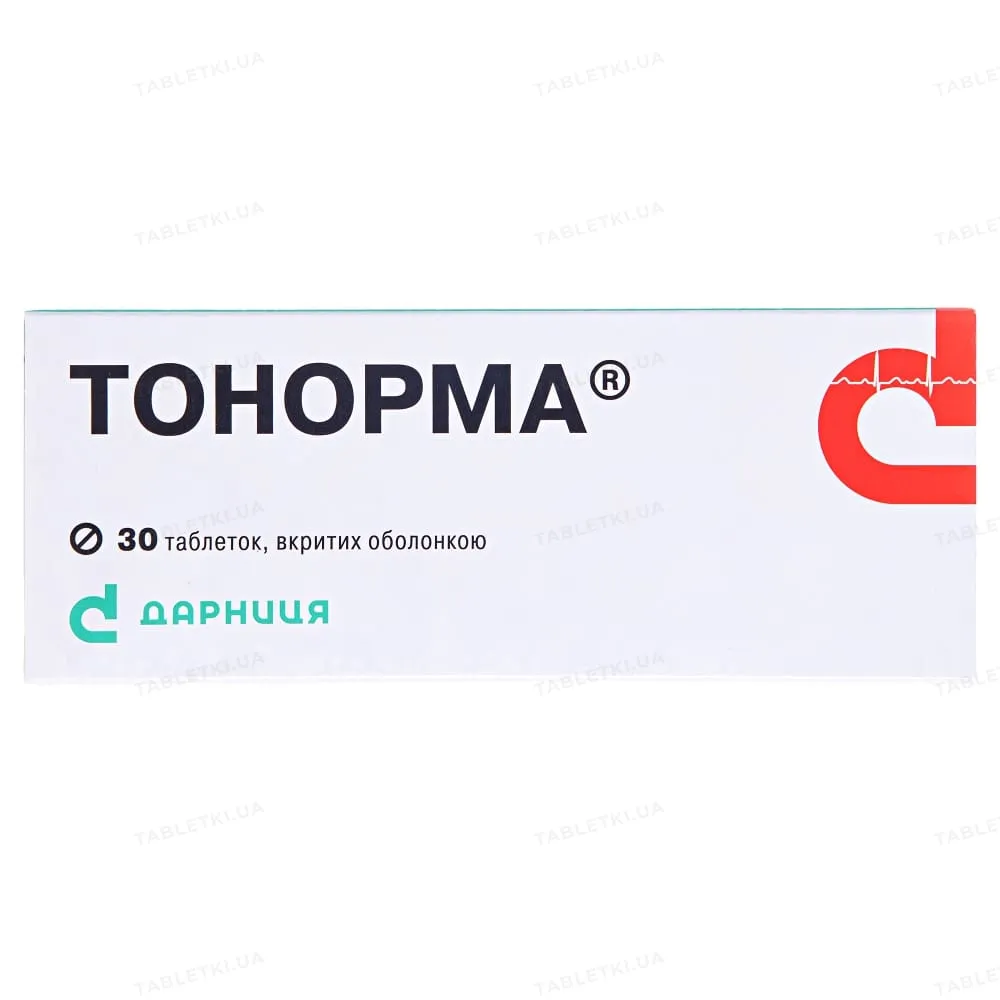
Table of Contents
INSTRUCTIONS FOR MEDICAL USE OF THE MEDICINAL PRODUCT TONORMA® (TONORMA)
Composition:
Active substances: atenolol, chlortalidone, nifedipine.
One tablet contains: atenolol 100 mg, chlortalidone 25 mg, nifedipine 10 mg;
Excipients: magnesium carbonate heavy, potato starch, hypromellose, colloidal anhydrous silicon dioxide, sodium lauryl sulfate, sodium croscarmellose, microcrystalline cellulose, magnesium stearate, polyethylene glycol, titanium dioxide (E 171), Yellow FCF (E 110).
Pharmaceutical form. Coated tablets.
Main physicochemical characteristics: yellow-orange coated tablets, round-shaped, biconvex surface, with a score line; white specks on the surface are permissible.
Pharmacotherapeutic group. Selective β1-adrenoblockers in combination with other antihypertensive agents. ATC code C07FB03.
Pharmacological Properties.
Pharmacodynamics.
Tonorma® is a combined antihypertensive medicinal product containing atenolol, nifedipine, and chlorthalidone. The antihypertensive effect of the medicinal product is due to the mechanism of action of its constituent components, primarily the main one – atenolol.
Atenolol is a cardioselective β1-adrenoblocker. It exerts antihypertensive, antianginal, and antiarrhythmic effects. It has no intrinsic sympathomimetic activity or membrane-stabilizing action. It predominantly blocks cardiac β-adrenergic receptors, thereby reducing the stimulatory influence of the sympathetic nervous system and circulating catecholamines on the heart. As a result, sinus node automaticity, heart rate, atrioventricular conduction, and myocardial contractility are reduced, and myocardial oxygen demand decreases.
Chlorthalidone is a long-acting thiazide-like diuretic. It inhibits reabsorption of sodium, chloride, and consequently fluid in the distal tubules of the nephron. It increases excretion of potassium and magnesium ions from the body. It reduces excretion of calcium and uric acid ions. It lowers arterial pressure by reducing the volume of circulating blood and cardiac output, as well as by decreasing total peripheral vascular resistance during prolonged use.
Nifedipine is a calcium antagonist of the 1,4-dihydropyridine type. It inhibits transmembrane influx of calcium ions into the cell through slow calcium channels. It acts on myocardial cells and smooth muscle cells of coronary arteries and peripheral vessels. In the heart, nifedipine dilates coronary arteries, particularly large supplying vessels, including intact segments of partially stenosed vessels. Furthermore, nifedipine reduces the tone of smooth muscles of coronary arteries, thereby increasing coronary blood flow and preventing angiospasm. With long-term use, it prevents the development of atherosclerotic plaques in the vessel wall. It reduces myocardial oxygen demand by decreasing afterload. It reduces arteriolar smooth muscle tone, thus decreasing elevated peripheral vascular resistance, which leads to a reduction in arterial pressure. Nifedipine increases excretion of sodium and fluid from the body. The antihypertensive effect is particularly pronounced in patients with arterial hypertension.
Pharmacokinetics.
The active ingredients of the medicinal product do not interact with each other; therefore, the metabolism of each component proceeds independently. After oral administration, the main component, atenolol, is absorbed in the gastrointestinal tract by 50–60%. Less than 5% of the drug binds to plasma proteins, and the volume of distribution is 0.7 L/kg. It crosses the placental barrier and is excreted in breast milk. Atenolol practically does not penetrate the blood-brain barrier. The elimination half-life (T½) is 6–9 hours and may be prolonged in renal impairment. The pharmacological effects of atenolol last for a prolonged period – up to 24 hours. Approximately 85% of the administered dose is excreted unchanged in urine.
Nifedipine is rapidly absorbed after oral administration. Maximum plasma concentration is reached within 30 minutes after intake. The elimination half-life (T½) is 3–4 hours. Approximately 80% is excreted by the kidneys as inactive metabolites, and nearly 15% via feces.
Chlorthalidone is well absorbed after oral administration and accumulates on the surface of erythrocytes in systemic circulation, with minimal binding to plasma proteins. The diuretic effect begins 2–4 hours after administration and lasts for 1 day or more, sometimes up to 3 days. The elimination half-life (T½) is prolonged – 30–40 hours. It is excreted in urine (approximately 25%) and feces (nearly 75%). A distinctive feature of chlorthalidone is the relatively long duration of the diuretic effect, which is due to its slow renal excretion.
Clinical characteristics.
Indications.
Arterial hypertension, when therapy with one or two of the components of the medicinal product is ineffective.
Contraindications.
Hypersensitivity to atenolol, chlorthalidone, nifedipine, other dihydropyridines, β-adrenoblockers, or to any other component of the medicinal product.
Myocardial infarction and the first month following myocardial infarction.
Unstable angina.
Acute heart failure.
Heart failure (NYHA III-IV).
Sick sinus syndrome.
Sinus bradycardia (heart rate less than 50 beats per minute).
Second- and third-degree atrioventricular block.
Sinoatrial block.
Clinically significant aortic stenosis.
Arterial hypotension (systolic pressure less than 90 mm Hg).
Cardiogenic shock.
Severe peripheral circulatory disorders.
Bronchial asthma, bronchoobstructive syndrome.
Metabolic acidosis.
Untreated pheochromocytoma.
Ileostomy, colostomy.
Porphyria.
Gout.
Severe hepatic and/or renal insufficiency (glomerular filtration rate less than 30 mL/min), anuria.
Precoma associated with Addison's disease.
Hypokalemia, hyponatremia, hypercalcemia.
Intoxication with cardiac glycosides.
Concomitant use with lithium preparations, monoamine oxidase inhibitors (except MAO-B inhibitors), rifampicin.
Inflammatory bowel diseases or Crohn's disease.
The medicinal product is contraindicated in patients who have received verapamil within the last 48 hours.
Interaction with other medicinal products and other types of interactions.
Concomitant use with other medicinal products may result in:
with nonselective inhibitors of neuronal monoamine reuptake – dangerous reduction in arterial pressure; potentiation of the effect of chlorthalidone contained in the medicinal product; do not use concomitantly without medical supervision;
with antiarrhythmic agents, calcium channel blockers ("slow channel blockers"), β-adrenoreceptor blockers – enhanced negative chronotropic, inotropic, and dromotropic effects. This may lead to severe arterial hypotension, marked bradycardia, and heart failure. Calcium channel blockers ("slow channel blockers") should not be administered intravenously within 48 hours after discontinuation of β-adrenoblockers;
with inhalational anesthetics (e.g., halothane, methoxyflurane) – increased risk of myocardial depression and development of arterial hypotension; therefore, administration of the medicinal product should be discontinued several days before anesthesia or an anesthetic with minimal negative inotropic activity should be selected;
with fentanyl – arterial hypotension may occur. At least 36 hours before planned surgery involving fentanyl anesthesia, nifedipine administration should be discontinued;
with cardiac glycosides – occurrence of tachy- or bradycardia, arrhythmias, and enhanced hypokalemia when used concomitantly with digitalis preparations; therefore, laboratory monitoring is required. Digitalis preparations and atenolol both slow heart rate and impair atrioventricular conduction. Caution is also advised when prescribing the medicinal product to patients receiving digitalis preparations along with an inadequate diet (not meeting the body's potassium requirements) or those with gastrointestinal disorders;
with hydralazine and prazosin – enhanced antihypertensive effect; their combination leads to greater reduction in arterial pressure than with use of either medicinal product alone;
with dihydropyridines (e.g., nifedipine) – enhanced hypotensive effect, heart failure in patients with chronic heart failure, cardiac rhythm disturbances;
with reserpine, guanethidine, guanfacine, clonidine – occurrence of bradycardia. When using these medicinal products concomitantly, clonidine may be discontinued only several days after discontinuation of the medicinal product. β1-adrenoblockers may exacerbate rebound hypertension that may occur after clonidine withdrawal. Concomitant use with catecholamines (e.g., reserpine) has been associated with arterial hypotension and/or bradycardia during studies, which may lead to dizziness, syncope, or orthostatic hypotension;
with methyldopa – enhanced hypotensive effect and occurrence of bradycardia;
with nonsteroidal anti-inflammatory agents (e.g., ibuprofen, indomethacin), estrogens, α- and β-adrenomimetics, aminophylline, theophylline – reduced effect of atenolol contained in the medicinal product;
with inhibitors of the cytochrome P450 system 3A4 (e.g., macrolide antibiotics, HIV protease inhibitors, azole antifungal agents, fluoxetine, nefazodone, cisapride, valproic acid, diltiazem, cimetidine, quinupristin/dalfopristin) – enhanced effect of nifedipine; when using these medicinal products concomitantly, blood pressure should be monitored. Azithromycin, structurally similar to macrolide antibiotics, does not inhibit cytochrome P450 3A4. Cimetidine inhibits the activity of the cytochrome isoenzyme CYP3A4. Nifedipine should be used with caution and gradual dose escalation in patients already receiving cimetidine. When HIV protease inhibitors are used concomitantly with nifedipine, a significant increase in its plasma concentration cannot be excluded due to reduced first-pass metabolism and decreased elimination;
with inducers of the cytochrome P450 3A4 system (e.g., phenytoin, carbamazepine, phenobarbital) – reduced effect of nifedipine. Nifedipine use may lead to increased serum concentrations of carbamazepine and phenytoin. Patients already receiving nifedipine and phenytoin or carbamazepine concomitantly should be under constant medical supervision. In case of signs of toxicity or increased serum concentrations of carbamazepine and phenytoin, the dose of these medicinal products should be reduced;
with antihypertensive agents of different classes, ACE inhibitors, AT-1 receptor antagonists, diuretics, peripheral vasodilators (PDE-5 inhibitors), nitrates, tricyclic antidepressants, antiepileptic agents, barbiturates, phenothiazines, baclofen – enhanced hypotensive effect;
with non-depolarizing muscle relaxants – enhanced effect of the latter;
with digoxin – plasma digoxin concentration may increase. Digoxin plasma concentrations should be monitored and doses adjusted at the beginning of nifedipine treatment, when increasing the dose, and upon discontinuation of nifedipine therapy;
with magnesium sulfate – nifedipine may potentiate the toxic effect of magnesium sulfate, leading to neuromuscular blockade. Concomitant use of nifedipine and magnesium sulfate is dangerous and may be life-threatening; therefore, co-administration of these medicinal products is not recommended;
with amiodarone – risk of impaired sinus or atrioventricular node function, automaticity, conduction, and myocardial contractility;
with cimetidine – decreased atenolol clearance, resulting in increased plasma levels and enhanced therapeutic effect;
with propafenone – enhanced effect of atenolol contained in the medicinal product;
with nicotine – enhanced effect of atenolol due to reduced metabolism and increased drug levels in blood;
with potassium-containing preparations – reduced effect of the latter;
with central nervous system depressants – enhanced sedative effect;
with lithium – enhanced effect of the latter;
with narcotic analgesics – enhanced narcotic effect; dangerous depression;
with adrenaline, noradrenaline – enhanced effect of the latter, followed by bradycardia;
with sympathomimetic agents – reduced bronchodilatory activity;
with anticoagulants such as coumarin – increased prothrombin time may be observed after nifedipine administration. The clinical significance of this interaction has not been fully investigated;
with indirect anticoagulants – potentiation of their effect;
with oral hypoglycemic agents, insulin – enhanced effect of the latter; when using these medicinal products concomitantly, plasma glucose levels should be monitored;
with anticholinesterase agents, angiotensin-converting enzyme inhibitors (captopril, enalapril, lisinopril) – increased blood potassium levels;
with quinolones, cimetidine – increased bioavailability of atenolol;
with lidocaine – reduced elimination (increased plasma concentration) and increased risk of toxic effects;
with tacrolimus – increased plasma concentration, and with theophylline – concentration may increase, decrease, or remain unchanged. Plasma concentrations should be carefully monitored and dosage adjusted if necessary;
with quinidine – reduced plasma concentration of the latter, whereas quinidine may increase patient sensitivity to nifedipine. When using these medicinal products concomitantly, arterial pressure should be monitored and attention paid to nifedipine adverse effects. Plasma quinidine concentration should be carefully monitored before initiation and after discontinuation of the medicinal product, and dosage adjusted if necessary. If nifedipine treatment is initiated in a patient already receiving quinidine, attention should be paid to nifedipine adverse effects;
with quinupristin, dalfopristin – plasma levels of nifedipine may increase;
β1-adrenoblockers should be prescribed with caution in combination with Class I antiarrhythmic agents (disopyramide), as cardiodepressive effects may be additive.
Concomitant use with euphyllin or theophylline may result in mutual inhibition of therapeutic effects.
Concomitant use of diuretics (chlorthalidone, contained in the medicinal product) with lithium preparations reduces renal clearance of lithium.
Concomitant use with glucocorticoids, amphotericin, furosemide promotes increased potassium excretion.
with rifampicin – may be accompanied by reduced plasma concentration of nifedipine and, consequently, reduced therapeutic effect. In case of angina attacks or elevated arterial pressure during concomitant use of nifedipine and rifampicin, the nifedipine dose should be increased;
with vincristine – reduced elimination of vincristine is observed;
with cephalosporin – increased plasma levels of cephalosporin;
with cyclosporine, ritonavir, or saquinavir – increased kinetic concentration of nifedipine (these medicinal products slow down the activity of cytochrome isoenzyme CYP3A4). In case of nifedipine adverse effects, its dose should be reduced;
with methacholine – bronchial response to methacholine may be altered. Nifedipine treatment should be discontinued prior to performing a nonspecific bronchoprovocation test with methacholine (if possible);
Grapefruit juice inhibits the cytochrome P450 3A4 system. Concomitant use of the medicinal product with grapefruit juice leads to increased plasma concentration of nifedipine and prolonged effect due to reduced metabolism. This may result in enhanced hypotensive action.
Other types of interactions.
Nifedipine use may cause falsely elevated spectrophotometric measurements of vanillylmandelic acid in plasma. However, no such effect is observed when using high-performance liquid chromatography.
Ethyl alcohol potentiates the effect of the medicinal product.
Smoking cessation increases the therapeutic effect of atenolol due to reduced metabolism and increased drug levels in blood.
Special precautions for use.
Treatment with the medicinal product should be carried out under medical supervision.
The medicinal product should be used with caution in patients with impaired liver or kidney function, first-degree atrioventricular block, heart failure (NYHA class II), peripheral circulatory disorders (Raynaud's syndrome, occlusive vascular diseases of the lower extremities), Prinzmetal's angina, fluid and electrolyte imbalances, pulmonary emphysema, psoriasis, depression, gastrointestinal disorders, diabetes mellitus, hypoglycemia, and in elderly patients.
Heart failure.
The medicinal product reduces heart rate. If bradycardia occurs, dose adjustment should be performed.
In chronic heart failure, circulatory function requires stimulation of the sympathetic nervous system. β1-receptor blockade poses a potential risk of further myocardial contractility suppression, leading to more severe heart failure.
At the first signs of heart failure decompensation, the use of the medicinal product should be discontinued and medical advice sought.
Use with caution in patients with chronic heart failure controlled by digitalis preparations and/or diuretics, as digitalis preparations and atenolol both slow atrioventricular conduction.
Ischemic heart disease.
The medicinal product should not be used if there is a possibility of association between previous use and ischemic pain.
Discontinuation of the medicinal product should be gradual, as with some β1-blockers, angina may worsen in patients with ischemic heart disease, and in some cases, myocardial infarction may be accelerated (withdrawal syndrome). Therefore, discontinuation of therapy with this medicinal product in such patients should be done cautiously and only under medical supervision.
In patients with angina, episodes may occur more frequently, and their duration and intensity may increase, especially at the beginning of treatment. It is contraindicated in patients experiencing an acute angina attack.
Even in the absence of existing angina, discontinuation of the medicinal product should be performed gradually under medical supervision, with dose reduction over 7–10 days and minimal physical exertion.
Since ischemic heart disease is common and may be unrecognized, abrupt discontinuation of the medicinal product should be avoided, even in patients previously treated for arterial hypertension.
For the treatment of coronary vasospasm in the post-infarction period, therapy should be initiated approximately 3–4 weeks after myocardial infarction and only after stabilization of coronary circulation.
Arterial hypertension and hypotension.
When used with other antihypertensive agents, postural arterial hypotension may occur. Blood pressure levels should be monitored in patients.
The medicinal product should be used with particular caution in patients with malignant hypertension and hypovolemia undergoing hemodialysis, as significant reduction in blood pressure due to vasodilation may occur.
The medicinal product is contraindicated in cases of very low blood pressure (severe arterial hypotension with systolic blood pressure below 90 mm Hg) and in pronounced cardiac weakness (decompensated heart failure).
Concomitant use of calcium channel blockers.
May lead to bradycardia, increased diastolic pressure (when β1-blockers are used with verapamil or diltiazem), atrioventricular block, or fatal outcomes. Patients with pre-existing intraventricular conduction disorders or left ventricular dysfunction are particularly sensitive to the effects of the medicinal product.
Renal and hepatic impairment.
In case of impaired liver and/or kidney function, the dynamics of their functional status should be monitored, as the medicinal product may provoke azotemia. Due to the possibility of cumulative effects in reduced renal function, and if renal function continues to deteriorate, treatment with the medicinal product should be discontinued.
Serum creatinine levels should be periodically determined in patients with impaired kidney function.
Use with caution in patients with impaired liver function. In patients with impaired liver function or progressive liver disease, even minor changes in fluid and electrolyte balance may lead to hepatic coma.
Therefore, this medicinal product should be prescribed with caution to such patients.
Metabolism and endocrine disorders.
The medicinal product should be used with caution in patients with diabetes mellitus due to the possibility of masking symptoms of hypoglycemia (tachycardia, dizziness, sweating, etc.).
At recommended doses, atenolol does not potentiate insulin-dependent hypoglycemia and, unlike non-selective β1-blockers, does not delay the recovery of blood glucose to normal levels.
Insulin requirements in diabetic patients may increase, decrease, or remain unchanged.
Latent diabetes mellitus may manifest during treatment with chlorthalidone.
The medicinal product should be used with caution during prolonged fasting and intense physical exertion (risk of severe hypoglycemic state). Blood glucose levels should be monitored.
A decision should be made regarding discontinuation of the medicinal product or implementation of careful monitoring in patients suspected of developing thyrotoxicosis, as β-adrenergic blockers may mask certain clinical symptoms of hyperthyroidism, such as tachycardia. Abrupt discontinuation of therapy with the medicinal product may provoke disease exacerbation.
The medicinal product should not be used prior to parathyroid function tests, as thiazides reduce calcium excretion.
Long-term thiazide therapy in patients has been associated with pathological changes in the parathyroid gland with hypercalcemia and hypophosphatemia; however, typical complications of hyperparathyroidism such as nephrolithiasis, bone tissue atrophy, peptic ulcer have not been observed.
Any chloride deficiency during thiazide therapy is usually insignificant and does not require specific treatment, except in exceptional circumstances (e.g., liver or kidney disease).
Hyperuricemia or acute gout may occur in some patients receiving thiazide therapy. The antihypertensive effects of thiazides may be enhanced in patients after sympathectomy.
If withdrawal syndrome occurs, treatment with the medicinal product should be resumed.
Untreated pheochromocytoma.
The medicinal product should not be used in patients with untreated pheochromocytoma. When prescribing the medicinal product to patients with pheochromocytoma, α-adrenergic blockers should be administered beforehand to prevent hypertensive crisis.
Fluid and electrolyte balance.
Plasma and urine electrolyte levels should be periodically determined to detect possible electrolyte imbalance (e.g., hyponatremia, hypochloremic alkalosis, hypokalemia), and creatinine levels should be monitored—especially important for patients with uncontrolled vomiting or receiving parenteral fluids. Signs or symptoms of fluid and electrolyte imbalance include dry mouth, thirst, weakness, lethargy, drowsiness, nervousness, muscle pain or cramps, muscle weakness, arterial hypotension, oliguria, tachycardia, and gastrointestinal disturbances such as nausea and vomiting.
Serum potassium levels should be periodically determined, especially in elderly patients, patients receiving digitalis preparations for heart failure, patients with unbalanced diets, or those complaining of gastrointestinal disorders.
Hypokalemia may develop, particularly in patients with rapid diuresis, severe cirrhosis, or during concomitant use of corticosteroids or adrenocorticotropic hormone.
Oral electrolyte intake may also contribute to hypokalemia development. Hypokalemia may increase cardiac sensitivity or enhance the toxic effects of digitalis preparations (e.g., increased ventricular sensitivity).
Hypokalemia can be corrected or treated by using potassium-containing supplements or foods rich in potassium.
Any chloride deficiency during thiazide therapy is usually insignificant and does not require specific treatment except in exceptional circumstances (e.g., liver or kidney disease).
Dilutional hyponatremia may occur in patients with edema during hot weather. Appropriate therapy involves fluid restriction rather than salt restriction, except in rare cases where hyponatremia is life-threatening.
Anesthesia and surgical intervention.
Prior to surgical intervention involving general anesthesia, discontinuation of the medicinal product may be necessary. In such cases, at least 48 hours should elapse between the last dose of the medicinal product and anesthesia. If treatment continues, caution should be exercised when using anesthetics—select general anesthetics with minimal negative inotropic effect. If vagal dominance occurs, it can be counteracted with atropine (1–2 mg intravenously).
However, the medicinal product should be used with caution in combination with anesthetic agents due to suppression of reflex tachycardia and increased risk of arterial hypotension.
Anesthetics causing myocardial depression should be avoided.
β1-blockers are competitive inhibitors of β1-receptor agonists, and their cardiac effects may be completely reversed by agents such as dobutamine or isoprenaline.
Bronchoobstructive syndrome.
The medicinal product should not be used in patients with bronchoobstructive syndrome, other bronchospastic disorders, or acute attacks of stable angina.
However, since the medicinal product is a selective β1-adrenergic blocker, it may be used cautiously in patients with bronchoobstructive syndrome when there is no response to or intolerance of other antihypertensive therapies. Since the selectivity of β1-adrenergic blockers is not absolute, the medicinal product should be used at the lowest possible doses with the possibility of using β2-adrenergic agonists. If dose escalation is necessary, the dose should be divided to achieve lower peak plasma levels of the medicinal product.
In patients with a history of bronchial asthma receiving thiazides, hypersensitivity reactions may occur.
Allergic reactions.
The medicinal product should be used with particular caution in patients with a history of severe hypersensitivity reactions and in patients undergoing desensitization therapy to reduce adrenergic opposition.
Gastrointestinal tract.
The medicinal product should be used with caution in patients with significant gastrointestinal tract narrowing due to the possibility of obstructive symptoms. Bezoars may form, possibly requiring surgical intervention.
In isolated cases, obstructive symptoms have been reported in the absence of gastrointestinal tract disorders in medical history.
The medicinal product should not be used in patients with an ileostomy (intestinal reservoir after proctocolectomy).
General disorders.
Some in vitro experiments have shown an association between the use of calcium antagonists, particularly nifedipine, and reversible biochemical changes in spermatozoa, impairing their fertilizing ability.
Use of the medicinal product may lead to false-positive results in X-ray examinations using barium contrast agents (e.g., filling defects interpreted as polyps) and in spectrophotometric determination of vanillylmandelic acid concentration in urine (however, this effect is not observed when using high-performance liquid chromatography).
During use of the medicinal product, a positive doping test result is possible.
Cases of systemic lupus erythematosus exacerbation have been reported.
During treatment with atenolol, changes in some laboratory test results are possible: increased levels of lipoproteins, cholesterol, and potassium in blood serum, and increased levels of catecholamines and their metabolites in urine and blood.
Although a link between atenolol and depression has not been established, the medicinal product should be used cautiously in such patients.
In elderly patients, atenolol should be prescribed at lower doses, especially in the presence of impaired kidney function.
Alcohol consumption should be discontinued during treatment.
Excipients.
This medicinal product contains sodium compounds. Caution should be exercised when used in patients on a sodium-restricted diet.
This medicinal product contains propylene glycol—which may cause symptoms similar to those arising from alcohol consumption.
This medicinal product contains Sunset Yellow FCF (E 110)—may cause allergic reactions.
Use during pregnancy or breastfeeding.
The medicinal product is contraindicated during pregnancy or breastfeeding.
Ability to affect reaction speed when driving or operating machinery.
During treatment, caution should be exercised when driving vehicles or operating machinery, and if dizziness occurs, potentially dangerous activities requiring increased attention and psychomotor reaction speed should be avoided.
Dosage and Administration.
The medicinal product should be administered orally to adults during or after meals, without chewing, preferably always at the same time of day. The dosage and duration of treatment are determined individually by a physician. The average dose for adults is 1–2 tablets per day.
Children.
The medicinal product must not be used in children.
Overdose.
Symptoms: The clinical picture depends on the degree of intoxication and is mainly characterized by disturbances of the cardiovascular and central nervous systems.
Overdose may lead to increased drowsiness, dizziness, nausea, arterial hypotension, tachycardia or bradycardia, heart failure, and cardiogenic shock. In severe cases, respiratory depression, bronchospasm, vomiting, impaired consciousness up to coma, hypovolemia, electrolyte imbalances with cardiac arrhythmias and muscle spasms, arrhythmias, II–III degree AV block, acute heart failure, hyperglycemia, hypoglycemia, metabolic acidosis, hypoxia, collapse with loss of consciousness, and cardiogenic shock accompanied by pulmonary edema and tachycardia may occur; generalized seizures are extremely rare.
Treatment: In case of overdose or if there is a risk of significantly reduced heart rate and/or arterial pressure, treatment with the medicinal product must be discontinued. In intensive care units, close monitoring of vital signs should be performed, with corrective measures as necessary. Continuous monitoring of cardiovascular and respiratory function is required, along with blood plasma glucose and electrolyte levels (potassium, calcium), daily diuresis, and circulating blood volume.
In addition to gastric lavage and administration of adsorbents, the following may be necessary:
- atropine (0.5–2 mg intravenously as a bolus);
- glucagon: initial dose 1–10 mg intravenously (as a bolus), followed by 2–2.5 mg/hour as a continuous infusion;
- sympathomimetics according to body weight and response (dopamine, dobutamine, isoprenaline, oxyprenaline, or adrenaline).
If pharmacological treatment of bradycardia is ineffective, electrical cardiostimulation may be performed.
In case of arterial hypotension, plasma or plasma substitutes should be administered.
Dobutamine, due to its positive inotropic effect, can also be used to treat arterial hypotension and acute heart failure. The indicated doses may be insufficient to counteract cardiac symptoms related to β-blockade in cases of significant overdose. Therefore, if necessary, the dose of dobutamine may be increased until the desired response is achieved, depending on the patient's clinical condition.
For bronchospasm, β2-sympathomimetics should be administered as an aerosol (and intravenously if the effect is inadequate) or intravenous aminophylline.
In case of generalized seizures, intravenous diazepam should be administered slowly.
In case of significant diuresis, normal fluid and electrolyte balance should be maintained.
Since nifedipine is highly protein-bound in plasma and has a relatively small volume of distribution, hemodialysis is ineffective; however, plasmapheresis is recommended.
Adverse Reactions
Eye disorders: Vision disturbances (including temporary blindness at peak plasma concentration of nifedipine), transient retinal ischemia, decreased visual acuity, decreased or increased tear secretion, conjunctivitis, dry eyes, eye pain.
Ear and labyrinth disorders: Tinnitus, disturbance of equilibrium.
Respiratory, thoracic and mediastinal disorders: Epistaxis, nasal congestion, cough, dyspnea, stridor, dyspnea, symptoms of bronchial obstruction; bronchospasm in patients with history of bronchial asthma, upper respiratory tract infections, cough and nasal congestion.
Gastrointestinal disorders: Gastrointestinal disturbances, constipation, diarrhea, abdominal pain, nausea, belching; black stools, heartburn, taste disturbances, dyspepsia, flatulence, dry mouth, anorexia, gingival hyperplasia, vomiting, gastroesophageal sphincter insufficiency, dysphagia, bezoar, intestinal obstruction, intestinal ulcer, gastric irritation, spasms, mesenteric arterial vessel thrombosis, ischemic colitis.
Hepatobiliary and biliary tract disorders: Hepatotoxicity, including hepatitis, intrahepatic cholestasis, transient increase in liver enzyme activity, jaundice, pancreatitis (mainly in women), liver function disorders.
Renal and urinary disorders: Polyuria, dysuria, nocturia, hematuria, difficulty in urination, interstitial nephritis.
Metabolism and nutrition disorders: Hypoglycemia or hyperglycemia (especially in patients with diabetes mellitus), impaired carbohydrate tolerance, gout, weight gain, bezoar.
Nervous system disorders: Headache, vertigo, migraine, dizziness, coordination disturbances, lethargy, tremor, syncope, paresthesia/dysesthesia, hypesthesia, somnolence, short-term memory loss, loss of consciousness.
Psychiatric disorders: Sleep disturbances (insomnia, somnolence, restless sleep), anxiety, mood changes (including depression), nightmares, confusion, psychosis, excitement, aggression, hallucinations, impaired concentration, disorientation, paranoid syndrome.
Cardiac disorders: Bradycardia, tachycardia, palpitations, worsening of heart failure, atrioventricular conduction disturbances, angina pectoris, flushing, edema, sick sinus syndrome, arrhythmia, episodes of asymptomatic myocardial ischemia, exacerbation of existing myocardial ischemia.
Vascular disorders: Cold extremities, swelling of the foot, ankle or calf, vasodilation, arterial hypotension, orthostatic hypotension, syncope, worsening of intermittent claudication in patients with Raynaud's syndrome, necrotizing vasculitis, lupus-like syndrome. In patients with malignant hypertension and hypovolemia undergoing hemodialysis, significant decrease in blood pressure due to vasodilation may occur.
Blood and lymphatic system disorders: Changes in blood count parameters, thrombocytopenia, agranulocytosis, leukopenia, purpura, neutropenia, pancytopenia, anemia, aplastic anemia, eosinophilia.
Immune system disorders: Hypersensitivity reactions, including allergic edema (including laryngeal edema), allergic reactions, anaphylactic/anaphylactoid reactions.
Skin and subcutaneous tissue disorders: Hyperemia, pruritus, rash, erythematous rash, erythema, urticaria, Quincke's edema, dermatitis; alopecia, psoriasis-like skin reactions, exacerbation of psoriasis, photosensitivity, purpura, toxic epidermal necrolysis, exfoliative dermatitis, Lyell's syndrome, Stevens-Johnson syndrome, lupus erythematosus.
Musculoskeletal and connective tissue disorders: Back pain, muscle weakness, muscle cramps, joint swelling, arthralgia, arthritis with presence of positive antinuclear antibodies, gout, myalgia.
Reproductive system and breast disorders: Libido disorders, erectile dysfunction, impotence, gynecomastia, Peyronie's disease.
Investigations: Hyperuricemia, hyponatremia, hypokalemia, hypomagnesemia, hypochloremic alkalosis, hyperglycemia, glucosuria, impaired glucose tolerance, increased serum transaminase levels, bilirubin, hypercalcemia, hypercholesterolemia, hypertriglyceridemia, increased level of antinuclear antibodies.
General disorders: General weakness, increased fatigue, malaise, nonspecific pain, chills, increased sweating, fever accompanied by pain and sore throat.
Shelf life. 2 years.
Storage conditions.
Store in the original packaging, out of reach of children, at a temperature not exceeding 25 °C.
Packaging.
10 tablets in a blister pack; 1 or 3 blisters per carton.
Prescription status. Prescription only.
Manufacturer. JSC "Pharmaceutical Company "Darnytsia".
Manufacturer's address.
13, Borispilska Street, Kyiv, 02093, Ukraine.