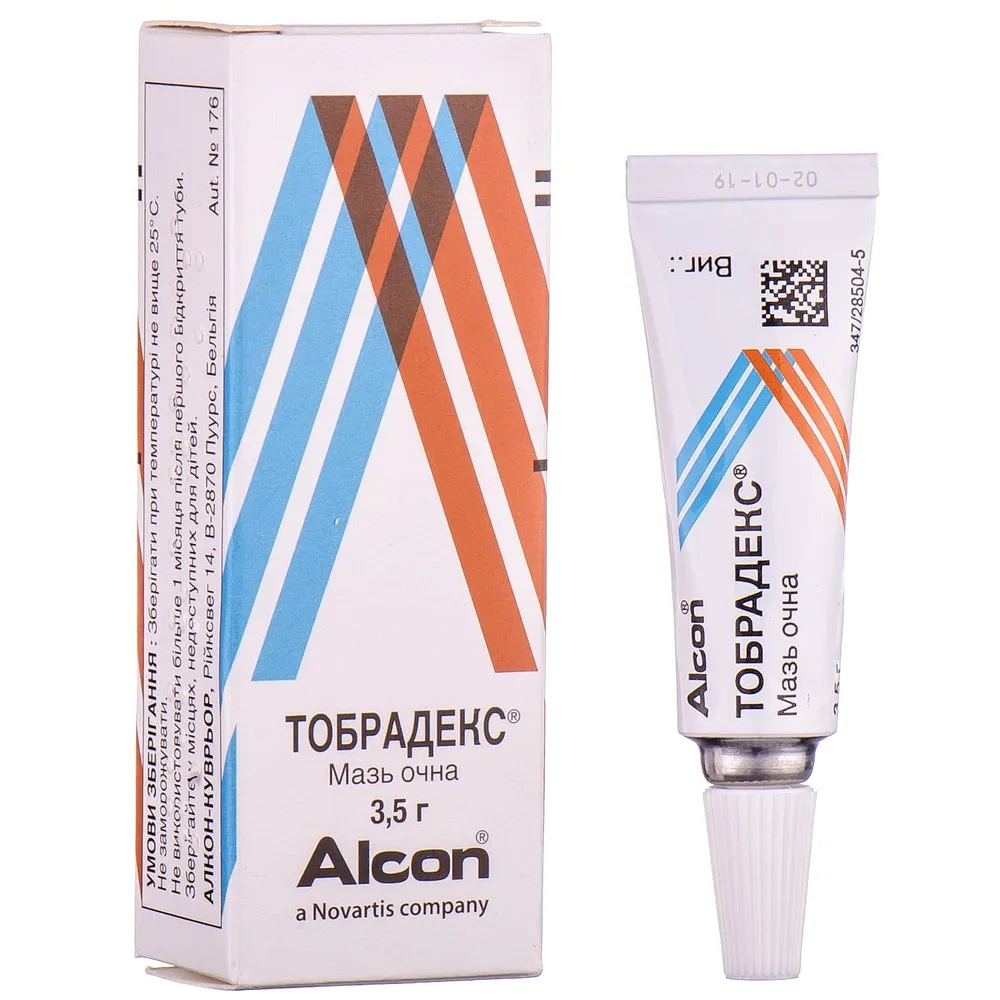
TOBRADEXÒ
(TOBRADEXÒ) Composition: Active substances: tobramycin, dexamethasone; 1 g of ointment contains tobramycin 3 mg and dexamethasone 1 mg; Excipients: chlorobutanol anhydrous, mineral oil, white soft paraffin. Pharmaceutical form. Eye ointment. Main physicochemical properties: homogeneous ointment from white to almost white in color. Pharmacotherapeutic group. Anti-inflammatory and antimicrobial agents in combination. Corticosteroids and antimicrobial agents in combination. ATC code S01CA01. Pharmacological properties. Pharmacodynamics. Dexamethasone The efficacy of corticosteroids in treating inflammatory conditions of the eye is well known. Corticosteroids exert their anti-inflammatory effect by inhibiting adhesion molecules to vascular endothelial cells, cyclooxygenase I or II, and cytokine release. As a result, the production of inflammatory mediators is reduced and the adhesion of circulating leukocytes to vascular endothelium is inhibited, thereby preventing their penetration into inflamed ocular tissues. Dexamethasone exerts a pronounced anti-inflammatory effect with reduced mineralocorticoid activity compared to some other steroids and is one of the most potent anti-inflammatory agents. Tobramycin Tobramycin is a highly effective, rapidly acting bactericidal antibiotic of the aminoglycoside group active against both Gram-positive and Gram-negative microorganisms. Its mechanism of action involves inhibition of the polypeptide complex and protein synthesis in bacterial ribosomes. Overall, tobramycin activity has been described in vitro by determining the minimum inhibitory concentration (MIC), which defines the antibiotic's activity against each bacterial species. Since the MIC of tobramycin is very low against most ocular pathogenic organisms, it is considered a broad-spectrum antibiotic. Critical MIC values have been established to determine bacterial culture susceptibility or resistance to a given antibiotic. The current critical MIC values for tobramycin against relevant bacterial species take into account the inherent susceptibility of species as well as maximum concentration and time/concentration pharmacokinetic parameters measured in serum after oral administration. Determination of these critical values, which classify microorganisms as susceptible or resistant, has been used to determine the clinical efficacy of systemically administered antibiotics. However, when antibiotics are applied locally in high concentrations directly at the site of infection, critical value determinations have not been performed. Most microorganisms that might be classified as resistant based on critical values during systemic administration actually respond well to local treatment. For prophylaxis, it is possible to prevent the development of such microorganisms causing infection. In clinical studies, topical tobramycin solution has proven effective against many existing strains of ocular pathogenic microorganisms in patients participating in the studies. Some of these ocular pathogenic microorganisms are considered resistant based on critical value determinations during systemic administration. Clinical studies have demonstrated that tobramycin is effective in treating superficial eye infections caused by the following pathogenic microorganisms: Gram-positive bacteria: Staphylococcus aureus (methicillin-sensitive or methicillin-resistant*) Staphylococcus epidermidis (methicillin-sensitive or methicillin-resistant*) Other coagulase-negative Staphylococcus species Streptococcus pneumoniae (penicillin-sensitive or penicillin-resistant*) Other Streptococcus species. * Beta-lactam (i.e., methicillin, penicillin) resistance phenotype is not associated with aminoglycoside resistance phenotype, and neither is associated with virulence or pathogenic organism phenotypes. Many methicillin-resistant staphylococci have been found to be resistant to tobramycin (and other aminoglycoside antibiotics). However, these resistant staphylococcal cultures (as defined by MIC critical values) usually respond well to topical tobramycin treatment. Gram-negative bacteria: Acinetobacter spp. Citrobacter spp. Enterobacter spp. Escherichia coli Haemophilus influenzae Klebsiella pneumoniae Moraxella spp. Morganella morganii Proteus mirabilis Pseudomonas aeruginosa Serratia marcescens. Bacterial susceptibility testing has shown that in some cases microorganisms resistant to gentamicin remain sensitive to tobramycin. A significant portion of the microflora has not yet developed resistance to tobramycin, although bacterial resistance may develop during prolonged use. Cross-sensitivity to other aminoglycoside antibiotics is possible; if hypersensitivity occurs during treatment, the drug should be discontinued and appropriate therapy initiated. Pharmacokinetics. Dexamethasone Clinical pharmacokinetic studies of TOBRADEX® eye ointment have not been conducted. However, studies with TOBRADEX® eye drops showed that systemic effects of dexamethasone after local ophthalmic administration are low. Peak plasma concentration levels ranged from 220 to 888 pg/mL (mean 555 ± 217 pg/mL) after instilling one drop of TOBRADEX® in each eye four times daily for two consecutive days. Dexamethasone is eliminated from the body via metabolism. Approximately 60% of the dose is excreted in urine as 6-β-hydroxydexamethasone. Unchanged dexamethasone was not detected in urine. The plasma half-life is relatively short—3–4 hours. Dexamethasone is approximately 77–84% bound to serum albumin. Clearance ranges from 0.111 to 0.225 L/h/kg and volume of distribution ranges from 0.576 to 1.15 L/kg. Oral bioavailability is approximately 70%. Tobramycin Clinical pharmacokinetic studies of TOBRADEX® eye ointment have not been conducted. However, studies with TOBRADEX® eye drops showed that systemic effects of tobramycin after local ophthalmic administration are low. Tobramycin plasma concentrations were not quantifiable in 9 out of 12 patients using TOBRADEX® eye drops, one drop in each eye four times daily for two consecutive days. The highest measured level was 0.25 µg/mL, which is 8 times lower than the 2 µg/mL concentration known to be below the nephrotoxicity risk threshold. Tobramycin is actively and extensively excreted in urine via glomerular filtration, primarily in unchanged form. The plasma half-life is approximately 2 hours, with clearance of 0.04 L/h/kg and volume of distribution of 0.26 L/kg. Plasma protein binding of tobramycin is negligible—less than 10%. Oral bioavailability of tobramycin is low (<1%). Preclinical safety data Safety data Data on systemic toxicity of the active substances are well established. Systemic effects of tobramycin at toxic doses, which greatly exceed the dose used for local ocular application, may be associated with nephrotoxicity and ototoxicity. Systemic effects of dexamethasone may be related to glucocorticoid imbalance effects. Repeated-dose toxicity studies of TOBRADEX® eye drops in rabbits revealed systemic effects related to corticosteroids, but even at doses significantly exceeding the human dose, this manifestation has minimal clinical relevance. The occurrence of these effects with TOBRADEX® at recommended doses is unlikely. Mutagenicity Studies in vitro and in vivo for each of the active substances showed no mutagenic effects. Teratogenicity Tobramycin crosses the placenta into fetal circulation and amniotic fluid. Animal studies with systemic administration of high doses of tobramycin to pregnant animals during organogenesis revealed fetal renal toxicity and ototoxicity. Other studies conducted in rats and rabbits using tobramycin at doses exceeding 100 mg/kg/day via parenteral administration (>400 times the maximum clinical dose) showed no impairment of fertility or harmful effects on the fetus. It has been established in animal studies that corticosteroids have teratogenic effects. Ocular application of 0.1% dexamethasone to pregnant rabbits resulted in increased fetal developmental abnormalities and intrauterine growth retardation. Fetal growth retardation and increased mortality were observed in rats during prolonged dexamethasone therapy. TOBRADEX® should be used during pregnancy only if the potential benefit outweighs the potential risk to the fetus. No studies have been conducted to evaluate the carcinogenic effects of TOBRADEX®. Clinical characteristics. Indications. Inflammatory eye conditions in patients responsive to steroids, where corticosteroid use is indicated and there is a superficial bacterial infection or risk of bacterial eye infection. These inflammatory processes may occur after surgical intervention (cataract removal) or may be caused by infection, foreign body entry into the eye, or ocular trauma. Contraindications. - Hypersensitivity to the active substances or to any component of the medicinal product.
- Hypersensitivity to aminoglycosides.
- Herpes simplex virus-induced keratitis.
- Cowpox, chickenpox, and other viral infections of the cornea and conjunctiva.
- Fungal diseases of ocular structures or untreated parasitic ocular infections.
- Mycobacterial infections of the eye.
- Infections or injuries limited to the corneal surface epithelium.
- TOBRADEX® should not be used after uneventful removal of a foreign body from the cornea.
Interaction with other medicinal products and other forms of interaction. Concomitant administration of locally applied steroids and NSAIDs (non-steroidal anti-inflammatory drugs) for local use may increase the risk of corneal wound healing complications. Concomitant and/or sequential use of aminoglycoside antibiotics (such as tobramycin) and other systemic oral or locally applied medicinal products with toxic (harmful) effects on the nervous system, hearing organs, or kidneys may lead to additive toxicity; therefore, such use should be avoided if possible. In patients receiving ritonavir, dexamethasone plasma concentrations may increase (see section "Special precautions"). If more than one ophthalmic agent is applied locally, the interval between applications should be at least 5 minutes. Ophthalmic ointments should be applied last. CYP3A4 inhibitors (including ritonavir and cobicistat) may reduce dexamethasone clearance, leading to more severe adverse events and adrenal cortex function suppression (Cushing's syndrome). Such combinations should be avoided unless benefit outweighs the increased risk of systemic corticosteroid side effects, and in such cases, systemic corticosteroid adverse effects should be monitored in patients. Special precautions. For ophthalmic use only. - Hypersensitivity to topically applied aminoglycosides may occur in some patients. The severity of hypersensitivity reactions may vary from local effects to generalized reactions such as erythema, itching, urticaria, skin rashes, anaphylaxis, anaphylactoid reactions, or bullous reactions. If a hypersensitivity reaction occurs, the drug should be discontinued.
- Cross-hypersensitivity to other aminoglycosides is possible. Consideration should be given to the possibility that patients hypersensitive to tobramycin with topical application may also be hypersensitive to other aminoglycosides administered topically or systemically.
- Serious adverse reactions, including neurotoxicity, ototoxicity, and nephrotoxicity, have been reported in patients receiving systemic aminoglycoside therapy. Caution should be exercised when co-administering with systemic aminoglycosides.
- Caution is required when prescribing TOBRADEX to patients with known neuromuscular disorders such as myasthenia gravis or Parkinson's disease. Aminoglycosides may exacerbate muscle weakness due to potential effects on neuromuscular function.
- Prolonged treatment with locally applied ophthalmic corticosteroids may lead to ocular hypertension and/or glaucoma with optic nerve damage, decreased visual acuity and visual field, and posterior subcapsular cataract formation. Patients receiving long-term ocular corticosteroid therapy should have intraocular pressure monitored regularly and repeatedly. This is particularly important for children aged 6 years and older, as the risk of corticosteroid-induced elevated intraocular pressure may be higher in children and may occur earlier than in adults.
- The risk of corticosteroid-induced elevated intraocular pressure and/or corticosteroid-induced cataract formation increases in predisposed patients (e.g., diabetic patients).
- Visual disturbances may occur with systemic and local corticosteroid use. If a patient experiences symptoms such as blurred vision or other visual disturbances, they should be referred to an ophthalmologist to evaluate possible causes, including cataract, glaucoma, or rare conditions such as central serous chorioretinopathy, which have been observed after systemic and local corticosteroid use.
- Cushing's syndrome and/or adrenal gland function suppression related to systemic absorption of ophthalmic dexamethasone may occur after intensive or prolonged continuous therapy in susceptible patients, including children and patients receiving CYP3A4 inhibitors (including ritonavir and cobicistat). In such cases, treatment should be discontinued gradually.
- Corticosteroids may reduce resistance to bacterial, viral, fungal, or parasitic infections and may interfere with the detection of such infections by masking clinical signs of infection.
- In persistent corneal ulceration, fungal infection should be considered. If fungal infection occurs, corticosteroid therapy should be discontinued.
- Prolonged use of antibiotics such as tobramycin may lead to overgrowth of resistant microorganisms, including fungi. Appropriate therapy should be initiated if superinfection occurs.
- Ophthalmic corticosteroids may delay corneal wound healing. NSAIDs for local use are also known to delay or impair wound healing. Concomitant administration of locally applied NSAIDs and locally applied steroids may increase the risk of wound healing complications (see section "Interaction with other medicinal products and other forms of interaction").
- In conditions leading to corneal or scleral thinning, local steroid use may cause perforation.
- Wearing contact lenses is not recommended during treatment of eye inflammation or infection.
- The medicinal product can be used in children aged 2 years and older.
Use during pregnancy or breastfeeding. Reproductive function No studies have been conducted to evaluate the effect of tobramycin and dexamethasone on human or animal reproductive function. Clinical data on the effect of dexamethasone on male or female reproductive function are limited. No adverse effects on the reproductive system were observed in rats sensitized to chorionic gonadotropin after dexamethasone administration. Pregnancy Data on the use of tobramycin or dexamethasone in pregnant women are absent or limited. After intravenous administration to pregnant women, tobramycin crosses the placenta into the fetal circulation. In utero exposure to tobramycin does not cause ototoxicity. Prolonged or repeated use of corticosteroids during pregnancy is associated with an increased risk of intrauterine growth retardation. Newborns whose mothers received high doses of corticosteroids during pregnancy should be carefully monitored for signs of adrenal insufficiency. Animal studies demonstrated reproductive toxicity after topical dexamethasone and systemic dexamethasone and tobramycin administration. Use of TOBRADEX® during pregnancy is not recommended. Breastfeeding After systemic administration, tobramycin is excreted into breast milk. Data on dexamethasone excretion into breast milk are lacking. It is unknown whether tobramycin and dexamethasone enter breast milk after local ophthalmic administration. It is unlikely that tobramycin and dexamethasone will be present in breast milk or cause clinical effects in newborns after local administration of the medicinal product. Risk to the breastfed infant cannot be excluded. A decision should be made whether to discontinue breastfeeding or discontinue/abstain from treatment, taking into account the benefit of breastfeeding for the child and the benefit of therapy for the woman. Since many medicinal products are excreted into breast milk, the possibility of temporarily discontinuing breastfeeding during TOBRADEX® use should be considered. Ability to affect reaction speed when driving or operating machinery. TOBRADEX®, eye ointment, has no or negligible effect on the ability to drive or operate machinery. Transient blurred vision or other visual disturbances may affect the ability to drive or operate machinery. If blurred vision occurs during use, patients should wait until vision clears before driving or operating machinery. Method of administration and dosage. For ophthalmic use. Use in adults, including elderly patients, and children aged 12 to 18 years. A small amount of ointment (a strip approximately 1.5 cm long) should be instilled into the conjunctival sac(s) of the affected eye(s) up to 3 or 4 times daily. The frequency of administration should be gradually reduced as clinical signs improve. Care should be taken not to discontinue therapy prematurely. The eye ointment can be used at night in combination with TOBRADEX® eye drops during the day. After ointment application, it is recommended to gently close the eyelids. This reduces systemic absorption of the drug administered into the eye, thereby decreasing the likelihood of systemic adverse effects. Regular monitoring of intraocular pressure is recommended. Use in children. Available data confirm the safety and efficacy of the medicinal product in children aged 2 years and older treated for 7 days for superficial bacterial eye inflammation. The product may be used in children requiring cataract surgery. Use in hepatic and renal impairment TOBRADEX® has not been studied in this patient category. However, due to the low systemic absorption of tobramycin and dexamethasone after local administration, dose adjustment is not necessary. Method of administration To prevent contamination of the tube tip and contents, care should be taken not to touch eyelids, adjacent areas, or other surfaces with the tube tip. Keep the tube tightly closed. Children Safety and efficacy in children under 2 years of age have not been established. Available data confirm the safety and efficacy of the medicinal product in children aged 2 years and older. TOBRADEX® can be used in children aged 2 years and older. Overdose. Given the characteristics of this product intended for local use, no toxic effects are expected with ophthalmic use at recommended doses or after accidental ingestion of the tube contents. In case of overdose with TOBRADEX® during local use, wash excess product from the eye(s) with warm water. Possible clinical signs and symptoms of overdose (punctate keratitis, erythema, increased lacrimation, eyelid edema, and itching) may be similar to adverse effects observed in some patients. Adverse reactions. During clinical trials, the most common adverse reactions were eye pain, increased intraocular pressure, eye irritation, and eye itching, occurring in less than 1% of patients. During clinical trials with TOBRADEX® eye ointment, the following adverse reactions were reported, categorized by frequency: very common (≥1/10); common (≥1/100 to <1/10); uncommon (≥1/1,000 to <1/100); rare (≥1/10,000 to <1/1,000); very rare (<1/10,000). Within each group, adverse effects are listed in order of decreasing severity. Table 1
| System organ classes |
Adverse reactions [MedDRA term (v.15.1)] |
| Eye disorders |
Uncommon: increased intraocular pressure, eye pain, eye itching, eye discomfort, eye irritation. Rare: keratitis, eye allergy, blurred vision, dry eyes, eye hyperemia. |
| Gastrointestinal disorders |
Rare: dysgeusia. |
Based on post-marketing surveillance studies, the adverse reactions listed below have been identified. Due to the nature of the data, it is not possible to estimate the frequency of these reactions.
| System organ classes |
Adverse reactions [preferred MedDRA term (v.15.1)] |
| Immune system disorders |
Hypersensitivity, anaphylactic reaction |
| Nervous system disorders |
Dizziness, headache |
| Eye disorders |
Eye lid oedema, eyelid erythema, mydriasis, increased lacrimation, ulcerative keratitis, blurred vision |
| Gastrointestinal disorders |
Nausea, gastric discomfort |
| Skin and subcutaneous tissue disorders |
Rash, facial swelling, pruritus, erythema multiforme |
| Endocrine disorders |
Cushing's syndrome, adrenal gland suppression |
Table 2 Description of some adverse reactions Long-term topical ocular use of corticosteroids may lead to increased intraocular pressure, resulting in optic nerve damage, decreased visual acuity, visual field defects, as well as posterior subcapsular cataract formation and delayed wound healing (see section "Special precautions for use"). Since the drug contains a corticosteroid, in patients with diseases causing thinning of the cornea or sclera, the risk of perforation increases, especially after prolonged use (see section "Special precautions for use"). Secondary infections may develop following treatment with combinations containing corticosteroids and antimicrobial agents. Fungal infections of the cornea may particularly develop actively during prolonged steroid use (see section "Special precautions for use"). Serious adverse reactions, including neurotoxicity, ototoxicity, and nephrotoxicity, have occurred in patients receiving systemic therapy with tobramycin. Some adverse reactions such as corneal abrasion, decreased vision, conjunctival edema, eyelid disorders, eye discharge, eyelid itching, urticaria, dermatitis, madarosis, leukoderma, and dry skin have been observed during tobramycin therapy. Adverse reactions such as keratoconjunctivitis, corneal pigmentation, photophobia, scaling along eyelid margins, decreased visual acuity, corneal erosion, and eyelid ptosis have been observed during dexamethasone therapy. Hypersensitivity reactions to aminoglycosides may occur in some patients following topical application (see section "Special precautions for use"). Shelf life. 2 years. The shelf life after first opening of the tube is 1 month. Storage conditions. Store at a temperature not exceeding 25 °C. Do not freeze. Keep out of reach of children. Keep the tube tightly closed. Packaging. 3.5 g in a tube; 1 tube in a cardboard box. Prescription category. By prescription only. Manufacturer.
Novartis Manufacturing NV / Novartis Manufacturing NV.
Manufacturer's address and place of business. Rijksweg 14, Puurs-Sint-Amands, 2870, Belgium / Rijksweg 14, Puurs-Sint-Amands, 2870, Belgium. |