Tivorel
Ukraine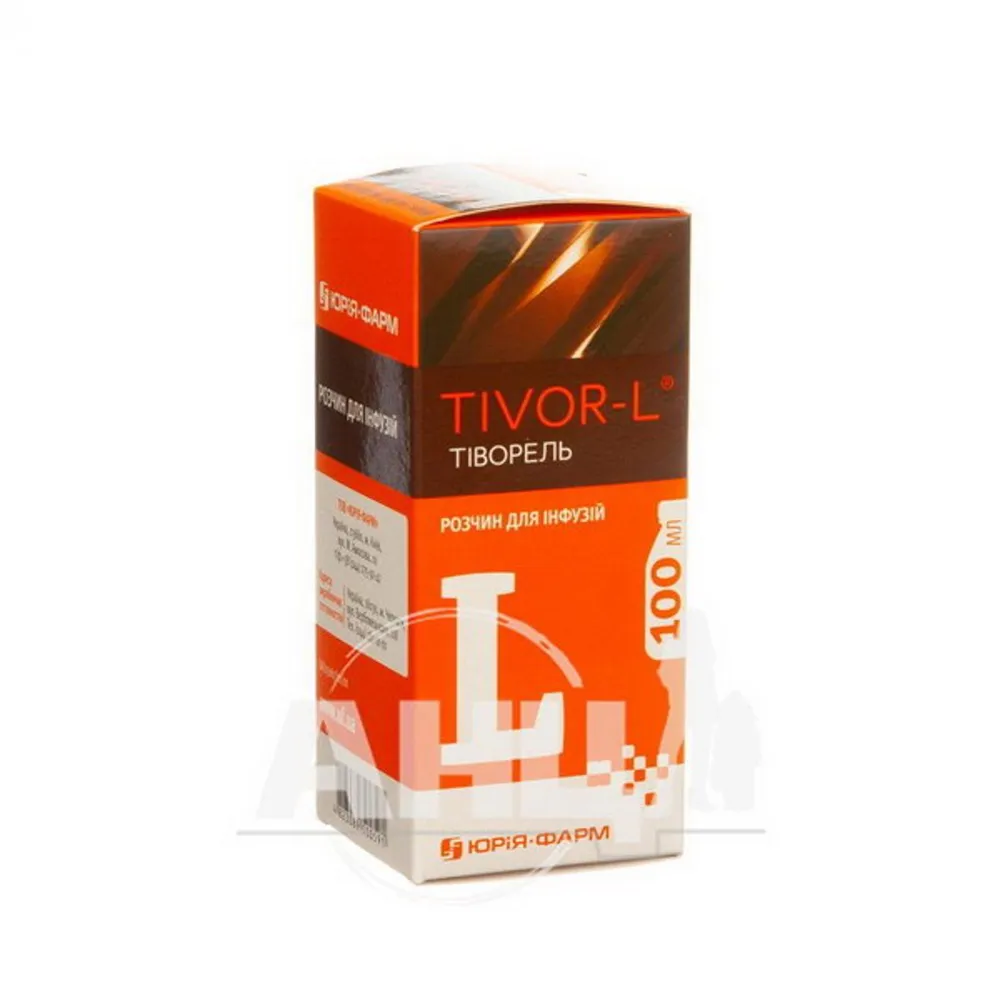
Table of Contents
INSTRUCTIONS FOR MEDICAL USE OF THE MEDICINAL PRODUCT TIVOREL (TIVOR-L®)
Composition:
Active substances: levocarnitine and arginine hydrochloride;
1 ml of solution contains 42 mg of arginine hydrochloride and 20 mg of levocarnitine;
Excipient: water for injections.
Pharmaceutical form. Infusion solution.
Main physicochemical properties: clear, colourless or slightly yellowish solution.
Pharmacotherapeutic group. Intravenous supplementary fluids. Amino acids. ATC code B05X B.
Pharmacological properties.
Pharmacodynamics.
Tivorel contains the active substances amino acids levocarnitine and arginine hydrochloride.
Arginine (α-amino-δ-guanidinovaleric acid) is an amino acid belonging to the class of conditionally essential amino acids and acts as an active and versatile cellular regulator of numerous vital functions of the body, demonstrating important protective effects under critical conditions.
Arginine exerts anti-hypoxic, membrane-stabilizing, cytoprotective, antioxidant, anti-radical, and detoxifying actions, and acts as an active regulator of intermediate metabolism and energy supply processes. It plays a certain role in maintaining hormonal balance in the body. It is known that arginine increases blood levels of insulin, glucagon, growth hormone, and prolactin, participates in the synthesis of proline, polyamines, and agmatine, is involved in the processes of fibrinogenolysis and spermatogenesis, and exerts membrane-depolarizing effects.
Arginine is one of the main substrates in the urea synthesis cycle in the liver. The drug's hypoammonemic effect is achieved by activating the conversion of ammonia into urea. It exerts hepatoprotective action due to antioxidant, anti-hypoxic, and membrane-stabilizing activities, and positively influences energy supply processes in hepatocytes.
Arginine is a substrate for NO-synthase, the enzyme catalyzing nitric oxide synthesis in endotheliocytes. The drug activates guanylate cyclase and increases the level of cyclic guanosine monophosphate (cGMP) in vascular endothelium, reduces activation and adhesion of leukocytes and platelets to the vascular endothelium, suppresses the synthesis of adhesion proteins VCAM-1 and MCP-1, thereby preventing the formation and progression of atherosclerotic plaques, and inhibits the synthesis of endothelin-1, a potent vasoconstrictor and stimulator of vascular smooth muscle cell proliferation and migration. Arginine also suppresses the synthesis of asymmetric dimethylarginine—a powerful endogenous stimulator of oxidative stress. The drug stimulates thymus gland activity, which produces T-cells, and regulates blood glucose levels during physical exertion. It exerts an acid-forming effect and promotes correction of acid-base balance.
Levocarnitine is a natural substance involved in energy metabolism and the metabolism of ketone bodies. Only the L-isomer of carnitine is biologically active.
Levocarnitine is necessary for the transport of long-chain fatty acids into mitochondria for subsequent beta-oxidation and energy production. Fatty acids are used as an energy substrate by all tissues except the brain. In skeletal muscles and myocardium, fatty acids are the primary substrate for energy production.
Levocarnitine plays an important role in cardiac metabolism, as fatty acid oxidation depends on the availability of sufficient amounts of this substance. Experimental studies have shown that under certain conditions such as stress, acute ischemia, myocarditis, a decrease in levocarnitine levels in myocardial tissue is possible. Numerous animal studies have confirmed the beneficial effects of levocarnitine in various induced cardiac disorders: acute and chronic ischemia, cardiac decompensation, heart failure due to myocarditis, and drug-induced cardiotoxicity (e.g., taxanes, adriamycin, etc.).
By releasing coenzyme-A from complex thioesters, levocarnitine also enhances carbohydrate oxidation in the Krebs tricarboxylic acid cycle, stimulates the activity of the key glycolysis enzyme pyruvate dehydrogenase, and in skeletal muscles, promotes the oxidation of branched-chain amino acids. Thus, levocarnitine directly or indirectly participates in most energy-producing processes, and its presence is essential for the oxidation of fatty acids, amino acids, carbohydrates, and ketone bodies.
In humans, physiological requirements for carnitine are met through dietary intake of carnitine-containing foods (primarily meat) and endogenous synthesis in the liver from trimethyllysine. The highest concentrations of levocarnitine are found in muscle tissue, myocardium, and liver.
Primary systemic carnitine deficiency is characterized by low levocarnitine concentrations in blood plasma, erythrocytes, and/or tissues. Secondary carnitine deficiency may result from congenital disorders of carnitine metabolism or iatrogenic interventions such as hemodialysis.
Pharmacokinetics.
During continuous intravenous infusion, the maximum plasma concentration of arginine hydrochloride is observed 20–30 minutes after the start of administration. Arginine crosses the placental barrier, is filtered in renal glomeruli, but is almost completely reabsorbed in renal tubules.
Levocarnitine is absorbed by the epithelial cells of the small intestine mucosa and enters the bloodstream relatively slowly; absorption is likely associated with an active trans-luminal mechanism. Absorption after oral administration is limited (< 10%) and variable.
Absorbed levocarnitine is transported via blood to various organs; it is believed that erythrocyte transport systems are involved in this process.
Levocarnitine is primarily excreted in urine. The excretion rate is directly proportional to the concentration of carnitine in the blood.
Levocarnitine is practically not metabolized in the body.
Clinical characteristics.
Indications.
As part of combination therapy for ischemic heart disease.
Contraindications.
Hypersensitivity to the drug. Severe renal function impairment; hyperchloremic acidosis; history of allergic reactions; use of potassium-sparing diuretics, as well as spironolactone. Myocardial infarction (including in medical history).
Interaction with other medicinal products and other forms of interactions.
When using the medicinal product Tivorel, it should be taken into account that the drug may cause pronounced and persistent hyperkalemia in patients with renal insufficiency who are taking or have taken spironolactone. Prior use of potassium-sparing diuretics may also contribute to increased blood potassium concentration. Concomitant use with aminophylline may increase blood insulin levels.
Concomitant use of glucocorticoids leads to accumulation of levocarnitine in body tissues (except liver). Other anabolic agents enhance the effect of the drug.
In patients who received levocarnitine concomitantly with coumarin-derived anticoagulants (see section "Special precautions for use"), very rare cases of increased international normalized ratio (INR) have been observed. INR or another appropriate coagulation test should be performed weekly until values become stable, and monthly thereafter, in patients taking such anticoagulants together with levocarnitine.
Concomitant use of levocarnitine with agents that induce hypocarnitinemia by enhancing renal excretion of carnitine (e.g., valproic acid, prodrugs containing pivonic acid, cephalosporins, cisplatin, carboplatin, ifosfamide) may reduce its levels.
The medicinal product is incompatible with thiopental.
Special precautions for use.
In patients with renal insufficiency, urine output and plasma potassium levels should be checked before initiating infusion, as the medicinal product may promote the development of hyperkalemia.
The medicinal product should be used with caution in patients with endocrine gland dysfunction. The product may stimulate insulin and growth hormone secretion.
If dry mouth occurs, blood glucose levels should be checked.
Caution is advised in patients with electrolyte metabolism disorders and kidney diseases. If symptoms of asthenia worsen during treatment, therapy should be discontinued.
The product should be used with caution in patients with angina pectoris.
Levocarnitine improves glucose utilization; therefore, administration of the medicinal product Tivorel in patients with diabetes mellitus receiving antidiabetic therapy may lead to hypoglycemia. In such cases, plasma glucose levels should be monitored regularly to allow timely adjustment of therapy.
Very rare cases of increased international normalized ratio (INR) have been observed in patients concurrently receiving levocarnitine and coumarin-derived anticoagulants (see section "Interaction with other medicinal products and other forms of interactions"). Appropriate monitoring is required when coumarin anticoagulants are used concomitantly.
Seizures have been reported in patients with a history of seizure activity; however, it has not been fully established whether levocarnitine increases the frequency and/or severity of seizures. In cases where levocarnitine is suspected to be the cause of seizures, discontinuation of the medicinal product should be considered.
Use during pregnancy or breastfeeding.
There are no data on the use of Tivorel in pregnant women. Data regarding excretion of the drug in breast milk and its effects on the fetus are unknown. Therefore, during pregnancy or breastfeeding, the medicinal product should be administered only if the expected benefit to the mother outweighs the potential risk to the fetus.
Ability to influence reaction speed when driving or operating machinery.
In individual cases, certain adverse reactions affecting the central nervous system may impair the ability to drive or operate complex machinery.
Administration and Dosage
The medicinal product is administered intravenously by drip infusion at a rate of 10 drops per minute for the first 10–15 minutes; thereafter, the infusion rate may be increased to 30 drops per minute.
The daily dose is 100 ml of solution.
Children
There is no data regarding the use of this medicinal product in children.
Overdose
Symptoms: Renal failure, hypoglycemia, metabolic acidosis; large doses may cause diarrhea.
Treatment: In case of overdose, the infusion of the drug must be discontinued. Physiological responses should be monitored and vital functions supported. If necessary, administer alkalizing agents and diuretics, electrolyte solutions (0.9% sodium chloride solution), and 5% glucose solution. Symptomatic therapy is recommended.
Adverse reactions.
Musculoskeletal system: joint pain.
Gastrointestinal tract: dry mouth, nausea, vomiting, abdominal pain, diarrhea.
Skin and subcutaneous tissue: reactions at the injection site, including hyperemia, itching sensation, skin pallor, up to acrocyanosis.
Immune system: anaphylactic shock, hypersensitivity reactions, including rash, urticaria, angioneurotic edema.
Respiratory system, thoracic organs, and mediastinum: dyspnea.
Cardiovascular system: fluctuations in blood pressure, changes in heart rate, chest pain.
Nervous system: headache, dizziness, feeling of fear, weakness, seizures, tremor, more frequently observed when the infusion rate is exceeded.
General disorders: hyperthermia, sensation of warmth, malaise.
Laboratory parameters: hyperkalemia.
Shelf life. 2 years.
Storage conditions.
Store at a temperature not exceeding 30 °C in the original packaging.
Keep out of reach of children.
Incompatibility.
The medicinal product is incompatible with thiopental.
Packaging.
100 ml in glass bottles. 100 ml in polymer bottles. 1 bottle in a cardboard box.
Prescription category. Prescription only.
Manufacturer.
LLC "Yuria-Pharm".
Manufacturer's address and location of business activity.
108, Kobzarska Street, Cherkasy, Cherkasy region, 18030, Ukraine. Tel.: (044) 281-01-01.