Tetracycline hydrochloride
Ukraine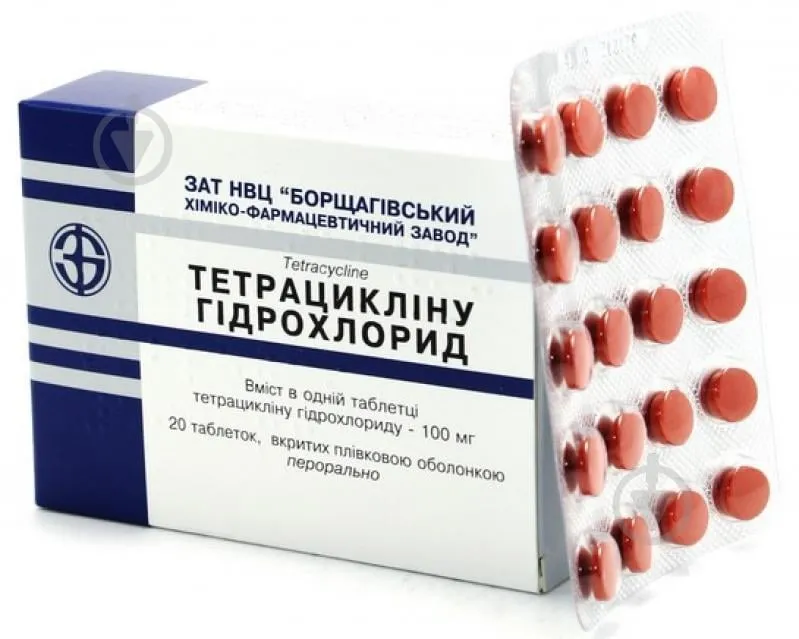
Table of Contents
INSTRUCTIONS FOR MEDICAL USE OF THE MEDICINAL PRODUCT TETRACYCLINE HYDROCHLORIDE (TETRACYCLINE HYDROCHLORIDE)
Composition:
Active substance: tetracycline;
1 tablet contains 100 mg of tetracycline hydrochloride calculated as 100% dry substance;
Excipients: microcrystalline cellulose, sodium croscarmellose, calcium stearate, talc; film-coating: polyvinyl alcohol, macrogol/PEG 3350, talc (E553b), titanium dioxide (E171), special red AG (E129), yellow FCF (E110).
Medicinal form. Film-coated tablets.
Main physicochemical properties: round-shaped, biconvex tablets with a film coating, ranging in color from red to reddish-brown.
Pharmacotherapeutic group. Antibacterial agents for systemic use. Tetracyclines. ATC code J01AA07.
Pharmacological Properties.
Pharmacodynamics.
Bacteriostatic antibiotic of the broad-spectrum tetracycline group. Inhibits protein synthesis by blocking the binding of aminoacyl-transfer RNA (tRNA) to the messenger RNA (mRNA)-ribosome complex. Active against Gram-positive bacteria (Staphylococcus spp., including penicillinase-producing strains; Streptococcus spp., including Streptococcus pneumoniae); Haemophilus influenzae, Listeria spp., Bacillus anthracis, and Gram-negative microorganisms (Neisseria gonorrhoeae, Bordetella pertussis, Escherichia coli, Enterobacter spp., Klebsiella spp., Salmonella spp., Shigella spp.), as well as Rickettsia spp., Chlamydia spp., Mycoplasma spp., Treponema spp. Organisms resistant to the drug include: Pseudomonas aeruginosa, Proteus spp., Serratia spp., most strains of Bacteroides spp., fungi, and small viruses.
Pharmacokinetics.
Approximately 75–80% of the drug is absorbed after oral administration. It binds to plasma proteins by 55–65%. Maximum blood concentration is reached within 2–3 hours and amounts to 1.5–3.5 mg/L. Over the following 8 hours, the concentration gradually decreases.
The drug is unevenly distributed throughout the body, with the highest concentrations found in the liver, kidneys, lungs, and organs rich in reticuloendothelial system elements (spleen, lymph nodes).
Tetracycline concentration in bile is 5–10 times higher than in blood serum. Drug levels in thyroid and prostate gland tissues are similar to those in blood plasma. Concentrations in pleural and ascitic fluid, saliva, and breast milk amount to 60–100% of its plasma concentration. The drug accumulates significantly in bone tissue. It poorly penetrates the blood-brain barrier but crosses the placental barrier and enters fetal circulation.
In the liver, 30–50% of the drug is metabolized. High concentrations are detectable in urine within 2 hours after administration and persist for 6–12 hours. Within the first 12 hours, 10–20% of the administered dose is excreted by the kidneys. 5–10% of the total dose is excreted in bile into the intestine, where partial reabsorption occurs (enterohepatic circulation), contributing to prolonged circulation of the active substance in the body. Gastrointestinal excretion after oral administration accounts for 20–50% of the dose. The elimination half-life is 8 hours.
Clinical characteristics.
Indications.
Infectious and inflammatory diseases caused by microorganisms sensitive to the drug: bronchitis, pneumonia, purulent pleurisy, subacute septic endocarditis, bacterial and amoebic dysentery, pertussis, tonsillitis, scarlet fever, gonorrhea, brucellosis, tularemia, typhus and relapsing fever, psittacosis, ornithosis, urinary and biliary tract infections, purulent meningitis, purulent skin and soft tissue infections, cholera.
Prevention of postoperative infections.
Contraindications.
- Hypersensitivity to tetracycline and related antibiotics, or to any component of the drug;
- fungal infections;
- chronic hepatic/renal dysfunction;
- renal insufficiency, especially in severe cases;
- systemic lupus erythematosus;
- concomitant use with vitamin A or retinoids (risk of developing benign intracranial hypertension).
Interaction with other medicinal products and other types of interactions.
Iron salts, oral zinc preparations, calcium, bismuth (including bismuth subsalicylate), aluminum, magnesium, and other products containing these cations (including magnesium-containing laxatives, antacids, sucralfate), cholestyramine, colestipol, kaolin-pectin, sodium bicarbonate: formation of inactive tetracycline chelates and reduced tetracycline absorption. Combinations with such agents should be avoided, as well as with quinapril (contains magnesium carbonate) and didanosine (contains calcium- and magnesium-containing excipients). If such combination is necessary, tetracycline should be administered as far apart in time as possible (2 hours before or 4–6 hours after administration of these agents).
Strontium ranelate: possible reduction in tetracycline serum concentration. Concomitant use should be avoided. It is recommended to interrupt strontium ranelate treatment during tetracycline therapy.
Digoxin, lithium preparations: possible increase in their serum concentrations.
Penicillins, cephalosporins, beta-lactam antibiotics: as a bacteriostatic antibiotic, tetracycline may interfere with the bactericidal activity of other antibiotics. Such combinations should be avoided.
The combination of tetracycline with oleandomycin and erythromycin is considered synergistic.
Oral anticoagulants, including warfarin, phenindione, antithrombotic agents: tetracyclines may enhance the effect of oral anticoagulants by inhibiting their hepatic metabolism, reduce plasma prothrombin levels, requiring careful monitoring of prothrombin time and, if necessary, reduction of anticoagulant dose.
Atovaquone: reduced plasma concentration of atovaquone.
Methotrexate: possible increase in its toxicity; this combination should be used with caution.
Methoxyflurane: possible nephrotoxic effects (including increased blood urea nitrogen and serum creatinine), acute renal failure, sometimes fatal.
Vitamin A and retinoids (including acitretin, isotretinoin, tretinoin): increased risk of intracranial hypertension; this combination should not be used. To prevent this complication during acne treatment with retinoids, an interval should be maintained after tetracycline therapy.
Hormonal contraceptives: reduced efficacy (unplanned pregnancy) and increased frequency of breakthrough bleeding when used with tetracyclines. Therefore, non-hormonal contraceptive methods are recommended during tetracycline treatment and for at least 7 days after completion of therapy.
Diuretics: this combination requires caution, as dehydration increases the risk of nephrotoxicity.
Antidiabetic agents (insulin, sulfonylurea derivatives, including glyburide, glipizide): enhanced hypoglycemic effect.
Chymotrypsin: increased tetracycline plasma concentration and prolonged circulation time.
Ergotamine and methysergide: increased risk of ergotism.
Oral typhoid vaccine, BCG vaccine: antibacterial agents, including tetracyclines, may reduce the therapeutic efficacy of these vaccines. Vaccination should be avoided during antibiotic treatment.
Tetracycline absorption is impaired when administered with food, milk, or dairy products.
Special precautions.
Esophagitis. Cases of esophagitis and esophageal ulcers have been reported in patients taking encapsulated or tablet forms of tetracyclines. The drug should be taken with sufficient fluid and swallowed in an upright position (sitting or standing), well before going to sleep. If symptoms such as dysphagia or substernal pain occur, the possibility of this complication should be considered and discontinuation of the drug should be evaluated. Tetracycline should be used with caution in patients with esophageal reflux.
Photosensitization. Cases of photosensitivity reactions with clinical manifestations of severe sunburn have been reported in patients taking tetracyclines. During treatment, patients should protect exposed areas of skin from direct sunlight and artificial UV radiation. Patients should be informed about the possibility of such reactions and advised to discontinue tetracycline therapy immediately at the first signs of skin erythema.
Microflora. Antibiotic use may lead to overgrowth of non-susceptible microorganisms, particularly fungi including Candida, and development of superinfection, which requires discontinuation of the antibiotic and appropriate intervention.
To prevent candidiasis, concomitant use of antifungal agents and vitamins is recommended during tetracycline therapy.
Diarrhea, especially severe, persistent, and/or with blood, during or after treatment (including several weeks after treatment) with tetracycline may be a symptom of Clostridium difficile-associated diarrhea (CDAD). The severity of CDAD may range from moderate diarrhea to life-threatening pseudomembranous colitis. If CDAD is suspected, tetracycline should be discontinued immediately and appropriate therapy initiated without delay. Antiperistaltic agents are contraindicated in this clinical situation.
CDAD should be considered in all patients who develop severe diarrhea during or following antibiotic therapy.
Tooth development. Use of tetracyclines during tooth development (second and third trimesters of pregnancy, breastfeeding period, neonatal period, children under 12 years of age) may cause permanent tooth discoloration (yellow-brown-gray). This adverse reaction occurs more frequently with prolonged use, but may also occur after repeated short courses of treatment. Hypoplasia of the enamel has also been reported.
Venereal diseases. Tetracyclines may mask the symptoms of syphilis. When treating venereal diseases with suspected concurrent syphilis, appropriate diagnostic procedures should be performed. In all such cases, monthly serological tests should be conducted for at least 4 months.
Beta-hemolytic streptococci. For infections caused by group A beta-hemolytic streptococci, treatment should last for at least 10 days.
Myasthenia gravis. Tetracyclines may cause mild neuromuscular blockade; therefore, they should be used with caution in patients with myasthenia gravis.
Systemic lupus erythematosus, porphyria. Tetracyclines may exacerbate systemic lupus erythematosus. Rare cases of porphyria have been observed in patients receiving tetracyclines. Therefore, tetracyclines should not be used in patients with porphyria or systemic lupus erythematosus.
Renal impairment. Tetracycline use is generally contraindicated in renal insufficiency due to the risk of excessive accumulation and increased likelihood of adverse effects.
Antianabolic effect of tetracyclines may lead to increased blood urea levels. While this is not significant in patients with normal renal function, in patients with severely impaired renal function, high serum levels of tetracycline may lead to azotemia, hyperphosphatemia, and acidosis.
Hepatic impairment. Tetracycline should be used with caution in patients with hepatic dysfunction and in those receiving potentially hepatotoxic drugs. High doses of the drug should be avoided. High-dose tetracycline use has been associated with fatty infiltration of the liver and pancreatitis.
Tetracyclines should be prescribed with caution in patients with leukopenia.
Since tetracyclines reduce plasma prothrombin activity, patients on anticoagulant therapy may require a reduction in anticoagulant dosage.
With prolonged use, periodic monitoring of renal function, liver function, and hematopoietic system should be performed.
Tetracycline therapy should be administered under medical supervision. The prescribed dosing regimen must be strictly followed throughout the treatment course, without missing doses and taking them at regular intervals. If a dose is missed, it should be taken as soon as possible; however, if the next dose is due soon, the missed dose should be skipped; doses should not be doubled. Tetracycline should not be taken simultaneously with milk or other dairy products, as this impairs drug absorption.
If signs of hypersensitivity or adverse reactions occur, the drug should be discontinued and, if necessary, an alternative antibiotic (not from the tetracycline group) should be prescribed. To prevent possible complications, concomitant use of hepatoprotectors, choleretics, eubiotics, vitamins, and antifungal agents may be advisable.
Tetracycline is not the drug of choice for the treatment of any type of staphylococcal infection.
Prescribing the drug to adults at doses less than 800 mg per day is not advisable, as it may not only result in insufficient therapeutic effect but also promote the development of tetracycline-resistant microorganisms.
The drug contains Yellow West FCF (E 110), which may cause allergic reactions, including bronchial asthma. The risk of allergy is higher in patients with hypersensitivity to acetylsalicylic acid.
The drug contains sodium carboxymethylcellulose, which should be taken into account in patients on a sodium-controlled diet.
Use during pregnancy or breastfeeding.
Tetracyclines cross the placenta and may have toxic effects on fetal tissues, particularly on skeletal development; therefore, the drug is contraindicated during pregnancy.
Tetracyclines are excreted in breast milk and are therefore contraindicated during breastfeeding.
All tetracyclines form stable calcium complexes in any calcifying tissue (skeletal system, tooth enamel, dentin). Decreased growth rate of the tibia has been observed in premature infants receiving oral tetracycline at a dose of 25 mg/kg every 6 hours. This adverse reaction was reversible upon discontinuation of the drug.
When tetracyclines are used during tooth development, they may deposit in dental tissues, causing permanent discoloration (see section "Special precautions").
Ability to affect reaction speed when driving or operating machinery.
There is no data on the effect of the drug on reaction speed when driving or operating machinery.
Method of Administration and Dosage
Tetracycline should be taken orally, 1 hour before or 2 hours after a meal, as food and certain dairy products reduce its absorption. Tablets should be swallowed in an upright position—sitting or standing—well before bedtime, and with a sufficient amount of water to reduce the risk of esophagitis.
Adults and children aged 12 years and older. The usual single dose is 200 mg (2 tablets) every 6 hours. In severe infections, the dose may be increased to 500 mg every 6 hours. The maximum daily dose is 2 g.
All infections caused by group A beta-hemolytic streptococci should be treated for at least 10 days.
Dosage and duration of treatment are determined individually by the physician depending on the nature and course of the disease. Treatment should be continued for at least 3 days after the disappearance of disease symptoms.
Elderly patients. The usual adult dosage is recommended. The drug should be used with caution in patients with subclinical renal insufficiency, as this may lead to drug accumulation.
Renal impairment. In general, tetracyclines are contraindicated in renal impairment, except when the use of this class of antibiotics is considered absolutely necessary. The daily dose should be reduced by decreasing the recommended individual doses and/or extending the intervals between doses.
Children.
The drug is contraindicated in children under 12 years of age.
Overdose.
Symptoms: nausea, vomiting; when doses significantly exceeding the recommended are used—crystalluria, hematuria. Exacerbation of the described adverse reactions, including hypersensitivity reactions, may occur.
Treatment: symptomatic therapy. There is no specific antidote.
Adverse reactions.
Immune system: hypersensitivity reactions, including urticaria, angioneurotic edema, including of the face and tongue, anaphylaxis, pericarditis, bronchospasm; anaphylactoid reactions, including anaphylactoid purpura, exacerbation of systemic lupus erythematosus, fixed drug eruption, exfoliative dermatitis, Stevens-Johnson syndrome, toxic epidermal necrolysis.
The product contains the dye "Tartrazine" (E 110), which may cause allergic reactions, including bronchial asthma.
Skin and subcutaneous tissue: pruritus, skin hyperemia, rash, including maculopapular, erythematous, photosensitization reactions, bullous dermatoses, disturbances in pigmentation of the skin and mucous membranes.
Blood and lymphatic system: hemolytic anemia, thrombocytopenia, neutropenia, eosinophilia, agranulocytosis, aplastic anemia, Moschowitz disease.
Endocrine system: with prolonged use of tetracyclines, microscopic areas of brown-black pigmentation may appear in thyroid tissue. Thyroid function remains unaffected.
Nervous system: bulging of the fontanelle in infants and benign intracranial hypertension in adolescents and adults, the first symptoms of which may include headache, dizziness, tinnitus/hearing impairment, visual disturbances (including optic nerve edema, blurred vision, scotoma, diplopia, photophobia), nausea, vomiting, unsteady gait. Cases of temporary/permanent vision loss have been reported.
Gastrointestinal system: anorexia, nausea, vomiting, dry mouth, discomfort/pain in the abdomen, dyspepsia (including heartburn/gastritis), dysphagia, diarrhea/constipation, intestinal dysbiosis, pancreatitis. Cases of esophagitis and formation of esophageal ulcers have been reported in patients taking tetracycline capsules and tablets, as well as gastric and duodenal ulcers.
Hepatobiliary system: cases of hepatotoxicity with transient elevations in serum levels of liver transaminases, alkaline phosphatase, and bilirubin, impaired liver function; hepatitis, jaundice, fatty liver degeneration, liver failure. Initial symptoms of liver involvement may include malaise, fever and/or right upper quadrant pain, epigastric pain, nausea, vomiting, subicterus of the sclera.
Effects due to biological activity: with prolonged use of high doses of antibiotics, including tetracycline, superinfection may develop, potentially leading to candidiasis, glossitis with papillary hyperplasia, glossophytia, stomatitis, staphylococcal enterocolitis, CDAD, pseudomembranous colitis, itching in the anal area, inflammatory lesions of the anogenital region (due to candidiasis), vulvovaginitis, balanitis, proctitis.
Musculoskeletal system: increased muscle weakness in patients with myasthenia gravis.
Renal and urinary system: azotemia, hypercreatininemia, nephritis, acute renal failure, usually in patients with pre-existing renal function impairment.
Other: sore throat, hoarseness, pharyngitis, hypovitaminosis, permanent discoloration of teeth (yellow-brown-gray), enamel hypoplasia in children, impaired bone tissue formation, slowed linear bone growth (in children).
Shelf life. 3 years.
Do not use after the expiry date stated on the packaging.
Storage conditions. In the original packaging at a temperature not exceeding 25 °C. Keep out of reach of children.
Packaging. 20 tablets in a blister, 1 blister per carton.
Prescription status. Prescription only.
Manufacturer. Public joint-stock company "Scientific and Production Center "Borysyvsky Chemical and Pharmaceutical Plant".
Manufacturer's address and location of business activity.
17, Miru Street, Kyiv, 03134, Ukraine.