Testosterone propionate
Ukraine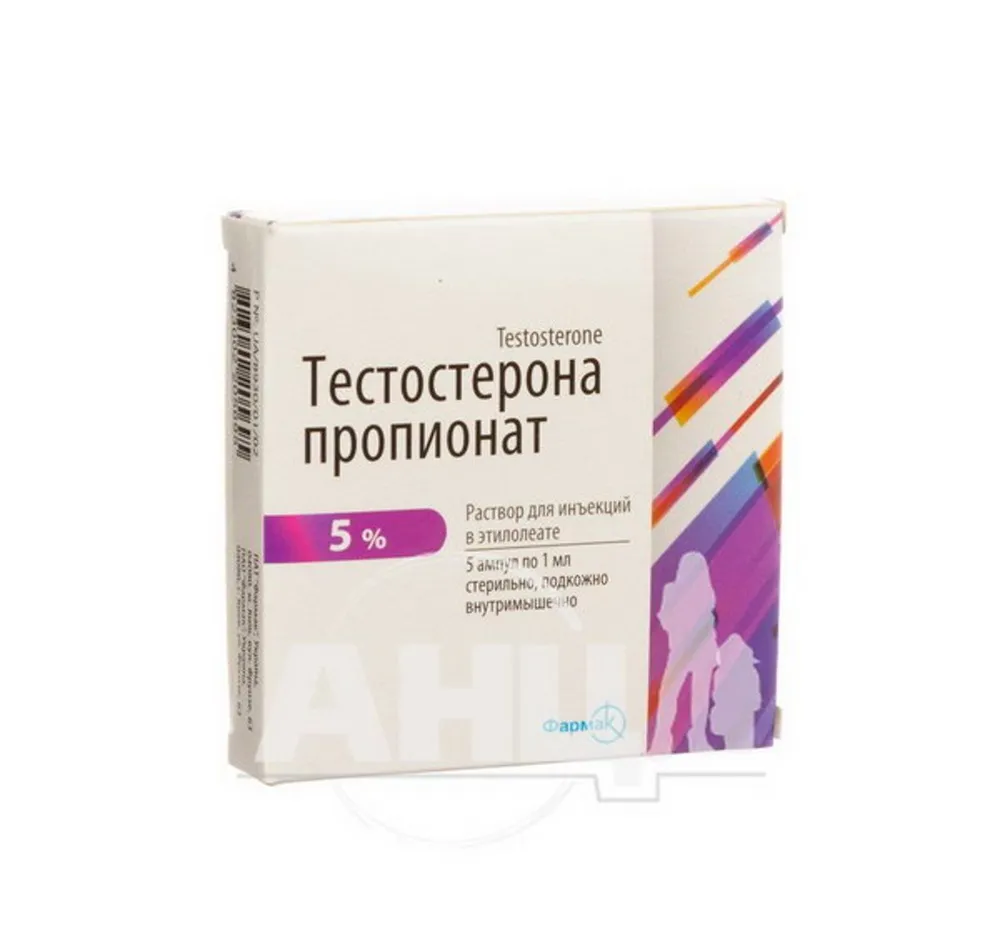
Table of Contents
INSTRUCTIONS FOR MEDICAL USE OF THE MEDICINAL PRODUCT TESTOSTERONE PROPIONATE (TESTOSTERONE PROPIONATE)
Composition:
Active ingredient: testosterone propionate;
1 ml of solution contains 50 mg of testosterone propionate, calculated as 100% substance;
Excipient: ethyl oleate.
Pharmaceutical form. Injection solution.
Main physicochemical properties: oily liquid of light green or light yellow color with a specific odor.
Pharmacotherapeutic group.
Androgens. ATC code G03BA03.
Pharmacological properties.
Pharmacodynamics.
Testosterone propionate exerts a specific androgenic effect: it stimulates the development and function of external genital organs, the prostate gland, seminal vesicles, as well as secondary sexual characteristics in males (voice, body hair). It participates in the formation of body constitution and male sexual behavior, enhances libido and potency, and stimulates spermatogenesis. It reduces the production of luteinizing hormone and follicle-stimulating hormone. Testosterone acts as an antagonist of female sex hormones—estrogens—and has an antitumor effect in breast tumors in women. It exerts an anabolic effect, manifested by stimulation of protein synthesis, reduction of fat deposition, retention in the body of potassium, phosphorus, and sulfur necessary for protein synthesis, enhanced calcium fixation in bones, and increased muscle mass. With adequate protein nutrition, it stimulates erythropoietin production.
Pharmacokinetics.
After intramuscular or subcutaneous administration, it is slowly absorbed from the injection site. Circulating testosterone reaches target organs, where it is reduced to 5-α-dihydrotestosterone, which interacts with cell membrane receptors and penetrates into the cell nucleus. Approximately 98% of the drug in blood plasma binds to proteins, primarily to globulins. It is metabolized in the liver to weakly active and inactive metabolites, which are excreted from the body in urine. About 6% of the drug is excreted unchanged in the feces.
Clinical characteristics.
Indications.
For men
Replacement therapy in primary and secondary hypogonadism, eunuchoidism; endocrine-origin impotence, post-castration syndrome, age-related androgen deficiency in men; infertility due to impaired spermatogenesis (except Sertoli-cell-only syndrome), oligospermia; osteoporosis caused by androgen deficiency.
For women
As part of complex treatment of breast cancer in postmenopausal women.
Contraindications.
Individual hypersensitivity to the drug, prostatic cancer or breast cancer in men, liver tumors, including in medical history, severe liver function disorders, hypercalcemia, hypercalciuria, untreated congestive heart failure, ischemic heart disease.
Interaction with other medicinal products and other types of interactions.
When used concomitantly with substances that are inducers of hepatic microsomal enzymes (barbiturates, rifampicin, carbamazepine, phenylbutazone, phenytoin), the effect of testosterone may be reduced. In cases of severely expressed hypogonadism, testosterone propionate can be combined with drugs stimulating thyroid gland function and estrogens. It enhances the action of anabolic agents, vitamins, and drugs containing calcium and phosphorus, and slows down the elimination of cyclosporine.
Androgens may increase glucose tolerance and reduce the need for insulin or oral antidiabetic agents in patients with diabetes mellitus.
Androgens may affect the metabolism of other medicinal products (increased serum concentrations of oxyphenbutazone have been observed). Furthermore, it has been reported that testosterone and its derivatives increase the activity of oral anticoagulants, which may require dose adjustment. Regardless of this fact, the restrictions regarding intramuscular injections should always be observed in patients with acquired or hereditary coagulation disorders.
Concomitant use of testosterone and adrenocorticotropic hormone or corticosteroids increases the risk of edema development.
Barbiturates and alcohol reduce testosterone activity.
Effect on laboratory test results
Androgens may reduce the level of thyroxine-binding globulin, thus leading to a decrease in the total thyroxine level and increased uptake of triiodothyronine and thyroxine. However, the concentration of free fractions of thyroid hormones remains unchanged. Clinical signs of impaired thyroid function are absent.
Special precautions for use.
As with all oil-based solutions, the injectable solution of testosterone propionate should be administered only intramuscularly and very slowly (over 2 minutes). Pulmonary microembolism due to oil-based solutions may rarely cause symptoms such as cough, dyspnea, malaise, hyperhidrosis, chest pain, dizziness, paresthesia, or syncope. These reactions may occur during or immediately after injection and are reversible. Therefore, patients should be monitored during and after each injection to ensure early recognition of possible symptoms of pulmonary oil microembolism. Treatment is generally supportive, for example, oxygen therapy.
Elderly patients.
Safety and efficacy data for use of the drug in patients aged 65 years and older are limited. Currently, there is no consensus regarding age-related normal testosterone levels. However, it should be considered that physiological serum testosterone levels decline with age.
Use with caution in patients with heart failure, arterial hypertension, epilepsy, migraine, or impaired renal function.
Patients with epilepsy or migraine (even in history) should be under medical supervision, as androgens may occasionally cause fluid and sodium retention.
In patients receiving androgens who achieve normal plasma testosterone levels following testosterone replacement therapy, increased insulin sensitivity may be observed.
Certain clinical symptoms such as irritability, nervousness, weight gain, or persistent or frequent erections may indicate androgen overdose and require dose adjustment.
Tumors.
Androgens may accelerate the development of subclinical prostate cancer and benign prostatic hyperplasia.
The drug should be used with caution in patients with malignancies at risk of developing hypercalcemia (and associated hypercalciuria) due to bone metastases. Regular monitoring of serum calcium levels is recommended in such patients.
Cases of benign and malignant liver tumors have been reported in individuals receiving hormonal substances, including androgenic compounds. In men undergoing treatment who develop severe upper abdominal pain, hepatomegaly, or signs of intra-abdominal hemorrhage, a possible liver tumor should be excluded during differential diagnosis.
Hepatic or renal impairment. Studies evaluating the efficacy and safety of the drug in patients with impaired liver or kidney function have not been conducted. Therefore, testosterone replacement therapy in such patients should be administered with caution.
Heart failure. Caution is required in patients predisposed to edema, for example, in cases of severe cardiac, hepatic, or renal failure or ischemic heart disease, as treatment with androgenic agents may lead to increased sodium and water retention. In cases of severe complications characterized by edema with or without congestive heart failure, treatment should be discontinued immediately (see section "Adverse reactions").
Testosterone may cause an increase in blood pressure, and testosterone propionate should be used with caution in men with arterial hypertension.
Coagulation disorders.
Conditions for intramuscular injections should be carefully observed in patients with acquired or congenital coagulation disorders.
It has been reported that testosterone and its derivatives may enhance the activity of oral anticoagulants—coumarin derivatives (see also section "Interaction with other medicinal products and other forms of interaction").
Testosterone should be used with caution in patients with thrombophilia, as thrombotic events have been observed in this patient group during post-marketing surveillance of testosterone therapy.
Due to the possible predisposition to thrombosis, the drug should be prescribed with caution to men following recent surgery or trauma.
The drug should be used with caution in patients with porphyria.
During treatment with the drug, liver and kidney function, thyroid function, and blood glucose levels should be monitored.
Before initiating therapy in men, prostate cancer must be excluded, as androgens increase the risk of prostatic hyperplasia when using the drug.
In patients receiving testosterone therapy, the condition of the prostate and mammary glands should be regularly and thoroughly examined using standard diagnostic methods—at least once a year, or twice a year in elderly patients and special patient categories (with clinical or hereditary risk factors).
In patients receiving androgens long-term, in addition to testosterone concentration, the following laboratory parameters should be monitored: hemoglobin, hematocrit (every 3 months initially, then annually), and liver function tests.
The drug should be prescribed with caution to men with sleep apnea. It has been reported that testosterone may cause or exacerbate sleep apnea. A careful clinical decision should be made and caution exercised in patients with risk factors such as obesity and chronic lung diseases.
Drug abuse or dependence. Androgens must not be used to enhance muscle development in healthy individuals or to improve physical performance.
Use during pregnancy or breastfeeding.
There are insufficient data on the use of the drug during pregnancy or breastfeeding. Considering the characteristic virilizing effect of the drug on the fetus, its use is contraindicated during pregnancy or breastfeeding. The drug should be discontinued upon diagnosis of pregnancy.
Ability to affect reaction speed when driving or operating machinery.
During treatment with the drug, patients should refrain from driving vehicles or operating machinery.
Method of Administration and Dosage.
For men with eunuchoidism, congenital underdevelopment of the sex glands, surgical removal or trauma-related loss of the glands, as well as in acromegaly, the drug should be administered intramuscularly or subcutaneously at a dose of 25–50 mg every other day or every two days. The duration of treatment depends on the therapeutic efficacy and the nature of the disease. After improvement in clinical symptoms, Testosterone propionate should be administered in maintenance doses of 5–10 mg daily or every other day. In erectile dysfunction of endocrine origin and in male climacteric accompanied by vascular and nervous disorders, Testosterone propionate should be administered at 10 mg daily or 25 mg 2–3 times per week for 1–2 months. For treatment of male infertility, the drug should be used at a dose of 10 mg twice weekly for 4–6 months or 50 mg every other day for 10 days. In pathological male climacteric, the drug should be administered at 25 mg twice weekly for 2 months, followed by a monthly break for 1–2 months.
For women, as part of combined therapy for breast cancer, the drug should be administered at 100 mg 2–3 times per week.
Children.
Safety and efficacy in children have not been established; therefore, the drug is not recommended for use in pediatric practice. Administration of testosterone to children may cause masculinization, accelerated growth and maturation of bone tissue, as well as premature closure of the epiphyseal growth plates, which may ultimately result in reduced final height.
Overdose.
When the drug is used at higher doses or for prolonged periods, adverse effects described in the relevant section may develop. In such cases, the drug should be discontinued, and after resolution of androgen-dependent adverse effects, treatment may be resumed at reduced doses. If necessary, symptomatic treatment should be administered.
Adverse reactions.
Reproductive system and breast disorders: priapism, increased sexual arousal, enhanced libido and frequent erections, gynecomastia, breast pain. With prolonged use of high doses in males, suppression of spermatogenesis and testicular atrophy may occur. Androgens in men may cause prostate hyperplasia and growth of malignant prostate tumors. In women, signs of masculinization (virilization) may occur: voice coarsening, excessive growth of facial and body hair, facial puffiness, ovarian function suppression, menstrual disorders, breast and endometrial tissue atrophy, oily skin, clitoral hypertrophy. Virilization may be irreversible even after discontinuation of testosterone.
Respiratory system disorders: respiratory disturbances, sleep apnea.
Musculoskeletal system disorders: leg pain, arthralgia, muscle cramps.
Gastrointestinal disorders: diarrhea, nausea, gastrointestinal bleeding.
Hepatobiliary disorders: increased levels of aminotransferases, liver function abnormalities, jaundice, cholestatic hepatitis. Cases of liver tumors have been reported with long-term use of high doses.
Blood and lymphatic system disorders: isolated cases of polycythemia, thrombosis tendency, elevated hematocrit, suppression of blood coagulation factors.
Skin and subcutaneous tissue disorders: various skin reactions including acne, seborrhea, alopecia, pruritus.
Metabolic and nutritional disorders: weight gain, hypercalcemia, glucose metabolism disturbances, increased levels of low-density lipoproteins, decreased levels of high-density lipoproteins.
Neurological disorders: dizziness, increased sweating, headache, nervousness, depression.
General disorders and administration site conditions: injection site pain, subcutaneous hematoma at injection site. Prolonged treatment with testosterone propionate or its use in high doses may sometimes lead to increased incidence of fluid retention and edema. Hypersensitivity reactions, including fever, chills, and hot flushes, may occur.
Shelf life. 2 years.
Do not use the medication after the expiry date stated on the package.
Storage conditions.
Store in the original packaging at a temperature not exceeding 25 °C.
Keep out of reach of children.
Packaging. 1 ml in an ampoule. 5 or 10 ampoules per pack. 5 ampoules in a blister. 1 or 2 blisters per pack.
Prescription status. Prescription only.
Manufacturer. JSC "Farmak".
Manufacturer's address and place of business.
74, Kyrylivska Street, Kyiv, 04080, Ukraine.