Terizidon
Ukraine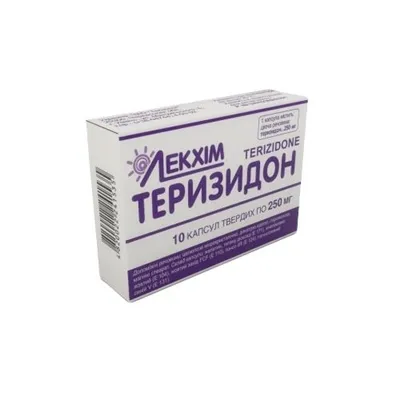
Table of Contents
INSTRUCTIONS FOR MEDICAL USE OF THE MEDICINAL PRODUCT THERIZIDONE (TERIZIDONE)
Composition:
Active substance: therizidone;
1 capsule contains therizidone 250 mg;
Excipients: lactose monohydrate, copovidone, talc, magnesium stearate;
Capsule shell composition: gelatin, titanium dioxide (E 171), quinoline yellow (E 104), yellow FCF (E 110), Ponceau 4R (E 124), patent blue V (E 131).
Dosage form. Hard capsules.
Main physicochemical properties: green, cylindrical, hard gelatin capsules. The capsules are filled with granular powder ranging from white to yellowish-white.
Pharmacotherapeutic group.
Antibacterials for systemic use. Drugs acting on mycobacteria. Antituberculosis agents. Other antituberculosis drugs. Therizidone.
ATC code J04AK03.
Pharmacological properties.
Pharmacodynamics.
Mechanism of action
Terizidone is a Schiff base composed of two molecules of D-cycloserine and one molecule of terephthalaldehyde. Terizidone is hydrolyzed in vivo to D-cycloserine.
The mechanism of action of cycloserine is based on disruption of bacterial cell wall synthesis through inhibition of alanine racemase and D-alanyl-D-alanine synthetase. This is competitive inhibition.
Terizidone is a bacteriostatic chemotherapeutic agent for oral administration. Terizidone is effective against Mycobacterium tuberculosis. Although several in vitro studies suggest susceptibility of other bacterial species to terizidone, there is insufficient data and clinical experience regarding the efficacy of the drug in treating these infections. Therefore, the use of terizidone should be restricted to the treatment of pulmonary and extrapulmonary tuberculosis caused by Mycobacterium tuberculosis.
Mechanism of resistance
Based on structural similarity (terizidone is a prodrug of the active substance cycloserine), it can be assumed that the resistance mechanism described for cycloserine also applies to terizidone.
Regarding resistance to D-cycloserine, reduced cellular permeability and mutations in genes encoding D-alanine racemase and D-alanyl-D-alanine synthetase have been described. There is complete cross-resistance to cycloserine. There is no cross-resistance with cycloserine or with other anti-tuberculosis drugs.
The prevalence of acquired resistance may vary locally and over time. Therefore, local information on resistance patterns is necessary, particularly for adequate treatment of severe infections.
When selecting combination drugs for tuberculosis treatment, the choice should depend on the results of susceptibility testing. Terizidone should only be used if susceptibility of the causative agent has been confirmed. The same applies to combination drugs used in each individual case. If empirical initiation of therapy with terizidone is absolutely necessary, susceptibility testing should be performed in parallel at the beginning of treatment. If susceptibility testing cannot be performed (e.g., due to inability to isolate the pathogen) and if the efficacy of terizidone is questionable due to local resistance patterns, consultation with a physician is recommended.
Strains susceptible to terizidone:
Aerobic Gram-positive microorganisms
Mycobacterium tuberculosis.
Resistant species:
Mycobacterium bovis ssp., Bacillus Calmette-Guérin (BCG)*
*Test for resistance to cycloserine.
In an in vitro study of Mycobacterium tuberculosis isolates obtained from patients in Germany with various resistance patterns (3 strains monoresistant to isoniazid, 1 strain monoresistant to rifampicin, 31 strains resistant to both isoniazid and rifampicin [multidrug-resistant, including 2 with Beijing genotype and 5 with Latin American genotypes]), all strains tested against terizidone were found to be susceptible. The minimal inhibitory concentration on Lowenstein-Jensen medium was 20 µg/mL.
A study of 261 isolates in 2002 showed a resistance rate to cycloserine of 0.8%.
A study of 212 multidrug-resistant Mycobacterium tuberculosis strains from Germany (2003–May 2005) showed a resistance rate to cycloserine of 2.4%.
In another study, 184 multidrug-resistant strains isolated in Germany between 2004 and 2006 were tested for resistance. Of these isolates, 9 (=5%) were found to be resistant to cycloserine.
Pharmacokinetics.
Terizidone is a prodrug, hydrolyzed to cycloserine after oral administration.
Absorption
After oral administration, terizidone is rapidly and completely absorbed from the gastrointestinal tract. In healthy subjects, peak serum levels of 1.78–6.44 µg cycloserine/mL were reached within 0.5–5 hours (mean 1.5 hours) after a single 250 mg oral dose of terizidone. After repeated administration of 250 mg terizidone three times daily, maximum cycloserine concentrations ranged between 6.2 and 12.7 µg cycloserine/mL (mean serum concentration 9 µg cycloserine/mL) over a 24-hour period.
Terizidone is likely hydrolyzed in the gastrointestinal tract as well as systemically, releasing D-cycloserine and terephthalaldehyde. Orange juice and antacids have minimal effect on the pharmacokinetics of cycloserine, whereas a very high-fat meal delays absorption. A similar effect can be expected for terizidone.
Distribution
Terizidone (prodrug) is hydrolyzed to D-cycloserine. The volume of distribution of cycloserine after a single 500 mg dose of terizidone was 112.6 L. Cycloserine is widely distributed into tissues and fluids, including cerebrospinal fluid and breast milk. Cycloserine crosses the placenta, resulting in fetal blood concentrations similar to maternal blood concentrations. Cycloserine concentration in breast milk ranges from 6 to 19 µg/mL. The ratio of concentrations in breast milk to plasma is 0.67–0.75. Cycloserine does not bind to serum proteins.
Biological transformation
No specific studies on the metabolism of terizidone have been conducted. It is likely that terizidone is hydrolyzed in the gastrointestinal tract and systemically, releasing D-cycloserine and terephthalaldehyde. Terephthalaldehyde has been shown not to be antibacterial active in vivo. Approximately 35% of cycloserine is converted into unidentified metabolites.
Elimination
Elimination of terizidone follows first-order kinetics. In healthy volunteers, cycloserine was eliminated after repeated administration of 250 mg terizidone three times daily with a half-life of 16 hours. Approximately 30% of the daily dose of terizidone was excreted in urine as cycloserine. Renal clearance was approximately 20 mL/min. Cycloserine is known to be primarily eliminated via the kidneys by glomerular filtration. Small amounts of cycloserine are excreted in feces.
Pharmacokinetics in special patient populations
Elderly patients
Elimination of terizidone occurs more slowly than in younger patients.
Patients with impaired renal function
The elimination half-life of terizidone is prolonged.
Dialysis
Terizidone or cycloserine can be removed by hemodialysis and peritoneal dialysis. There is insufficient evidence to confirm that terizidone remains clinically effective during continuous dialysis modalities (continuous peritoneal dialysis; continuous ambulatory peritoneal dialysis (CAPD)).
Clinical characteristics.
Indications.
Terezidon is indicated in adults as part of combination antituberculosis therapy for the treatment of tuberculosis caused by Mycobacterium tuberculosis.
Terezidon should only be used in cases of resistance of Mycobacterium tuberculosis to primary antituberculosis agents and when other antituberculosis therapies have proven ineffective.
When using Terezidon, official recommendations regarding the appropriate use of antibacterial agents must be followed.
Contraindications.
- Psychiatric disorders (depression, pronounced states of excitement, psychosis).
- Hypersensitivity to Terezidon and/or cycloserine or to any of the excipients of the medicinal product.
- Severe renal insufficiency (serum creatinine above 2 mg/dL).
- Marked cerebral sclerosis (severe calcification with impaired cerebral circulation).
- Epilepsy.
- Alcoholism.
- Infections with Mycobacterium bovis BCG.
Interaction with other medicinal products and other forms of interaction.
Ethionamide. Concomitant use of ethionamide potentiates the neurotoxic effects of Terezidon. Monitoring for adverse effects on the central nervous system is required.
Prothionamide. Concomitant use of prothionamide increases the risk of central nervous system adverse effects of Terezidon. Monitoring for adverse effects on the central nervous system is required.
Anticoagulants. Cumarin enhances the effectiveness of oral anticoagulants; therefore, adverse effects and efficacy of anticoagulants should be monitored, and anticoagulant doses adjusted as necessary.
Muscle relaxants. Adverse effects of succinylcholine should be monitored; dose adjustment of suxamethonium is not mandatory.
Vitamin B6 reduces the toxic effects on the central nervous system.
Isoniazid. Patients receiving Terezidon and isoniazid should be under medical supervision, as this combination may enhance toxic effects on the central nervous system (dizziness, drowsiness, increased risk of seizures), and dose adjustment may be required.
Antiepileptic agents. When used concomitantly with phenytoin, an increased blood level of phenytoin may occur; phenytoin dosage should be adjusted as necessary.
Alcohol. Due to delayed elimination of Terezidon/cycloserine, concomitant alcohol consumption may increase the risk of central nervous system disturbances; therefore, alcohol should be avoided during Terezidon therapy.
Caffeine. There is information suggesting that concomitant use of Terezidon and caffeine may increase the risk of nervous system adverse effects. In the absence of sufficient evidence, caffeine and Terezidon should be used concomitantly with caution. Also, consumption of beverages or stimulants containing very high levels of caffeine should be avoided.
Special precautions for use.
Patients should be monitored during both inpatient and outpatient therapy due to the possibility of developing psychological and nervous system adverse effects.
Treatment with terizidone must be discontinued or the dosage reduced in case of allergic reactions or symptoms of nervous system involvement. Poisoning may occur if the drug concentration in blood exceeds 30 mg/L, which may result from overdose or impaired drug clearance. The therapeutic index of this medicinal product is low.
During treatment, hematological parameters, renal excretory function, blood drug levels, liver function, and neurological status should be monitored. In case of insomnia, low doses of tranquilizers are recommended.
Prior to initiating treatment, microbial culture should be isolated and strain sensitivity to terizidone determined. In case of tuberculosis infection, strain sensitivity to other antituberculosis agents should also be assessed.
During treatment of patients with impaired renal function who are receiving a daily dose exceeding 500 mg and who exhibit symptoms of overdose, terizidone blood levels should be monitored at least once weekly. The dose should be adjusted so that the maintenance drug concentration in blood remains below 30 mg/L.
Anticonvulsant and sedative drugs may be effective in preventing symptoms of central nervous system involvement, such as seizures, agitation, and tremor.
Patients receiving more than 500 mg of terizidone per day should be under medical supervision due to the risk of overdose symptoms.
To prevent adverse neurotoxic effects, benzodiazepine psychotropic agents should be prescribed: diazepam (5 mg) or phenazepam (1 mg) at night; nootropic agents: piracetam (800 mg twice daily), pyridoxine (50 mg pyridoxine per 250 mg terizidone), and glutamic acid (1 g three times daily).
In some cases, use of terizidone and other antituberculosis drugs may lead to vitamin B12 or folic acid deficiency, megaloblastic, and sideroblastic anemia. If anemia develops during antituberculosis therapy, the physician should examine the patient and initiate appropriate treatment.
In case of outpatient treatment and occurrence of depression or behavioral changes in patients, relatives should immediately notify the physician.
Patients with rare hereditary fructose intolerance, glucose-galactose malabsorption syndrome, or deficiencies of sucrase or isomaltase enzymes must not take this drug.
The capsule contains the colorants Yellow West FCF (E 110) and Ponceau 4R (E 124), which may cause allergic reactions.
Use during pregnancy or breastfeeding.
Pregnancy
It is unknown whether terizidone crosses the placenta. However, since terizidone is hydrolyzed to cycloserine, it can be expected that after administration, corresponding amounts of cycloserine pass through the placenta and enter the embryonic circulation.
There is almost no experience with the use of cycloserine and terizidone in pregnant women. Animal studies have not indicated any direct or indirect harmful effects on reproductive toxicity. Terizidone is not recommended during pregnancy due to adverse effects on the central nervous system. Terizidone may be prescribed to pregnant women under medical supervision only if the expected benefit to the mother outweighs the potential risk to the fetus.
Lactation
It is unknown whether terizidone is excreted in breast milk. However, since terizidone is hydrolyzed to cycloserine, it can be expected that after administration, corresponding amounts of cycloserine are excreted into breast milk.
The risk of sensitization, diarrhea, and mucosal candidiasis in breastfed infants cannot be excluded.
A decision should be made whether to discontinue breastfeeding or to stop terizidone therapy. The benefits of breastfeeding for the child and the benefits of therapy for the mother should both be taken into account.
Fertility
There are no data on the effect of terizidone on fertility.
Ability to affect reaction speed when driving or operating machinery.
The drug may cause adverse reactions affecting the central nervous system; therefore, patients should refrain from driving vehicles or operating complex machinery while taking this medication.
Method of Administration and Dosage
Take capsules during meals, swallowing them whole with plenty of liquid, at regular intervals (every 6 or 8 hours). The adult dose is 250 mg (1 capsule) 3–4 times daily. The dose may be gradually increased.
The maximum daily dose should not exceed 1000 mg (4 capsules).
The duration of terizidone treatment in combination therapy with other anti-mycobacterial agents depends on the clinical course, including the duration and severity of the disease, as well as the treatment regimen based on drug susceptibility testing. The treatment duration usually lasts 18–24 months after conversion.
Dosing in patients with renal impairment
For patients with renal impairment (creatinine clearance less than 30 mL/min), administer 250 mg (1 capsule) once daily or 500 mg (2 capsules) three times weekly, for example, on Monday, Wednesday, and Friday.
Dosing in elderly patients
For patients aged 60 years and older with body weight less than 60 kg, administer 250 mg twice daily.
Children
The safety and efficacy of terizidone in children are unknown; therefore, the drug is not recommended for use in pediatric patients.
Overdose
Symptoms. Acute poisoning may occur if an adult patient ingests more than 1 g of the drug. Chronic toxicity depends on the dosage and may develop if more than 500 mg of the drug is administered daily. If administration in patients with impaired renal function is necessary, see sections "Contraindications" and "Special Warnings".
Toxic effects usually manifest in the central nervous system: headache, dizziness, confusion, excitability, paresthesia, dysarthria, psychosis, paresis, tremor, seizures, and coma. When high doses are taken, manifestations of other adverse reactions may be intensified. Ethanol increases the risk of epileptic seizures.
Treatment. In case of overdose, in addition to discontinuing the drug, measures to inhibit absorption and enhance elimination may be required. Symptomatic and supportive therapy is recommended. Activated charcoal is more effective in reducing drug absorption than gastric lavage. In case of neurotoxic effects, administer 200–300 mg of pyridoxine daily. Terizidone is removed from the blood during hemodialysis, but the development of potentially life-threatening toxic effects cannot be excluded.
Adverse reactions.
The adverse reactions listed below are classified by organ systems and by frequency of occurrence: very common (≥1/10), common (≥1/100 to <1/10), uncommon (≥1/1,000 to <1/100), rare (≥1/10,000 to <1/1,000), very rare (<1/10,000).
Central nervous system: common: headache, dizziness, excitability, tremor, insomnia, and feeling of intoxication; rare: epileptic seizures and psychiatric reactions of depressive and manic type, anxiety attacks.
Gastrointestinal disorders: rare: nausea, abdominal pain, flatulence, gastric disturbances, diarrhea, constipation.
Since terizidone is hydrolyzed to cycloserine, adverse reactions associated with cycloserine use may also be expected.
Hepatobiliary disorders: liver function abnormalities, increased levels of hepatic aminotransferases, particularly in patients with pre-existing liver disease.
Blood and lymphatic system disorders: anemia, including megaloblastic and sideroblastic anemia.
Cardiac disorders: congestive heart failure.
Immune system disorders: Stevens-Johnson syndrome, rash, hypersensitivity reactions.
Nervous system disorders: coma, tremor, dysarthria, hyperreflexia, visual disturbances, excitability, nervousness, paresis, epileptoid seizures without epileptiform activity, and encephalopathy.
Psychiatric disorders: paranoia, catatonia, confusion and disorientation with memory loss, psychosis (possibly with suicidal tendencies), mood changes, behavioral changes, mania, depression, increased irritability, aggression.
Reporting suspected adverse reactions
Reporting of suspected adverse reactions following administration of the medicinal product is important. It allows continuous monitoring of the benefit-risk balance of the medicinal product. Healthcare professionals should report any suspected adverse reactions.
Shelf life: 2 years.
Storage conditions.
Store in the original packaging at a temperature not exceeding 30°C. Keep out of reach of children.
Packaging.
10 capsules in a blister; 1 blister per cardboard pack.
Prescription status.
Prescription only.
Manufacturer.
JSC "Tekhnolohiya".
Manufacturer's address and place of business.
8, Stara Prorizna Street, Uman, Cherkasy region, 20300, Ukraine.