Teraliv
Ukraine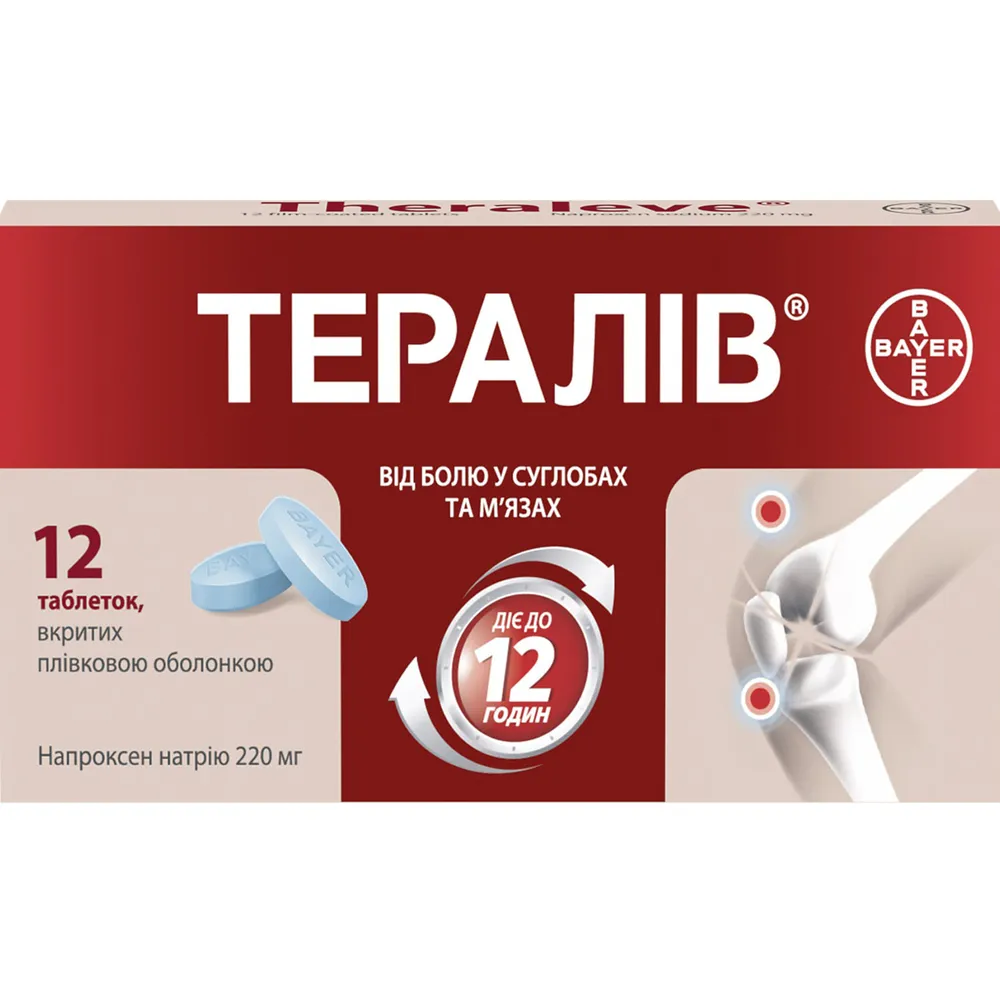
Table of Contents
INSTRUCTIONS FOR MEDICAL USE OF THE MEDICINAL PRODUCT THERALEVEâ (THERALEVEâ)
Composition:
Active substance: sodium naproxen;
1 tablet contains 220 mg of sodium naproxen;
Excipients: microcrystalline cellulose, povidone K30, talc, magnesium stearate;
Tablet coating: Opadry blue YS-1-4215 (hydroxypropylmethylcellulose, titanium dioxide (E 171), polyethylene glycol 8000, FD&C Blue No 2 (indigo carmine (E 132)), aluminum lake).
Pharmaceutical form. Film-coated tablets.
Main physicochemical properties: oval, biconvex, film-coated tablets of light blue color, with "BAYER" embossed on one side.
Pharmacotherapeutic group.
Non-steroidal anti-inflammatory and antirheumatic drugs. Propionic acid derivatives. Naproxen. ATC code M01AE02.
Pharmacological Properties.
Pharmacodynamics.
Exerts analgesic, antipyretic, and anti-inflammatory effects. Duration of action – up to 12 hours.
Naproxen is a non-selective inhibitor of COX, whose mechanism of action involves inhibition of the COX-1 and COX-2 enzymes. Naproxen inhibits COX-1-dependent thromboxane synthase A2 (TXA2), leading to reduced platelet aggregation, and COX-2-dependent prostacyclin (PGI2), the main mediator of vasodilation. Naproxen inhibits prostaglandin synthesis, which explains its analgesic and antipyretic effects.
Pharmacokinetics.
Absorption. Sodium naproxen is rapidly and almost completely absorbed in the gastrointestinal tract. After oral administration, maximum concentration of the active substance is reached within one hour. Concomitant food intake may slow the absorption of sodium naproxen, but does not affect the extent of absorption.
Distribution. The volume of distribution of naproxen is 0.16 L/kg. Over 99% of the active substance is bound to serum albumin. With doses exceeding 500 mg/day, plasma concentration increases are no longer proportional due to saturation of protein binding, resulting in increased clearance at higher doses. Despite this, the increase in unbound naproxen levels remains proportional to the administered dose.
Naproxen penetrates into synovial fluid, crosses the placental barrier, and is detected in breast milk of lactating women at concentrations corresponding to approximately 1% of plasma concentrations.
Metabolism. Naproxen is metabolized in the liver, primarily to 6-O-desmethyl-naproxen.
Excretion. Approximately 95% of the administered dose is excreted in urine (as unchanged naproxen, inactive 6-O-desmethyl-naproxen, or conjugates). A small amount (≤ 3%) is excreted in feces.
The clearance of naproxen is 0.13 mL/min/kg. The elimination half-life from plasma is approximately 14 hours.
Pharmacokinetics in special patient groups
Hepatic impairment. In patients with significantly impaired liver function, plasma concentrations of unbound naproxen may increase.
Renal impairment. In renal insufficiency, accumulation of naproxen and its metabolites is possible, as they are primarily excreted by the kidneys. Elimination of naproxen is reduced in patients with significantly impaired renal function.
Clinical characteristics.
Indications.
Short-term symptomatic treatment of pain:
- in the back;
- in joints and muscles;
- post-traumatic pain;
- menstrual pain;
- dental pain;
- headache.
As well as for reduction of fever in influenza and colds.
Contraindications.
Hypersensitivity to the active substance or to any of the excipients of the medicinal product.
History of bronchospasm, urticaria, or allergy-like symptoms after taking acetylsalicylic acid or other nonsteroidal anti-inflammatory drugs (NSAIDs).
Third trimester of pregnancy (see section "Use during pregnancy or breastfeeding").
Active peptic ulcer or gastrointestinal bleeding.
Inflammatory bowel diseases (e.g., Crohn’s disease, ulcerative colitis).
Severe hepatic impairment (liver cirrhosis and ascites).
Severe renal impairment (creatinine clearance < 30 mL/min).
Severe heart failure (NYHA class III–IV).
Treatment of postoperative pain following coronary artery bypass grafting (CABG) (or use of cardiopulmonary bypass).
Interaction with other medicinal products and other forms of interaction.
Concomitant administration with antacids or cholestyramine, as well as with food, may slow the absorption of naproxen but does not affect the extent of absorption.
Due to the high degree of naproxen binding to plasma albumins, interaction with other drugs that bind to albumin is theoretically possible, such as coumarin anticoagulants, sulfonylurea derivatives, hydantoins, other NSAIDs, and acetylsalicylic acid. When treating patients concomitantly with hydantoins (phenytoin), sulfonamides, or sulfonylurea derivatives, careful monitoring of the patient is required due to the potential need for dose adjustment.
Clinical studies have not demonstrated interactions between naproxen and anticoagulants or sulfonylurea derivatives. Nevertheless, caution should be exercised when used concomitantly, as interactions have been observed with other drugs in this class.
Naproxen may delay the irreversible inhibition of ADP-induced platelet aggregation. Pharmacodynamic data indicate that the effect of low-dose acetylsalicylic acid on platelet activity is inhibited when naproxen is administered concomitantly with low-dose acetylsalicylic acid for more than one day. This effect may persist for several days after discontinuation of naproxen. The clinical significance of this interaction is unknown. Treatment with naproxen may interfere with the cardiovascular protection provided by acetylsalicylic acid in patients at risk of cardiovascular disease.
Concomitant use with probenecid increases the blood level and prolongs the biological half-life of naproxen.
Naproxen and methotrexate should be used cautiously together, as naproxen and certain other NSAIDs have been shown in animal models to reduce tubular secretion of methotrexate, which may potentially enhance their toxicity.
In addition, naproxen may reduce the antihypertensive effect of beta-blockers.
There is evidence that some drugs in this class inhibit the natriuretic effect of furosemide.
Inhibition of renal clearance of lithium has also been reported, leading to increased plasma lithium concentrations.
Effect on laboratory test results
Since naproxen may affect certain tests for the determination of 17-ketosteroids, treatment should be discontinued 48 hours before performing adrenal function tests. Naproxen may also affect the determination of 5-hydroxyindoleacetic acid in urine.
Naproxen causes reversible inhibition of platelet aggregation and prolongs bleeding time. This effect should be taken into account when measuring bleeding time.
Special precautions for use.
General warnings regarding the use of systemic nonsteroidal anti-inflammatory drugs
Gastrointestinal ulcers, bleeding, or perforation may occur at any time during treatment with NSAIDs, regardless of COX-2 selectivity, even in the absence of prior symptoms or relevant medical history. To minimize this risk, treatment should be initiated using the lowest effective dose for the shortest duration possible.
Results from placebo-controlled studies have shown an increased risk of thrombotic cardiovascular and cerebrovascular complications with the use of certain COX-2 selective inhibitors. It is currently unknown whether this risk is directly related to the COX-1/COX-2 selectivity of individual NSAIDs. There are no data from comparative clinical studies on the use of maximum doses or long-term naproxen therapy; therefore, the possibility of a similarly increased risk cannot be excluded. Until such data become available, the benefit-risk ratio should be carefully evaluated before prescribing naproxen to patients with clinically confirmed ischemic heart disease, cerebrovascular disorders, peripheral arterial occlusive diseases, or significant risk factors (e.g., arterial hypertension, hyperlipidemia, diabetes mellitus, smoking). Therefore, the lowest effective dose should be used for the shortest treatment duration.
Renal effects of NSAIDs include fluid retention with edema and/or arterial hypertension. Naproxen should therefore be used cautiously in patients with heart failure and other conditions leading to fluid retention. Caution is also required in patients receiving diuretics or angiotensin-converting enzyme (ACE) inhibitors, and in patients at increased risk of hypovolemia.
Naproxen should be used with caution or only under medical supervision in the following cases:
- Elderly patients require special caution for general medical reasons. In elderly patients, the unbound plasma concentration of naproxen is increased, while the total concentration remains unchanged; the lowest effective dose is recommended for frail elderly patients or those with low body weight;
- In patients with current or past history of bronchial asthma, naproxen may induce bronchospasm;
- In case of renal impairment;
- In case of heart failure;
- In case of hepatic dysfunction or hepatic insufficiency.
Hematological effects
Like other NSAIDs, naproxen may reduce platelet aggregation and prolong bleeding time.
This effect should be considered when assessing bleeding duration. Patients with coagulation disorders or those receiving medications that negatively affect hemostasis should be closely monitored during treatment with naproxen-containing products. In patients at high risk of bleeding and in those fully anticoagulated (e.g., with dicoumarol derivatives), concomitant use of naproxen-containing products may increase the risk of bleeding.
Renal effects
Caution is advised in patients whose conditions lead to reduced blood volume and/or renal blood flow, in whom renal prostaglandins play a supportive role in maintaining renal perfusion. In such patients, the use of naproxen-containing products and other NSAIDs may cause dose-dependent reduction in renal prostaglandin synthesis and may lead to renal function decompensation or renal failure. The highest risk of such reactions occurs in patients with impaired renal function, hypovolemia, heart failure, hepatic dysfunction, or salt depletion syndrome, in patients receiving diuretic or ACE inhibitor therapy, and in elderly patients. Naproxen-containing products should be used with increased caution in these patients, and monitoring of serum creatinine levels and/or creatinine clearance is recommended. To prevent excessive accumulation of naproxen metabolites in such patients, dose reduction should be considered.
Naproxen is not recommended for patients whose baseline creatinine clearance is less than 20 ml/min, as accumulation of naproxen metabolites has been observed in such cases.
Due to the high degree of protein binding of naproxen, its plasma concentration is not significantly reduced by hemodialysis.
Cutaneous effects
Photosensitivity reactions may rarely occur. Therefore, exposure to sunlight (UV radiation) should be minimized during naproxen treatment.
Stevens-Johnson syndrome (SJS), toxic epidermal necrolysis (TEN), and drug reaction with eosinophilia and systemic symptoms (DRESS), which may be life-threatening or fatal, have been reported in the post-marketing period in association with naproxen use. If signs or symptoms suggesting these reactions occur, the drug should be discontinued immediately. If a patient develops SJS, TEN, or DRESS during naproxen treatment, re-administration is contraindicated and treatment must be permanently discontinued.
Use during pregnancy or breastfeeding.
Pregnancy.
Inhibition of prostaglandin synthesis may adversely affect pregnancy and/or embryonic/fetal development. Epidemiological studies indicate an increased risk of miscarriage and congenital heart defects and gastroschisis following the use of prostaglandin synthesis inhibitors during early pregnancy. This risk is considered to increase with dose and duration of treatment.
Animal studies have shown that prostaglandin synthesis inhibitors increase pre- and post-implantation loss and embryo/fetal mortality. Increased incidence of various developmental abnormalities, including cardiovascular malformations, has been reported in animals treated with prostaglandin synthesis inhibitors during organogenesis.
Oral administration of naproxen at a dose of 20 mg/kg/day during organogenesis in rats and rabbits did not show teratogenic effects (i.e., did not cause fetal malformations).
Starting from the 20th week of pregnancy, the use of the drug may cause oligohydramnios due to fetal renal dysfunction. This may occur soon after initiation of treatment and is usually reversible upon discontinuation. Additionally, cases of fetal ductus arteriosus constriction have been reported after second-trimester use, most of which resolved after treatment cessation. Therefore, naproxen should be used during the first and second trimesters only if clearly necessary. When naproxen is used in women planning pregnancy or during the first or second trimester, the dose should be as low as possible and the duration of treatment as short as possible. Prenatal monitoring for oligohydramnios and ductus arteriosus constriction should be considered after exposure of several days starting from the 20th week of gestation. Treatment should be discontinued if oligohydramnios or ductus arteriosus constriction is detected.
Naproxen is contraindicated during the third trimester of pregnancy. All prostaglandin synthesis inhibitors may affect the fetus, leading to:
- cardiopulmonary toxicity (with premature constriction/closure of the ductus arteriosus and pulmonary hypertension);
- impaired renal function, including renal failure with oligohydramnios.
In the mother and newborn, they may cause prolonged bleeding time (due to inhibition of platelet aggregation, which may occur even at very low doses); and inhibition of uterine contractions, potentially leading to delayed or prolonged labor.
Breastfeeding .
NSAIDs are excreted in breast milk. Therefore, as a precautionary measure, naproxen should not be used during breastfeeding. If treatment is necessary, the infant should be switched to artificial feeding.
Fertility .
Oral administration of naproxen at doses of 30 mg/kg/day in male rats and 20 mg/kg/day in female rats showed no adverse effects on fertility. However, naproxen may affect female fertility and is therefore not recommended for women attempting to conceive. Discontinuation of naproxen should be considered in women experiencing difficulty conceiving or undergoing infertility evaluation.
Ability to affect reaction speed when driving or operating machinery.
Naproxen may affect reaction speed. This should be taken into account when driving vehicles or operating machinery (see section "Adverse reactions").
Dosage and Administration
Film-coated tablets should be taken whole, without chewing, and swallowed with sufficient amount of water.
Adults and adolescents aged 16 years and older: 1 film-coated tablet every 8–12 hours.
If necessary, the initial dose may be 2 film-coated tablets, followed by an additional 1 film-coated tablet as needed after 12 hours.
Do not exceed the recommended dose: 3 tablets of naproxen sodium (660 mg) per day. The duration of use should not exceed 3 days. If longer use is required, consult a physician.
Elderly patients (over 65 years of age).
Unless otherwise directed by a physician, no more than 2 film-coated tablets per day should be taken.
Children. Naproxen is not intended for use in children and adolescents under 16 years of age.
Overdose.
Overdose of naproxen may result in dizziness, drowsiness, abdominal pain, stomach discomfort, digestive disturbances, nausea, transient liver function impairment, hypoprothrombinemia, kidney function impairment, metabolic acidosis, apnea, disorientation, or vomiting. Since naproxen may be rapidly absorbed, high blood levels of the active substance may occur shortly after ingestion. Seizures have been reported in some patients, although it is unclear whether they are directly related to naproxen.
If a patient has accidentally or intentionally ingested a large amount of naproxen-containing medication, gastric lavage should be performed and other supportive measures initiated. Animal studies indicate that administration (within 15 minutes) of 50–100 g of activated charcoal as a liquid slurry within 2 hours after overdose may significantly reduce drug absorption.
Due to the high degree of protein binding of naproxen, its plasma concentration is not significantly reduced by hemodialysis.
Adverse reactions.
The adverse reactions listed below have been observed during the use of naproxen.
Frequency of adverse reactions: very common (>1/10), common (>1/100, <1/10), uncommon (>1/1000, <1/100), rare (>1/10000, <1/1000), very rare (<1/10000), frequency not known.
| Classes/Organ Systems |
Frequency |
Adverse Reactions |
| Blood and lymphatic system |
Very rare |
Leukopenia, thrombocytopenia, agranulocytosis, aplastic anemia, eosinophilia, hemolytic anemia |
| Immune system |
Very rare |
Anaphylaxis, anaphylactoid reactions, angioedema |
| Psychiatric disorders |
Very rare |
Psychotic symptoms, depression, sleep disturbances |
| Nervous system |
Common Very rare |
Headache, dizziness, somnolence, fatigue. Aseptic meningitis, cognitive impairment, seizures |
| Eye organs |
Very rare |
Visual disturbances, corneal opacity, papillitis, retrobulbar neuritis, optic disc edema |
| Ear and labyrinth disorders |
Uncommon Very rare |
Vertigo Hearing disorders, tinnitus |
| Cardiovascular system |
Very rare |
Heart failure, hypertension, pulmonary edema, vasculitis |
| Respiratory system |
Uncommon Very rare |
Dyspnea, asthma Eosinophilic pneumonia |
| Gastrointestinal disorders |
Common Uncommon Rare Very rare |
Dyspepsia, nausea, heartburn, abdominal pain Diarrhea, constipation, vomiting Peptic ulcers with or without bleeding/perforation, gastrointestinal hemorrhage, hematemesis, melena Pancreatitis, colitis, aphthae, stomatitis, esophagitis, intestinal ulceration |
| Liver and biliary system |
Very rare |
Hepatitis, jaundice |
| Skin and subcutaneous tissue disorders |
Uncommon Very rare Frequency unknown |
Exanthema (rash), pruritus, urticaria Alopecia (in most cases reversible), porphyria, exudative multiform erythema, epidermal necrolysis, nodular erythema, drug-induced exanthema, lichen planus, pustular reactions, systemic lupus erythematosus, photosensitivity reactions including cases resembling Porphyria cutanea tarda ("pseudoporphyria") or bullous epidermolysis Drug-induced eosinophilia with systemic symptoms (DRESS) (see section "Special precautions"), fixed drug eruption |
| Renal and urinary system |
Uncommon Very rare |
Renal dysfunction, edema Interstitial nephritis, papillary necrosis, nephrotic syndrome, acute renal failure |
| General disorders |
Rare |
Increased body temperature |
Shelf life. 3 years.
Storage conditions.
Store in the original packaging at a temperature not exceeding 25 °C.
Keep out of reach and sight of children.
Packaging.
12 tablets in a blister; 1 blister in a cardboard box.
Supply category. Over-the-counter.
Manufacturer.
Bayer Bitterfeld GmbH.
Manufacturer's address.
Ortsteil Greppin, Salegaster Chaussee 1, 06803 Bitterfeld-Wolfen, Germany.