Tenochek®
Ukraine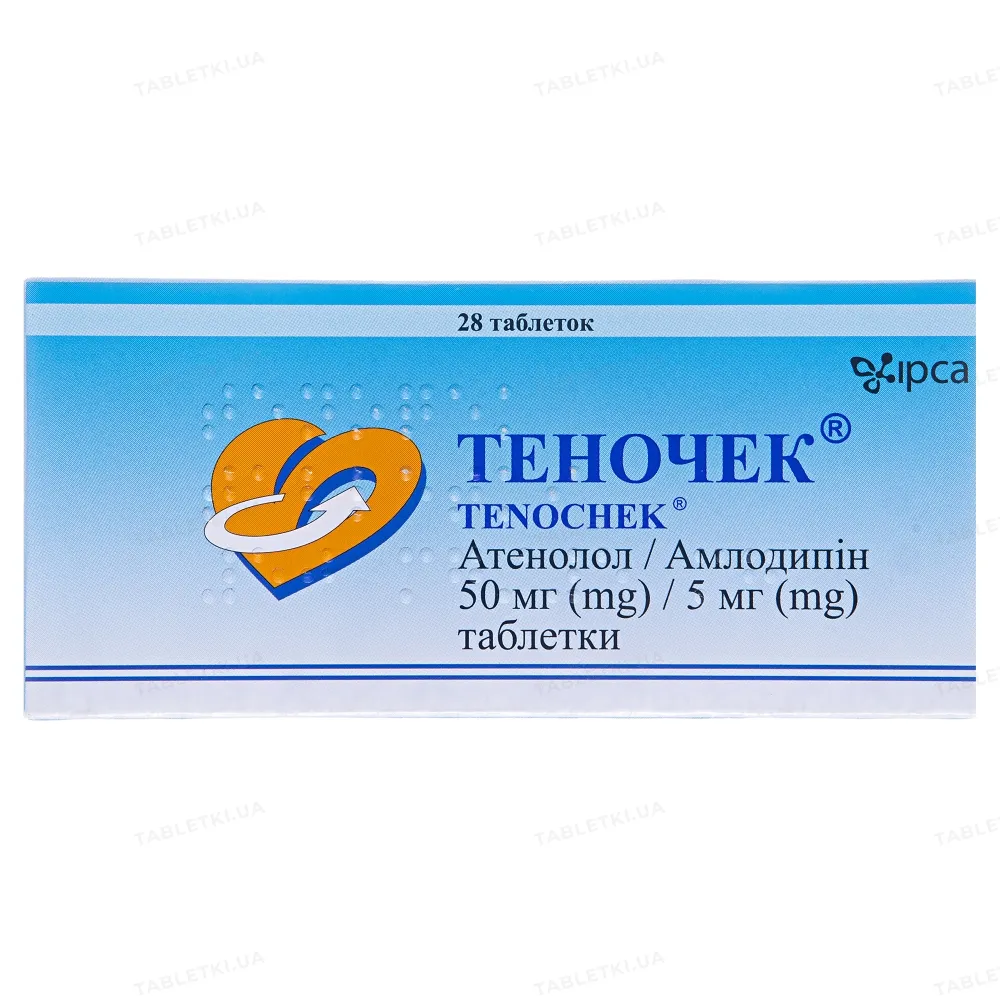
Table of Contents
INSTRUCTIONS FOR MEDICAL USE OF THE MEDICINAL PRODUCT TEPOCHET® (TENOCHEK)
Composition:
Active substances: atenolol, amlodipine;
One tablet contains atenolol 50 mg, amlodipine besylate equivalent to amlodipine 5 mg;
Excipients: maize starch, calcium hydrogen phosphate, microcrystalline cellulose, povidone K-30, sodium starch glycolate (type A), talc, magnesium stearate, colloidal anhydrous silicon dioxide.
Pharmaceutical form. Tablets.
Main physicochemical properties: round, flat tablets with bevelled edges, white in colour, with "TC" embossed on one side and a break line on the other.
Pharmacotherapeutic group. Selective beta-adrenoreceptor blockers with other antihypertensives. Atenolol and other antihypertensive agents.
ATC code C07F B03.
Pharmacological Properties
Pharmacodynamics
Tenochek® is an antihypertensive combination drug containing amlodipine – a calcium channel blocker – and atenolol – a β1-adrenoblocker.
Amlodipine. The antianginal and antihypertensive effects of amlodipine are due to its direct action on vascular smooth muscle, resulting in reduced total peripheral vascular resistance and decreased arterial blood pressure. Consequently, myocardial oxygen demand and energy consumption by the cardiac muscle are reduced. On the other hand, amlodipine likely causes dilation of large-caliber coronary arteries and coronary arterioles in both intact and ischemic areas of the myocardium. Thus, oxygen supply to the myocardium is improved during coronary artery spasms.
Atenolol. Exhibits antianginal, antiarrhythmic, and antihypertensive effects. It blocks cardiac β-adrenergic receptors, reducing the stimulatory effects on the myocardium from the sympathetic division of the autonomic nervous system and circulating catecholamines. Atenolol reduces sinus node automaticity, heart rate (at rest and during physical exertion), myocardial contractility, slows conduction, and decreases myocardial oxygen demand. The antianginal and antihypertensive effects are related to reduced cardiac output and heart rate (prolongation of diastole and improved myocardial perfusion) and decreased myocardial contractility, thereby reducing myocardial oxygen demand and, as a result, the frequency of angina attacks.
The combination of atenolol and amlodipine produces a more pronounced antihypertensive effect than monotherapy with either component alone.
The antihypertensive effect lasts for 24 hours; with regular administration, arterial pressure stabilizes by the end of the second week of treatment.
Pharmacokinetics
Not studied.
Clinical characteristics.
Indications.
Arterial hypertension, chronic ischemic heart disease (stable angina pectoris).
Contraindications.
Hypersensitivity to the active substance or to any of the excipients. Arterial hypotension (systolic blood pressure less than 90 mm Hg), acute heart failure, second- or third-degree atrioventricular (AV) block, sinoatrial block, sick sinus syndrome, myocardial infarction with arterial hypotension, sinus bradycardia (heart rate less than 50 beats/min), cardiogenic shock, late stages of peripheral circulatory disorders, metabolic acidosis; severe hepatic and renal diseases, Raynaud’s syndrome, allergic reactions, psoriasis; diabetes mellitus; bronchial asthma, concomitant use of monoamine oxidase inhibitors (MAOIs) (except MAO-B inhibitors). Hypersensitivity to other β-adrenergic blockers, to dihydropyridines; untreated pheochromocytoma; left ventricular outflow tract obstruction (e.g., severe aortic stenosis). Hemodynamically unstable heart failure following acute myocardial infarction.
Interaction with other medicinal products and other forms of interaction.
Other antihypertensive agents.
The antihypertensive effect of amlodipine is potentiated by the antihypertensive effects of other antihypertensive agents.
Cardiac glycosides, reserpine, α-methyldopa, guanfacine, and clonidine.
Potentiate the negative chronotropic, dromotropic, and bathmotropic effects of atenolol. Marked slowing of heart rate may occur.
Propafenone.
Concomitant administration with atenolol leads to enhanced effect of atenolol, which is part of the combination.
Sildenafil.
Single 100 mg dose of sildenafil in patients with essential hypertension did not affect the pharmacokinetics of amlodipine. When amlodipine and sildenafil are used concomitantly as combination therapy, each drug exerts its antihypertensive effect independently of the other.
Sympatholytics, nitroglycerin, hydralazine.
Enhance the antihypertensive effect of atenolol.
Anticholinesterase agents, angiotensin-converting enzyme (ACE) inhibitors (captopril, enalapril, lisinopril).
Concomitant use with atenolol may lead to increased serum potassium levels.
Potassium-containing preparations.
Concomitant use with atenolol may reduce their effectiveness.
Oral antidiabetic agents, such as insulin.
When used concomitantly with atenolol, may potentiate the development of hypoglycemia. In such cases, symptoms of hypoglycemia (especially tachycardia and tremor) may be masked or absent. Therefore, regular monitoring of blood glucose levels is necessary.
Nonsteroidal anti-inflammatory drugs (indomethacin), estrogens.
Reduce the antihypertensive effect of atenolol.
Cimetidine.
Inhibits atenolol metabolism.
Antacids.
Slow down the absorption of atenolol.
Calcium channel blockers (nifedipine).
In addition to enhancing the antihypertensive effect of atenolol, heart failure may develop.
Calcium channel blockers with negative inotropic effect (verapamil, diltiazem).
In combination with atenolol, may enhance their effects, especially in patients with ventricular function impairment and/or atrioventricular conduction disorders, increasing the risk of arterial hypotension and bradycardia. If intravenous verapamil is required, it should be administered no sooner than 48 hours after discontinuation of atenolol.
Dantrolene (infusions).
In animals, ventricular fibrillation with fatal outcome and cardiovascular collapse associated with hyperkalemia have been observed after intravenous administration of verapamil and dantrolene. Due to the risk of hyperkalemia, calcium channel blockers such as amlodipine should be avoided in patients susceptible to malignant hyperthermia and in the treatment of malignant hyperthermia.
Cyclosporine.
Studies on interactions between cyclosporine and amlodipine in healthy volunteers or other patient groups have not been conducted, except in kidney transplant patients, in whom variable increases in cyclosporine trough concentrations (on average by 0–40%) were observed. In kidney transplant patients receiving amlodipine, monitoring of cyclosporine concentrations should be considered, and cyclosporine dosage reduced if necessary.
Tacrolimus.
There is a risk of increased blood levels of tacrolimus when used concomitantly with amlodipine, although the pharmacokinetic mechanism of this interaction is not fully understood. To avoid tacrolimus toxicity, monitoring of tacrolimus blood levels and, if necessary, dose adjustment should be performed in patients receiving both amlodipine and tacrolimus.
mTOR inhibitors (mammalian target of rapamycin – mTOR in mammals).
mTOR inhibitors such as sirolimus, temsirolimus, and everolimus are substrates of CYP3A. Amlodipine is a weak inhibitor of CYP3A. When used concomitantly with mTOR inhibitors, amlodipine may enhance their effects.
CYP3A4 inhibitors.
Concomitant use of amlodipine with strong or moderate CYP3A4 inhibitors (protease inhibitors, azole antifungals, macrolides such as erythromycin or clarithromycin, verapamil, or diltiazem) may lead to a significant increase in amlodipine exposure. The clinical significance of these changes may be more pronounced in elderly patients. Clinical monitoring and dose adjustment may be necessary.
Concomitant use of amlodipine with grapefruit or grapefruit juice is not recommended, as in some patients, the bioavailability of amlodipine may increase, thereby enhancing its antihypertensive effect.
CYP3A4 inducers.
Concomitant use of amlodipine with substances that are CYP3A4 inducers (e.g., rifampicin, St. John’s wort) may lead to reduced plasma concentrations of amlodipine; therefore, such combinations should be used with caution.
Simvastatin.
Concomitant administration of multiple 10 mg doses of amlodipine and 80 mg of simvastatin resulted in a 77% increase in simvastatin exposure compared to simvastatin alone. In patients receiving amlodipine, the simvastatin dose should be limited to 20 mg daily.
Central nervous system depressants (tricyclic antidepressants, neuroleptics, sedatives, hypnotics, and alcohol).
In combination with atenolol, may potentiate central nervous system depression and enhance sedative effects.
Nitrates, peripheral vasodilators, MAO inhibitors.
In combination with atenolol, their antihypertensive effects are increased. Atenolol is incompatible with MAO inhibitors.
Tricyclic antidepressants, barbiturates, phenothiazines, nitroglycerin, diuretics, vasodilators, and other antihypertensive agents (e.g., prazosin).
May enhance the antihypertensive effect of atenolol.
Peripheral muscle relaxants (e.g., succinylcholine, tubocurarine).
In combination with atenolol, may lead to enhanced neuromuscular blockade; therefore, the anesthesiologist should be informed prior to anesthesia that the patient is taking atenolol.
Sympathomimetic agents (adrenaline).
Concomitant use with atenolol may reduce the effects of β-blockers.
Narcotic agents and antiseptics.
The antihypertensive effect of atenolol is enhanced. An additive negative inotropic effect of both agents may occur.
Inhalational anesthetics (hydrocarbon derivatives), amiodarone, quinidine, and other calcium antagonists.
May enhance the effect of amlodipine.
Narcotic analgesics.
Concomitant use with atenolol may lead to enhanced narcotic effect and dangerous depression.
Lidocaine.
In combination with atenolol, may result in reduced elimination and increased risk of lidocaine toxicity.
Euphyllin and theophylline.
In combination with atenolol, mutual inhibition of therapeutic effects may occur.
Special precautions for use.
Patients with heart failure.
Amlodipine should be used with caution in this patient population. In a long-term placebo-controlled study in patients with severe heart failure (NYHA class III and IV), the incidence of pulmonary edema was higher with amlodipine compared to placebo. Calcium channel blockers, including amlodipine, should be used with caution in patients with congestive heart failure, as they may increase the risk of cardiovascular complications and future mortality.
Maintenance of circulatory function in chronic heart failure requires stimulation of the sympathetic nervous system; therefore, β-blockade with atenolol may cause further depression of myocardial contractility and lead to more severe heart failure.
Atenolol should be used with caution in patients with chronic heart failure controlled by digitalis and/or diuretics. Both digitalis and atenolol slow atrioventricular conduction.
In patients, particularly those with severe obstructive coronary artery disease, there have been rare reports of increased frequency, duration, and/or severity of angina or acute myocardial infarction during initiation of calcium channel blocker therapy or dose escalation. The mechanism of this effect is not fully understood.
Heart failure in patients with acute myocardial infarction that cannot be rapidly and effectively controlled by intravenous administration of 80 mg furosemide or equivalent therapy is a contraindication to treatment with beta-blockers, including atenolol.
In patients without a history of heart failure, prolonged myocardial depression due to β-blockers over time may in some cases lead to the development of heart failure. At the first signs of worsening heart failure, patients should consult their physician, receive appropriate treatment as recommended, and remain under close medical supervision. If heart failure progresses despite appropriate therapy, atenolol should be discontinued.
During treatment with atenolol, intravenous administration of calcium channel blockers such as verapamil or diltiazem, or other antiarrhythmic agents (e.g., disopyramide), should not be used.
Patients with ischemic heart disease should be under close medical supervision during withdrawal of the drug.
The drugs containing atenolol should be prescribed with particular caution and only under strict medical supervision in patients with first-degree atrioventricular block.
Atenolol-containing drugs should be used with caution in patients with Prinzmetal’s angina.
Particular attention should also be paid to dose selection in patients with decompensated cardiac function.
Hypoglycemic states.
Drugs containing atenolol should be prescribed with special caution and only under strict medical supervision:
- in patients with diabetes mellitus with fluctuating blood glucose levels (due to the risk of developing severe hypoglycemia);
- during prolonged fasting or severe physical exertion (risk of severe hypoglycemic states).
Atenolol masks the tachycardia associated with hypoglycemia and may prolong the duration of insulin-induced hypoglycemic reactions.
Hormonal disorders.
Patients with hyperthyroidism should be treated with caution, as atenolol may mask the tachycardia caused by thyrotoxicosis.
Patients with bronchospastic disorders.
Atenolol-containing drugs should not be used in patients with bronchoconstrictive syndrome or other bronchospastic disorders. Compared to non-selective β-adrenergic blockers, cardioselective β-blockers have less effect on lung function; however, atenolol should be prescribed in patients with obstructive airway diseases only when absolutely indicated. However, since atenolol is a selective β1-adrenergic blocker, it may be cautiously used in patients of this category at the lowest possible doses when there is no response to or intolerance of other antihypertensive therapies. If necessary, in some cases, the use of β2-adrenergic agonists may be considered. If dosage escalation is required, the dose should be divided to achieve lower peak plasma concentrations.
Depression.
Although the association between atenolol and depression has not been fully established, the drug should be used cautiously in such patients.
Circulatory disorders and myasthenia.
The drug should be used with caution in patients with peripheral arterial diseases, including Raynaud’s syndrome, and in patients with severe myasthenia gravis.
Allergic and autoimmune disorders.
The drug should be used with caution in patients undergoing desensitization therapy or with a history of severe allergic reactions, in patients with psoriasis or a personal or family history of psoriasis, and in patients with a history of thrombocytopenic or non-thrombocytopenic purpura during treatment with β-adrenergic blockers.
Patients with renal impairment.
When prescribing atenolol to this patient group, continuous monitoring of kidney function is required.
Patients with hepatic impairment.
In patients with impaired liver function, the elimination half-life of amlodipine is prolonged. Dosing recommendations in this case have not been established. Therefore, therapy in this patient group should be initiated at the lowest dose. Caution is required both at the start of treatment and during dose escalation. In cases of severe hepatic insufficiency, slow dose titration and careful patient monitoring may be necessary.
Elderly patients.
Treatment in elderly patients should be initiated with reduced doses (the dose may be increased with monitoring of blood pressure and heart rate). If elderly patients develop progressive bradycardia (heart rate <50 bpm), arterial hypotension (systolic pressure <100 mm Hg), AV block, bronchospasm, ventricular arrhythmias, or severe hepatic or renal dysfunction, the dose should be reduced or treatment discontinued. Therapy should be discontinued gradually over 10–14 days by tapering the dose.
In all the above cases, the physician must carefully weigh the benefit-risk ratio before prescribing atenolol.
Laboratory test results.
Treatment with atenolol may alter results of certain laboratory tests: increased serum potassium levels, and elevated levels of catecholamines and their metabolites in blood and urine.
The use of amlodipine with grapefruit or grapefruit juice is not recommended, as in some patients this may increase bioavailability, leading to an enhanced hypotensive effect.
Sudden discontinuation of the drug may lead to withdrawal syndrome.
Long-term use of amlodipine has been associated with an increased risk of breast cancer.
The safety and efficacy of amlodipine in hypertensive crisis have not been established.
Use during pregnancy or breastfeeding.
The drug is contraindicated during pregnancy or breastfeeding.
Fertility.
In some patients receiving calcium channel blockers, reversible biochemical changes in sperm heads have been reported. Clinical data on the potential effect of amlodipine on male fertility are insufficient. In one study in rats, adverse effects on male fertility were observed.
Ability to affect reaction speed when driving or operating machinery.
The drug may affect attention and concentration; therefore, it should be used with caution when driving vehicles or operating machinery.
Dosage and Administration
For adults, the drug is administered orally. It should be taken without chewing, with water, before meals, preferably at the same time each day.
The dosage and duration of treatment are determined individually by a physician, depending on the therapeutic response achieved. Dosage adjustments or discontinuation of treatment must not be made without medical advice. Abrupt discontinuation of the drug may lead to withdrawal syndrome. Therefore, dose reduction and discontinuation should be performed gradually.
For arterial hypertension, the usual dose is 1 tablet per day. If necessary and upon good tolerance, this dose may be increased in individual cases to the maximum dose of 2 tablets per day.
For angina pectoris, the recommended dose is 1 tablet per day.
The maximum daily dose is 2 tablets per day.
For patients with significant renal impairment, dosage depends on creatinine clearance: if creatinine clearance is 10–30 mL/min, the dose should be halved; if creatinine clearance is less than 10 mL/min, the dose should be reduced fourfold compared to the standard dose.
Children.
The medicinal product is contraindicated in children (under 18 years of age), as its efficacy and safety have not been established in this age group.
Overdose.
Symptoms: the clinical picture depends on the degree of intoxication and primarily involves disturbances of the cardiovascular and central nervous systems.
Overdose may lead to arterial hypotension, bradycardia, heart failure, and cardiogenic shock.
In severe cases, dizziness, respiratory depression, bronchospasm, vomiting, impaired consciousness, and acrocyanosis of upper and lower extremities may occur; generalized seizures are extremely rare.
Overdose may also result in excessive peripheral vasodilation and reflex tachycardia. Cases of prolonged systemic hypotension, including shock with fatal outcome, have been reported.
Treatment. In case of overdose or life-threatening decrease in heart rate and/or arterial pressure, treatment with the drug should be discontinued. Clinically significant hypotension caused by overdose requires active interventions aimed at supporting cardiovascular function, including monitoring of cardiac and pulmonary function, careful monitoring of vital signs, control of circulating blood volume, and diuresis. To counteract calcium channel blockade, intravenous calcium gluconate should be administered.
If necessary, the following may be prescribed:
- atropine (0.5–2 mL intravenously as a bolus);
- glucagon: initial dose – 1–10 mg intravenously as a bolus, followed by 2–2.5 mg/hour as a continuous infusion;
- sympathomimetics, adjusted according to body weight and response (dopamine, dobutamine, isoprenaline, oxyprenaline, or epinephrine).
If bradycardia is unresponsive to pharmacological treatment, temporary cardiac pacing may be considered.
In case of bronchospasm, β2-adrenergic antagonists in aerosol form should be administered (and intravenously if insufficient response) or intravenous aminophylline.
In case of generalized seizures, slow intravenous administration of diazepam is indicated. There is no specific antidote. Gastric lavage and administration of activated charcoal are recommended. Hemodialysis is ineffective.
Adverse reactions.
Cardiovascular system: bradycardia, flushing, arterial hypotension, disturbances of atrioventricular conduction and occurrence of symptoms of heart failure (up to cardiac arrest), chest pain, palpitations, myocardial infarction, arrhythmia (including ventricular tachycardia and atrial fibrillation), orthostatic hypotension, vasculitis; in individual cases, exacerbation of angina attacks is possible in patients with angina pectoris.
Gastrointestinal system: at the beginning of treatment abdominal pain, nausea, loss of appetite, taste disturbances, vomiting, dyspepsia, gingival hyperplasia, constipation, diarrhea, dry mouth, throat irritation, pancreatitis, gastritis, flatulence, increased concentration of liver enzymes and/or bilirubin in blood serum, disturbances in transaminase levels, intrahepatic cholestasis, hepatitis, jaundice.
Central nervous system: at the beginning of treatment dizziness, fatigue, malaise, sleep disturbances, somnolence, depression, headache, nightmares, cold sensation and paresthesia in extremities, hallucinations, mood changes (including fear), irritability, psychosis, asthenia, peripheral neuropathy, insomnia, confusion, psychosis, anxiety, tremor, syncope, hypesthesia, hypertonia, discomfort, possible development of extrapyramidal syndrome.
Endocrine system: decreased glucose tolerance in patients with diabetes mellitus, gynecomastia, hyperglycemia, hypoglycemia.
Respiratory system: in patients predisposed to bronchospasm, bronchial obstruction, dyspnea, rhinitis, cough, dyspnea may occur.
Immune system: skin redness, itching, skin rashes (psoriasis exacerbation), psoriasiform rashes, swelling and multiform erythema, skin discoloration, urticaria, exanthema, skin depigmentation, purpura, reversible alopecia, increased levels of antinuclear antibodies, urticaria, exfoliative dermatitis, Stevens–Johnson syndrome, toxic epidermal necrolysis, Quincke's edema, lupus syndrome, hypersensitivity reactions (angioneurotic edema).
Blood system: thrombocytopenia, formation of antinuclear antibodies, development of thrombocytopenic or non-thrombocytopenic purpura, leukopenia.
Visual organs: visual disturbances, decreased tear secretion, conjunctivitis, dry eye sensation, photosensitization, diplopia.
Auditory and vestibular system: tinnitus.
Genitourinary system: libido and potency disturbances, impotence, difficulty in urination, increased frequency of urination, nocturia.
Musculoskeletal system and connective tissue: calf swelling, transient muscle weakness, calf muscle cramps, arthralgia, myalgia, back pain, chest pain.
Other: increased sweating, withdrawal syndrome.
Lipid metabolism disturbances may occasionally occur: with total cholesterol levels remaining within normal limits, high-density lipoprotein levels decrease and plasma triglyceride levels increase.
After discontinuation of the drug, adverse reactions usually completely disappear.
Shelf life. 4 years.
Storage conditions. Store in a place inaccessible to children, at a temperature not exceeding 25 °C, in the original packaging.
Packaging. 14 tablets in a blister; 2 blisters in a cardboard pack.
Prescription category. By prescription.
Manufacturer.
Ipca Laboratories Limited.
Manufacturer's address and location of its business activity.
Plot No. 255/1, Village – Atul, U.T. Dadra and Nagar Haveli, 396 230 Silvassa, India.