Tenikam
Ukraine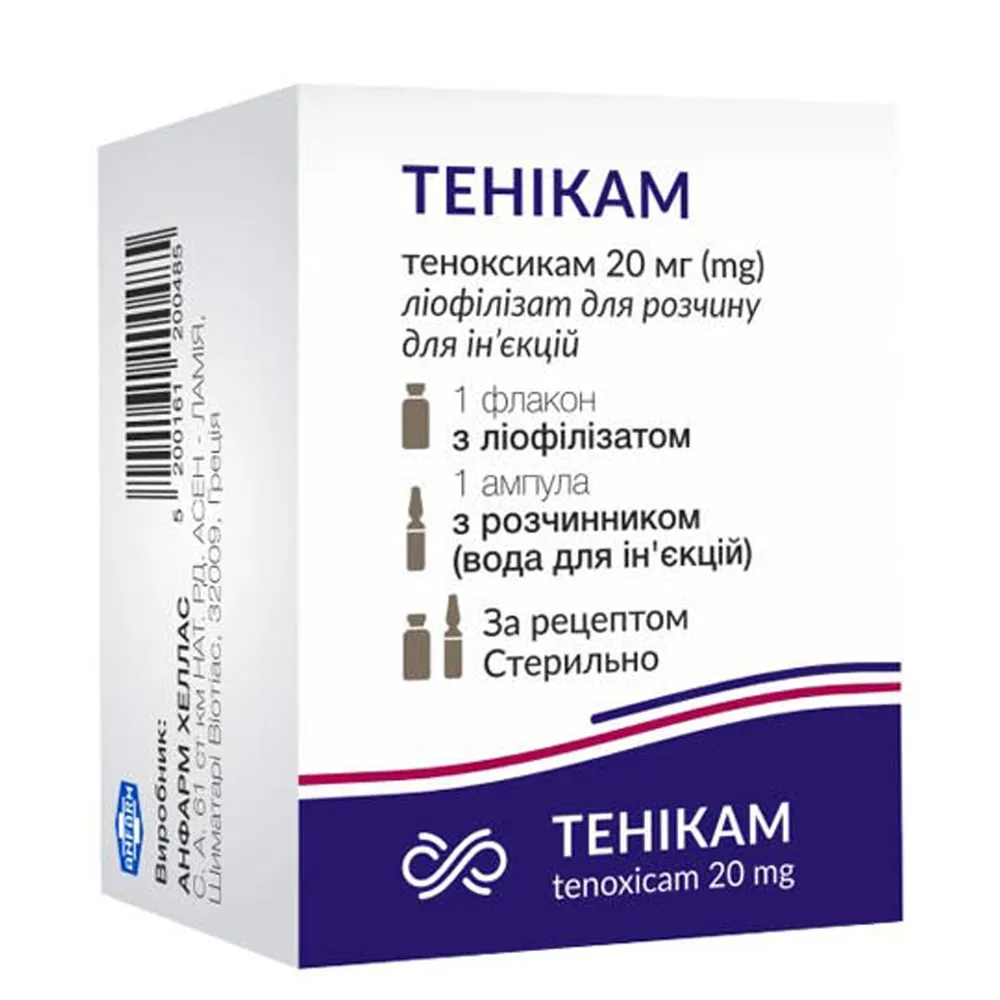
Table of Contents
INSTRUCTION FOR MEDICAL USE OF THE MEDICINAL PRODUCT TENIKAM (TENIKAM)
Composition:
Active substance: tenoxicam;
1 vial contains tenoxicam 20 mg;
Excipients: mannitol, disodium edetate, sodium metabisulfite (E 223), trometamol, sodium hydroxide.
1 ampoule of solvent contains 2 ml of water for injections.
Pharmaceutical form. Lyophilisate for solution for injection.
Main physicochemical characteristics: compacted mass of yellow to greenish-yellow color.
Pharmacotherapeutic group.
Non-steroidal anti-inflammatory and antirheumatic drugs. Oxicams. Tenoxicam.
ATC code M01AC02.
Pharmacological Properties.
Pharmacodynamics.
Tenoxicam is a non-steroidal anti-inflammatory drug. It exerts a pronounced analgesic, anti-inflammatory, and some antipyretic effects.
As with other non-steroidal anti-inflammatory drugs (NSAIDs), the exact mechanism of action is unknown, although it is likely multifactorial, including inhibition of prostaglandin biosynthesis and reduction of leukocyte accumulation at the site of inflammation.
Pharmacokinetics.
Tenoxicam in the form of a lyophilisate is a long-acting preparation; administration once daily is effective.
Tenoxicam penetrates well into synovial fluid, where its concentration is approximately half of its plasma concentration. The mean elimination half-life from plasma is approximately 72 hours.
After intravenous administration of tenoxicam at a dose of 20 mg, its plasma level rapidly decreases during the first 2 hours, which is related to the distribution process. After intramuscular injection, a level of at least 90% or more of the maximum concentration is achieved within 15 minutes.
With the recommended dosage regimen of 20 mg daily, steady-state plasma concentrations are reached within 10–15 days. Accumulation is not expected. Tenoxicam is highly bound to plasma proteins.
Tenoxicam is almost completely metabolized in the body. Approximately two-thirds of the administered dose is excreted in urine as the pharmacologically inactive metabolite 5-hydroxypyridyl, and the remainder is excreted via bile, mainly as glucuronide conjugates of hydroxymetabolites.
No age-related changes in the pharmacokinetics of tenoxicam have been observed, although individual variations are generally greater in elderly patients.
Clinical characteristics.
Indications.
For relief of pain and inflammation in osteoarthritis and rheumatoid arthritis.
For short-term treatment of acute musculoskeletal disorders, including sprains, dislocations, and other soft tissue injuries.
In the above indications, the drug should be administered intravenously or intramuscularly when oral administration of tenoxicam is not feasible.
Contraindications.
-
Hypersensitivity to tenoxicam or to any excipients of the medicinal product. History of hypersensitivity reactions (including asthma, rhinitis, angioedema, or urticaria) to other NSAIDs, including ibuprofen and acetylsalicylic acid — due to possible cross-sensitivity with tenoxicam.
-
Active or history of recurrent peptic ulceration/bleeding, ulcerative colitis, Crohn’s disease, severe gastritis, or gastrointestinal hemorrhage or perforation related to previous NSAID therapy.
-
Severe heart, liver, or renal failure.
-
History of cerebrovascular bleeding or other coagulation disorders.
-
Breastfeeding period.
-
Third trimester of pregnancy.
-
Pediatric age (under 18 years).
Interaction with other medicinal products and other forms of interaction.
Anticoagulants: In healthy volunteers, no clinically significant interaction was observed between tenoxicam in lyophilisate form and low-molecular-weight heparin. Tenoxicam is highly bound to serum albumin and, similar to other NSAIDs, may enhance the anticoagulant effect of warfarin and other anticoagulants (see section "Special precautions for use"). Particular caution is required when monitoring the effects of anticoagulants and oral hypoglycemic agents at the beginning of tenoxicam therapy.
Antiplatelet agents and selective serotonin reuptake inhibitors (SSRIs): Increased risk of gastrointestinal bleeding (see section "Special precautions for use").
Antihypertensive agents: Tenoxicam and other NSAIDs may attenuate the effect of antihypertensive drugs.
Cardiac glycosides: NSAIDs may exacerbate heart failure, reduce glomerular filtration rate, and increase plasma levels of cardiac glycosides when used concomitantly.
Cyclosporine: As with all other NSAIDs, caution is recommended when using tenoxicam concomitantly with cyclosporine, due to increased risk of nephrotoxicity.
Cimetidine: No interaction was observed when used concomitantly with cimetidine.
Corticosteroids: As with all other NSAIDs, caution is recommended when using tenoxicam concomitantly with corticosteroids, due to increased risk of gastrointestinal ulceration or bleeding (see section "Special precautions for use").
Diuretics: Reduced diuretic effect. NSAIDs may cause retention of potassium, sodium, and fluid and may interfere with the natriuretic effect of diuretics, thereby increasing the risk of NSAID-induced nephrotoxicity. These properties should be considered when treating patients with arterial hypertension or heart failure, as tenoxicam may worsen the course of these conditions.
Lithium: Reduced lithium elimination has been reported with NSAID use. If tenoxicam is prescribed to a patient receiving lithium therapy, more frequent monitoring of lithium levels is recommended, and the patient should be advised to maintain adequate fluid intake and to be aware of symptoms of lithium toxicity.
Methotrexate: Caution is recommended when used concomitantly with methotrexate due to the potential for methotrexate toxicity, as NSAIDs have been reported to reduce its elimination.
Mifepristone: NSAIDs should not be used within 8–12 days after mifepristone administration, as these agents may reduce the efficacy of mifepristone.
NSAIDs, selective cyclooxygenase-2 (COX-2) inhibitors, salicylates: Concomitant use of two or more NSAIDs (including acetylsalicylic acid) should be avoided due to increased risk of adverse reactions (see section "Special precautions for use"). Salicylates may displace tenoxicam from protein-binding sites, increasing its clearance and distribution. Concomitant treatment with salicylates or other NSAIDs should be avoided due to the risk of increased adverse effects (particularly gastrointestinal).
Penicillamine, parenteral gold preparations: In a small number of patients receiving these agents concomitantly, no clinically significant interaction was observed.
Quinolone antibiotics: Preclinical data indicate that NSAIDs increase the risk of quinolone-induced seizures. The concomitant use of these agents increases the risk of seizures in patients.
Tacrolimus: Increased risk of nephrotoxicity when NSAIDs are used concomitantly with tacrolimus.
Zidovudine: Increased risk of hematologic toxicity when NSAIDs are used concomitantly with zidovudine. Evidence suggests an increased risk of hemarthrosis and hematoma in HIV-infected patients with hemophilia receiving concomitant zidovudine and ibuprofen.
Special precautions for use
Concomitant use of tenoxicam with NSAIDs, including selective COX-2 inhibitors, should be avoided (see section "Interaction with other medicinal products and other forms of interaction").
Adverse reactions to tenoxicam can be minimized by using the lowest effective dose for the shortest duration necessary to control symptoms (see section "Dosage and administration" and information on gastrointestinal and cardiovascular risks below).
Cardiovascular and cerebrovascular effects
Patients with hypertension and/or a history of mild to moderate heart failure should be closely monitored during treatment, as fluid retention and edema have been reported with NSAID therapy.
Clinical trials and epidemiological data indicate that the use of certain NSAIDs, particularly at high doses and over prolonged periods, is associated with a small increased risk of arterial thrombotic events (e.g., myocardial infarction or stroke). Currently, there are insufficient data to exclude such risk with the use of tenoxicam.
The drug should be administered to patients with uncontrolled hypertension, congestive heart failure, established ischemic heart disease, peripheral arterial disease, and/or cerebrovascular disease only after careful assessment. A similar assessment should be performed prior to initiating long-term treatment in patients with risk factors for cardiovascular disease (such as hypertension, hyperlipidemia, diabetes mellitus, smoking).
Cardiovascular, renal, and hepatic disorders
NSAID use may cause dose-dependent reduction in prostaglandin synthesis and acute renal failure. The risk of such reactions is higher in patients taking diuretics and in elderly patients. Renal function should be monitored in such patients (see section "Contraindications").
Rare cases of increased serum transaminase levels or other signs of hepatic dysfunction have been reported. These were mostly mild and transient elevations above the normal range. If significant or persistent increases occur, tenoxicam should be discontinued and appropriate tests performed. Particular caution is required when administering the drug to patients with pre-existing liver disease.
In rare cases, NSAIDs may cause interstitial nephritis, glomerulonephritis, papillary necrosis, or nephrotic syndrome due to inhibition of renal prostaglandin synthesis, which maintains renal perfusion in patients with reduced renal blood flow and/or decreased blood volume. In such patients, NSAID use may lead to marked renal decompensation, which typically reverses upon discontinuation of the drug. The highest risk of such complications exists in patients with pre-existing renal disease (including diabetic nephropathy), nephrotic syndrome, reduced blood volume, hepatic or cardiac dysfunction, and in those receiving concomitant diuretics or potentially nephrotoxic agents. Renal, hepatic, and cardiac functions should be monitored regularly during treatment in these patients. The drug should be administered at the lowest possible dose in patients with renal, hepatic, or cardiac impairment. NSAIDs should be used with caution in patients with a history of heart failure or hypertension, as edema has been reported with ibuprofen use.
Cutaneous effects
Rarely, NSAIDs may cause severe, sometimes fatal, skin reactions, including exfoliative dermatitis, Stevens-Johnson syndrome, and toxic epidermal necrolysis (see section "Adverse reactions"). The risk of such reactions is highest at the beginning of treatment, with most cases occurring within the first month of therapy. At the first signs of skin rash, mucosal lesions, or other signs of hypersensitivity, the drug should be discontinued immediately.
Use in elderly patients
The frequency of adverse reactions, particularly gastrointestinal bleeding and perforation, including fatal outcomes, is increased in elderly patients receiving NSAIDs (see section "Dosage and administration"). Special caution should be exercised when administering the drug to elderly patients, with regular monitoring for possible interactions with concomitant medications and for renal, hepatic, and cardiovascular function, which may be affected by NSAIDs.
Effect on female fertility
The medicinal product may affect female fertility and therefore is not recommended for use in women attempting to conceive. Discontinuation of the drug should be considered in women experiencing difficulties in conceiving or undergoing infertility evaluation.
Gastrointestinal bleeding, ulcers, and perforations
NSAIDs should be used with caution in patients with a history of gastrointestinal disorders.
Gastrointestinal bleeding, ulcers, and perforations, including fatal cases, have been reported during treatment with all NSAIDs, at any time during therapy, with or without warning symptoms, and regardless of prior gastrointestinal disease.
The risk of such events increases with higher NSAID doses, in patients with a history of peptic ulcer, especially if complicated by bleeding or perforation (see section "Contraindications"), and in elderly patients. Treatment in these patients should be initiated at the lowest possible dose. For these patients, as well as for those receiving concomitant low-dose acetylsalicylic acid or other agents increasing gastrointestinal risk, consideration should be given to concomitant therapy with agents such as misoprostol or proton pump inhibitors.
Patients, particularly elderly ones, with a history of gastrointestinal toxicity should be informed about any unusual gastrointestinal symptoms, especially bleeding. This is particularly important at the beginning of treatment.
The drug should be used with caution in patients receiving concomitant medications that increase the risk of ulceration or bleeding, such as oral corticosteroids, anticoagulants (e.g., warfarin), selective serotonin reuptake inhibitors, or antiplatelet agents (e.g., acetylsalicylic acid) (see section "Interaction with other medicinal products and other forms of interaction").
Patients with gastrointestinal symptoms while receiving tenoxicam therapy should be closely monitored. If gastrointestinal bleeding or ulceration occurs, the drug should be discontinued immediately.
NSAIDs should be used with caution in patients with a history of inflammatory bowel disease (ulcerative colitis, Crohn's disease), as tenoxicam may exacerbate their symptoms (see section "Adverse reactions").
Hematological effects
Tenoxicam reduces platelet aggregation and may prolong bleeding time, which should be considered prior to planned major surgical procedures (e.g., joint replacement) and when bleeding time needs to be determined.
Ophthalmological effects
Ocular adverse events have been reported with NSAID use. If such events occur during tenoxicam therapy, ophthalmological examination should be performed.
Respiratory effects
The drug should be used with caution in patients with bronchial asthma or a history of bronchial asthma, as NSAID use may provoke bronchospasm in such patients.
Use in patients with systemic lupus erythematosus (SLE) and mixed connective tissue diseases
The use of NSAIDs in such patients increases the risk of aseptic meningitis (see section "Adverse reactions").
This medicinal product contains less than 1 mmol (23 mg)/dose of sodium, i.e., essentially "sodium-free".
Use during pregnancy or breastfeeding
Pregnancy. Inhibition of prostaglandin synthesis may adversely affect pregnancy and/or fetal development. Epidemiological studies suggest that use of prostaglandin synthesis inhibitors during early pregnancy increases the risk of miscarriage, congenital heart defects, and abdominal wall defects in the fetus. The absolute risk of cardiovascular malformations increases from <1% to approximately 1.5%. The risk is believed to increase with higher drug doses and longer duration of treatment. In animal studies, prostaglandin synthesis inhibitors have caused increased pre- and post-implantation loss and embryofetal mortality. Furthermore, administration of prostaglandin synthesis inhibitors during organogenesis in animals has been associated with increased incidence of fetal malformations, including cardiovascular abnormalities.
Tenoxicam should not be prescribed during the first and second trimesters of pregnancy, except when clearly necessary. If tenoxicam is used by a woman attempting to conceive or during the first or second trimester of pregnancy, the dose should be as low as possible and the duration of treatment as short as possible.
During the third trimester, all prostaglandin synthesis inhibitors cause:
Risks to the fetus:
- Cardio-pulmonary toxicity (premature constriction/closure of the ductus arteriosus and pulmonary hypertension);
- Renal dysfunction, which may progress to renal failure with oligohydramnios;
Risks to the mother and neonate at the end of pregnancy:
- Prolonged bleeding time (due to inhibition of platelet aggregation), which may occur even with low-dose use;
- Inhibition of uterine contractions, leading to delayed labor and prolonged delivery.
Therefore, tenoxicam is contraindicated during the third trimester of pregnancy.
Breastfeeding. Limited data on NSAIDs suggest that these drugs may pass into breast milk in very small amounts. NSAIDs should be avoided during breastfeeding.
There is no information on the passage of tenoxicam into human breast milk. Animal studies indicate that significant levels of the drug may be achieved.
Fertility. For effects on female fertility, see section "Special precautions for use".
Ability to affect reaction speed when driving or operating machinery
Patients who experience adverse reactions that may impair their ability to drive or operate machinery, such as vertigo, dizziness, somnolence, fatigue, or visual disturbances, should refrain from driving or operating machinery.
Method of Administration and Dosage
Adverse reactions to tenoxicam can be minimized by using the lowest effective dose for the shortest duration necessary to control symptoms (see section "Special Warnings and Precautions for Use").
Adults
The medicinal product is intended for intravenous and intramuscular administration.
The recommended dose is 20 mg once daily during the first 1–2 days of treatment. After this period, a switch to tablet form is recommended, to be taken daily at the same time each day. Prior to administration, the contents of the vial should be dissolved in 2 mL of water for injections, which is included in the medicinal product package. After complete dissolution of the lyophilisate, the solution should be used immediately.
Recommended doses should not be exceeded, as higher doses do not necessarily provide greater therapeutic effect but increase the risk of adverse reactions.
The duration of tenoxicam treatment for acute musculoskeletal disorders usually does not exceed 7 days. In exceptional cases, therapy may be extended up to 14 days.
Elderly Patients
Tenikam, like other NSAIDs, should be used with particular caution in elderly patients. This population has an increased risk of adverse reactions and frequently receives concomitant medications or has impaired renal, hepatic, or cardiovascular function. If necessary, the drug should be administered to elderly patients at the lowest effective dose for the shortest possible duration. These patients should be carefully monitored during NSAID therapy for the development of gastrointestinal bleeding.
Patients with Renal and/or Hepatic Impairment
| Creatinine clearance |
Dosing |
| Greater than 25 mL/min |
Under medical supervision without dosage adjustment (see section "Special precautions for use") |
| Less than 25 mL/min |
Insufficient data to recommend a dosing regimen |
The drug should be used with caution in patients with low albumin concentrations (e.g., in nephrotic syndrome) or with high plasma bilirubin concentrations, since tenoxicam is highly bound to plasma proteins.
There are insufficient data to recommend dosage adjustments of tenoxicam in patients with hepatic insufficiency.
Children.
There are insufficient data to recommend the use of tenoxicam in children.
Overdose.
Symptoms. There have been no reports of severe cases of tenoxicam overdose. Symptoms of NSAID overdose include headache, nausea, vomiting, epigastric pain, gastrointestinal bleeding, occasionally diarrhea, disorientation, excitement, coma, drowsiness, dizziness, tinnitus, weakness, and sometimes seizures. Severe poisoning may lead to significant renal or hepatic insufficiency.
Treatment. If necessary, symptomatic therapy should be administered. Adequate hydration should be maintained, and liver and kidney functions should be monitored. The patient should remain under medical supervision for at least 4 hours after overdose. In cases of frequent or prolonged seizures, diazepam should be administered intravenously. Administration of H2-receptor antagonists may be beneficial. Other interventions should be carried out as clinically indicated based on the patient's condition.
Side effects
In most patients, adverse reactions are temporary and do not require discontinuation of treatment. Gastrointestinal side effects are the most commonly observed.
Cardiovascular system: Edema, hypertension, and heart failure associated with NSAID therapy have been reported. Dyspnea and palpitations have been reported rarely.
Clinical studies and epidemiological data indicate that the use of NSAIDs (particularly at high doses and with prolonged use) may increase the risk of arterial thrombosis (e.g., myocardial infarction, stroke) (see section "Special precautions").
Skin and subcutaneous tissue: Photosensitivity and bullous reactions, including Stevens-Johnson syndrome and toxic epidermal necrolysis (very rare), have been reported.
Eye disorders: Visual disorders (such as visual disturbances and blurred vision) have been reported—frequency unknown.
Gastrointestinal tract: The most common adverse reactions are gastrointestinal. These include dyspepsia, nausea, vomiting, abdominal pain and discomfort, constipation, diarrhea, flatulence, digestive disorders, epigastric distress, melena, hematemesis, ulcerative stomatitis, anorexia, and exacerbations of colitis and Crohn's disease (see section "Special precautions").
As with other NSAIDs, there is a risk of peptic ulceration, perforation, or gastrointestinal bleeding, which may be fatal, particularly in elderly patients (see section "Special precautions").
Gastritis has been observed less frequently.
Pancreatitis has been reported very rarely.
Blood and lymphatic system: Decreased hemoglobin levels unrelated to gastrointestinal bleeding have been observed. Anemia, aplastic anemia, hemolytic anemia, thrombocytopenia, non-thrombocytopenic purpura, leukopenia, neutropenia, and eosinophilia have been reported. Epistaxis has been reported uncommonly. Agranulocytosis has been reported rarely.
Hepatobiliary system: Liver function abnormalities. As with most NSAIDs, various changes in liver function parameters have been observed. During treatment, serum transaminase levels may increase in some patients. Although such reactions are rare, the drug should be discontinued if persistent or worsening abnormalities in liver function tests occur, or if clinical signs of liver disease or systemic manifestations (e.g., eosinophilia, rash) are present. Hepatitis and jaundice have also been reported.
Hypersensitivity reactions: Hypersensitivity reactions have been reported with NSAID use, including non-specific allergic reactions and anaphylactic reactions; respiratory tract reactivity including bronchial asthma, asthma exacerbation, bronchospasm, or dyspnea; skin disorders: various types of rash, alopecia, angioneurotic edema, pruritus, and purpura. Disorders of the nails, erythema, urticaria, and photosensitivity have been reported rarely. As with other NSAIDs, exfoliative and bullous dermatitis, including epidermal necrolysis, erythema multiforme, Stevens-Johnson syndrome, vesiculobullous reactions, and vasculitis have been reported rarely.
Metabolism and nutrition: Metabolic disturbances such as hyperglycemia, and increased or decreased body weight have been observed rarely.
Nervous system: Malaise and tinnitus may occur.
Aseptic meningitis (particularly in patients with pre-existing autoimmune disorders such as systemic lupus erythematosus or mixed connective tissue disease) has been reported rarely, with symptoms such as neck stiffness, headache, nausea, vomiting, fever, or disorientation, dizziness, malaise, fatigue, and somnolence.
Headache, insomnia, depression, nervousness, sleep disorders, and dizziness have been reported rarely. Somnolence and paraesthesia have also been reported—frequency unknown.
Psychiatric disorders: Confusion and hallucinations have been reported—frequency unknown.
Renal and urinary system: Various forms of nephrotoxicity have been observed, including interstitial nephritis, nephrotic syndrome, and renal failure.
Reversible increases in blood urea nitrogen and serum creatinine levels have been reported (see section "Special precautions").
Reporting suspected adverse reactions
Reporting suspected adverse reactions after drug approval is of great importance. It allows ongoing monitoring of the benefit-risk ratio of the drug. Healthcare professionals and patients, as well as their legal representatives, should report all suspected adverse reactions and lack of drug efficacy via the Automated Pharmacovigilance Information System at: https://aisf.dec.gov.ua/.
Shelf life. 3 years.
Storage conditions.
Store in the original packaging at a temperature not exceeding 25 °C.
Keep out of reach and sight of children.
Incompatibilities.
Not known.
Packaging.
1 vial of lyophilisate and 1 ampoule of solvent per cardboard box.
Prescription status. Prescription only.
Manufacturer.
ANFARM HELLAS S.A.
Manufacturer's address and place of business.
61st km NAT. RD. ASENS-LAMIA, Chalkoutari Viotias, 32009, Greece.