Temodal
Ukraine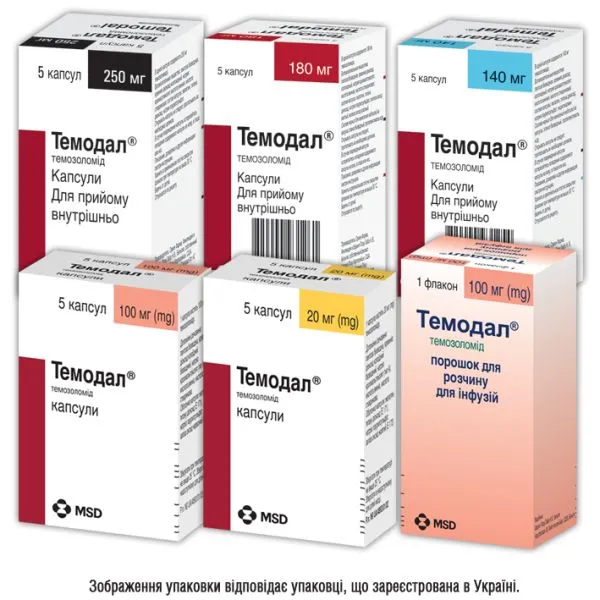
Table of Contents
INSTRUCTIONS FOR MEDICAL USE OF THE MEDICINAL PRODUCT TEMODALâ (TEMODALâ)
Composition:
Active substance: temozolomide;
One vial contains 100 mg of temozolomide;
After reconstitution, 1 ml of infusion solution contains 2.5 mg of temozolomide;
Excipients: mannitol (E 421), L-threonine, polysorbate 80, sodium citrate, hydrochloric acid concentrated.
Pharmaceutical form. Powder for solution for infusion.
Main physicochemical properties: powder free from extraneous matter.
Pharmacotherapeutic group.
Antineoplastic agents. Alkylating agents. ATC code L01A X03.
Pharmacological Properties
Pharmacodynamics
Temozolomide is a triazene that undergoes rapid chemical conversion at physiological pH levels to its active metabolite, 3-methyl-(triazene-1-yl)imidazole-4-carboxamide (MTIC). Cytotoxicity of MTIC is believed to be primarily due to alkylation of guanine at the O6 position, with additional alkylation at the N7 position. The resulting cytotoxic lesions are thought to involve a mechanism of aberrant repair of the methyl adduct.
Pharmacokinetics
Temozolomide undergoes spontaneous hydrolysis at physiological pH levels, primarily forming the active metabolite 3-methyl-(triazene-1-yl)imidazole-4-carboxamide (MTIC). MTIC further spontaneously hydrolyzes to 5-amino-imidazole-4-carboxamide (AIC), a known intermediate in purine and nucleic acid biosynthesis, and methylhydrazine, which is likely the active alkylating species. The cytotoxicity of MTIC is believed to be primarily due to DNA alkylation, mainly at the O6 and N7 positions of guanine. Relative to the AUC of temozolomide, exposure to MTIC and AIC is approximately 2.4% and 23%, respectively. In vivo, the t1/2 of MTIC is similar to that of temozolomide—1.8 hours.
Absorption. After oral administration in adult patients, temozolomide is rapidly absorbed, with peak concentrations reached within 20 minutes after dose administration (median time from 0.5 to 1.5 hours). Following oral administration of 14C-labeled temozolomide, the mean fecal excretion of 14C over 7 days after dosing was 0.8%, indicating complete absorption.
Distribution. Temozolomide exhibits weak protein binding (10–20%), so interactions with substances that are highly protein-bound are not expected.
Studies using positron emission tomography (PET) in humans, as well as preclinical data, indicate that temozolomide rapidly crosses the blood-brain barrier and enters cerebrospinal fluid (CSF). The presence of the drug in CSF was confirmed in one patient; CSF exposure, relative to the AUC of temozolomide, was approximately 30% of plasma exposure, consistent with data obtained from animal studies.
Elimination. The elimination half-life (t1/2) of temozolomide in plasma is approximately 1.8 hours. The primary route of 14C elimination is via the kidneys. After oral administration, approximately 5–10% of the dose is excreted unchanged in urine within 24 hours, with the remainder excreted as temozolomide acid, 5-aminoimidazole-4-carboxamide, or unidentified polar metabolites.
Plasma concentrations increase in a dose-dependent manner. Drug clearance in plasma, volume of distribution, and half-life are independent of dose.
Special patient populations. Pharmacokinetic analysis of temozolomide has shown that its clearance is independent of patient age, renal function, or nicotine dependence. In a separate pharmacokinetic study, plasma pharmacokinetic profiles in patients with mild or moderate hepatic impairment were similar to those in patients with normal hepatic function.
In pediatric patients, plasma concentration (AUC) is higher than in adults. However, the maximum tolerated dose for both pediatric and adult patients is the same—1000 mg/m² per treatment cycle.
Clinical Characteristics.
Indications.
Treatment:
- of adult patients with newly diagnosed multiforme glioblastoma, in combination with radiotherapy and subsequently as monotherapy;
- of children aged 3 years and older and adult patients with malignant glioma in the form of multiforme glioblastoma or anaplastic astrocytoma, in the presence of recurrence or disease progression after standard therapy.
Contraindications.
Temodal® is contraindicated in patients with:
hypersensitivity to the active substance or to any of the excipients;
hypersensitivity to dacarbazine;
severe myelosuppression.
Special safety precautions.
Care must be taken when handling Temodal®, powder for solution for infusion. Medical gloves and aseptic equipment should be used. In case of powder contact with skin or mucous membranes, it should be immediately and thoroughly washed off with soap and water.
Due to the absence of compatibility studies, Temodal®, powder for solution for infusion, must not be mixed or co-administered with other medicinal products using the same infusion system.
Temodal®, powder for solution for infusion, is intended for single use only. Any unused amount of the medicinal product or waste must be disposed of according to local requirements.
Interaction with other medicinal products and other forms of interaction.
Interaction studies have been conducted only in adult patients.
In a separate Phase I study, the concomitant administration of temozolomide with ranitidine did not result in changes in the extent of temozolomide absorption or exposure to its active metabolite MTIC.
Based on pharmacokinetic data from Phase II studies, concomitant administration of dexamethasone, prochlorperazine, phenytoin, carbamazepine, ondansetron, histamine H2-receptor antagonists, or phenobarbital does not alter temozolomide clearance. Concomitant administration of valproic acid caused a mild but statistically significant reduction in temozolomide clearance.
Studies on the effect of temozolomide on the metabolism and elimination of other drugs have not been conducted. However, since temozolomide is not metabolized in the liver and exhibits low protein binding, its effect on the pharmacokinetics of other medicinal products is unlikely.
The use of temozolomide with other agents that suppress bone marrow function may increase the likelihood of developing myelosuppression.
Special precautions for use.
Opportunistic infections and reactivation of infections. Opportunistic infections (such as Pneumocystis jirovecii-caused pneumonia) and reactivation of infections such as hepatitis B and cytomegalovirus have been observed during treatment with temozolomide (see section "Adverse reactions").
Herpes meningoencephalitis. Post-marketing cases of herpes meningoencephalitis (including fatal cases) have been reported in patients receiving temozolomide in combination with radiotherapy, including when administered concomitantly with steroids.
Pneumocystis jirovecii pneumonia. Patients who received treatment with Temodal® in combination with radiotherapy according to an extended 42-day treatment schedule had an increased risk of developing Pneumocystis jirovecii pneumonia. Therefore, prophylaxis against Pneumocystis jirovecii pneumonia should be administered to all patients receiving concomitant temozolomide and radiotherapy according to the 42-day schedule (up to a maximum of 49 days), regardless of lymphocyte count. If lymphopenia occurs, prophylaxis should be continued until lymphopenia resolves to grade ≤ 1.
The incidence of Pneumocystis jirovecii pneumonia may be higher when temozolomide is administered according to a prolonged treatment schedule. All patients receiving temozolomide, and particularly those receiving steroid medications, should be frequently monitored for the development of Pneumocystis jirovecii pneumonia, regardless of treatment schedule. Fatal cases due to respiratory failure have been reported in patients receiving temozolomide, particularly in combination with dexamethasone or other steroids.
Hepatitis B virus. Reactivation of hepatitis B virus has been reported in patients with evidence of prior hepatitis B infection, which in some cases led to fatal outcomes. Patients with positive serological markers for hepatitis B (including those with active disease) should be evaluated by a liver disease specialist prior to initiation of treatment. Patients should be monitored during treatment and appropriate decisions regarding antiviral therapy should be made.
Hepatotoxicity. Liver injury, including fatal hepatic failure, has been reported in patients receiving temozolomide. Baseline liver function tests should be performed prior to initiating treatment. The physician should assess the benefit-risk ratio before initiating temozolomide therapy, including the potential risk of fatal hepatic failure. Patients receiving the 42-day treatment cycle should have liver function tests repeated during the cycle. All patients should have liver function tests evaluated after each treatment cycle. Physicians should reassess the benefit-risk ratio before continuing treatment in patients with marked abnormalities in liver function. Hepatotoxic effects may occur several weeks (or later) after the last dose of temozolomide.
Malignant neoplasms. Very rare cases of myelodysplastic syndrome and secondary malignant neoplasms, including myeloid leukemia, have also been reported.
Antiemetic therapy. Nausea and vomiting are very common with Temodal® use; therefore, antiemetic therapy may be administered before or after drug administration.
Adult patients with newly diagnosed glioblastoma multiforme. Prophylaxis against vomiting is recommended before the first dose in the combined treatment phase and is strongly recommended throughout the monotherapy phase.
Patients with recurrent or progressive malignant glioma. Antiemetic therapy may be necessary for patients who experienced severe vomiting (Grade III or IV) in previous treatment cycles.
Laboratory parameters. Myelosuppression, including prolonged pancytopenia, may occur in patients receiving Temodal®, which may lead to aplastic anemia, sometimes with fatal outcome. Assessment of some cases was complicated by concomitant use of drugs for the treatment of aplastic anemia, including carbamazepine, phenytoin, and sulfamethoxazole/trimethoprim.
Prior to initiating Temodal® treatment, the following laboratory parameters must meet the following criteria: absolute neutrophil count ≥ 1.5 × 10⁹/L and platelet count ≥ 100 × 10⁹/L. A complete blood count should be performed on Day 22 (21 days after the first dose) or within 48 hours thereafter, and then weekly until the absolute neutrophil count exceeds 1.5 × 10⁹/L and the platelet count exceeds 100 × 10⁹/L. If the absolute neutrophil count is < 1.0 × 10⁹/L or the platelet count is < 50 × 10⁹/L at any point during a cycle, the dose in the next cycle should be reduced by one level. Available dose levels are 100 mg/m², 150 mg/m², and 200 mg/m² per day. The lowest recommended dose is 100 mg/m² per day.
Children. There is no clinical experience with the use of Temodal® in children under 3 years of age. Experience in older children and adolescents is very limited.
Elderly patients. Elderly patients (over 70 years of age) have a higher risk of developing neutropenia and thrombocytopenia compared to younger patients. Therefore, Temodal® should be used with caution in elderly patients.
Female patients. Women of childbearing potential must use effective contraception to prevent pregnancy during treatment with Temodal® and for at least 6 months after completion of treatment.
Male patients. Temozolomide may have a genotoxic effect. Therefore, men undergoing treatment with Temodal® should use effective contraception and should avoid planning conception for at least 3 months after discontinuation of treatment. Men are advised to seek consultation regarding sperm cryopreservation prior to starting treatment due to the potential for irreversible infertility caused by temozolomide therapy.
Sodium. One vial of Temodal® contains 55.2 mg of sodium, equivalent to 2.8% of the WHO recommended maximum daily intake of 2 g sodium for adults. This should be taken into account for patients on a sodium-controlled diet.
Use during pregnancy or breastfeeding.
Pregnancy. There are no data on the use of the drug in pregnant women. Preclinical studies in rats and rabbits receiving a dose of 150 mg/m² showed evidence of teratogenic effects and/or fetal toxicity. Therefore, Temodal® should not be administered to pregnant women. If treatment during pregnancy is necessary, the woman should be informed of the potential risk to the fetus.
Women of childbearing potential. Women of reproductive potential must use effective contraception to prevent pregnancy during treatment with Temodal® and for at least 6 months after completion of treatment.
Lactation. It is unknown whether Temodal® is excreted in human breast milk; therefore, breastfeeding should be discontinued during treatment with Temodal®.
Male fertility. Temodal® may have a genotoxic effect. Therefore, men undergoing treatment should use effective contraception and are advised to avoid planning conception for at least 3 months after the last dose. Men should also seek consultation regarding sperm cryopreservation prior to starting treatment due to the potential for irreversible infertility caused by Temodal® therapy.
Ability to affect reaction speed when driving or operating machinery.
The ability to drive or operate machinery may be slightly impaired during treatment with Temodal® due to the potential occurrence of fatigue and somnolence.
Administration and Dosage
Temodal® should only be prescribed by a physician experienced in oncological therapy for brain tumors.
Concomitant antiemetic therapy may be administered.
Adult patients with newly diagnosed glioblastoma multiforme
Temodal® is administered in combination with focal radiotherapy (concomitant phase), followed by 6 cycles of monotherapy with temozolomide (monotherapy phase).
Concomitant phase
Temodal® is administered at a dose of 75 mg/m² daily for 42 days, concurrently with focal radiotherapy (60 Gy delivered in 30 fractions). Dose reduction is not recommended; however, decisions regarding delay or interruption of treatment should be made weekly based on hematological and non-hematological toxicity parameters. Administration of Temodal® at this dose may be extended from 42 to 49 days of combined therapy if all of the following conditions are met:
- Absolute neutrophil count ≥ 1.5 × 10⁹/L;
- Platelet count ≥ 100 × 10⁹/L;
- National Cancer Institute Common Toxicity Criteria (NCI CTC): non-hematological toxicity ≤ Grade 1 (excluding alopecia, nausea, and vomiting).
A complete blood count should be performed weekly during treatment with Temodal®. Treatment should be interrupted or permanently discontinued during the concomitant phase depending on hematological and non-hematological toxicity (see Table 1).
Table 1
Interruption or permanent discontinuation of Temodal® during concomitant therapy (Temodal® + radiotherapy)
| Toxicity parameters |
Temporary discontinuation |
Discontinuation |
| Absolute neutrophil count |
³ 0.5 and < 1.5 × 10⁹/l |
< 0.5 × 10⁹/l |
| Platelet count |
³ 10 and < 100 × 109/l |
< 10 × 109/l |
| CTC: non-hematological toxicity (excluding alopecia, nausea and vomiting) |
CTC, grade 2 |
CTC, grade 3 or 4 |
a Combined treatment phase (Temodal® + focal radiotherapy) may be continued if all of the following conditions are met: absolute neutrophil count ≥ 1.5 × 10⁹/L; platelet count ≥ 100 × 109/L; EORTC: non-hematological toxicity ≤ Grade 1 (excluding alopecia, nausea, and vomiting).
Monotherapy phase
Four weeks after completion of the combined treatment phase (Temodal® + radiotherapy), 6 cycles of monotherapy with Temodal® are administered. The dose during cycle 1 (monotherapy) is 150 mg/m2 once daily for 5 consecutive days, followed by a 23-day treatment-free period. The dose of Temodal® for cycle 2 is increased to 200 mg/m2 daily if EORTC: non-hematological toxicity during cycle 1 was ≤ Grade 2 (excluding alopecia, nausea, and vomiting), absolute neutrophil count ≥ 1.5 × 10⁹/L, and platelet count ≥ 100 × 109/L. If the dose was not increased in cycle 2, it should not be increased in subsequent cycles. If the dose was increased, the drug is administered at 200 mg/m2 daily during the first 5 days of each subsequent cycle, unless toxicity develops. Dose reduction or discontinuation of Temodal® during adjuvant therapy should be performed according to Tables 2 and 3.
A complete blood count should be performed on day 22 of treatment (21 days after the first dose of Temodal®).
Table 2
Dose levels of Temodal® for monotherapy
| Level of dose |
Dose (mg/m2/day) |
Note |
|
100 |
Dose reduction due to prior toxicity |
| 0 |
150 |
Dose during cycle 1 |
| 1 |
200 |
Dose during cycles 2–6 in the absence of toxicity |
Table 3
Dose reduction or discontinuation of Temodal® during monotherapy
| Toxicity parameters |
Reduce Temodal® dosage by 1 levela |
Discontinue Temodal® treatment |
| Absolute neutrophil count |
< 1.0 × 10⁹/l |
see referenceb |
| Platelet count |
< 50 × 109/l |
see referenceb |
| CTC: non-hematological toxicity (excluding alopecia, nausea and vomiting) |
CTC grade 3 |
CTC grade 4b |
a The dose levels of Temodal® are indicated in Table 2.
b Temodal® should be discontinued if dose level –1 (100 mg/m²) continues to be associated with unacceptable toxicity or if grade 3 non-hematological toxicity (excluding alopecia, nausea, and vomiting) recurs after dose reduction.
Recurrent or progressive malignant glioma in adults and children aged 3 years and older
The treatment cycle is 28 days. For patients who have not previously received chemotherapy, Temodal® is administered once daily at a dose of 200 mg/m² for 5 consecutive days, followed by a 23-day treatment-free period. For patients who have previously received chemotherapy, the initial dose is 150 mg/m² once daily for 5 days; in cycle 2, the dose may be increased to 200 mg/m² once daily for 5 days, provided there is no hematological toxicity.
Special patient populations
Patients with hepatic or renal impairment
The pharmacokinetics of temozolomide are comparable in patients with normal liver function and those with mild to moderate hepatic impairment. There are no data on the use of temozolomide in patients with severe hepatic impairment (Child-Pugh class C) or renal impairment. Based on the pharmacokinetic properties of temozolomide, dose adjustment is unlikely to be necessary for patients with severe hepatic impairment or any degree of renal impairment. However, temozolomide should be used with caution in these patients.
Elderly patients
Pharmacokinetic data from studies involving patients aged 19 to 78 years indicate that temozolomide clearance is independent of age. However, elderly patients (over 70 years of age) are at increased risk of developing neutropenia and thrombocytopenia.
Method of administration
Temodal®, powder for solution for infusion, must be administered only by intravenous infusion. Other routes of administration such as intrathecal, intramuscular, or subcutaneous injection must not be used. Temodal®, powder for solution for infusion (2.5 mg/mL), may be administered through the same infusion line with 0.9% sodium chloride solution. The product is incompatible with dextrose solutions.
The appropriate dose of temozolomide should be administered by intravenous infusion over 90 minutes using an infusion pump.
As with other similar chemotherapeutic agents, precautions should be taken to avoid extravasation. In patients who received Temodal® (powder for solution for infusion 2.5 mg/mL), injection site reactions have occurred, mostly mild and transient. Preclinical studies did not show permanent tissue damage.
The contents of one vial should be reconstituted with 41 mL of sterile water for injection to yield a solution containing 2.5 mg/mL of temozolomide. The vial should be gently rotated and not shaken. The solution should be inspected visually for particulate matter; if visible particles are present, the solution must not be used. 40 mL of the prepared solution should be transferred into an empty 250 mL polyvinyl chloride infusion bag. The pump tubing should be attached to the bag, purged, and then capped. Temodal® must be administered only as an intravenous infusion over 90 minutes.
Children
Temodal® is indicated in children aged 3 years and older only for the treatment of recurrent or progressive malignant glioma. Experience with the use of this medicinal product in this patient group is very limited. The safety and efficacy of temozolomide in children under 3 years of age have not been established. No data are available.
Overdose
Doses of 500, 750, 1000, and 1250 mg/m² (total dose over a five-day cycle) have been clinically evaluated. Dose-dependent hematological toxicity occurred at all dose levels, but as expected, was more pronounced at higher doses. One patient received an overdose of 10,000 mg (total dose in one cycle over 5 days), resulting in pancytopenia, pyrexia, multi-organ failure, and death. Cases have been reported of patients receiving recommended doses (150–200 mg/m²) for more than 5 days (up to 64 days), leading to bone marrow suppression (with or without infection), in some cases severe and prolonged, with fatal outcomes.
In case of overdose, hematological monitoring is recommended and supportive treatment should be initiated as necessary.
Adverse reactions
In patients who received Temodal® therapy during clinical trials, the most common adverse reactions were nausea, vomiting, constipation, anorexia, headache, fatigue, convulsions, and rash. Most hematological adverse reactions were reported with "common" frequency; the frequency of grade 3–4 laboratory parameter changes is presented after Table 4.
In patients with recurrent or progressive glioma, nausea (43%) and vomiting (36%) were generally grade 1 or 2 (0–5 episodes of vomiting within 24 hours) and resolved spontaneously or were easily controlled with standard antiemetic therapy. The incidence of severe nausea and vomiting was 4%.
The list of adverse reactions is provided in the table.
Adverse reactions observed during clinical trials and post-marketing use of Temodal® are listed in Table 4. These adverse reactions are classified by system organ classes and frequency.
Frequency is defined as: very common (≥1/10); common (≥1/100 to <1/10); uncommon (≥1/1000 to <1/100); rare (≥1/10,000 to <1/1000); very rare (<1/10,000); not known (cannot be estimated from available data). Within each frequency group, adverse reactions are listed in order of decreasing severity.
Table 4.
Adverse reactions in patients receiving Temodal® therapy
| Infections and infestations |
|
| Common |
infection, herpes simplex, pharyngitis1, oral candidiasis |
| Uncommon |
opportunistic infections (including Pneumocystis carinii-induced pneumonia), sepsis§, herpes meningoencephalitis§, cytomegalovirus infection, cytomegalovirus reactivation, hepatitis B virus§, herpes simplex, reactivation of infections, wound infection, gastroenteritis2 |
| Malignant and benign neoplasms, unspecified |
|
| Uncommon |
myelodysplastic syndrome (MDS), secondary malignant neoplasm including myeloid leukemia |
| Blood and lymphatic system disorders |
|
| Common |
febrile neutropenia, neutropenia, thrombocytopenia, lymphopenia, leukopenia, anemia |
| Uncommon |
persistent pancytopenia, aplastic anemia§, pancytopenia, petechiae |
| Immune system disorders |
|
| Common |
allergic reactions |
| Uncommon |
anaphylaxis |
| Endocrine disorders |
|
| Common |
Cushingoid3 |
| Uncommon |
diabetes insipidus |
| Metabolism and nutrition disorders |
|
| Very common |
anorexia |
| Common |
hyperglycemia |
| Uncommon |
hypokalemia, increased alkaline phosphatase levels |
| Psychiatric disorders |
|
| Common |
agitation, amnesia, depression, restlessness, confusion, insomnia |
| Uncommon |
behavioral disorders, emotional lability, hallucinations, apathy |
| Nervous system disorders |
|
| Very common |
seizures, hemiparesis, aphasia/dysphasia, headache |
| Common |
ataxia, loss of balance, cognitive disorders, decreased concentration, decreased level of consciousness, dizziness, hypoesthesia, memory impairment, neurological disorders, neuropathy4, paresthesia, somnolence, speech disorder, taste alteration, tremor |
| Uncommon |
status epilepticus, hemiplegia, extrapyramidal disorders, parosmia, gait disturbance, hyperesthesia, sensory disturbances, coordination impairment |
| Eye disorders |
|
| Common |
hemianopia, blurred vision, visual disturbance5, visual field defect, diplopia, eye pain |
| Uncommon |
decreased visual acuity, dry eyes |
| Ear and labyrinth disorders |
|
| Common |
deafness6, vertigo, tinnitus, ear pain7 |
| Uncommon |
hearing impairment, hyperacusis, otitis media |
| Cardiac disorders |
|
| Uncommon |
palpitations |
| Vascular disorders |
|
| Common |
hemorrhage, pulmonary embolism, deep vein thrombosis, hypertension |
| Uncommon |
cerebral hemorrhage, blood flush, hot flushes |
| Respiratory, thoracic and mediastinal disorders |
|
| Common |
pneumonia, dyspnea, sinusitis, bronchitis, cough, upper respiratory tract infection |
| Uncommon |
respiratory failure§, interstitial pneumonitis/pneumonitis, pulmonary fibrosis, nasal congestion |
| Gastrointestinal disorders |
|
| Very common |
diarrhea, constipation, nausea, vomiting |
| Common |
stomatitis, abdominal pain8, dyspepsia, dysphagia |
| Uncommon |
abdominal distension, fecal incontinence, gastrointestinal disorders, hemorrhoids, dry mouth |
| Hepatobiliary disorders |
|
| Uncommon |
hepatic failure§, liver injury, hepatitis, cholestasis, hyperbilirubinemia |
| Skin and subcutaneous tissue disorders |
|
| Very common |
rash, alopecia |
| Common |
erythema, dry skin, pruritus |
| Uncommon |
toxic epidermal necrolysis, Stevens-Johnson syndrome, angioneurotic edema, erythema multiforme, erythroderma, skin exfoliation, photosensitivity reactions, urticaria, exanthema, dermatitis, increased sweating, pigmentation disorder |
| Unknown |
drug reaction with eosinophilia and systemic symptoms (DRESS) |
| Musculoskeletal and connective tissue disorders |
|
| Common |
myopathy, muscle weakness, arthralgia, back pain, musculoskeletal pain, myalgia |
| Renal and urinary disorders |
|
| Common |
frequency of urination, urinary incontinence |
| Uncommon |
dysuria |
| Reproductive system and breast disorders |
|
| Uncommon |
vaginal bleeding, menorrhagia, amenorrhea, vaginitis, breast pain, impotence |
| General disorders and administration site conditions |
|
| Very common |
fatigue |
| Common |
fever, influenza-like symptoms, asthenia, malaise, pain, swelling, peripheral edema9 |
| Uncommon |
worsening of general condition, tremor, facial edema, tongue color change, thirst, dental injury |
| Investigations |
|
| Common |
elevated liver enzymes10, decreased body weight, increased body weight |
| Uncommon |
elevated gamma-glutamyl transferase (GGT) levels |
| Injury, poisoning and procedural complications |
|
| Common |
radiation injury11 |
1 Including pharyngitis, nasopharyngitis, streptococcal pharyngitis.
2 Including gastroenteritis, viral gastroenteritis.
3 Including Cushingoid, Cushing's syndrome.
4 Including neuropathy, peripheral neuropathy, polyneuropathy, peripheral sensory neuropathy, peripheral motor neuropathy.
5 Including visual impairment, eye disorders.
6 Including deafness, bilateral deafness, sensorineural deafness, unilateral deafness.
7 Including ear pain, ear discomfort.
8 Including abdominal pain, lower abdominal pain, upper abdominal pain, abdominal discomfort.
9 Including peripheral edema, peripheral swelling.
10 Including increased liver function tests, elevated alanine aminotransferase levels, increased aspartate aminotransferase, increased liver enzymes.
11 Including radiation injury, radiation dermatitis.
§ Including cases with fatal outcome.
Newly diagnosed multiform glioblastoma
Laboratory findings
Myelosuppression (neutropenia and thrombocytopenia), which is a manifestation of dose-dependent toxicity observed with most cytotoxic agents including temozolomide, occurred. During the combined treatment phase and monotherapy with temozolomide, grade III or IV neutropenia was observed in 8% of patients, and grade III or IV thrombocytopenia in 14% of patients.
Recurrent or progressive malignant glioma
Laboratory findings
Grade III or IV thrombocytopenia and neutropenia were observed in 19% and 17% of patients, respectively, receiving treatment for malignant glioma. This led to hospitalization and/or discontinuation of temozolomide in 8% and 4% of patients, respectively. Myelosuppression was predictable (usually during the first few cycles, with nadir between days 21 and 28) and rapidly reversible, typically within 1–2 weeks. There were no signs of cumulative myelosuppression. The presence of thrombocytopenia may increase the risk of bleeding, and the presence of neutropenia or leukopenia may increase the risk of developing infection.
Sex
According to population pharmacokinetic analysis, during the first treatment cycle, the highest incidence was grade IV neutropenia (absolute neutrophil count <0.5x10⁹/L), occurring in 12% of women and 5% of men; grade IV thrombocytopenia (<20 x 10⁹/L) occurred in 9% of women and 3% of men. Data from 400 patients with recurrent glioma showed that during the first treatment cycle, grade IV neutropenia occurred in 8% of women and 4% of men, and grade IV thrombocytopenia in 8% of women and 3% of men. In a study involving 288 patients with newly diagnosed multiform glioblastoma, during the first treatment cycle, grade IV neutropenia was observed in 3% of women and 0% of men, and grade IV thrombocytopenia in 1% of women and 0% of men.
Pediatric population
Oral administration of temozolomide was studied in children (aged 3–18 years) with recurrent brain stem glioma or recurrent high-grade astrocytoma using a regimen of daily dosing for 5 consecutive days every 28 days. Although data are limited, the tolerability of the drug in children is expected to be similar to that in adults. The safety of temozolomide in children under 3 years of age has not been established.
Clinical trial experience with intravenous temozolomide
Temodal®, powder for solution for infusion, releases temozolomide and its active metabolite 3-methyl-(triazene-1-yl)imidazole-4-carboxamide (MTIC) at levels equivalent to those achieved with the corresponding oral formulation Temodal®, capsules. Adverse reactions reported during two studies with intravenous temozolomide (number of patients – 35), but not reported in capsule formulation studies, included infusion site reactions: pain, irritation, itching, sensation of warmth, swelling, and redness, as well as hematoma.
Shelf life
Unopened vial – 4 years.
Prepared solution – no more than 14 hours, including infusion time.
From a microbiological standpoint, Temodal® should be used immediately. If immediate use is not possible, the user is responsible for storage conditions and duration prior to use, which generally should not exceed 24 hours at a temperature of 2 to 8 °C, provided reconstitution was performed under controlled and validated aseptic conditions.
Storage conditions
Keep out of reach of children.
Store unopened vial at 2–8 °C.
The prepared solution should be used immediately. If not used immediately, the solution should be stored at 2–8 °C.
Incompatibilities
Temodal® may be administered in the same infusion line with 0.9% sodium chloride injection solution. The product is incompatible with dextrose solutions.
Due to lack of additional data, the product should not be mixed or co-infused in the same infusion line with other medicinal products.
Packaging
Powder for solution for infusion in a 100 ml glass vial. The vial is closed with a rubber stopper and sealed with an aluminum seal and flip-off cap. One vial per cardboard box.
Prescription status
Prescription only.
Manufacturer
Organon Heist bv, Belgium.
Merck Sharp & Dohme B.V., Netherlands.
Manufacturer's address and place of business
Industriepark 30, 2220 Heist-op-den-Berg, Belgium.
Waarderweg 39, 2031 BN Haarlem, Netherlands.