Tygacil rompharm
Ukraine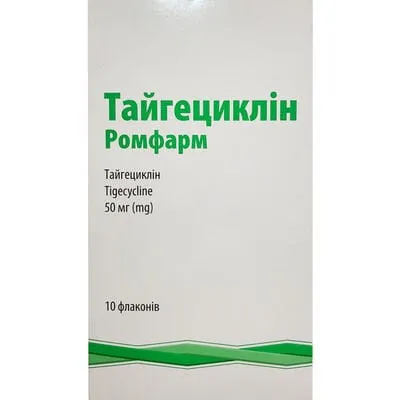
Table of Contents
INSTRUCTION FOR MEDICAL USE OF THE MEDICINAL PRODUCT TIGECYCLINE romPharm
Composition:
Active substance: tigecycline;
1 vial contains 50 mg of tigecycline;
Excipients: lactose monohydrate; hydrochloric acid.
Pharmaceutical form. Lyophilisate for solution for infusion.
Main physicochemical properties: orange-colored powder.
Pharmacotherapeutic group.
Antibacterials for systemic use, tetracyclines.
ATC code J01A A12.
Pharmacological properties.
Pharmacodynamics.
Mechanism of action.
Tigecycline, a glycylcycline-class antibiotic, inhibits bacterial protein translation by binding to the 30S ribosomal subunit and blocking the entry of aminoacyl-tRNA molecules into the A-site of the ribosome. This prevents the incorporation of amino acid residues into elongating peptide chains.
Tigecycline is generally considered to have a bacteriostatic effect. In studies evaluating the effect of tigecycline on Enterococcus spp., Staphylococcus aureus, and Escherichia coli at a concentration four times higher than the minimum inhibitory concentration (MIC), a 2 log reduction in colony count was observed.
Mechanism of resistance.
Tigecycline is capable of overcoming two primary mechanisms of tetracycline resistance: ribosomal protection and active efflux. Among Enterobacteriaceae, cross-resistance exists between tigecycline and minocycline-resistant isolates, mediated by multidrug efflux pumps. There is generally no cross-resistance between tigecycline and most classes of antibiotics based on target site. Tigecycline is susceptible to chromosomally encoded multidrug efflux pumps in Proteeae and Pseudomonas aeruginosa. Organisms within the family Proteeae (Proteus spp., Providencia spp., and Morganella spp.) are generally less susceptible to tigecycline than other Enterobacteriaceae. Reduced susceptibility in both groups is associated with overexpression of the nonspecific efflux pump AcrAB, which mediates multidrug resistance. Decreased susceptibility of Acinetobacter baumannii is linked to overexpression of the AdeABC efflux pump.
Breakpoints.
The European Committee on Antimicrobial Susceptibility Testing (EUCAST) has established the following MIC breakpoints:
- For Staphylococcus spp. — S ≤ 0.5 mg/L and R > 0.5 mg/L;
- For Streptococcus spp. species, excluding S. pneumoniae — S ≤ 0.25 mg/L, R > 0.5 mg/L;
- For Enterobacter spp. — S ≤ 0.25 mg/L, R > 0.5 mg/L;
- For Enterobacteriaceae — S ≤ 1(^) mg/L, R > 2 mg/L.
(^) In vitro activity of tigecycline is reduced against Proteus, Providencia, and Morganella spp.
Clinical efficacy of tigecycline against anaerobic bacteria in polymicrobial intra-abdominal infections has been demonstrated; however, there is no correlation between MIC values, pharmacokinetic/pharmacodynamic data, and clinical outcomes. Therefore, susceptibility breakpoint information is not provided. It should be noted that a wide range of MIC values has been observed for Bacteroides and Clostridium species, including values exceeding 2 mg/L of tigecycline.
Data on the clinical efficacy of tigecycline against enterococci are limited. However, clinical studies have demonstrated that polymicrobial intra-abdominal infections respond to treatment with tigecycline.
Susceptibility.
The frequency of acquired resistance may vary depending on the geographical location and time of microbial sampling; local resistance data are therefore desirable, especially when treating severe infections. When local acquired resistance reaches a level at which the benefit of using the drug becomes questionable for at least some types of infections, expert advice should be sought.
Pathogenic microorganisms.
Predominantly susceptible species.
- Gram-positive aerobes:
Enterococcus spp.†
Staphylococcus aureus*
Staphylococcus epidermidis
Staphylococcus haemolyticus
Streptococcus agalactiae*
Streptococcus anginosus group* (includes S. anginosus, S. intermedius, S. constellatus)
Streptococcus pyogenes*
Viridans group streptococci
- Gram-negative aerobes:
Citrobacter freundii*
Citrobacter koseri
Escherichia coli*
Klebsiella oxytoca*
- Anaerobes:
Clostridium perfringens†
Peptostreptococcus spp.†
Prevotella spp.
Species with potential for developing resistance.
- Gram-negative aerobes:
Acinetobacter baumannii
Burkholderia cepacia
Enterobacter aerogenes
Enterobacter cloacae*
Klebsiella pneumoniae*
Morganella morganii
Proteus spp.
Providencia spp.
Serratia marcescens
Stenotrophomonas maltophilia
- Anaerobes:
Bacteroides fragilis group†
Species with inherent resistance.
- Gram-negative aerobes:
Pseudomonas aeruginosa
* Species for which adequate activity was demonstrated in clinical studies.
† See "Breakpoints" above.
Cardiac electrophysiology.
In a randomized, placebo- and active-controlled, four-period crossover study involving 46 healthy volunteers, no significant effect on QTc interval was observed after administration of a single intravenous dose of tigecycline 50 mg or 200 mg.
Pediatrics.
Tigecycline (0.75; 1 or 1.25 mg/kg) was administered in an open-label, multiple ascending dose study to 39 children aged 8 to 11 years with complicated intra-abdominal infections or complicated skin and soft tissue infections*. All patients received intravenous tigecycline for 3 to 14 consecutive days, with the option to switch to oral antibiotics on day 4 or later.*
Clinical response was assessed between days 10 and 21 after the last dose. Summary results for clinical response in the modified intent-to-treat population (mITT) are presented in Table 1.*
Table 1.
Clinical response, mITT population.
| Indications |
0.75 mg/kg, n/N (%) |
1 mg/kg, n/N (%) |
1.25 mg/kg, n/N (%) |
| Complicated intra-abdominal infections |
6/6 (100.0) |
3/6 (50.0) |
10/12 (83.3) |
| Complicated skin and soft tissue infections |
3/4 (75.0) |
5/7 (71.4) |
2/4 (50.0) |
| Total |
9/10 (90.0) |
8/13 (62.0) |
12/16 (75.0) |
The efficacy data described above should be critically evaluated, as concomitant use of antibiotics was permitted in this study; furthermore, the small number of patients should be taken into account.
Pharmacokinetics.
Absorption.
The bioavailability of tigecycline is 100%, as it is administered intravenously.
Distribution.
The binding of tigecycline to plasma proteins in vitro was approximately 71–89% at concentrations observed during clinical studies (from 0.1 to 1.0 µg/mL). Pharmacokinetic studies in animals and humans have demonstrated that tigecycline rapidly distributes into tissues.
Following administration of a single dose or multiple doses of 14C-tigecycline in rats, radioactivity was widely distributed in most tissues; the highest concentrations were found in bone marrow, salivary glands, thyroid gland, spleen, and kidneys. In humans, the volume of distribution of tigecycline at steady state averages 500–700 L (7–9 L/kg), indicating active distribution of tigecycline beyond plasma and its accumulation in tissues.
There are no data on the ability of tigecycline to cross the blood-brain barrier in humans.
In clinical pharmacology studies using a therapeutic dose (100 mg, followed by 50 mg every 12 hours), the steady-state Cmax of tigecycline in blood serum was 866 ± 233 ng/mL with a 30-minute infusion and 634 ± 97 ng/mL with a 60-minute infusion. The steady-state AUC0–12h value is 2349 ± 850 ng×h/mL.
Metabolism.
It is estimated that less than 20% of tigecycline is metabolized prior to elimination from the body. After administration of 14C-tigecycline to healthy male volunteers, unchanged 14C-labeled material was detected in urine and feces; glucuronide, N-acetyl metabolite, and epimer of tigecycline were also present.
In vitro studies using human liver microsomes show that tigecycline does not inhibit the metabolism mediated by any of the six cytochrome P450 (CYP) isoforms: 1A2, 2C8, 2C9, 2C19, 2D6, and 3A4, via competitive inhibition. Additionally, tigecycline does not exhibit nicotinamide-adenine-dinucleotide-phosphate-dependent inhibition of CYP2C9, CYP2C19, CYP2D6, and CYP3A, suggesting absence of suicide inhibition of these CYP enzymes.
Elimination.
Measurement of total radioactivity in feces and urine after administration of 14C-tigecycline shows that 59% of the dose is excreted in feces and bile, and 33% in urine. Overall, the main route of tigecycline elimination is excretion of unchanged tigecycline via bile. Secondary pathways include glucuronide formation and unchanged renal excretion. Total clearance of tigecycline after intravenous administration is 24 L/h, and renal clearance is approximately 13% of total clearance. Tigecycline exhibits polyexponential elimination from serum; with multiple dosing, the mean elimination half-life is 42 hours, although there is considerable inter-subject variability.
In vitro studies using Caco-2 cells demonstrate that tigecycline does not inhibit digoxin efflux, indicating that tigecycline is not a P-glycoprotein inhibitor. These in vitro findings are consistent with the lack of effect of tigecycline on digoxin clearance observed in the in vivo drug interaction study described below (see section "Interaction with other medicinal products and other forms of interaction").
Based on in vitro studies using a cell line characterized by overexpression of P-glycoprotein, tigecycline is a substrate of P-glycoprotein. The potential contribution of P-glycoprotein-mediated transport to the in vivo distribution of tigecycline is unknown. Concomitant administration of P-glycoprotein inhibitors (e.g., ketoconazole, cyclosporine) or P-glycoprotein inducers (e.g., rifampicin) may affect the pharmacokinetics of tigecycline.
Special patient groups.
Hepatic impairment.
The pharmacokinetic profile of a single dose of tigecycline was not altered in patients with mild hepatic impairment. However, in patients with moderate and severe hepatic impairment (Child–Pugh classes B and C), systemic clearance of tigecycline was reduced by 25% and 55%, respectively, and the elimination half-life of tigecycline was prolonged by 23% and 43%, respectively (see section "Posology and method of administration").
Renal impairment.
The pharmacokinetic profile of a single dose of tigecycline is not altered in patients with renal insufficiency (creatinine clearance < 30 mL/min, n = 6). In patients with severe renal impairment, AUC values were 30% higher than in patients with normal renal function (see section "Posology and method of administration").
Elderly patients.
Overall, no differences in pharmacokinetic parameters were observed between healthy elderly and younger volunteers (see section "Posology and method of administration").
Paediatric population.
The pharmacokinetics of tigecycline were studied in two trials. The first trial included children aged 8–16 years (n = 24) who received a single dose of tigecycline (0.5 mg/kg, 1 mg/kg, or 2 mg/kg, up to a maximum dose of 50 mg, 100 mg, and 150 mg, respectively) administered intravenously over 30 minutes. The second trial was conducted in children aged 8–11 years who received multiple doses of tigecycline (0.75 mg/kg, 1 mg/kg, or 1.25 mg/kg, up to a maximum dose of 50 mg) every 12 hours, administered intravenously over 30 minutes. Loading doses were not used in these trials. Pharmacokinetic parameters are presented in Table 2.
Table 2.
Dose normalized to 1 mg/kg, Cmax and AUC (mean ± standard deviation) of tigecycline in children.
| Age (years) |
N |
Cmax (ng/mL) |
AUC (ng×h/mL)* |
| Single dose |
|||
| 8–11 |
8 |
3881 ± 6637 |
4034 ± 2874 |
| 12–16 |
16 |
8508 ± 11,433 |
7026 ± 4088 |
| Multiple doses |
|||
| 8–11 |
42 |
1911 ± 3032 |
2404 ± 1000 |
* Single dose — AUC0–∞, multiple dose — AUC0–12h.
The target AUC0–12h in adults following administration of the recommended loading dose of 100 mg and maintenance dose of 50 mg every 12 hours was approximately 2500 ng×h/mL.
Population pharmacokinetic analysis from both studies identified body weight as a covariate of tigecycline clearance in children aged 8 years and older. It is predicted that with a dosing regimen of 1.2 mg/kg tigecycline every 12 hours (up to a maximum dose of 50 mg every 12 hours) in children aged 8–12 years and 50 mg every 12 hours in adolescents aged 12–18 years, drug exposure will be similar to that observed in adults receiving the approved dosing regimen.
During these studies, higher Cmax values were observed in some children compared to adults. Therefore, the infusion rate of tigecycline in pediatric patients should be selected with caution.
Sex.
No clinically significant differences in tigecycline clearance between males and females were observed. AUC in females was found to be 20% higher than in males.
Race.
Tigecycline clearance is not influenced by race.
Body weight.
Clearance, clearance adjusted for body weight, and AUC in patients with different body weights, including patients weighing ≥ 125 kg, were not significantly different. In patients weighing ≥ 125 kg, AUC values were 24% lower. Data for patients weighing 140 kg or more are not available.
Clinical characteristics.
Indications.
Tigecycline Rompharm is indicated for use in adults and children aged 8 years and older for the treatment of (see also sections «Special warnings and precautions for use» and «Pharmacodynamics»):
- complicated skin and soft tissue infections, excluding infected diabetic foot (see section «Special warnings and precautions for use»);
- complicated intra-abdominal infections.
Tigecycline Rompharm should be used only when other antibiotics are not suitable for use (see sections «Special warnings and precautions for use», «Adverse reactions» and «Pharmacodynamics»).
Official recommendations on the appropriate use of antibacterial agents should also be taken into account.
Contraindications.
Hypersensitivity to the active substance or to any of the excipients listed in section «Composition».
Patients with hypersensitivity to tetracycline-class antibiotics may have hypersensitivity to tigecycline.
Interaction with other medicinal products and other forms of interaction.
Interaction studies were conducted only in adults.
Concomitant administration of tigecycline and warfarin (25 mg single dose) to healthy volunteers resulted in a 40% and 23% reduction in the clearance of R-warfarin and S-warfarin, respectively, and an increase in AUC by 68% and 29%, respectively. The mechanism of this interaction is not yet known. Based on available data, it cannot be assumed that this interaction may lead to significant changes in the international normalized ratio (INR). However, since tigecycline may prolong both prothrombin time and activated partial thromboplastin time, coagulation parameters should be closely monitored when tigecycline is used concomitantly with anticoagulants (see section «Special warnings and precautions for use»). Warfarin did not affect the pharmacokinetic profile of tigecycline.
Tigecycline is not extensively metabolized. Therefore, active substances that are inhibitors or inducers of CYP450 isoenzymes are not expected to influence its clearance. In vitro, tigecycline does not exhibit properties of a competitive inhibitor or irreversible inhibitor of CYP450 enzymes (see section «Pharmacokinetics»).
Tigecycline at recommended doses does not affect the rate or extent of absorption or clearance of digoxin (0.5 mg, followed by 0.25 mg daily) when administered to healthy adult volunteers. Digoxin does not affect the pharmacokinetic profile of tigecycline. Therefore, dosage adjustment is not required when tigecycline is used concomitantly with digoxin.
In vitro studies have not shown antagonism between tigecycline and antibiotics from other classes commonly used in therapy.
Concomitant use of antibiotics with oral contraceptives may reduce the efficacy of contraceptives.
Concomitant administration of tigecycline with calcineurin inhibitors such as tacrolimus or cyclosporine may lead to increased trough serum concentrations of calcineurin inhibitors. Therefore, serum concentrations of calcineurin inhibitors should be monitored during treatment with tigecycline to avoid drug toxicity.
According to in vitro study results, tigecycline is a substrate of P-glycoprotein. Combined use with P-glycoprotein inhibitors (e.g., ketoconazole, cyclosporine) or P-glycoprotein inducers (e.g., rifampicin) may affect the pharmacokinetics of tigecycline (see section «Pharmacokinetics»).
Special precautions for use.
In clinical trials involving patients with complicated skin and soft tissue infections, complicated intra-abdominal infections, infected diabetic foot, hospital-acquired pneumonia, and in studies involving patients with resistant pathogens, a higher mortality rate was observed among patients treated with tigecycline compared to those treated with comparator agents. The reasons for this remain unknown, but cannot exclude lower efficacy and safety compared to the comparator agents used in the studies.
Superinfection.
In clinical trials, surgical wound healing complications associated with superinfection were observed in patients with complicated intra-abdominal infections. Patients with impaired wound healing should be closely monitored for signs of superinfection (see section "Adverse reactions").
Patients who develop superinfections, including hospital-acquired pneumonia, may have poorer treatment outcomes. Patients should be carefully monitored for the development of superinfections. If a new site of infection develops after initiation of tigecycline treatment, other than complicated skin and soft tissue infections or complicated intra-abdominal infections, consideration should be given to switching to an alternative antibacterial therapy proven effective for the treatment of the existing infection.
Anaphylaxis.
Anaphylactic/anaphylactoid reactions, which may be life-threatening, have been reported during tigecycline use (see section "Contraindications" and "Adverse reactions").
Hepatic impairment.
Cases of liver injury, predominantly of cholestatic type, including cases of hepatic failure with fatal outcome, have been reported in patients treated with tigecycline. Although the development of hepatic failure in patients receiving tigecycline may be attributable to underlying diseases or concomitant medications, a potential contribution of tigecycline to this condition cannot be ruled out (see section "Adverse reactions").
Tetracycline-class antibiotics.
Glycylcycline antibiotics are structurally similar to tetracycline-class antibiotics. Adverse reactions similar to those observed with tetracycline-class antibiotics may occur during tigecycline use. These may include photosensitivity, pseudotumor cerebri, pancreatitis, and anti-anabolic effects leading to increased blood urea nitrogen, azotemia, acidosis, and hyperphosphatemia (see section "Adverse reactions").
Acute pancreatitis.
Acute pancreatitis, which may be severe, has occurred (frequency unknown) in association with tigecycline use (see section "Adverse reactions"). Acute pancreatitis should be considered in the differential diagnosis in patients receiving tigecycline who develop clinical symptoms, signs, or laboratory abnormalities consistent with acute pancreatitis. Most reported cases of pancreatitis occurred at least one week after initiation of tigecycline therapy. In some cases, pancreatitis developed in patients without known risk factors for pancreatitis. Clinical improvement usually occurred after discontinuation of tigecycline. Consideration should be given to discontinuing tigecycline if pancreatitis is suspected.
Coagulopathy.
Tigecycline may prolong both prothrombin time (PT) and activated partial thromboplastin time (aPTT). Additionally, hypofibrinogenemia has been reported during tigecycline treatment. Therefore, coagulation parameters such as PT or other appropriate anticoagulation tests, including blood fibrinogen levels, should be monitored before initiating tigecycline therapy and regularly during treatment. Particular caution is required in patients with severe underlying conditions and in those receiving concomitant anticoagulant therapy.
Underlying diseases.
Experience with tigecycline use in infections among patients with severe underlying conditions is limited.
Clinical trials of tigecycline for the treatment of complicated skin and soft tissue infections primarily included patients with cellulitis (58.6%) and deep-seated abscesses (24.9%). Patients with severe underlying conditions such as immunosuppression, infected pressure ulcers, or those requiring treatment longer than 14 days (e.g., necrotizing fasciitis) were not included in the trials. A limited number of patients with comorbidities such as diabetes mellitus (25.8%), peripheral vascular disease (10.4%), intravenous drug use (4.0%), and HIV infection (1.2%) were enrolled. Additionally, experience with patients with concomitant bacteremia is limited (3.4%). Therefore, treatment of such patients requires caution. Results from a large study in patients with infected diabetic foot showed lower efficacy of tigecycline compared to the reference drug; therefore, its use is not recommended in this patient group (see section "Indications").
Clinical trials of tigecycline for complicated intra-abdominal infections primarily included patients with complicated appendicitis (50.3%), and less commonly, complicated cholecystitis (9.6%), intestinal perforation (9.6%), intra-abdominal abscess (8.7%), perforated gastric or duodenal ulcer (8.3%), peritonitis (6.2%), and complicated diverticulitis (6.0%). Peritonitis was surgically confirmed in 77.8% of these patients. The trials included a limited number of patients with severe underlying conditions: immunosuppression, critical illness (APACHE II score >15, 3.34%), and surgically confirmed multiple intra-abdominal abscesses (11.4%). Some experience exists in treating patients with concomitant bacteremia (5.6%). Therefore, caution is required when treating such patients.
When using tigecycline in patients with severe complicated intra-abdominal infections due to intestinal perforation, early sepsis, or septic shock, consideration should be given to combination antibacterial therapy (see section "Adverse reactions").
The effect of cholestasis on tigecycline pharmacokinetics has not been fully established. Biliary excretion accounts for approximately 50% of total elimination from the body. Therefore, careful monitoring of patients with cholestasis is required.
Patients receiving tigecycline concomitantly with anticoagulants should be monitored via prothrombin time or other appropriate coagulation tests (see section "Interaction with other medicinal products and other forms of interaction").
Pseudomembranous colitis, ranging from mild to life-threatening in severity, has been reported with nearly all antibacterial agents. Therefore, this diagnosis should be considered in patients who develop diarrhea during or after antibacterial therapy (see section "Adverse reactions").
Tigecycline use may lead to overgrowth of non-susceptible organisms, including fungi. Patients should be closely monitored during treatment (see section "Adverse reactions").
Bone discoloration was observed in rat studies with tigecycline. Administration of tigecycline during tooth development may lead to permanent tooth discoloration in humans (see section "Adverse reactions").
Pediatric population.
Clinical experience with tigecycline for the treatment of infections in children aged 8 years and older is very limited (see sections "Adverse reactions" and "Pharmacodynamics"). Therefore, use of this drug should be restricted to clinical situations where no alternative antibacterial therapy is available.
Adverse reactions such as nausea and vomiting are very common in children and adolescents (see section "Adverse reactions"). Dehydration should be considered as a potential complication. The drug should preferably be administered via intravenous infusion lasting more than 60 minutes in pediatric patients.
As in adults, abdominal pain has been frequently reported in children. Such pain may indicate pancreatitis. If pancreatitis develops, tigecycline should be discontinued.
Liver function tests, coagulation parameters, blood counts, and amylase and lipase levels should be monitored regularly before and during tigecycline treatment.
Tigecycline Rompharm should not be used in children under 8 years of age due to lack of safety and efficacy data in this age group, and because tigecycline may cause permanent tooth discoloration (see sections "Dosage and administration" and "Adverse reactions").
Use during pregnancy or breastfeeding.
Pregnancy. Data on tigecycline use in pregnant women are lacking or limited. Animal studies have shown reproductive toxicity. The potential risk to humans is unknown. Like tetracycline-class antibiotics, tigecycline may cause permanent tooth damage (discoloration and enamel defects) and impair bone ossification in the fetus during the second half of pregnancy, as well as in children under 8 years of age, due to accumulation in tissues with high calcium turnover and formation of calcium-containing chelate complexes (see section "Special precautions for use"). Tigecycline should not be used during pregnancy except in clinical situations where the patient requires tigecycline therapy.
Lactation. It is unknown whether tigecycline/metabolites are excreted in human breast milk. Available pharmacodynamic/toxicological data from animal studies indicate that tigecycline/metabolites are excreted in milk. Risk to newborns/infants cannot be excluded. A decision should be made whether to discontinue breastfeeding or to discontinue/modify tigecycline therapy, taking into account the benefit of breastfeeding for the child and the benefit of therapy for the woman.
Fertility. Tigecycline did not affect mating or fertility in rats at doses approximately 4.7 times the human daily dose based on AUC. No drug-related effects on ovaries or ovarian cycles were observed in female rats at doses approximately 4.7 times the human daily dose based on AUC.
Effects on ability to drive and use machines.
Dizziness may occur during tigecycline treatment, which may affect the ability to drive or operate machinery (see section "Adverse reactions").
Method of Administration and Dosage.
Dosing.
Adults.
The recommended initial dose for adults is 100 mg, followed by 50 mg every 12 hours for 5–14 days.
The duration of treatment should be determined based on the severity of the infection, the site of infection, and the patient's clinical response.
Children and adolescents (aged 8 to 17 years).
Tigecycline should be used for treatment of children aged 8 years and older only after consultation with a physician experienced in managing infections.
- Children aged 8 to 12 years: 1.2 mg/kg of tigecycline every 12 hours administered intravenously, with a maximum dose of 50 mg every 12 hours for 5–14 days.
- Adolescents aged 12 to 18 years: 50 mg every 12 hours for 5–14 days.
Elderly patients.
Dose adjustment is not required for elderly patients (see section "Pharmacokinetics").
Hepatic impairment.
No dose adjustment is required in patients with mild to moderate hepatic impairment (Child-Pugh class A or B).
In patients (including children) with severe hepatic impairment (Child-Pugh class C), the tigecycline dose should be reduced by 50%. The adult dose should be reduced to 25 mg every 12 hours after a 100 mg loading dose. The drug should be used with caution and treatment response should be closely monitored in patients with severe hepatic impairment (Child-Pugh class C) (see sections "Special precautions" and "Pharmacokinetics").
Renal impairment.
No dose adjustment is required in patients with renal impairment or in patients undergoing hemodialysis (see section "Pharmacokinetics").
Method of administration.
Tigecycline is administered only by intravenous infusion over 30 to 60 minutes (see section "Special precautions"). In children, tigecycline should preferably be administered as an intravenous infusion lasting more than 60 minutes (see section "Special precautions").
Information on reconstitution and dilution of the medicinal product prior to administration.
To achieve a tigecycline concentration of 10 mg/mL, the powder should be reconstituted with 5.3 mL of 0.9% sodium chloride injection solution (9 mg/mL), 5% dextrose injection solution (50 mg/mL), or lactated Ringer's injection solution. The contents of the vial should be gently mixed by rotating until the powder is completely dissolved. Then, immediately withdraw 5 mL of the resulting solution and transfer it into a 100 mL intravenous infusion bag or another suitable infusion container (e.g., a glass vial).
To obtain a 100 mg dose, reconstitute the contents of two vials into a 100 mL intravenous infusion bag or another suitable infusion container (e.g., a glass vial). Note: The vial contains a 6% overage; thus, 5 mL of the prepared solution is equivalent to 50 mg of active substance.
The reconstituted solution should be yellow to orange in color; if the solution has a different color, it should be discarded. Parenteral products should be inspected visually for particulate matter and discoloration (e.g., green or black) prior to administration.
Tigecycline should be administered intravenously via a dedicated intravenous line or through a Y-site catheter. If the same line is used for sequential administration of multiple drugs, it should be flushed before and after tigecycline administration with 0.9% sodium chloride injection solution (9 mg/mL) or 5% dextrose injection solution (50 mg/mL). When administering through a common line, infusion solutions compatible with both tigecycline and other medicinal products administered through the same line must be used (see section "Incompatibilities").
The vial is intended for single use only; any unused medicinal product or waste material should be disposed of according to local requirements.
Compatible intravenous infusion solutions:
- 0.9% sodium chloride injection solution (9 mg/mL);
- 5% dextrose injection solution (50 mg/mL);
- lactated Ringer's injection solution.
Compatibility of tigecycline solution prepared with 0.9% sodium chloride injection solution has been confirmed for co-administration via a Y-site catheter with the following medicinal products or solvents: amikacin, dobutamine, dopamine hydrochloride, gentamicin, haloperidol, lactated Ringer's solution, lidocaine hydrochloride, metoclopramide, morphine, norepinephrine, piperacillin/tazobactam (EDTA-containing formulation), potassium chloride, propofol, ranitidine hydrochloride, theophylline, and tobramycin.
Children.
The safety and efficacy of tigecycline in children under 8 years of age have not been established. There are no available data.
Tigecycline Rompharm should not be used in children under 8 years of age due to the risk of tooth discoloration (see sections "Special precautions" and "Pharmacodynamics").
Overdose.
There is no specific information on the treatment of overdose. Following a single 300 mg intravenous dose of tigecycline administered over 60 minutes to healthy volunteers, an increased incidence of nausea and vomiting was observed.
Tigecycline is not significantly removed by hemodialysis.
Adverse Reactions
Overall, during phases 3 and 4 of clinical trials, 2393 patients with complicated skin and soft tissue infections and complicated intra-abdominal infections were treated with tigecycline.
During clinical studies, the most commonly reported adverse reactions associated with the use of the medicinal product were nausea (21%) and vomiting (13%). These reactions were mostly mild or moderate in severity, usually occurred early in treatment (within 1–2 days), and were reversible.
The adverse reactions listed below were identified during clinical trials and post-marketing surveillance (marked with the symbol «*»). Frequency is defined as follows: very common: ≥ 1/10; common: ≥ 1/100 and < 1/10; uncommon: ≥ 1/1000 and < 1/100; rare: ≥ 1/10000 and < 1/1000; very rare: < 1/10000; frequency not known (cannot be estimated based on available data).
Infections and infestations.
Common: sepsis/septic shock, pneumonia, abscess, infections.
Blood and lymphatic system disorders.
Common: prolonged activated partial thromboplastin time, prolonged prothrombin time.
Uncommon: thrombocytopenia, increased international normalized ratio (INR).
Rare: hypofibrinogenemia.
Immune system disorders.
Frequency not known: anaphylactic/anaphylactoid reactions* (see section «Contraindications» and «Special precautions for use»).
Metabolism and nutrition disorders.
Common: hypoglycemia, hypoproteinemia.
Nervous system disorders.
Common: dizziness.
Vascular disorders.
Common: phlebitis.
Uncommon: thrombophlebitis.
Gastrointestinal disorders.
Very common: nausea, vomiting, diarrhea.
Common: abdominal pain, dyspepsia, anorexia.
Uncommon: acute pancreatitis (see section «Special precautions for use»).
Hepatobiliary disorders.
Common: increased serum aspartate aminotransferase (AST) levels, increased serum alanine aminotransferase (ALT) levels, hyperbilirubinemia.
Uncommon: jaundice, hepatic injury, mostly cholestatic.
Frequency not known: liver failure* (see section «Special precautions for use»).
Skin and subcutaneous tissue disorders.
Common: pruritus, rash.
Frequency not known: severe skin reactions, including Stevens-Johnson syndrome*.
General disorders and administration site conditions.
Common: impaired healing, injection site reactions, headache.
Uncommon: injection site inflammation, injection site pain, injection site swelling, injection site phlebitis.
Investigations.
Common: increased serum amylase levels, increased blood urea nitrogen (BUN) levels.
Adverse reactions associated with antibiotics.
- Pseudomembranous colitis ranging from mild to life-threatening (see section «Special precautions for use»).
- Overgrowth of antibiotic-resistant microorganisms, including fungi (see section «Special precautions for use»).
Adverse reactions associated with tetracycline-class antibiotics.
Glycylcycline antibiotics are structurally similar to tetracycline-class antibiotics. Adverse reactions associated with tetracycline-class antibiotics may include increased photosensitivity, benign intracranial hypertension, pancreatitis, and anti-anabolic effects leading to increased blood urea nitrogen, azotemia, acidosis, and hyperphosphatemia (see section «Special precautions for use»).
Administration of tigecycline during tooth development may result in permanent discoloration of teeth (see section «Special precautions for use»).
In phase 3 and 4 clinical trials involving patients with complicated skin and soft tissue infections and complicated intra-abdominal infections, serious adverse reactions related to infections occurred more frequently in patients treated with tigecycline (7.1%) compared to those receiving comparator agents (5.3%). A notable difference was observed in the incidence of sepsis/septic shock with tigecycline (2.2%) versus comparator agents (1.1%).
During the post-treatment period, changes in AST and ALT levels occurred more frequently in patients treated with tigecycline compared to those receiving comparator agents, in whom such changes occurred more frequently during therapy.
In phase 3 and 4 clinical trials involving patients with complicated skin and soft tissue infections and complicated intra-abdominal infections, mortality was observed in 2.4% (54/2216) of patients treated with tigecycline and in 1.7% (37/2206) of patients treated with active comparator agents.
Pediatric population.
Safety data from two pharmacokinetic studies (see section «Pharmacokinetics») are very limited. No new or unexpected safety concerns with tigecycline were observed during these studies.
The safety of tigecycline was evaluated in an open-label, single-dose, escalating-dose pharmacokinetic study involving 25 children aged 8 to 16 years who had recently recovered from infections. The adverse reaction profile of tigecycline in these patients was generally consistent with that observed in adults.
The safety of tigecycline was also evaluated in an open-label, multiple-dose, escalating-dose pharmacokinetic study involving 58 children aged 8 to 11 years with complicated skin and soft tissue infections (n = 15), complicated intra-abdominal infections (n = 24), or community-acquired pneumonia (n = 19). The adverse reaction profile of tigecycline in these children was generally consistent with that in adults, except for nausea (48.3%), vomiting (46.6%), and increased serum lipase levels (6.9%), which were observed at higher frequencies than in adults.
Reporting suspected adverse reactions.
Reporting suspected adverse reactions after marketing authorization is important. It allows continuous monitoring of the benefit-risk balance of the medicinal product. Healthcare professionals should report any suspected adverse reactions in accordance with national regulatory requirements.
Shelf life.
2 years.
Storage conditions.
Store at temperatures not exceeding 25 °C.
Keep out of the reach and sight of children.
Incompatibilities.
The following active substances must not be administered simultaneously with tigecycline through the same Y-site catheter: amphotericin B, amphotericin B lipid complex, diazepam, esomeprazole, omeprazole, and intravenous solutions that may increase pH above 7.
This medicinal product must not be mixed with other medicinal products unless compatibility with tigecycline has been established.
Packaging.
Lyophilisate in a glass vial with a rubber stopper and aluminum cap with a "flip-off" plastic cap; 10 vials per cardboard box.
Prescription status. Prescription only.
Manufacturer.
K.T. ROMPHARM COMPANY S.R.L. / S.C. ROMPHARM COMPANY S.R.L.
Manufacturer's address and place of business
Str. Eroilor No. 1A, Otopeni city, 075100, Ilfov county, Romania / Eroilor str. 1A, Otopeni city, 075100, county Ilfov, Romania.