Tagrisso
Ukraine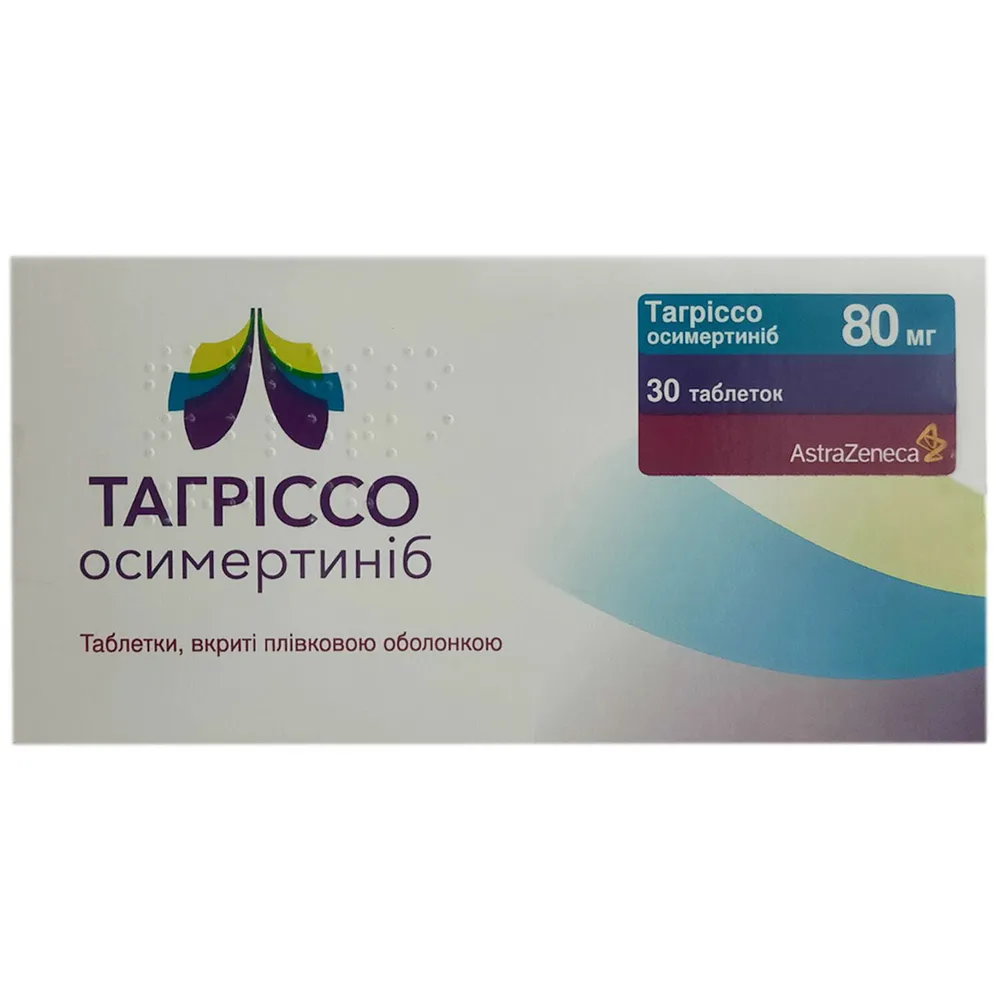
Table of Contents
INSTRUCTIONS FOR MEDICAL USE OF THE MEDICINAL PRODUCT Tagrisso (Tagrisso®)
Composition:
Active substance: osimertinib;
One film-coated tablet contains 40 mg or 80 mg of osimertinib;
Excipients: mannite (E 421), microcrystalline cellulose, low-substituted hydroxypropylcellulose, sodium stearyl fumarate; film coating: polyvinyl alcohol, titanium dioxide (E 171), macrogol 3350, talc, yellow iron oxide (E 172), red iron oxide (E 172), black iron oxide (E 172).
Pharmaceutical form. Film-coated tablets.
Main physicochemical properties:
40 mg: round, biconvex, beige film-coated tablets, with "AZ" above "40" engraved on one side and smooth on the reverse.
80 mg: oval, biconvex, beige film-coated tablets, with "AZ 80" engraved on one side and smooth on the reverse.
Pharmacotherapeutic group. Antineoplastic agents. Protein kinase inhibitors.
ATC code L01E B04.
Pharmacological Properties.
Pharmacodynamics.
Mechanism of action
Osimertinib is a tyrosine kinase inhibitor (TKI). The medicinal product is an irreversible inhibitor of epidermal growth factor receptors (EGFRs) containing sensitizing mutations (EGFRm) and the TKI-resistance mutation T790M.
Pharmacodynamic effects
In vitro studies demonstrated that osimertinib exhibits potent inhibitory activity against EGFR across all clinically relevant non-small cell lung cancer (NSCLC) cell lines harboring EGFR sensitizing mutations and the T790M mutation (observed IC50 values ranging from 6 nM to 54 nM against phospho-EGFR). This leads to inhibition of cell growth, while activity against EGFR in wild-type cell lines is considerably lower (observed IC50 values ranging from 480 nM to 1.8 µM against phospho-EGFR). Oral administration of osimertinib in vivo results in tumor regression in both NSCLC xenograft models with EGFRm and T790M, and in a transgenic mouse model of lung cancer.
Cardiac electrophysiology
The potential for QTc interval prolongation with Tagrisso was assessed in 210 patients receiving osimertinib 80 mg once daily in the AURA2 study. Serial ECGs were recorded after single-dose administration and at steady state to evaluate the effect of osimertinib on QTc intervals. Based on pharmacokinetic/pharmacodynamic analysis, a drug-related QTc prolongation of 14 ms is predicted at the 80 mg dose, with an upper bound of 16 ms (90% CI).
Clinical efficacy and safety
Adjuvant treatment of EGFR mutation-positive NSCLC with or without prior adjuvant chemotherapy, ADAURA trial
The efficacy and safety of Tagrisso for adjuvant treatment of patients with EGFR mutation-positive (Ex19del or L858R) NSCLC who have undergone complete tumor resection, with or without prior adjuvant chemotherapy, were demonstrated in a randomized, double-blind, placebo-controlled trial (ADAURA).
Eligible patients with resectable tumors at stage IB–IIIA (according to the American Joint Committee on Cancer [AJCC], 7th edition) were required to have EGFR mutations (Ex19del or L858R) detected by cobas EGFR mutation test performed prospectively at a central laboratory using biopsy or surgical specimen.
Patients were randomized in a 1:1 ratio to receive either Tagrisso (n = 339, 80 mg orally once daily) or placebo (n = 343), following recovery from surgery and completion of standard adjuvant chemotherapy. Patients who did not receive adjuvant chemotherapy were randomized within 10 weeks, and those who received adjuvant chemotherapy were randomized within 26 weeks after surgery. At randomization, patients were stratified by type of EGFR mutation (Ex19del or L858R), ethnicity (East Asian or non-East Asian), and tumor stage according to the Tumor-Node-Metastasis (pTNM) classification (IB vs. II vs. IIIA) as per AJCC 7th edition. Treatment continued until disease recurrence, development of unacceptable toxicity, or for up to 3 years.
The primary efficacy endpoint was investigator-assessed disease-free survival (DFS) in the stage II–IIIA population. DFS in the stage IB–IIIA population (overall population) was an additional efficacy endpoint. Other secondary efficacy endpoints included DFS rate, overall survival (OS), OS rate, and time to deterioration in health-related quality of life (HRQoL) as measured by SF-36.
Baseline demographic and disease characteristics of the overall population were as follows: median age 63 years (range 30–86 years), ≥75 years (11%), female sex (70%), East Asian ethnicity (64%), never smokers (72%), WHO performance status 0 (64%) or 1 (36%), stage IB (31%), stage II (34%), and stage IIIA (35%). Regarding EGFR mutation status, 55% had exon 19 deletions and 45% had L858R point mutations in exon 21; 9 patients (1%) also had concomitant de novo T790M mutation. The majority (60%) of patients received adjuvant chemotherapy prior to randomization (26% IB; 71% IIA; 73% IIB; 80% IIIA). At the time of DFS analysis, 205 (61%) patients were still receiving active treatment; among the 73 (11%) patients eligible to complete the 3-year treatment period, 40 (12%) were in the osimertinib group and 33 (10%) in the placebo group.
Disease recurrence occurred in 37 patients during treatment with Tagrisso. Most frequently reported sites of recurrence were: lungs (19 patients), lymph nodes (10 patients), and CNS (central nervous system) (5 patients). Disease recurrence occurred in 157 patients during treatment with placebo. Most frequently reported sites of recurrence were: lungs (61 patients), lymph nodes (48 patients), and CNS (34 patients).
The ADAURA trial demonstrated a statistically significant reduction in the risk of disease recurrence or death in patients receiving Tagrisso compared to those receiving placebo in the stage II–IIIA population. Similar results were observed in the stage IB–IIIA population.
Investigator-assessed efficacy results from the ADAURA trial are presented in Table 1.
Table 1
Efficacy results from the ADAURA trial, investigator assessment
| Efficacy parameter |
Patients with stage II–IIIA |
Patients with stage IB–IIIA |
||
| Tagrisso (N = 233) |
Placebo |
Tagrisso (N = 339) |
Placebo |
|
| Disease-free survival |
||||
| Number of events (%) |
26 (11) |
130 (55) |
37 (11) |
159 (46) |
| Disease recurrence (%) |
26 (11) |
129 (54) |
37 (11) |
157 (46) |
| Death (%) |
0 |
1 (0.4) |
0 |
2 (0.6) |
| Median DFS, months (95% CI) |
NR (38.8; NR) |
19.6 (16.6; 24.5) |
NR (NR; NR) |
27.5 (22.0; 35.0) |
| HR (99.06% CI); P-value |
0.17 (0.11; 0.26); < 0.0001a |
0.20 (0.14; 0.30); < 0.0001b |
||
| DFS at 12 months (%) (95% CI) |
97 (94; 99) |
61 (54; 67) |
97 (95; 99) |
69 (63; 73) |
| DFS at 24 months (%) (95% CI) |
90 (84; 93) |
44 (37; 51) |
89 (85; 92) |
52 (46; 58) |
| DFS at 36 months (%) (95% CI)c, d |
78 (65; 87) |
28 (19; 38) |
79 (69; 86) |
40 (32; 48) |
VR – hazard ratio; CI – confidence interval, NR – not calculable.
DFS results were based on investigator assessment.
A VR value < 1 indicates benefit with the medicinal product Tagrisso.
The median duration of follow-up for the DFS endpoint was 22.1 months for patients receiving Tagrisso and 14.9 months for patients receiving placebo (population with stage II–IIIA tumour), and 16.6 months for patients receiving placebo (population with stage IB–IIIA tumour).
DFS results are from the primary analysis (January 17, 2020).
- Adjusted for interim analysis (33% data maturity), a p-value < 0.0094 was required to achieve statistical significance.
- Adjusted for interim analysis (29% data maturity), a p-value < 0.0088 was required to achieve statistical significance.
- The number of patients at risk at 36 months was 18 in the Tagrisso group and 9 in the placebo group (population with stage II–IIIA tumour).
- The number of patients at risk at 36 months was 27 in the Tagrisso group and 20 in the placebo group (population with stage IB–IIIA tumour).
- The number of patients at risk at 36 months was 18 in the Tagrisso group and 9 in the placebo group (population with stage II–IIIA tumour).
- Adjusted for interim analysis (29% data maturity), a p-value < 0.0088 was required to achieve statistical significance.
The final OS analysis (data cut-off date (DCOD) January 27, 2023) demonstrated statistically significant improvement in OS for patients receiving Tagrisso compared to placebo, both in the population with stage II–IIIA disease (100 OS events [21% maturity]; HR = 0.49; 95.03% CI: 0.33, 0.73; p-value = 0.0004) and in the overall population (IB–IIIA; 124 OS events [18% maturity]; HR = 0.49; 95.03% CI: 0.34, 0.70; p-value < –0.0001). In both populations, median OS was not reached in either treatment group, and 95% CIs were not calculated. The median follow-up time to achieve OS in all patients was 59.9 months (stage II–IIIA disease population) and 60.4 months (stage IB–IIIA disease population) in the Tagrisso group, and 56.2 months (stage II–IIIA disease population) and 59.4 months (stage IB–IIIA disease population) in the placebo group.
The benefit of Tagrisso over placebo with respect to DFS was consistent across all pre-specified patient subgroups analyzed, including subgroups by ethnicity, age, sex, and EGFR mutation type (Ex19Del or L858R).
A exploratory analysis of DFS for CNS lesions (time to CNS lesion recurrence or death) in patients receiving Tagrisso compared to those receiving placebo showed a HR of 0.18 (95% CI: 0.10; 0.33; p < 0.0001) in the overall population (stage IB–IIIA).
Patient-reported outcomes
Health-related quality of life (HRQL) in the ADAURA study was assessed using the 36-Item Short Form Health Survey, version 2 (SF-36v2). The SF-36v2 questionnaire was completed at 12 weeks, 24 weeks, and then every 24 weeks from randomization until completion of treatment or discontinuation of the medicinal product. Overall, HRQL was maintained in both groups up to 30 months, with at least 70% of patients in the stage II–IIIA tumour population not experiencing clinically meaningful deterioration in physical health according to the SF-36 or death (70% in the Tagrisso group vs. 76% in the placebo group), or mental health according to the SF-36 or death (70% in the Tagrisso group vs. 71% in the placebo group).
Previously untreated locally advanced or metastatic NSCLC with positive EGFR mutation status
FLAURA – monotherapy
The efficacy and safety of Tagrisso in the treatment of patients with locally advanced or metastatic NSCLC with positive EGFR mutation status who are not candidates for curative surgery or radiotherapy, or patients with metastatic NSCLC who have not received prior systemic therapy for progressive disease, were demonstrated in a randomized, double-blind, active-controlled trial (FLAURA). Tumour tissue samples were required to have one of the two most common EGFR mutations known to be associated with EGFR TKI sensitivity (Ex19del or L858R), as determined by testing at a local or central laboratory.
Patients were randomized 1:1 to receive Tagrisso (n = 279, 80 mg orally once daily) or comparator EGFR TKI (epidermal growth factor receptor tyrosine kinase inhibitor) (n = 277, gefitinib 250 mg orally once daily or erlotinib 150 mg once daily).
Randomization was stratified by EGFR mutation type (Ex19del or L858R) and ethnicity (East Asian or non-East Asian). Patients received study treatment until treatment intolerance or until the investigator determined that the patient no longer derived clinical benefit. For patients receiving the comparator EGFR TKI, crossover to open-label Tagrisso was permitted upon disease progression if tumour samples were positive for the T790M mutation.
The primary efficacy endpoint was progression-free survival (PFS), assessed by the investigator.
Baseline demographic and disease characteristics of the overall study population: median age 64 years (range 26–93 years), ≥ 75 years (14%), female sex (63%), Caucasian race (36%), East Asian race (62%), never smoked (64%), WHO performance status 0 or 1 (100%), bone metastatic disease (36%), extrathoracic visceral metastases (35%), CNS metastases (21%, identified by CNS lesion site at baseline, history, and/or prior surgery and/or prior radiotherapy for CNS metastases).
Tagrisso demonstrated clinically and statistically significant improvement in progression-free survival compared to the comparator EGFR TKI (median 18.9 months vs. 10.2 months, respectively, HR = 0.46; 95% CI: 0.37; 0.57; P < 0.0001). Efficacy results from the FLAURA study by investigator assessment are presented in Table 2. The final OS analysis (58% data maturity) demonstrated a statistically significant improvement in this endpoint (HR = 0.799; 95.05% CI: 0.641; 0.997) and clinically meaningful increase in median overall survival for patients randomized to Tagrisso compared to the comparator EGFR TKI (Table 2). A greater proportion of patients receiving Tagrisso were alive at 12, 18, 24, and 36 months (89%, 81%, 74%, and 54%, respectively) compared to patients receiving the comparator EGFR TKI (83%, 71%, 59%, and 44%, respectively). Analysis of endpoints beyond progression showed that the PFS benefit was maintained with subsequent lines of therapy.
Table 2
Efficacy results from the FLAURA study by investigator assessment
| Efficiency parameter |
Tagrisso |
Comparator EGFR TKI |
| Progression-free survival (PFS) |
||
| Number of events (62% data maturity) |
136 (49) |
206 (74) |
| Median PFS, months (95% CI) |
18.9 (15.2; 21.4) |
10.2 (9.6; 11.1) |
| HR (95% CI), P-value |
0.46 (0.37; 0.57); P < 0.0001 |
|
| Overall survival (OS) |
||
| Number of deaths (58% data maturity) |
155 (56) |
166 (60) |
| Median OS, months (95% CI) |
38.6 (34.5; 41.8) |
31.8 (26.6; 36.0) |
| HR (95.05% CI), P-value |
0.799 (0.641; 0.997); P = 0.0462a |
|
| Objective response rate (ORR)*1 |
||
| Number of responses (n) |
223 |
210 |
| Odds ratio (95% CI), P-value |
1.3 (0.9; 1.9); P = 0.2421 |
|
| Duration of response (DoR)*b |
||
| Median DoR, months (95% CI) |
17.2 (13.8; 22.0) |
8.5 (7.3; 9.8) |
| Second progression-free survival after initiation of first subsequent therapy (PFS2) |
||
| Number of patients with second progression (%) |
73 (26) |
106 (38) |
| Median PFS2, months (95% CI) |
NR (23.7; NR) |
20.0 (18.0; NR) |
| HR (95% CI), P-value |
0.58 (0.44; 0.78); P = 0.0004 |
|
| Time from randomization to first subsequent therapy or death (TFST) |
||
| Number of patients who received first subsequent therapy or died (%) |
115 (41) |
175 (63) |
| Median TFST, months (95% CI) |
23.5 (22.0; NR) |
13.8 (12.3; 15.7) |
| HR (95% CI), P-value |
0.51 (0.40; 0.64); P < 0.0001 |
|
| Time from randomization to second subsequent therapy or death (TSST) |
||
| Number of patients who received second subsequent therapy or died (%) |
75 (27) |
110 (40) |
| Median TSST, months (95% CI) |
NR (NR; NR) |
25.9 (20.0; NR) |
| HR (95% CI), P-value |
0.60 (0.45; 0.80); P = 0.0005 |
|
HR – hazard ratio; CI – confidence interval; NR – not calculable.
PFS, ORR, DoR, and PFS2 values were based on investigator assessment according to RECIST.
*Based on unconfirmed response.
The median duration of subsequent follow-up was 15.0 months for patients receiving Tagrisso and 9.7 months for patients receiving EGFR TKI-comparator.
The median duration of follow-up for survival was 35.8 months for patients receiving Tagrisso and 27.0 months for patients receiving EGFR TKI-comparator.
Results for PFS, ORR, DoR, PFS2, TFST, and TSST were obtained after DSBP on June 12, 2017. OS results were obtained after DSBP on June 25, 2019.
HR < 1 in favor of Tagrisso; odds ratio > 1 in favor of Tagrisso.
a Adjusted for an interim analysis with 25% data maturity; p < 0.0495 was required to achieve statistical significance.
b Objective response rate (ORR) based on BICR (blinded independent centralized review) was consistent with ORR reported by investigator assessment; ORR by BICR was 78% (95% CI: 73; 83) in the Tagrisso group and 70% (95% CI: 65; 76) with EGFR TKI comparator.
The advantage of Tagrisso over EGFR TKI comparator in terms of PFS was consistent across all predefined analyzed patient subgroups, including subgroups by ethnicity, age, sex, smoking status, baseline CNS metastasis status, and EGFR mutation type (Exon 19 deletion or L858R).
Efficacy in CNS metastases, FLAURA study
Patients with CNS metastases who did not require steroids and had stable neurological status for at least two weeks after completion of definitive therapy and steroid treatment were eligible for randomization in the FLAURA study. Among the 556 patients, baseline brain scans were performed in 200 patients. BICR results of these scans identified a subgroup of 128 (23% of 556) patients with CNS metastases; these data are presented in Table 3. Efficacy in CNS metastases assessed by RECIST (version 1.1) in the FLAURA study demonstrated a statistically significant improvement in CNS PFS (HR = 0.48; 95% CI 0.26; 0.86; p = 0.014).
Table 3
CNS efficacy by BICR in patients with CNS metastases at baseline brain scan in the FLAURA study
| Efficiency parameter |
Tagrisso |
Comparator EGFR TKI N = 67 |
| CNS PFS a |
||
| Number of events (%) |
18 (30) |
30 (45) |
| Median CNS PFS, months (95 % CI) |
NR (16.5; NR) |
13.9 (8.3; NR) |
| HR (95 % CI), P-value |
0.48 (0.26; 0.86); P = 0.014 |
|
| Progression-free in CNS and alive at 6 months (%) (95 % CI) |
87 (74; 94) |
71 (57; 81) |
| Progression-free in CNS and alive at 12 months (%) (95 % CI) |
77 (62; 86) |
56 (42; 68) |
RR – risk ratio; CI – confidence interval, NR – not calculable.
RR < 1 in favor of Tagrisso, odds ratio > 1 in favor of Tagrisso.
a CNS BICR-assessed BICR-defined CNS BICR (measurable and non-measurable CNS lesions at baseline by BICR) n = 61 for Tagrisso and n = 67 for comparator EGFR TKI; responses not confirmed.
In a pre-specified subgroup analysis of CNS metastasis status (defined by presence of CNS lesions at baseline, history and/or prior surgery, and/or prior radiotherapy for CNS metastases) at study entry in the FLAURA study, efficacy advantage was demonstrated in the Tagrisso group compared to the comparator EGFR TKI group regardless of baseline CNS disease status; fewer patients developed new CNS lesions in the Tagrisso group compared to the comparator EGFR TKI group (Tagrisso, 11/279 [3.9%] vs. comparator EGFR TKI, 34/277 [12.3%]). In the subgroup of patients without baseline CNS lesions, fewer new CNS lesions occurred in the Tagrisso group compared to the comparator EGFR TKI group (7/226 [3.1%] vs. 15/214 [7.0%], respectively).
Patient-reported outcomes (PRO)
Patient-reported symptoms and HRQL were collected electronically using the EORTC QLQ-C30 and the lung cancer module (EORTC QLQ-LC13). LC13 was initially administered once weekly for the first 6 weeks, then every 3 weeks before and after progression. C30 was assessed every 6 weeks before and after progression. No differences were observed between the Tagrisso and comparator EGFR TKI (gefitinib or erlotinib) groups in patient-reported symptoms, functional status, or HRQL at baseline. Compliance during the first 9 months was predominantly high (≥70%) and similar in both groups.
Analysis of key lung cancer symptoms
Data collected from study initiation to Month 9 demonstrated similar improvements in the Tagrisso and EGFR TKI comparator groups for five pre-specified key patient-reported symptoms (cough, dyspnea, chest pain, fatigue, and loss of appetite), with cough improvement reaching clinically meaningful thresholds. No clinically meaningful differences in patient-reported symptoms were observed between the Tagrisso and EGFR TKI groups by Month 9 (defined as a difference of ≥10 points).
HRQL and physical functioning improvement analysis
Both groups reported similar improvements across most functional domains and global health status/HRQL, indicating improved overall patient well-being. No clinically meaningful differences were observed between Tagrisso and EGFR TKI in patient functional status, symptoms, or HRQL by Month 9.
FLAURA2 – Combination therapy
The efficacy and safety of Tagrisso in combination with pemetrexed and platinum-based chemotherapy for the treatment of patients with locally advanced or metastatic EGFR mutation-positive NSCLC who had not previously received systemic therapy were demonstrated in a randomized, open-label, active-controlled study (FLAURA2). Tumor tissue samples from patients were required to have one of two common EGFR mutations known to confer tumor sensitivity to epidermal growth factor receptor tyrosine kinase inhibitors (EGFR TKIs) (Ex19del or L858R), determined by local or centralized testing.
Patients were randomized (1:1) to receive one of the following treatment regimens:
- Tagrisso (80 mg) orally once daily with pemetrexed (500 mg/m²) and investigator’s choice of cisplatin (75 mg/m²) or carboplatin (AUC 5) intravenously on Day 1 of each 21-day cycle for 4 cycles, followed by Tagrisso (80 mg) orally once daily and pemetrexed (500 mg/m²) intravenously every 3 weeks (n = 279);
- Tagrisso (80 mg) orally once daily (n = 278).
Randomization was stratified by race (Chinese/Mongoloid, non-Chinese/Mongoloid, or non-Mongoloid), WHO performance status (0 or 1), and tissue analysis method (centralized or local). Patients received study treatment until treatment intolerance or until the investigator determined that the patient was no longer deriving clinical benefit.
The primary efficacy endpoint was investigator-assessed progression-free survival (PFS) according to RECIST v1.1 criteria, and the key secondary efficacy endpoint was overall survival (OS).
Baseline demographic and disease characteristics of the overall study population were as follows: median age 61 years (range 26–85), ≥75 years (8%), female sex (61%), Mongoloid race (64%), Caucasian race (28%), never smokers (66%). Baseline WHO performance status was 0 (37%) or 1 (63%); 98.7% of patients had predominantly adenocarcinoma histology. Among patients with metastases, 49% had bone metastases, 53% had extrathoracic metastases, and 20% had liver metastases. 41% of patients had CNS metastases (determined by investigator based on presence of CNS lesions at baseline, medical history, and/or prior surgery, and/or prior radiotherapy for CNS metastases). Regarding EGFR mutation type at randomization, exon 19 deletion was present in 60.5% of tumors, exon 21 L858R in 38.2%, and both exon 19 deletion and exon 21 L858R in 0.7% of patients.
Treatment with Tagrisso in combination with pemetrexed and platinum-based chemotherapy resulted in a statistically significant improvement in PFS compared to Tagrisso monotherapy. The PFS improvement was consistent across all analyzed subgroups. At the time of the second interim OS analysis (data cutoff: January 8, 2024), statistical significance had not been reached.
Efficacy results from the FLAURA2 study by investigator assessment are presented in Table 4.
Table 4
Efficacy results from the FLAURA2 study by investigator assessment
| Efficiency parameter |
Tagrisso with pemetrexed |
Tagrisso (N = 278) |
| Progression-free survival |
||
| Number of events (%) |
120 (43) |
166 (60) |
| Median PFS, months (95% CI)a |
25.5 (24.7; NR) |
16.7 (14.1; 21.3) |
| HR (95% CI); P-value |
0.62 (0.49; 0.79); P < 0.0001 |
|
| Overall survival |
||
| Number of deaths (%) |
100 (36) |
126 (45) |
| Median OS, months (95% CI) |
NR (38.0; NR) |
36.7 (33.2; NR) |
| HR (95% CI); P-value |
0.75 (0.57; 0.97); P = 0.0280b |
|
HR – hazard ratio; CI – confidence interval, NR – not reached
PFS was assessed by the investigator according to RECIST.
The median duration of follow-up for PFS was 19.5 months in the osimertinib plus pemetrexed and platinum-based chemotherapy group and 16.5 months in the osimertinib monotherapy group.
PFS results are as of the DSB date of April 3, 2023 (data maturity – 51%). OS results are as of the DSB date of January 8, 2024 (data maturity – 41%).
a PFS results obtained by BICR are consistent with investigator-assessed data.
b Based on the second interim analysis (data maturity – 41%), a p-value < 0.000001 was required to achieve statistical significance.
Efficacy data regarding treatment of CNS metastases in the FLAURA2 study
Patients with asymptomatic CNS metastases who did not require corticosteroids and had stable neurological status for at least two weeks following completion of definitive therapy and corticosteroid treatment were eligible for randomization in the FLAURA2 study. All patients underwent baseline brain imaging. BICR assessment of these scans using modified RECIST criteria identified a subgroup of 222/557 (40%) patients with measurable and/or non-measurable CNS lesions (central nervous system full analysis set, cFAS) and another subgroup of 78/557 (14%) patients with measurable CNS lesions (central nervous system evaluable for response, cEFR). According to exploratory analysis, the CNS response rate was > 65% in both treatment groups; the complete response rate was higher in the osimertinib plus pemetrexed and platinum-based chemotherapy group (59.3% of patients) compared to the osimertinib monotherapy group (43.3% of patients). Median DOR was not reached in the osimertinib plus pemetrexed and platinum-based chemotherapy group and was 26.2 months in the osimertinib monotherapy group. In the cEFR subgroup, 47.5% of patients in the osimertinib plus pemetrexed and platinum-based chemotherapy group achieved complete CNS response compared to 15.8% of patients in the osimertinib monotherapy group.
Patients enrolled in study AURA3 with NSCLC and T790M mutation who had received prior therapy
The efficacy and safety of osimertinib for the treatment of patients with locally advanced or metastatic NSCLC with T790M mutation whose disease had progressed on or after EGFR TKI therapy were demonstrated in a randomized, open-label, phase 3 study with active control (AURA3). All patients were required to have NSCLC with EGFR T790M mutation detected by the cobas EGFR test performed at a central laboratory prior to randomization. T790M mutation status was also assessed using circulating tumor DNA (ctDNA) isolated from a plasma sample collected during screening. The primary efficacy endpoint was PFS as assessed by the investigator. Secondary efficacy endpoints included objective response rate (ORR), duration of response (DOR), and OS as assessed by the investigator.
Patients were randomized in a 2:1 ratio (osimertinib: platinum-based doublet chemotherapy) to receive either osimertinib (n = 279) or platinum-based doublet chemotherapy (n = 140). Randomization was stratified by ethnicity (Asian vs. non-Asian patients). Patients in the osimertinib group received osimertinib 80 mg orally once daily until intolerance to therapy or lack of clinical benefit was determined by the investigator. Chemotherapy consisted of pemetrexed 500 mg/m² with carboplatin AUC5 or pemetrexed 500 mg/m² with cisplatin 75 mg/m² on day 1 of each 21-day cycle for up to 6 cycles. Patients who did not have disease progression after four cycles of platinum-based chemotherapy could receive maintenance therapy with pemetrexed (pemetrexed 500 mg/m² on day 1 of each 21-day cycle). Patients in the chemotherapy group who experienced objective radiological progression (as assessed by the investigator and confirmed by independent central review of imaging data) had the option to initiate treatment with osimertinib.
Baseline demographic and disease characteristics of the overall study population: median age 62 years, ≥ 75 years (15%), female sex (64%), Caucasian (32%), Asian (65%), never smokers (68%), WHO performance status 0 or 1 (100%). Fifty-four percent (54%) of patients had visceral metastases outside the thorax, including 34% with CNS metastases (identified by baseline CNS lesion site, history, and/or prior surgery and/or prior radiotherapy to CNS metastases) and 23% with liver metastases. Forty-two percent (42%) of patients had metastatic bone disease.
In study AURA3, a statistically significant improvement in PFS was demonstrated in patients treated with osimertinib compared to chemotherapy. Efficacy results from study AURA3 as assessed by the investigator are presented in Table 5. No statistically significant difference between treatment groups was observed in the final OS analysis.
Table 5
Efficacy results from study AURA3 as assessed by the investigator
| Measure of efficacy |
Tagrisso (N = 279) |
Chemotherapy (pemetrexed/cisplatin or pemetrexed/carboplatin) (N = 140) |
|
| Progression-free survival |
|||
| Number of events (data maturity, %) |
140 (50) |
110 (79) |
|
| Median PFS, months (95 % CI) |
10.1 (8.3; 12.3) |
4.4 (4.2; 5.6) |
|
| HR (95 % CI); P-value |
0.30 (0.23; 0.41); P < 0.001 |
||
| Overall survival a |
|||
| Number of death events (data maturity, %) |
188 (67.4) |
93 (66.4) |
|
| Median OS, months (95 % CI) |
26.8 (23.5; 31.5) |
22.5 (20.2; 28.8) |
|
| HR (95.56 % CI); P-value |
0.87 (0.67; 1.13); P = 0.277 |
||
| Objective response rate b |
|||
| Number of responses, response rate (95 % CI) |
197 71 % (65; 76) |
44 31 % (24; 40) |
|
| Odds ratio (95 % CI); P-value |
5.4 (3.5; 8.5); P < 0.001 |
||
| Duration of response (DoR) b |
|||
| Median DoR, months (95 % CI) |
9.7 (8.3; 11.6) |
4.1 (3.0; 5.6) |
|
HR – hazard ratio; CI – confidence interval; NR – not reached; OS – overall survival.
All efficacy results are based on investigator assessment according to RECIST criteria.
a Final OS analysis was performed at 67% data maturity. CI for HR is consistent with previous interim analyses. OS analysis did not adjust for potential impact of crossover (99 [71%] patients in the chemotherapy group received subsequent osimertinib treatment).
b Investigator-assessed PFS and ORR results were consistent with those obtained by BICR; ORR by BICR was 64.9% [95% CI: 59.0; 70.5] for osimertinib and 34.3% [95% CI: 25.6; 42.8] for chemotherapy; PFS by investigator assessment was 11.2 months (95% CI: 8.3; NR) for osimertinib and 3.1 months (95% CI: 2.9; 4.3) for chemotherapy.
A sensitivity analysis of PFS was conducted using BICR and showed a median PFS of 11.0 months in the Tagrisso treatment group compared to 4.2 months in the chemotherapy group. The analysis demonstrated a treatment effect (HR 0.28; 95% CI: 0.20; 0.38), consistent with investigator assessment.
Clinically meaningful improvement in PFS with HR < 0.50 in favor of patients receiving Tagrisso compared to those receiving chemotherapy was consistently observed across all pre-specified analyzed subgroups, including subgroups by ethnicity, age, sex, smoking history, and presence of EGFR mutation (exon 19 deletion and L858R).
Efficacy data for the medicinal product in patients with CNS metastases in study AURA3
Patients with asymptomatic, stable brain metastases who did not require steroid treatment for at least 4 weeks prior to initiation of study treatment were eligible for randomization in the study. BICR efficacy results for CNS metastases according to RECIST, version 1.1, in the subgroup of 116/419 (28%) patients with CNS metastases identified by baseline brain scan are presented in Table 6.
Table 6
CNS efficacy by BICR in patients with CNS metastases identified by baseline brain scan in study AURA3
| Measure of efficacy |
Tagrisso |
Chemotherapy (pemetrexed/cisplatin or pemetrexed/carboplatin) |
|
| Central nervous system (CNS) objective response ratea |
|||
| CNS response rate, % (n/N) (95 % CI) |
70 % (21/30) (51; 85) |
31 % (5/16) (11 %; 59 %) |
|
| Odds ratio (95 % CI); P-value |
5.1 (1.4; 21); P = 0.015 |
||
| CNS response durationb |
|||
| Median DoR in CNS, months (95 % CI) |
8.9 (4.3; NR) |
5.7 (NR; NR) |
|
| CNS disease control ratec |
|||
| CNS disease control rate |
87 % (65/75) (77; 93) |
68 % (28/41) (52; 82) |
|
| Odds ratio (95 % CI); P-value |
3.0 (1.2; 7.9); P = 0.021 |
||
| CNS progression-free survival3 |
N = 75 |
N = 41 |
|
| Number of events (data maturity, %) |
19 (25) |
16 (39) |
|
| Median PFS in CNS, months (95 % CI) |
11.7 (10; NR) |
5.6 (4.2; 9.7) |
|
| HR (95 % CI); P-value |
0.32 (0.15; 0.69); P = 0.004 |
||
a Objective response rate in the CNS and duration of response, determined according to RECIST criteria, version 1.1, based on BICR CNS assessments in the population of patients with measurable CNS disease at baseline (as per BICR): n = 30 for Tagrisso and n = 16 for chemotherapy.
b Based on data from patients who responded only; DoR was defined as the time from the date of first documented response (complete response or partial response) to disease progression or death; disease control rate (DCR) was defined as the proportion of patients with response (complete or partial response) or stable disease for ≥ 6 weeks.
c CNS progression-free survival was defined according to RECIST criteria, version 1.1, based on BICR CNS assessments in the intent-to-treat population (patients with measurable or non-measurable CNS lesions at baseline as per BICR): n = 75 for Tagrisso and n = 41 for chemotherapy.
A HR value < 1 indicates a benefit in favor of Tagrisso.
In the AURA3 study, a statistically significant improvement in PFS was demonstrated in patients treated with Tagrisso compared to those receiving chemotherapy, regardless of CNS metastasis status at study entry.
Patient-reported outcomes
Patient-reported symptoms and health-related quality of life (HRQL) were collected electronically using the EORTC QLQ-C30 questionnaire and its lung cancer-specific module (EORTC QLQ-LC13). The LC13 questionnaire was initially completed once weekly during the first 6 weeks, then every 3 weeks before and after disease progression. The C30 questionnaire was assessed every 6 weeks before and after progression.
Analysis of key lung cancer symptoms
Tagrisso provided improvement in patient-reported lung cancer symptoms compared to chemotherapy, as demonstrated by statistically significant differences in mean change from baseline versus chemotherapy over the entire period from randomization to 6 months for 5 pre-specified symptoms (loss of appetite, cough, chest pain, dyspnea, and increased fatigue), as shown in Table 7.
Table 7
Mixed model for repeated measures – key lung cancer symptoms – mean change from baseline in patients in the Tagrisso treatment group compared to chemotherapy
| Loss of appetite |
Cough |
Chest pain |
Dyspnea |
Increased fatigue |
||||||
| Groups |
Tagrisso (279) |
Chemotherapy (140) |
Tagrisso (279) |
Chemotherapy (140) |
Tagrisso (279) |
Chemotherapy (140) |
Tagrisso (279) |
Chemotherapy (140) |
Tagrisso (279) |
Chemotherapy (140) |
| N |
239 |
97 |
228 |
113 |
228 |
113 |
228 |
113 |
239 |
97 |
| Adjusted mean value |
-5.51 |
2.73 |
-12.22 |
-6.69 |
-5.15 |
0.22 |
-5.61 |
1.48 |
-5.68 |
4.71 |
| Calculated difference (95% CI) |
-8.24 (-12.88; -3.60) |
-5.53 (-8.89; -2.17) |
-5.36 (-8.20; -2.53) |
-7.09 (-9.86; -4.33) |
-10.39 (-14.55; -6.23) |
|||||
| p-value |
p < 0.001 |
p = 0.001 |
p < 0.001 |
p < 0.001 |
p < 0.001 |
|||||
Adjusted mean values and calculated differences were obtained using a mixed model analysis of repeated measurements (MMRM). The model included patient, treatment, visit, treatment-by-visit interaction, baseline symptom score, and baseline symptom score-by-visit interaction, and used an unstructured covariance matrix.
HRQL and Physical Functioning Improvement Analysis
Patients receiving the medicinal product Tagrisso had significantly greater odds of achieving a clinically meaningful improvement of 10 or more points in overall health status and physical functioning (as measured by the EORTC-C30 questionnaire) during the study period compared to chemotherapy. Odds ratio (OR) for overall health status: 2.11 (95% CI 1.24; 3.67; p = 0.007); OR for physical functioning: 2.79 (95% CI 1.50; 5.46; p = 0.002).
Patients with EGFR T790M mutation-positive NSCLC previously treated – AURAex and AURA2 studies
Two non-comparative open-label clinical trials, AURAex [expanded cohort 2 phase (n = 201)] and AURA2 (n = 210), were conducted in patients with EGFR T790M mutation-positive non-small cell lung cancer (NSCLC) whose disease had progressed following prior systemic therapy including one or more lines of EGFR TKI therapy. All patients had EGFR T790M mutation-positive NSCLC confirmed by cobas EGFR testing performed at a central laboratory prior to treatment initiation. The T790M mutation status was also retrospectively assessed using circulating tumor DNA (ctDNA) isolated from plasma samples collected at screening. All patients received the medicinal product Tagrisso at a dose of 80 mg once daily. The primary efficacy endpoint in these two studies was objective response rate (ORR) according to RECIST criteria (version 1.1) assessed by blinded independent central review (BICR). Secondary efficacy endpoints included duration of response (DoR) and progression-free survival (PFS).
Baseline demographic and disease characteristics of the overall study population (AURAex and AURA2): median age 63 years, 13% of patients ≥ 75 years, female gender (68%), Caucasian race (36%), Asian race (60%). All patients had received at least one prior line of therapy. 31% (N = 129) of patients had received one prior line of therapy (EGFR TKI only), 69% (N = 282) had received two or more prior lines of therapy. 72% of patients were never smokers, 100% had an ECOG performance status of 0 or 1. 59% of patients had visceral metastases outside the thorax, including 39% with CNS metastases (identified by CNS lesion location at baseline, medical history, and/or prior surgery and/or prior radiotherapy for CNS metastases) and 29% with liver metastases. 47% of patients had bone metastatic disease. Median duration of follow-up for PFS was 12.6 months.
In 411 previously treated patients with confirmed EGFR T790M-positive NSCLC, the overall ORR by BICR was 66% (95% CI: 61; 71). Among responding patients, the median duration of response was 12.5 months (95% CI: 11.1; NR). ORR by BICR was 62% (95% CI: 55; 68) in the AURAex study and 70% (95% CI: 63; 77) in the AURA2 study. Median PFS was 11.0 months; 95% CI (9.6; 12.4).
Objective response rate by BICR exceeding 50% was observed across all pre-specified subgroups analyzed, including subgroups by line of therapy, ethnicity, age, and region.
In the population of patients with evaluable response, 85% (223/262) had a documented response at the time of first scan (6 weeks); 94% (247/262) had a documented response at the time of second scan (12 weeks).
Efficacy data in CNS metastases from phase 2 studies (AURAex and AURA2)
BICR-assessed efficacy outcomes in CNS metastases according to RECIST criteria, version 1.1, were evaluated in a subgroup of 50 (out of 411) patients who had measurable CNS metastases on baseline brain scans. CNS ORR was 54% (27/50 patients; 95% CI: 39.3; 68.2); complete response was observed in 12% of these cases.
Clinical trials in patients with de novo EGFR T790M-mutated NSCLC have not been conducted.
Pediatric population
The European Medicines Agency has waived the obligation for the applicant to submit the results of studies with Tagrisso in all pediatric subpopulations for NSCLC (see section "Posology and method of administration" for information on use in children).
Pharmacokinetics
The pharmacokinetic parameters of osimertinib were studied in healthy volunteers and patients with NSCLC. Population pharmacokinetic analysis showed that the apparent plasma clearance of osimertinib is 14.3 L/h, the apparent volume of distribution is 918 L, and the terminal half-life is approximately 44 hours. Pharmacokinetics in patients receiving osimertinib in combination with pemetrexed and platinum-based chemotherapy are similar to those in patients receiving osimertinib monotherapy. AUC and Cmax increase proportionally with dose in the dose range of 20 to 240 mg. Once-daily dosing of osimertinib results in approximately 3-fold accumulation, reaching steady-state exposure levels by day 15 of treatment. At steady state, plasma concentrations of the circulating drug are generally maintained within a 1.6-fold range over the 24-hour dosing interval.
Absorption
Following oral administration of Tagrisso, maximum plasma concentration of osimertinib is reached with a median tmax of 6 (3–24) hours, with multiple peaks observed within the first 24 hours in some patients. Absolute bioavailability of Tagrisso is 70% (90% CI 67, 73). In a clinical pharmacokinetic study in patients receiving the 80 mg dose, food intake did not have a clinically relevant effect on osimertinib bioavailability [AUC increased by 6% (90% CI –5; 19), and Cmax decreased by 7% (90% CI –19; 6)]. In healthy volunteers receiving a single 80 mg tablet with elevated gastric pH due to omeprazole administration over 5 days, osimertinib exposure was unchanged (AUC and Cmax increased by 7% and 2%, respectively), with 90% CI for the exposure ratios within the 80–125% range.
Distribution
The population-derived mean steady-state volume of distribution (Vss/F) of osimertinib is 918 L, indicating extensive tissue distribution. In vitro, osimertinib plasma protein binding is 94.7% (5.3% free). Osimertinib has also been shown to covalently bind to plasma proteins, human serum albumin, and hepatocytes in rats and humans.
Biotransformation
In vitro studies demonstrate that osimertinib is primarily metabolized by CYP3A4 and CYP3A5. However, based on available data, alternative metabolic pathways cannot be fully excluded. In vitro studies identified two pharmacologically active metabolites (AZ7550 and AZ5104) in plasma of preclinical species and humans after oral administration of osimertinib; AZ7550 exhibits a pharmacological profile similar to that of Tagrisso, while AZ5104 shows greater potency against both mutant and wild-type EGFR. Both metabolites appear slowly in plasma after administration of Tagrisso, with median tmax of 24 (4–72) and 24 (6–72) hours, respectively. In human plasma, unchanged osimertinib accounts for 0.8%, and the two metabolites for 0.08% and 0.07% of total radioactivity, with the majority of radioactive material covalently bound to plasma proteins. The geometric mean exposure (AUC) of each metabolite AZ5104 and AZ7550 is approximately 10% of steady-state osimertinib exposure.
The primary metabolic pathways of osimertinib are oxidation and dealkylation. At least 12 components were identified in human urine and feces samples analyzed in combined studies, with five components accounting for >1% of the dose: unchanged osimertinib, AZ5104, and AZ7550 accounted for 1.9%, 6.6%, and 2.7% of the dose, respectively, while the cysteine adduct (M21) and an unknown metabolite (M25) accounted for 1.5% and 1.9% of the dose, respectively.
In vitro studies show that osimertinib is a competitive inhibitor of CYP3A4/5, but not of CYP1A2, 2A6, 2B6, 2C8, 2C9, 2C19, 2D6, or 2E1 at clinically relevant concentrations. In vitro, osimertinib is not an inhibitor of hepatic UGT1A1 or UGT2B7 at clinically relevant concentrations. Inhibition of intestinal UGT1A1 is possible, but its clinical implications are unknown.
Elimination
After a single oral 20 mg dose, 67.8% of the dose was recovered in feces (1.2% as unchanged compound), and 14.2% of the administered dose (0.8% as unchanged compound) was recovered in urine by day 84. Unchanged osimertinib accounts for approximately 2% of excreted drug; 0.8% is excreted in urine and 1.2% in feces.
Interaction with transport proteins
In vitro studies showed that osimertinib is not a substrate of OATP1B1 or OATP1B3. In vitro, osimertinib does not inhibit OAT1, OAT3, OATP1B1, OATP1B3, MATE1, OST2, or MATE2K at clinically relevant concentrations.
In vitro data indicate that osimertinib is a substrate of P-glycoprotein and breast cancer resistance protein (BCRP), but clinically relevant interactions at therapeutic doses are unlikely. In vitro studies have shown that osimertinib is an inhibitor of BCRP and P-gp (see section "Interaction with other medicinal products and other forms of interaction").
Special patient populations
Population pharmacokinetic analysis (n = 1367) showed no clinically relevant dependence of predicted steady-state exposure (AUCss) on age (range: 25–91 years), gender (65% female), ethnicity (including Caucasians, Asians, including Japanese and Chinese, and non-Asian Black patients), line of therapy, or smoking status (n = 34 current smokers, n = 419 former smokers). Population PK analysis showed that body weight was a significant covariate, resulting in less than 20% change in AUCss of osimertinib across the body weight range from 88 kg to 43 kg (95th to 5th percentile), compared to AUCss at median body weight of 61 kg. Considering extreme body weights of <43 kg to >88 kg, the fraction of metabolite AZ5104 varied from 11.8% to 9.6%, while the fraction of metabolite AZ7550 varied from 12.8% to 8.1%, respectively. According to population pharmacokinetic (PK) analysis, serum albumin was a significant covariate, resulting in less than 30% change in AUCss of osimertinib across the serum albumin range from 29 to 46 g/L (95th to 5th percentile), compared to AUCss at median baseline serum albumin level of 39 g/L. Such exposure changes due to differences in body weight or baseline serum albumin level are not considered clinically relevant.
Hepatic impairment
Osimertinib is primarily eliminated via the liver. In a clinical study in patients with various types of advanced solid tumors and mild (Child-Pugh class A, mean score = 5.3; n = 7) or moderate (Child-Pugh class B, mean score = 8.2; n = 5) hepatic impairment, no increase in drug exposure was observed compared to patients with normal hepatic function (n = 10) after a single 80 mg dose of Tagrisso. The geometric mean ratio (90% CI) of AUC and Cmax of osimertinib was 63.3% (47.3; 84.5) and 51.4% (36.6; 72.3) in patients with mild hepatic impairment and 68.4% (49.6; 94.2) and 60.7% (41.6; 88.6) in patients with moderate hepatic impairment; AUC and Cmax of metabolite AZ5104 were 66.5% (43.4; 101.9) and 66.3% (45.3; 96.9) in patients with mild hepatic impairment and 50.9% (31.7; 81.6) and 44.0% (28.9; 67.1) in patients with moderate hepatic impairment, compared to exposure in patients with normal hepatic function. Population pharmacokinetic analysis did not show any dependence between hepatic function markers (ALT, AST, bilirubin) and osimertinib exposure. The hepatic impairment marker, serum albumin, was shown to affect osimertinib PK. Clinical studies did not include patients with AST or ALT levels >2.5 × ULN (upper limit of normal), or >5.0 × ULN if due to underlying malignancy, or total bilirubin >1.5 × ULN. In a pharmacokinetic study involving 134 patients with mild hepatic impairment, 8 with moderate hepatic impairment, and 1216 with normal hepatic function, osimertinib exposure was nearly identical across all patient groups. Data in patients with severe hepatic impairment are limited (see section "Posology and method of administration").
Renal impairment
In a clinical study, following a single oral 80 mg dose of Tagrisso in patients with severe renal impairment (CLcr 15 to <30 mL/min; n = 7), AUC increased by 1.85-fold (90% CI: 0.94; 3.64) and Cmax by 1.19-fold (90% CI: 0.69; 2.07) compared to patients with normal renal function (CLcr ≥90 mL/min; n = 8). Additionally, population pharmacokinetic analysis of data from 593 patients with mild renal impairment (creatinine clearance (CLcr) 60 to <90 mL/min), 254 with moderate renal impairment (CLcr 30 to <60 mL/min), 5 with severe renal impairment (CLcr 15 to <30 mL/min), and 502 with normal renal function (CLcr ≥90 mL/min) showed that osimertinib exposure was nearly identical across all patient groups. Patients with CLcr ≤10 mL/min were not included in clinical studies.
Patients with brain metastases
PET (positron emission tomography) scans after administration of microdoses of [11C]osimertinib in patients with EGFR-mutant NSCLC and brain metastases (n = 4) and healthy volunteers (n = 7) showed that the brain-to-plasma concentration ratio (Kp) of the drug was similar, and that [11C]osimertinib rapidly crossed the blood-brain barrier and was uniformly distributed throughout all brain regions in both patients and healthy volunteers.
Clinical characteristics.
Indications.
Tagrisso used as monotherapy is indicated:
- as adjuvant therapy following complete tumor resection in adult patients with stage IB-IIIA epidermal growth factor receptor (EGFR) mutation-positive non-small cell lung cancer (NSCLC): exon 19 deletions or exon 21 (L858R) substitution (see section "Pharmacodynamics");
- as first-line treatment of locally advanced or metastatic NSCLC with activating EGFR mutations in adult patients;
- for the treatment of locally advanced or metastatic EGFR T790M mutation-positive NSCLC in adult patients.
Tagrisso is indicated in combination with:
- pemetrexed and platinum-based chemotherapy as first-line treatment in adult patients with advanced NSCLC whose tumors have EGFR gene mutations: exon 19 deletion or exon 21 (L858R) substitution.
Contraindications.
Hypersensitivity to the active substance or to any of the excipients.
Concomitant use of St. John’s wort with Tagrisso is contraindicated (see section "Interaction with other medicinal products and other forms of interaction").
Interaction with other medicinal products and other forms of interaction.
Pharmacokinetic interactions
Strong CYP3A4 inducers may reduce the exposure of osimertinib. Osimertinib may increase the exposure of breast cancer resistance protein (BCRP) and P-glycoprotein (P-gp) substrates.
Medicinal products that may increase plasma concentrations of osimertinib
In vitro studies have shown that phase I metabolism of osimertinib is primarily mediated by CYP3A4 and CYP3A5. In a clinical pharmacokinetic study in which patients received 200 mg itraconazole twice daily (a strong CYP3A4 inhibitor) concomitantly, no clinically significant effect on osimertinib exposure was observed (the area under the curve (AUC) increased by 24%, and Cmax decreased by 20%). Therefore, the effect of CYP3A4 inhibitors on osimertinib exposure is unlikely. No other catalyzing enzymes have been identified.
Medicinal products that may decrease plasma concentrations of osimertinib
In patients in a clinical pharmacokinetic study, steady-state AUC of osimertinib was 78% lower when co-administered with rifampicin (600 mg daily for 21 days). Similarly, AUC of the metabolite AZ5104 decreased by 82%, and Cmax by 78%. Concomitant use of strong CYP3A inducers (e.g., phenytoin, rifampicin, and carbamazepine) with Tagrisso is not recommended. Moderately strong CYP3A4 inducers (e.g., bosentan, efavirenz, etravirine, modafinil) may also reduce osimertinib exposure and should be used with caution; concomitant use should be avoided if possible. There are no clinical data available to recommend dose adjustment of Tagrisso. Concomitant use of St. John’s wort is contraindicated (see section "Contraindications").
Effect of agents that reduce gastric acid secretion on osimertinib
In a clinical pharmacokinetic study, concomitant administration of omeprazole did not cause clinically significant changes in osimertinib exposure. Agents affecting gastric pH may be co-administered with Tagrisso without restrictions.
Medicinal products whose plasma concentrations may be altered by Tagrisso
Based on in vitro data, osimertinib is a competitive inhibitor of BCRP transporters.
In a clinical pharmacokinetic (PK) study, co-administration of Tagrisso with rosuvastatin (a sensitive BCRP substrate) resulted in increases in rosuvastatin AUC and Cmax by 35% and 72%, respectively. Patients receiving concomitant medications with BCRP-dependent disposition and a narrow therapeutic index require close monitoring for signs of altered tolerability of concomitantly administered drugs due to increased exposure during Tagrisso treatment (see section "Pharmacokinetics").
In a clinical PK study, co-administration of Tagrisso with simvastatin (a sensitive CYP3A4 substrate) resulted in a decrease in simvastatin AUC and Cmax by 9% and 23%, respectively. These changes are minor and likely not clinically significant. Clinically significant PK interactions with CYP3A4 substrates are unlikely. The risk of reduced efficacy of hormonal contraceptives cannot be excluded.
In a clinical interaction study with enzymes regulated by the pregnane X receptor (PXR), co-administration of Tagrisso with fexofenadine (a P-gp substrate) resulted in increases in fexofenadine AUC and Cmax by 56% (90% CI 35; 79) and 76% (90% CI 49; 108) after a single dose, and by 27% (90% CI 11; 46) and 25% (90% CI 6; 48) at steady state, respectively. Patients receiving concomitant medications dependent on P-gp disposition and with a narrow therapeutic index (e.g., digoxin, dabigatran, aliskiren) require close monitoring for signs of altered tolerability of concomitantly administered drugs due to increased exposure during Tagrisso treatment (see section "Pharmacokinetics").
Special precautions for use.
Assessment of EGFR mutation status
When considering the use of the medicinal product Tagrisso as adjuvant therapy in adult patients with NSCLC following complete tumor resection, a key eligibility criterion for treatment is a positive EGFR mutation status (exon 19 deletions (Ex19del) or substitution mutation (L858R) in exon 21). A validated analytical method must be performed in a clinical laboratory using tumor DNA obtained from biopsy or surgical specimen.
When deciding on the use of Tagrisso for the treatment of locally advanced or metastatic NSCLC, a positive EGFR mutation status must be determined. A validated test should be performed using tumor DNA obtained from a tissue sample or circulating tumor DNA (ctDNA) obtained from a plasma sample.
A positive result for EGFR mutation (activating EGFR mutations for first-line therapy, exon 19 deletion or exon 21 substitution mutations (L858R) when using Tagrisso in combination with pemetrexed and platinum-based chemotherapy as first-line therapy, or T790M mutations following progression on or after EGFR TKI therapy) by tissue or plasma analysis indicates that the patient is suitable for treatment with Tagrisso. However, if ctDNA analysis in plasma is used and the result is negative, a confirmatory tissue test is recommended, if possible, due to the possibility of false-negative plasma test results.
Only a validated, reliable, and sensitive test with proven efficacy in detecting EGFR mutations should be used.
Interstitial lung disease (ILD)
Severe, life-threatening, or fatal cases of ILD or ILD-like adverse reactions (e.g., pneumonitis) have been observed in patients receiving Tagrisso in clinical trials. In most cases, improvement or recovery was achieved after treatment interruption. Patients with ILD, drug-induced ILD, radiation pneumonitis requiring steroid treatment, or any signs of clinically active ILD were excluded from clinical trials (see section "Adverse reactions").
ILD or ILD-like adverse reactions were reported in 4.0% of 1813 patients treated with Tagrisso as monotherapy in the ADAURA, FLAURA, FLAURA2, and AURA trials. Seven fatal cases were reported in patients with locally advanced or metastatic disease. No fatal cases were reported during adjuvant therapy. The incidence of ILD was 11.2% among Japanese patients, 2.3% among non-Japanese Asian patients, and 2.7% among patients of other (non-Asian) ethnicities (see section "Adverse reactions").
ILD or ILD-like adverse reactions were reported in 3.3% of participants, and were fatal in 0.4% (n = 1) of 276 participants in the FLAURA2 study who received Tagrisso in combination with pemetrexed and platinum-based chemotherapy. The incidence of ILD was 14.9% in patients of Japanese ethnicity and 1.7% in patients of non-Japanese ethnicity; no ILD occurred in patients of non-Japanese ethnicity in the combination therapy group of the FLAURA2 study. The median time from first dose to onset of ILD or ILD-like adverse reactions was 161 days.
All patients with acute onset or unexplained worsening of respiratory symptoms (dyspnea, cough, fever) should undergo thorough evaluation to exclude ILD. Treatment with the medicinal product should be suspended until the cause of these symptoms is determined. If ILD is diagnosed, Tagrisso should be discontinued and appropriate treatment initiated, if necessary. Reinitiation of Tagrisso should only be considered after careful assessment of benefit versus risk for the individual patient.
Severe cutaneous adverse reactions (SCARs)
Cases of Stevens-Johnson Syndrome (SJS) and toxic epidermal necrolysis (TEN) associated with Tagrisso treatment have been reported with frequencies categorized as rare and unknown, respectively. Patients should be informed about the signs and symptoms of SJS and TEN prior to starting treatment. If signs or symptoms suggestive of SJS or TEN occur, Tagrisso should be discontinued immediately. If SJS or TEN is diagnosed, Tagrisso should be discontinued immediately.
QTc interval prolongation
QTc interval prolongation occurs in patients receiving Tagrisso. QTc prolongation may increase the risk of ventricular tachyarrhythmias (e.g., torsades de pointes) or sudden death. No cases of QTc-related arrhythmias were reported in the ADAURA, FLAURA, FLAURA2, or AURA studies (see section "Adverse reactions"). Patients with clinically significant rhythm or conduction abnormalities on baseline electrocardiogram (ECG) (e.g., QTc interval > 470 ms) were excluded from these studies (see section "Adverse reactions").
Tagrisso should be used with caution in patients with congenital long QT syndrome. In patients with congestive heart failure, electrolyte imbalances, or those taking medicinal products that may prolong the QTc interval, periodic monitoring with ECG and electrolyte levels is recommended. If a patient develops a QTc interval > 500 ms on at least two separate ECGs, treatment should be interrupted until the QTc interval is < 481 ms or returns to baseline if the QTc interval is ≥ 481 ms; after this, treatment with Tagrisso may be resumed at a reduced dose as shown in Table 7. Tagrisso should be permanently discontinued if a patient develops QTc prolongation in combination with any of the following: torsades de pointes, polymorphic ventricular tachycardia, or symptoms of severe arrhythmia.
Changes in myocardial contractility
In clinical trials, a decrease in left ventricular ejection fraction (LVEF) of ≥10 percentage points was observed, and a decrease of >50% was observed in 4.2% (65/1557) of patients treated with Tagrisso as monotherapy who had baseline and at least one follow-up LVEF assessment. Cardiological monitoring, including baseline and on-treatment LVEF assessment, should be performed in patients with cardiovascular risk factors or conditions that may affect LVEF. If patients develop significant cardiac signs/symptoms during treatment, cardiological monitoring including LVEF assessment should be performed. In the placebo-controlled adjuvant therapy trial (ADAURA), LVEF decreased by ≥10 percentage points or dropped abruptly to <50% in 1.5% (5/325) of patients receiving Tagrisso and in 1.5% (5/331) of patients receiving placebo. In the FLAURA2 study, a decrease in LVEF of ≥10 percentage points and a decrease to <50% was observed in 8.0% (21/262) of patients in the Tagrisso combination therapy group who had baseline and at least one subsequent LVEF assessment.
Keratitis
Keratitis occurred in 0.6% (n = 10) of 1813 patients treated with Tagrisso as monotherapy in the ADAURA, FLAURA, FLAURA2, and AURA trials. Patients who develop signs and symptoms suggestive of keratitis, such as acute onset or worsening of ocular inflammation, tearing, photophobia, blurred vision, eye pain, and/or eye redness, should be referred immediately for ophthalmological evaluation (see section "Dosage and administration", Table 7).
Aplastic anemia
Isolated cases of aplastic anemia, including fatal cases, have been reported during treatment with Tagrisso. Patients should be informed about the signs and symptoms of aplastic anemia, which include persistent fever, bruising, bleeding, pallor, infection, and fatigue. If signs or symptoms suggestive of aplastic anemia occur, careful monitoring and interruption or discontinuation of Tagrisso should be considered. Tagrisso should be discontinued in patients with confirmed aplastic anemia (see "Dosage and administration").
Age and body weight
Elderly patients (>65 years) or patients with low body weight (<50 kg) may have an increased risk of developing grade 3 or higher adverse effects. Close monitoring of these patients is recommended (see "Adverse reactions").
Sodium
This medicinal product contains less than 1 mmol sodium (23 mg) per 1 tablet, i.e., is essentially "sodium-free".
Use during pregnancy or breastfeeding.
Fertile women/Contraception in men and women
Fertile women are advised to avoid pregnancy during treatment with Tagrisso. Patients should use effective contraception for the following periods after completion of treatment with this medicinal product: at least 2 months for women and 4 months for men. A reduced efficacy of hormonal contraceptives cannot be excluded.
Pregnancy
Data on the use of osimertinib in pregnant women are lacking or limited. Animal studies have shown reproductive toxicity (embryo-lethality, fetal growth retardation, and neonatal death). Due to the mechanism of action and preclinical data, osimertinib is expected to be harmful to the fetus if administered to a pregnant woman. Tagrisso should not be used during pregnancy, except when the woman's clinical condition requires treatment with osimertinib.
Breastfeeding
It is unknown whether osimertinib/metabolites are excreted in human breast milk. Information on the excretion of osimertinib/metabolites in animal milk is insufficient. However, osimertinib and its metabolites were detected in the milk of animals, with adverse effects on offspring growth and survival. A risk to the breastfed infant cannot be excluded. Breastfeeding should be discontinued during treatment with Tagrisso.
Fertility
Data on the effect of Tagrisso on human fertility are lacking. Animal studies indicate that osimertinib affects reproductive organs in males and females and may impair fertility.
Ability to drive and use machines
Tagrisso has no or negligible influence on the ability to drive and use machines.
Administration and Dosage
Treatment with the medicinal product Tagrisso should be initiated and supervised by a physician experienced in the use of anticancer medicinal products.
Before deciding on the use of Tagrisso, the presence of EGFR mutation must be confirmed (in tumor samples for adjuvant therapy, and in tumor samples or plasma for locally advanced or metastatic disease) using a validated test method (see section "Special Warnings and Precautions for Use").
Dosage
Monotherapy
The recommended dose is 80 mg of osimertinib once daily.
Combination therapy
When used in combination with pemetrexed and platinum-based chemotherapy, the recommended dose of Tagrisso is 80 mg of osimertinib once daily.
Refer to the respective product information for pemetrexed and cisplatin or carboplatin for appropriate dosing instructions.
Patients should receive adjuvant treatment until disease recurrence or development of unacceptable toxicity. The safety and efficacy of treatment beyond 3 years have not been studied.
Patients with locally advanced or metastatic lung cancer should continue treatment with Tagrisso until disease progression or development of unacceptable toxicity.
If a dose of Tagrisso is missed, the patient should take the missed dose unless the next scheduled dose is within 12 hours. In that case, the missed dose should be skipped.
Tagrisso should be taken at the same time each day, with or without food.
Dose Adjustment
Depending on individual safety and tolerability, interruption and/or dose reduction of Tagrisso may be required. If dose reduction is necessary, the dose should be reduced to 40 mg once daily.
Recommendations for dose reduction due to toxic side effects are provided in Table 7.
Table 7
Recommended Dose Modifications for Tagrisso
| Target organ |
Adverse reactiona |
Dose modification |
| Lung manifestationsb |
Interstitial lung disease/pneumonitis |
Discontinue TAGRISSO treatment (see section "Special precautions") |
| Cardiac manifestationsb |
QTc interval prolongation exceeding 500 ms on at least 2 separate ECGs |
Temporarily discontinue TAGRISSO until QTc interval decreases to below 481 ms or returns to baseline if baseline QTc is ≥481 ms; then resume at reduced dose (40 mg) |
| QTc interval prolongation with symptoms of serious arrhythmia |
Permanently discontinue TAGRISSO |
|
| Skin manifestationb |
Stevens-Johnson syndrome and toxic epidermal necrolysis |
Permanently discontinue TAGRISSO |
| Blood and lymphatic system manifestationsb |
Aplastic anemia |
Permanently discontinue TAGRISSO |
| Other |
Adverse reaction of grade 3 or higher |
Temporarily discontinue TAGRISSO for up to 3 weeks |
| Improvement of grade 3 or higher adverse reaction to grade 0–2 after temporary discontinuation of TAGRISSO for up to 3 weeks |
Treatment may be resumed at the same dose (80 mg) or at a reduced dose (40 mg) |
|
| Grade 3 or higher adverse reaction that does not improve to grade 0–2 after temporary discontinuation of TAGRISSO for up to 3 weeks |
Permanently discontinue TAGRISSO |
a The intensity of clinical adverse reactions is determined according to the National Cancer Institute (NCI), USA, Common Terminology Criteria for Adverse Events (CTCAE), version 5.0.
b See section "Special instructions".
ECG – electrocardiography; QTc – QT interval corrected for heart rate.
Combination therapy
When Targrisso medicinal product is used in combination, dose adjustments of any treatment component should be performed as needed. Instructions for dose adjustment of Targrisso are provided in Table 7. Dose adjustments for pemetrexed, cisplatin, or carboplatin should be performed according to the instructions for medical use of the respective medicinal product. Cisplatin and/or carboplatin should be administered for up to 4 cycles.
Special patient populations
Dose adjustment based on age, body weight, gender, ethnicity, or smoking habit is not required (see section "Pharmacokinetics").
Hepatic impairment
Clinical studies have shown that dose adjustment is not required for patients with mild (Child-Pugh class A) or moderate (Child-Pugh class B) hepatic impairment.
Similarly, based on population pharmacokinetic analysis, dose adjustment is not recommended for patients with mild hepatic impairment (total bilirubin ≤ ULN and aspartate aminotransferase (AST) > ULN, or total bilirubin > 1.0 to 1.5 × ULN and any level of AST) or moderate hepatic impairment (total bilirubin 1.5 to 3 times ULN and any level of AST). The safety and efficacy of this medicinal product in patients with severe hepatic impairment have not been established. Until further data become available, administration of the medicinal product to patients with severe hepatic impairment is not recommended (see section "Pharmacokinetics").
Renal impairment
According to results of clinical studies and population pharmacokinetic analysis, dose adjustment is not required for patients with mild, moderate, or severe renal impairment. The safety and efficacy of this medicinal product in patients with end-stage renal disease [creatinine clearance (CLcr) < 15 mL/min, calculated by the Cockcroft-Gault formula] or in patients on dialysis have not been established. Treatment of patients with severe renal impairment and end-stage renal disease should be conducted with caution (see section "Pharmacokinetics").
Method of administration
This medicinal product is intended for oral use only. The tablet should be swallowed whole with liquid, without crushing, splitting, or chewing.
If a patient is unable to swallow the tablet, it may be dissolved in 50 mL of non-carbonated water. The tablet should be placed in water without crushing, stirred until completely dissolved, and immediately swallowed. To ensure that nothing remains in the glass, an additional half glass of water should be added and immediately consumed. Other liquids should not be added.
If administration via nasogastric tube is required, proceed as described above, but use a volume of 15 mL for initial dissolution and 15 mL for rinsing. The resulting 30 mL of solution should be administered through the nasogastric tube according to the manufacturer's instructions, and the tube should be properly flushed with water. The dissolved tablet and rinse solution should be administered within 30 minutes after adding the tablet to water.
Paediatric population
The safety and efficacy of Targrisso in children (under 18 years of age) have not been established. Data are lacking.
Overdose.
In clinical trials of Targrisso, a limited number of patients received Targrisso at daily doses up to 240 mg without development of dose-limiting toxicity. In these studies, patients receiving Targrisso at 160 mg and 240 mg daily showed increased frequency and severity of certain typical EGFR TKI-induced adverse reactions (ARs) (mainly diarrhea and skin rash) compared to those receiving 80 mg. Human experience with accidental overdose is limited. All cases occurred in individual patients who mistakenly took an additional dose of Targrisso, which did not result in any clinical consequences.
There is no specific antidote for Targrisso overdose. If overdose is suspected, administration of Targrisso should be discontinued and symptomatic treatment initiated.
Adverse reactions.
Summary of safety profile
Studies in patients with EGFR mutation-positive NSCLC
The safety of Tagrisso used as monotherapy is based on pooled data from 1813 patients with non-small cell lung cancer (NSCLC) harboring EGFR mutations who received Tagrisso at a dose of 80 mg once daily in four phase 3 randomized trials (ADAURA, adjuvant therapy; FLAURA and FLAURA2 [monotherapy arm], first-line therapy; and AURA3, second-line therapy), two single-arm phase 2 trials (AURAex and AURA2, second-line or later therapy), and one phase 1 trial (AURA1, first-line or later therapy) (see section "Pharmacodynamics"). Most adverse reactions were of grade 1 or 2 severity. The most common adverse reactions (ARs) were diarrhea (47%), rash (46%), paronychia (34%), dry skin (32%), and stomatitis (24%). Grade 3 and grade 4 adverse reactions in these studies occurred in 11% and 0.2% of patients, respectively. Dose reductions due to ARs were required in 3.9% of patients treated with Tagrisso 80 mg once daily. Discontinuation of the drug due to adverse reactions occurred in 5.2% of patients.
The safety of Tagrisso in combination with pemetrexed and platinum-based chemotherapy is based on data from 276 patients with EGFR mutation-positive NSCLC and was consistent with the safety profile of Tagrisso monotherapy and the known safety profiles of pemetrexed and platinum-based chemotherapy. The most common adverse reactions with Tagrisso in combination with pemetrexed and platinum-based chemotherapy were rash (49%), diarrhea (43%), decreased appetite (31%), stomatitis (31%), paronychia (27%), and dry skin (24%). When Tagrisso is used as part of combination therapy, the prescribing information for each component of the combination should be consulted prior to initiating treatment.
Patients with a history of interstitial lung disease (ILD), medically managed ILD, steroid-treated radiation pneumonitis, or any evidence of clinically active ILD in medical history were excluded from the clinical trials. Patients with clinically significant abnormalities in rhythm or conduction on baseline electrocardiogram (ECG) (e.g., QTc interval > 470 ms) were not included in these studies. Patients underwent assessment of FEV1 during screening and subsequently every 12 weeks.
Tabulated list of adverse reactions
Adverse reactions are listed in Table 8 by frequency category based on the incidence of adverse reactions reported in the pooled dataset of 1813 patients with EGFR mutation-positive NSCLC who had received prior therapy and were treated with Tagrisso as monotherapy at a dose of 80 mg once daily in the ADAURA, FLAURA, FLAURA2, AURA3, AURAex, AURA2, and AURA1 trials, and in 276 patients treated with Tagrisso in combination with pemetrexed and platinum-based chemotherapy in the FLAURA2 trial.
Adverse reactions are listed by MedDRA system organ classes (SOCs). Within each system organ class, adverse reactions are listed in order of decreasing frequency. Within each frequency group, adverse reactions are listed in order of decreasing severity. The corresponding frequency categories for adverse reactions are defined according to CIOMS III criteria as follows: very common (≥ 1/10); common (≥ 1/100 to < 1/10); uncommon (≥ 1/1,000 to < 1/100); rare (≥ 1/10,000 to < 1/1,000); very rare (< 1/10,000); frequency not known (cannot be estimated from available data).
Table 8
Adverse reactions observed in the ADAURA, FLAURA, FLAURA2, and AURA trials
| SOC by MedDRA |
Tagrisso a |
Tagrisso with pemetrexed |
||
| Frequency according to CIOMS/ overall frequency (all grades according to CTCAE) c |
Frequency of grade 3 or higher reactions according to CTCAE c |
Frequency according to CIOMS/ overall frequency (all grades according to CTCAE) c |
Frequency of grade 3 or higher reactions according to CTCAE c |
|
| Blood and lymphatic system disorders |
||||
| Aplastic anaemia |
Uncommon (0.06%) |
0.06% |
0% |
0% |
| Leukopenia |
Common (5.4%) |
0.4% |
Very common (12.7%) |
2.9% |
| Lymphopenia |
Common (1.7%) |
0.2% |
Common (2.5%) |
1.1% |
| Thrombocytopenia |
Common (7.6%) |
0.6% |
Very common (18.5%) |
6.9% |
| Neutropenia |
Common (6%) |
0.9% |
Very common (24.6%) |
13.4% |
| Metabolism and nutrition disorders |
||||
| Decreased appetite |
Very common (19%) |
1.2% |
Very common (31%) |
2.9% |
| Eye disorders |
||||
| Keratitisd |
Uncommon (0.6%) |
0.06% |
Uncommon (0.7%) |
0% |
| Cardiac disorders |
||||
| Heart failure |
Uncommon (0.5%) |
0.2% |
Common (1.8%) |
1.1%e |
| Respiratory, thoracic and mediastinal disorders |
||||
| Nosebleed |
Common (6%) |
0% |
Common (7%) |
0.4% |
| Interstitial lung disease |
Common (4.0%)f |
1.4%g |
Common (3.3%)h |
0.7%i |
| Gastrointestinal disorders |
||||
| Diarrhoea |
Very common (47%) |
1.4% |
Very common (43%) |
2.9% |
| Stomatitisj |
Very common (24%) |
0.4% |
Very common (31%) |
0.4% |
| Skin and subcutaneous tissue disorders |
||||
| Rashk |
Very common (46%) |
0.8% |
Very common (49%) |
2.5% |
| Paronychial |
Very common (34%) |
0.4% |
Very common (27%) |
0.7% |
| Dry skinm |
Very common (32%) |
0.1% |
Very common (24%) |
0% |
| Pruritusr |
Very common (17%) |
0.06% |
Common (8%) |
0% |
| Alopecia |
Common (5%) |
0% |
Common (9%) |
0% |
| Palmar-plantar erythrodysesthesia syndrome |
Common (2.1%) |
0% |
Common (5%) |
0% |
| Urticaria |
Common (1.9%) |
0.1% |
Common (1.4%) |
0.4% |
| Skin hyperpigmentationo |
Common (1.0%) |
0% |
Common (2.5%) |
0% |
| Polymorphic erythemar |
Uncommon (0.3%) |
0% |
Common (1.4%) |
0.7% |
| Skin vasculitisq |
Uncommon (0.2%) |
0% |
0% |
|
| Stevens–Johnson syndromer |
Rare (0.02%) |
0% |
0% |
|
| Toxic epidermal necrolysis |
Not known |
0% |
0% |
|
| Investigations |
||||
| Decreased left ventricular ejection fractiont,u |
Common (4.2%) |
Common (8%) |
||
| QTc interval prolongation |
Common (1.1%) |
Common (1.8%) |
||
| Increased blood creatine phosphokinase |
Common (1.9%) |
0.3% |
Common (3.3%) |
1.1% |
| Changes identified by laboratory tests (reported as grade deviation from normal according to CTCAE) |
||||
| Decreased leukocyte countt |
Very common (65%) |
1.8% |
Very common (88%) |
20% |
| Decreased lymphocyte countt |
Very common (64%) |
8% |
Very common (78%) |
16% |
| Decreased platelet countt |
Very common (53%) |
1.3% |
Very common (85%) |
16% |
| Decreased neutrophil countt |
Very common (36%) |
4.0% |
Very common (85%) |
36% |
| Increased blood creatinine levelt |
Common (9%) |
0.2% |
Very common (22%) |
0.4% |
| Musculoskeletal and connective tissue disorders |
||||
| Myositis |
Uncommon (0.2%) |
0% |
0% |
0% |
a The data represent pooled results from the ADAURA, FLAURA, FLAURA2 (monotherapy group), and AURA (AURA3, AURAex, AURA2, and AURA1) studies; only reactions observed in patients who received at least one dose of the investigational medicinal product Tagrisso as randomized treatment are summarized.
b Data obtained from the combination group in the FLAURA2 study; only reactions observed in patients who received at least one dose of the investigational medicinal product (Tagrisso, pemetrexed, cisplatin, or carboplatin) as randomized treatment are summarized. The median duration of treatment in the study was 22.3 months for patients in the Tagrisso with pemetrexed and platinum-based chemotherapy group.
c National Cancer Institute (NCI), USA, Common Terminology Criteria for Adverse Events (CTCAE), version 5.0.
d Includes the following events: corneal epithelial defect, corneal erosion, keratitis, punctate keratitis.
e Two grade 5 adverse reactions according to CTCAE (fatal) were reported.
f Includes the following events: interstitial lung disease (1.9%), pneumonitis (2.0%), organizing pneumonia (0.1%).
g Seven grade 5 adverse reactions according to CTCAE (fatal) were reported.
h Includes the following events: interstitial lung disease (1.8%), pneumonitis (1.1%), organizing pneumonia (0.4%).
i One grade 5 adverse reaction according to CTCAE (fatal) was reported.
j Includes the following events: oral ulceration, stomatitis.
k Includes the following events: acne, dermatitis, acneiform dermatitis, drug eruption, erythema, folliculitis, pustules, rash, erythematous rash, follicular rash, macular rash, maculopapular rash, papular rash, pustular rash, pruritic rash, vesicular rash, skin erosion.
l Includes the following events: nail bed disorder, nail bed infection, paronychia, nail discoloration, nail disorder, nail dystrophy, nail infection, nail pigmentation, nail ridging, toxic nail changes, onychalgia, onychoclasis, onycholysis, onychomadesis, onychomycosis, paronychia.
m Includes dry skin, eczema, skin fissures, xeroderma, xerosis.
n Includes eyelid pruritus, pruritus.
o Persistent dyschromic erythema has been reported during post-marketing use of the medicinal product.
p Six out of 1813 patients in the ADAURA, FLAURA, FLAURA2 (monotherapy group), and AURA studies reported erythema multiforme. Post-marketing reports of erythema multiforme were also received, including 7 reports from a post-marketing surveillance study (N = 3578).
q Calculated frequency. The upper limit of the 95% confidence interval for the point estimate is 3/1813 (0.2%).
r One case was identified in the post-marketing study, and the frequency was established based on data from the ADAURA, FLAURA, FLAURA2 (monotherapy group), and AURA trials and the post-marketing study (N = 5391).
s Reported during post-marketing use.
t Represents the frequency of laboratory parameter abnormalities, not the frequency of reported adverse reactions.
u Corresponds to a decrease of 10 or more percentage points and less than 50%.
v Corresponds to the frequency of cases in patients with QTcF interval prolongation > 500 ms.
Description of selected adverse reactions
Interstitial lung disease (ILD)
In the ADAURA, FLAURA, FLAURA2 (monotherapy group), and AURA studies, the incidence of ILD was 11.2% in Japanese patients, 2.3% in Asian patients (non-Japanese), and 2.7% in non-Asian patients. The median time from first dose to onset of ILD or ILD-like adverse reactions was 85 days (see section "Special warnings and precautions for use").
QTc interval prolongation
Among 1813 patients enrolled in the ADAURA, FLAURA, FLAURA2, and AURA studies who received Tagrisso monotherapy (80 mg), 1.1% (n = 20) had QTc interval prolongation exceeding 500 ms, and 4.3% (n = 78) had an increase in QTc interval greater than 60 ms from baseline. Pharmacokinetic/pharmacodynamic analysis predicts a concentration-dependent increase in QTc interval prolongation with Tagrisso. No cases of arrhythmia associated with QTc interval prolongation were reported in the ADAURA, FLAURA, FLAURA2, and AURA studies (see sections "Special warnings and precautions for use" and "Pharmacodynamics"). In the group receiving Tagrisso in combination with pemetrexed and platinum-based chemotherapy, the proportion of patients with QTc interval prolongation exceeding 500 ms and an increase of more than 60 ms from baseline was low and similar to that observed with monotherapy (1.8% vs. 1.5%).
Gastrointestinal effects
In the ADAURA, FLAURA, FLAURA2, and AURA studies (Tagrisso as monotherapy; N = 1813), diarrhea was reported in 47% of patients, including 37% with grade 1, 8.6% with grade 2, and 1.4% with grade 3 reactions; no grade 4 or 5 reactions were reported. Dose reduction was required in 0.5% of patients, and treatment interruption occurred in 1.9%. Four reactions (0.2%) led to discontinuation of the investigational medicinal product. In the ADAURA, FLAURA, FLAURA2 (monotherapy group), and AURA3 studies, the median time to onset of the adverse reaction was 22 days, 19 days, 22 days, and 22 days, respectively, and the median duration of grade 2 reactions was 11 days, 19 days, 17 days, and 6 days, respectively. In the group receiving Tagrisso in combination with pemetrexed and platinum-based chemotherapy, diarrhea was reported in 43% of patients compared to 41% in the monotherapy group; most of these diarrhea cases were grade 1 or 2.
Hematological events
At the start of treatment with Tagrisso, a decrease in mean leukocyte, lymphocyte, neutrophil, and platelet counts was observed. Adverse reactions such as leukopenia, lymphopenia, neutropenia, and thrombocytopenia were reported, most of which were mild or moderate in severity and did not lead to treatment interruption. Isolated cases of aplastic anemia, including fatal outcomes, were reported during treatment with Tagrisso. Treatment with Tagrisso must be discontinued in patients with confirmed aplastic anemia (see sections "Dosage and administration" and "Special warnings and precautions for use").
Elderly patients
In the ADAURA, FLAURA, FLAURA2, and AURA3 studies (Tagrisso as monotherapy; N = 1813), 42% of patients were aged 65 years or older, and 11% were aged 75 years or older. Compared to younger patients (<65 years), patients aged ≥65 years more frequently experienced adverse reactions leading to dose modifications (treatment interruptions or dose reductions) (17% vs. 10%). The types of reported adverse reactions were similar regardless of patient age. Adverse reactions of grade 3 or higher were more frequently observed in elderly patients compared to younger patients (14% vs. 10%). Overall, no differences in treatment efficacy were observed between elderly and younger patients. A similar safety and efficacy profile was observed in the analysis of phase 2 AURA study data. Among 276 patients who received Tagrisso in combination with pemetrexed and platinum-based chemotherapy, 104 patients were aged ≥65 years and 23 were aged ≥75 years. The incidence of grade 3 or higher adverse reactions in elderly patients (≥65 years) was similar to that in patients aged <65 years (36% vs. 36%, respectively). Dose adjustments due to adverse reactions were reported in a higher proportion of patients aged ≥65 years compared to those aged <65 years (34% vs. 20%).
Low body weight
Patients with low body weight (<50 kg) receiving Tagrisso monotherapy (80 mg) reported a higher frequency of grade ≥3 adverse reactions (20% vs. 10%) and QTc prolongation (13% vs. 6%) compared to patients with higher body weight (≥50 kg). In patients with low body weight (<50 kg) receiving Tagrisso in combination with pemetrexed and platinum-based chemotherapy, the frequency of grade ≥3 adverse reactions was similar (32% vs. 37%) to that in patients with higher body weight (≥50 kg). However, dry skin (34% vs. 22%) and stomatitis (40% vs. 30%) occurred more frequently in patients with low body weight (<50 kg) compared to those with higher body weight (≥50 kg).
Reporting of adverse reactions
Reporting of suspected adverse reactions after medicinal product authorization is of great importance. It allows continuous monitoring of the benefit-risk balance of the medicinal product. Healthcare professionals and patients or their legal representatives should report all suspected adverse reactions and lack of efficacy through the Automated Information System for Pharmacovigilance at the following link: https://aisf.dec.gov.ua.
Shelf life.
3 years.
Storage conditions.
Keep out of reach of children. Store below 30°C.
Packaging.
10 tablets in a blister; 3 blisters in a cardboard box.
Prescription status.
Prescription only.
Manufacturer.
AstraZeneca AB/AstraZeneca AB.
Manufacturer's address and place of business.
Gertunavagen, Sodertalje, 152 57, Sweden/Gartunavagen, Sodertalje, 152 57, Sweden.