Symbicort turbuhaler
Ukraine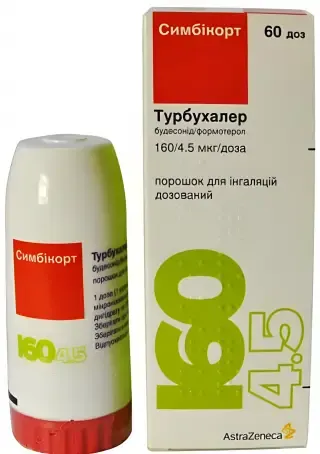
Table of Contents
INSTRUCTIONS for medical use of the medicinal product Symbicort Turbuhaler (Symbicort®Turbuhaler®)
Composition:
Active substances: 1 inhalation (1 dose) contains: 80 mcg micronized budesonide;
4.5 mcg formoterol fumarate dihydrate;
Excipient: lactose monohydrate.
Pharmaceutical form. Powder for inhalation, metered.
Main physicochemical properties:
Inhaler (60 doses): rotating red-colored dosing unit. The rotating dosing unit has embossed Braille code. White-colored cap. Inside the cap there are five ribs.
The number 60 is visible in the dose indicator window. The mouthpiece has four rods and is rotatable.
Contents: white to almost white in color, mainly in the form of rounded granules.
Inhaler (120 doses): rotating red-colored dosing unit. The rotating dosing unit has embossed Braille code. White-colored cap. Inside the cap there are five ribs.
The number 120 is visible in the dose indicator window. The mouthpiece has four rods and is rotatable.
Contents: white to almost white in color, mainly in the form of rounded granules.
Pharmacotherapeutic group. Adrenergic agents in combination with corticosteroids or other agents, excluding anticholinergic agents. Formoterol and budesonide.
ATC code R03AK07.
Pharmacological Properties.
Pharmacodynamics.
Mechanisms of action and pharmacodynamic effects
The medicinal product Symbicort Turbuhaler contains formoterol and budesonide, which have different mechanisms of action and exhibit an additive effect in reducing the frequency of exacerbations of bronchial asthma. The specific properties of budesonide and formoterol allow the combination to be used for maintenance therapy and symptom relief or for maintenance therapy of bronchial asthma.
Budesonide
Budesonide is a glucocorticosteroid that, when inhaled, exerts a dose-dependent anti-inflammatory action in the airways, resulting in a reduction of symptoms and a decreased frequency of exacerbations of bronchial asthma. Inhaled budesonide causes fewer adverse reactions than systemic corticosteroids. The precise mechanism responsible for the anti-inflammatory effect of glucocorticosteroids is unknown.
Formoterol
Formoterol is a selective β2-adrenergic agonist that, when administered by inhalation, leads to rapid and prolonged relaxation of bronchial smooth muscle in patients with reversible airway obstruction. The bronchodilating effect is dose-dependent; the medicinal product begins to act within 1–3 minutes. The duration of effect after a single dose is at least 12 hours.
Clinical efficacy and safety
Efficacy of maintenance therapy with budesonide/formoterol
Clinical studies in adult patients have shown that adding formoterol to budesonide alleviates symptoms of bronchial asthma, improves lung function, and reduces the frequency of exacerbations.
In two 12-week studies, the effect of the fixed combination of budesonide/formoterol on lung function was equivalent to that of the free combination of budesonide and formoterol and was superior to budesonide monotherapy. All treatment groups used short-acting β2-adrenergic agonists as needed. There was no evidence of a decline in anti-asthmatic effect over time.
Two 12-week studies were conducted in pediatric patients, in which 265 individuals aged 6–11 years received maintenance therapy with budesonide/formoterol (2 inhalations of 80 mcg/4.5 mcg/inhalation twice daily) and a short-acting β2-adrenergic agonist as needed. In both studies, improvements in lung function were observed, and the treatment was well tolerated compared to the use of the corresponding dose of budesonide as monotherapy.
Clinical efficacy of maintenance therapy and symptom relief with budesonide/formoterol
The use of budesonide/formoterol for maintenance therapy and symptom relief provided a statistically and clinically significant reduction in the frequency of severe exacerbations of bronchial asthma compared to all other therapies.
Comparable efficacy and safety of the medicinal product in adolescents and adults were demonstrated in 6 double-blind studies, including the 5 aforementioned studies and one additional study using a higher maintenance dose—two inhalations of 160/4.5 mcg twice daily. Assessments were based on data from a total of 14,385 asthma patients, of whom 1,847 were adolescents. The number of adolescent patients who used more than 8 inhalations of the medicinal product on any day during the use of budesonide/formoterol for maintenance therapy and symptom relief was limited, and such use was infrequent.
In studies involving patients requiring medical attention due to acute symptoms of bronchial asthma, the use of budesonide/formoterol provided rapid and effective relief of bronchospasm symptoms similar to that of salbutamol and formoterol.
Pharmacokinetics.
Absorption
The fixed-dose combination of budesonide and formoterol and the corresponding monoproducts were found to be bioequivalent with respect to systemic exposure to budesonide and formoterol. Despite this, after administration of the fixed-dose combination, a slight increase in cortisol secretion suppression was observed compared to administration of the medicinal products separately. This difference was considered clinically insignificant.
There was no evidence of pharmacokinetic interaction between budesonide and formoterol.
Pharmacokinetic parameters of the respective substances were similar after administration of budesonide and formoterol as monoproducts or as part of the fixed-dose combination. After administration of the fixed combination, the AUC of budesonide was slightly higher, and the rate of absorption and maximum plasma concentration were slightly greater than when administered separately. The maximum plasma concentration of formoterol after administration of the fixed combination was similar to that after administration of the monoproduct. Inhaled budesonide is rapidly absorbed; plasma concentration reaches its peak within 30 minutes after inhalation. In studies, the average lung deposition of budesonide after inhalation via a dry powder inhaler ranged from 32% to 44% of the delivered dose. Systemic bioavailability is approximately 49% of the delivered dose. In children aged 6–16 years, lung deposition varies within the same range as in adults at the same doses. Corresponding plasma concentrations were not detectable.
Inhaled formoterol is rapidly absorbed; plasma concentration reaches its peak within 10 minutes after inhalation. In studies, the average lung deposition of formoterol after inhalation via a dry powder inhaler ranged from 28% to 49% of the delivered dose. Systemic bioavailability is approximately 61% of the delivered dose.
Distribution and metabolism
Approximately 50% of formoterol and 90% of budesonide are bound to plasma proteins. The volume of distribution of formoterol is approximately 4 L/kg and of budesonide is 3 L/kg. Formoterol is inactivated via conjugation reactions (active O-demethylated and deformylated metabolites are formed, but they are predominantly present as inactivated conjugates). Budesonide undergoes extensive (approximately up to 90%) biotransformation during first-pass metabolism through the liver, forming metabolites with low glucocorticosteroid activity. The glucocorticosteroid activity of the main metabolites, 6-β-hydroxy-budesonide and 16-α-hydroxy-prednisolone, does not exceed 1% of the activity of budesonide. There is no evidence of metabolic interaction or displacement reactions between formoterol and budesonide.
Elimination
The majority of the formoterol dose undergoes hepatic metabolism and is subsequently excreted by the kidneys. After inhalation, 8–13% of the delivered dose of formoterol is excreted unchanged in urine. Formoterol has a high systemic clearance (approximately 1.4 L/min), and its terminal half-life averages 17 hours.
Budesonide is metabolized primarily by the CYP3A4 enzyme. Budesonide metabolites are excreted in urine in unchanged or conjugated form. Only a small amount of unchanged budesonide is detectable in urine. Budesonide has a high systemic clearance (approximately 1.2 L/min), and its half-life in plasma after intravenous administration averages 4 hours.
The pharmacokinetics of formoterol in children has not been studied. The pharmacokinetics of budesonide and formoterol in patients with renal impairment is unknown. In patients with liver disease, exposure to budesonide and formoterol in blood may be increased.
Linearity/non-linearity
Systemic exposure to budesonide and formoterol is linearly correlated with the administered dose.
Clinical characteristics.
Indications.
Symbicort Turbuhaler, 80 mcg/4.5 mcg, is indicated for use in adults, adolescents, and children aged 6 years and older.
Symbicort Turbuhaler is prescribed for regular treatment of bronchial asthma when combination therapy (inhaled corticosteroid and long-acting β2-agonist) is appropriate:
- in patients whose condition is not adequately controlled with inhaled corticosteroids and as-needed, short-acting β2-agonists, or
- in patients whose condition is well controlled with inhaled corticosteroids and long-acting β2-agonists.
Symbicort Turbuhaler (80 mcg/4.5 mcg/dose) is not suitable for treatment of patients with severe bronchial asthma.
Contraindications.
Hypersensitivity to the active substances or to any of the excipients listed in section "Composition" (lactose, which contains a small amount of milk proteins).
Interaction with other medicinal products and other types of interactions.
Pharmacokinetic interactions.
Plasma levels of budesonide may markedly increase when the medicinal product is used concomitantly with potent CYP3A4 inhibitors (e.g., ketoconazole, itraconazole, voriconazole, posaconazole, clarithromycin, telithromycin, nefazodone, and HIV protease inhibitors); therefore, concomitant use of these medicinal products should be avoided. If this is not possible, the interval between administration of the inhibitor and budesonide should be as long as possible (see section "Special precautions for use"). Patients taking potent CYP3A4 inhibitors should not use Symbicort Turbuhaler for both maintenance and reliever therapy simultaneously.
The potent CYP3A4 inhibitor ketoconazole, administered at a dose of 200 mg once daily, increased the plasma concentration of orally administered budesonide (3 mg as a single dose) by an average of 6-fold when co-administered. When ketoconazole was administered 12 hours after budesonide, budesonide concentrations increased on average by 3-fold, indicating that staggered administration of the drugs with an interval may reduce the increase in plasma budesonide concentrations. Limited data on this interaction with high doses of inhaled budesonide show that when itraconazole 200 mg once daily was co-administered with inhaled budesonide (1000 mcg as a single dose), plasma levels of budesonide may markedly increase (on average by four times).
Pharmacodynamic interactions
β-adrenergic blockers may attenuate or antagonize the effect of formoterol. Therefore, Symbicort Turbuhaler should not be used concomitantly with β-adrenergic blockers (including ophthalmic drops) unless there are compelling reasons.
Concomitant use of quinidine, disopyramide, procainamide, phenothiazines, antihistamines (terfenadine), and tricyclic antidepressants may prolong the QTc interval and increase the risk of ventricular arrhythmias.
In addition, L-dopa, L-thyroxine, oxytocin, and alcohol may impair cardiac tolerance to β2-sympathomimetics.
Concomitant use of monoamine oxidase inhibitors, including medicinal products with similar properties such as furazolidone and procarbazine, may provoke hypertensive reactions.
Patients receiving concomitant anaesthesia with halogenated hydrocarbons are at increased risk of developing arrhythmias.
Concomitant use of other β-adrenergic or anticholinergic medicinal products may have a potentially additive bronchodilator effect.
Hypokalaemia may increase susceptibility to arrhythmias in patients taking cardiac glycosides.
Hypokalaemia may occur as a result of β2-agonist therapy and may be potentiated by concomitant use of xanthine derivatives, corticosteroids, and diuretics (see section "Special precautions for use").
No interactions between budesonide and formoterol with any other medicinal products used for the treatment of bronchial asthma have been observed.
Children
Interaction studies have been conducted only in adult patients.
Special precautions for use.
If discontinuation of treatment is necessary, it is recommended to gradually reduce the dose rather than abruptly stop therapy.
If the patient considers the treatment ineffective or the maximum recommended daily dose of Symbicort Turbuhaler has been exceeded, medical advice should be sought (see section "Dosage and administration"). Sudden and progressive worsening of asthma control may be potentially life-threatening; therefore, urgent medical evaluation is required. In such cases, intensification of corticosteroid therapy should be considered, for example, initiating a course of oral corticosteroids or antibiotic treatment if bacterial infection is present.
Patients should always carry a "reliever" inhaler: either Symbicort Turbuhaler (for patients using Symbicort Turbuhaler as maintenance and reliever therapy) or a separate rapid-acting bronchodilator (for patients using Symbicort Turbuhaler only as maintenance therapy).
Patients should be reminded of the importance of continuing maintenance treatment with Symbicort Turbuhaler as prescribed, even in the absence of symptoms. Preventive use of Symbicort Turbuhaler, for example prior to physical exertion, has not been studied. Symbicort Turbuhaler inhalations for symptom relief should only be used when asthma symptoms occur and are not intended for regular preventive use, such as before exercise. For this purpose, a separate rapid-acting bronchodilator should be considered.
After achieving control of asthma symptoms, gradual dose reduction of Symbicort Turbuhaler may be considered. During dose reduction, it is important that patients undergo regular monitoring. The lowest effective dose of Symbicort Turbuhaler should be used (see section "Dosage and administration").
Patients should not initiate treatment with Symbicort Turbuhaler during an exacerbation or acute or severe worsening of asthma.
Serious adverse reactions related to asthma and exacerbations of the disease may occur during treatment with Symbicort Turbuhaler. Patients should continue treatment and consult a physician if asthma symptoms persist or worsen after starting therapy with Symbicort Turbuhaler.
As with any other inhaled therapy, paradoxical bronchospasm with immediate wheezing and shortness of breath after inhalation may occur. If paradoxical bronchospasm develops, Symbicort Turbuhaler should be discontinued immediately, the patient should be evaluated, and alternative therapy initiated if necessary. Paradoxical bronchospasm, which requires immediate treatment, responds to rapid-acting inhaled bronchodilators (see section "Adverse reactions").
Systemic effects may occur with inhaled corticosteroids, especially at high doses and during prolonged treatment. The likelihood of such effects is much lower with inhaled corticosteroids compared to oral forms. Possible systemic effects include Cushing's syndrome, Cushingoid features, adrenal suppression, growth retardation in children and adolescents, decreased bone mineral density, cataract and glaucoma, and less frequently, psychiatric disturbances or behavioral changes, including psychomotor hyperactivity, sleep disorders, anxiety, depression, or aggression (particularly in children) (see section "Adverse reactions").
In long-term studies of inhaled budesonide at average daily doses of 400 mcg (delivered dose) in children or 800 mcg (delivered dose) in adults, no significant effect on bone mineral density was observed. Information regarding the effect of Symbicort Turbuhaler at higher doses is lacking.
If there is reason to suspect adrenal suppression due to previous systemic steroid therapy, caution should be exercised when switching patients to treatment with Symbicort Turbuhaler.
The benefits of inhaled budesonide therapy generally minimize the need for oral steroids; however, patients previously treated with long-term oral steroids may still be at risk of adrenal suppression. Recovery after discontinuation of oral steroids may take a long time, so patients previously treated with oral corticosteroids and switched to inhaled budesonide may remain at risk of adrenal suppression for an extended period. In such cases, regular monitoring of hypothalamic-pituitary-adrenal (HPA) axis function is required.
Prolonged treatment with high doses of inhaled corticosteroids, particularly when doses exceed recommended levels, may also lead to clinically significant adrenal suppression. Therefore, supplemental systemic corticosteroid therapy should be considered during periods of stress, such as severe infections or scheduled surgery. Rapid dose reduction of steroids may lead to acute adrenal crisis. Symptoms and signs of acute adrenal crisis may not always be clear but may include anorexia, abdominal pain, weight loss, fatigue, headache, nausea, vomiting, decreased level of consciousness, seizures, hypotension, and hypoglycemia.
Treatment with systemic steroids or inhaled budesonide should not be abruptly discontinued.
When switching from oral steroid therapy to Symbicort Turbuhaler, a lower systemic steroid effect is generally observed, which may lead to the emergence of allergy symptoms or arthritis symptoms such as rhinitis, eczema, and muscle or joint pain. If these conditions develop, specific treatment should be initiated. Insufficient glucocorticoid effect may be suspected if symptoms such as fatigue, headache, nausea, and vomiting occur, although this is rare. In such cases, temporary increase in the dose of oral glucocorticoids may sometimes be necessary.
To reduce the risk of oropharyngeal candidiasis (see section "Adverse reactions"), patients should be instructed to rinse their mouth with water after each maintenance dose. If oropharyngeal candidiasis occurs, the mouth should be rinsed with water after inhalation as needed.
Concomitant use of itraconazole, ritonavir, or other potent CYP3A4 inhibitors should be avoided (see section "Interaction with other medicinal products and other forms of interaction"). If concomitant use cannot be avoided, the interval between administration of interacting drugs should be as long as possible. Concomitant use of Symbicort Turbuhaler for both maintenance and reliever therapy is not recommended in patients taking potent CYP3A4 inhibitors.
Symbicort Turbuhaler should be used with caution in patients with thyrotoxicosis, pheochromocytoma, diabetes mellitus, untreated hypokalemia, hypertrophic obstructive cardiomyopathy, idiopathic subvalvular aortic stenosis, severe arterial hypertension, aneurysm, or other severe cardiovascular disorders such as ischemic heart disease, tachyarrhythmia, or severe heart failure.
The medicinal product should be used with caution in patients with prolonged QTc interval. Formoterol may cause QTc interval prolongation.
The need for inhaled corticosteroids and their dosage should be reviewed in patients with active or inactive pulmonary tuberculosis, fungal or viral respiratory tract infections.
Potentially serious hypokalemia may occur with high doses of β2-adrenergic agonists. Concomitant treatment with β2-adrenergic agonists and medicinal products that may cause hypokalemia or enhance its effect (e.g., xanthine derivatives, steroids, and diuretics) may increase the hypokalemic effect of β2-adrenergic agonists. Particular caution is required in patients with unstable asthma requiring frequent use of bronchodilators for symptom relief, as well as in acute severe asthma, since the risk of hypokalemia is increased under conditions of hypoxia and other states that increase the likelihood of this complication. In such cases, serum potassium levels should be monitored.
As with other β2-adrenergic agonists, additional monitoring of blood glucose levels is recommended in patients with diabetes mellitus.
Visual disturbances may occur with systemic and local corticosteroid use. If patients experience symptoms such as blurred vision or other visual disturbances, they should consult an ophthalmologist to evaluate possible causes, including cataract, glaucoma, or rare conditions such as central serous chorioretinopathy (CSCR), which has been reported after systemic or local corticosteroid use.
Symbicort Turbuhaler contains lactose monohydrate (< 1 mg/inhalation). This amount usually does not cause problems in patients who are lactose intolerant. This excipient contains small amounts of milk proteins, which may cause allergic reactions.
Children
Regular monitoring of growth is recommended in children receiving long-term inhaled corticosteroid therapy. If growth retardation occurs, therapy should be reviewed with the aim of reducing the inhaled corticosteroid dose to the lowest dose that maintains effective asthma control, if possible. The benefits of corticosteroid therapy should be carefully weighed against the potential risks of growth suppression. Referral to a pediatric respiratory specialist may also be appropriate.
Limited long-term data suggest that most children and adolescents treated with inhaled budesonide eventually achieve normal adult growth. However, an initial slight and transient reduction in growth velocity (approximately 1 cm) has been observed, typically during the first year of treatment.
Pregnancy and breastfeeding.
Pregnancy
There are no clinical data on the use of Symbicort Turbuhaler or concomitant therapy with formoterol and budesonide during pregnancy. Data from animal studies on embryofetal development showed no additional effect with this combination. Clinical experience with formoterol use in pregnant women is limited. Animal reproductive toxicity studies with formoterol showed adverse effects at very high systemic drug concentrations. Data from approximately 2000 pregnancies did not show any increased teratogenic risk associated with inhaled budesonide. Animal studies have shown that glucocorticoids may cause developmental disturbances. However, these findings are unlikely to be relevant to humans when the drug is used at recommended doses.
Animal studies have also shown that high-dose glucocorticoid use during pregnancy increases the risk of intrauterine growth retardation, cardiovascular disease in adult animals, and permanent changes in glucocorticoid receptor density, metabolism, and neurotransmitter profiles when administered at dose ranges lower than teratogenic doses.
Symbicort Turbuhaler should only be used during pregnancy if the benefit to the mother outweighs the potential risk to the fetus/child. The lowest effective dose of budesonide that provides adequate asthma control should be used.
Breastfeeding
Budesonide passes into breast milk. However, no effect on the infant is expected when the drug is used at therapeutic doses. It is unknown whether formoterol passes into human breast milk.
In rats, small amounts of formoterol were detected in milk. The use of Symbicort Turbuhaler in breastfeeding women should only be considered if the expected benefit to the mother outweighs any potential risk to the infant.
Fertility
There are no data on the potential effect of budesonide on fertility. Animal reproductive studies with formoterol showed a slightly reduced fertility in male rats at high systemic drug concentrations.
Effect on ability to drive and use machines.
Symbicort Turbuhaler has no effect or negligible effect on the ability to drive and use machinery.
Method of Administration and Dosage
Route of administration – inhalation.
Dosing
Symbicort Turbuhaler is not intended for the initial treatment of bronchial asthma.
The doses of the active ingredients in Symbicort Turbuhaler should be individually adjusted and modified according to the severity of the disease. This should be taken into account not only at the beginning of treatment with combination medications but also during adjustments of the maintenance dose. If a patient requires a combination of doses different from those available in the combined inhaler, appropriate doses of β2-adrenergic agonists and/or corticosteroids should be prescribed using separate inhalers.
The dose should be gradually reduced to the lowest dose that effectively controls symptoms. Patients must undergo regular follow-up examinations with the physician who prescribed the medication to ensure that the dose of Symbicort Turbuhaler remains optimal. After achieving long-term symptom control with the lowest recommended dose, an attempt should be made to control symptoms using only an inhaled corticosteroid.
There are two options for using Symbicort Turbuhaler.
A. For maintenance therapy: Symbicort Turbuhaler is used for regular maintenance therapy in combination with a separate, fast-acting bronchodilator used as needed for symptom relief.
B. For maintenance therapy and symptom relief: Symbicort Turbuhaler is used for regular maintenance therapy and also as needed for symptom relief.
A. Use of Symbicort Turbuhaler for maintenance therapy.
Patients should be advised to always carry a separate, fast-acting bronchodilator for immediate symptom relief.
Recommended doses
Adults (aged 18 years and older): 1–2 inhalations twice daily. Some patients may require up to 4 inhalations twice daily.
Adolescents (aged 12–17 years): 1–2 inhalations twice daily.
Children (aged 6 years and older): 2 inhalations twice daily.
Typically, after achieving symptom control with twice-daily administration, the dose should be titrated down to the lowest effective dose, including reducing to once-daily use of Symbicort Turbuhaler, when, in the physician’s opinion, the patient requires combined maintenance therapy with a long-acting bronchodilator and an inhaled corticosteroid.
Increased use of a fast-acting bronchodilator indicates worsening of the patient’s condition and the need to reassess asthma management.
Children under 6 years of age: Symbicort Turbuhaler is not recommended for children under 6 years of age.
B. Use of Symbicort Turbuhaler for maintenance therapy and symptom relief.
Patients should take their daily maintenance dose of Symbicort Turbuhaler and also use Symbicort Turbuhaler as needed for symptom relief. Patients should be advised to always carry Symbicort Turbuhaler for immediate symptom relief in emergency situations. The use of Symbicort Turbuhaler for both maintenance therapy and symptom relief should be considered, particularly in patients:
- with poorly controlled bronchial asthma who frequently require medications for symptom relief;
- with a history of asthma exacerbations requiring medical intervention.
Patients who frequently and in large amounts use Symbicort Turbuhaler inhalations as needed should be closely monitored for the development of dose-dependent adverse reactions.
Recommended doses
Adults and adolescents (aged 12 years and older): The recommended maintenance dose is 2 inhalations per day – either 1 inhalation in the morning and 1 in the evening, or 2 inhalations in the morning or 2 in the evening. As needed, when symptoms occur, 1 additional inhalation should be taken. If symptoms persist after several minutes, an additional inhalation may be taken. In any single episode, no more than 6 inhalations should be used.
A total daily dose exceeding 8 inhalations is generally not required; however, during a limited period, the total daily dose may reach up to 12 inhalations. Patients using more than 8 inhalations per day are strongly advised to consult their physician. They should undergo reassessment and review of their maintenance therapy.
Children under 12 years of age: The use of Symbicort Turbuhaler for maintenance therapy and symptom relief is not recommended in children under 12 years of age.
General Information
Special patient groups
No special dosage adjustments are required for elderly patients. Data on the use of Symbicort Turbuhaler in patients with renal or hepatic impairment are lacking. Since both budesonide and formoterol are primarily eliminated via hepatic metabolism, increased plasma concentrations of the drug may be expected in patients with severe liver cirrhosis.
Method of administration
Instructions for correct use of Symbicort Turbuhaler
Preparing a new Symbicort Turbuhaler inhaler for use
Before the first use, a new Symbicort Turbuhaler inhaler must be prepared for use as follows:
- Unscrew and remove the cap. A rattling sound may be heard.
- Hold the Symbicort Turbuhaler inhaler vertically with the red dose indicator pointing downward.
- Rotate the red dose indicator fully in one direction, then fully in the opposite direction (the order does not matter). A click should be heard.
- Rotate the red dose indicator again fully in both directions.
- The Symbicort Turbuhaler inhaler is now ready for use.
How to perform an inhalation
Each dose must be taken following the instructions below.
|
Fig.1 |
|
|
Fig. 2 |
|
|
Fig. 3 |
|
|
Fig.4 |
The amount of medication inhaled is very small. This means you may not taste the medication after inhalation. If you follow the instructions, you can be confident that you have received the dose and the medication has reached your lungs.
|


- After daily morning and/or evening inhalations, rinse your mouth with water, without swallowing it.
Do not attempt to remove or unscrew the mouthpiece. It is securely attached to the Symbicort Turbuhaler inhaler and must not be removed. Do not use the inhaler if it is damaged or if the mouthpiece has become detached.
As with other inhalers, caregivers should ensure that children prescribed Symbicort Turbuhaler inhale according to the above instructions.
Cleaning the Symbicort Turbuhaler inhaler
Once a week, wipe the outer surface of the mouthpiece with a dry cloth. Do not use water or other liquids.
When to use a new inhaler
|
Fig. 5 |
|

- The appearance of red color in the dose indicator window means that approximately 20 doses remain in the inhaler. When 10 doses remain, the dose indicator window turns completely red. When the "0" mark on the red window reaches the center of the indicator window, the inhaler should be replaced with a new one (Fig. 5).
Note
- The dose counter will continue to rotate and click even after the Symbicort Turbuhaler inhaler is empty.
- The sound heard when shaking the Symbicort Turbuhaler inhaler is caused by the desiccant, not the medication. Therefore, this sound cannot help determine how much medication remains in the inhaler.
- If more than one dose is mistakenly loaded into the Symbicort Turbuhaler inhaler, only one dose will still be delivered to the lungs during inhalation. However, the dose indicator will register the total number of doses dispensed.
Overdose
The medication must be used according to the instructions or as directed by a physician. Do not exceed the prescribed dose without consulting your doctor.
The most common symptoms that may occur in case of an overdose of Symbicort Turbuhaler are tremor, headache, or rapid heartbeat.
Missed dose
- If a dose is missed, it should be taken as soon as remembered. However, if it is almost time for the next dose, the missed dose should not be taken.
- Do not take a double dose to make up for a missed dose.
For further questions regarding the use of this medication, consult your doctor or pharmacist.
The inhaler is activated by inspiratory flow, meaning that when the patient inhales through the mouthpiece, the active substances are delivered into the airways together with the inhaled air.
Note
It is important to instruct the patient:
- to follow the instructions for medical use;
- to inhale strongly and deeply through the mouthpiece to ensure optimal delivery of the dose to the lungs;
- never to exhale through the mouthpiece;
- after use, to close the Symbicort Turbuhaler inhaler with the cap;
- after inhaling a maintenance dose, to rinse the mouth with water to minimize the risk of oral candidiasis. In case of oral candidiasis, rinse the mouth with water after using the medication as needed.
The patient may not taste or feel the Symbicort Turbuhaler medication during inhalation due to the small inhaled dose.
Other information
On the lower part of the rotating dose counter, there is an embossed Braille code to identify Symbicort Turbuhaler (the code for Symbicort Turbuhaler is the number 6, distinguishing it from other AstraZeneca medications).
Children. Symbicort Turbuhaler is not recommended for children under 6 years of age. For children aged 6 years and older, use according to the indications and doses specified in the section "Dosage and administration".
Overdose.
Overdose of formoterol is likely to cause effects typical of β2-adrenergic agonists: tremor, headache, palpitations. In isolated cases, tachycardia, hyperglycemia, hypokalemia, QTc interval prolongation, arrhythmia, nausea, and vomiting have been reported. Supportive and symptomatic therapy may be indicated. Administration of 90 mcg over 3 hours in patients with acute bronchial obstruction has been shown to be safe.
Acute overdose of budesonide, even in excessive doses, is not expected to cause clinical problems. However, prolonged use of excessive doses may lead to systemic glucocorticosteroid effects such as hypercorticism and adrenal suppression.
If treatment with Symbicort Turbuhaler needs to be discontinued due to formoterol overdose, consider using an appropriate inhaled corticosteroid instead.
Adverse reactions.
Since Symbicort Turbuhaler contains budesonide and formoterol, the same adverse reactions observed with each of the active substances used separately may occur.
Concomitant use of the two substances did not increase the frequency of adverse reactions. The most commonly reported adverse reactions associated with the use of the medicinal product are pharmacologically predictable adverse reactions of β2-adrenoceptor agonists, such as tremor and palpitations. These adverse reactions were usually mild in severity and disappeared within a few days of treatment.
The adverse reactions listed below, caused by the use of budesonide or formoterol, are presented by system organ classes and by frequency of occurrence.
Adverse reactions by frequency of occurrence: very common (≥ 1/10), common (≥ 1/100 to < 1/10), uncommon (≥ 1/1000 to < 1/100), rare (≥ 1/10,000 to < 1/1000), and very rare (< 1/10,000).
| System organ class (SOC) |
Frequency |
Adverse reaction to the use of the medicinal product |
| Infections and infestations |
Common |
Oropharyngeal candidiasis |
| Immune system disorders |
Uncommon |
Immediate or delayed hypersensitivity reactions, such as exanthema, urticaria, pruritus, dermatitis, angioedema, and anaphylactic reaction |
| Endocrine disorders |
Very rare |
Cushing's syndrome, adrenal suppression, growth retardation, decreased bone mineral density |
| Metabolism and nutrition disorders |
Uncommon |
Hypokalaemia |
| Very rare |
Hyperglycaemia |
|
| Psychiatric disorders |
Uncommon |
Aggression, psychomotor hyperactivity, anxiety, sleep disorders |
| Very rare |
Depression, behavioural disturbances (mainly in children) |
|
| Nervous system disorders |
Common |
Headache, tremor |
| Uncommon |
Dizziness |
|
| Very rare |
Taste disturbance |
|
| Eye disorders |
Uncommon |
Blurred vision (see section "Special precautions for use") |
| Very rare |
Cataract, glaucoma |
|
| Cardiac disorders |
Common |
Palpitations |
| Uncommon |
Tachycardia |
|
| Uncommon |
Cardiac arrhythmias, e.g. atrial fibrillation, supraventricular tachycardia, extrasystoles |
|
| Very rare |
Angina pectoris, QTc interval prolongation |
|
| Vascular disorders |
Very rare |
Changes in blood pressure |
| Respiratory, thoracic and mediastinal disorders |
Common |
Mild irritation in the throat, cough, hoarseness |
| Uncommon |
Bronchospasm |
|
| Gastrointestinal disorders |
Uncommon |
Nausea |
| Skin and subcutaneous tissue disorders |
Uncommon |
Increased tendency to bruising |
| Musculoskeletal and connective tissue disorders |
Uncommon |
Muscle cramps |
Candida infection of the oropharynx results from deposition of the medicinal product in the oral cavity. Patients should be instructed to rinse the mouth with water after each inhalation of a maintenance dose in order to minimize the risk of oral candidiasis. Oropharyngeal candidiasis usually responds to local antifungal treatment without the need to discontinue inhaled corticosteroid therapy. If candidiasis develops, patients should also rinse the mouth with water after using the medicinal product as needed.
As with any other inhaled therapy, paradoxical bronchospasm, characterized by immediate wheezing and shortness of breath following drug administration, may very rarely occur (less than 1 case per 10,000 patients). Paradoxical bronchospasm, which should be treated immediately, responds to administration of a fast-acting inhaled bronchodilator. In such cases, treatment with Symbicort Turbuhaler should be discontinued immediately, the patient's condition should be evaluated, and alternative therapy initiated if necessary (see section "Special warnings and precautions for use").
Systemic effects may occur with inhaled corticosteroids, particularly at high doses and during prolonged therapy. The likelihood of such effects is lower with inhaled corticosteroids compared to oral corticosteroids. Possible systemic effects include Cushing's syndrome, Cushingoid features, adrenal suppression, growth retardation in children and adolescents, decreased bone mineral density, cataract, and glaucoma. Increased susceptibility to infections and impaired ability to adapt to stress may also occur.
These effects are likely dependent on dose, duration of treatment, concomitant or prior use of steroid medicinal products, and individual patient sensitivity.
Treatment with β2-adrenergic agonists may lead to increased blood levels of insulin, free fatty acids, glycerol, and ketone bodies.
Children. Regular monitoring of growth in children receiving long-term inhaled corticosteroid therapy is recommended (see section "Special warnings and precautions for use").
Reporting of suspected adverse reactions
It is important to report suspected adverse reactions during the post-marketing period of the medicinal product. This allows continuous monitoring of the benefit-risk balance of the medicinal product. Healthcare professionals are obliged to report any suspected adverse reactions through the national reporting system.
Shelf life.
2 years.
Storage conditions.
Keep out of the reach of children. Store at temperatures not exceeding 30°C. Keep the package tightly closed to protect from moisture.
Packaging.
60 doses or 120 doses in a plastic inhaler; 1 inhaler per cardboard box.
Prescription status.
Prescription only.
Manufacturer.
AstraZeneca AB/AstraZeneca AB.
Manufacturer's address and place of business.
Forskargatan 18, Sodertalje, 151 36, Sweden/Forskargatan 18, Sodertalje, 151 36, Sweden.