Sibazon
Ukraine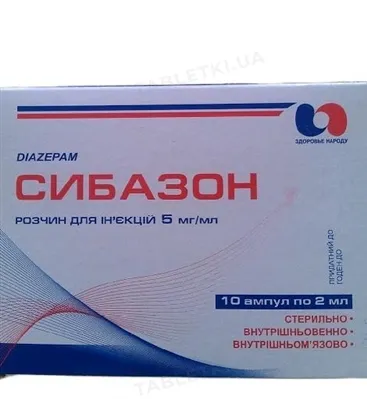
Table of Contents
INSTRUCTIONS FOR MEDICAL USE OF THE MEDICINAL PRODUCT SIBAZON (DIAZEPAM)
Composition:
Active substance: diazepam;
1 ml of solution contains diazepam 5 mg;
Excipients: ethanol 96%, propylene glycol, polyethylene oxide, glacial acetic acid, water for injections.
Pharmaceutical form. Solution for injection.
Main physico-chemical properties: clear colorless or slightly yellowish-green liquid.
Pharmacotherapeutic group.
Psycholeptics. Anxiolytics. Benzodiazepine derivatives.
ATC code N05BA01.
Pharmacological properties.
Pharmacodynamics.
Sibazon is a tranquilizer of the benzodiazepine class. It exerts anxiolytic, sedative, anticonvulsant, central muscle relaxant effects, increases the pain sensitivity threshold, and regulates neurovegetative responses.
The mechanism of action is mediated by interaction with benzodiazepine receptors at the allosteric site of postsynaptic gamma-aminobutyric acid (GABA) receptors in the limbic system, thalamus, hypothalamus, and interneurons of the lateral horns of the spinal cord. This interaction facilitates the opening of chloride ion channels in the cytoplasmic membrane, leading to membrane hyperpolarization and inhibition of interneuronal transmission in corresponding regions of the central nervous system.
Pharmacokinetics.
After intramuscular administration, the drug is incompletely and unevenly absorbed; maximum concentration is reached within 60 minutes. After intravenous administration in adults, maximum concentration is achieved within 15 minutes and depends on the dose. The drug rapidly distributes in organ tissues, primarily in the brain and liver, crosses the placental and blood-brain barriers, and also penetrates into breast milk.
Biotransformation occurs in the liver, producing active metabolites: N-dimethyldiazepam (50%), temazepam, and oxazepam. N-dimethyldiazepam accumulates in the brain, providing prolonged and pronounced anticonvulsant effect. Hydroxylated and dimethylated metabolites of diazepam conjugate with glucuronic acid and bile acids and are primarily excreted by the kidneys. Diazepam belongs to long-acting tranquilizers; the elimination half-life after intravenous administration is 32 hours, the half-life of N-dimethyldiazepam is 50–100 hours, and the total renal clearance is 20–33 mL/min.
Pharmacokinetics in special clinical situations.
The elimination half-life of diazepam may be prolonged in neonates, elderly patients, and patients with liver disease.
In patients with renal insufficiency, the elimination half-life of diazepam remains unchanged.
Intramuscular administration of the drug may lead to increased creatine phosphokinase activity in blood serum, with peak levels observed 12–24 hours after injection. This should be taken into account when diagnosing myocardial infarction.
Drug absorption after intramuscular injection may be variable, especially when administered into gluteal muscles. Therefore, this route of administration should be used only when oral or intravenous administration is not feasible.
Clinical characteristics.
Indications.
Acute anxiety-phobic and anxiety-depressive states, including alcoholic psychoses with withdrawal symptoms; delirium; epileptic status, tetanus, muscle spasms in neurodegenerative diseases, including spinal injuries, lumbar pain, cervical radiculitis. Premedication in anesthesiology for surgical interventions and complex diagnostic procedures; eclampsia in pregnancy.
Contraindications.
Hypersensitivity to any component of the drug, acute attack of glaucoma (in open-angle glaucoma the drug may be used provided appropriate concurrent treatment), acute alcohol intoxication and sedative agents, severe pseudoparalytic myasthenia, episodes of sleep apnea, severe hepatic insufficiency, acute respiratory failure, alcohol or drug dependence (except for acute withdrawal syndrome), pronounced chronic hypercapnia, closed-angle glaucoma, myasthenia, chronic psychoses, intoxication with alcohol, psychotropic agents, shock, coma, severe hepatic insufficiency, phobias and obsessive conditions, acute porphyria.
Do not use in newborns and premature infants.
Diazepam should not be used as monotherapy for the treatment of patients with depression or anxiety states associated with depression due to the risk of development of suicidal behavior in such patients.
Interaction with other medicinal products and other forms of interactions.
Antipsychotic agents
Plasma concentration of zotepine may increase. Severe arterial hypotension, collapse, loss of consciousness, respiratory depression, and risk of fatal respiratory arrest have been reported in several patients receiving benzodiazepines and clozapine. Increased salivation has also been observed. Initiation of clozapine therapy should be undertaken with caution in patients receiving diazepam. There is an increased risk of arterial hypotension, bradycardia, and respiratory depression when benzodiazepines are administered parenterally and olanzapine is given intramuscularly.
Sodium oxybate
Concomitant use of sodium oxybate (gamma-hydroxybutyrate, GHB) with benzodiazepines should be avoided, as benzodiazepines enhance the effects of this substance.
Antibacterial agents
Metabolism of diazepam may be slowed by isoniazid, to a lesser extent by erythromycin. The effect of diazepam may be enhanced and prolonged. Strong hepatic inducers such as rifampicin may increase diazepam clearance.
Antiviral agents
Concomitant use of amprenavir and ritonavir should be avoided, as they can reduce benzodiazepine clearance, potentiate their effects, and increase the risk of excessive sedative effects and respiratory depression.
Antifungal agents
The effect of diazepam may be increased when used concomitantly with azole antifungals—voriconazole, ketoconazole, and fluconazole—which inhibit hepatic isoenzymes CYP2C19, CYP2C9, and CYP3A4, and to a lesser extent with itraconazole, a potent inhibitor of CYP3A4.
Antihypertensive agents
Concomitant use of diazepam with antihypertensive agents may lead to enhanced hypotensive effect. Enhanced sedative effect is possible when used concomitantly with alpha-blockers or moxonidine.
CNS depressants
Concomitant use of diazepam with other central nervous system depressants, including other anticonvulsants, anxiolytics/hypnotics, sedative antihistamines, alcohol, neuroleptics, antidepressants, analgesics, and anesthetics, may lead to enhanced sedative effects or depression of respiratory or cardiovascular function.
Anticonvulsants
Diazepam may either increase or decrease plasma phenytoin concentration. Patients should be monitored for signs of phenytoin toxicity. Phenytoin and carbamazepine may reduce diazepam plasma concentration. Concomitant use of barbiturates may lead to enhanced sedative effects or respiratory depression. Concomitant use of sodium valproate may increase diazepam plasma concentration and enhance sedative effects.
Antidepressants
Plasma concentration of some benzodiazepines increases after administration of fluvoxamine. Concomitant use of selective serotonin receptor antagonists or tricyclic antidepressants may reduce attention and psychomotor reaction, and negatively affect the ability to perform complex tasks (e.g., driving a vehicle).
Alcohol
Sedative effects of diazepam may be enhanced when used concomitantly with alcohol. This negatively affects reaction speed when driving a vehicle or operating machinery.
Medicinal products that reduce gastric acidity
Cimetidine, omeprazole, and esomeprazole may inhibit diazepam metabolism, leading to increased plasma concentrations of the latter.
Disulfiram
Disulfiram may inhibit diazepam metabolism, resulting in increased sedative effects.
Levodopa
Benzodiazepines may antagonize the effect of levodopa.
Theophylline
Theophylline may reduce the effect of benzodiazepines.
Skeletal muscle relaxants
Concomitant use of baclofen or tizanidine with diazepam may lead to enhanced sedative effects.
Special precautions for use.
The drug should be administered only in healthcare facilities where emergency resuscitation measures can be promptly provided if necessary.
Patients with organic disorders of the central nervous system should receive a reduced initial dose of the drug by half. Intravenous administration to such patients should be performed with special caution, as high doses of the drug may cause somnolence and loss of consciousness.
When treating epileptic status, the possibility of seizure recurrence should be considered. Particular caution is required when prescribing Sibazon to patients who have been receiving centrally-acting antihypertensive agents, β-blockers, anticoagulants, or cardiac glycosides for prolonged periods.
In treating patients with chronic respiratory insufficiency or chronic liver diseases, reduced doses of the drug should be used.
There is no need to reduce the dose in patients with renal dysfunction, as the elimination half-life of diazepam remains unchanged in such cases.
Sibazon is not recommended as monotherapy for anxiety-phobic or anxiety-depressive disorders due to the risk of suicide attempts.
Amnesia may occur several hours after drug administration. To reduce the risk of amnesia, patients should be provided conditions for uninterrupted sleep lasting from 7 to 8 hours.
During treatment with benzodiazepines, dependence may develop. The risk of drug abuse is particularly high in patients who have been treated for prolonged periods and/or used high doses, especially in those with a history of alcohol or drug abuse. After physical dependence on benzodiazepines has developed, abrupt discontinuation of the drug may lead to withdrawal syndrome: headache, muscle pain, phobia, increased anxiety, agitation, tension, motor restlessness, confusion, and irritability.
In severe cases – derealization (impaired perception of the surrounding world), depersonalization, numbness and tingling in the extremities, increased sensitivity to light, noise, and physical contact, hallucinations, or epileptic seizures. Loss of sense of reality or loss of consciousness, paresthesia, photophobia, increased sensitivity to sounds and touch, hallucinations, or convulsive seizures may occur. With prolonged intravenous administration of the drug, treatment should not be discontinued abruptly; the dose should be gradually reduced.
Rebound insomnia and anxiety. Abrupt discontinuation of diazepam therapy may provoke a rebound phenomenon, characterized by symptom exacerbation followed by rapid symptom reduction (mood changes, anxiety, or sleep disturbances, restlessness). To prevent rebound phenomenon/withdrawal syndrome, gradual dose reduction is recommended.
Treatment duration. Treatment duration should be as short as possible depending on the indication, but should not exceed 4 weeks for insomnia or 8–12 weeks for anxiety disorders, including the tapering period. Treatment duration may be extended only after careful assessment of the patient's condition. Patients should be informed about the start and duration of treatment and the need for gradual dose reduction. Additionally, patients should be warned about the possible development of withdrawal syndrome to reduce anxiety, especially when stopping therapy. When using benzodiazepines with short duration of action, withdrawal symptoms may occur between doses, especially if the dose is high. Due to the risk of withdrawal syndrome, switching between short-acting benzodiazepines during treatment is not recommended.
Tolerance. Regular use of benzodiazepines or similar-acting drugs, including diazepam, for several weeks may lead to reduced effectiveness of their action.
Amnesia. It should be noted that benzodiazepines may cause anterograde amnesia. Anterograde amnesia may occur with therapeutic doses, and the risk increases with higher doses. Amnestic effects may be associated with inappropriate behavior.
Special patient groups. Elderly patients (aged 65 years and older) and debilitated patients require dose reduction. Due to the myorelaxant effect, there is an increased risk of falls and fractures in this patient group. Benzodiazepines may delay psychological recovery in patients experiencing grief-related symptom complexes following the loss of a close person.
Sibazon should be administered intravenously with particular caution in elderly patients in critical condition and in patients with cardiac or respiratory insufficiency, due to the risk of apnea and/or cardiac arrest. Concomitant use of diazepam with barbiturates, alcohol, or other substances with CNS depressant effects increases the risk of circulatory depression or respiratory center depression up to apnea. In such cases, resuscitation equipment, including devices for artificial ventilation of the lungs, should be readily available.
Benzodiazepines and similar drugs are not recommended for patients with severe hepatic insufficiency or organic liver disease, as these drugs may accelerate the development of hepatic encephalopathy. Doses should be reduced in patients with chronic liver diseases.
Each 1 ml of the drug contains 100 mg of ethanol, which should be taken into account when prescribing Sibazon to children and adult patients at risk (patients with liver disease or epilepsy).
Alcoholic beverages must not be consumed during diazepam treatment and for 3 days thereafter.
Concomitant use of alcohol/CNS depressants. Alcohol and/or other CNS depressants must not be consumed during diazepam treatment. This combination enhances the clinical effects of benzodiazepines, including profound sedation, clinically associated with respiratory and/or cardiovascular depression.
Diazepam is not recommended for patients dependent on CNS depressants or alcohol, except during acute withdrawal syndrome.
The drug contains propylene glycol, which may cause symptoms similar to those occurring with alcohol abuse.
When treating patients with mild to moderate renal impairment, standard precautions should be observed. The drug is not recommended for use in severe renal insufficiency. The maximum daily dose for patients with renal dysfunction, as well as for those undergoing long-term dialysis, is 15 mg.
Benzodiazepines and similar drugs are not recommended for patients with psychoses.
Use in depression. Benzodiazepines should not be used as monotherapy for treating depression or anxiety states. Suicidal tendencies may occur in these patients. Due to the risk of intentional overdose, benzodiazepines and similar drugs should be prescribed to such patients in the smallest possible doses.
For patients with symptoms of endogenous depression or depression-related anxiety, the physician should prescribe several drugs simultaneously. Use of the drug in patients with depression may worsen depressive symptoms, including suicidal thoughts.
Benzodiazepines and similar drugs should be used with great caution in patients with a history of drug or alcohol dependence. Such patients should be under strict supervision during diazepam treatment, as they are at risk of developing habituation and psychological dependence.
Diazepam should be used cautiously in patients with porphyria. Diazepam use may exacerbate symptoms of this disease.
Paradoxical reactions such as motor excitement, aggression, delirium, rage attacks, nightmares, hallucinations, psychoses, inappropriate behavior, and other perceptual disturbances have been reported with benzodiazepine use, especially in children and elderly patients. If such symptoms occur, the drug should be discontinued.
Benzodiazepines are not recommended for treatment of primary psychotic disorders.
Use during pregnancy or breastfeeding.
Pregnancy. Data on the use of diazepam in pregnant women are limited. Therefore, the drug is not recommended during pregnancy.
If the drug is prescribed to women of reproductive age, they should inform their physician if they become pregnant or suspect pregnancy during treatment.
If emergency medical procedures requiring high doses of diazepam are necessary during the last trimester of pregnancy or during labor, possible effects on the newborn include hypothermia, hypotonia (congenital amyotonia), cardiac arrhythmia, weak sucking reflex, and moderate respiratory depression, related to the pharmacological action of diazepam.
Furthermore, infants born to mothers who have been treated with benzodiazepines for prolonged periods during late pregnancy may develop physical dependence and are at risk of withdrawal syndrome in the postnatal period.
Diazepam should be prescribed during pregnancy only when the potential benefit outweighs the risks.
Breastfeeding period. Diazepam passes into breast milk; therefore, breastfeeding should be discontinued if treatment with this drug is necessary.
Ability to influence reaction speed when driving or operating machinery. Sibazon may reduce psychomotor and mental reaction speed; therefore, patients should not drive or operate machinery on the day of drug administration. Anxiety, amnesia, impaired concentration, and muscle weakness negatively affect the ability to drive vehicles or operate mechanical equipment.
The likelihood of attention impairment increases with insufficient sleep and alcohol consumption during treatment.
Patients should be warned not to drive or operate mechanical equipment for 3 days after discontinuation of the drug.
Administration and Dosage
The dosage of the drug should be individually determined for each patient.
Administer intravenously slowly (no more than 1 mL/min) as a bolus or by infusion, or deep intramuscularly. The rate of intravenous administration in children is 0.5 mL of solution over 30 seconds. To prepare an infusion solution, dilute 100 mg of diazepam (10 vials of Sibazon) in 500 mL of 0.9% sodium chloride solution or 5% glucose solution.
The single dose, frequency, and duration of administration should be individually established according to the principle of "minimal effective dose." In emergency conditions, Sibazon is recommended to be administered intravenously whenever possible. The single dose is 10–20 mg, depending on age and disease course.
Acute anxiety-phobic and anxiety-depressive states.
For adults, administer intravenously or intramuscularly at a dose of 1–2 mL (5–10 mg). If necessary, repeat administration at the same dose after 3–4 hours. In alcohol withdrawal delirium, the initial dose is 2 mL (10 mg) intravenously, followed by 1–2 mL (5–10 mg) every 3–4 hours until acute symptoms resolve. Maintenance intravenous infusion may be used at a rate of 2.5–5 mg/hour. Maximum single dose: 30 mg; maximum daily dose: 70 mg.
Epileptic status.
For adults, administer 1–2 mL (5–10 mg) intravenously slowly; if necessary, repeat administration every 10–15 minutes until a total dose of 6 mL (30 mg) is reached. For newborns (after 30 days of life) and children under 5 years of age, administer intravenously at a dose of 0.04–0.1 mL/kg (0.2–0.5 mg/kg); repeat if necessary every 10–15 minutes. For children aged 5 years and older, administer 0.2 mL/kg (1 mg/kg) intravenously, repeating if necessary every 5–15 minutes. The maximum single dose for children under 5 years should not exceed 5 mg of diazepam; for children aged 5 years and older, it should not exceed 10 mg of diazepam.
Muscle spasms in neurodegenerative diseases, spinal injuries.
For adults, administer 2–4 mL (10–20 mg) slowly intravenously or intramuscularly; for newborns and children under 5 years, administer 0.2–0.4 mL (1–2 mg) intravenously or intramuscularly; for children aged 5 years and older, administer 1–2 mL (5–10 mg). If necessary, repeat injections every 3–4 hours, followed by transition to oral tablet form. The maximum single dose for children under 5 years should not exceed 5 mg of diazepam; for children aged 5 years and older, it should not exceed 10 mg of diazepam.
Tetanus.
Initial dose for adults is 2 mL (10 mg) administered slowly intravenously or intramuscularly, followed by continuous intravenous infusion at a rate of 5–15 mg/hour.
Peripheral muscle spasms (lumbago, cervical radiculitis).
For adults, administer 2–4 mL (10–20 mg) intramuscularly 1–2 times daily until acute symptoms resolve. Then continue therapy with the tablet form of the drug.
Anesthesiology, surgery.
For premedication in adults, administer 2–4 mL (10–20 mg) intramuscularly the evening before surgery, and 1–2 mL (5–10 mg) intramuscularly or slowly intravenously 30–60 minutes before surgery or immediately before surgery. After surgery, administer 1–2 mL (5–10 mg) intramuscularly. For induction of short-term narcotic sleep during therapeutic and surgical procedures (minor surgeries, dislocations, fractures, diagnostic procedures), administer 2–6 mL (10–30 mg) slowly intravenously in adults and 0.2–0.4 mL/kg (1–2 mg/kg) in children. Dose should be individually adjusted: begin with 5 mg, then add 2.5 mg increments, observing the patient's response for 30 seconds after each administration. Discontinue administration upon development of ptosis.
Eclampsia in pregnancy.
Administer slowly intravenously 1–2 mL (5–10 mg); if necessary, continue with intravenous infusion (up to 100 mg/day).
Children. Use of Sibazon in children under 2 years of age is possible only when the expected benefit outweighs the potential risk.
Due to the presence of 96% ethanol in the formulation, use with caution in children.
Overdose.
Symptoms. Profound sedation, excessive drowsiness, deep prolonged sleep, nystagmus, apnea, depression of cardiovascular and respiratory systems, paradoxical excitation, bradycardia, reduced response to painful stimuli, impaired motor coordination, dysarthria, marked decrease in arterial pressure, rigidity or clonic twitching of limbs, depressed reflexes, transient disturbance of consciousness progressing to coma; potentially fatal outcome.
Symptoms of mild overdose: confusion, drowsiness, lethargy, impaired consciousness, decreased reflexes, or paradoxical depression.
Treatment. Symptomatic therapy should be administered if necessary. Ensure airway patency, monitor heart rate, arterial pressure, and body temperature, and take measures to support respiratory and cardiovascular functions. In case of arterial hypotension, intravenous administration of adrenaline (epinephrine) may be used. Forced diuresis, hemodialysis, and hemoperfusion are ineffective. The specific antidote is flumazenil (administered intravenously), a competitive antagonist of benzodiazepine receptors.
Patients requiring antidotal therapy must be closely monitored in a hospital setting. Flumazenil should be used cautiously in patients with epilepsy who are being treated with benzodiazepine drugs. In case of psychotropic agitation, barbiturates should not be used.
Adverse Reactions
Prolonged use of the drug, even at therapeutic doses, may lead to physical and psychological dependence. Sudden discontinuation of treatment after prolonged use may result in withdrawal syndrome.
When administered intravenously, hiccups may occur; with rapid intravenous administration – irritation of the vessel wall and development of thrombophlebitis. To minimize local reactions, the drug should be administered into large veins of the antecubital area. Extravasation of the drug must be avoided.
Intramuscular administration may cause increased creatine phosphokinase activity. Intramuscular injection may also cause pain, redness, and occasional tenderness at the injection site.
General disorders and administration site reactions. Fatigue, general weakness, drowsiness, lethargy, dizziness, headache, slowed speech, confusion, muscle weakness, motor inhibition, disorientation, ataxia, accommodation disorders, mood deterioration, reduced attention, increased risk of falls and fractures with benzodiazepine use has been reported in elderly patients; phlebitis, phlebothrombosis.
Cardiovascular system. Arterial hypotension, circulatory depression (after rapid intravenous administration), cardiac arrhythmias, heart failure, bradycardia, tachycardia, in isolated cases – cardiac arrest, orthostatic collapse.
Respiratory system. Apnea, reduced respiratory rate, dyspnea, respiratory depression (after rapid intravenous administration), respiratory failure.
Nervous system. Restlessness, excitement, disorientation, visual disturbances (diplopia or blurred vision), drowsiness and muscle weakness, reduced speed of mental and motor reactions, tremor, anterograde amnesia, ataxia, dizziness, headache, catalepsy, asthenia, hyporeflexia, confusion, vertigo, increased or decreased libido.
Psychiatric disorders. Physical and psychological dependence, reduced emotional responses, depression, speech disorders (including dysarthria), irritability, sleep disturbances, aggression, delusions, rage attacks, nightmares, hallucinations (some of a sexual nature), psychosis, behavioral disturbances, delirium, and seizures, suicidal tendencies. Long-term use of the drug (even at therapeutic doses) may lead to the development of physical dependence: discontinuation of therapy may cause withdrawal syndrome or rebound phenomenon. Cases of benzodiazepine abuse have been reported (see section "Special Warnings").
Gastrointestinal system. Nausea, dry mouth or excessive salivation, belching, hiccups, constipation, loss of appetite, colic, dryness in the mouth, vomiting, liver function disturbances, elevated liver enzymes, jaundice.
Laboratory test changes. Increased transaminase and alkaline phosphatase activity.
Urinary system. Urinary incontinence or urinary retention (spastic ischuria).
Immune system. Allergic reactions such as skin hyperemia, skin rashes and itching, bronchospasm, laryngospasm, anaphylactic shock, hypersensitivity reactions, including anaphylactic reactions.
Musculoskeletal system. Joint pain.
Hematopoietic system. Leukopenia, neutropenia, agranulocytosis, anemia, thrombocytopenia, disturbances in blood morphology, jaundice.
Skin and subcutaneous tissue. Rash, allergic dermatitis, urticaria.
Metabolism and nutrition. There have been reports of metabolic disturbances, including metabolic acidosis, increased anion gap, and osmotic hypernatremia, as a consequence of propylene glycol toxicity.
If any of these symptoms occur, the use of the drug should be discontinued.
Shelf life. 2 years.
Do not use after the expiry date stated on the packaging.
Storage conditions. Store in the original packaging at a temperature not exceeding 25 °C. Keep out of reach of children.
Incompatibility. Mixing diazepam solution with other drugs in the same syringe or infusion set is not recommended due to the possibility of adsorption onto container walls. Arterial injection and extravasation of diazepam must be avoided.
Packaging. 2 ml in an ampoule; 5 ampoules per blister; 2 blisters per carton.
2 ml in an ampoule; 10 ampoules per blister; 1 blister per carton.
Prescription category. Prescription only.
Manufacturer. Limited liability company "Kharkiv Pharmaceutical Enterprise "Zdorov'ya Narodu".
Manufacturer's address and place of business.
41 Kuлиkovska Street, Kharkiv, Kharkiv Oblast, 61002, Ukraine.