Supervit
Ukraine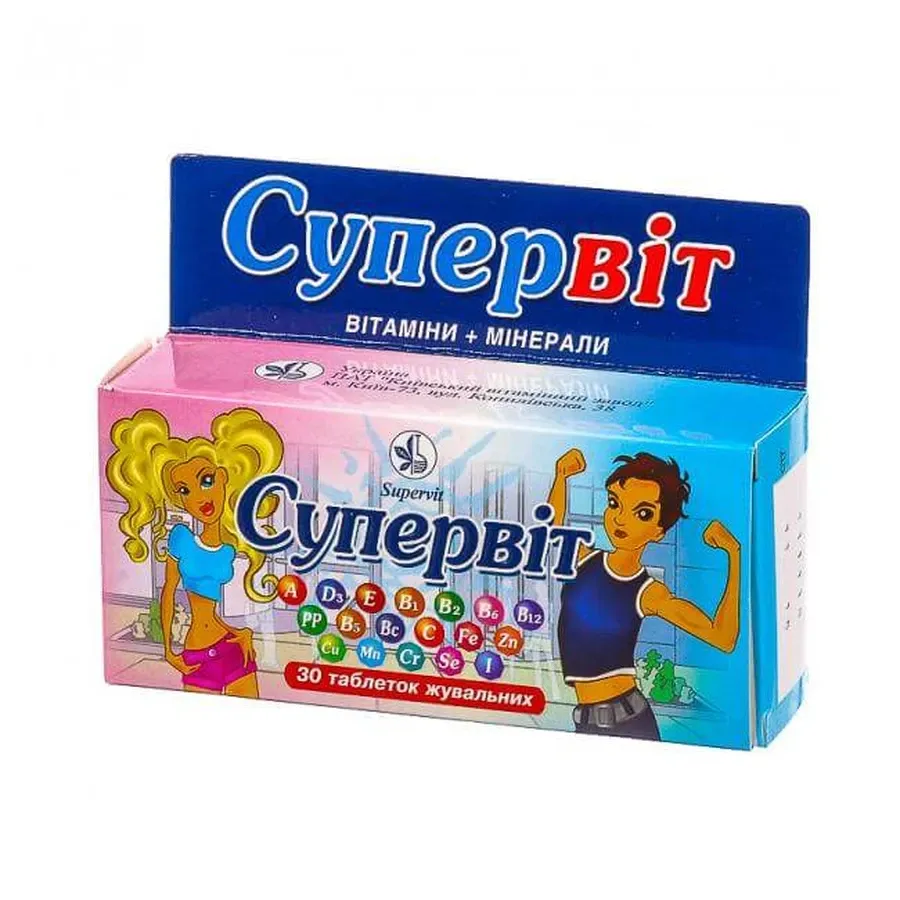
Table of Contents
INSTRUCTION FOR MEDICAL USE OF THE MEDICINAL PRODUCT SУPERVIT (SUPERVIT)
Composition:
Active ingredients:
1 tablet contains
| vitamin A (as retinyl acetate) |
2,666 IU, |
| vitamin D3 (as cholecalciferol) |
200 IU (5 mcg), |
| vitamin E (as α-tocopheryl acetate) |
14.9 IU, |
| vitamin B1 (as thiamine mononitrate) |
1.4 mg, |
| vitamin B2 (riboflavin) |
1.6 mg, |
| vitamin B6 (pyridoxine hydrochloride) |
2 mg, |
| vitamin B12 (cyanocobalamin) |
1 mcg, |
| vitamin PP (niacinamide) |
18 mg, |
| vitamin B5 (pantothenic acid) as calcium D-pantothenate |
6 mg, |
| folate (folic acid) |
100 mcg, |
| vitamin C (ascorbic acid) |
60 mg, |
| iron (as ferrous fumarate) |
14 mg, |
| zinc (as zinc oxide) |
15 mg, |
| copper (as copper oxide) |
2 mg, |
| manganese (as manganese sulfate monohydrate) |
2.5 mg, |
| chromium (as chromium chloride (III)) |
50 mcg, |
| selenium (as sodium selenate) |
50 mcg, |
| iodine (as potassium iodide) |
150 mcg; |
Excipients: ascorbic acid; sorbitol (E 420); lactose monohydrate; sucrose; cyclodextrin; potato starch; aspartame (E 951); acesulfame potassium; blackcurrant flavor; magnesium stearate; colloidal anhydrous silicon dioxide; stearic acid; povidone.
Dosage form. Chewable tablets.
Main physicochemical properties: round-shaped tablets with a flat surface, beveled edges, and speckles.
Pharmacotherapeutic group. Multivitamins with trace elements. ATC code A11A A04.
Pharmacological Properties.
Pharmacodynamics.
A combined medicinal product containing vitamins, macro- and microelements that regulate metabolic processes. The pharmacological effect is determined by the properties of the components contained in the formulation.
Vitamin A (retinol acetate) ensures proper growth and normal condition of bones and epithelial tissues, vision, and the immune system.
Vitamin D (cholecalciferol) regulates calcium and phosphorus metabolism.
Vitamin E (α-tocopheryl acetate) prevents oxidation of polyunsaturated fatty acids in membranes.
Vitamin B1 (thiamine hydrochloride) is a necessary coenzyme in carbohydrate metabolism and nerve impulse transmission.
Vitamin B2 (riboflavin) is a component of FMN and FAD (flavin mononucleotide and flavin adenine dinucleotide), primarily required for metabolic processes.
Vitamin B6 (pyridoxine hydrochloride) is essential for enzymes involved in metabolism, as well as for the synthesis of neurotransmitters and hemoglobin.
Vitamin B12 (cyanocobalamin) functions as a coenzyme in nucleic acid synthesis and, together with folic acid, participates in metabolic processes.
Nicotinamide (vitamin PP) is a component of the co-factors NAD(H) and NADP(H) and part of the glucose tolerance factor.
Pantothenic acid (vitamin B5) primarily functions as part of coenzyme A and participates in the production of hormones and antibodies.
Folic acid is necessary for cell division and metabolic processes, together with vitamin B12.
Vitamin C (ascorbic acid) is essential for growth and the normal condition of bones, skin, teeth, capillary endothelium, and the immune system.
Iron is necessary for hemoglobin function and as part of the oxygen reservoir in muscles.
Zinc is a component of various enzymes, for example, those involved in the synthesis and metabolism of fats and proteins.
Copper is used in metabolic reactions and in protein synthesis.
Manganese acts as an activator and supports various enzymatic reactions in the body.
Chromium is a component of the glucose tolerance factor and is necessary for normal metabolism.
Selenium functions together with vitamin E in protection against oxidation and as a component of enzymes.
Iodine is a necessary component of thyroid hormones.
Pharmacokinetics. Not studied.
Clinical characteristics.
Indications.
Prevention of vitamin and mineral deficiency in adults and treatment of children aged 4 years and older with insufficient intake of vitamins and minerals due to improper nutrition and conditions associated with increased requirements for vitamins and minerals (growth period, illness, convalescence), or impaired absorption (gastrointestinal disorders, diarrhea).
Contraindications.
Hypersensitivity to the components of the drug, hypercalcemia, hypercalciuria, renal failure, nephrolithiasis, nephritis, nephroses, nephronephritis, active pulmonary tuberculosis, fructose intolerance, glucose-galactose malabsorption syndrome, chronic glomerulonephritis, history of sarcoidosis, hypervitaminosis A, E, and D, thrombophlebitis, severe renal function impairment, gout, hyperuricemia, phenylketonuria, erythremia, erythrocytosis, thromboembolism, thyrotoxicosis, chronic heart failure, active peptic ulcer of the stomach and duodenum (due to possible increase in gastric juice acidity), concomitant use of retinoids or selenium, disorders of iron or copper metabolism.
Interaction with other medicinal products and other forms of interaction.
Vitamin A and E mutually enhance each other's effects and act synergistically. Retinol reduces the anti-inflammatory effect of glucocorticoids. Concomitant use with nitrates and cholestyramine is not recommended because they impair retinol absorption. Vitamin A should not be administered with retinoids, as their combination is toxic.
Drugs containing iron or silver reduce the effect of vitamin E. Vitamin E should not be used together with iron or silver preparations, alkaline agents (sodium hydrocarbonate, trisamin), or indirect-acting anticoagulants (dicoumarol, neodicoumarol).
Alpha-tocopherol acetate enhances the effect of steroid and nonsteroidal anti-inflammatory agents (diclofenac sodium, ibuprofen, prednisolone).
Vitamin C enhances the action and toxicity of sulfonamides (risk of crystalluria), penicillin, increases iron absorption, and reduces the effectiveness of heparin and indirect anticoagulants. Absorption of vitamin C is reduced when used concomitantly with oral contraceptives.
Vitamin B1, by influencing polarization processes at neuromuscular synapses, may reduce curare-like effects. PAS, cimetidine, potassium preparations, and alcohol reduce vitamin B12 absorption.
Vitamin B6 reduces the effect of levodopa and prevents or diminishes toxic manifestations associated with isoniazid and other antituberculosis drugs.
Folic acid reduces plasma concentrations of phenytoin; when used with other antiepileptic agents, mutual reduction in clinical efficacy is possible.
Riboflavin is incompatible with streptomycin and reduces the effectiveness of antibacterial agents (oxytetracycline, doxycycline, erythrocycline, tetracycline, and lincomycin).
Tricyclic antidepressants, imipramine, and amitriptyline inhibit riboflavin metabolism, especially in cardiac tissue.
When used concomitantly with quinine, hemorrhages may be intensified. The activity of vitamin D3 may be reduced when used simultaneously with phenytoin or barbiturates. The drug slows down the absorption of beta-adrenergic blockers and indirect-acting anticoagulants.
Therefore, the drug should be taken either 2 hours before or 2 hours after other medications. To prevent reduced absorption of thiophosphates or sodium fluoride, the drug should be taken no earlier than 1 hour after these agents. Concomitant use with thiazide diuretics increases the risk of hypercalcemia. Cholestyramine and laxatives (liquid paraffin) reduce the absorption of vitamin D3.
Antacid preparations containing aluminum, magnesium, or calcium, as well as cholestyramine, reduce the absorption of iron contained in the drug.
Special precautions for use
Use with caution in patients with liver disorders, history of peptic ulcer of the stomach and duodenum, cholelithiasis, chronic pancreatitis, diabetes mellitus, patients with tumors, history of kidney diseases, and those predisposed to thrombosis and bleeding (hemophilia, thrombocytopenia, thrombopathies).
The medicinal product can be used at the usual dose in patients with gluten intolerance.
Patients with diabetes mellitus may use the medicinal product, but should be aware that the daily dose contains 0.456 g of sugar. Each chewable tablet contains 0.456 g of sugar.
Discoloration of urine to yellow may occur, which is completely harmless and due to the presence of riboflavin in the medicinal product.
The medicinal product is not recommended to be administered concomitantly with other multivitamins and micronutrients due to the risk of overdose.
The medicinal product contains lactose and therefore should not be used in patients with rare hereditary forms of galactose intolerance, lactase deficiency, or glucose-galactose malabsorption syndrome.
The medicinal product contains iodine; patients with thyroid disorders should consult a physician regarding the appropriateness of using the product.
Do not exceed the recommended dose.
Use during pregnancy or breastfeeding
Since studies on the safety of using the medicinal product during pregnancy or breastfeeding have not been conducted, it should not be used in these patient groups.
Ability to influence reaction speed when driving or operating machinery
Studies on the influence of the medicinal product on the ability to drive a vehicle or operate other (potentially hazardous) machinery have not been conducted. However, the possibility of adverse reactions affecting the nervous system (drowsiness, dizziness) occurring during use of the medicinal product should be taken into account.
Method of Administration and Dosage.
The medicinal product should be prescribed to children from 4 years of age and adults at a dose of 1 tablet per day. Administer orally during or immediately after a meal. Tablets should be chewed. The duration of treatment is determined individually depending on the patient's condition.
Children.
The medicinal product is intended for use in children aged 4 years and older.
Overdose.
Symptoms. Overdosing with the medicinal product may intensify adverse reactions and cause abdominal distension. Iron overdose may lead to nausea, vomiting, diarrhea, abdominal pain, hematemesis, rectal bleeding, lethargy, and acute vascular insufficiency. Hyperglycemia and acidosis may also occur.
Vitamin D3 overdose may cause cardiovascular and renal disturbances.
Treatment. If signs of overdose occur, administration of the tablets should be discontinued. Induce vomiting, administer large amounts of fluids, and follow a diet restricted in vitamin D3. Further treatment is symptomatic.
Adverse reactions.
Recommended doses are generally well tolerated; however, adverse reactions may occur in individuals with increased sensitivity.
Immune system disorders: allergic reactions, including anaphylactic shock, angioedema, hyperthermia.
Skin and subcutaneous tissue disorders: skin rashes, urticaria, pruritus, erythema, bronchospasm.
Gastrointestinal disorders: dyspeptic symptoms, nausea, vomiting, stomach pain, belching, constipation, diarrhea, increased gastric juice secretion, heartburn.
Nervous system disorders: headache, dizziness, increased excitability, drowsiness.
Other: visual disturbances, sweating, possible yellow discoloration of urine.
With prolonged use at high doses the following may occur: irritation of the gastrointestinal mucosa, arrhythmias, paresthesia, hyperuricemia, reduced glucose tolerance, hyperglycemia, transient increase in AST, lactate dehydrogenase, and alkaline phosphatase activity, impaired kidney function, dryness and cracking of palms and soles, hair loss, seborrheic eruptions, changes in urine parameters, increased calcium levels in blood and urine, soft tissue, kidney, lung, and vascular calcification; reduced blood coagulation.
Shelf life. 1 year 6 months.
Storage conditions.
Store in the original packaging at a temperature not exceeding 25 °C.
Keep out of reach of children.
Packaging.
10 tablets per blister pack; 3 blisters per carton.
Release category. Over-the-counter (without prescription).
Manufacturer: JSC "KYIV VITAMIN PLANT".
Manufacturer's address and location of business activity:
38 Kopilivska Street, Kyiv, 04073, Ukraine.
Web-site: www.vitamin.com.ua.
INSTRUCTION
for medical use of the medicinal product
SUPERVIT
(SUPERVIT)
Composition:
Active ingredients:
1 tablet contains
| vitamin A (as retinyl acetate) |
2,666 IU, |
| vitamin D3 (as cholecalciferol) |
200 IU (5 µg), |
| vitamin E (as α-tocopheryl acetate) |
14.9 IU, |
| vitamin B1 (as thiamine mononitrate) |
1.4 mg, |
| vitamin B2 (riboflavin) |
1.6 mg, |
| vitamin B6 (pyridoxine hydrochloride) |
2 mg, |
| vitamin B12 (cyanocobalamin) |
1 µg, |
| vitamin PP (nicotinamide) |
18 mg, |
| vitamin B5 (pantothenic acid) as calcium D-pantothenate |
6 mg, |
| folate (folic acid) |
100 µg, |
| vitamin C (ascorbic acid) |
60 mg, |
| iron (as ferrous fumarate) |
14 mg, |
| zinc (as zinc oxide) |
15 mg, |
| copper (as copper oxide) |
2 mg, |
| manganese (as manganese sulfate monohydrate) |
2.5 mg, |
| chromium (as chromium chloride (III)) |
50 µg, |
| selenium (as sodium selenate) |
50 µg, |
| iodine (as potassium iodide) |
150 µg; |
Excipients: ascorbic acid; sorbitol (E 420); lactose monohydrate; sucrose; cyclodextrin; potato starch; aspartame (E 951); potassium acesulfame; blackcurrant flavoring; magnesium stearate; colloidal anhydrous silicon dioxide; stearic acid; povidone.
Pharmaceutical form. Chewable tablets.
Main physicochemical properties: round-shaped tablets with flat surface, beveled edges, and speckles.
Pharmacotherapeutic group. Multivitamins with trace elements. ATC code: A11AA04.
Pharmacological properties.
Pharmacodynamics.
A combination medicinal product containing vitamins, macro- and microelements that regulate metabolic processes. The pharmacological effect is determined by the properties of its constituent components.
Vitamin A (retinyl acetate) ensures proper growth and normal condition of bones and epithelial tissues, vision, and immune system.
Vitamin D (cholecalciferol) regulates calcium and phosphorus metabolism.
Vitamin E (α-tocopheryl acetate) prevents oxidation of polyunsaturated fatty acids in membranes.
Vitamin B1 (thiamine hydrochloride) is a necessary coenzyme in carbohydrate metabolism and nerve impulse transmission.
Vitamin B2 (riboflavin) is a component of FMN and FAD (flavin mononucleotide and flavin adenine dinucleotide), primarily required for metabolic processes.
Vitamin B6 (pyridoxine hydrochloride) is necessary for enzymes involved in metabolism, as well as for synthesis of neurotransmitters and hemoglobin.
Vitamin B12 (cyanocobalamin) functions as a coenzyme in nucleic acid synthesis and, together with folic acid, participates in metabolic processes.
Nicotinamide (vitamin PP) is a component of co-factors NAD(H) and NADP(H) and part of the glucose tolerance factor.
Pantothenic acid (vitamin B5) primarily functions as part of coenzyme A and participates in hormone and antibody production.
Folic acid is essential for cell division and metabolic processes, together with vitamin B12.
Vitamin C (ascorbic acid) is necessary for growth and normal condition of bones, skin, teeth, capillary endothelium, and immune system.
Iron is essential for hemoglobin function and as part of the oxygen reservoir in muscles.
Zinc is a component of various enzymes, for example, those involved in synthesis and metabolism of fats and proteins.
Copper is used in metabolic reactions and protein synthesis.
Manganese acts as an activator and supports various enzymatic reactions in the body.
Chromium is a component of the glucose tolerance factor and is necessary for normal metabolism.
Selenium functions together with vitamin E to protect against oxidation and as a component of enzymes.
Iodine is a necessary component of thyroid hormones.
Pharmacokinetics. Not studied.
Clinical characteristics.
Indications.
Prevention of vitamin and mineral deficiency in adults and treatment in children from 4 years of age with insufficient intake of vitamins and minerals due to improper nutrition and conditions associated with increased demand for vitamins and minerals (growth period, diseases, recovery period), or impaired absorption (gastrointestinal disorders, diarrhea).
Contraindications.
Hypersensitivity to the components of the medicinal product, hypercalcemia, hypercalciuria, renal failure, nephrolithiasis, nephritis, nephrosis, nephronephritis, active pulmonary tuberculosis, fructose intolerance, glucose-galactose malabsorption syndrome, chronic glomerulonephritis, history of sarcoidosis, hypervitaminosis A, E, and D, thrombophlebitis, severe renal function impairment, gout, hyperuricemia, phenylketonuria, erythremia, erythrocytosis, thromboembolism, thyrotoxicosis, chronic heart failure, active peptic ulcer of the stomach and duodenum (due to possible increase in gastric juice acidity), concomitant use of retinoids, selenium, or disorders of iron or copper metabolism.
Interaction with other medicinal products and other types of interactions. Vitamins A and E mutually enhance each other’s effects and act as synergists. Retinol reduces the anti-inflammatory effect of glucocorticoids. Concomitant use with nitrates and cholestyramine is not recommended because they impair retinol absorption. Vitamin A should not be administered together with retinoids, as their combination is toxic.
Medicinal products containing iron or silver reduce the effect of vitamin E. Vitamin E should not be used together with iron or silver preparations, alkaline media agents (sodium hydrogencarbonate, trisamin), or indirect-acting anticoagulants (dicoumarol, neodicoumarol). Alpha-tocopheryl acetate enhances the effect of steroid and nonsteroidal anti-inflammatory drugs (diclofenac sodium, ibuprofen, prednisolone).
Vitamin C enhances the action and toxicity of sulfonamides (risk of crystalluria), penicillin, increases iron absorption, and reduces the effectiveness of heparin and indirect anticoagulants. Absorption of vitamin C is reduced when used concomitantly with oral contraceptives.
Vitamin B1, by influencing polarization processes at neuromuscular synapses, may weaken curare-like effects. PAS, cimetidine, potassium preparations, and alcohol reduce vitamin B12 absorption.
Vitamin B6 reduces the effect of levodopa and prevents or reduces toxic manifestations observed during isoniazid and other antituberculosis drug therapy.
Folic acid reduces plasma concentrations of phenytoin; with other antiepileptic drugs, mutual reduction in clinical efficacy is possible.
Riboflavin is incompatible with streptomycin and reduces the effectiveness of antibacterial agents (oxytetracycline, doxycycline, erythrocycline, tetracycline, and lincomycin).
Tricyclic antidepressants, imipramine, and amitriptyline inhibit riboflavin metabolism, especially in cardiac tissue.
When used concomitantly with quinine, hemorrhages may be intensified. The activity of vitamin D3 may be reduced when used with phenytoin or barbiturates. The medicinal product slows the absorption of beta-adrenergic blockers and indirect-acting anticoagulants.
Therefore, the medicinal product should be taken either 2 hours before or 2 hours after other medications. To prevent reduced absorption of phosphates or sodium fluoride, the product should be taken no sooner than 1 hour after their administration.
Concomitant use of thiazide diuretics increases the risk of hypercalcemia. Cholestyramine and laxatives (mineral oil) reduce vitamin D3 absorption.
Antacid preparations containing aluminum, magnesium, calcium, as well as cholestyramine, reduce the absorption of iron contained in the medicinal product.
Special precautions.
Use with caution in patients with liver disorders, history of peptic ulcer of the stomach and duodenum, cholelithiasis, chronic pancreatitis, diabetes mellitus, patients with neoplasms, history of kidney diseases, predisposition to thrombosis and bleeding (hemophilia, thrombocytopenia, thrombocytopathy).
The medicinal product can be used at the usual dose in patients with gluten intolerance. Patients with diabetes mellitus may use the medicinal product, but should be aware that the daily dose contains 0.456 g of sugar. Each chewable tablet contains 0.456 g of sugar.
Yellow discoloration of urine may occur, which is completely harmless and due to the presence of riboflavin in the medicinal product.
The medicinal product is not recommended to be used concomitantly with other multivitamins and trace elements due to the risk of overdose.
The medicinal product contains lactose and therefore should not be used in patients with rare hereditary forms of galactose intolerance, lactase deficiency, or glucose-galactose malabsorption syndrome.
The medicinal product contains iodine; patients with thyroid disorders should consult a physician regarding the appropriateness of using the product.
Do not exceed the recommended dose.
Use during pregnancy or breastfeeding.
Since safety studies of the medicinal product during pregnancy or breastfeeding have not been conducted, it should not be used in these patient groups.
Effect on ability to drive vehicles or operate machinery.
Studies on the effect of the medicinal product on the ability to drive vehicles or operate (potentially hazardous) machinery have not been conducted. However, possible adverse reactions affecting the nervous system (drowsiness, dizziness) should be considered.
Dosage and administration.
The medicinal product should be administered to children from 4 years of age and adults at a dose of 1 tablet per day.
Take orally during or immediately after meals. Tablets should be chewed.
The duration of treatment is determined individually depending on the patient’s condition.
Children.
The medicinal product is indicated for children from 4 years of age.
Overdose.
Symptoms. Overdose may lead to intensified adverse reactions and abdominal distension. Iron overdose may cause nausea, vomiting, diarrhea, abdominal pain, hematemesis, rectal bleeding, lethargy, and acute vascular insufficiency. Hyperglycemia and acidosis may also occur.
Overdose of vitamin D3 may lead to cardiovascular and renal disturbances.
Treatment. If signs of overdose occur, administration of the tablets should be discontinued. Induce vomiting and administer large amounts of fluids; follow a diet low in vitamin D3. Further treatment is symptomatic.
Adverse reactions.
Recommended doses are generally well tolerated; however, adverse reactions may occur in individuals with hypersensitivity.
Immune system: allergic reactions, including anaphylactic shock, angioedema, hyperthermia.
Skin and subcutaneous tissue: skin rash, urticaria, pruritus, erythema, bronchospasm.
Gastrointestinal tract: dyspeptic disorders, nausea, vomiting, stomach pain, belching, constipation, diarrhea, increased gastric juice secretion, heartburn.
Nervous system: headache, dizziness, increased excitability, drowsiness.
Other: visual disturbances, sweating, possible yellow discoloration of urine.
With prolonged use at high doses: irritation of the gastrointestinal mucosa, arrhythmias, paresthesia, hyperuricemia, reduced glucose tolerance, hyperglycemia, transient increase in AST, lactate dehydrogenase, and alkaline phosphatase activity, impaired kidney function, dryness and cracking of palms and soles, hair loss, seborrheic rash, changes in urine parameters, increased calcium levels in blood and urine, soft tissue calcification, calcification of kidneys, lungs, and blood vessels; reduced blood coagulation.
Shelf life. 1 year 6 months.
Storage conditions.
Store in original packaging at a temperature not exceeding 25 °C.
Keep out of reach of children.
Packaging.
10 tablets per blister; 3 blisters per carton.
Prescription status. Over-the-counter.
Manufacturer. JSC "KIEV VITAMIN PLANT".
Manufacturer's address and location of operations.
38 Kopylivska St., Kyiv, 04073, Ukraine.
Web-site: www.vitamin.com.ua.