Sumetrolym
Ukraine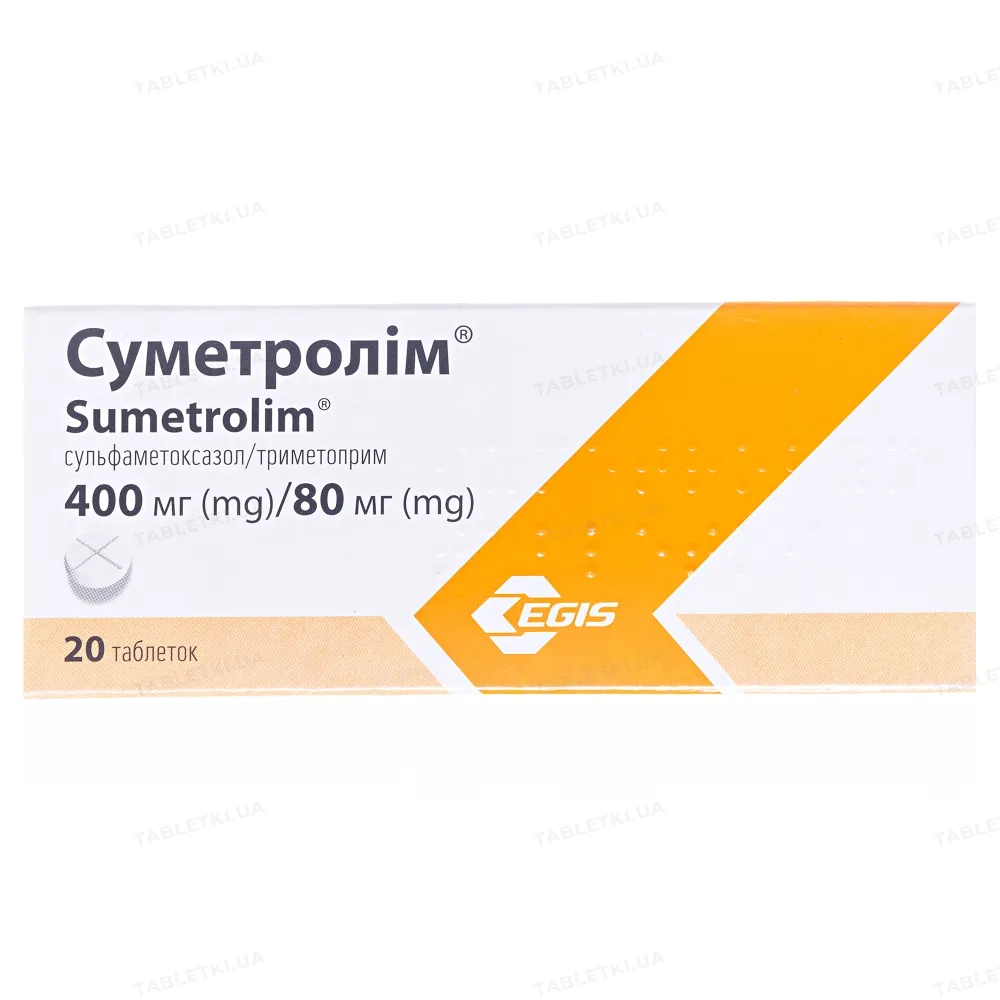
Table of Contents
INSTRUCTIONS FOR MEDICAL USE OF THE MEDICINAL PRODUCT CUMETROLIM® (SUMETROLIM®)
Composition:
Active substances: 1 tablet contains 400 mg of sulfamethoxazole and 80 mg of trimethoprim;
Excipients: potato starch, talc, gelatin, sodium starch glycolate (type A), magnesium stearate, glycerin (85 %), stearic acid.
Pharmaceutical form. Tablets.
Main physicochemical properties: round, flat tablets of white or greyish-white color, odorless or almost odorless, disk-shaped with beveled edges, engraved with "SUMETROLIM" on one side and a crosswise score line on the other side.
Pharmacotherapeutic group.
Combination of sulfonamides and trimethoprim, including their derivatives.
ATC code J01E E01.
Pharmacological properties.
Mechanism of action
Pharmacodynamics. Sumetrolim® is a combined antibacterial agent with bactericidal activity due to the synergistic action of its two components, sulfamethoxazole and trimethoprim. The two active components block two consecutive stages of folic acid biosynthesis in microorganisms, thereby inhibiting the synthesis of nucleic acids and proteins. By competitive inhibition, sulfamethoxazole interferes with the incorporation of para-aminobenzoic acid—a vital compound for microorganisms—into the molecule of dihydrofolic acid, thus inhibiting dihydrofolate synthetase. Trimethoprim selectively inhibits dihydrofolate reductase, the enzyme that converts dihydrofolic acid into tetrahydrofolic acid. This effect is selective because the affinity of trimethoprim for bacterial dihydrofolate reductase is several times higher (105-fold) than for the human enzyme, and because humans can obtain folic acid and folinic acid from external sources, whereas microorganisms must synthesize these compounds independently. Consequently, bacteriostatic concentrations of the components when used separately in vitro become bactericidal when used in combination. The combination reduces the risk of resistance development, although plasmid-mediated resistance remains possible. The antibacterial activity of the drug covers a broad spectrum of Gram-positive and Gram-negative microorganisms and protozoa.
The drug is effective against the following microorganisms:
Gram-positive microorganisms: Listeria monocytogenes, Nocardia asteroides, Staphylococcus aureus (90%), coagulase-negative Staphylococcus;
Gram-negative microorganisms: Aeromonas spp., Bartonella henselae, Bordetella pertussis, Chlamydia trachomatis, Escherichia coli (70%), Haemophilus ducreyi, Haemophilus influenzae, Klebsiella spp., Morganella morganii, Neisseria meningitidis, Proteus spp., Burkholderia (Pseudomonas) cepacia, Burkholderia (Pseudomonas) pseudomallei, Salmonella spp., Salmonella typhi, Salmonella paratyphi (90%), Vibrio cholerae, Yersinia enterocolitica (90%), Stenotrophomonas (Xanthomonas) maltophilia;
Protozoan pathogens: Isospora belli, Plasmodium spp., Pneumocystis jirovecii (carinii), Toxoplasma gondii;
Partially sensitive microorganisms: Brucella spp., Enterobacter spp., Moraxella catarrhalis, Neisseria gonorrhoeae, Serratia marcescens, Shigella spp., Streptococcus pneumoniae, Streptococcus pyogenes;
Resistant microorganisms: Mycoplasma spp., Mycobacterium tuberculosis, Enterococcus faecalis, Pseudomonas aeruginosa, and Treponema pallidum.
The drug is poorly effective against anaerobic bacteria and ineffective against anaerobic species of normal intestinal flora.
Pharmacokinetics.
Absorption
The pharmacokinetic parameters of both components of the drug are similar. This similarity allows for the combined use of the two active substances. Both active compounds are well absorbed after oral administration; approximately 90% of trimethoprim and about 80% of sulfamethoxazole are absorbed from the gastrointestinal tract. Maximum plasma concentration of each component is reached within 1–4 hours after oral administration.
Distribution
Plasma protein binding is 42–46% for trimethoprim and 66% for sulfamethoxazole. The therapeutic effect of the drug is attributed to the free fraction. Concomitant food intake reduces the area under the concentration-time curve (AUC) of trimethoprim by approximately 20%. The drug is well distributed in tissues; the theoretical volume of distribution is 69–133 L for trimethoprim and 10–16 L for sulfamethoxazole.
Both components cross the blood-brain barrier and placenta and can be detected in cerebrospinal fluid, middle ear fluid, vaginal fluid, saliva, bile, and trimethoprim also in bronchial secretions. Both components of Sumetrolim® are excreted into breast milk.
Biotransformation
Both components of the drug are primarily metabolized in the liver.
Elimination
The active substances and their metabolites are excreted by the kidneys (via glomerular filtration and tubular secretion); concentrations of trimethoprim and sulfamethoxazole in urine are higher than in blood. The elimination half-life of trimethoprim is 10–12 hours and that of sulfamethoxazole is 9–12 hours. Approximately 50% of the administered dose of trimethoprim and nearly 30% of the sulfamethoxazole dose are excreted unchanged in urine. Blood concentrations of both components can be determined 24 hours after dosing. A small portion of the molecules is excreted in bile. Neither component can be removed by peritoneal dialysis, but both components can be partially removed by hemodialysis.
Elderly patients: renal clearance of sulfamethoxazole is reduced.
Patients with renal impairment (creatinine clearance less than 25 mL/min): elimination half-lives of both components are prolonged (20–30 hours).
Clinical Characteristics.
Indications.
Treatment of infections caused by pathogenic microorganisms sensitive to the drug, when the benefit from such treatment outweighs the potential risk; it is necessary to consider whether monotherapy with a single antibacterial agent could be used.
Infections of the ear, nose, throat, and respiratory tract: acute and chronic bronchitis, bronchiectasis, pneumonia (including that caused by Pneumocystis carinii), pharyngitis, tonsillitis (in infections caused by β-hemolytic streptococci group A, eradication rates are not entirely sufficient), sinusitis, otitis media.
Infections of the kidneys and urinary tract: acute and chronic cystitis, pyelonephritis, urethritis, prostatitis, chancroid.
Gastrointestinal tract infections: typhoid fever and paratyphoid, shigellosis (caused by sensitive strains of Shigella flexneri and Shigella sonnei, when antibacterial therapy is indicated), traveler’s diarrhea caused by enterotoxigenic strains of Escherichia coli, cholera (in addition to rehydration and electrolyte replacement).
Other bacterial infections: acute and chronic osteomyelitis, brucellosis, nocardiosis, actinomycosis, toxoplasmosis, South American blastomycosis.
Contraindications.
Hypersensitivity to trimethoprim and sulfamethoxazole (including sulfonamide derivatives, sulfonylurea antidiabetic agents, as well as thiazide diuretics) and to any other components of the medicinal product.
Acute hepatitis, hepatic dysfunction, severe liver failure, including parenchymal liver damage, porphyria.
Blood disorders, hematopoietic disturbances, megaloblastic anemia due to folic acid deficiency, glucose-6-phosphate dehydrogenase deficiency, severe hematological disorders.
Severe renal insufficiency characterized by creatinine clearance less than 15 ml/min, if plasma drug concentration cannot be monitored (except when hemodialysis is performed).
Immune thrombocytopenia caused by trimethoprim and/or sulfamethoxazole.
Contraindicated in patients undergoing chemotherapy.
Must not be prescribed in combination with dofetilide.
Interaction with other medicinal products and other types of interactions.
Nonsteroidal anti-inflammatory drugs, sulfonylurea antidiabetic agents, phenytoin, indirect anticoagulants, barbiturates increase the risk of adverse effects. There is a possibility of developing cross-hypersensitivity reactions to these components. Rarely, in patients receiving sulfonamides, diuresis and/or hypoglycemia may be enhanced.
Ascorbic acid increases the risk of crystalluria.
Elderly patients receiving diuretics, particularly thiazides, are more prone to developing thrombocytopenic purpura.
The medicinal product Sumetrolim® enhances the effect of oral anticoagulants (coumarins) due to stereoselective inhibition of their metabolism. Sulfamethoxazole may displace warfarin from protein binding sites with albumin in plasma in vitro. Therefore, when prescribing the drug to patients receiving oral anticoagulants, prothrombin time should be carefully monitored and, if necessary, the anticoagulant dose adjusted. In such cases, blood clotting time should be re-determined.
The drug inhibits phenytoin metabolism: in individuals taking both drugs, the half-life of phenytoin increases by approximately 39%, and phenytoin clearance decreases by approximately 27%. Therefore, when co-administering both drugs, careful monitoring of clinical symptoms and blood phenytoin levels is recommended.
Sulfonamides may reduce plasma protein binding and renal transport of methotrexate, thereby increasing free methotrexate concentration and enhancing its systemic effects. It is believed that adding folic acid reduces the risk of hematological adverse effects.
Concomitant use of rifampicin and the medicinal product Sumetrolim® reduces the elimination half-life of trimethoprim by approximately one week.
In renal transplant patients who simultaneously received Sumetrolim® and cyclosporine, transient worsening of renal function was observed.
Predominantly in elderly patients, concomitant use of Sumetrolim® and digoxin may increase the latter's serum concentration; therefore, monitoring of serum digoxin levels may be necessary. In elderly patients, the combination of co-trimoxazole with certain diuretics, especially thiazides, increases the risk of thrombocytopenia.
In patients taking indomethacin and other nonsteroidal anti-inflammatory drugs, the blood concentration of sulfamethoxazole may increase.
Occasionally, when Sumetrolim® is prescribed concurrently with pyrimethamine for malaria prophylaxis at doses exceeding 25 mg per week, megaloblastic anemia may develop.
Sumetrolim® may reduce the effectiveness of tricyclic antidepressants.
Like other sulfonamides, Sumetrolim® also enhances the effect of oral hypoglycemic agents; therefore, carbohydrate metabolism should be monitored more closely during treatment.
When trimethoprim is used concomitantly with other medicinal products (e.g., amantadine or procainamide) that are cationic at physiological pH and partially eliminated via tubular secretion, the concentration of each component may increase due to competitive inhibition of tubular secretion. Rare cases of delirium have been observed with concurrent use.
Concomitant use of Sumetrolim® and zidovudine may increase the risk of hematological adverse reactions. If combined therapy is necessary, hematological parameters should be monitored.
Trimethoprim/sulfamethoxazole (160 mg/800 mg) may increase lamivudine effect by up to 40% due to the trimethoprim component. Lamivudine does not affect the pharmacokinetics of trimethoprim or sulfamethoxazole.
Caution should be exercised when treating patients taking other drugs that may cause hyperkalemia.
Concomitant use of trimethoprim with spironolactone may lead to clinically significant hyperkalemia.
Laboratory tests
Sumetrolim®, specifically trimethoprim contained in it, may interfere with serum methotrexate concentration measurement using the competitive protein binding method with dihydrofolate reductase. However, no interference occurs when methotrexate is measured by radioimmunoassay.
Sumetrolim® may interfere with the Jaffe reaction (creatinine determination by reaction with picric acid in alkaline medium). In this case, results within the normal range may be overestimated by approximately 10%.
Special precautions for use.
Rare cases of life-threatening complications associated with the use of sulfonamides have been reported, including acute hepatic necrosis, aplastic anemia, agranulocytosis, other blood dyscrasias, and respiratory hypersensitivity reactions (pulmonary infiltrates).
Life-threatening skin reactions have been reported in connection with sulfamethoxazole use, including Stevens-Johnson syndrome and toxic epidermal necrolysis.
Patients should be informed about subjective and objective symptoms of skin reactions and the necessity for careful monitoring. The highest risk of developing serious skin reactions (Stevens-Johnson syndrome and toxic epidermal necrolysis) occurs during the first weeks of treatment.
Treatment with Sumetrolim® should be discontinued immediately upon the appearance of any subjective or objective symptoms of Stevens-Johnson syndrome or toxic epidermal necrolysis (such as sudden onset of skin rash, often with blisters or mucosal lesions).
The best outcomes in treating Stevens-Johnson syndrome or toxic epidermal necrolysis are observed when early diagnosis is made and the causative drug is promptly discontinued. Immediate withdrawal of the drug improves the prognosis.
If a patient develops Stevens-Johnson syndrome or toxic epidermal necrolysis during treatment with Sumetrolim®, this medicinal product must not be prescribed again in the future.
The drug should be discontinued if a skin rash or any other adverse reaction occurs (including sore throat, fever, joint pain, pallor, purpura, jaundice) that cannot be explained by other causes. Cough, dyspnea, and development of pulmonary infiltrates may also indicate a hypersensitivity reaction. Caution is advised when prescribing the drug to patients with a history of severe allergic reactions or bronchial asthma.
Except in exceptional cases, Sumetrolim® should not be prescribed to patients with serious persistent blood dyscrasias. The drug has occasionally been used in patients receiving cytotoxic agents for leukemia treatment, in whom signs of adverse effects on bone marrow or peripheral blood were observed.
Due to the risk of hemolysis, Sumetrolim® should not be administered to patients with certain hemoglobinopathies (Hb-Zurich, Hb-Cologne), except in cases of urgent need and only in minimal doses.
Prolonged treatment with the drug is not recommended. Treatment in elderly patients should not be prolonged. In elderly patients, treatment with Sumetrolim® increases the risk of renal or hepatic damage, severe skin reactions, bone marrow suppression (including blood cell formation), and thrombocytopenia with or without purpura. Concomitant use of diuretics increases the risk of bleeding.
Treatment of streptococcal pharyngitis with co-trimoxazole often results in unsatisfactory outcomes due to failure to eliminate the bacteria. Co-trimoxazole is not indicated for the treatment of pharyngitis or tonsillitis of streptococcal etiology.
Trimethoprim interferes with phenylalanine metabolism, but with an appropriate diet, it does not affect the condition of patients with phenylketonuria.
As with any sulfonamide, caution is required in patients with thyroid dysfunction. Patients who are slow acetylators are more prone to developing idiosyncratic reactions to sulfonamides.
Sumetrolim® should be used cautiously in patients with impaired hepatic or renal function, folate deficiency (e.g., elderly patients, patients with alcoholism, patients on anticonvulsant therapy, patients with malabsorption syndrome, or undernourished patients), and in those with blood dyscrasias. Elderly patients and those with probable folate deficiency should be considered for additional folate supplementation during treatment.
To prevent crystalluria and tubular obstruction in the kidneys, patients should consume sufficient fluids (at least 1.5 L per day). The risk of crystalluria increases with poor nutrition.
During prolonged treatment, blood counts, liver and kidney function should be closely monitored. Folic acid (5–10 mg/day) may be added during treatment to mitigate hematological effects without compromising the antibacterial efficacy of the drug.
Caution should be exercised when prescribing Sumetrolim® to patients with X-linked mental retardation, as folate deficiency may exacerbate psychomotor disorders associated with the condition.
In AIDS patients treated with Sumetrolim® for Pneumocystis infection, the following adverse events occur more frequently: rash, fever, leukopenia, elevated aminotransferase levels, hyperkalemia, and hyponatremia.
During treatment, direct exposure to sunlight should be avoided, or protective clothing and/or photoprotective agents should be used due to photosensitivity.
Pseudomembranous colitis may develop during co-trimoxazole therapy (as with other antibacterial agents).
The clinical course may range from mild to life-threatening. Therefore, correct diagnosis of this condition is crucial in patients who develop diarrhea during antibacterial therapy. Antibacterial agents alter the normal flora of the colon and may lead to overgrowth of anaerobic bacilli. Toxins produced by Clostridium difficile are a major cause of colitis.
In mild cases of pseudomembranous colitis, discontinuation of the drug is usually sufficient. In moderate to severe cases, patients require fluid, electrolyte, protein, and antibacterial therapy active against Clostridium difficile (metronidazole or vancomycin). Antiperistaltic agents or other antidiarrheal drugs should not be used.
The product contains parahydroxybenzoates, which may cause allergic reactions (including delayed-type reactions).
Prolonged treatment may lead to overgrowth of resistant microorganisms and fungi. In case of superinfection, appropriate therapy should be initiated immediately.
Effect on laboratory test results
Trimethoprim may interfere with enzymatic methods for serum methotrexate concentration determination, but does not affect radioimmunoassay methods.
Trimethoprim may increase Jaffe test results for creatinine by approximately 10% when using alkaline picrate.
Respiratory toxicity
Very rare, severe cases of respiratory toxicity, sometimes progressing to acute respiratory distress syndrome (ARDS), have been reported during sulfamethoxazole/trimethoprim therapy. Pulmonary manifestations such as cough, fever, and dyspnea, in combination with radiological signs of pulmonary infiltrates and worsening pulmonary function, may be early signs of ARDS. In such cases, sulfamethoxazole/trimethoprim should be discontinued and appropriate treatment initiated.
Hemophagocytic lymphohistiocytosis (HLH)
Very rare cases of HLH have been reported in patients receiving co-trimoxazole. HLH is a life-threatening syndrome of pathological immune activation, characterized by clinical signs and symptoms of excessive systemic inflammation (e.g., fever, hepatosplenomegaly, hypertriglyceridemia, hypofibrinogenemia, high serum ferritin levels, cytopenias, and hemophagocytosis). Patients presenting early signs of pathological immune activation should be evaluated immediately. If HLH is diagnosed, co-trimoxazole treatment must be discontinued.
Use during pregnancy or breastfeeding.
The medicinal product should not be used during pregnancy or breastfeeding.
Ability to affect reaction speed when driving or operating machinery.
The medicinal product does not affect reaction speed when driving vehicles or operating machinery. However, if neurological adverse effects occur during treatment, driving or operating complex machinery should be avoided.
Dosage and Administration
Adults and children aged 12 years and older. The usual initial dose is 2 tablets twice daily (morning and evening), taken after meals with plenty of fluid. In severe infections, higher daily doses may be prescribed—up to 3 tablets twice daily. For maintenance therapy lasting longer than 14 days, a dose of 1 tablet twice daily is recommended.
Children aged 6 to 12 years. The recommended daily dose for children is 6 mg of trimethoprim and 30 mg of sulfamethoxazole per kg of body weight. This dose should be divided into two administrations.
The recommended daily dose for children aged 6 to 12 years is 1 tablet twice daily. For children under 6 years of age, Sumetrolim® syrup is recommended.
Duration of treatment. In acute infections, except for gonorrhea, treatment should last at least 5 days or for 2 days after symptoms have disappeared. A 3-day course may be sufficient for women with uncomplicated acute cystitis. However, in children with this condition, the drug is recommended for 5–7 days. In acute brucellosis, treatment should last at least 4 weeks, and in nocardiosis, even longer (6–8 tablets daily for 3 months).
For prophylaxis and treatment of toxoplasmosis (Toxoplasmosis): the dosing regimen for Pneumocystis carinii may be used.
In uncomplicated gonorrhea, a single-day treatment course—5 tablets twice daily (morning and evening)—or a two-day course—4 tablets twice daily—may be used.
For treatment of pneumonia caused by Pneumocystis carinii, the recommended daily dose is 20 mg of trimethoprim and 100 mg of sulfamethoxazole per kg of body weight (15–16 tablets). This dose should be divided into 2 or more administrations and continued for 14–21 days.
For prophylaxis of pneumonia caused by Pneumocystis carinii, the recommended dose for adults is 2 tablets once daily, or 2 tablets every other day, or 2 tablets twice daily during periods of increased infection risk.
For prophylaxis in children, the usual therapeutic dose, calculated based on the child's age and body weight, should be administered once daily or three times weekly for three consecutive days. This dose corresponds approximately to 150 mg/m² of trimethoprim and 750 mg/m² of sulfamethoxazole. The maximum daily doses of trimethoprim and sulfamethoxazole are 320 mg and 1600 mg, respectively.
Special patient groups
For patients with impaired renal function, the dose can be adjusted according to the following scheme (for adults and children aged 12 years and older):
| Serum creatinine level |
Daily dose (% of usual dose) |
Dosing frequency |
|
| Creatinine clearance, mL/min |
Creatinine clearance, μmol/L |
||
| > 25 |
Men: < 265 Women: < 175 |
100 |
Every 12 hours |
| 15 – 25 |
Men: 265 - 620 Women: 175 - 400 |
50 |
Every 12 or 24 hours |
| < 15 |
Men: > 620 Women: > 400 |
Drug administration should be avoided except when hemodialysis is performed. |
|
Plasma concentration measurement of sulfamethoxazole is recommended on days 2–3 of treatment (12 hours after administration of Sumetrolim®). If the plasma concentration of sulfamethoxazole reaches 150 μg/mL, treatment should be suspended until the sulfamethoxazole concentration decreases to 120 μg/mL.
Patients undergoing regular hemodialysis should receive 50 % of the usual dose before hemodialysis and half of the administered dose after completion of the procedure. Hemodialysis lasts 4 hours, during which 44 % of trimethoprim and 57 % of sulfamethoxazole are removed from the body. The drug is not recommended for use on days when hemodialysis is not performed.
Sumetrolim® should be used with particular caution in elderly patients, as adverse reactions occur more frequently in this patient group, especially in individuals with renal or hepatic impairment, or when other medicinal products are used concomitantly.
Children.
The medicinal product may be administered to children aged 6 years and older.
For children under 6 years of age, Sumetrolim® syrup is recommended.
The drug is contraindicated in premature infants under 1 year of age and in full-term infants under 6 weeks of life.
Overdose.
Symptoms: headache, nausea, vomiting, dizziness, anorexia, colic, visual disturbances, psychiatric disorders, confusion, prostration, petechiae, purpura, jaundice, bone marrow suppression. Hematological changes usually occur later. Hematuria, crystalluria, and anuria may also be observed.
Treatment (depending on symptoms). Induction of vomiting and gastric lavage are recommended (although absorption from the gastrointestinal tract is usually very rapid and completed within approximately two hours), followed by forced diuresis. Alkalinization of urine may enhance sulfamethoxazole elimination, but reduces trimethoprim excretion.
The drug is not removed from the body by peritoneal dialysis, but it is partially removed by hemodialysis. Hypersensitivity reactions can be managed with corticosteroid drugs.
In cases of bone marrow suppression caused by prolonged high-dose use of Sumetrolim®, leucovorin may be administered at doses of 5–15 mg daily until hematopoiesis normalizes.
Side effects
The most common side effects include gastrointestinal disorders and skin allergic reactions.
Rarely, severe and potentially life-threatening adverse reactions may occur during treatment with this medicinal product, such as Stevens-Johnson syndrome, Lyell’s syndrome (toxic epidermal necrolysis), fulminant hepatic necrosis, agranulocytosis, aplastic anemia, blood dyscrasias, and severe hypersensitivity reactions.
Adverse effects are listed below by organ systems and frequency of occurrence: very common (≥1/10), common (≥1/100 to <1/10), uncommon (≥1/1000 to <1/100), rare (≥1/10000 to <1/1000), very rare (<1/10000), and not known (available data insufficient to estimate frequency).
Infections and infestations:
Common: Candidiasis.
Blood and lymphatic system disorders:
Very rare: Leukopenia, neutropenia, thrombocytopenia, agranulocytosis, megaloblastic, hemolytic or aplastic anemias, methemoglobinemia, eosinophilia, purpura, hemolysis in some patients with glucose-6-phosphate dehydrogenase deficiency.
Most hematological changes are usually mild and may resolve after discontinuation of the drug. Most changes are not associated with clinical symptoms, although they may cause severe symptoms in individual cases, especially in elderly patients, those with concomitant hepatic or renal impairment, and in patients with folate deficiency. Fatal cases have been reported in high-risk patients; therefore, these patients should be closely monitored.
Folate and vitamin B12 deficiency increases the risk of developing anemia, megaloblastic changes, or neutropenia.
Hypersensitivity reactions:
Very rare: Serum sickness, anaphylaxis, allergic myocarditis, angioneurotic edema, drug-related fever, Schönlein-Henoch purpura, polyarteritis nodosa, systemic lupus erythematosus.
Metabolic and nutritional disorders:
Very common: Hyperkalemia
Very rare: Hypoglycemia, hypernatremia, anorexia.
Hyperkalemia and hyponatremia may occur primarily in patients receiving high doses of sulfamethoxazole/trimethoprim, in elderly patients, and in patients with AIDS.
Psychiatric disorders:
Very rare: Hallucinations, depression.
Nervous system disorders:
Common: Headache.
Very rare: Aseptic meningitis, seizures, peripheral neuritis, ataxia, spatial disorientation, dizziness, tinnitus.
Not known: Weakness, fatigue, insomnia, apathy.
Aseptic meningitis resolved rapidly after discontinuation of the drug but recurred upon re-administration of trimethoprim either as monotherapy or in combination therapy.
Eye disorders:
Very rare: Uveitis.
Respiratory system disorders:
Very rare: Cough, dyspnea, pulmonary infiltrates, allergic eosinophilic alveolitis. Cough, dyspnea, and development of pulmonary infiltrates may be early signs of respiratory hypersensitivity, which, although very rare, may lead to fatal outcomes. Allergic eosinophilic alveolitis is a very rare but life-threatening adverse effect.
Gastrointestinal disorders:
Common: Vomiting (3–5%), diarrhea (1%).
Uncommon: Nausea.
Rare: Glossitis, stomatitis.
Very rare: Pseudomembranous colitis, pancreatitis.
Not known: Loss of appetite.
Hepatobiliary disorders:
Very rare: Transient elevations in bilirubin and serum transaminases, hepatitis, cholestatic jaundice, hepatic necrosis.
Treatment may exacerbate pre-existing liver function disorders. Cholestatic jaundice and hepatic necrosis may lead to fatal outcomes.
Skin and subcutaneous tissue disorders:
Common: Allergic skin rash (3–5%).
Very rare: Photosensitivity, exfoliative dermatitis, persistent drug erythema, erythema multiforme. Severe skin adverse reactions: Stevens-Johnson syndrome and toxic epidermal necrolysis have been reported.
Not known: Acute febrile neutrophilic dermatosis (Sweet’s syndrome).
Musculoskeletal and connective tissue disorders:
Very rare: Arthralgia, myalgia; rhabdomyolysis (in patients with AIDS).
Renal and urinary disorders:
Very rare: Renal function impairment (renal failure), interstitial nephritis.
The moderate nephrotoxicity of the drug can be attributed to the sulfamethoxazole component. The toxic effect may occur on the background of renal insufficiency and manifest as increased urea and creatinine levels and interstitial nephritis. To prevent crystalluria, adequate fluid intake is recommended.
Adverse reactions associated with treatment of Pneumocystis jirovecii (carinii) pneumonia (PCP)
Very rare: Severe hypersensitivity reactions, rash, fever, neutropenia, thrombocytopenia, elevated liver enzymes, hyperkalemia, hyponatremia, rhabdomyolysis.
Severe hypersensitivity reactions have been reported with high-dose regimens used in the treatment of PCP, requiring discontinuation of therapy. These reactions recurred upon re-administration of sulfamethoxazole/trimethoprim, sometimes after a few days’ interval.
If signs of bone marrow suppression are observed, the patient should be additionally prescribed folic acid (5–10 mg/day).
Severe hypersensitivity reactions have been reported in PCP patients upon re-administration of sulfamethoxazole/trimethoprim, sometimes after a few days’ interval.
In patients with AIDS receiving high doses of the drug, adverse effects may occur 40–50% more frequently and manifest as neutropenia, skin rash, elevated liver enzymes, and increased serum creatinine.
Shelf life: 5 years.
Storage conditions:
Store at temperatures not exceeding 25 °C, in a place inaccessible to children.
Packaging:
10 tablets in a blister pack, 2 blisters in a cardboard box.
Prescription status: Prescription only.
Manufacturer: Egis Pharmaceuticals Ltd., Hungary.
Manufacturer’s address:
65 Matyas Kiraly Street, Kermend, 9900, Hungary.